See-saw Memory

Journal 2016

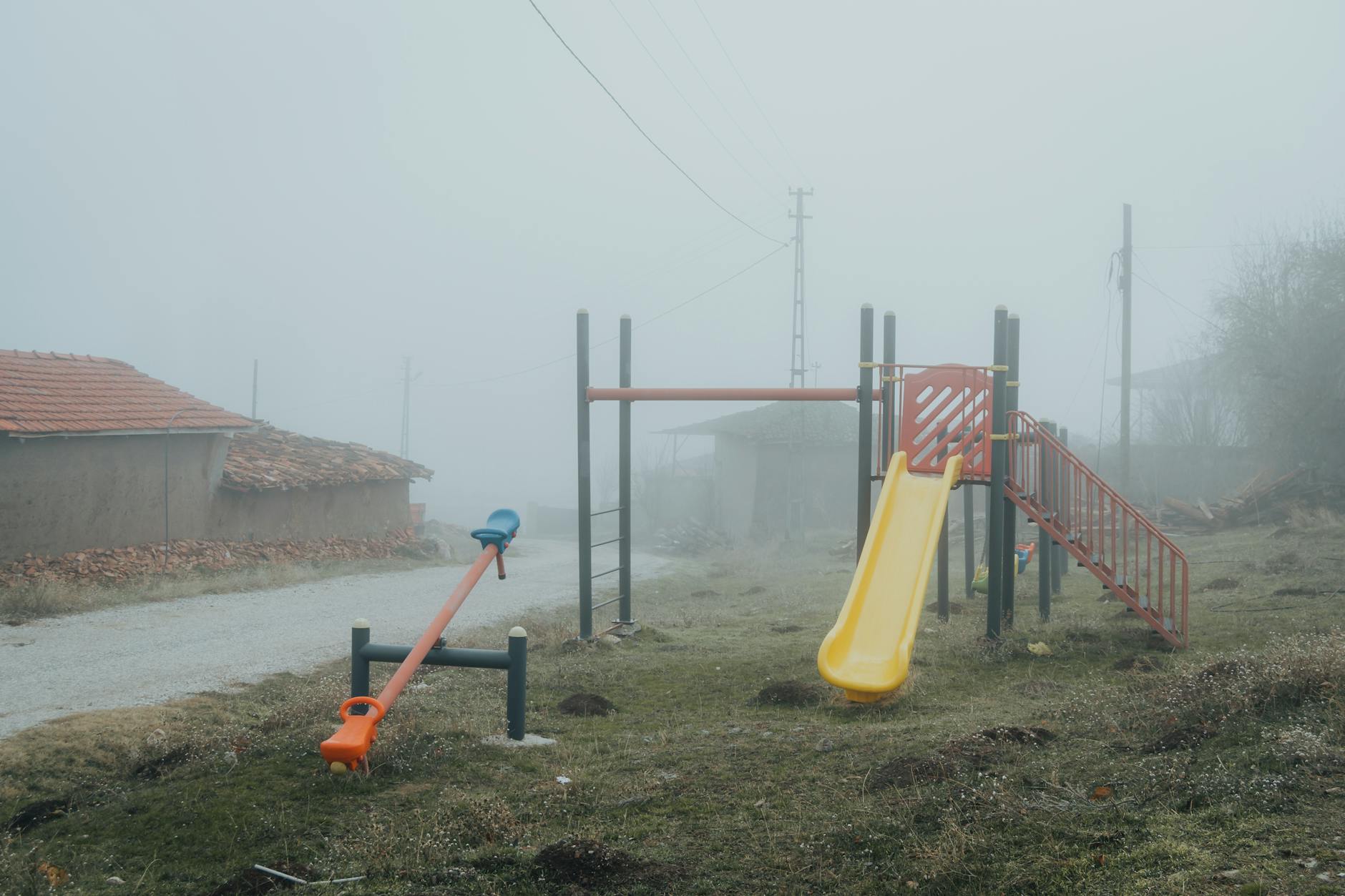
I felt a trigger this week that took me back to the sensation of being at the end of a teeter-totter. My playmate sat on the end of the board at ground-level, suspending me in the air, feet dangling, afraid she might step away and leave me to crash to the ground.

All my solutions for this discomfort didn’t work, so I invited Jesus into my picture. He stood beside me and grabbed me when the teeter-totter plunged. Safe in His arms.

Amazing how our minds work. I’m 63 years old, and the cells of my body and brain still remember the sensation I felt at age 8. We human beings are walking messes of triggers!

Photo by u00d6mer Derinyar on Pexels.com

So Many People!

Journal 2016

There are not enough hours in the day to pray for or develop and maintain a relationship with every person I know. I’m working on getting to know my immediate neighbors, but just when I made a good solid contact, they moved. Arrghh! How do I apportion my time wisely between friendships and acquaintances? I could spend 100% of my time with one client and it wouldn’t be enough to satisfy her need. A phone call a couple hours a month is all another relationship needs in order to remain best friends.

God orchestrated the Apostle Paul’s travels and people he connected with, and Paul had to be obedient. Even his jail time was used by God. How much control do I have over my relationships and time vs. how much does God control it? I’m only responsible for my part, not His. I have to trust Him to bring into my life exactly whom He wants me to talk to, spend time with, and minister to. If I’m moving forward, He can guide me.

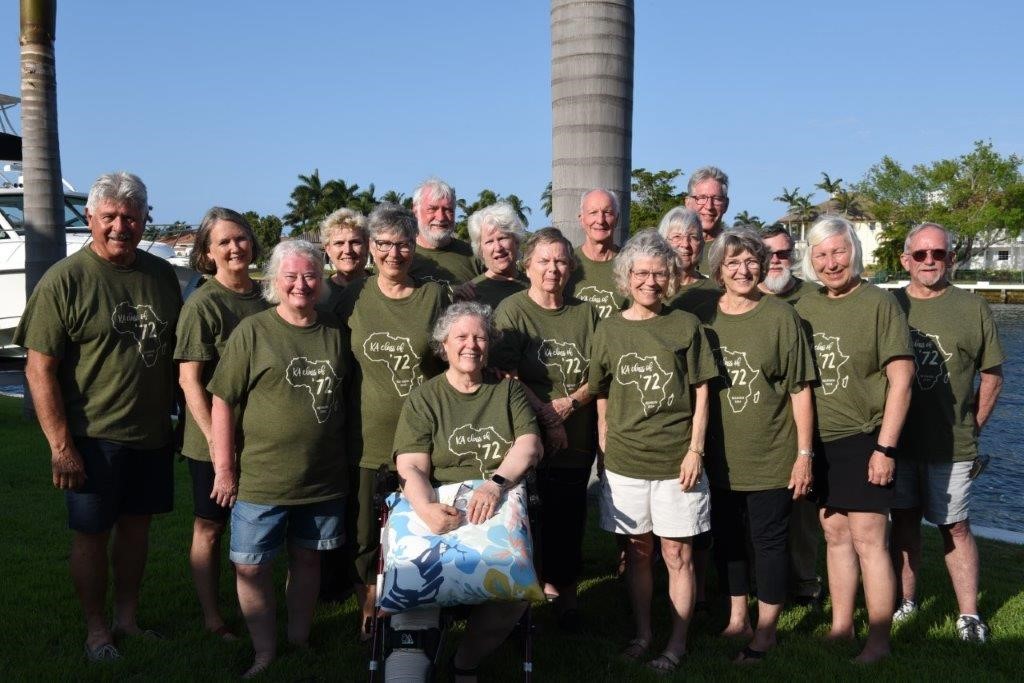
A 2024 Update. I just returned from Florida where I reunited once again with my childhood boarding school classmates from around the world. As we reminisced over the last 70 years, the bonds only got stronger, but I don’t have time in my schedule to maintain daily contact with each one. People come into our lives for a season, and now it’s time to refocus on those whom I sit beside at church or chat with at the grocery store checkout lane. But these brothers and sisters will be forever in my heart.

On Doubt and Faith

Journal 2016

 “They did not believe it [the resurrection]” (Mark 16:11 NIV).

 “They did not believe them [the 2 men on the road to Emmaus] either” (Mark 16:11).

 “Jesus rebuked them for their lack of faith and their stubborn refusal to believe those who had seen him after he had risen” (Mark 16:14).

Why is it so hard to believe someone else’s testimony? And when evidence is right there in my face, why do I refuse to believe it? What makes me dig in my heals and deny the truth? Everyone (including Mary, the ten disciples, and eventually Thomas) finally believed when they experientially saw Jesus with their own eyes.

I suspect fear is at the bottom of it. When I’m working with clients with D.I.D. (Dissociative Identity Disorder), the denial parts might say, “If I believe it happened, then I’ll have to admit it was real.”

“Then what?” I’ll ask.

“Then I’ll feel overwhelmed (. . . or scared . . . or someone might find out . . . or I’ll be killed).”

I wonder what lie the disciples believed that kept their denial part in place: “It’s too good to be true (. . . or I can’t let myself feel hope for fear I’ll be disappointed).” I think that’s it. Jesus’ death was a HUGE disappointment, an overwhelmingly painful loss.

Yet when Jesus met them, He didn’t encourage them like He did when someone was fearful. He rebuked and chided them for their unbelief. According to I Samuel 15:23, stubbornness (ASV) rebellion (KJV) presumption (ESV) defiance (HCSB) is as the sin of witchcraft. Apparently, there was an element of demonic control or attachment that perhaps got planted at their point of pain. Jesus doesn’t need to dig around in their psyches to help them discover why they’ve dug in their heels. He bluntly rebukes them.

God is patient with our struggles, our fears, and our doubts, but He’s not so patient with lack of faith. How many times did He say, “O ye of little faith?” There’s no pointing of fingers here. I’m plenty guilty myself. But my heart strongly desires to root out all stubbornness, rebellion, and lack of faith.

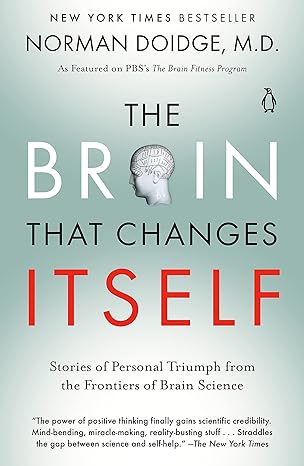
I’m currently reading books on the neuroscience of the brain and wondering how to meld that knowledge with Jesus’ words.

The women at the tomb believed as soon as the angels spoke truth to them. The men, however, continued to doubt when presented with the evidence (the women’s testimony and an empty tomb). The disciples on the road to Emmaus couldn’t seem to grasp the truth, and Jesus rebuked them. Even when the disciples saw Jesus in the room, and the joy center of their brain was activated, they had a hard time believing.

We know that the brain is a complex organ—different parts of the brain are responsible for different functions. The occipital for eyes, the amygdala for emotion, the frontal cortex for logic and reasoning, and memory resides in a different part.

Jesus created the human brain. He knew what part of the brain was being accessed during fear (Peter walking on the water; the disciples in the storm on the sea of Galilee). He knew that the frontal cortex shuts down during a fight/flight/freeze situation. Yet He seemed impatient with them: “Why do you doubt? Why do you have so little faith? Why don’t you believe when the evidence is in front of you that I’m alive? Stop doubting!”

What makes us doubt? Is the emotion center too strong? Are there lies imbedded in that emotion? Once truth enters the brain, doubt and fear flee. Jesus understood all this, so was He really impatient or was He challenging them to accept HIM, the truth, the way, the life?

I think women often believe more easily than men. Perhaps that’s why Satan appealed to Eve first. Is that because our emotion center is more active than our reason center? Was Jesus instructing these men to get in touch with their emotional side? Women are also more apt to be duped, more gullible. I know I am.

Lord, help my unbelief.

Peace

Journal 2017

If I recorded only my struggles, you’d never know about my good times, the peaceful days. If I only recorded good memories and words of praise and gratitude to God, you wouldn’t know of my struggles, and you’d think I was a saint. Neither is true. I resonate with Paul’s words, “For in my inner being I delight in God’s law” (Romans 7:22 NIV). This may be referring to the Law of Moses, but I see it through Jesus’ words, the Law of Love: Love the Lord Your God . . . and your neighbor as yourself.

I love the Word of God, and I love THE WORD Himself. He is my only source of true joy, the author of my peace, my motive for loving my neighbor.

I don’t often record my praise and gratitude because they are a given—they bubble up inside me. But maybe it would be a good exercise to write them down as well. David did.

My praise, my worship, doesn’t sound like today’s music, nor does it sound like David’s. My praise is more contemplative, quieter, a simple thank you. It’s standing in the rain, arms raised to the heavens, drinking in the warmth and the water, dancing with Jesus, following His lead, a graceful ballet of love and appreciation.

“The mind . . . governed by the Spirit is life and peace” (Romans 8:6 NIV). One follows the other. Spirit-control yields peace. Spirit-non-control yields unrest.

Today I am at peace, at rest.

Seek God, Not an Experience.

Journal 2016

The apostles performed many signs and wonders among the people . . . people brought the sick into the streets and laid them on beds and mats so that at least Peter’s shadow might fall on some of them as he passed by. Crowds gathered also from the towns around Jerusalem, bringing their sick and those tormented by impure spirits, and all of them were healed (Acts 5: 12-16, NIV).

Peter, the man who denied Jesus three times, is now performing miracles of healing. Why didn’t this happen while he was walking with Jesus before the ascension (aside from the time when Jesus sent the disciples out to the villages two by two)? Why now? The answer is the Holy Spirit. Peter didn’t ask for it. It was a gift, donated, conferred upon him—according to God’s design.

I lay to rest once and for all the notion/teaching that I’m missing something because I don’t speak in tongues, raise people from the dead, heal sickness and disease, or handle snakes without getting poisoned. I can cast out evil cosmic beings because—and only because—the person wills it to be so and because the demonic forces have been defeated at the cross.

I have no power in myself to do diddly-squat! It’s by God’s very will and choice that I draw breath and move and have my being.

It’s like I’ve been standing around with my palms up, asking to receive whatever God has for me. Instead, He says, “Just get to work! Quit standing around. When and if I offer you something, you’ll open your hand or reach for it in obedience. If you refuse a gift, then you’re being rude or disobedient. It’s not so polite to extend your hand to demand that someone give you a gift!”

Then the high priest and all his associates who were members of the party of the Sadducees were filled with jealousy (v. 17).

“And don’t be jealous,” God adds, “if I give a gift that you want, or think you deserve, to someone else. I know exactly what gift(s) you need—best for you and best for Me. Now get to work and enjoy what I’ve given you!”

A 2024 Update. I wrote this in 2016 in response to the emotion stirred up when someone claimed all believers were supposed to practice all the gifts. This week I previewed a book by Neil Miller titled Agents of Healing. Miller states that we all have authority to heal physical ailments, but we don’t all have the same power to do so. And that with practice and experience, we can increase our faith to do so. His arguments are well laid out and biblically and experientially verified, but I’m still mulling over whether or not we’re all commanded to practice all the gifts.

Miller sites the times when Jesus cast out demons without the person’s involvement or consent, but as God incarnate, He knew the innermost workings of a person’s heart and the plan of the Father to bring Him glory. In my ministry of inner healing prayer, I’ve found that involving the person’s will makes the process a whole lot easier.

Am I Not Enough?

Journal 2016

I’m feeling disgruntled today, agitated, pacing, complaining. Jesus invites me to sit with Him for a bit.

“I’m weary of living and working with people whose hearts are closed. Soulmate is a mythical beast,” I tell Him.

“Am I not enough?” Jesus asks.

“Am I not enough?” the Holy Spirit queries.

“Am I not enough?” the Father says.

And my heart cries out, “I want You to be. So why am I not satisfied? Why do I cling to the illusion that flawed human beings are capable of meeting the deepest longings and intimate needs of my heart?”

“It’s not fair to expect people to be God to you,” observes Jesus. “That’s idolatry.”

And so I repent.

Be Jesus to others but let go of expecting them to be that to you.

Josh and Katie (our youngest)

Mountaintop Experiences

Journal 2016

Peter, James, and John, closest earthly friends of Jesus, zigzag to the top of a high mountain (Matthew 17). It’s refreshing to be away from the pressing crowds, a gentle breeze caressing their cheeks, but they’re tired, sweaty, hungry, and thirsty. The long, arduous journey affords time to ponder all that’s happened so far in this ministry, but they are clueless as to why Jesus is leading them here. One foot following the other, pausing to breathe, they wonder when they’ll ever reach their destination. They miss their families, but it’s exciting to be singled out to spend quality time with their Rabbi. The privileged three.

And then it happens—Jesus’ transfiguration, meeting biblical heroes Moses and Elijah, the enveloping brilliant light cloud, the very voice of God. It’s overwhelming, it’s exhilarating, it’s sacred, it’s terrifying, it’s unique in history.

But this mountaintop experience is not meant to be the norm—in spite of Peter’s suggestion to create shelters for the three of them. This is a once-in-a-lifetime experience, and they are forbidden to share it with anyone—at least for now. This is a holy, between-them-and-God moment. It’s nobody’s business but theirs. Perhaps the purpose is to strengthen their faith or give them courage or enlightenment. Maybe Jesus is bursting with excitement and wants to experientially share His true story with His best friends.

And now it’s time to come down off the mountain. They can’t live there, but it’s now part of their story that shapes how they think and feel. They are different for having experienced it. And when the time is right (after the resurrection), they can tell others—it’s a testimony—both theirs as a witness and a verification of who Jesus is.

What mountaintop experience have you had? Did you tell someone, or have you kept it between you and the Lord? Why?

Wisdom or Foolishness?

Journal 2017

The book of Proverbs often contrasts the fool with the wise. The fool doesn’t listen to knowledge, utters slander, does what is right in his own eyes, is full of wrath, doesn’t learn from discipline, is contentious, and is bound for destruction.

The wise person, obviously, portrays opposite characteristics. But is being wise the same thing as being righteous? I understand imputed righteousness, but there’s our part as well. God doesn’t declare everyone righteous—just those who have responded to His invitation—and that’s being wise. (9:10)

We are all wise at times and foolish at others, but a person’s character, like a young tree, can be bent in different directions (15:24). The more mature the tree becomes, the more hardened the trunk gets—straighter or more crooked.

Sometimes I hesitate to call myself wise—it sounds prideful. But it isn’t boasting when you are being honest about your choices. To fear the Lord is to be wise. I have chosen God. I have chosen to humble myself when I recognize pride, I try to learn, I try not to defend when hurt, I try not to slander or be contentious and to keep anger under control. My tree trunk is bent in that direction. That’s not pride—it’s observing what’s in my heart.

It is not arrogant to recognize when you are wise, but I don’t know too many people who would admit they are fools. Usually they see it at the end of their life or when they suffer the consequences of a poor decision.

All a person’s ways seem right in his own opinion, but the Lord evaluates the motives. (Proverbs 16:2 NET)

Psalm 36

Journal 2003

The broken and bruised Little One lurched forward onto the desert stones, her parched lips whispering a desperate, “Help.”

A large-winged, iridescent creature glided swiftly from the sky, casting shade over her limp body. In one motion, he lifted her high above the earth. The wind cooled her fevered brow, and she slept. When she opened her eyes, they were soaring over a mountain and descending into a lush green valley where she spied a ribbon of river sparkling in the sunlight.

The creature landed gently near the entrance to a cozy cottage. As if on cue, the heavy oak door swung open, and a kind-faced, elderly gentleman reached for her as her spindly legs crumpled beneath her.

“Come in, my child,” he invited.

A warm glow from the fireplace revealed a table spread with a feast beyond compare. Exotic fruits and colorful vegetables spilled artfully around platters of venison, quail, and racks of lamb. Never before had she seen such abundance.

“You may eat all you want, but only a little at a time, as much as your stomach can handle.” And he began to feed her from his own hand. When she had eaten her fill, she fell asleep at the table, dreaming of lamb chops and fresh fruit and homemade bread.

The next morning, she awoke in a bed of feathers, refreshed but weak. Where was the old man? She wandered outside to explore. There by the cottage ran the river she’d noticed from the sky. And in the middle, standing chest-high, a young man beckoned her to join him. When he saw her fear, he waded to shore, offered his hand, and led her close to the edge where she tested the water with one toe. Surprised at its warmth, she allowed him to pull her further in, waist high. The mineralized liquid soothed her aching muscles and cleansed her wounds of the poisons. Finally, she plunged completely under and came up splashing and laughing. The dirt and the grime of a lifetime dissolved into a rainbow of bubbles. The man smiled, enjoying her fun. She could have stayed in this River of Delight all day, but the man had more he wanted to show her.

“Come,” he said—in the same tone the old man had used.

Curious, she thought.

He wrapped a soft towel around her shoulders and handed her a robe. Strangely unselfconscious in his presence, she slipped out of her dirty rags and let the shimmering white garment fall neatly to her feet, covering her bony frame.

“It’s beautiful!” she murmured.

She followed him down the path and around to the back of the cottage. A kaleidoscope of color met her eye. In the center of the garden stood a massive fountain with flowers and vines of all varieties growing out of its walls. A stone bench circled the base of the fountain where small pilgrims could climb to reach the water or the elderly could sit. The man reached for a dipper, scooped up some of the pristine liquid, and held it out to her. Again, she felt fear surging up from deep within.

“It’s safe,” is all he said. And she drank. And she felt life in her bones, and her flesh felt restored, and her spirit revived.

For a year the Little One stayed in this valley of paradise, learning lessons from the Master Teacher, until one day he spoke these words:  “You are strong enough now, my child, to venture forth. Invite others to come here—but you must show them the way. And if, like you, they’re too weak to travel by foot, simply call, and I will send my winged spirit to carry them here.”

And the Little One, strong in the power of His might, went forth and gathered in the lame, the blind, the broken, the bleeding, and the wounded, and brought them to the feet of the Master. And they, too, experienced fullness of joy in the River of Delight. And the cottage swelled with happy voices—but was never full—for there was always room for one more. And the Fountain of Life never ran dry.

Psalm 36:7-9 NIV

How priceless is your unfailing love, O God!

People take refuge in the shadow of your wings.

They feast on the abundance of your house;

you give them drink from your river of delights.

For with you is the fountain of life; in your light we see light.

Photo by Hilary Halliwell on Pexels.com

The Father’s Love

Journal 2017

Why do I resist the Father’s love? Is it because I do not love myself adequately? Is it because I think less of myself than He does?

I’ve been taught since grade school the concept of the depravity of man: “Your sins are scarlet,” “There is none righteous, no not one,” and those famous lines from “Amazing Grace”: “for such a worm as I.” We were taught that we’re abased, unholy, unrighteous, unworthy, worthless human beings.

How do I climb out of this pit of self-abasement? How do I make the transition to God’s favored one, beloved of the Father, “I’m wild about you,” redeemed, accepted, made righteous and holy and pure in His sight?

When I leap into the Father’s arms, He catches me and holds me tight. “I’ll never let you go,” He whispers in my ear. “You’re mine forever.” I nestle into His bosom—the carrying pouch for little lambs, safe, loved, secure. I no longer sing, “If Jesus goes with me, I’ll go,” but rather, wherever the Father goes, I am carried along with Him. I can hear His heartbeat. It soothes and lulls and lets me rest and sleep like a newborn.

Photo by Rachel Claire on Pexels.com