As I pray through a long list of people I know and love, it strikes me that every one of us struggles with something.
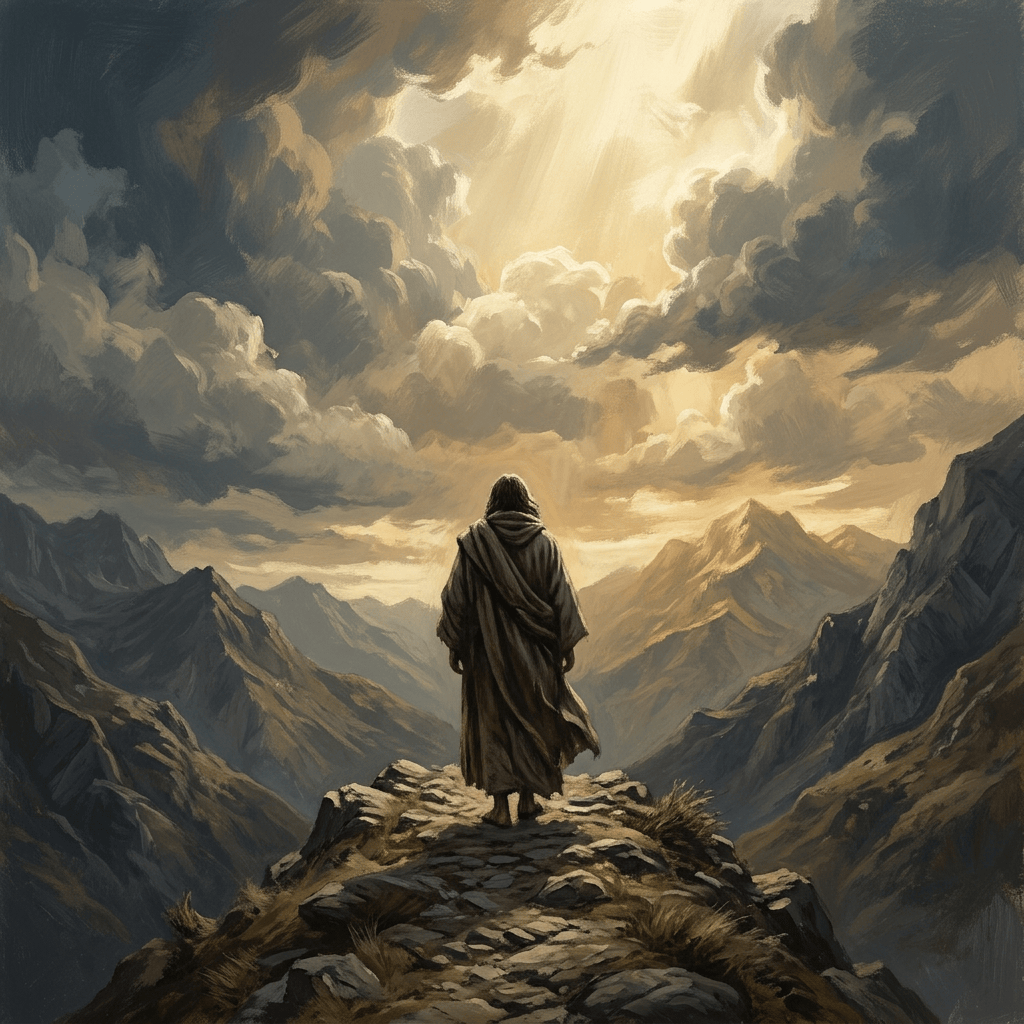
The chick struggles to break free of its shell. The caterpillar turned butterfly struggles out of its cocoon. The fetus struggles to exit the birth canal. The tender shoot struggles to push through the hard ground. Even the Messiah struggled.
Struggling implies hardship, straining, work, motivation, conflict, wrestling, effort to free oneself from restraint or constriction, achieving something new in the face of difficulty or resistance. Struggling strengthens us, proves us, and tests what we’re made of, and the effort is worth it when we reach the end of the race or resolve the conflict.
There is a time, however, when struggling is counterproductive. Sometimes God waits for us to stop struggling in our own power before He frees us. It’s when we relax and acknowledge our limitations that we find our greatest growth.
I have an overwhelming list of people I want to pray for, and I can’t keep up with them all.
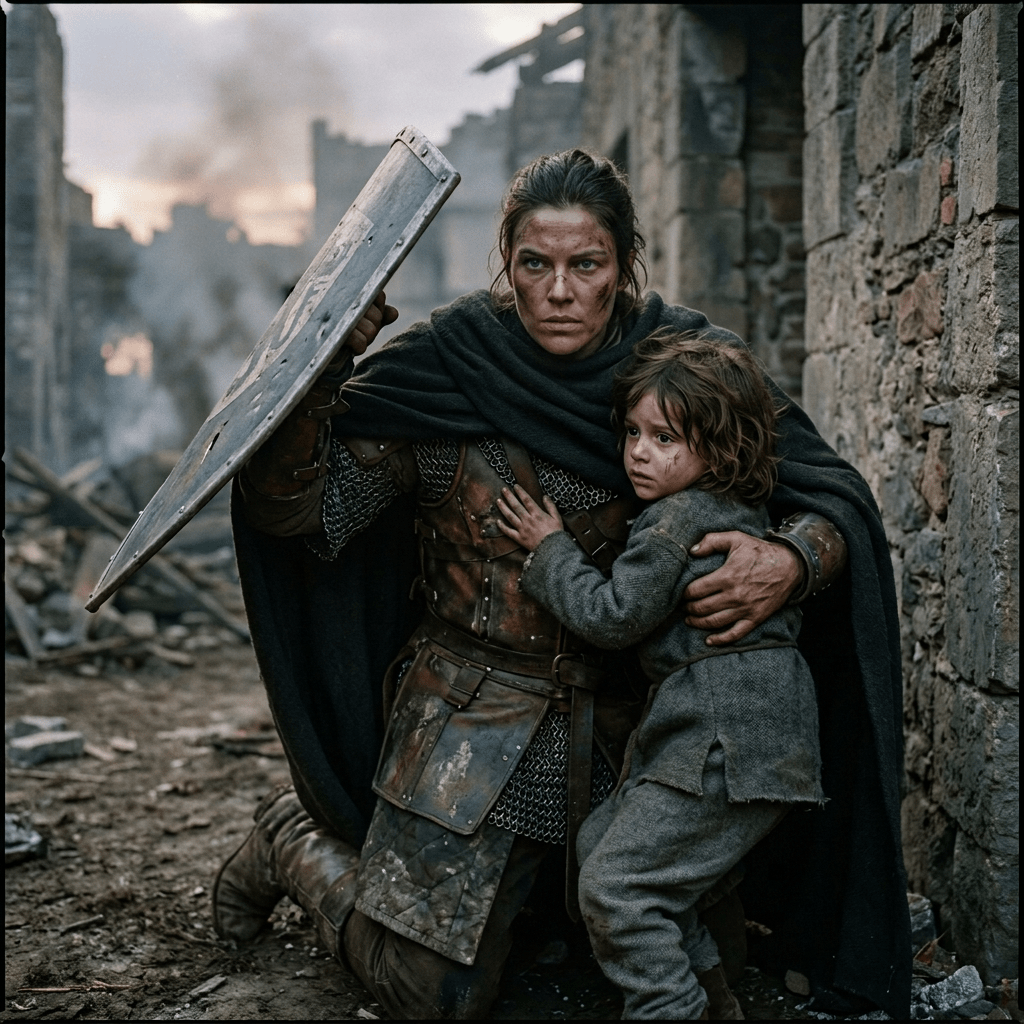
Visual: I am in a square room with many doors, and each open door has monsters (demons) guarding them, preventing me from exiting. I know I cannot fight them all at once, but I still grab my Sword of the Spirit and flail it around. Suddenly, I lose my grip, the sword flies through the air, and it lodges in the wall above one of the doors. I laugh out loud. Well, that was a most ineffective use of my weapon!
So Jesus teaches me like a Jedi warrior how to use my sword: Keep calm, maintain control, and you only have to fight one ogre at a time.
And which one is that? I wonder. Instantly, I know its name: Doubt.
Doubt in my prayer life. Doubt that I’m doing it right or not doing enough or… And so, I invite Doubt into the prayer room. Jesus stands outside the arena, watching me. “Parry here, thrust there. Watch your vulnerable side. Good job. Stay alert,” He calls.
Once I’ve practiced, I invite Doubt into the ring, thrust forward with my sword, and the ogre vanishes like smoke. The doorway is now clear, and I can exit into a lush green garden.
“May I spend some time here with you?” Jesus and I ask at the same time, and we both laugh.
“See this rose?” “Note this bush.” “Do you like this tree?”
Yes, yes and yes!
“I made them all for you to enjoy,” He says. I can see the delight on His face.
“But what about that prayer room?” I ask. “Aren’t I supposed to be in there fighting ogres?”
“At some point,” He replies. “But for now, I want you to relax and rest here with Me and learn to delight in Me. Then when you do fight, you carry My heart and My strength with you, and you’re not fighting on your own. Rest here with Me and enjoy My presence, and I will teach you. I will let you know when it’s time to return to the room. Just stay close to Me for now. In this garden, pay attention, look and listen. There are things to learn in the quietness and stillness that you cannot learn in the midst of a battle.”
I’m okay with that, I think, but I don’t know what to do with the multi-page list I’ve been carrying around.
“We’ll use that for weed control,” He replies. And He carefully lays the papers in a special place in the garden, covers them with dirt, and walks away. “They are important to this garden,” He says. “They aren’t going anywhere.”
“Oh!” I exclaim. “There are little seeds embedded in the pages! When the rain comes, they’ll begin to sprout and grow. I don’t have to keep planting them.”
“I’ll keep watch over them with you, and My gardener helpers will make sure they get the proper nutrients,” He says.
And now I see it. The prayers I pray on behalf of other people are like seeds. The more I plant, the bigger the crop, but I’m not capable of or responsible for making them sprout or blossom. Now I’m eager to find even more seeds to plant.
“Look no further,” Jesus says, smiling, as He pulls out a packet from His pocket.
“Show me where to plant them,” I say.
“Some will be planted in your heart and some in others’ hearts. Some will fall on rocky paths, some will get choked by thorns, some will fall on good soil. (Sound familiar?) Just keep planting and sowing, and I’ll take care of the rest.”
Jesus declares He’s there to preach, but He keeps getting sidetracked by people just wanting their physical needs met. Yet He doesn’t view meeting people’s needs as a distraction. He has compassion on them, even as He continues to fulfill His mission to preach. But there were consequences to His compassion (v. 40). Jesus is hindered from preaching in the villages after He agrees to heal a leper who disobeys Jesus’ command to go to the priest and to keep quiet about it. Jesus may not have been as comfortable sitting on a rock in the sun outside the village instead of meeting people in the privacy of a home or in the synagogue. But God’s Word will not be thwarted. The people find Him and come to Him.
When Jesus gave instructions to His disciples about finding a colt, they were to say to the owner, “The Lord needs it AND will send it back here shortly.” I’ve never before noticed the “and.”
Who kept up with it the whole time they were in Jerusalem? Who returned the colt and when? I know the donkey incident fulfilled scripture, but I still ask, on a practical level, why He did it. Why ride when no one else does? And why a colt?
On Regret (Mark 14:72)
After he denied Jesus three times, Peter broke down and wept.
This strong, overconfident braggadocio with a choleric temperament falls apart when confronted with his own failure. Weeping and repentance are appropriate, but regret can paralyze. Afterwards, shame rushes in to keep one bound. Only Jesus’ gentle question, “Peter, do you love Me?” releases all the shame and regret.
On Envy (Mark 15:9)
Pilot knew that the chief priests handed Jesus over to him out of envy. Envy so blinded their hearts and minds that they were ready to commit murder and release a murderer, Barabbas. How ironic and twisted is that?
Why envy and jealousy? What did Jesus have that they didn’t and that they wanted? A following? Respect? Their pride revolved around self-righteousness. Keeping and teaching the law required years of study and hard work. They had their Ph.D. in the subject, after all, and along comes an uneducated Galilean who has more wisdom and more knowledge than they’ve gained in a lifetime of study. And something else—He has power. They’d never seen anything like it, and they were afraid because they were losing control. When we lose control, we feel powerless and vulnerable, and we don’t like that feeling. What if Jesus was teaching the truth? Then my lifetime of self-effort turns to dust, and I am left humble and humiliated like Saul.
Humble yourself in the sight of God and He will lift you up (James 4:10).
The way up is down. Counterintuitive. “Let go and let God” is more than a cliche.
Jesus’ Torture (Mark 14)
We usually focus on the whipping, which would be pain beyond endurance in itself, but today as I read this account, I realized He most likely had brain damage or a concussion due to the blows on His thorn-crowned head. And add to that, sleep deprivation. No one without supernatural ability could stay present through this all and have a coherent thought in his head. All a person wants in the midst of torture is for the pain to cease. How did Jesus stay true to Himself?
“My God, My God” (Mark 15:33)
A popular song claims that the Father turned His face away at the cross. What utter nonsense. Jesus was feeling temporary separation from His Father, but God does not turn His back on us when we suffer or sin. The Father’s love is infinite and complete, and He embraced the pain along with His Son. Turning away would be avoidance or denial. Pain yes, but not separation. As part of the Trinity, the Spirit felt pain at the cross as well.
My trauma clients often ask, “Where were You, God, when it happened?”
And He always answers, “I was there. I felt your pain along with you.”
The waves crash over the little boat, and the disciples shake Jesus awake. Their accusation intrigues me:
Don’t you care if we drown?
I hear the same cry from some of my clients: Don’t you care that I’m hurting?
Jesus was asleep, oblivious to the storm, so how could they accuse Him of not caring? In His humanity He was exhausted and needed rest. It’s ludicrous when a client accuses me of not caring because I’m not available to process with her the moment she gets triggered. Of course I care, but there’s not much I can do for her in the moment except pray she’ll have the strength to keep rowing.
Fear drove the disciples’ words and deeds. What did they want Jesus to do when they woke Him up? Help row? Be prepared to swim if they sank? Perhaps they felt alone and wanted His comforting presence. The storm was bothering the ones who were afraid. It wasn’t bothering the One who was resting.
What if the disciples hadn’t woken Him up? Would they indeed have drowned? What if they’d stopped struggling, stopped rowing and gone to sleep? They weren’t really in any danger, for God still had work for each of them to do. At the right time, Jesus stilled the storm.
May I rest in you today, Lord, no matter what storm rages around me.
Mark 6:5
He was not able to do a miracle there [in Nazareth], except to lay his hands on a few sick people and heal them.
Why?
Mark says, “Because of their unbelief.”
Perhaps this verse is the source of the false teaching that if you’re sick, it’s your own fault because of your lack of faith—you just didn’t believe hard enough. The issue, however, is not about one’s self-effort but a disbelief in who the Healer is. If you don’t believe that Jesus is the Son of God, the Messiah, the creator of the universe, no amount of “faith that I will be healed” is good enough.
Faith is not quantifiable. How do you know when you have “enough faith”? Either you believe that Jesus is who He said He was, or you don’t. Faith is better demonstrated in, “If You will, You can make me whole.” The focus is not on me, but on Him.
Mark 6:56
After the incident with the woman who had an issue of blood, people would ask Jesus if they could touch the edge of His cloak, and all who touched it were healed. I suspect her story spread like wildfire—that she had the audacity to believe and act on it, but Jesus had called her out for it, so now they asked first.
Were there any who asked that got turned away by him? Did He ask them questions first and interview them? Did He simply ignore or tune out the ones who were suspect? Did He have the human capability of selective hearing and blocking out extraneous noise or visual cues? Did He take time with each person to connect with him or her, or did multiple people touch Him, and there were mass healings? Did touching people and ministering to them drain Him physically, mentally, emotionally, spiritually? Was He more introvert or extrovert? (Even an extrovert requires downtime.)
We learn from other people’s successes. The bleeding woman had audacious faith. She was desperate, willing to do whatever it took to receive her healing. Her act of boldness, in turn, I believe, gave courage to others to try the same thing.
May I, Lord, have audacious faith, believing You are all powerful, all knowing, omnipresent. But I want to be polite enough to ask if You’re okay with my actions to find healing.
I recently watched Come Sunday, a movie based on true events where a Black preacher, who had a successful church ministry, experienced a crisis of faith. He had some pride (I suspect), a poor relationship with his wife, and was married to the church. He preached salvation and evangelism out of fear. One day, as he agonized over children being abused in Africa, he “heard God say” that all those people were going to heaven. His conclusion was that there was no hell, and he became a Unitarian. Half the church accused him of heresy. He indeed became a softer man, more tolerant of people, and he had a better relationship with his wife.
But, and there’s a huge BUT here. Is his theology correct? Whose voice did he hear? God’s? Satan’s? His own? Or was he stepping into denial?
Stepping into protection mode and out of pain can produce a false peace. I’ve watched my clients do it. I’ve done it myself. One day, when life’s circumstances left me feeling like I was suffocating inside a box, in my visual I stepped out of the box. That seemed like a reasonable solution, for it felt good to be able to breathe again. But my prayer partner called me on it. “Go back into the box and feel the discomfort,” she instructed. When I did, that’s when Jesus came into the visual, expanded my space and gave me His breath. I had to face my pain, not run from it. The result was permanent peace, whether I was inside or outside my box.
When a neighbor of mine, who used to lead worship at her church, got hurt by some Christians in a Bible study, she stepped away from the church forever. She couldn’t reconcile the God she thought she knew with the God of these intolerant Christians. She says she’s at peace now, but I suspect she just dissociated from her pain.
Now, is it possible that God gave this preacher truth about the suffering kids in Africa? I wasn’t there in his head. But I do know that when someone we’re praying with hears an obvious lie or contradiction to scripture, we test the voice using I John 4:1-2.
For months my brain has been trapped in a hyperdrive carousel, spinning round and round, up and down, speeding then slowing. It’s been fun, but I’m ready to get off. I’m weary and sad and long to return to a place of peace. I need stillness, a sanctuary. If I move to a park bench, I’m afraid someone is going to approach me to engage in conversation or ask me to play frisbee with them.
Lord, I invite You into this picture.
Jesus hits the off switch, and everything stops. Dizzy and disoriented, I collapse, unable to move. When I finally recover, I toss onto that spinning mass my schedule, my to-do list, my shoulds and ought-tos, my needs and commitments. Like little kids, if they don’t hang on, they’ll fly off and get hurt. Not my fault, but while they want me to kiss their boo boos and fetch their band aids, all I want to do is be by myself, not entertaining a passel of kids. I want to be alone with Jesus, away from this noise, clutter, and movement, but there’s nowhere to go in this park.
Jesus says, “I’ll give you a cone of silence.” (Remember the show Get Smart?) I step inside of Jesus (see Acts 17:28), and He closes the door. Suddenly everything is still and quiet. I can still hear muffled sounds, but there’s plenty of room to stretch out. There are even books on a shelf within reach. When He moves, I move, but it’s fluid, not jerky. I don’t have to make decisions.
I hum Chris Tomlin’s song “Where you stay, I’ll stay. When you move, I’ll move.” Only I’m not following Him. I’m in Him. I don’t choose where we go. It just is. I can feel my whole body relaxing. I didn’t realize my protective guardian had been so in charge. In fact, now I see that guardian had been wearing all of his armor. Before I could step into Jesus’ heart room, he had to check everything at the door, clad in just a tunic. There’s no space for all that clunky metal here where it’s soft, pillowy, and safe.
Breathe. Just breathe. Relax. Curl up in a feather bed. Sleep.
As a child, I was taught the immensity of God. I was not taught the intimacy of God. As an adult, I experience the intimacy but sometimes forget the immensity—Someone who is so foreign and beyond my comprehension. Our minds are incapable of understanding billions of galaxies and a God who lives outside of time. Man is a miniscule speck of dust in the universe, yet God loved that speck, for He created it. We are part of His creativity. We are not equals. We are the recipients of His grace and mercy.
How then should we view God? I Timothy 6 describes Him as:
The blessed and only ruler
The King of Kings
The Lord of Lords
Who alone is immortal
Who lives in unapproachable light
Whom no one has seen or can see
To him be honor and might forever
How can He be all that Paul states, yet live within my heart? How can He dwell in unapproachable light when His very Spirit interacts with mine? We say we approach the throne of grace, yet Paul says God is not approachable. (When I go to heaven, will He be approachable then because I will be in a different state?)
God is both-and. I recognize that my finite mind cannot and never will understand the mysteries of God.
Teach [me] to number [my] days that [I] may gain a heart of wisdom . . . May the favor of the Lord our God rest upon [me]. Establish the work of [my] hands for [me]—yes, establish the work of [my] hands. (Psalm 90:12, 17 NIV).
Visual: I’m fidgeting on a hard and uncomfortable seat, knees pulled up to my chest in front of a large, floor-to-ceiling curtain. Why am I not in the audience? What am I waiting for?
Suddenly the curtain lifts and the show begins. Apparently I’m one of the performers in a cabaret. I wait for my cue. I’m on in . . . 3-2-1. Perform, do the best I can, enjoy the process, and then I’m off the stage, panting from the exertion as I watch the show from the other side of the stage. It’s over—only a brief participation award in the grand experience of life on this earth. My part is done. I have the rest of eternity to analyze my performance.
That’s the big picture.
But for the moment I’m still on stage. I’m just a bit player, but every character is important to the plot. I need to remember my lines, do cartwheels in time with the music, sing with the chorus, and remain quiet when others are speaking. I’m under the Director’s watchful eye. Someone steps out of line and the production halts. I sit on the edge of the stage and wait. Apparently, we’re in a rehearsal. It’s not performance night. The Director is giving instructions, making changes, fixing footing and lighting, and I sit and wait. It’s a time of rest till we’re instructed to move again, and I’m okay with that. Dancing can be fun, but it’s hard work keeping in step with the whole group. I trust the Director. He sees the whole picture. He knows what He wants to accomplish.
Time sometimes appears to speed up and sometimes it appears to slow down. What makes the difference? The intensity of the emotion, or perhaps the degree of pain? I want to learn “a heart of wisdom” and have “hands that are established” in the dailiness of life as well as in the crisis moments. To the best of my ability, I want to care for my physical, emotional, mental, and spiritual health. I fail, I make goals, I try again. I trust God to direct my steps. He knows what’s best.
I’m in a weird place right now, caught between worlds, not sure where I am, and if I’m coming or going. I’m neither compelled to be with people nor to get tasks done. I’m not in a routine, but I still need to function. “Overwhelmed” keeps coming to mind. I won’t analyze it, but here’s what I see.
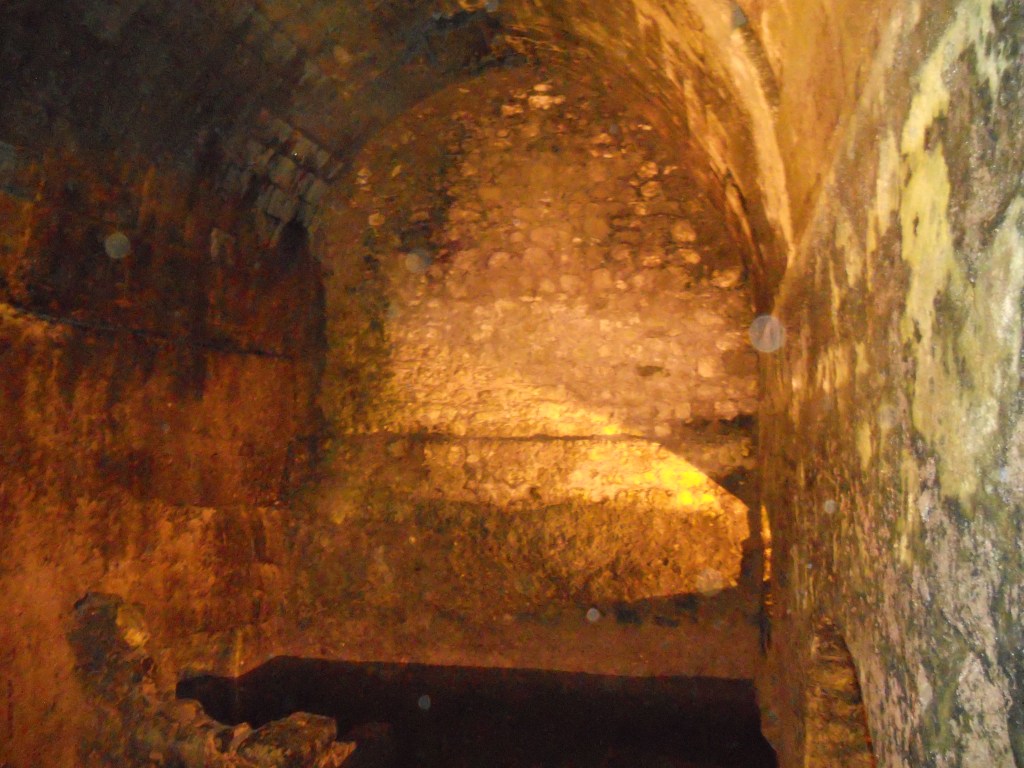
Four trips in four months (to sightsee in Israel, to visit relatives in Vancouver, BC, to attend a boarding school reunion in Dallas, TX, and to attend a 100th birthday party in Sebring, FL). The trips look like four steppingstones in a riverbank. I’ve stepped from one to the next till I’m standing on a fifth. I can’t go back in time except in my memory. I can only face forward, but the rushing water feels overwhelming, daunting. I’m frozen here. I don’t know what to do next.
I look up to see Jesus beckoning me to walk toward him. I hesitate. Will this be a step of faith like Indiana Jones, or like Peter stepping out of the boat to walk on water? The water is neither deep nor swift, so I’m not frightened. I’m just hesitant to get my clothes wet should I misstep.
And so I take off my shoes and socks and roll up my pantlegs. I want to look at my steppingstones one last time. I experienced them in haste, without slowing down to savor the scenery, and I missed something in my hurry to get to the last stone. I can’t release this jumble of images yet until I spend time with each one. Is it too late to do that or am I just supposed to move on and let it all go?
I can’t begin to list all the old and new friends I encountered on airplane rides and at each stop. I see strings attached to each person connected to my heart, and I’m overwhelmed with the memories. But I don’t have to hold them all, for I see that Jesus grasps each string. He can hand them back to me one at a time as needed to connect or reconnect. I also have photo albums and journals to contain the memories, but I need to record events as I remember them to offload them from my memory bank before they are lost. That will help.
As I continue to relive the precious memories, the stones begin to sink, including the one I’m standing on. When the water reaches ankle-height, I see a walkway to Jesus just below the surface. I run to Him, and He laughs and shouts, “Let’s dive in!” There’s no stopping now. I plunge into the water after Him. It’s peaceful in this pool, no longer a river. Or maybe it’s a pool between river points. I don’t know. I just know I want to stay here and not move on.
I glance at Jesus and see a look. Surely not worry, just more concern.
“What?” I query. ” What is it?”
“You know there’s more work to do, don’t you? There’s more river of life to go down. You can’t stay here forever.”
“I know,” I sigh. “I know.”
“Do you trust me?” He asks.
“Of course.”
“Will you follow me when it’s time to move on?”
“Of course,” I respond.
“Good. Now let’s enjoy this rest just a little bit longer. And when it’s time, I promise to equip you for the next part of the journey.”
My mind is fighting itself this morning as I try to study the Word. This summer is so jam packed with travel, ministry, company, goals, and family events, it’s hard to stay present. I wake up with to-do lists in my head, with plans, ideas, and needs taking up more prefrontal cortex space than I care to give it. Feeling a little overwhelmed, my foot starts jiggling again.
I’m currently listening to a fascinating book on brain research: The Organized Mind: Thinking Straight in the Age of Information Overload, by Daniel J. Levitin. The author addresses the neurological importance of proper sleep, the inability of the brain to focus on more than one thing at a time, how multitasking actually reduces effectiveness, and the role of memory. I just wish I could retain all this information. (Click here for a summary video of the book.)
I already practice many of the principles the author suggests, but I struggle sometimes getting into the flow (as he terms it). This is when our left brain stands still and we go into right-brain mode to write, paint, or create music. When I have a lot on my mind, it’s harder to stay there.
One of my takeaways from the book is that mindless daydreaming mode is actually very purposeful. We need it. It’s almost like REM sleep where our brain sorts and searches and organizes information. We need time to daydream and not fill our minds 100% with stimuli and entertainment. What is screen time doing to my brain if I don’t ever give it a rest? If it’s not the computer, it’s the phone. If it’s not the phone, it’s the TV or iPad. So, when I wake in the morning, it’s hard to stay focused on God. My mind is going crazy trying to keep up with my schedule.
Visual: I’m balancing on the top rung of a floor-to-ceiling library ladder, randomly grabbing books off the shelves. I want to read them all, but which book do I start next? Where should I focus? How do I cram a lifetime of goals into what’s left of my short life span? I need a system, a plan. I can’t possibly read them all, and I don’t want to waste my time. I want to organize my life in an overcrowded library.
Balance
Yesterday was one of those days when I’d stretched to my limit of emotional and psychological endurance. When I get unbalanced (people versus alone time, leisure versus work), I must make adjustments to return to equilibrium. There’s my part and there’s God’s part. When I bleed over into trying to do God’s job, I take on burdens that harm me. The battle may be the Lord’s, but I must do my part and take care of my body, feed myself spiritually, and make wise decisions.
I need to leave the library for a while and stop rushing, relax, and gain some perspective. I need to be okay with not meeting a goal or a deadline. So today I think I’ll skip some of my scheduled activities, go for a walk, clean up my e-mail inbox, and organize a closet. The library books will still be there when I return.