Fairness in the Future

Because of one man’s obedience (Abraham), God blessed future generations and individuals. They didn’t earn it or deserve it.

Jeremiah 29 records that, because of Shemaiah, a false prophet in Babylon, his offspring would also be punished. Actually, verse 32 implies he wouldn’t even have any offspring (but if he did, they wouldn’t ever get to see “the good that I will do to My people.”) His children would suffer for their father’s poor choices.

How blessed I am to have been born into a godly heritage. I only knew two grandparents, but both were godly men who loved Jesus. And though I never met them, I know my grandmas did too. I didn’t do anything to deserve this honor, but I am eternally grateful.

My husband did not experience the same blessing growing up, but he became the chosen one to stop the line of unbelief in his family. In God’s mercy, He gave him Halsey, his godfather, to encourage him in the right direction.

My choices affect future generations.

A 2023 Update. My children are blessed because of their heritage, and to their credit, now my grandchildren are being taught in the ways of the Lord. I pray for them daily to walk in the godly steps of their great-great grandparents.

How to Recognize a False Prophet

Journal 2009.

Poor Jeremiah. He prophesied for 23 years, right up to the Babylonian captivity. That’s a lot of doom and gloom. That’s a lot of ridicule and abuse and no positive response from the people. Was He a true prophet then?

There are several Scriptural guidelines for telling a true prophet from a false one, including if all his predictions come true.

But the prophet who prophesies peace will be recognized as one truly sent by the LORD only if his prediction comes true. (Jeremiah 28:9 NIV)

Jeremiah predicted 70 years of captivity, and it happened.

Hannaniah predicted 2 years and it didn’t happen.

Jeremiah predicted Hannaniah’s death, and it happened. So who was the true prophet?

God says false prophets do not stand in His council and do not hear and perceive and mark His words, but they SAY they hear. False prophets claim they have dreams and visions and even use God’s name. But it comes out of the deceit of their own hearts.

God did not say He doesn’t give dreams and visions. He does. But His words are like fire and like a hammer that breaks the rock into pieces (Jeremiah 23:28). So how would the people know which prophet was God’s mouthpiece? A God of peace sounded more appealing than a God of war. I may have been duped as well had I lived in Jeremiah’s day.

Finally, Jeremiah said a true prophet profits the people (23:30).

I think it takes discernment, spiritual maturity, and sometimes time to recognize and identify a false prophet. Deception is so . . . well . . . deceptive.

Lessons from Jeremiah 14-18

Journal 2009.

  • God is so creative! He knew the Israelites needed visuals to get His point across. I counted 83 of them by chapter 14 of Jeremiah. I process best with symbolic representations of my emotions, so I get it with Jeremiah. Why didn’t the Israelites? Because of the blindness, hardness, and stubbornness of their hearts.
  • In 14:11, God told Jeremiah NOT to pray for Israel—not for their good anyway! Astonishing! Even if they fasted, He said, He wouldn’t hear them. He wouldn’t accept their offerings either. That’s pretty bad!
  • Jeremiah said the prophets were predicting peace (14:13-14). God said, “I didn’t send them, command them or speak to them. Their words come from the deceit of their own minds.” Ouch!
  • In 15:1, Jeremiah pleaded with God to reconsider His judgment, and God said no, He’d made up His mind. Remember when both Moses and Samuel interceded for the people, and God refused to change His mind? He came to the end of His patience, tolerance, and kindness. This time, the rebellious son went too far, and God had to let him go. Lesson: Don’t rebel! There’s a time limit on God’s patience.
  • Jeremiah struggled with the call of God on his life (sometimes I do too), but he kept remembering God’s words, and God kept comforting and reassuring him (Chap. 15).
  • God named Manasseh as the reason for His wrath (15:4). One man, one ruler, can ruin it for an entire nation. Obviously, the people could have rebelled and refused to follow Manasseh in his wickedness (and maybe some did), but often it’s the case that as the leader goes, so goes the nation. (Be careful who I vote for . . .)
  • “You [Israel] keep going in reverse” (15:6). What a strong visual—quite a contrast to the Disney movie I recently watched (Meet the Robinsons) with the motto: Keep going forward. I don’t like it when I slide backward. God promises that He won’t let my foot slip, but if I deliberately turn around and head back down the mountain, He may let me go my own stubborn way—but, because I am His, He will put obstacles in my way (think Jonah’s whale and Balaam’s donkey) to urge me to start climbing again.
  • We often try to apply Jeremiah’s potter wheel metaphor (chapter 18) to our individual lives—and that’s okay if we’re sharing a devotional. But in this context, God was using it as a visual for what He intended to do to Israel (crush her and start over, using the same lump of clay) and to show Jeremiah that He had a right to do so because He is the Master Potter. (Yes, I sometimes struggle with God’s sovereignty.)

What Makes Me Spiritual?

Journal 2009.

As a literalist teen, trying to obey the Bible, I felt unspiritual because I wasn’t visiting orphans and widows like James instructed.

Pure religion and undefiled before God and the Father is this, To visit the fatherless and widows in their affliction.”  James 1:27 (KJV)

I knew no orphans and had contact with only one widow (who seemed more well off than I was). And I conveniently ignored the rest of the verse: “and to keep himself unspotted from the world.”

I think James may have been quoting the prophet Jeremiah who said bad people don’t “judge and plead with justice in the cause of the fatherless and defend the rights of the needy” (Jeremiah 5:28). But his instructions are broader than that. Jeremiah adds:

IF you:

  • Practice justice between neighbors
  • Don’t oppress the alien, orphan, or widow
  • Don’t shed innocent blood
  • Don’t walk after other gods to your own ruin

THEN you can dwell in the land. (7:5 NASB)

This list of instructions for piety included more than looking after widows and orphans. Different things were required for God’s blessing. And in verse 9 he added keeping the 10 commandments.

A 2023 Update. I understand, now, that spirituality is far more than completing a specific list. It’s a matter of the heart and motives. And I won’t even go there with the promised consequence of keeping this list means I’m going to “dwell in the [promised] land” when I happen to live in America. I need not feel guilty if I don’t specifically visit widows and orphans, but I can minister to any who are needy in my community or overseas. Here are some organizations I recommend.

Widows: Widowconnection.com

Orphans: Hopegivers International

Needy: Compassion International

Photo by MART PRODUCTION on Pexels.com

God’s Instructions

Journal 2009.

When I give someone instructions (a recipe, directions to my house, how to send a file in an email) [yes, this was written a few years ago!] I give clear, precise information. If I don’t, the food may be tasteless; the person will end up at the wrong destination; I won’t be able to open the file.

When God gives instructions, He is the expert. He knows the intended outcome as well as the steps to achieve that goal. His instructions are clear and precise. When God speaks, we better listen . . . and obey to the letter.

God said to Jeremiah (26:2):

  1. Stand in the court of the Lord’s house (where and with what posture).
  2. Speak to all the cities of Judah that come to worship there (what to do and to whom).
  3. Speak all the words that I command you to speak; diminish not a word (what to say—precisely, fully, accurately).

So . . . Jeremiah obeyed. But AFTER he finished speaking, the people, priests, and prophets seized him and threatened death. Obedience does not guarantee comfortable results!

Jeremiah’s response, however, is most interesting and gratifying. He had already grappled with the fear of the results of his actions.

Be assured, however, that if you put me to death, you will bring the guilt of innocent blood on yourselves and on this city and on those who live in it, for in truth the LORD has sent me to you to speak all these words in your hearing.” Jeremiah 26:15 (NIV)

I have learned the hard way that disobedience to God’s clear instructions brings only heartache. I would have saved myself a boatload of angst had I obeyed the first time!

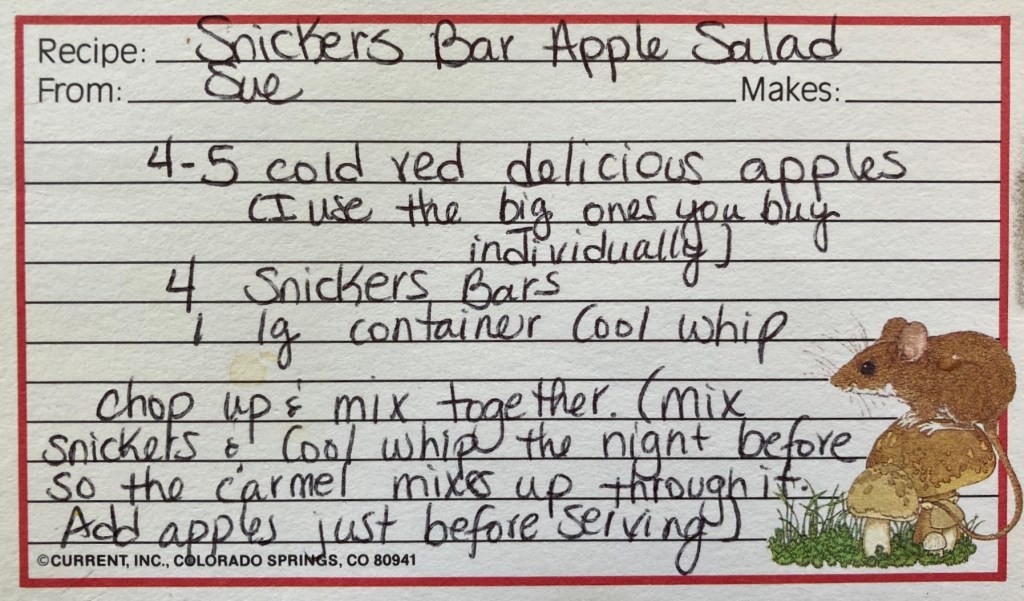
There is on-going debate in our family over whether this is a salad or a dessert.

Is God Unfair?

Why do I struggle with the concept that God has the right to do as He pleases with His creation? I want fairness, and it doesn’t FEEL fair for God to choose one person for special purposes and another for common use.

Does not the potter have the right to make out of the same lump of clay some pottery for special purposes and some for common use? (Romans 9:21 NIV)

With my great power and outstretched arm I made the earth and its people and the animals that are on it, and I give it to anyone I please. (Jeremiah 27:5 NIV Emphasis added)

I can view my story from an egocentric viewpoint or a theocentric one. I can read the story of Pinocchio through his eyes or through the Woodcarver’s who created Pinocchio in love for a relationship. The only safe place for Pinocchio was in his father’s house and under his creator’s care. He could have had greater adventures, in safety, had he stayed with Geppetto, but he ran away. His rebellion resulted in grief, but then he found redemption when he returned to his maker.

When I think “birth” instead of “creation,” I have a paradigm shift in my response to “unfair.” I am a baby, then a child, adolescent, and adult in God’s kingdom. But even as an adult, I never outgrow the need to be loved and cared for. The danger as an adult is to think I’m self-sufficient.

Photo by CARLOSCRUZ ARTEGRAFIA on Pexels.com

Fervent Prayer

Journal 2009.

I can name five people right now who are in crisis emotionally. I am not indifferent to their pain; I am concerned and praying for them. But I wonder at my emotional detachment from these good friends. I realize that with the healing in my own heart, I’m not jerked around so much by other people’s issues. I’m sure a doctor goes through this process having to take care of sick bodies without getting too emotionally distracted.

The prophet Jeremiah said God’s burden on his heart to prophecy was like a fire in his soul if he didn’t speak. David also had a fire in his soul—but it was driven by guilt. The key, I think, is recognizing the difference between the Holy Spirit’s burden on my soul to pray for someone and my own triggers that reveal insecurities and fears.

James said, “The effectual fervent prayer of a righteous man availeth much” (5:16 KJV). Can prayer be effective if emotions aren’t involved? “Fervent prayer” implies strong emotion. When I’m in crisis, I have strong emotions, and my prayers are deep. But what if I’m not feeling anything? Are my prayers just as effective? I say yes—if my motives are pure and my heart is right before God.

When I pray with someone who is demonized, I don’t have to raise my voice, wrestle, be stern, or give in to fear. The power is not in my desire to see someone delivered and getting all excited emotionally. The power is in Jesus’ Name.

So if I’m praying for someone, interceding on their behalf, I don’t have to drum up some emotion to get God’s attention. Remember the prophets of Baal who had strong emotion, pleading, crying out, jumping around, and cutting themselves? But Elijah? He just appealed to the God who made the fire and the rocks and rain. The power is in the Person. Using God’s Name means I’m accessing the power of the universe. Therefore, be careful what I ask for!

Sweet Words

Journal 2009.

“Your words were found and I ate them, and Your Word was to me a joy and the rejoicing of my heart; for I am called by Your name, O Lord, God of Hosts.” (Jeremiah15:16)

Thought #1. What did Jeremiah mean by eating God’s words? I think about the word biblio-idolatry (the worship of the Bible). This is the person who studies every word, shade of meaning, and explanation but never falls in love with the author (The Word Himself). It’s the person who can’t let go of the literal to read in context. Or the one who boasts in the ability to find any verse, quote any passage. They’ve fallen in love with the beauty of the language, or they use verses to beat people over the head.

That was not the case with Jeremiah. He had a relationship with the author of the words, and therefore the words were sweet to him. When my husband says to me, “I love you,” I cherish his words. If an acquaintance says, “I love you” because I happened to be kind to her, the words do not hold the same impact as someone I deeply cherish. I can thank her politely and then flick them away. I don’t “eat her words and enjoy their sweetness” like I do when Scott says them.

Thought #2. What does it mean “I am called by Your Name”? My maiden name was assigned by default from my father, and I inherited my last name by marriage. My given middle name, however, belongs to my paternal grandmother. I am “called by my grandmother’s name” means I’m associated with her. And though I never knew her, I want to “do her proud,” as Grandpa would say. But to be called by GOD’S name? Wow! Here’s the relationship as I see it:

He is King                   I am a Princess

Lord                            Indentured servant

Messiah                       Saved one

Shepherd                     Sheep

Truth-giver                  Truth-receiver

Creator                        Created

Redeemer                    Redeemed one

Master                         Slave

Comforter                   Comforted one

Counselor                    Counselee

Father                          Daughter

Prince of Peace           Peace-receiver

Holy One                    Purified one

Savior                          Saved

Vine                            Branches

Door                            Protected one

Way                             Traveler

Relationship with Adult Children

From my 2009 Journal

I’m still learning what is appropriate and what isn’t in relationship with an adult child under our roof. Is it reasonable to expect our daughter to pick up after herself in family living areas? To help with the dishes? With cooking? With cleaning the house? And if she chooses not to, how do I approach the subject with her? I realize communication at this point can be tricky. My expectations and desires for a neat and tidy house must be subservient to maintaining relationship. Therefore, I am far more tolerant of mess than I would be if I were still trying to train her.

Child-training was like using all my strength to pull three girls in a wagon who are pushing and shoving and fighting each other. If I insisted they get out of the wagon occasionally to walk on their own or help push a little, they whined, “We’re too tired!” (Well, so are the parents!)

The trouble is when children get comfortable in the wagon, they expect you to bring their food to them and clean their play area even though they’re old enough to clean it themselves, and you trip over the toys, and have to clean around them. Where did I go wrong in my parenting that my training didn’t stick?

Now that they’re grown and living with us, it’s time to drop the wagon handle. The challenge is not to become resentful or nagging when they don’t join me in household chores.

While living in a college dorm, our one daughter discovered firsthand what it felt like to have a roommate who never cleaned up after herself in the kitchen. So when she came home, I was delighted to hear of her intentions to help out more with the dishes. So if she’s too tired to help out for a couple days, do I hold her to her good intentions? Do I feel resentful when I return home to find breakfast dishes still in the sink? So she slept late that day, worked the entire day, and ran out of energy before the work was done after supper . . . (welcome to the grownup world, kiddo!) I do not fault her, but I do have to figure out what is an appropriate response.

Jesus says, “Whistle while you work.” Praise Him that I have two arms and two hands. Praise Him that I’m not in a wheelchair and unable to stand at the sink. Change my attitude and enjoy the brief time I have with my daughter. She’ll soon be gone, and I’ll miss her.

A 2023 Update. Now that my girls have homes of their own, it’s fun to watch them struggle through the challenges of training rambunctious boys to put away their clothes or help in the kitchen. And when they come to Grandma’s house for a visit, chaos reigns for a few hours or days and I love them all. But when they go, tidy returns. I guess you can’t have it both ways!

Returning to One’s Roots

Returning to One’s Roots

Journal 2009

Returning to one’s roots can be emotionally charged, therapeutic, exhilarating, liberating, or terrifying, depending on your memories. When my sister suggested we revisit our old haunts in Elkhart, Indiana, where we spent our 1965-66 furlough year, I readily agreed. It was the last time we ever lived together. I was in Grade 6, and my sister in Grade 11. My parents and I returned there in 1970, and I stayed an extra year when they left me for my senior year of high school to return to the mission field. Both my siblings were on their own by then. Here’s an excerpt from my journal:

It’s the middle of the night and my thoughts are ricocheting so fast I can’t sleep. How does one record thoughts, emotions, impressions, and for whose benefit? Where to begin? These are MY memories. With whom do I share them? When I take a photo of our old house, my immediate thought is I want to send it to my mom [who is deceased]. Thankfully, I’m experiencing this trip with my sister, which is hugely satisfying. But I record them for myself so that in my old age I have somewhere to refresh and keep the memories alive. I don’t share these with my children because they weren’t there. But maybe someday they’ll visit some spot on earth and stand there and say, “My mother’s spirit was here.”

I stand outside our parsonage home on Second Street and “watch” my sixth-grade-self playing Jingle Jump on the sidewalk. I see me climbing the tree in the front yard and climbing out my bedroom window onto the roof. Playing with our dog Duke and ironing in front of the TV in the basement. Marimba lessons and finding marbles in the heat register in my brother’s bedroom and slip-sliding in the oversized bathtub and buying toothpaste because I saw it advertised on TV. My huge empty bedroom upstairs with my sister on the other side. I learned to use the telephone. Snapshots in my mind of packing for our summer trip across the USA. My mom was sick with Hodgkin’s that year, and we complained of Dad’s cooking. This is my story, my history. I’ve relived it in my mind many times.

The neighborhood is seedy now and multi-racial. The neighbor across the street came over to chat and told us the house is in foreclosure. I want so much to see inside, but it’s unsafe, he said.

My best friend Kathy lived at the end of Pottawatomi Street, and we walked the six blocks to school each day together, past a Mom-and-Pop grocery store where we bought wax pop bottles or wax lips filled with sweet liquid and candy cigarettes. We formed the TGTG club (The Glued Together Girls). She loved to stay overnight at our house because her daddy was raping her at hers, and I was too ignorant to know. She taught me to make snow angels and play king of the mountain. We played hundreds of games of Yahtzee, biked down to McDonald’s in the winter for a warm bite of hamburger and French fries.

More memories flooded in when we visited the old Grace Bible Church Tabernacle who had showered us furloughing missionaries with love and Tupperware. We met the current pastor who has a ministry to inner city dwellers. Then on to Central High School where I graduated with 900 other seniors—a huge culture shock to this African girl. I wonder what memories surfaced for my sister as we visited her high school and the home where she stayed for her senior year.

My former Samuel Strong School building now houses a business. So many memories. Open-stall bathrooms in the basement, being teased for being the teacher’s pet, volleyball in the low-ceilinged gym. Declining to be a crossing guard because I didn’t know what that was. Skating on ice on the pavement for the first time. Being teased for gifting dandelions to the teacher (Who knew they were weeds!) Kathy destroying a page from Playboy magazine she found on the sidewalk, and I had no clue what it was. Kathy wondering how babies got fed, and she was surprised that I knew (well, duh—I watched mothers nursing all the time in Africa, including in church) and me surprised that she didn’t know this basic fact of life.

We drove to the house where we lived in 1970, but though I saw the curtains moving, no one answered the door when I knocked. More memories sling their way across my brain. When we visited the house where I lived with an older couple in my senior year, the current owners invited me in. Too many painful memories to record from that year. But revisit them I must if I want to heal from them. Perhaps another day. . .

A 2023 Update. Physically revisiting a site may trigger emotions, but it’s worth it. I understand the power of letting go of the past, and over the years, I have revisited each of those memories and found healing and release. This summer our family is planning a trip back to Michigan where we raised our girls. New memories will soon overlay old ones as they share with their husbands and children what it was like where they grew up. Let the fun begin!