Thunderstorms Over Your Head

Journal 2005

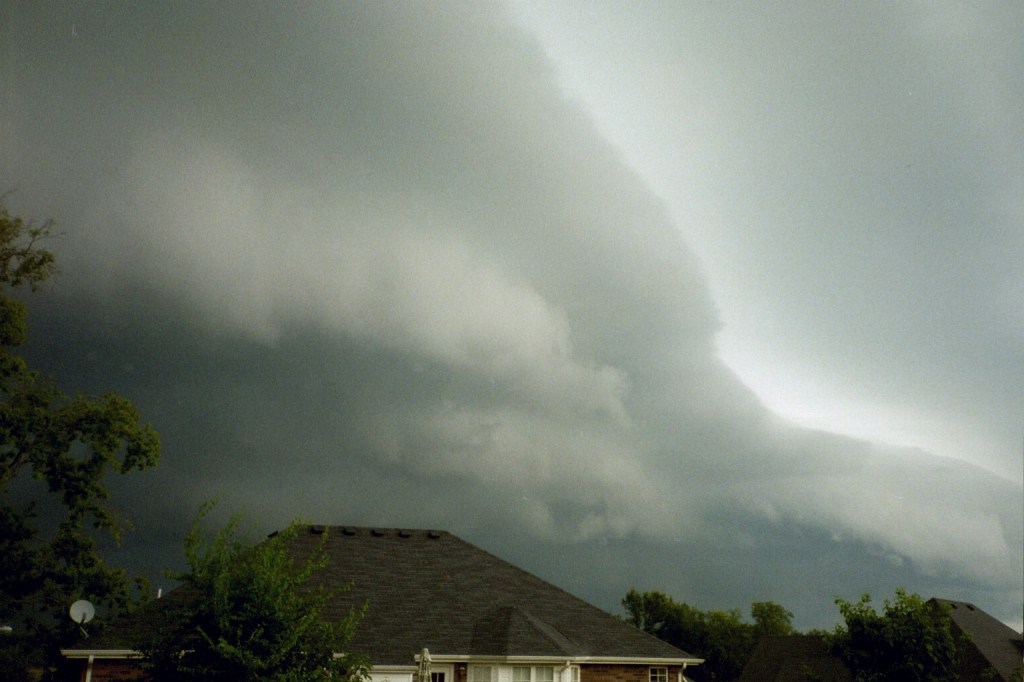
Being in the presence of people in a bad mood is like standing under their rain cloud. It’s their choice to stay there getting drenched, and it’s their choice to grumble and complain because they’re cold and miserable. But what is that to me? I prefer not to get wet (or worse, struck by lightning), and the easiest solution is to just walk away.

But what if I want to help that person? Or what if I’m in a love relationship and choose not to retreat? Am I willing to get wet? Take the chance of getting zapped?

Jesus says: “I am in the eye of the storm. Rest there with Me.” And the swirling wind about me will move people’s rain away so that I can be near them. I don’t have to be affected by their weather patterns.

Lord, keep me in the center of You.

Lovingkindness

Journal 2005

The word lovingkindness intrigues me. “Loving” I understand. “Kindness” is obvious. But why the two together? Aren’t they mutual? If you’re loving, you’ll be kind; if you’re kind, you’ll be loving. How can you have one without the other? How is lovingkindness different from the definition of loving or kindness? I turned to Webster for help.

Loving: affectionate

Kindness: friendly, generous, warm-hearted, sympathy, understanding, humane, considerate, forbearing, tolerant, generous, good-hearted, tender, considerate

Lovingkindness: tender and benevolent affections

How do I wrap my mind and understanding around this attribute when I read of God’s judgment, fury, and anger toward the rebellious? How do I become the object or recipient of His affection? Can I really earn it? We’re taught: “No, it’s all one-sided. We love Him because He first loved us.” Without His initiation, we would not respond to Him.

But my part is necessary too. It’s not just one-sided. It’s not that I earn His love, but that I respond to His. I don’t turn away from, but toward, His love. He has offered me relationship. And when I embrace it and accept it, He responds back in relationship—and lovingkindness.

When someone spurns God’s love, He is patient, kind, and tender. He continues to woo and invite. But at some point (God knows the heart and the intents), He must exact consequences or punishment or judgment. That is His right.

If someone spurns the love I offer, I can leave him or her in God’s hands and turn away. But when someone spurns God’s love, knowing the consequences thereof, they have no one to blame but their own choices.

I can experience all of God’s lovingkindness or benevolence. It’s there for my heart. But I have to do my part and turn toward the warmth and light, not away from it.

What Would Paul Say?

Journal 2005

I have been taught all my life that we are to believe and follow every word written in the Bible. But we are inconsistent. We decide which rules and principles we want to follow and then gloss over the rest. (See The Blue Parakeet by Scot McKnight.) And if we question some portion of another person’s pet doctrine or rule, we’re accused of going against the Bible.

There’s a reason, obviously, why the Apostle Paul’s letters are included in the canon, but one must keep in mind that he wrote to specific individuals or churches about specific issues in the context of their culture. How different would these letters read if he were alive today and wrote to the American church or the Korean or Ethiopian or Brazilian? Different needs, different pastors, different times, different issues.

Would Paul, for example, still address the role of women in the church? Would he still preach, “Women, don’t usurp authority over men,” or would he instruct, “Exercise your God-given gifts, and don’t hinder each other’s spiritual growth”?

Would he still say, “Wives, submit to your husbands,” or would he say, “Be mutually respectful of each other”?

How would he address the subject of clothing, hairstyles, and modesty? Would he tailor his words to the country he’s writing to?

All the instructions regarding the widow list don’t apply so much to us in our U.S. culture where widows have more resources. Perhaps Paul would preach about ministering to the homeless instead.

Would Paul address employee-boss issues in the USA instead of slave-master dynamics?

Would he still need to give instructions on the use of spiritual gifts?

A 2022 Update. How politically correct do you think he’d be? I suspect Paul would not mince words to the churches about his opinions on issues he didn’t address in the first century, such as abortion, euthanasia, cloning, transgender choices, and gay marriage.

A Journey into Victorious Praying

I learned to pray as a toddler at my father’s knee. Twice daily, our family read the Bible together and took turns praying—my parents in King James English, which I attempted to emulate. I remember the first time I returned home from college and tentatively prayed at family devotions, dropping the “thees” and “thous” of my childhood. I wondered if my parents would approve of my casual intimacy with the Creator.

Over the years I’ve read numerous books on prayer, including one that examined every prayer in the Bible. One book stood out to me more than all the others, however, because it came from the humble heart of someone who did more than study prayer. He practiced it. Here are some of my favorite quotes from A Journey into Victorious Praying, by Bill Thrasher. I highly recommend you get your own copy and begin your journey into the mysteries of the relationship with the Divine.

No one ever just decides to be a prayer warrior. God does something in a life that makes the person sense this need of God (p. 29).

I think this is true. My deepest prayers came at a time of my deepest need.

If you will take your temptations and turn them into conversations with God, you will learn to talk to God from your heart. . . . Temptations are an appeal to meet righteous needs in an unrighteous way to meet the longing your temptation has stirred (p. 30).

Again, this rings true to my experience. I could write a book on this one!

Martin Luther said, “Prayer is not a performance but climbing up to the heart of God” (p. 43).

For years, prayer for me was merely a checklist of spiritual disciplines. Relationship sheds the “shoulds.”

True spiritual fervency and compassion is a work of the Holy Spirit. We cannot work this up on our own strength (p. 44).

I tried my own strength. It didn’t work. I was told I should have compassion for the lost, and so, feeling guilty, I tried to drum up some feelings. Instead, God gave me compassion for those who hurt.

True prayer starts with God and the prayer burden He places on our hearts (p. 52). We aren’t called to pray for every request with the same intensity. God will not give any of us every prayer burden (p. 54).

Whew! My soul relaxes with these thoughts. Though I often pray for our leaders in government, for example, they are not a burden on my heart. Give me the name of an MK who’s hurting, however, and immediately my lips move in supplication.

I ask the Lord to bring to mind what He wants me to pray for. Sometimes when I ask, nothing comes to mind. Maybe He’s just calling me to silence (p. 55).

Once more, the “shoulds” in my head dissolve. I like contemplative silence.

Ask God to deliver you from anything that is hindering you from praying your heart to God.

It was only after relinquishing my tight self-control, my unforgiving heart, my anger, and my bitterness that I found true peace, resting in God’s presence. He always feels near now instead of far away.

Thrasher suggests that God is capable of taking my feeble prayer and interpreting my desires and deep longings and motivations.

Sometimes coming up with the right words feels like a chore. Sometimes I pray with pictures, sometimes without words at all. He knows my heart.

When we pray a specific prayer and God does not grant it, “could it be that it is because God is desiring to grant you an even deeper longing and desire of your heart?” (p. 60).

Ex:  Augustine, a leader in the early church, lived a sensual lifestyle in his early years. When he planned to go to Rome, his mother prayed, “O Lord, do not let him go to Rome because he will only get into further debauchery.” God did let him go to Rome. But it was there that he was converted. “The Spirit of God pled the deeper desire of the mother for his spiritual well-being, and God answered her heart.”

This story has stayed with me, reminding me that God is bigger than my feeble attempts at prayer.

You don’t “spend” time with God. You “invest” it. Time alone with Him can be one of the greatest time savers of your life (p. 114).

How true. Going to God first with a concern and working through my angst before speaking to someone has saved me hours of mop-up after a wrong response.

Prayer is not attempting to get our will done in heaven but His will done on earth (p.171).

I would love to hear about your experiences in your journey to victorious praying.

On the Edge of a Cliff

Journal 2005

Going for an Oral Interpretation major in college, I once performed a reading with a powerful visual about standing atop a cliff, desperately trying to stop people from going over the edge (presumably to hell). The point was to urge believers to evangelize. I even know one missionary who went overseas because of this visual. But all I ever felt was guilt, helplessness, and powerlessness.

As I sit with my emotions, I notice there are danger signs at the edge of the cliff. In fact, there are warning signs before the danger signs. I’m praying desperately for people to open their eyes and take notice, and if I take my eyes off the scene, I’ll miss someone. Still I feel helpless. I have to DO something. If I sit down to rest, I’ll get stampeded! Where do responsibility and trust intersect?

Jesus says, “Back away from the edge of the cliff, find a bench, sit there and wait. Offer cold drinks and sandwiches to the weary travelers. Invite; don’t panic. Invite them to rest with me and talk. Tell them about the cliff and encourage them to share the news with the other travelers on their path. And if while I’m talking to one, and another passes by, I can just wave and smile. And if I need to sleep for a while, I can ask Jesus (or an angel) to tap me on the shoulder when I need to wake up and pay attention. Whew! That feels better.

Negative Energy

Journal 2005. I am an introvert who knows I need people, but some people emit negative energy like a giant, pulsating sore thumb, throbbing like a plucked low bass guitar string.

I remember a former classmate whose aura left little barbs, fingers of electric shock that kept poking and jabbing me.

When I asked for God’s help, He gave me an enveloping coat of Teflon—not to keep the person out, but so I could get close to the person without getting zapped. The droning noise got mingled with a heavenly symphony of praise, and together we looked and listened for other sounds around us. I guess I needed another focus other than myself.

Photo by Pixabay on Pexels.com

Thoughts on Embarrassment

Journal 2005

As I approached a group of friends gathered around my kitchen table, I tripped and fell to my knees. Red-faced, I gathered my dignity and tried to laugh it off. But why should I feel embarrassed, I thought?

When I’m embarrassed, I tend to hide behind a mask, cover with a nervous laugh, or pretend I don’t care.

Embarrassment is often rooted in pride: What are they thinking of me?

Embarrassment may be a result of feeling exposed and vulnerable. This is especially true for someone who’s molested.

Embarrassment can also carry shame messages: I am less than, I am clumsy, I can’t do anything right.

Can I be embarrassed FOR someone else? For example, if I watch someone who is ignorant of cultural mores, I may assume they’re feeling (or should be feeling) embarrassment for their actions. In realty, what I feel is a reflection of my own embarrassment: If I were in their shoes, I’d feel embarrassed.

I decided my reaction to my stumbling foot was a simple case of pride and let it go. My friends were more than solicitous.

Photo by furkanfdemir on Pexels.com

Thoughts on Luke 9-10

Journal 2005

Jesus’ disciples came across someone who was expelling demons using Jesus’ name, and they told the man to stop. But Jesus said, “Don’t stop him. If he’s not an enemy, he’s an ally” (Luke 9).

I confess I am guilty of being critical of other Christians with whom I disagree. Have I hindered the work of God? When does it become a work of Satan? And how do we know the difference?

Later, on their way to Jerusalem, Jesus and the disciples were going to spend the night in Samaria, but when the Samaritans found out they were traveling to Jerusalem, they refused hospitality. James’ and John’s immediate response was: Shall we call lightning down on them? (How creative! Or had they seen Jesus do this at some point?) But Jesus said, “No,” and they continued to another village.

Somedays I’d like to call down lightning on someone! But that’s not my prerogative. Revenge belongs to God in His own time. God’s patience and grace are longsuffering.

When Jesus sent out the 70 (by now the group had grown—it wasn’t just the 12 He was preparing), He told them to travel light—just as He had told the 12. But also—to get out if they were not well received and go where they were welcomed and wanted.

How far do we take this model? Missionaries often enter hostile environments. Should they be following Christ’s words to the 70, or were His instructions for a specific time and place? I know many stories of triumph where missionaries pushed through and stayed where they were unwanted, and God eventually blessed their persistence. Were they there at God’s calling or their own inner voice? Who am I to judge? I just know I must follow the dictates of the Holy Spirit in my own heart and let all others answer to God themselves. Personally, if I encounter opposition to an attempt to advance the kingdom of God, it makes sense to me to move on to an open door instead of continually knocking on a closed and bolted one.

Your thoughts?

God’s Extravagance

From my 2009 Journal.

My husband Scott and I were out of town visiting our middle daughter who was pregnant with our first grandbaby. We needed some milk and a vegetable for dinner, so we sent Scott to the grocery store for these two items. Ladies, you can already predict what happened . . . He returned with three bags of newborn diapers (not needed for another five months), a box of cereal, some salad dressing (both of which we already had on hand, but he didn’t know it), three bags of cookies, the milk, a veggie, and some tea.

I started to grouse about his overkill when the Lord struck me with this thought: “This is like Me—an over-abundant, extravagant, generous, over-flowing, more-than-you-need kind of God. Do not spurn generosity.”

Thank You, Lord, for my generous husband.

Using those diapers 5 months later

Profanity

Journal 2005

Recently a friend on Facebook used a four-letter word in her post, and I’m disappointed in the direction this young person has taken in life. I know she knows God, but her activities don’t match my understanding of biblical mandates. It grieves my heart for the woman she’s become when I knew her once as an innocent child. What seed of disappointment, pride, rebellion, hurt, or emptiness got planted in her heart and when? I’m not responsible for her choices, but her choice today impacted my eyes, and the impurity infiltrated my mind.

I was raised with strict rules about dancing, smoking, movie-going, and card-playing. Never once did my parents curse, drink alcohol, or travel on Sunday. As I’ve grown in my faith, I’ve had to decide which rules I want to shed and which I want to keep. I can happily play games with cards, go to movies, or golf with my husband on a Sunday afternoon, but I still seem to be quite sensitive to profanity.

And so I struggle to get that four-letter word out of my head. It’s like trying not to see a pink elephant by saying, “Don’t think of pink elephants”! I need a God-miracle to break the bond with it. I’ve tried every trick, tip, and tool I know, and nothing works. I’ve tried bond-breaking in memories and images, prayers against curses, repentance, forgiveness, praise, and prayer for purity for self and for others.

Forgiveness—this word jumps out at me. Why am I reluctant to pursue this? Why do I need to forgive her? Has she done me wrong? She doesn’t even know she’s impacted my heart and mind, and I’m sure if she knew, she wouldn’t care. I am not her judge . . . and that thought helps. I can forgive her. Apparently, I was standing in the judge’s seat, and that position is not mine, but God’s. And with that, I can let the stuck word melt away in my brain.

A 2022 Update. I would dance if I could, and I enjoy an occasional sip of wine, but I still choose not to add profanity to my vocabulary. I thank my parents for the example they set.

Photo by Liliana Drew on Pexels.com