From my 2012 Journal. When I was growing up, the adults in my life defined worldly as doing anything that looked like you might fit into or embrace the culture around you:
Wearing certain clothing (the list might include too short, too long, too revealing, too flashy, pants vs skirts)
Going to a bar / drinking alcohol / smoking / drugs
Facial hair on men / short hair on women
Going to the movies (or the pool hall or the bowling alley)
Wearing too much makeup (especially red lipstick) or jewelry
And, of course, dancing!
So I was surprised when I read that the Apostle Paul defined worldliness not with outward-appearance restrictors but as “jealousy and quarreling among yourselves.”
You are still worldly. For since there is jealousy and quarreling among you, are you not worldly? Are you not acting like mere humans? (I Corinthians 3:3)
Whom should I believe . . . ? Perhaps those adults in my life were more worldly than they cared to admit!
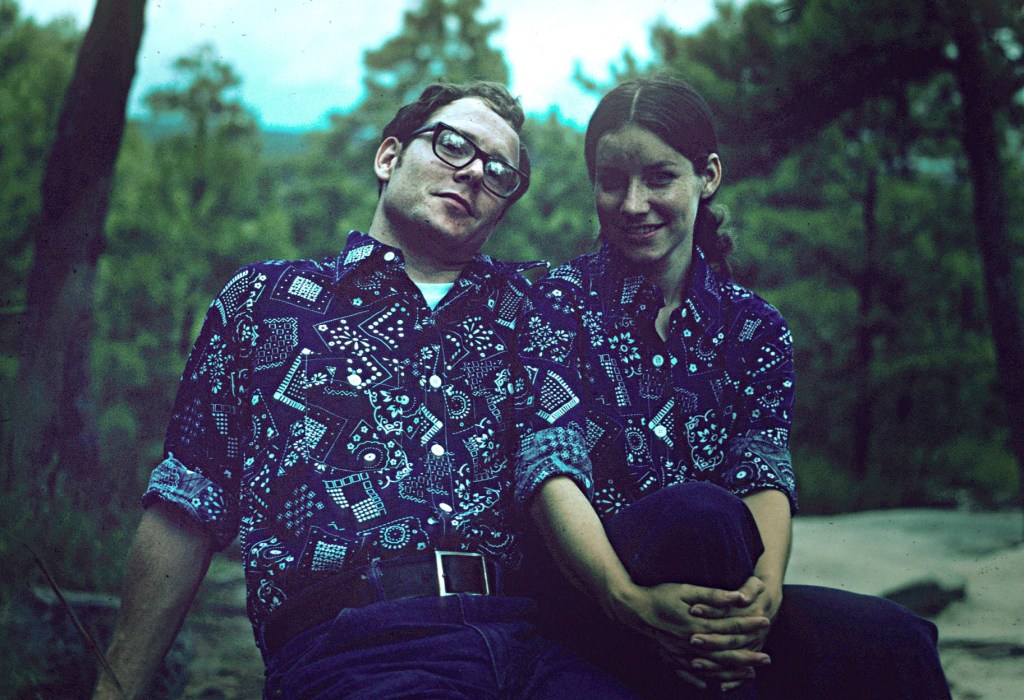
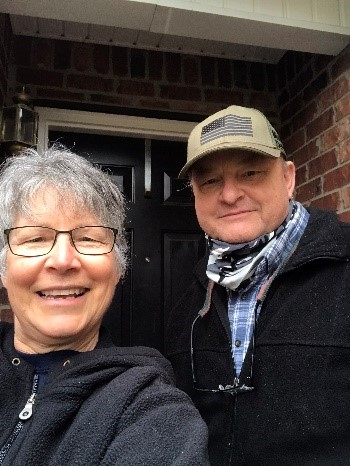
Scott and I, young and in love, and apparently not caring about outward appearance!
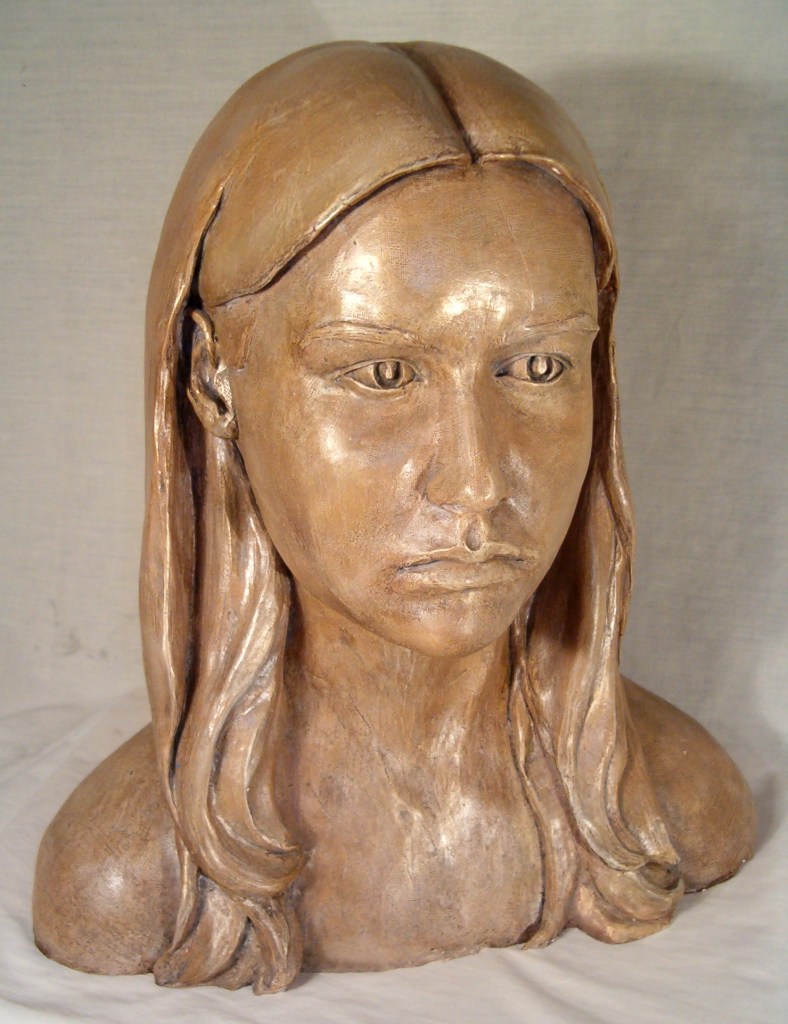
From my 2012 Journal. We tend to focus on different things at different seasons of our lives. For example, when our daughter Cindy took a course in human anatomy for her degree in sculpture, she couldn’t help but notice the shapes of different people’s noses, eyes, and hairlines. As a young mom now, I suspect she’s focusing more on toddler behavior.
Cynthia’s self-bust
I, on the other hand, learned to critique a speaker’s vocal quality and body language for my oral interpretation degree. Perhaps that’s what kicked into high gear last night when I attended an evening church service. I found myself distracted by what I observed on stage. The words to a song splashed onto the screen, the worship leaders stepped up to the front in unison, each dressed to perfection—except that I think one is too perfect—I wonder what that rigidity looks like in her daily life?One dresses fashionably, I muse, but the fashion doesn’t suit her. Another is not petite enough. (What?! I just critiqued “the perfect one” as being too petite!) Arrggh! What’s wrong with my mind? I’m noticing the outward appearance, but inwardly, I’m critiquing: too perfect, too immodest, wounded, relaxed, etc.
I’m not God, and I can’t see into another person’s heart, so where do I come off having the right to judge and critique someone else’s inner soul? Yes, the externals give clues to the internals and, because of my counselor’s training, I’m getting better at noticing. But I don’t like the consequences. It’s distracting to my focus on worship. I’m not these people’s judge . . . or have I become one? When did I take on this role, and how do I stop it? It’s one thing to notice; it’s another to critique and then to judge.
So why do I do it? I think to myself, This person needs fixing! Yikes! What an ugly thought! That’s God’s job, not mine.
What if I focused on creativity and beauty instead of flaws? What if I celebrated our differences and our choices instead of our motives? Celebrated the colors on stage. Observed the style of clothing from a designer’s eye, appreciating the variety of shapes and sizes and textures rather than as a critique of a person’s character. I need to separate the physical from the internal.
So when does assessment turn into judgmentalism? Or pride? Or contempt? Or pity? Or concern? Or compassion? Have I created a standard in my mind for right and wrong that is different from God’s standard? God’s measuring stick is absolute (don’t lie, hate, lust, covet). My standard is a moving target based on cultural norms, a person’s age, historical time periods, etc.
And so I begin by stating an observation regarding externals:
She’s large-boned / He’s shorter than average
She wears high necklines / she has a plunging neckline
She has 4 visible tattoos / he has none
She wears tight-fitting jeans / he wears saggy pants
He has shoulder-length hair / she has short, spiky hair
It becomes an assessment when I draw plausible conclusions based on past experience or training. The assessment is not wrong IF I acknowledge that it is an educated guess: it could be that . . . I wonder if . . . most people like this are. . . . But concluding (without knowledge) what’s in a person’s heart is presumptuous. For example:
She’s too skinny / plump because she’s on weight-gaining drugs, she was abused as a child, she has no self-discipline, she has a food disorder, etc.
She shows cleavage because she wants to attract men’s attention, she has a “wardrobe malfunction,” she grew up in an Africa village where it’s culturally acceptable, etc.
She has tattoos because she wants to fit in with her peers, because she wants to permanently remember an event, because she’s rebelling against parental restrictions, etc.
And so on and so forth.
This exercise of the mind morphs into sinful pride (The Elder Brother syndrome) when I begin to compare myself to another person and indulge in feelings of superiority: I would never do that. . . I’m better than he/she. How sick is that!
I think about Zacchaeus the tax collector. How would I have judged him I wonder . . . a short, fat, greedy, mean, traitorous man? But Jesus sees into his repentant, hurting heart and begins a love relationship with him.
Visual: I see mobs of people milling around. Some are blind, others are crippled, and many are wearing arms in slings. Others hide behind facial masks, believing they’re safer that way; but their restricted vision prevents them from seeing the truth. They’re all dressed in filthy rags, covering painful sores. A pitiful lot.
And then I watch as a drop of Living Water falls gently onto one person. Like a drop of soap in a dishpan with oil, the ripples spread out and a path of clean is created. And more drops fall, and the people turn their faces skyward. Blinded eyes see, slings fall off, and crippled legs are straightened. But some are frightened by the foreign matter, and they run from the moisture . . . because water and dirt create mud streaks on their face, and they feel self-conscious.
And so I begin to let go of my judgmentalism. I now see their fear instead of their sin; their timidity instead of their stubbornness.
The rain is gentle and soothing and inviting. I allow myself to be bathed in it, cleansed, forgiven. I sense the sweet wooing of the Savior. And now instead of judgment, I feel sorrow for those who struggle, for I am one of them.
Suddenly the focus of my prayers change. I don’t pray for the person to have a change of heart; I pray for God’s mercy to let a drop of His Spirit fall on him/her. I appeal to God to pour out His love and woo the stubborn, judgmental heart—starting with mine.
Man looks on the outward appearance, but God looks on the heart (I Samuel 16:7).
The shrewd man saw trouble and took cover; the simple kept going and paid the penalty (Proverbs 22:3).
From my 2012 Journal. I’ve often thought about how the Psalmist David fled from King Saul; but the 3 young captives Shadrach, Meshach, and Abednego stayed put and refused to bow before an idol at the king’s mandate. Corrie ten Boom hid Jews in Holland during Hitler’s regime, while others refused to harbor fugitives. What’s the right thing to do? Flee from harm’s way or stand your ground and take the consequences? What about Mary and Joseph? God could have simply put a miraculous, sword-proof shield around the holy family or made them invisible to the soldiers’ eyes. But God chose to remove them from the situation. He told them to flee to Egypt.
What would have happened if David had stood his ground and confronted Saul instead of running? Or if the Jews hadn’t gone into hiding? Or if Shad, Mesh, and Abed had fled the country?
When the Israelites were besieged by the Babylonian army, God instructed them not to resist—just surrender and go into captivity. Instead, the leaders and the people fought back, tried to escape, and hid—and many lost their lives as a result. Later, God told the remnant to do the opposite: stay put and not flee to Egypt. The key, I think, is obedience to the Spirit of God who knows what’s best.
I can’t say I’ve ever been in this situation, so it’s hard to predict what I might do. But I think about it. Have you ever experienced this dilemma? How did you choose and why?
If you refrain from rescuing those taken off to death—those condemned to slaughter—If you say, “we knew nothing of it,” surely he who fathoms hearts will discern [the truth]. He who watches over your life will know it. And he will pay each man as he deserves (Proverbs 24:11).
From my 2012 Journal. A study of two men (II Kings 5)
Jordan River today
The story: A little girl is taken captive from Israel and placed in the service of a lady whose respected husband Naaman is a commander of the Syrian army. One day Naaman is diagnosed with leprosy and the servant girl tells her mistress that healing is possible back in her home country. By a circuitous route, Naaman winds up at the prophet Elisha’s doorstep. Elisha sends his servant Gehazi out the door to instruct Naaman to dip 7 times in the Jordan River. Naaman is ticked off (the dialogue is quite comical) and stomps away. But in the end, he obeys and gets healed.
Next, Naaman returns to Elisha’s house to reward him for this healing gift, but Elisha refuses to accept anything, and Naaman drives away in his chariot. The servant Gehazi, meanwhile, runs after Naaman, tells a fib, and walks away with some loot and hides it in his house. For this indiscretion, God inflicts leprosy on him. Talk about irony!
Naaman’s issue? Pride. He believed that God could heal him, but he expected God to perform in a certain way. When God didn’t meet his expectations, he got angry, but he eventually humbled himself. He made the right choice in the end.
Gehazi’s issue? Greed. But his one indiscretion left his life in ruins. (I wonder if he attempted a 7-dip trick in the Jordan to get rid of HIS leprosy!?)
So here’s a foreigner who gets a gift from God and an Israelite who gets punished. Why?
Lesson: It’s really about what’s in the heart. Actions matter—we live with the consequences of our decisions. But if we guard our hearts, we suffer fewer consequences for poor choices.
Lesson: It’s not who you’re living close to that determines your character. Naaman lived in a position of power under an ungodly, idol-worshipping king. Gehazi lived in a position of servitude to a godly prophet.
“God created man . . . and God fell in love . . .” (Wes Stafford in Just a Minute)
From my 2012 Journal. That’s a stunning statement. In my head I’ve always known “God is love” and that God loves me. After all, we grew up singing, “Jesus loves me” and quoting John 3:16 “For God so loved the world . . . ” But were those just words, a fact, a piece of information, a truth with no questions asked, or a head knowledge only?
To say someone “fell in love” implies emotion and deep affection. There’s a difference between saying, “I know Scott loves me,” and “He fell in love with me.” I know about God’s agape love (sacrificial love; doing-the-right-and-moral-thing kind of love). But what do I know about His emotional love? Is it similar to what I feel for my girls or for my grandsons? I delighted in watching their every move as they turned over, took their first steps, spoke their first words. Is this how God feels toward me?
Somehow the thought that I’m a sinner stands in the way of accepting God’s emotional love for me. It’s time to take the label off.
I may be a corrupted or scratched-up CD, but I’m not a corrupted file. I’m fixable! (The world at the time of Noah—now that was a corrupted file!)
God loves the song that I sing. I’m his favorite album—scratches and all. He doesn’t get irate when I fail to perform at my best. He’s the originator, the creator of the CD, and He has a scratch-less copy on His hard drive. He made a perfect copy, and then Satan’s tools and my pride, stubbornness, and rebellion corrupted the music. Someday He’ll make another copy of me—back to perfect, good as new, and I won’t need the medium anymore. The music will play in the air, crystal clear, scratch-less.
God fell in love with me—my music—because He’s the songwriter, and He loves His creation. I came out of His heart. “Yes, Jesus loves me.”
2021 Update: After reading the book Imagine Heaven by John Burke, I have a new appreciation and understanding of God’s all-encompassing, unconditional, healing, gentle love. The thought makes my heart sing.
After listening to a series of Annie F. Downs’ podcasts on the subject of the 9 points of the enneagram, I noted she always ended her show with “What do you do for fun?” Since I’m a serious “1” on the enneagram chart (always motivated by doing what’s right), the words “That sounds fun” do not come naturally or trippingly off my tongue.
The more I listened to Annie, the more I knew that I needed more fun in my life, so this year I determined to embrace spontaneity and joy in the little pleasures in life—to do an activity just because “That sounds fun.”
I discovered in the process that if I declared “That sounds fun” regarding an upcoming event, even if that event had potential negative aspects to it, just saying the words out loud enhanced the pleasure of the activity and helped to dispel the gloom. To decide ahead of time that something is fun helps to make it so.
The year started out great, but quickly deteriorated with the onset of COVID. With exciting overseas and stateside travel plans canceled, I had to be content with smaller activities that might bring pleasure. Here’s a list of some of my favorites. What would be on YOUR list?
Visit the library: That sounds fun!
I started the year off by reading The Library Book by Susan Orlean, the story of the great fire of 1986 at the Los Angeles Public Library. It reminded me how much I love libraries and how much I’m missing out by always choosing e-books for their convenience and readability. And so I indulged in the simple pleasure of visiting our public library and checking out a physical book—just because I could.
COVID perspective: I’m so ready to revisit a real library again!
“Adopt” 2 Chinese students: That sounds fun!
Jiamin and Chenlu
Last year we hosted two sweet MTSU ladies. Once a month we picked them up from campus to introduce them to American culture. We went on hikes, visited local museums and attractions, took them to local restaurants, celebrated holidays, and exchanged cooking experiences.
COVID perspective: All those fun times screeched to a halt in March 2020.
Organize something: That sounds fun!
I removed a large bagful of unwanted clothing from my bedroom closet and rearranged, sorted, and tidied the rest. Next, I tackled the hall closet, followed by reorganizing my jewelry boxes.
COVID perspective: A wasted effort! I’ve hardly worn jewelry all year with my ubiquitous jeans and t-shirt wardrobe.
Play with the grandboys: That sounds fun!
This one’s a no-brainer . . . Visiting baby William’s dedication; making oatmeal, chocolate chip cookies with Jack, Ben, and Noah; telling “Grandma Special” stories, taking them out for ice cream treats, and playing games together.
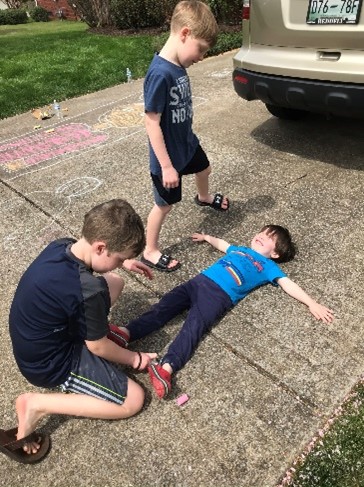
COVID perspective: In March, fun quickly changed to outdoor activities only, including hiking, visiting the zoo, drawing with sidewalk chalk, and playing in the backyard or table games under the carport.
Eat something spicy: That sounds fun!
Spicy fish and exotic mushrooms
At the Country Club I tried spicy curry chicken with roasted root vegetables, squash casserole, and cranberry nut bread. Outstanding! Another day, my daughter Sharon introduced me to Oscar’s Taco just down the street. Fish tacos are the best! And the Chinese students fixed us exotic, spicy dishes to sample. (Note: This is MY list of fun, not Scott’s!)
COVID perspective: Take-out just doesn’t taste the same. I miss eating inside, leisurely.
Pray with clients: That sounds fun!
I love my ministry . . . but on the way to the office one day to pray with one of our more challenging clients, I declared out loud, “That sounds fun.” And this time it actually turned out to be so!
COVID perspective: Though we can no longer meet in person, I’m so thankful for technology that has kept our ministry alive.
Get a massage: That sounds fun!
Oh yeah! What’s not to like?
COVID Perspective: Too bad I had to cancel my appointment the week I came down with the dreaded coronavirus!
Scott and Karen Days: That sounds fun!
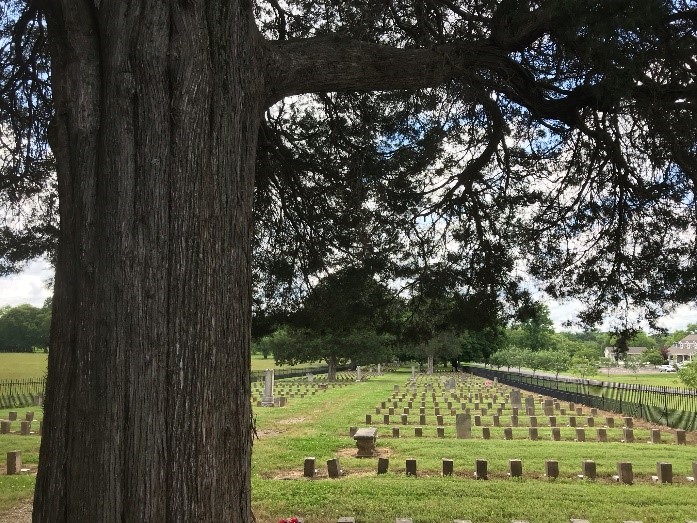
Civil War graveyard at the Carnton House, Franklin, TN
My Christmas gift to Scott last year was for once-a-month, all-day-together time —uninterrupted, just the two of us, doing any fun activity of his choice. The very first scheduled day in January, Scott was laid up with a wrenched back, so I sat in the den with him and read almost an entire novel. Guilt-free reading time. What’s not to like about that? In other months, we went to movies, played golf, and visited historic sites.
COVID perspective: When I came down with COVID, I was sorry we had to cancel November’s date while we isolated on opposite sides of the house. Fun was sitting in the sunshine together on the deck 12 feet apart from each other for 20 minutes.
Walk somewhere new: That sounds fun!
This wasn’t the actual scene that day, but it does hold special memories.
I took off for a walk late in the day. Thousands of blackbirds were swarming against a red, sunset sky and a full moon. The whole scene took my breath away and filled my soul with joy.
COVID perspective: This is one activity I’ve been able to continue.
Reconnect with MKs: That sounds fun!
Steven Dowdell, a fellow boarding school MK (Missionary Kid), dropped by to see me on his way through town. It had been 50 years!
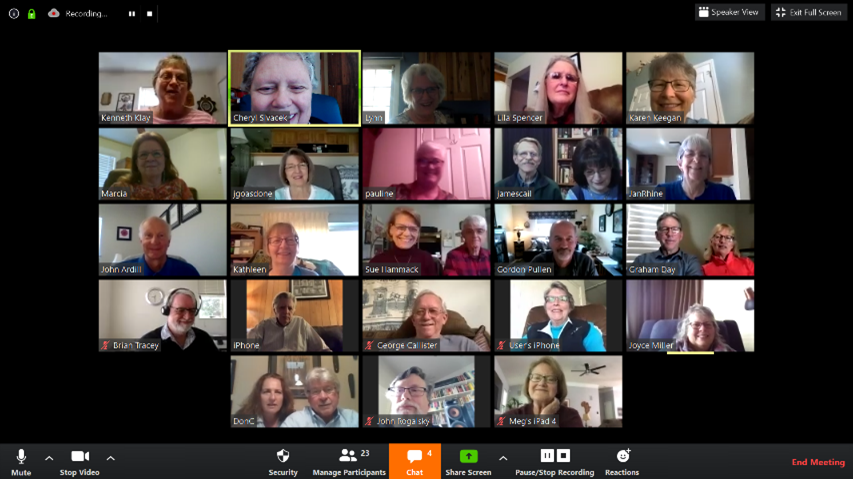
COVID perspective: Though we had to cancel our Class of 72 reunion in Florida in May, we enjoyed connecting from around the world through Zoom.
Start a new puzzle: That sounds fun!
I walked to Goodwill, just a few blocks away, and came home with a bagful of puzzles. At the height of the lockdown, we drove to Nashville to exchange puzzles with our daughter Sharon.
COVID perspective: Haha! Take that, you Virus! Nothing can stop me here.
Join a book club: That sounds fun!
Our first and only meeting was delightful. I met some new ladies, and we chose our first book.
COVID perspective: And then it closed. It was fun while it lasted!
Play golf: That sounds fun!
Sewanee Golf Course atop Monteagle Mountain, TN
Until just a few years ago, I could not have said “golf” and “fun” in the same sentence. But now it’s a joy to spend time with Scott, out in nature, hunting for my many lost balls.
COVID perspective: Bring your own clubs; don’t share carts; it’s all good.
Celebrate my birthday: That sounds fun!
At first, I didn’t think it would be . . .
COVID perspective: . . . then three good friends arrived in my backyard wearing masks and gloves and holding up signs, while they sang “Happy Birthday” to me.
Celebrate Mothers’ Day: That sounds fun!
After being isolated for two months, my daughter Cindy and her family arrived at my door to hand me a gorgeous hydrangea, and then I blew bubbles with the boys outside. I couldn’t stop smiling.
COVID perspective: See next entry.
Go hiking: That sounds fun!
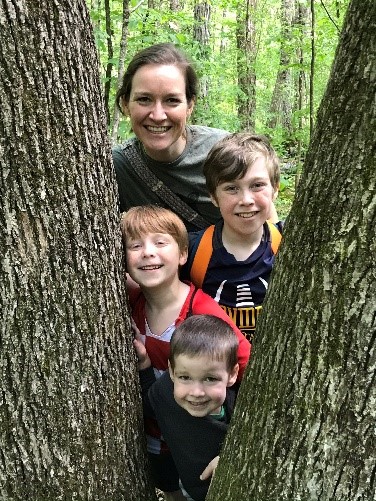
In late May, Cindy and her 3 boys and I took a 4.5-mile hike together. Ben (7) kept forgetting to keep his distance on the trail and would reach out and take my hand. I even carried Noah (3) on my back for a bit. They loved playing in the water and throwing stones. I also went on many hikes alone this year.
COVID perspective: This is when I decided that isolation from the grandkids was for the birds. We stopped social distancing with them after that.
Go to Sonic for ice cream: That sounds fun!
Scott and I drove up close to the Sonic order menu and turned off the car (but left the radio running) while we sat there enjoying our ice cream. In that short time, the battery drained, and we had to call AAA to come give us a jumpstart!
COVID perspective: I’m sure glad it was successful as Scott could not open his door, and we would have had trouble finding a ride home due to social distancing.
Visit my brother: That sounds fun!
Paul and Joan with daughter Joanna +2, me and Katie +1
Though we only live a few hours from each other, coordinating schedules is a challenge since Paul travels much of the year. But we pulled it off in June while I was visiting Katie.
COVID perspective: This connection was only possible because of Paul’s travel restrictions!
Celebrate Fathers’ Day: That sounds fun!
The whole family went together to play mini-golf. Noah (3) declared, “When I was your age, Grandma . . .”
COVID perspective: Scott brought his own putter.
Grow a tower garden: That sounds fun!
It was a steep learning curve! I learned how to make sun-dried tomatoes, as we had a proliferation of cherry tomatoes.
COVID perspective: A safe, outdoor activity
Tell you my favorite grandchild funny: That sounds fun!
So I was watching 4-year-old Noah one week and asked him what his favorite Bible story was. After some blank looks and shoulder shrugs, we talked about Adam and Eve, and then I asked if he knew about his namesake and the big boat. “Nope.” And so I began a dramatic rendition of the timeless story, emphasizing the animals, the 2 by 2, and the 8 people (count them). Though I did mention it, 40 days and 40 nights means little, as does the length of one year since this little tyke’s time frame includes “I went to the zoo tomorrow.”
Grandma: . . . And after the water went down, God opened the door of the boat, and Noah saw dry land at last. (Dramatic pause) And what do you think was the first thing Noah did?
Noah: He peed?
(Well, wouldn’t you if you’d been cooped up for a year!!!???)
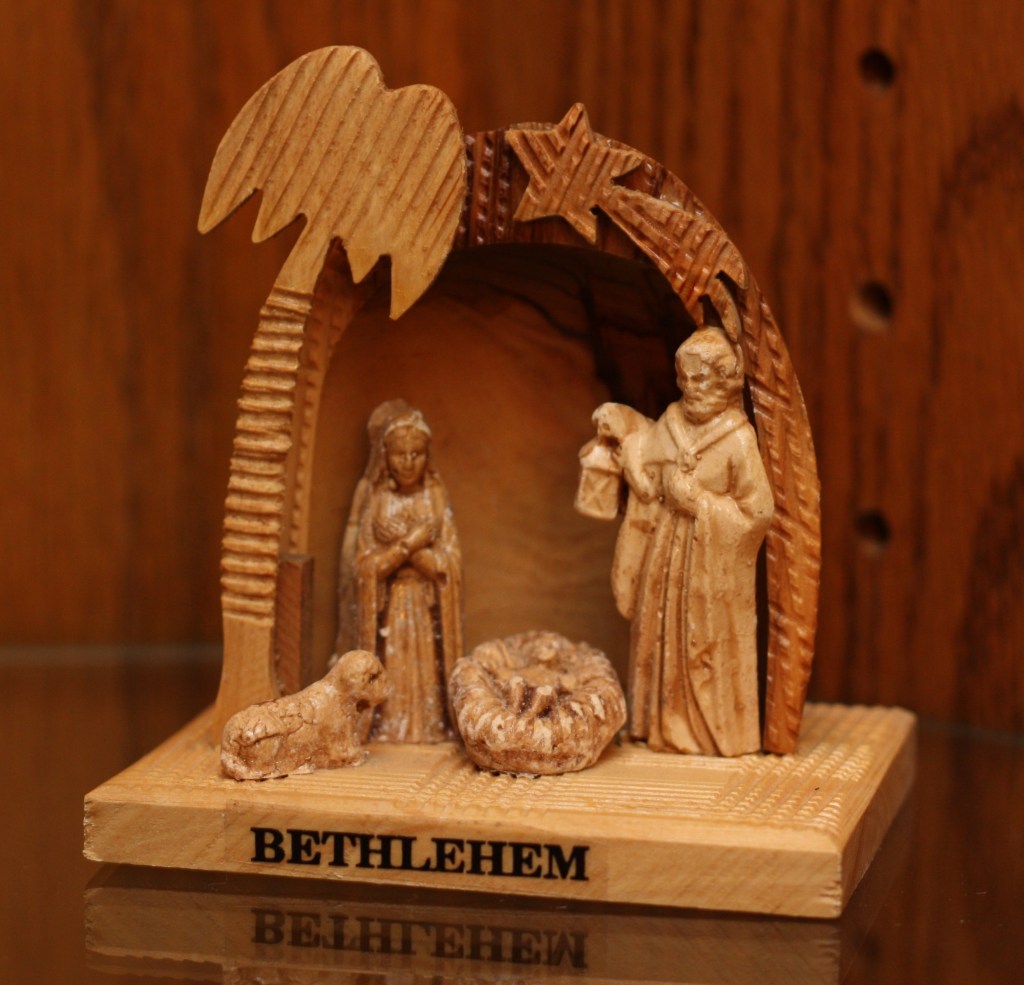
From my 2012 Journal. The Christmas story leaves me with more questions than answers. If you just read Matthew’s Gospel, chapter 1, you’d conclude that Jesus was born in Nazareth. But suddenly Chapter 2 declares He was born in Bethlehem–no explanation as to why or how. Without Luke’s account, we’d be left to speculation: that Mary and Joseph left Nazareth due to the shame and embarrassment of Mary’s pregnancy.
We speculate about the town gossip that Mary endured, but I wonder . . . In those days pregnant women remained confined. It was not a condition to be flaunted and exposed like it is today. Even as recent as my mother’s day, any woman with child was termed “p.g.”–rather than the blatant “pregnant.” Because an unwed mother was such a shameful thing, I wonder if it was kept secret, hush-hush. How else could Joseph have “quietly” divorced her? And the marriage could have taken place as quickly as possible so the secret wouldn’t be discovered. Maybe. It’s a thought. But we always assume the other.
Another random thought: In a day when so many children died in birth or infancy and some mothers during childbirth as well, it must have been a tremendous comfort to Mary to hear “This son will live.”
And an afterthought: before sonograms existed, only a handful of people in history knew for sure what the gender of the baby was before birth. Think about it—are they ANY pre-birth announcements of GIRL babies?
Happy birthday, Jesus–even if we don’t know what the actual day was!
From my 2012 Journal. I think I have a skewed attitude toward time. My dad was extremely punctual—which was a little comical to watch in the context of a remote African village in the 50s where time was ordered around the seasons of harvest or full moons. Our lives growing up were regimented and predictable—breakfast and dinner at 6 o’clock sharp. Lunch at noon. Family devotions before breakfast and after dinner—without fail. Work hard in between. (I identified with the hymn, “Work for the Night Is Coming.”) And don’t get me started on the regimen of boarding school bells and sirens . . . !
But I loved it! I actually thrive on routine and schedules. There was a long season in my life when, no kidding, I planned and regimented every minute of my day. As a result, I was extremely efficient and productive. It did not leave room, however, for relationship-building. Marriage and children knocked me off that routine, and I slowly began to adapt to fluidity in my schedule. But I still don’t like wasting time.
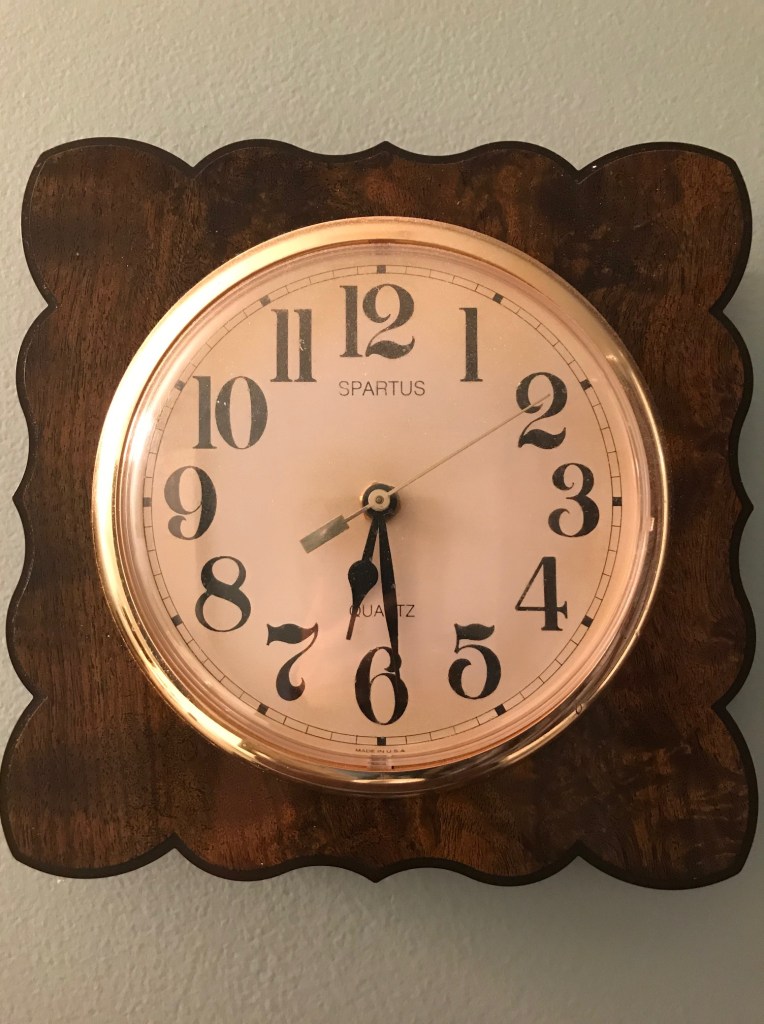
We have a clock in every room of our house, and I even wear a timepiece on my wrist to make sure I keep to specified deadlines. I’m a task-oriented person. If I don’t have a running list of goals to accomplish, I feel at loose ends, unproductive, lazy . . . like I’m wasting time. Vacations for personal pleasure and decadence feel wasteful of . . . time.
How about the word “busy”? What does that mean? If someone calls me on the phone and asks, “Are you busy?” I never know how to answer that. I’m always doing something—even if it’s resting: I’m busy resting or reading or cleaning my house or praying with someone. I’m not sitting on the couch staring off into space, catatonic. A better question might be, “May I interrupt what you’re doing?”
So what does wasting time mean, exactly? Is use the opposite of waste? If I waste food, it means I don’t use it up. But what if I have an excessive amount of it? Do I share it? Freeze it? Or throw it in the garbage? How do I waste water? I suppose that depends on my region. If I live in an arid climate, the definition might be quite different if I lived in a rain forest. How about wasted opportunities? That’s a harder concept. Sometimes we’re limited by our resources or our emotional state or our internal drives.
When does “relaxing” morph into “wasting”? And where in all this discussion does balance come in?
Okay, I’m done with the rambling in my head. Anyone want to weigh in?
From my 2012 Journal. I’ve been taught that our perception of God the Father is often influenced by our earthly dads, but it didn’t seem to ring true for me. Recently, however, I’m beginning to see how wrong I’ve been. I’m realizing anew how distant God the Father feels to me. Jesus I can feel close to. The Holy Spirit is inside me—ethereal but there. But the Father? He is no Papa to me, no Abba Daddy. He represents the immensity of God—power and majesty who dwells in unapproachable light.
“Father” to me means security, benevolence, rough work hands, farmer, verbally silent, expressive in writing, consistent, teacher, and strength . . . but not so much nurturing. Though I adored him and respected him, my dad felt more aloof, more distant emotionally.
I think of the Christ-figure Aslan in The Chronicles of Narnia. He wasn’t warm and cuddly either. Is that what I want? Warm and cuddly? What my dad was not? Where’s the balance between an all-powerful God who is also warm and comforting?
I remember sitting one evening in devotions with a missionary family that I was visiting and wishing I could have a dad like that—interactive, nurturing, able to discuss with his kids what we’d just read. In our own twice-daily family devotions, my dad was rigid, predictable, strict and disciplined, no-nonsense, with no discussion.
And then I met Bill Rudd, my high school youth leader—not old enough to be my dad, but an amazing role model of personable sweetness, others-focused, a gifted teacher. When you talked to Bill, you felt like you were the only person in the room. I wondered what it would be like to have a dad like that!
One day I looked up from my pew in church and watched a stately, white-haired gentleman walk in who exuded peace, benevolence and gentleness. My whole heart relaxed, and I longed for and ached to meet this man face to face. I could feel safe with him . . . because things were not always “safe” in my relationships at the time.
As I write, I’m beginning to get a picture of my own ramrod-straight persona: strict, stern, unbending, rigid, disciplined, no-nonsense—just like my dad. Where can I go to feel safe? To feel peace, to feel loved and accepted? It’s not to Abba Father. Why not? What’s holding me back?
It’s because I am a Pharisee. Pharisees don’t feel safe around Jesus. I can’t be a little child who runs and jumps into His lap. I’m a judge and jury and critic and criticizer and analyzer, always on the lookout for the flaws in others . . . because I have so many flaws of my own. I, myself, am not warm and cuddly. So why would I expect God to be?
I’m so ready to shed my Pharisee garments.
When I disrobe, I become a little crippled girl. No wonder I needed Pharisee garments—to feel strong and powerful, at other people’s expense. The Master Shepherd is kind to me, patient, teaching, correcting, gentle, soft, approachable. I am unworthy. I am the little African girl longing for some crumbs from the white man’s table, not the big-shot white girl, lording it over her kingdom.
And now I’m a grown-up in the little African village where I was raised, and I’m welcoming the little children into my arms, loving them, holding them, comforting them. And we’re in a circle, dancing and laughing; and my little white self has joined the circle—one Vanilla Bean in the midst of all that lovely Chocolate.
I can’t see God the Father correctly till I see myself correctly. How can I love Him if I don’t love myself?
And the Spirit pulls me up and out of the scene, up, up, far into the atmosphere where the world is just a small sphere in the distance. “I made that world,” He says, “and all the people in it. I have a job for you to do.”
“I’m willing,” I say, “but that’s an awful lot of people down there, and I am only one tiny drop in the bucket.” But then I see that drop spreading out like ripples in a pond. I may only be one drop, but the consequences and ripples are huge. Am I willing to be that drop? To be dropped? Yes! No longer can I claim my job is too small and insignificant in this world. And what if every believer were willing to be dropped? We’d soak and saturate this old world with refreshing rain. I may be only one drop, but every drop is important. Together we can change the world. Let revival come! Let it rain!
And I find that I’m no longer rigid down my back. Instead, I’m a mighty warrior, ready to fight for truth with the Sword of the Spirit and the Word of God. But I’m also a little girl who feels safe in her Abba’s loving arms.
When Jesus saw him lying there and learned that he had been in this condition for a long time, he asked him, “Do you want to get well?” (John 5:6 NIV).
From my 2012 Journal. The story of Jesus healing the disabled man at the Pool of Bethesda intrigues me. This place was a hotbed of sick folks. Did Jesus heal anyone else there that day, or did He single this man out? The Scripture doesn’t say if Jesus approached him first or if the man spoke first, but it says that Jesus SAW him there and LEARNED that he’d been in this condition for years.
Astonishingly, Jesus asks him, “Do you want to get well?” What if the man had said, “No”? How foolish we would have thought him. Of course he wanted to be well—that’s why he was at the healing pool in the first place. Yet, the question isn’t quite so odd as one might think. It’s human nature not to like change—even if it’s good for us. We do a lot of “choice” work in our ministry: Are you willing to let go of your anger? Are you willing to feel the pain? Are you willing to explore why you’re medicating with alcohol?
I don’t recall any record of Jesus asking anyone else this same question, Do you want to get well? Normally the hurting person initiates the request for healing (remember blind Bartimaeus?). A client is in my office because she’s made the choice to seek healing. I rarely approach a stranger and ask if she wants to get rid of her pain. Sometimes I’ve tested a person’s sincerity by asking, “If there was a way for you to get healed, would you want to know how?”
The crippled man’s answer is also astonishing. Instead of replying yes or no, he jumps to the defense. “Sir,” the invalid replied, “I have no one to help me into the pool when the water is stirred. While I am trying to get in, someone else goes down ahead of me” (v. 7). (Implied: Duh, of course I do, but I don’t know how.) The Healer is in his presence, but the paralytic is looking to another source for pain removal. (“And how’s that working for you?” we sometimes ask a client.)
People go to counselors and doctors and friends and give their excuses and complaints about feeling bad, when all along The Master Healer is waiting for them to turn to the Him–the only one who has the power to heal.
Do you want to get well? What’s your excuse for not pursuing the Healer?










 In the Pursuit of Peace