I seldom post a current blog, but this milestone deserves to be shouted from the rooftop: We made it!
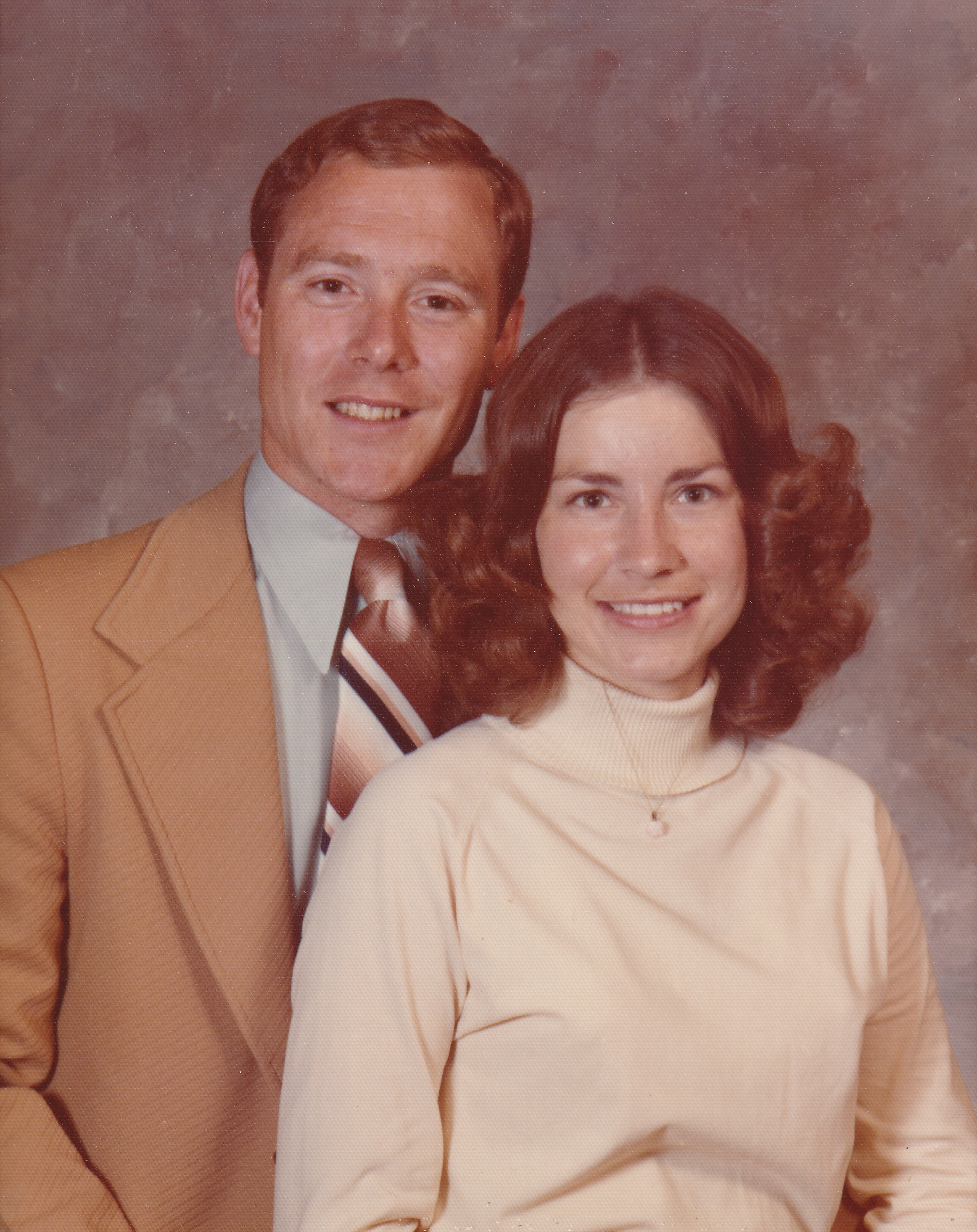
Fifty years ago today, on August 8, Scott and I vowed to stay married “through sickness and in health, through poverty and wealth, till death do us part.” We’ve had our share of health challenges, and we know what it’s like to pinch pennies as well as to enjoy abundance. But we’re not dead yet.
Our marriage had a rocky start as we came from vastly different cultures, lifestyles, and worldviews. In fact, ten years into our marriage, the pastor who did our pre-marital counseling revealed he wasn’t sure we would make it. Well, we proved him wrong!
My husband prefers bland American food, golf, Trivial Pursuit, hot tea, and talks for a living. I like spicy international cuisine, hiking, word games, coffee, and get paid to listen. He’s a night owl, a pessimist, a clutter bug. I’m a morning person, an optimist, and a minimalist. He grew up in upper-middle-class society, living in Massachusetts, New York, and Vancouver, Canada. I grew up in a mud-brick house (built by my father) in an African village. He’s a spontaneous extrovert, and I, a one-track-minded introvert.
We bonded over our transient childhoods, our mutual love of speech and drama, table games, a few TV shows, traveling, our family of course, but most of all, our faith. I knew at age 5 that I wanted a relationship with the God of my loving missionary parents. Scott met his Savior at age 21, as an adult child of two alcoholic parents. We determined on our wedding day never to threaten divorce when we had a disagreement. (I never said I wouldn’t kill him, though! 😊) Ours is a love story, but also a God-story. How else can I explain that I love this man more today than the day I married him!
Here’s to us, Honey. And, as my daddy used to say, “I wouldn’t trade you for a teddy bear!”
I can feel my mind and body edging toward burnout. It’s been an intense people- as well as project-oriented month. I need an entire day of alone time, but that’s not about to happen anytime soon.
VISUAL
I see a large room densely filled with high-energy party people. The noise is deafening. I’d prefer to stay outside, under the stars, alone and quiet. Sometimes that’s necessary, sometimes that’s possible. But I need to work through what it feels like to have to open the door and enter even when my reserves are gone.
Jesus says to sit with Him first. Outside.
I can do that. A pond in front of our park bench reflects the moon. It’s quiet, peaceful. I don’t want to talk or think or plan or look at a clock or a calendar.
AI-generated
LATER
I spent all my free time reading a novel, guilt-free, no agenda, no thinking, just resting. I’m doing better but still craving more down time.
My mind continually goes to the Apostle Paul. What he endured is astounding. How did he physically survive all the persecution and emotional trauma? How did he not crack under the pressure? Was his drivenness from his temperament or from his experience? I feel like such a wimp next to this giant in the faith.
As I write this, I recognize false guilt: I believe I’m inferior, less than, a gnat next to a giant.
Jesus says, “Why are you comparing yourself to Paul? Why not to Me?”
My head wants to say, “Impossible,” but my heart wants to snuggle up next to Him and accept His unconditional love.
I feel His gentle rebuke. “What is Paul to you? I have different plans for different people. Do not take on what is not yours.”
It’s time to let that one go. I can learn from Paul, from his triumphs and mistakes, but I must keep my eyes on Jesus.
ANOTHER VISUAL
The visual changes as the Apostle Paul and I are now the same height, mere mortals obeying our Master. One is not inferior or superior, except in our choices. I may make wise or foolish choices based on the hand that’s been dealt me. I will not pout or gloat if I win or lose a game if I play it the best I know how with hints from the Master Dealer. Just play the hand smartly, take some risks or play it safe. But most of all, play graciously. Let my mistakes go, but learn from my faux pas and don’t repeat them. And do not get jealous if someone gets more wild cards than I do or if I get none at all. Play fair and without complaining and enjoy the game.
According to Jude verse 1, the author is writing to “those who have been called, who are loved by the Father, kept by Jesus Christ.” Yet with strong and powerful metaphors, Jude spends the majority of his book pointing out evil people (false prophets and teachers) who are destined for destruction.
I have a hard time relating to this book because I don’t have much personal contact with evil people. In my ministry, I meet with those who are broken—often because of evil people in THEIR world.
I have great compassion for those who are hurting and want help. But Jesus died for the false prophet, the Hitlers, the Pharisees, and even the perpetrators. The invitation is to all. All are invited, all may come to the Feast of Love, but some by choice reject the invitation. God says he resists the proud. He loves his creation enough to die for us all, but he is intolerant of willful refusal to accept his invitation. I cannot judge men’s hearts, but I can certainly see their deeds and hear their words. Jude called them out and said they were ripe for destruction and hell, as were Sodom and Gomorrah.
I’d rather meditate on verses 20-22 that urge me to build others up, pray in the Holy Spirit, keep myself in God’s love as I wait for His return, and be merciful to those who doubt.
The verse I respond to the most is the glorious doxology in verse 24. He’s able to keep me from stumbling. He will present me faultless before his glorious presence. Glory, majesty, power, and authority are ascribed to Christ alone, past, present and future. Amen and amen.
… His wrath can flare up in a moment. Blessed are all who take refuge in Him. (Psalm 2:12 NIV)
Here’s my visual for this verse: God is a fire-breather. If you’re “out there,” you’ll get zapped, but if you stay close to his heart, you are safe and protected.
The thought of God’s judgment is slightly terrifying to me: facing the Judge of the Universe to discover how many words, thoughts and deeds didn’t make it through His refining fire. It’s not like coming before the school principal with whom you have no relationship. It’s more like coming before your dad when you’ve misbehaved.
And yet, since our sins are covered and forgiven, the judgment for the believer is more like a lack of rewards, not punishment. “Not guilty,” the Father has declared. I do not need to fear or dread His coming judgment.
Regret will be punishment enough, I think. The question for me is, did I obey God’s commands to love Him and to love others?
Keep me close to your heart, dear Lord. Let me not stray far from Your embrace.
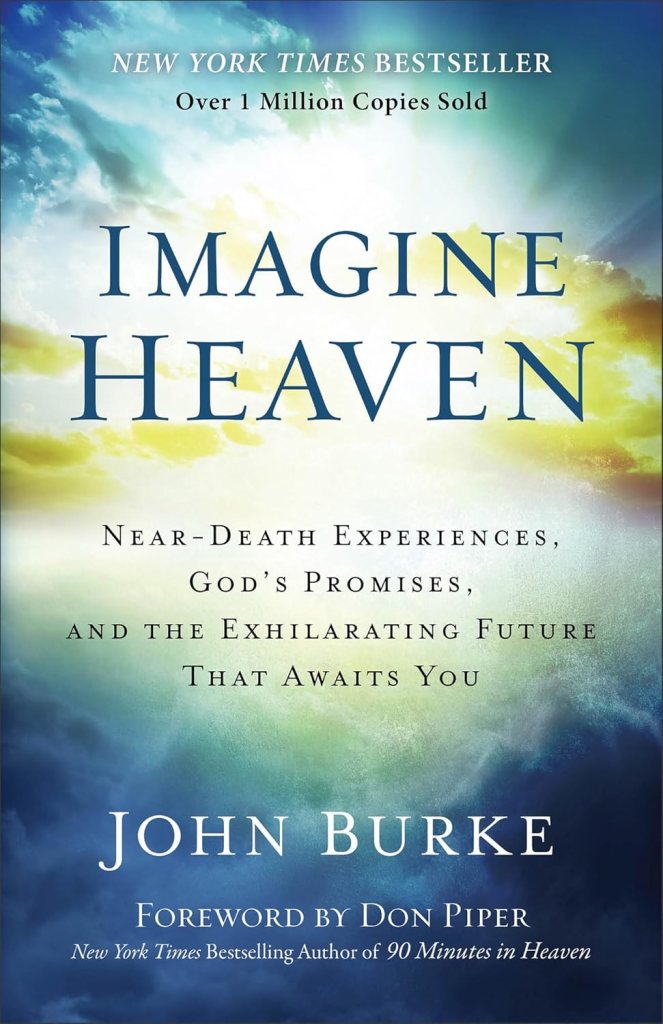
A 2025 Update. After reading Imagine Heaven by John Burke, my heart relaxed. Burke “compares more than one hundred gripping stories of near-death experiences (NDEs) to what Scripture says about our biggest questions of Heaven.” He suggests that our life review before Almighty God will not be filled with shame (my default when I disobey Him), but rather an understanding about my choices.
The other day I made a disparaging remark about someone, turned around, and there she stood! I don’t know if she heard me or not. I pray she didn’t. But I felt awful. I can’t apologize to her since I don’t know if she heard me, for if she didn’t, it would only make things worse.
You’d think I’d learn not to say negative things about people or put others down behind their backs. If I only spoke words that I would say in front of them, I wouldn’t get caught red-handed (I wonder where that expression comes from?*). God forgive me!
Lord, help me remember to keep my mouth shut! And show me how to release the guilt.
A 2025 Update. What I’ve discovered is that when I have negative thoughts toward a person, there’s always a negative emotion beneath the words. It is always best to work through what I’m feeling before I open my mouth. But when I do slip up, I try to give myself grace and thank the Lord for revealing another unhealed place in my heart.
*Here are two claims for the origin of “caught red-handed.” Most sources say the red refers to blood, but I prefer the one about strawberry jam!
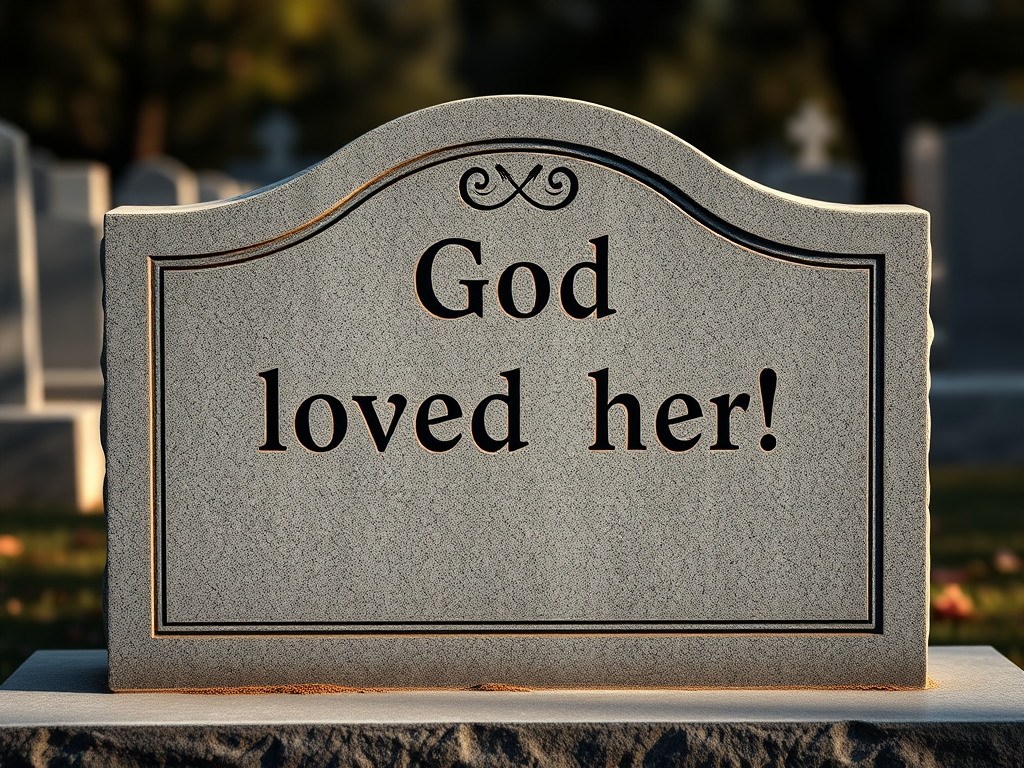
Our pastor challenged us to consider what we would want people to say about us at our memorial service or what we’d like imprinted on our tombstone. If we know the end, the goal of our life, we can work backward through the process to plan how to get there. For example, if you want to be known for being a generous person, you’ll want to practice giving now. If you want people to remember you for your kindness, then you’ll stamp out cruel remarks now.
At first, I thought I’d like my tombstone to read: “She loved God.” But on further reflection, I think the better epitaph would be: “Wonder of wonders—God loved her!”
A 2025 Update. I was meditating recently on George Beverly Shea’s hymn “The Wonder of It All” with the words “… but the wonder of it all is that God loves me.” https://youtu.be/MUBZy_6xUgY?si=l-3emAXwJLepC8Zx
And then I came across this note in Amazing Grace—366 Inspiring Hymn Stories for Daily Devotions by Kenneth W. Osbeck. “After attending a service where the hymn ‘O How I love Jesus’ was sung repeatedly, [Philip P.] Bliss thought, ‘Have I not been singing enough about my poor love for Jesus and shall I not rather sing of His great love for me?'” That’s when he penned the hymn, “Jesus Loves Even Me.” https://youtu.be/i0zljm3KMSA?si=zzmBqiuv_QnXiIqI
Apparently, I’m not the first to have this thought!
I have always struggled with decision-making. I remember as a preschooler feeling paralyzed in front of a long row of bowls while my mother urged me to hurry up and choose something for lunch at a cafeteria. How could I possibly decide between all those delicious options? What if I asked for fried chicken and later wished I’d chosen the pasta dish? What if I regretted passing up my chance to taste shrimp? I needed time to weigh each option in my mind and imagine tasting each selection on my tongue.
Even today I have trouble making up my mind. I’ll try on a dozen outfits in the dressing room and walk out of the store empty-handed. This is why I like to take one of my daughters with me when I clothes-shop. I trust their judgment better than mine.
Or take gift-giving. The never-ending loop in my brain runs through all the scenarios of “what if?” until I give up and pass the chore onto my husband to decide.
In answer to my prayer for release from worry, the Lord took me back to a little story I read as a child.
Two boys were selling bushels of apples at a fruit stand. The first boy placed his largest and best apples on the bottom of his basket, whereas the second boy put those beauties on the top. The second boy got the best business that year, but the first boy had the best business in subsequent years.
Lesson: It’s not about decisions; it’s about integrity. It’s not about choosing “a” over “b” but about right versus wrong. Be trustworthy in my decisions. Always choose right. No worries.
Can one truly be righteous or in right standing with God? Psalm 112 seems to think so.
Blessed is the man who fears the Lord, who delights greatly in His commandments … and … Light arises in the darkness for the upright, gracious, compassionate, and just—who are in right standing with God. (vv. 1, 4 NASB)
Personally, I delight to do God’s will. I desire to be righteous. I don’t make idols or follow other gods or give a false witness in court. I honor my parents, don’t steal from my neighbor or covet his things. I don’t hate or murder.
Does that mean I have always kept my heart pure? No. Nor does it mean that I don’t slip up and envy someone or say things that are unkind or think bad thoughts, or neglect to love as I should. I’d never claim perfection.
But God’s righteousness covers me and my sins. I am not self-righteous; I am God-righteous. Therefore, can I claim the promises made to the upright, the righteous? Can I expect the blessings that come from being in right standing with God? Why do I doubt?
Something niggles at me regarding my negative thinking. My speech and drama professors trained me to notice the negative—to critique and to judge for the sake of improvement. I thought it had to do with following the rules. My acting class prof, for example, taught us to always “cheat out,” meaning to keep one’s body open toward the audience. So, when our play director told a fellow actor to begin his dialogue with his back to the audience, I rebelled. “He’s not following the rules,” I thought. But he was following artistic license. He was able to make an exception to the rule for the sake of the mood in a scene. The rule became, then, a generality, a guideline.
When I critique a student’s speech or grade an English paper, do I self-righteously point out the flaws? Or do I approach the work thinking, “How can I help the student improve?”
How do I change my negative thinking patterns? For me, step #1 is mind renewal through inner healing prayer. But that only gets me to a neutral zone. It removes the trigger and brings me to peace. But how do I move to the positive side of the sliding scale resulting in a joyful attitude? Positive thinking looks to me like changing my thoughts from “Ick, it’s raining” to “It’s okay if it rains” to “Thank You, God, for the rain.”
Some positive thinking, however, sounds like a disbelief in reality—like declaring in a thunderstorm that the sun is shining. It feels false, untrue—like my belief in something can change my world. Maybe it can; maybe it can’t. Joel Olstein touts the mantra, “Positive things are going to happen.” But it’s more than just telling myself that everything is fine and good. It’s actually trusting God whether it is or isn’t.
I think Pollyana had it right. Instead of whining, “I’m grumpy because I only had three hours of sleep last night,” I can declare out loud, “Thank You, Lord, for three hours of sleep to refresh me.”
Is this a choice we make? How do we turn the train around to start practicing the positive? By sheer will power? By prayer? By practice? How do I get on the train that’s traveling in the opposite direction from everyone else? It depends on what the destination is. If I can see light up ahead, I’d rather be moving in that direction than toward a burnt-out bridge.
And so, I start with prayer: Today, Lord, I want to begin to practice the habit of praise, gratitude, and positive thinking. I need your help to remind me.
Yesterday my youngest daughter asked me how I was doing.
“Ok,” I responded.
“Just okay?” she asked.
Her question caught me up short. I’d been dwelling on how sore my right big toe felt. But the moment she challenged me, I reflected and answered, “No, I’m great, thanks. It’s a perfect day with a perfect breeze, and I have clothes and food and shelter and a loving family. What else could a person ask for?” And suddenly the throbbing toe was no longer my focus.
The danger I see in my response is that if I deny the pain, I’m not being honest with myself, and I may not take care of the problem. Those who are positive all the time are suspect in my opinion. Are they living in reality? I think pain has to be acknowledged and embraced, not denied. However, we don’t like being around negative people because they can bring us down. Where’s the balance?
I have a “positive” friend. I never see her down, never complaining no matter how much pain she’s in. I do know that’s because of a vow she made to not be like her complaining mother, but . . . it makes it very easy to be around her.
Not complaining. Maybe that’s the key. One of my mom’s favorite sayings is, “There’s a difference between complaining and stating a fact, and I’m just stating a fact.” The attitude and the tone of voice can reflect the difference.
When someone asks, “How are you doing?” they’re not usually asking for an “organ recital.” Do you lie and say, “Fine” even when you’re not? Or perhaps they’re asking how your spirit or attitude is. If you’re down, do you admit it? If hurting physically, but feeling up mentally, can you, in truth, say, “Fine”?
I called a friend yesterday and asked how she was, and she admitted, “My heart is heavy today …” That was honest. And it gave me a chance to encourage her.
So … I think when I’m asked, “How ya doin’?” I can legitimately pause, look inward, find the joy spot and return with, “All is well.”
Here’s one friend’s approach which may contain faulty thinking: When I think of the best thing that can happen and it doesn’t occur, I get disappointed; so instead, I think of the worst thing that can happen, and when it doesn’t occur, I am pleased.
Is there a middle ground? Realism? But that flies in the face of the positive thinker.
Maybe I’m mixing up my ideas. One is about goals, the other about the present. What’s the balance? Be realistic about the present, optimistic about the future.
Maybe the answer is not in plus vs. minus but inward vs. outward thinking. How do I get the focus off self (which is a pretty small topic)? Perhaps I can avoid the question, “How ya doin’” by responding with, “Lucky to have you for a friend!”
I’m feeling peevish today—I need a week to work uninterrupted. As an introvert, I thrive on solitude, but for the last month, I’ve had to be “on” with people—either needy ones or as company in someone else’s home. It’s not that I don’t enjoy my life, but I just need a break from it. When others around me are struggling, it affects my mood. I feel like I keep giving and giving without getting replenished.
In the River of Life, I would prefer to float on my back and watch the sky. Instead, I’m back-paddling at the top of a waterfall.
When I finally stop rowing, I fly over the waterfall with a God-given parachute. But at the bottom, my boat spins in an eddy, and I white-knuckle my grip to keep from capsizing or slamming into the rocks. I’m in survival mode and must remain vigilant for more rapids ahead. This wild ride is no longer exhilarating or fun. I’m cold and wet and want to get out and dry by a fire.
Endurance. Perseverance. Steadfastness.
I feel the weight of people’s woes and my responsibility to meet their needs. I feel the burden of maintaining friendships and working to contribute toward our family’s finances. I could spend all day at the feet of Jesus, but the house won’t clean itself, and the food doesn’t cook itself, and I have to think about my health, prayer obligations, books to read, goals to accomplish, and, and, and.
Balance. Rest. Pleasure.
I’m a linear thinker who knocks off my to-do list one item at a time, but relationships, interrupting phone calls, and the messiness of life get in the way.
I think it’s about losing control. I used to have control over my own life, but now I live at the mercy of other people’s choices. It makes me feel lost at sea without my oars.
Jesus asks my permission to handle the oars. All I have to do is sit and watch and wait, He says. When He commands, “There’s a fish; let down your net,” I obey. And when He says, “It’s time to rest,” I can lie down on the cushions and sleep, knowing He is in charge. And sometimes He hands me a Karen-sized oar and says, “Now paddle hard!” because we’re about to go over some rapids.
A 2025 Update. Reading this entry makes me tired! I am in such a different place now emotionally. I am at peace, unhurried, at rest. Perhaps my circumstances have changed, but I suspect I’m simply at a different place in my healing journey as a recovering co-dependent.
Whenever I ask people to define faith, they glibly quote Hebrews 11:1.
Now faith is the substance of things hoped for, the evidence of things not seen.
But to me, this sentence is just meaningless words on a page. It wasn’t until I heard the following sermon that it finally clicked. Here’s what pastor said.
Faith is when you hear what God says, and you do it.
It’s defined by what God says. (For every entry in Hebrews 11, they heard a command from God.)
It’s determined by how you respond. (Check out the verbs in this chapter.)
It’s deepened by the challenges you face, your experiences.
It’s directed to the rewards He promised.
Faith is NOT simply belief. For example, I can believe that if I step off the edge of a cliff, I won’t fall. That’s stupidity, not faith.
Faith is acting on a command or a promise from God. Faith is standing on the edge of a cliff, and if GOD TELLS ME to step off the edge, I do it in obedience and trust. If I plummet to my death, so be it. He will take care of the results. Or He may have prepared an invisible bridge to the other side (like in Indiana Jones and Last Crusade)—but I wouldn’t have known it was there if I hadn’t taken the first step.
Daniel’s friends, Shadrach, Meshach, and Abednego (Daniel 3:16-28) obeyed God—in faith—and their attitude was, “Even if we die, God will take care of it.” But God chose to spare their lives for a greater purpose. Others, like Jim Elliott and his four fellow missionaries, obeyed and became martyrs—they stepped into faith and obedience and stepped right into the arms of Jesus.
A 2025 Update. I’d like to add that the object of my faith is of prime importance for the outcome. I can always trust God to do what’s best.








 In the Pursuit of Peace