Word vs. Spirit

Journal 2005

As I study the passages in the Word about the Holy Spirit, I wonder where the balance is between study and experience. My Bible training was all academic: interpretation, dissection, exegesis. If I only have the written Word and no Holy Spirit inside to interpret them, I simply have a collection of symbols on a page, lifeless and meaningless. But if I didn’t have the written Word, how would I know what my experience meant? But Jesus IS the Word—the Living Word. He brings the symbols to life and gives them meaning. I need both.

I wonder why God chose to use words to communicate with us. Why not comic-book pictures? Or is the world itself and its experience a visual? A picture would not be reproducible in certain countries or eras. But words endure, can be passed down through the generations. Can be heard. But for those who are visual . . .  I guess God gives each of us the visuals in our minds that meet our needs the best. But then, so do words.

A 2023 Update. After praying with people for the past 22 years, I’ve come to realize how important both words and visuals are. Clients will say, “I know the truth in my head, but I don’t feel it in my heart.” What they are describing is left-brain (words, logic) vs. right-brain (pictures, emotion). Our experience comes first, followed by interpretation of the event. When I read Scripture, I’m engaging my left brain. When the Holy Spirit speaks directly to my heart (emotions), I experience the truth and it gets correctly interpreted.

Natural Disasters (and lots of bad news)

From my 2005 Journal.

What does one do with all the stories of horror and sadness in the news? It it’s not war, it’s an Asian tsunami, a Florida hurricane, or tornadoes in Indiana on the heels of earthquakes in Pakistan. Murder, rape, and evil. The needs are overwhelming. And then there are the spiritual needs of a lost world. How do I balance getting information and processing it without emotional overload or feeling blasé? If it’s someone else’s problem, I shrug and say, “That’s interesting, but glad it doesn’t affect me.” But if it’s MY child that dies in the disaster, it’s suddenly too close to home.

I wonder what makes people rush to help. Some feel called and become trained to respond to disasters. Is there something wrong with me that I don’t feel the tug to “do something, anything” or is it merely an absence of triggers? I don’t want to be jerked around by emotionalism or false guilt that weighs on me like a shroud. My resources are limited. It’s impossible to give to every cause—and there are so many good ones!

I’m standing at the edge of a pit watching Stephen being stoned. I cannot prevent his demise. If I try to rush to his aid, I’ll perish as well—the mob is too large for one person to control. What I can do is search for the one or two people who are hesitant, who don’t really want to be there. Who can I persuade to walk away and listen to God? I cannot respond to all the disasters and needs in the world, but I can minister to the few on my path.

On a side note, I’ve noticed an interesting phenomenon: when people offer aid for a disaster, those who have not been treated in like kind are sometimes jealous. For example, after 9-11, victims from another terrorist bombing lamented that America didn’t send dollars to generously help THEM. When Hurricane Katrina struck Mississippi, and people in my city reached out to help the displaced citizens, locals who needed the same kind of care and concern felt ignored. What makes us respond to a disaster with an outpouring of generosity, but we don’t reach out to meet the routine needs of our community?

My mother had great compassion for sick people. It made her a good nurse. One day we witnessed a motorcycle accident in front of us. Watching my mother’s concern and compassion mixed itself in my heart with worry—like an emotional bow string triangulated between the boy, my mother, and me.

Am I willing for the music to stop? For the vibration in my soul to cease? Will I become emotionless, calloused, if I give up the strings?

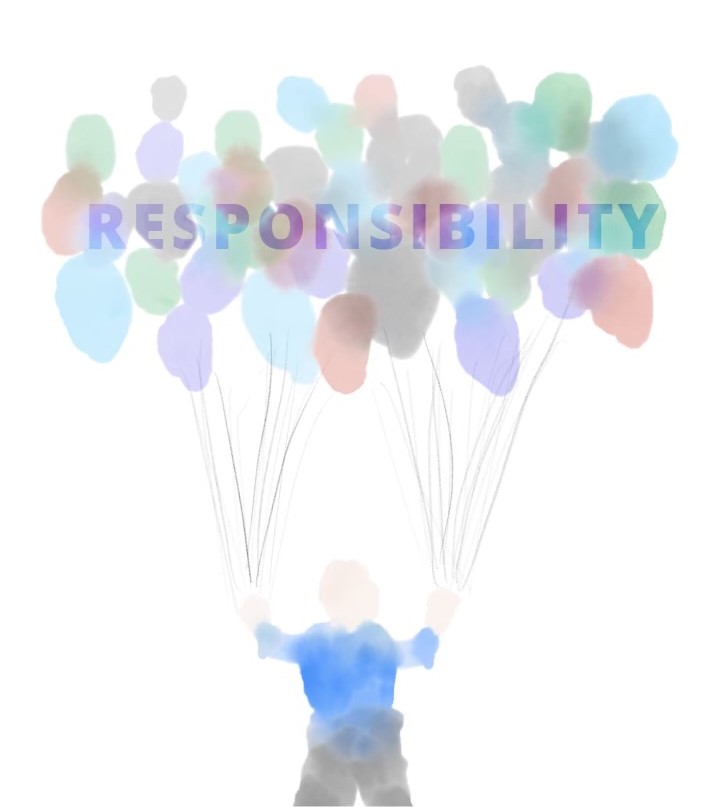
“No, the song will only become sweeter,” says Jesus. And so, I unloose the worry string, tie a balloon on the end, and release it skyward. My focus now shifts to meeting others’ needs instead of mine.

A 2023 Update. I glanced at the news of the recent earthquake in Turkey, said a quick prayer for the victims and rescuers, and moved on to the ministry in front of me, focusing on what I could do, rather than on what I couldn’t.

Photo by Franklin Peu00f1a Gutierrez on Pexels.com

Judgment or Discernment?

Journal 2005

I’ve been working through how to recognize the difference between God’s standard and men’s standard of conduct. For example, I came out of a system that taught it was a sin for a woman to wear pants, and though I threw that false belief out years ago, I wonder about wearing skimpy clothing. A judgmental attitude (which I’m prone to have) is a self-righteous attitude about how others conduct themselves—usually because I don’t do it myself. And often the item or “sin” in question reflects a tradition of man rather than breaking a direct command of Scripture. Discernment, on the other hand, involves understanding the intent of a command in Scripture and applying it to myself.

One’s choice of dress falls on a continuum: from a Middle Eastern burka all the way to public nudity. What’s modest for one culture may be immoral for another.* I’m sure my upbringing in an African village impacts my confusion. Does God’s Word dictate standards of dress, or does God look only on the heart? (I can dress like a Puritan and not have a pure heart.) The other end of the continuum is harder for me to gauge. At what point does my dress choice cross into sin? Can the discussion focus on the amount of material, or should the focus be 100% on the heart?

Or what about my media viewing choices? Is there a point at which what I watch becomes sin? Or is it all about the condition of the heart? I cannot judge another’s motives, but personally, I’d prefer wholesome rather than on-the-edge. Better to hug the mountain side than the cliff side in these gray areas.

*Funny story from Stormy Omartian’s book The Power of the Praying Woman. Seems an offended missionary decided he should supply the topless natives with t-shirts. The next day the ladies showed up at church proudly wearing their new garb—with holes cut out for their breasts (so they could nurse of course). Made perfect sense to me!

2023 Update. I must have worked through these questions sufficiently as I have no emotion today when the subject comes up. I know now that I am not responsible for anyone’s heart but my own, and I can trust God to convict me when needed and guide me into all truth.

The Power of Story

From my 2005 Journal.

When a person is ready to face his pain, it’s like giving a thirsty man a drink. But when there’s resistance, you can stand there all day with the cup in your hand, and he won’t reach out to take it. Telling a story sometimes helps when I’m trying to persuade someone to seek healing for emotional wounds.

I have also used stories in an inner healing prayer session with a client with DID (Dissociative Identity Disorder). When there’s resistance, a story can soften the bud and open the flower.

The disciples asked Jesus why He spoke in parables.

He replied, “You’ve been given insight into God’s kingdom. You know how it works. Not everybody has this gift, this insight; it hasn’t been given to them. Whenever someone has a ready heart for this, the insights and understandings flow freely. But if there is no readiness, any trace of receptivity soon disappears. That’s why I tell stories: to create readiness, to nudge the people toward receptive insight. In their present state they can stare till doomsday and not see it, listen till they’re blue in the face and not get it. Matthew 13:11-13 (The Message)

Jesus’ solution (according to The Message) was to tell stories. Those who wanted to hear truth “got it.” Those who didn’t, well, maybe it piqued their curiosity a little. In any case, it got their attention and got them to listen. Which part of the sermon do we remember the longest? The story of course! Even a daydreaming child in the pew will sit up and take notice when a story is told.

While processing some grief issues this week over another person’s unreceptive heart, God told me to write a story to present to this person to see if it would open a discussion. And it did.

Once upon a time…

Photo by Suzy Hazelwood on Pexels.com

Should You Ever Break a Vow?

From my 2009 Journal.

The Bible instructs us to keep our vows; however, some vows are unhealthy and must be broken “I’ll never do that again!” or “I’ll build a wall to protect my heart” can be detrimental to our healing journey.

When I was in junior high, my ambition was to become a missionary nurse—just like my mom. But one day, one of my teachers whom I highly respected asked me what I wanted to be when I grew up. When I told him, he replied, “Well, you should consider becoming a doctor instead. You have good enough grades.”

To please my teacher, for the next six years I informed everyone I was going to become a missionary doctor, and I began to look into med schools. Very quickly, I realized I really had no passion or even the slightest interest in studying the medical field. And so I floundered, trying to figure out who I was. Consequently, I made a vow never to become a counselor. I did not want to be responsible for guiding someone incorrectly in their life choices. How ironic that I am now pursuing a Master’s in Pastoral Counseling!

Today I read:

Personally I am satisfied about you, my brethren, that you yourselves are rich in goodness, amply filled with all [spiritual] knowledge and competent to admonish and counsel and instruct one another also. (Romans 15:14 Amp, Emphasis added):

Note the order:

  1. First comes goodness
  2. Then comes knowledge
  3. Next competency
  4. And finally comes the act of counseling.

Character precedes knowledge. Practice comes before proficiency. I have no business counseling others if I don’t begin with character; and without training, counseling others can be dangerous. In Job 38:2 God asks, “Who is this that darkens counsel by words without knowledge?” I wonder if I’ll make a good counselor?

A 2023 Update. Technically, I kept my vow since I became in inner healing prayer minister instead of a counselor. However, breaking that vow would have been acceptable as it was made from a place of emotion and wrong motives. Better not to make an unhealthy vow or promise than to have to break it later.

My mother, Martha Seger

Judgment or Love?

From my 2009 Journal.

A few years ago, I had a friend who struggled to care for her two adopted girls when she injured her leg. Another friend remarked, “Well, she asked for it.” (i.e. she had no business adopting children if she couldn’t afford them.) Yes, my friend had made that choice, but it wasn’t her fault she hurt her leg and needed compassionate help.

But what if I am at fault for the consequence of my choices? A smoker I know is struggling with emphysema. I find it difficult to drum up any sympathy. I may fetch an oxygen tank if he runs out, but I’d still roll my eyes and think he made his own bed and must lie in it.

And then I think of an obese friend who struggles with physical challenges. Do I withhold compassion and mercy when she has a stroke? I may conclude that she asked for it, but I don’t think that’s the right response. Instead, I need God’s love for her.

I can readily see the solution to everyone else’s problem but find it harder to deal with my own. Quit smoking! Lose weight! Turn to Christ! Let go of your anger! Forgive that person who hurt you! But when I look inward at my own shortcomings, I find I can easily make excuses for my own actions and attitudes. I need God’s mercy for my own struggles that keep me bound and powerless to change and quit judging others for losing their battles. I don’t know what it’s like to walk in their shoes.

The heart is deceitful above all things and desperately wicked. Who can know it? (Jeremiah 17:9 KJV)

The Gift of Faith

Jesus said, “Were not ten healed? Where are the nine? Can none be found to come back and give glory to God except this outsider?” Then he said to him, “Get up. On your way. Your faith has healed and saved you” (Luke17: 17-19 The Message).

Jesus healed ten lepers, but only one thanked Him. The Samaritan had faith; I don’t know if the other nine had it or not. Did Jesus heal certain people out of compassion or because of their faith? He raised the dead—and that’s not because of their faith! In this case, the one leper demonstrated that he “got it.” I suspect God does a lot of things for us that go unacknowledged.

Maybe faith is like a promised Christmas present, an unopened box. Jesus hands it to me and says, “I’ve made you a promise. It’s in the box. But it’s not time to open it yet.” And faith says, “I believe You, Lord. And I will patiently wait till You say it’s time.”

Abraham was given a box. Inside was the promise of a son. But I think he got impatient waiting—or perhaps he thought God had handed him the wrong box, and so he set it aside and opened a different gift under the tree. But even with his mistake, God still handed him the right one and he still got to open it.

I have so many precious promise boxes under my tree I can’t even count them all! What box am I holding that I’m ignoring, substituting, not waiting for, anxious about?

When Jesus handed the one leper his gift, he remembered to write the thank you note. The other nine got their gift, too, but were so excited they forgot where it came from. We must pause, notice, respond in gratitude, and recognize the source of our healing, our salvation.

On Prejudice

Prejudice is an adverse opinion or leaning formed without just grounds or before sufficient knowledge. (Webster’s Dictionary)

From my 2005 Journal.

I had a dream last night in which a professor told me I had an issue with prejudice. I denied it—but part of me recognizes the truth.

Prejudice has a negative connotation, but prejudice simply means “pre-judging.” We live most of life that way. Before I sit in a chair, I pre-judge that it will hold me up. Why? Because I’ve had prior knowledge and experience with chairs. What happens when we pre-judge people, however? The problem comes when we attribute one characteristic to an entire race, not allowing for individual differences.

What’s the relationship between pre-judging, expectations, and anticipation? When does it become negative, wrong, sinful, unproductive, or damaging? In a court of law, to pre-judge is to declare guilty or not guilty without prior or proper trial. What would be the opposite? No judgment at all? Or . . . judgment after the fact instead of before? How is it possible to avoid pre-judgment of people?

Isn’t prejudice merely a trigger? Reduced to that, it would be easy to detect and feel one’s own prejudice—because there is emotion involved. There are or can be good triggers, can’t there? Or is that suspect too? Pre-judging what Christmas will be like can set you up for disappointment.

A 2022 Perspective: I went through a lengthy period where the Lord worked on my heart about my judgmental attitude. Obviously, I’m not perfect in this area, but looking back, I can see how very far I’ve come.

Don’t judge a book by its cover.

The River of Life

From my 2009 Journal

When people and things disrupt my workflow, how can I tell if an interruption is a distraction or a God-event? Is it like a child’s bumper lane in a bowling alley, meant to keep me out of the gutter? Or is it a snare, a stick-pile in the river?

The rapids are the events over which I have no control, and I’m glad I have an experienced Guide with me Who knows where the hazards are. He expects me to use my paddle as I’m able and engage in the fight to stay upright, but He’s strong enough to keep me on an even keel.

Sometimes, when I’m about to be dumped into the river, I just hang onto the sides for dear life. But I’m not going to drown (unless it’s my time to go Home). When He comes to rescue me, I must relax and not struggle against Him. He has the lifeline in His hands. Thankfully, not all of life is rapids. Sometimes it’s okay to drift and to rest.

So, whether I encounter shallows, a stick-pile, or the rapids, I don’t have to figure out its source. I just need to navigate what comes with patience, faith, and grace.

On Hatred

Journal 2005

At my missionary boarding school, I was taught it was a sin to hate. Therefore, if we hated someone, we’d piously say, “Oh, I don’t hate her; I just strongly dislike her!” As if we didn’t say the words, we were not guilty of the deed.

This week the Spirit of God confronted my self-righteousness with a memory where I carried hatred in my heart. As I released that emotion, years of bondage slipped away, and I felt free. Nobody but Jesus knew that sin was there. And nobody but Jesus and the person who prayed with me for deliverance knows it’s gone. But will others sense a change in me? I don’t know. I feel the change, and I know that something is different.