Judgment or Love?

From my 2009 Journal.

A few years ago, I had a friend who struggled to care for her two adopted girls when she injured her leg. Another friend remarked, “Well, she asked for it.” (i.e. she had no business adopting children if she couldn’t afford them.) Yes, my friend had made that choice, but it wasn’t her fault she hurt her leg and needed compassionate help.

But what if I am at fault for the consequence of my choices? A smoker I know is struggling with emphysema. I find it difficult to drum up any sympathy. I may fetch an oxygen tank if he runs out, but I’d still roll my eyes and think he made his own bed and must lie in it.

And then I think of an obese friend who struggles with physical challenges. Do I withhold compassion and mercy when she has a stroke? I may conclude that she asked for it, but I don’t think that’s the right response. Instead, I need God’s love for her.

I can readily see the solution to everyone else’s problem but find it harder to deal with my own. Quit smoking! Lose weight! Turn to Christ! Let go of your anger! Forgive that person who hurt you! But when I look inward at my own shortcomings, I find I can easily make excuses for my own actions and attitudes. I need God’s mercy for my own struggles that keep me bound and powerless to change and quit judging others for losing their battles. I don’t know what it’s like to walk in their shoes.

The heart is deceitful above all things and desperately wicked. Who can know it? (Jeremiah 17:9 KJV)

The Gift of Faith

Jesus said, “Were not ten healed? Where are the nine? Can none be found to come back and give glory to God except this outsider?” Then he said to him, “Get up. On your way. Your faith has healed and saved you” (Luke17: 17-19 The Message).

Jesus healed ten lepers, but only one thanked Him. The Samaritan had faith; I don’t know if the other nine had it or not. Did Jesus heal certain people out of compassion or because of their faith? He raised the dead—and that’s not because of their faith! In this case, the one leper demonstrated that he “got it.” I suspect God does a lot of things for us that go unacknowledged.

Maybe faith is like a promised Christmas present, an unopened box. Jesus hands it to me and says, “I’ve made you a promise. It’s in the box. But it’s not time to open it yet.” And faith says, “I believe You, Lord. And I will patiently wait till You say it’s time.”

Abraham was given a box. Inside was the promise of a son. But I think he got impatient waiting—or perhaps he thought God had handed him the wrong box, and so he set it aside and opened a different gift under the tree. But even with his mistake, God still handed him the right one and he still got to open it.

I have so many precious promise boxes under my tree I can’t even count them all! What box am I holding that I’m ignoring, substituting, not waiting for, anxious about?

When Jesus handed the one leper his gift, he remembered to write the thank you note. The other nine got their gift, too, but were so excited they forgot where it came from. We must pause, notice, respond in gratitude, and recognize the source of our healing, our salvation.

On Prejudice

Prejudice is an adverse opinion or leaning formed without just grounds or before sufficient knowledge. (Webster’s Dictionary)

From my 2005 Journal.

I had a dream last night in which a professor told me I had an issue with prejudice. I denied it—but part of me recognizes the truth.

Prejudice has a negative connotation, but prejudice simply means “pre-judging.” We live most of life that way. Before I sit in a chair, I pre-judge that it will hold me up. Why? Because I’ve had prior knowledge and experience with chairs. What happens when we pre-judge people, however? The problem comes when we attribute one characteristic to an entire race, not allowing for individual differences.

What’s the relationship between pre-judging, expectations, and anticipation? When does it become negative, wrong, sinful, unproductive, or damaging? In a court of law, to pre-judge is to declare guilty or not guilty without prior or proper trial. What would be the opposite? No judgment at all? Or . . . judgment after the fact instead of before? How is it possible to avoid pre-judgment of people?

Isn’t prejudice merely a trigger? Reduced to that, it would be easy to detect and feel one’s own prejudice—because there is emotion involved. There are or can be good triggers, can’t there? Or is that suspect too? Pre-judging what Christmas will be like can set you up for disappointment.

A 2022 Perspective: I went through a lengthy period where the Lord worked on my heart about my judgmental attitude. Obviously, I’m not perfect in this area, but looking back, I can see how very far I’ve come.

Don’t judge a book by its cover.

The River of Life

From my 2009 Journal

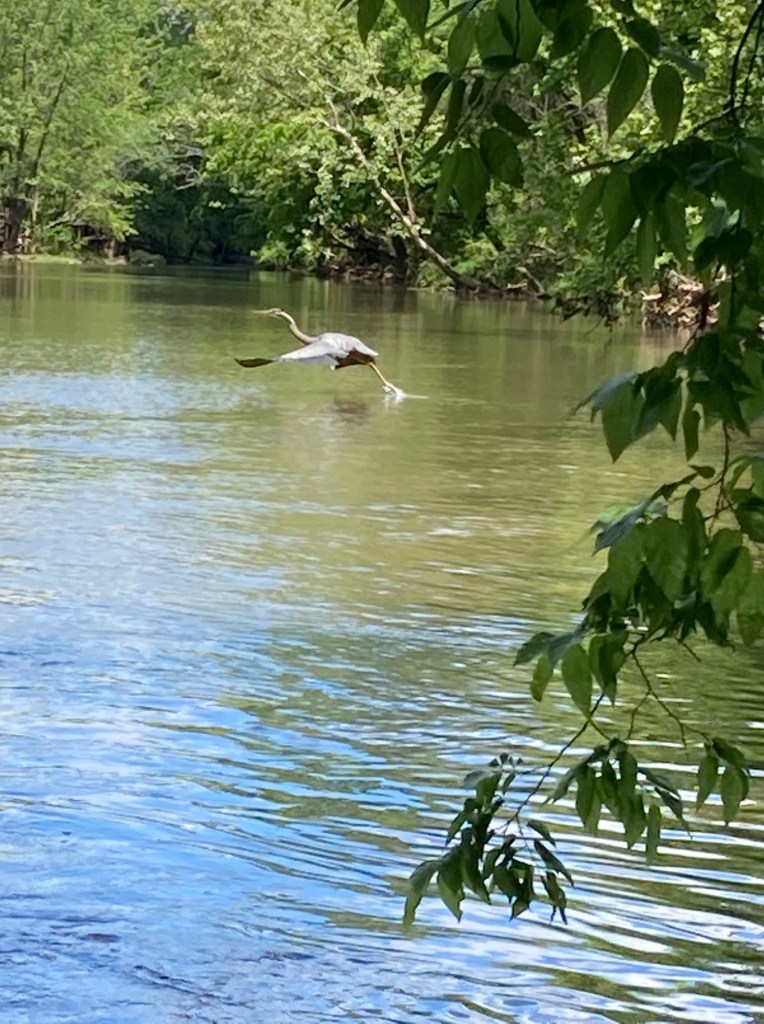
When people and things disrupt my workflow, how can I tell if an interruption is a distraction or a God-event? Is it like a child’s bumper lane in a bowling alley, meant to keep me out of the gutter? Or is it a snare, a stick-pile in the river?

The rapids are the events over which I have no control, and I’m glad I have an experienced Guide with me Who knows where the hazards are. He expects me to use my paddle as I’m able and engage in the fight to stay upright, but He’s strong enough to keep me on an even keel.

Sometimes, when I’m about to be dumped into the river, I just hang onto the sides for dear life. But I’m not going to drown (unless it’s my time to go Home). When He comes to rescue me, I must relax and not struggle against Him. He has the lifeline in His hands. Thankfully, not all of life is rapids. Sometimes it’s okay to drift and to rest.

So, whether I encounter shallows, a stick-pile, or the rapids, I don’t have to figure out its source. I just need to navigate what comes with patience, faith, and grace.

On Hatred

Journal 2005

At my missionary boarding school, I was taught it was a sin to hate. Therefore, if we hated someone, we’d piously say, “Oh, I don’t hate her; I just strongly dislike her!” As if we didn’t say the words, we were not guilty of the deed.

This week the Spirit of God confronted my self-righteousness with a memory where I carried hatred in my heart. As I released that emotion, years of bondage slipped away, and I felt free. Nobody but Jesus knew that sin was there. And nobody but Jesus and the person who prayed with me for deliverance knows it’s gone. But will others sense a change in me? I don’t know. I feel the change, and I know that something is different.

Six Tributaries

Journal 2005

Lynda Graybeal, administrator of Renovare (www.renovare.org) suggests we need a “balanced vision” of 6 streams or dimensions of the Christian life (Conversations, Vol 3:1, p. 52). Though I was reared in one particular stream, I have dipped my toes in each of these tributaries and found grace in each of them. All make up the body of Christ. All have partial truth. All can learn from the others.

Contemplative – The prayer-filled life

Holiness – The virtuous life

Charismatic – The Spirit-empowered life

Social Justice – The compassionate life

Evangelical – The Word-centered life

Incarnational – The sacramental life

Which stream refreshes you the most? Which one challenges you?

Responding to Change

Journal 2005

I’m reading The Bible or the Axe: One Man’s Dramatic Escape from Persecution in the Sudan, by William O. Levi. The author’s childhood in an African village parallels the stories in Wes Stafford’s book Too Small to Ignore. I note the idealism of the simplicity of life, where there’s community and comradery and a commune with nature that is severely lacking in my current world. Am I mourning the loss of my childhood home where TV was unknown and family was all we had and the stars were so bright and there were amazing trees to climb?

What kind of a childhood did I give my kids? How can they appreciate nature when they’re cooped up inside the house in front of the TV all day long? (An exaggeration of course.) So, they’re grown now and can make their own decisions. What am I afraid of?

Today one daughter showed me the website where all her friends have gathered in cyberspace. With a click of a mouse, she can tell me the 56 other people who like Princess Bride. I marvel at this, for my boarding school classmates balk at joining a chat group!

Technology has taken over our lives. Entertainment rules. What happens to relationships in this media-crazed world? How do I find balance? I need to work out how I feel about TV, movies, entertainment, computers, cell phones, microwaves, telephones, digital cameras, Blackberries, iPods, iPads, etc. Funny, I never did learn how to program the VCR—but now there’s little need to because we have TIVO.

I remember my dad recalling how HIS dad lamented when farm machinery was invented. He said with a horse or mule, you both got to rest at the end of each row! And my Grandpa Peterson didn’t like gas-powered lawn mowers because they were so noisy. Does each succeeding generation chafe under the advancement of technology?

As I see it, there are two choices—complain that the world is leaving me behind—or stay caught up and use the resources that are handed to me. Would I really want to go back to the days of the washboard? I doubt it. I’m not hardy enough.

Later. The family gave me the heavenly gift of 24 hours with no TV. Silence meant more family time and interaction. I have strong opinions about entertainment, but I’m over-ruled and I’ve quit fighting it. I think there must be moderation and balance in all things. Lord, show me where I’m off-balance in my heart.

Principles to consider:

  • Does this activity, whatever it might be—TV, computer, social media—push me closer to God or away from Him?
  • Is it a moral issue?
  • Does it harm others or myself?
  • Is it used as a painkiller? An opiate? A coping mechanism?
  • Is my conscience pricked?
  • Check my emotions and my motivation if I do or do not do this activity.

A 2022 Update. What’s a VCR, TIVO, Blackberry, or chat group? How quickly our technology has changed. I remember when my nephew took a typewriter to school for show-and-tell and when my then two-year-old grandson showed me how to turn on his LeapPad. In those days I had no idea what the universal on-button looked like, much less what this gadget could do. I’m way behind in social media knowledge and pop culture. I think I’ll just go for a nature hike and leave it all behind!

Thunderstorms Over Your Head

Journal 2005

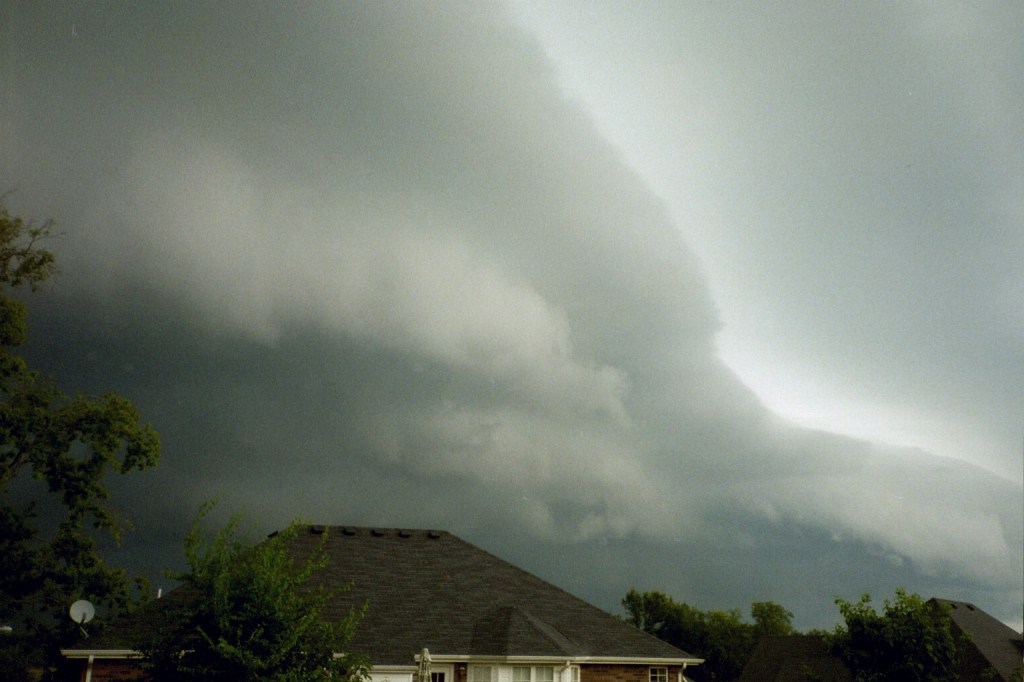
Being in the presence of people in a bad mood is like standing under their rain cloud. It’s their choice to stay there getting drenched, and it’s their choice to grumble and complain because they’re cold and miserable. But what is that to me? I prefer not to get wet (or worse, struck by lightning), and the easiest solution is to just walk away.

But what if I want to help that person? Or what if I’m in a love relationship and choose not to retreat? Am I willing to get wet? Take the chance of getting zapped?

Jesus says: “I am in the eye of the storm. Rest there with Me.” And the swirling wind about me will move people’s rain away so that I can be near them. I don’t have to be affected by their weather patterns.

Lord, keep me in the center of You.

Lovingkindness

Journal 2005

The word lovingkindness intrigues me. “Loving” I understand. “Kindness” is obvious. But why the two together? Aren’t they mutual? If you’re loving, you’ll be kind; if you’re kind, you’ll be loving. How can you have one without the other? How is lovingkindness different from the definition of loving or kindness? I turned to Webster for help.

Loving: affectionate

Kindness: friendly, generous, warm-hearted, sympathy, understanding, humane, considerate, forbearing, tolerant, generous, good-hearted, tender, considerate

Lovingkindness: tender and benevolent affections

How do I wrap my mind and understanding around this attribute when I read of God’s judgment, fury, and anger toward the rebellious? How do I become the object or recipient of His affection? Can I really earn it? We’re taught: “No, it’s all one-sided. We love Him because He first loved us.” Without His initiation, we would not respond to Him.

But my part is necessary too. It’s not just one-sided. It’s not that I earn His love, but that I respond to His. I don’t turn away from, but toward, His love. He has offered me relationship. And when I embrace it and accept it, He responds back in relationship—and lovingkindness.

When someone spurns God’s love, He is patient, kind, and tender. He continues to woo and invite. But at some point (God knows the heart and the intents), He must exact consequences or punishment or judgment. That is His right.

If someone spurns the love I offer, I can leave him or her in God’s hands and turn away. But when someone spurns God’s love, knowing the consequences thereof, they have no one to blame but their own choices.

I can experience all of God’s lovingkindness or benevolence. It’s there for my heart. But I have to do my part and turn toward the warmth and light, not away from it.

On the Edge of a Cliff

Journal 2005

Going for an Oral Interpretation major in college, I once performed a reading with a powerful visual about standing atop a cliff, desperately trying to stop people from going over the edge (presumably to hell). The point was to urge believers to evangelize. I even know one missionary who went overseas because of this visual. But all I ever felt was guilt, helplessness, and powerlessness.

As I sit with my emotions, I notice there are danger signs at the edge of the cliff. In fact, there are warning signs before the danger signs. I’m praying desperately for people to open their eyes and take notice, and if I take my eyes off the scene, I’ll miss someone. Still I feel helpless. I have to DO something. If I sit down to rest, I’ll get stampeded! Where do responsibility and trust intersect?

Jesus says, “Back away from the edge of the cliff, find a bench, sit there and wait. Offer cold drinks and sandwiches to the weary travelers. Invite; don’t panic. Invite them to rest with me and talk. Tell them about the cliff and encourage them to share the news with the other travelers on their path. And if while I’m talking to one, and another passes by, I can just wave and smile. And if I need to sleep for a while, I can ask Jesus (or an angel) to tap me on the shoulder when I need to wake up and pay attention. Whew! That feels better.