Thoughts on Embarrassment

Journal 2005

As I approached a group of friends gathered around my kitchen table, I tripped and fell to my knees. Red-faced, I gathered my dignity and tried to laugh it off. But why should I feel embarrassed, I thought?

When I’m embarrassed, I tend to hide behind a mask, cover with a nervous laugh, or pretend I don’t care.

Embarrassment is often rooted in pride: What are they thinking of me?

Embarrassment may be a result of feeling exposed and vulnerable. This is especially true for someone who’s molested.

Embarrassment can also carry shame messages: I am less than, I am clumsy, I can’t do anything right.

Can I be embarrassed FOR someone else? For example, if I watch someone who is ignorant of cultural mores, I may assume they’re feeling (or should be feeling) embarrassment for their actions. In realty, what I feel is a reflection of my own embarrassment: If I were in their shoes, I’d feel embarrassed.

I decided my reaction to my stumbling foot was a simple case of pride and let it go. My friends were more than solicitous.

Photo by furkanfdemir on Pexels.com

Profanity

Journal 2005

Recently a friend on Facebook used a four-letter word in her post, and I’m disappointed in the direction this young person has taken in life. I know she knows God, but her activities don’t match my understanding of biblical mandates. It grieves my heart for the woman she’s become when I knew her once as an innocent child. What seed of disappointment, pride, rebellion, hurt, or emptiness got planted in her heart and when? I’m not responsible for her choices, but her choice today impacted my eyes, and the impurity infiltrated my mind.

I was raised with strict rules about dancing, smoking, movie-going, and card-playing. Never once did my parents curse, drink alcohol, or travel on Sunday. As I’ve grown in my faith, I’ve had to decide which rules I want to shed and which I want to keep. I can happily play games with cards, go to movies, or golf with my husband on a Sunday afternoon, but I still seem to be quite sensitive to profanity.

And so I struggle to get that four-letter word out of my head. It’s like trying not to see a pink elephant by saying, “Don’t think of pink elephants”! I need a God-miracle to break the bond with it. I’ve tried every trick, tip, and tool I know, and nothing works. I’ve tried bond-breaking in memories and images, prayers against curses, repentance, forgiveness, praise, and prayer for purity for self and for others.

Forgiveness—this word jumps out at me. Why am I reluctant to pursue this? Why do I need to forgive her? Has she done me wrong? She doesn’t even know she’s impacted my heart and mind, and I’m sure if she knew, she wouldn’t care. I am not her judge . . . and that thought helps. I can forgive her. Apparently, I was standing in the judge’s seat, and that position is not mine, but God’s. And with that, I can let the stuck word melt away in my brain.

A 2022 Update. I would dance if I could, and I enjoy an occasional sip of wine, but I still choose not to add profanity to my vocabulary. I thank my parents for the example they set.

Photo by Liliana Drew on Pexels.com

Company!

Journal 2005

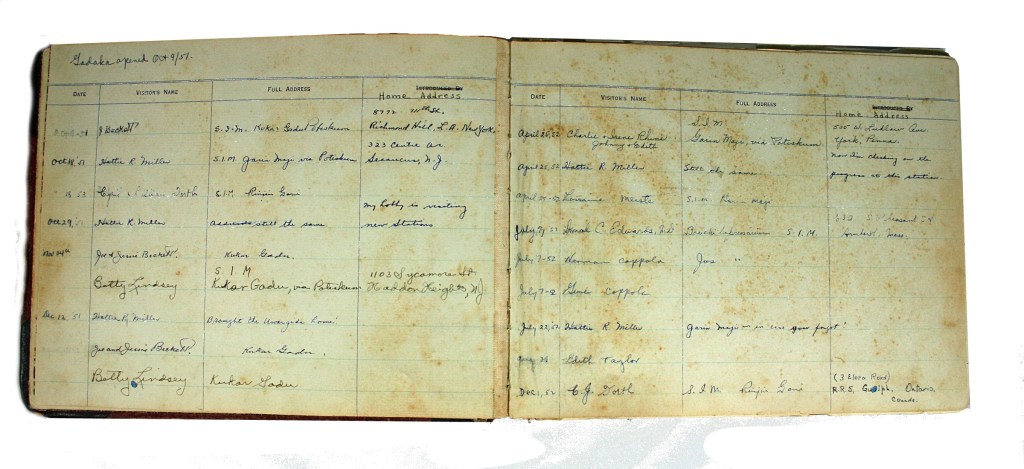
Following my parents’ example, I keep a guestbook log*. Theirs began in 1953, and mine in 1983. Any overnight stay or feet under the table warrants an entry. Hattie Miller, a brave single missionary who lived 60 miles away at the nearest mission station to ours, signed theirs the most often. It was she who bought us our book and signed it first. Today that book is held together with packing tape.

The arrival of company is an exciting event, but there’s a certain relief when they leave. We just happily said goodbye to a couple who stayed a week longer than they had originally planned (due to unforeseen circumstances). Other people’s energy tends to drain me, so despite their statement that they didn’t expect me to entertain them, why did I feel compelled to do so?

My mind goes back to visiting Sunday school classes in various churches on furlough in the U.S. I was forced into the limelight. I had to say something intelligent. I was the entertainment! The church members clutched the end of an electrical cord, looking for a place to plug it in. I was a receptacle and bingo—they had electric juice, I was being drained, and the lights were going dim! I didn’t want to be used. Plug yourself into someone else’s outlet please! But putting a cap over my outlet felt selfish and rude, so I kept the cap off.

In a listening prayer session, Jesus said to me: “Turn the tables on them. Ask them questions instead.” Deceit is the opposite of honesty. With company, I can say, “Do you mind if I take a power nap?” Of course they don’t mind. They understand. Maybe they’d like some alone time too!

A 2022 Update: Someone recently wondered how many times she had visited us, and I was able to pull out my guestbook and search for her name. As I scanned through the pages, I noted how many of our guests have passed on to glory. But I was most struck with the passage of time when I read my middle daughter’s entry: Jackson is learning to crawl. How did 12 years gallop by so fast!

After working through my emotions, I’ve discovered I’m far more tolerant now of being with people for extended periods of time. I’m still an introvert, but I rely more now on a greater Power Source to maintain inner peace.

*On the flyleaf of my parents’ book, Dad penned the following:

When the great Guest Book in the house above, Lies spread before us in the Home of love, One entry only waits the writer’s name: No record of departure, only “Came.”

Dropping Stones

Journal 2005

My heart hurts when my children are not at peace, and my soul longs for growth and godliness for each of us. I’m weighed down by a stone that is too heavy to carry, and I drop this boulder on someone’s foot. The thought that I might have hurt someone, even inadvertently, is heinous to me. I feel helpless to make it right because, even if I apologize, and even if they forgive me, the damage is done, and it’s my fault. I feel regret and sorrow.

When I sin deliberately and someone gets hurt, I am accountable for the damage. If I sin inadvertently or unintentionally, God knows my heart. He can turn the stone into flower petals. And if I seek reconciliation and I repent and confess my part in the hurt, He can restore and bless and soften the blow.

O, Lord, bring rose petals to my family today. Open our eyes to see truth and give us courage to act upon it. Amen.

Anger, Bitterness, and Resentment

Journal 2005

One day three guardians named Anger, Resentment, and Bitterness stepped into my heart, and one day I decided they needed a come-to-Jesus moment.

“I’m tired, says Bitterness. “I don’t want to carry this anymore. I’m willing for You to take what’s in my heart. I just don’t know how to give it to You.”

“I’ve been waiting for you,” says Jesus. And He stretches out a full-length cloak to place around the guardian’s shoulders, but Bitterness resists.

“I’m too dirty and ragged. I don’t want a cloak to cover me.”

Jesus smiles. “I was just measuring to see if it fits.”

“Oh, sorry.”

“That’s okay,” He says. “Now, let’s see . . . what shall we do with you?” He has a teasing twinkle in His eye.

“I just want to be clean!” Bitterness cries.

Jesus smiles and nods toward a nearby pool of Living Water. Bitterness leaps in, splashing and laughing as the cool water soaks into his scabs and melts away the dirty garments. He’s fascinated the water doesn’t turn murky as a result.

Little Emotion, now free at last, says, “I’ve been trapped here for so long, but Bitterness was too strong for me.”

Bitterness asks forgiveness of Little Emotion. “I was just trying to protect you,” he says.

“I forgive you,” she replies. “And thank you.” I watch as they hug.

Then Little Emotion eagerly runs to Jesus. “Can I have a cloak too?” she asks.

“In a minute,” He replies. “You have some wounded places that need healing first.” And He touches some spots on her shoulders, her back, and down her torso. In fact, the more spots He touches, the more appear. But when He touches them, they begin to glow, like they’re radioactive or something. I don’t understand what’s happening.

“This is just revealing where all the hidden spots are,” He explains.

“So many!” she cries.

“Not too many,” He says. He turns her around and examines each one. “There, I think we have them all,” He declares.

“Now what? What are You waiting for?” she demands.

His eyes are kind. “You’ll see.”

There’s an eruption in the earth at our feet, like an explosion, and a cylindrical structure rises from the depths. What in the world?? At first, I think it’s from the netherworld, the work of the underground, but Jesus says He wouldn’t allow that on my castle grounds.

It’s a Guard Tower, a turret, located on the back, right corner of the property, near the little pool. The three Guardians are curious. “For us?” they ask in wonder?

Jesus laughs and hands each one a cloak, just their size. Resentment, Anger, and Bitterness rush up the stairs, exploring their new digs. “So cool! Look how far we can see! Jesus, can we have some weapons too?! And please, can we change our names? We don’t like the old ones.”

And Little Emotion steps forward, tugs on His robe, and weeps. “Please, Sir, can I have one too?”

He kneels and embraces her. “Let it all out, Honey,” He says. And all the glowing spots begin to fall off like they’re made of plastic discs, clink, clink, clink on the ground. And still she weeps until the tears run dry.

“Little Flower,” He calls her, and slips a strange cloak around her shoulders made of multi-colored fabric petals. She doesn’t particularly care for it. “I’d rather have a rainbow one,” she declares, and it immediately turns into many colors. “Or a tiger-striped one” and it changes instantly.

“What kind of a cloak is this?” she wonders. “It’s not what I expected.”

“What did you expect?”

“Something soft and shimmery and golden or something.”

“Ahhh,” He says. “This is a special cloak. It is not fake, like you thought. (How did He know she was thinking that?) It changes with your mood. People can see what you’re feeling according to what color and shape it is. Bitterness hid the real you. You are now free to feel what you feel and enjoy the shifting and changing inside. It’s the beginning of Joy.”

“I’m related to Joy?” she exclaims.

“Yes, Little Flower. You may run along now to the castle, if you wish, and see her.”

The three Guardians are giggling and racing around and poking their heads through the openings in the turret. Jesus laughs with them. “Ready for your new names?” He calls.

They stampede down the stairs, nearly tripping over their new garments. These might take some getting used to, they think.

They line up in a row in front of Jesus, panting.

“You,” He declares, pointing to Resentment, “are Forgiveness.”

“And you, Anger, are Guardian.”

“And you, Bitterness, shall be called Sweetness.”

“Sweet! Can I have some candy? Preferably bittersweet chocolate?”

Jesus laughs. “Go on with you. There’s some in your drawer in your quarters upstairs.”

Forgiveness kneels before Jesus. “Jesus, I’m sorry for staying away from You so long. I’m sorry I held Little Emotion captive.”

“Ah, dear child, you are already forgiven. I took that for you two thousand years ago. Welcome home! And thank you for trying to help. I appreciate that.”

“I like Your way better, though, Jesus. Thank You.”

“Guardian!” He commands. “Step forward please.”

Anger Guardian bows his head, ashamed of his role in this little drama.

Jesus kneels, lifts his chin, and looks him in the eyes. “You did your job the best you knew how. There is no shame in that. Thank you for doing your part to protect Emotion. Are you willing to try My way now?”

“Of course, Jesus! It would be foolish to go back to my former life.”

Jesus nods sadly, “Yes it would. But I have a feeling you might change your mind under different circumstances. When you’re in the thick of the battle, you might resort to your old cloak again. But I promise to be there with you. As soon as you realize you’re doing that, I’ll be right there to exchange cloaks again for you if you wish. All you have to do is ask.”

“I’ll try to remember. I like Your way better than mine.”

Guardian bows to his Lord. “I’m still feeling bad.”

“Why?”

“I don’t know . . . I don’t like me very much when I use the old cloak. It’s not who You made me to be.”

“You’re not? Did you know I get angry sometimes?”

Guardian’s head pops up. “Really? You!? But I thought we weren’t supposed to use that cloak.”

“Oh no, my child. I don’t use that one. I use the one I gave you. I created you for a reason. You are a protector, a guardian. Your new Anger Cloak is for defending others who need it. When you defend yourself with the old cloak, you hide yourself from Me. When you defend yourself or others with your new cloak, you become strong and effective in battle.”

Guardian scratches his head. “I have to think about that,” he says. “How will I know which cloak I’m wearing?”

“They look quite different, don’t you think? But if you’re confused, just check with Little Flower. She’ll help you decide, for she can tell the difference. The old cloak will start squeezing her, and she’ll begin to feel restricted again. I suspect she’ll let you know when that happens,” He says with a wink.

“I love you, Jesus. And thank you.”

“You’re welcome. I love you too.”

Tragic Women in David’s Life

I don’t harangue on this often, but have you noticed how many male preachers focus on only 50% of the congregation in their sermons? When David is the topic of conversation, for example, we hear about all his exploits—shepherd boy, giant-killer, musician, refugee, king, adulterer, and murderer. But what about a list of the tragic women he left in his wake?

Michal, David’s first wife, is a bride-price from her father Saul in exchange for David killing 100 Philistines. She loves David initially and helps him escape from her father’s murderous intentions. After Saul gives her away to another man (who obviously loves her), she’s ripped away again back to David’s side. Next, she has to share her lover with many other wives. No wonder she’s angry and hurt. Yet God still holds her responsible for her attitude toward David when he dances before the Lord in his joy that the ark has returned to Jerusalem. Her punishment is barrenness. I feel sorry for her.

Next, David marries Ahinoam (which means pleasant, though this woman lived a hard life.) Along with Abigail, she would have been with David while he was on the run. She was also taken captive when the Amalekites raided Ziklag, David’s Philistine base. And, sadly, her son Ammon ends up raping his half-sister, Tamar.

Tamar, David’s daughternow there’s a study! A rape victim, she ends up living in her brother Absalom’s house, a desolate woman. Talk about tragedy!

Abigail was married to Nabal, a churlish boor. She wisely confronts David about his intent to harm her husband, and David is grateful to her. When Nabal dies from apoplexy, David takes Abigail as his next wife, and God rewards her for her faith. Yes, she’s rid of a nasty husband, but she now has to live the life of a desert refugee, fleeing from Saul with her husband and his band of outlaws. I admire this strong woman!

Bathsheba is a victim who loses both her husband and her son because of King David’s lust. Did she struggle with resentment? But because of David’s repentance, God rewards her with Solomon, the next king of Israel. I wonder how she worked through her grief.

And then we meet David’s concubines. When David flees from his rebellious son, Absalom, he leaves behind ten of his concubines, now vulnerable and helpless. And Absalom rapes these women in plain sight of all Israel. Chosen by a king and living in a palace does not shield them from heartache and disgrace. How did their stories end?

And finally, there’s Abishag. This beautiful, young virgin is chosen to curl up with the elderly king David to help his hypothermia. Seriously!? How’s she supposed to find a husband after that job!? Or was this such an honor she’d be guaranteed a higher position? In any case, I wouldn’t want any daughter of mine to have to sleep with an old codger.

Any preacher care to tackle this list from the pulpit next Sunday?

Photo by Alex Green on Pexels.com

The Evangelism Thing

Journal 2005

Since birth, I ate, drank, slept, and absorbed evangelism in all my pores. I watched my parents and other missionaries plant churches in Africa. I read missionary biographies including the exploits of the Apostle Paul, and I tried to obey the Great Commission and share my faith with every stranger on my path. Though my heart was in the right place, however, my actions were paste jewelry.

Along with the injunction to share the Good News, I collected some lies. All these years, I’ve carried around a deflated, stretched-out balloon. The Lord offers me a colorful hot air balloon instead, but when I climb in, I can’t seem to let go of that useless piece of latex. I need to go back to where it first inflated.

I dedicated my life to missionary service in Grade 6, so when someone asked, “What if God called you to stay in the States,” I emphatically replied, “He wouldn’t!” It’s a little ironic how many times people have declared, “I’ll go anywhere, Lord, except . . .,” and usually they fill in the blank with “Africa.” Yet I could not face my own “What if” and fill in “America.”

And so, Lord, I hand you my pride and arrogance. That little balloon, held at arm’s length in my sixth-grade hand, stood for the call to evangelism, to missionary service. I should have placed that balloon in my heart and sought HIM instead, where He could fill it with His Spirit.

Photo by Pixabay on Pexels.com

I drop that melted balloon in the trash and soar with God, wherever His Spirit takes me. There’s no climbing out of this craft. I’m here now, and here’s where I plan to stay, and unless we land somewhere else, it’s safest in the center of the basket.

A 2022 Update. God is not limited by the choices we make, our deflated dreams, or even our emotion-laden vows. From my more mature perspective today high in the air, I can see the route He took to bring me to the fulfillment of His dreams for me, and I am at peace.

The Death

Something died inside

The day he said, “Do not.”

The end of a dream,

The end of her world,

Joy and light slipped into oblivion,

Trampled under the heavy-footed boot of disdain.

She did not cry,

No tears were shed,

Only a sorrow too deep for words.

A loss,

A mourning.

Her precious gem,

Her jewel,

So carefully crafted, loved and cherished,

Crushed beneath his careless words.

Dead, gone, to be no more . . .

A vow? Perhaps.

She’d never do that again—

Not cast her pearl before the swine—

Just keep it to herself,

Not to be shared with him.

What next?

Pile high the dreams on funeral byre

And let them float on down the stream.

Released.

Good-bye.

Empty-handed, return.

Now what?

Wait.

Hold your apron, Maiden,

And let the Master

Fill your skirts with gold,

Solid, precious, overflowing stones of worth.

No man can crush My words.

They’re not gone, forgotten, disappeared—

They’re there within your heart!

Journal April 2, 2005. A memory healed.

Fear-based Triggers

Journal 2008. In my prayer ministry, I help people work through their triggers, born out of unresolved hurt and lies believed in their memories. In my Bible reading this morning, I note that human nature has not changed over the centuries.

THE SCENARIO: When the children of Israel approach the Promised Land to oust the local residents, the tribes of Reuben, Gad, and half of Manasseh declare they want to settle instead on the east side of the Jordan. Leader Joshua relents, as long as their fighting men help their brothers (the other 9 ½ tribes) conquer the land on the west side. And the tribes agree to the terms.

Once the men fulfill their duties, Joshua sends them home in peace. But before they leave, the 2 ½ tribes build an imposing altar on the west side of the Jordan. They’ve done a good job, their character is commendable, and all is well it seems. But then they get slammed.

And when the Israelites [the westerners] heard that they had built the altar . . ., the whole assembly of Israel gathered at Shiloh to go to war against them (Joshua 22: 11-12).

What! Driven by FEAR, the western Israelites accuse the eastern tribes of rebellion against God. Where did this fear come from?

TWO TRIGGER MEMORIES:

First, they recall the Baal of Peor incident when they played the harlot with Moab women who caused them to worship Baal and 24,000 died of plague (Num. 25:1-9). “If we turn from the Lord,” they conclude, “we’re all toast. God will get us all” (v. 18). From all appearances, any altar except for the one at the temple was contrary to God’s instructions—IF the altar was for the purpose of sacrificing animals

Second, they remember Achan—when the whole nation got punished for one man’s sin.

Israel rebelled many times, but apparently this one lesson stuck. A healthy fear of God and the consequences of sin is not a bad thing, but their fear made them jump to false conclusions.

THE DEFENSE. Meanwhile, the 2 ½ tribes push back in defense:

The Mighty One, God, the Lord! HE knows, and let Israel know! We’re innocent of rebellion (v. 22).

THEIR TRIGGER: “We did it from FEAR.”

Really?! Same emotion as their accusers, but for a different reason. Fear that “someday your kids will say to our kids: What have you to do with the God of Israel? There’s a boundary [Jordan] between us, and we’re scared your kids might make our kids stop following God. So . . . we built this copy of the real altar—not as a place for offerings, but to be a witness between us and generations after us.”

Ironically, their fear-based decision to protect themselves backfired. Later we read that those 2 ½ tribes drifted away from their roots. That altar was ineffective and did not produce the desired result.

Acting out of triggers can produce unwanted consequences. How much better if both sides had sought the Lord first and worked through their fears before they acted. If the easterners hadn’t built that altar, the westerners wouldn’t have risen to war. Sounds like we could learn a thing or two from the ancients.

Not-So-Triumphal Entry

Journal 2008. Jesus comes riding on a donkey, down the Mount of Olives, across the Kidron Valley, to Jerusalem. But coats and palms branches don’t cut it for my modern mind. Think ticker-tape parade in a convertible limo, waving to the crowds, on the way to seat of government. And the whole city buzzes and vibrates with the news on Twitter and Facebook, while the media clamors for an interview.

When He arrives at the house that was built to honor Him and His Father—it belongs to His family—He finds garbage everywhere. And Starbucks kiosks, newspaper stands, and ware hawkers have taken over the lawn. Business is booming like a circus.

“Get off my lawn!” Jesus cries. “You don’t belong here! This isn’t your property! This is my Dad’s house—and Mine, since I inherit all things from Him.” The little children who have followed Jesus the whole parade, along with their big sisters and brothers, shout and laugh and chant “Hosanna!” Meanwhile, some crippled and blind people huddle in a corner of His house, and He cures them. What a range of emotion He feels—anger, elation, compassion, and sorrow, all in the space of a few hours.

And just like any hero or miracle-worker or crowd-pleaser who enters a city, there is opposition, criticism, and jealousy. The caretakers of His house shout: “What do you think you’re doing here? Do you hear what the kids are saying? It’s blasphemous; shut them up!”

And Jesus says, “Have you never read [a slap, a rebuke—of course they’ve read—they know the passage by heart]: Out of the mouths of children and infants You have made perfect praise. (Ps. 8:2).”

What’s in God’s house today—clutter, criticism, or accolades?