Spinning Mind

Journal 2018

I feel panic rising this morning as my mind spins out of control with a long to-do list.

I see a large panel of spinning cogwheels. Little intruding gremlins toss sand and pebbles into the mix, and the whole mechanism grinds to a halt. What a greasy mess! When I invite Jesus into this space, we sit in front of the panel and stare. I know He could just power wash it with some sort of solution and get this thing up and running again quickly, but He just leans back, contemplating.

Not much I can do to make Him hurry, so I wait. He hands me a miniature cogwheel set to fiddle with while He observes the mess in front of us.

“You know,” He observes, “some of those wheels aren’t in a very efficient place, and others aren’t touching at all. May I help you fix it?”

“Of course!” I reply. He’s in charge, apparently, of the big panel in front of us. I’m just in charge of playing with the toy model. I give Him permission to disassemble whatever He needs, clean the cogwheels, and let Him put things back together however He wants. He’s a master at this.

Then I thank Him for allowing the sand and pebbles to interfere. Otherwise, I would have continued to inefficiently spin my wheels. Besides, my mind needed a rest, and this pause gives me an opportunity to sit still for a while. And I’m okay with that.

The Lesson

God is in charge of the big stuff—like my life and circumstances and people that enter and exit my calendar. I’m in charge of the small stuff—like dusting and answering emails and cooking for my family. If I get interrupted doing the small stuff, it’s because He has a job for me to do—something that impacts eternity. It’s not that cooking is unnecessary or unimportant (my attitude can turn it into a holy activity), but it doesn’t have eternal consequences if I choose to make a three-course meal vs. a simple crockpot dish.

The panic subsides, and I tick off the first item on my list.

For Counselors and Therapists

Journal 2018

When strangers ask me what I do, I often say, “I’m a counselor,” because it’s hard to explain, “I’m an inner healing prayer minister.” Though I have the degree, I’m not a counselor. I’m not a therapist. I’m simply a facilitator who helps people connect to THE Counselor—the only One who can heal their pain.

My training provided me with some tools for the trade, but John Wembe said, “You come to each session with an empty toolbox! It doesn’t matter if you’ve used it 400 times in the past. Don’t assume that what worked yesterday will work today.” Over the past 25 years, I’ve been astonished at how God gives us the exact tools we need for each client.

One day we discovered the teachings of a fellow MK (Missionary’s Kid), Arthur Burke, who founded the Sapphire Leadership Group. Reading through his prolific material is like drinking from a firehose. And though no one person has perfect knowledge or truth, we can learn much from one person’s journey of discovery. Here are some quotes and information I gleaned from his writings that have helped me in my ministry.

Being a Healer Is Contrary to Our Nature—it’s not natural.

  1. We have a deep preference for power and control (we don’t like powerlessness). Inner healing costs us something.
  2. Safety: we’re always at risk (those who are traps and deceivers—witchcraft, lawsuits, blamers). The demonic knows your schedule and uses manipulation.
  3. Craving for closure (You can’t get closure if someone is suicidal.) Boundaries don’t cut it. It’s hard to switch off when you leave the office. There’s no finish line—an open-ended journey—especially if clients leave before you think they should.
  4. We are made for community. Pain and pleasure are done best in community (e.g. birth, death, weddings). Because of confidentiality, the therapist must process his pain and pleasure in private. We experience landmines and tripwires. We can’t avoid them. We don’t like doing this to a client. It’s unintentional, emotionally devastating, and you can’t discuss it with anyone. You also can’t share victories.
  5. Validation: We are designed by God to receive it, and we delight in giving it. But very few clients give you validation (e.g. “You’re doing a good job.”)
  6. Therapists are driven over the years to a personality change: we become more sour or less sparkly. “It’s a toxic trade.” There is a cost to us and our personalities to be a healer, and we risk addiction to medicate pain in the body or in the soul.

The brain’s hardware, explains Burke, is the physical, the gray matter. The brain’s software is the mind/soul. All of the above is about the software. But we need to find the energy in our spirits. We need to welcome God’s initiative, like a new mom initiating connection with her newborn.

Toxic Beliefs

  1. That my job is to bring pleasure to God by my obedience. (Psalm 33:5) We try to train God to love us, but it doesn’t work! God will reveal Himself to me in ways that are uniquely for me. God trains my spirit to build my joy. In a therapy session, my soul moves forward, but my spirit can anticipate how God is going to work, not just problem-solve. The bigger the problem, the more the opportunity to watch God work.
  2. We’ve been fed a lie. We have a guilt trip if we don’t “hear” from God. But by design, we might “see” (e.g. visuals, visions) rather than “hear” from God. God asked the prophet Jeremiah, “What do you see?” God engages with us in a myriad of ways. Ask, “What do I see?” and then ask for dialogue from God.

On Being Stuck

Authenticity comes when we face our powerlessness and admit it but are willing to sit with an individual no matter what. When you can bring others to healing but not experience it for yourself (e.g. Paul’s thorn in the flesh), you are not alone! Don’t go to the place of guilt. Trust God. He chose to leave you in that place till His purposes are fulfilled. How long can you stand in your powerlessness without allowing it to define your God? How long can you wrestle with God selectively answering prayers without it becoming about you?

When to Call It Quits

You may need to disengage from these four types of clients if they are not willing to move forward, if they make no progress at all, or if they make some progress but regress.

  1. A person who doesn’t want help but wants legitimacy—they will tell their friends they’re working on their stuff, but they aren’t. Phase them out!
  2. Denial. You can’t help them till they crash and burn.
  3. Beware of someone who comes to you self-diagnosed. They want you to work on their choice. “I can’t get other therapists to listen to me,” they might say. They’re allergic to responsibility. Ask: Are you open to another possibility?
  4. They have a religious spirit that reduces God to a formula (like Job’s friends). “I’ve done what I’m supposed to,” they might say. Beware this person. He believes he can control God. Can you walk with God with no guarantee that He’ll change your circumstances? (e.g. Shadrach)

A 2025 Update. I have been asked multiple times how I can listen for hours to horrific stories of pain and abuse without being weighed down myself. The answer is always to process what feelings get stirred up inside my own heart. When I am at peace, I can relax and watch God work. It’s His job, not mine, to fix broken hearts.

Prayer Burdens

Journal 2018

My heart is heavy this morning with the news that a friend is nearing the end of her life, and another is struggling to function with a disease. Perhaps God put the heaviness there so that I will pray for my friends. Perhaps I’m believing a lie. Or maybe it’s tapping into something unresolved in my own heart. I see worry lines across my forehead.

In my mind, I lift my dying friend’s wasted skeleton and lay her gently in the lap of Jesus. He smiles. She is in good hands.

I see my other friend limping and leaning heavily on my left shoulder as I try to keep her upright. I’m sad and I don’t know why. My knees buckle under her weight, while Jesus waits for us to reach Him. Why isn’t He stepping forward to help? We sit for a while and rest, and still He tarries. I believe I have the responsibility to get her there, but I can’t. All I can do is sit with her till help comes. And as I relax and encourage her, Jesus sends angels to minister to her. They gently soothe her, but her earthly pain remains. Then I see the angels lift her, chair and all, to His feet. I follow and I watch.

“Are you ready, my child?” He whispers in her ear.

“Not yet,” she replies. And so he instructs the angels to carry her to Sick Bay.

It seems I’m next. “Come here, my child,” He says. “What’s troubling you?”

“It’s that word responsibility again,” I say. I know that whatever “it” is doesn’t belong to me.

“No, But love does. Staying with her and not walking away is what I ask of you.”

“That’s the easy part; I can do that.”

“Then visit her in Sick Bay and let her know she’s not alone in her pain.”

It’s often easier to try to fix another’s pain in order to relieve my own, but prayer is not about telling God what to do. It’s about letting go of my expectations and listening to His instructions.

Be a Tree

Journal 2018

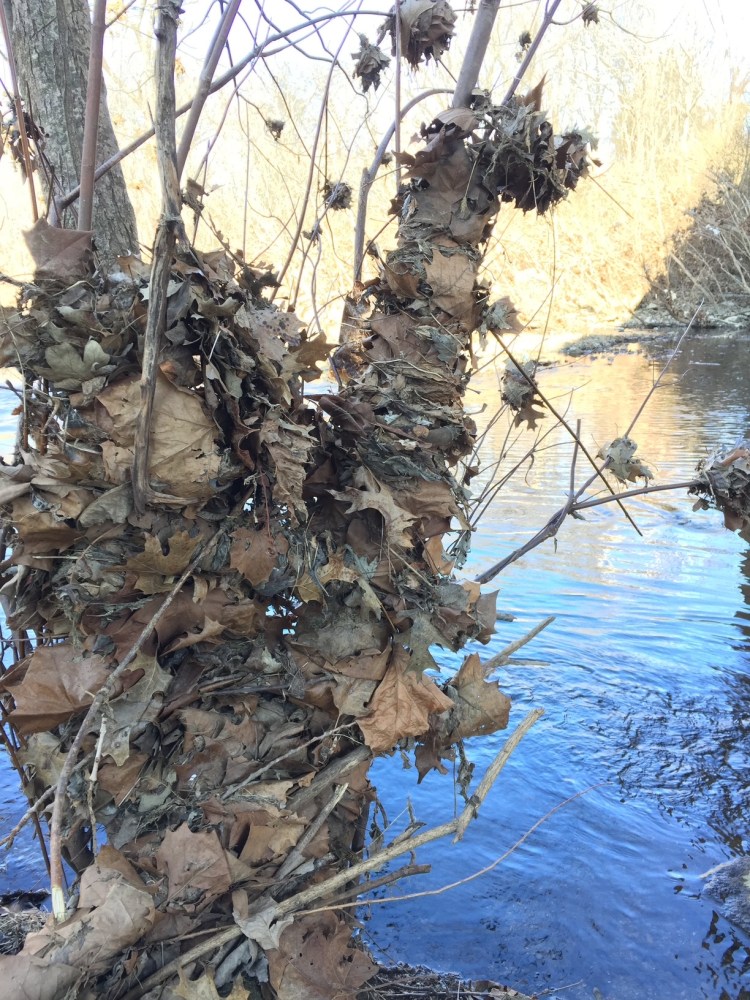
Two days in a row I rose from my bed feeling weary. Is this mild depression? Driven to get some fresh air and exercise, on Saturday I donned a light jacket, packed what I needed for the day, and headed to the Greenway. I snapped some photos and tried not to think. Just walk. Bare trees and brown hues dominated the landscape in the winter chill. I saw a red-headed woodpecker, two fat robins, some ducks on the water, a cardinal, and several squirrels with nuts in their mouths. Under one overpass, I was shocked to see how high the water had flooded at some point. Leaves twined tightly around branches above my head.

Returning to the trailhead, I sat on a bench to rest, but my body felt antsy, jiggly. As I tried to relax, I heard God say, “Be a tree.”

“But a tree doesn’t move!” I exclaimed.

“Precisely.”

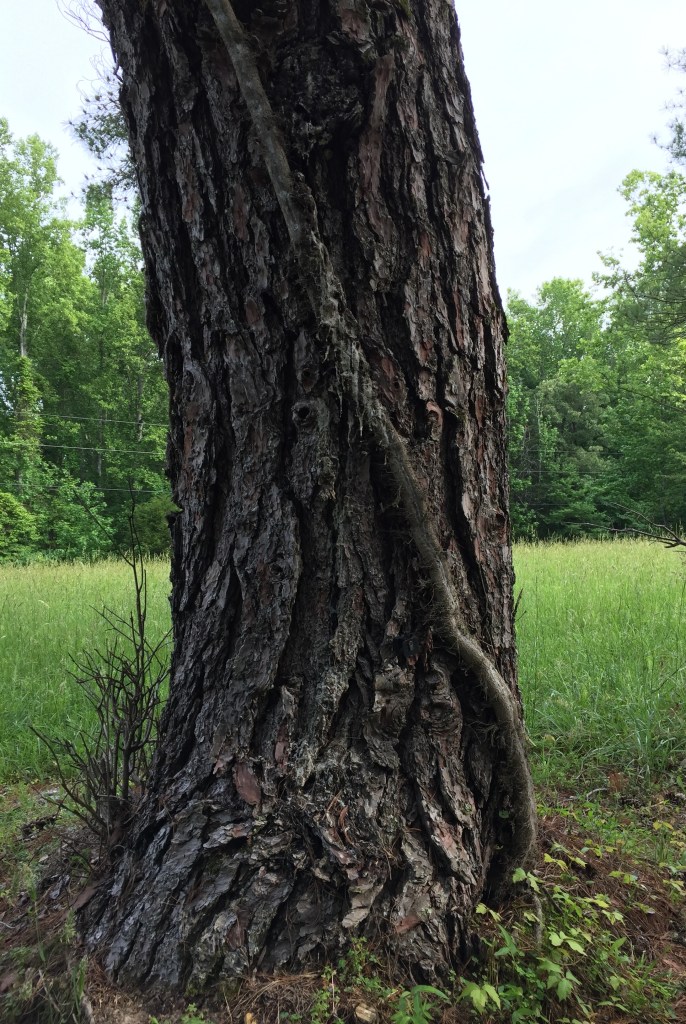
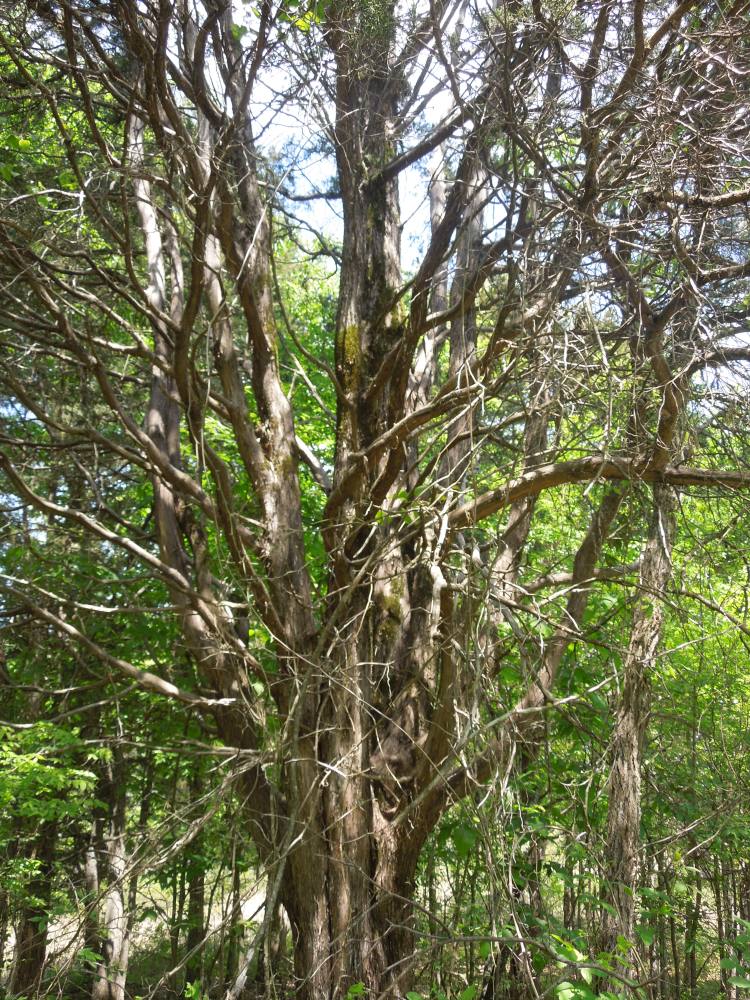
A tree. Rooted. Still. Unmovable. Sturdy. Stable. Allowing the animals to come to me. I don’t have to find them; they will find me. Just be. Be still and know that I am God. Be still. Be still.

Be still before the Lord and wait patiently for Him. Psalm 37:7 (NIV)

In awe of this simple injunction from the Holy Spirit, I began to walk again. But it wasn’t enough. I could still feel the dread of having to be “on” at my next meeting.

I came to another bench warmed by the sun and stretched out on my back. I needed to release whatever load I was still carrying. In my mind I saw a steel cord across my chest with weights on the ends, holding me down. I heard the word responsibility.

Again? Still? Why do I keep struggling with this?

I asked the Lord to cut the cord or remove the balls, and surprisingly He refused.

What? A weight too heavy for Him to lift? I don’t understand.

“OK, Lord, do it your way.”

And I watched as He lifted the cord a few inches off my chest, suspended lightly on His index finger. Now I could choose to stay or to move. That felt better.

And so I walked some more.

“Is there more, Lord?” I still feel tired in my soul.

Then I saw a closet door. When I opened it, a mass of material goods tumbled out. “What a mess!” I cried. “I don’t have the energy to clean it up and sort through the pile.”

“Your decision-maker is tired,” He said. “It’s time to sort and tidy your environment. You’ve been living in clutter and chaos in your home for six weeks now with Christmas, company, family messes, extra meals, and three big projects completed in three weeks. Your office and sleeping space are not restful or peaceful. It’s time to take back your place and create a peaceful environment.”

“That I can do,” I thought. And with that, the oppressive, heavy feeling began to lift.

“Be a tree. Be still. Look to Me to make your decisions. Declutter and find peace once more.”


All during church the next day I tried to process, to rejuvenate, to just sit and soak in God’s presence. I visualized a part of my heart like a squirrel scampering around the tree, so many branches to explore, unable to settle. Then I saw one branch overladen with fruit (and perhaps some excess stuff) drooping to the ground. It represented my to-do-list responsibilities, my ongoing projects, my schedule, and my ministry relationships. It represented the month of January and the burdens I’ve been carrying. I knew the little squirrel needed to stay away from that branch, but he lusted after the fruit. Perching on another branch on Sunday meant trying to focus on other things for a while, but that simply did not work. And so, I gave up the escapist, self-disciplined route to focus on what it might feel like to venture out onto that over-burdened branch. I was afraid it would snap and fall to the ground, and the fruit would rot before it could ripen.

And that’s when I saw a metal bar (God’s strength) underneath the branch supporting the weight. Now the squirrel could perch on the bar and still reach various fruits without breaking the whole limb. That felt a whole lot lighter and safer.

The next morning, I felt more rested and alert instead of groggy and grumpy. And that evening I did not get overwhelmed when we hosted a Super Bowl party for our entire family. Let’s see what tomorrow brings.

He shall be like a tree planted by the rivers of water, that bringeth forth his fruit in his season; his leaf also shall not wither; and whatsoever he doeth shall prosper. Psalm 1:3 (KJV)

Like a cedar of Lebanon he will send down his roots; his young shoots will grow. His splendor will be like an olive tree, his fragrance like a cedar of Lebanon. People will dwell again in his shade. Hosea 14:5b-7a NIV

The Odor of Heaven

Journal 2018

Your robes are all fragrant with myrrh and aloes and cassia. Ps. 45:8 ESV

We talk of the beauty of heaven and even the sounds, but seldom do I think about the anticipated smells.

I grew up in a different country than my husband. To prepare him for a visit to the land of my birth, I showed him pictures; I spoke to him in Hausa; he touched the curios I’d transported from overseas. But how could I share with him the smells of a place he’d never been to? He loathed my malodorous dadawa (fermented beans used as bouillon in tuwo da miya), but I wanted him to experience frangipani and guavas and baobab fruit. The minute he stepped onto the airline bound for Nigeria, the biggest assault to his senses was not the sights or the sounds, but the smells. I thought he’d pass out!

I can’t say that I have a favorite fragrance, but I am partial to the headiness of bread baking in the oven, the duskiness of rain approaching, or the intoxicating scent of sheets drying on a clothesline. I know little of myrrh and aloe and cassia. I can’t get excited about something I can’t relate to. The very words sound overpowering. I prefer light, fresh scents. I avoid darkly scented candles, most perfumes (including Essential oils) and heavily scented deodorants. Both my cat litter and my detergent must be unscented.

For sure, our visual capacity will increase in heaven, but will our sense of smell be different as well? I just know that there will be no malodor or distaste associated with my King’s garments. We will be drawn to it, delight in it. There will be nothing artificial or decaying or sour or bitter. It will be unlike anything we’ve ever experienced here on earth. I have no hooks on which to hang an odor I’ve never smelled before.

When we use words to describe something visual, we include a myriad of parameters: height, weight, shape, color, etc. But when we try to describe a smell, we’re reduced to one-word descriptors or similes, often connected to taste: bittersweet, salty, bland, lemony, spicy, peppery, acidic. Smells can have qualities such as delicate, overpowering, pungent, or acrid. But even those fall short when trying to describe an odor you don’t taste like pine or roses or rotting flesh.

We have associations with smell, like my mother’s cinnamon rolls, like a boy’s locker room, or like a friend’s Chanel No. 5. Our brains have smell memories—one whiff of something and we’re transported back to a time when we first experienced emotion with it. I know one MK (Missionary’s Kid) who stowed a scarf inside a sealed jar so she could pull it out occasionally to bring back her olfactory memories.

Besides a reference to His garments, I checked a concordance for other scripture references to fragrance. “Sweet smelling” is used most often in the Bible. I doubt this means sickly sweet but rather in a beautiful (a sight word), soft (tactile), pleasant sense.

  • Evil odor
  • Foul odor
  • Fragrance or pleasing aroma of Christ
  • Fragrance of His knowledge
  • Good ointments
  • Lebanon (cedar)
  • Mandrakes (wonder how they smell)
  • Of a field which Jehovah blessed: sweet
  • Of death or of life
  • Of the cloud of incense
  • Of the face like citrons
  • Of water
  • Perfume
  • Pleasant fruits
  • Pleasing odor
  • Spikenard oil
  • Sweet aromas
  • Sweet fig trees
  • The smell of battle
  • The smell of fire
  • We are a sweet fragrance to God.
  • His breath

Aroma, scent, savor, tang, reek, stench, feted, stink, and whiff—and that about exhausts the list, both in the dictionary and in the scriptures.

What’s your favorite scent and why?

A 2025 Update. This meditation is even more poignant to me after my year-long sense deprivation with COVID-19. Like a blind person who looks forward to seeing heaven’s beauty, I can’t wait to get my first deep whiff of heaven’s scents.

Passing on the tradition with my grandsons

Confession Time and God’s Time

Journal 2018

Many years ago, a missionary couple put me on their mailing list without my consent, and for some reason I resented it. I don’t even recollect why, but for years, every time their prayer letter arrived in the mailbox, I tossed it in the trash; and later by e-mail, I’d hit the delete button without reading it. Petty, I know. Every other missionary letter I received I’d read and pray through it. This morning, however, I felt the small prick of conscience when the Holy Spirit said I needed to change my attitude toward this couple.

Once a day, beginning in the New Year, I open one Christmas card, reread the sentiment and personal notes, and pray for the person who sent it. I had just confessed my sin when I picked up the next card in the stack. I laughed out loud when it turned out to be from this missionary couple. God has such a sense of humor. And later that day, for the first time, I read their e-mail newsletter and felt engaged with their ministry.

Why does it take me so long to recognize my blind spots or to acknowledge my triggers? So much wasted time, bad brain space, and lost opportunity for prayer. I’m grateful for God’s patience, love, and forgiveness.

On Job Burnout

Journal 2007

I’m really struggling right now. I’m angry, resentful, proud, defensive, hurt, sad, and stressed. I’ve had to let go of other areas of responsibility in order to survive my teaching duties. I’ve lost my joy and peace, and I don’t know the way back. My friends say I sound depressed.

[I was teaching at a junior college whose goal was to motivate struggling students to stay in school. The administration placed great pressure on the teachers to make this happen.]

VISUAL

I’ve sidled ungracefully past the wildly swinging middle section of a tightrope, but now I’m weary, trying to stay centered. Some in the watching crowd cheer me; others boo. I want to be applauded; I want to be liked; but when a belligerent student confronts me, my hackles rise.

ANOTHER VISUAL

I am a track team coach. I can encourage the runners from the sidelines or drive the momentum from the front. But if they choose to quit running, I can’t force them to continue. Nor can I simultaneously grasp every hand and drag them forward. While I’m helping one, others lag behind. I urge them to help each other, but it’s not enough. Complaining the race is too hard, many keep stepping off the track, distracted by illness, winter weather, or family stressors. Others continue to run but get lost and wander off into the marshes. Some are so far behind they’ll never catch up.

Meanwhile, my boss yells at me that I’m not trying hard enough. It’s my fault if I don’t provide their running shoes, hold their hands, and stay with them till the sun goes down.

And me? I’m wearing myself out trying to be in multiple places at once. I’m running 16 hours a day to keep the pace for the motivated student runners while racing back and forth to grab the laggers. I hear my boss yelling in one ear, and the runners wheezing and gasping in the other. The front runners complain that I’m spending too much time in back, and the ones in back complain I’m out front too much. I’m angry, tired, discouraged and ready for the finish line.

A THIRD VISUAL

I’m a spelunking tour guide. To those in my assigned group who follow closely enough to hear, I point out the beauty of the stalactites along the way. I can wait for a few stragglers to catch up before I begin lecturing, but if they linger in the back, talking and not listening, that’s on them. Or if they turn back to the entrance of the cave, I have to let them go. It’s not my fault if they are physically incapable of keeping up. I can provide a wheelchair, but unless they get someone else to push them, they’re stuck. I already have six people in my group who need wheelchairs! My job is to keep lecturing and keep pointing the way with my flashlight.

I become discouraged when I discover that only 8 to10 out of my original 20 make it to the beautiful waterfall at the end of the cave. The stragglers have missed it!

Now that I’m finished ranting, I’m ready to listen to the Lord.

THE LESSON

I am at fault. I have not bathed my classes in prayer. I have not prayed for my students by name. I have not consistently blessed my classroom. I’ve been too tired, distracted, and preoccupied to give it all over to God. I keep griping and crying that it’s too hard, too impossible a task that God has required of me. (Hmm. I sound like my students!)

And so, I repent for neglecting my spiritual disciplines. I can’t keep the students on track if I don’t have the right focus.

I realize, now, that it’s the company’s responsibility, not mine, to make sure the spelunkers sign a waiver saying they are physically and mentally fit for the journey BEFORE they enter the cave. Now that I understand it’s not my fault and that I’m doing all I can, what do I do with those in wheelchairs that the company requires me to get safely back to the entrance? I’m afraid the students will have to wait there alone in the pitch-blackness until we send for help. That’s when I notice permanent low lights lining the path. They will be safe for now.

A 2025 Update. I understand the passion behind wanting to help students succeed, but I’m not sure pressuring the teachers was the best motivation. This school is no longer in existence, and I am no longer teaching.

Approaching Burnout

Journal 2018

I can feel my mind and body edging toward burnout. It’s been an intense people- as well as project-oriented month. I need an entire day of alone time, but that’s not about to happen anytime soon.

VISUAL

I see a large room densely filled with high-energy party people. The noise is deafening. I’d prefer to stay outside, under the stars, alone and quiet. Sometimes that’s necessary, sometimes that’s possible. But I need to work through what it feels like to have to open the door and enter even when my reserves are gone.

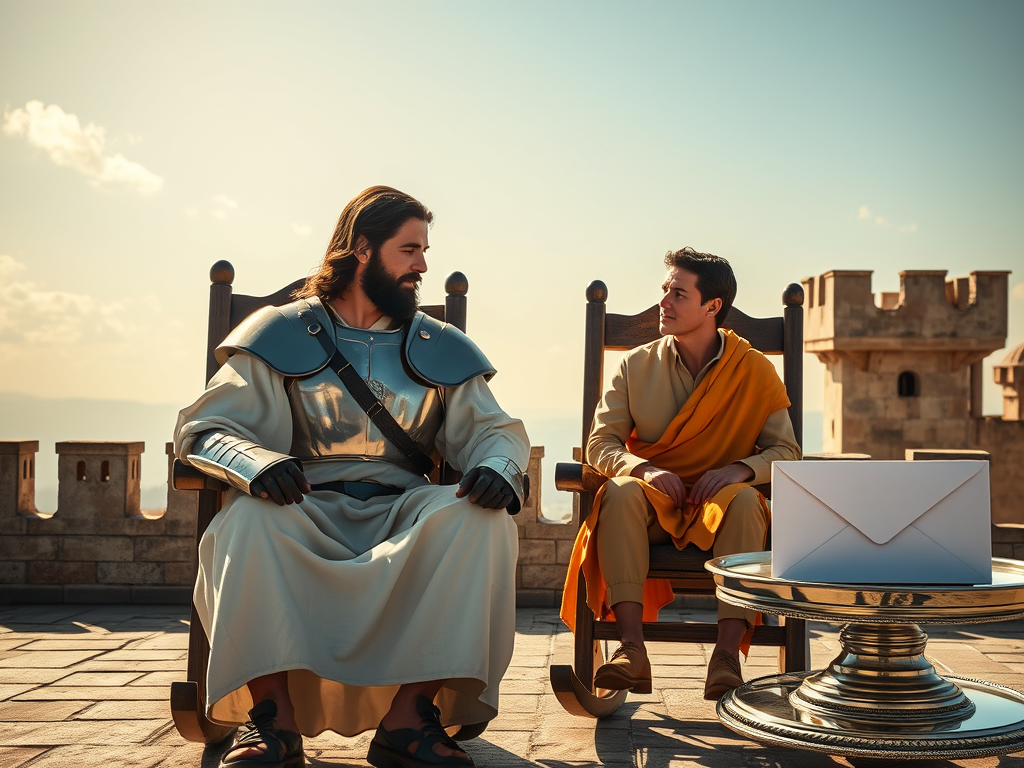
Jesus says to sit with Him first. Outside.

I can do that. A pond in front of our park bench reflects the moon. It’s quiet, peaceful. I don’t want to talk or think or plan or look at a clock or a calendar.

AI-generated

LATER

I spent all my free time reading a novel, guilt-free, no agenda, no thinking, just resting. I’m doing better but still craving more down time.

My mind continually goes to the Apostle Paul. What he endured is astounding. How did he physically survive all the persecution and emotional trauma? How did he not crack under the pressure? Was his drivenness from his temperament or from his experience? I feel like such a wimp next to this giant in the faith.

As I write this, I recognize false guilt: I believe I’m inferior, less than, a gnat next to a giant.

Jesus says, “Why are you comparing yourself to Paul? Why not to Me?”

My head wants to say, “Impossible,” but my heart wants to snuggle up next to Him and accept His unconditional love.

I feel His gentle rebuke. “What is Paul to you? I have different plans for different people. Do not take on what is not yours.”

It’s time to let that one go. I can learn from Paul, from his triumphs and mistakes, but I must keep my eyes on Jesus.

ANOTHER VISUAL

The visual changes as the Apostle Paul and I are now the same height, mere mortals obeying our Master. One is not inferior or superior, except in our choices. I may make wise or foolish choices based on the hand that’s been dealt me. I will not pout or gloat if I win or lose a game if I play it the best I know how with hints from the Master Dealer. Just play the hand smartly, take some risks or play it safe. But most of all, play graciously. Let my mistakes go, but learn from my faux pas and don’t repeat them. And do not get jealous if someone gets more wild cards than I do or if I get none at all. Play fair and without complaining and enjoy the game.

God’s Judgment

Journal 2017

… His wrath can flare up in a moment. Blessed are all who take refuge in Him. (Psalm 2:12 NIV)

Here’s my visual for this verse: God is a fire-breather. If you’re “out there,” you’ll get zapped, but if you stay close to his heart, you are safe and protected.

The thought of God’s judgment is slightly terrifying to me: facing the Judge of the Universe to discover how many words, thoughts and deeds didn’t make it through His refining fire. It’s not like coming before the school principal with whom you have no relationship. It’s more like coming before your dad when you’ve misbehaved.

And yet, since our sins are covered and forgiven, the judgment for the believer is more like a lack of rewards, not punishment. “Not guilty,” the Father has declared. I do not need to fear or dread His coming judgment.

Regret will be punishment enough, I think. The question for me is, did I obey God’s commands to love Him and to love others?

Keep me close to your heart, dear Lord. Let me not stray far from Your embrace.

A 2025 Update. After reading Imagine Heaven by John Burke, my heart relaxed. Burke “compares more than one hundred gripping stories of near-death experiences (NDEs) to what Scripture says about our biggest questions of Heaven.” He suggests that our life review before Almighty God will not be filled with shame (my default when I disobey Him), but rather an understanding about my choices.

Caught in the Act

Journal 2006

The other day I made a disparaging remark about someone, turned around, and there she stood! I don’t know if she heard me or not. I pray she didn’t. But I felt awful. I can’t apologize to her since I don’t know if she heard me, for if she didn’t, it would only make things worse.

You’d think I’d learn not to say negative things about people or put others down behind their backs. If I only spoke words that I would say in front of them, I wouldn’t get caught red-handed (I wonder where that expression comes from?*). God forgive me!

Lord, help me remember to keep my mouth shut! And show me how to release the guilt.

A 2025 Update. What I’ve discovered is that when I have negative thoughts toward a person, there’s always a negative emotion beneath the words. It is always best to work through what I’m feeling before I open my mouth. But when I do slip up, I try to give myself grace and thank the Lord for revealing another unhealed place in my heart.


*Here are two claims for the origin of “caught red-handed.” Most sources say the red refers to blood, but I prefer the one about strawberry jam!

AI-generated

The Origin of “Caught Red-Handed”

Caught Red-handed – Meaning & Origin Of The Phrase