Lessons from Moses 2

Journal 2006

In Exodus 4:11 (ESV) God said to Moses:

Who has made man’s mouth?

Who makes him mute?

Or deaf?

Or seeing?

Or blind?

Is it not I, the Lord?

These words startle me. They challenge the popular teaching that God wants everyone healed.

I’m really struggling today with my arthritis. I can tolerate the pain in my hands and feet but find it difficult to cope with the back pain and tightening muscles. I don’t want to be all-consumed with the body, yet it’s the vehicle for the soul to function. Do I just accept what’s happening, or do I seek help? Everybody I talk to has his or her pet remedy or solution. I need a diagnostic tool, but most of all, I need God’s guidance.

Can my infirmity bring more glory to Him than my healing? Is there something He wants to teach me in this situation that I could not learn another way?

AI-generated

A 2025 Update. I’m delighted to report the arthritis is gone! But that’s a story for another day.


God said to Moses, “Now go; I will help you speak and will teach you what to say” (v. 12).

When God tells me to do something, He will give me the tools to accomplish His assigned task.


In another incident, due to his wife Zipporah’s influence, Moses opposed God when he refused to circumcise his son, and God almost killed him. But the fear of losing her husband won over the distaste of the sight of blood, and Zipporah herself performed the surgery!

When God wants something done, He’ll make it happen, but how much better to cooperate with Him the first time He asks! Don’t try to out-manipulate God. He’s smarter and wiser. He’ll always win in the end.

Lessons from Moses 1

Journal 2006

Moses murdered an Egyptian. After the deed, he felt fear—fear of being found out. I wonder how he felt when the words, “Thou shalt not kill” appeared on the tablets of stone. Did he feel guilt? Remorse?

Sometimes I’m more concerned about being discovered than repenting of my sin. Words I’ve said in anger behind someone’s back leave me unrepentant till I’m found out by the one I slandered. Shame at my misdeed leads me to repentance.

I wonder if God’s original plan was for Moses to release the Israelites from bondage while he was still serving in Pharoah’s court. Perhaps the murder incident delayed God’s plan while He worked on Moses’ character.

God’s plan cannot be thwarted by man’s plan, but man can sure mess up God’s best or original plan! God lets us go our way until we see the error of our ways, and then He creatively works “all things for good.”

I wonder what difference it would make to our beliefs if we could see all the choices and various paths we could take in life. Would we believe sooner? Be more cautious of our words? Choose any more wisely? Every choice we make in life—every single step, word, or deed impacts us, the world, and others forever.

For example, if on Tuesday at 9 a.m. I choose to go to the grocery store, and I see a child being verbally abused by his mother, my simple smile could be the moment that freezes kindness and encouragement into that child’s life. And forty years later, God may bring that memory back to him and give him a safe place in his mind to start the healing process. Sound far-fetched? I don’t think so. If God ordained this event from the foundation of the world, and He is the One who prompts me to get groceries at 9 a.m. instead of at 10 a.m., then His plan is fulfilled.

AI-generated

But what if Satan sends a phone call that delays me by two minutes, and I miss this little encounter? Is God’s plan thwarted? I don’t think so. Perhaps He’ll send another person. Perhaps He’ll delay the mother too. Check. Checkmate. God wins!

Another checkmate example. When Moses argues with God that he’s incapable of doing what God asks, Moses gets his way—he doesn’t have to speak before Pharoah. But God gets His way when He chooses an alternate spokesperson: his brother Aaron.

Has my doubt or denial or stubbornness ever thwarted God’s best for me? Yes. But He still gets His will accomplished even though I may lose out on the best plan for me. Why is man’s heart so unbelieving? I piously think, given the circumstances, I would have been a Joshua or a Caleb or a Joseph or a Mary or an Esther. But in reality, I’m probably more like Moses.

One-Track Mind

Journal 2006

I have a one-track mind that struggles to manage multiple, simultaneous crises. At one time I aspired to become a medical doctor until I realized I didn’t have the multi-tasking skills needed for that profession. The positive side to this super-power is I can focus on a task to completion. Unfortunately, I get frustrated at interruptions, finding it hard to pull my mind away from the zone.

As I’m concentrating on a task, I’m not thinking about God. When I’m worshiping God, I find it distracting to be around people. And while I’m with people, I can’t center on my inner needs. How do I balance these areas of focus and release my feelings of worry and guilt that I’m “less than”?

So here’s my visual: With my heart in the middle, my feet perform a task, my arms reach out to minister, and my head looks up to God. When I look within, I focus on self—adjusting and changing, making goals, and removing triggers. When I look outward, I focus on relationships and the needs of others.

So, in my visual, it’s okay to be seated (feet still, no task) while I reach out to minister to others. The body is still there, whether my mind is focusing on it or not. When I watch my feet, my senses can still be alert, aware of changes in the environment that will warn me of danger. The parts are all inter-related, still in existence even if my eyes are focusing on one part only. The rest of me doesn’t go away.

So how do I find balance? Should I tithe my time? (That would mean focusing solely on God 2.4 hours in a 24-hour period or 1.6 hours if I only count waking hours). How much time should I allot to self-examination? (As much as necessary, I think, to become emotionally healthy.) If my arms are always engaged in ministry, my feet (tasks) don’t get done. If my head always faces the sky, my feet will trip. Each part must take turns. The trick is to maintain an equilibrium between the parts.

But I must not become too compartmentalized. I can focus on each in rapid succession. Micro-seconds of looking up while engaging my hands or feet will give me orientation. Checking my attitude while ministering to others is necessary. I might not be able to stop for self-care in the moment, but I certainly can take note of it and deal with it at my first opportunity.

A 2025 Update. Over time, I worked through the anger I felt at my tasks being interrupted. I find I can more quickly redirect my attention to others or return to the zone and refocus on my task without anxiety or shame. Being one-track-minded is not a character flaw.

Finding Jesus

Journal 2006

Philip Yancy in his book The Jesus I Never Knew suggests that we get a false view of Jesus from our exposure to false teachings, life experiences, and poor examples. Perhaps my view of Jesus is slightly off-center I realize.

I watched the movie Anna and the King last night. The King of Siam has Christ-figure elements about him. His eyes are gentle and kind. His self-sacrifice for the sake of his wives and children. Room in his heart for one more. Of course there are major flaws in this analogy since he is human and a Buddhist, but there’s something about his character that draws me in, makes me sit up and take notice and love him.

Because I’m married, I can’t relax around most men—my heart stays on guard. But I’ve encountered three men in my life who make me think “Jesus.” One was a relative, one a friend, and another a stranger. Each had that quality or air that made me want to sit at his feet and learn.

Jesus is not my human daddy; He’s not my human husband; He’s not the King of Siam, a friend, or a relative. Who is He then? How do I picture Him? Am I afraid of Him? Is this why I need to come to Him as a little child, trusting, unself-conscious, needy, desiring to sit in His lap and be held …?

The verse in Isaiah that says there is no comeliness about Him that would draw us to Him trips me up. Of course that refers to His human form or perhaps to His battered body on the cross. But what if I could see Him in His risen, shining, radiant beauty? Would I be drawn to Him then?

I can approach Jesus and talk to Him about anything, and He doesn’t get angry or defensive or push me away. He listens with patience and waits for me to quit struggling, to relax and trust Him.

So how can I see Him? Many clients report seeing glorious revelations and pictures in another dimension. I visualize nothing. I have no inner landscape, no other world, no Land of Narnia. (How does one get to Narnia anyway without a wardrobe?) How does one get to see the face of Jesus? In the final scene in Finding Neverland, the playwright tells little Peter he can visit his deceased mother any time he pleases.

“How?” Peter asks.

“Just believe,” he says.

Just believe? How do you do that?

“Through the eyes of faith,” you might tell me.

But what is that? Give me more than words. Give me an experience. Give me a heavenly vision.

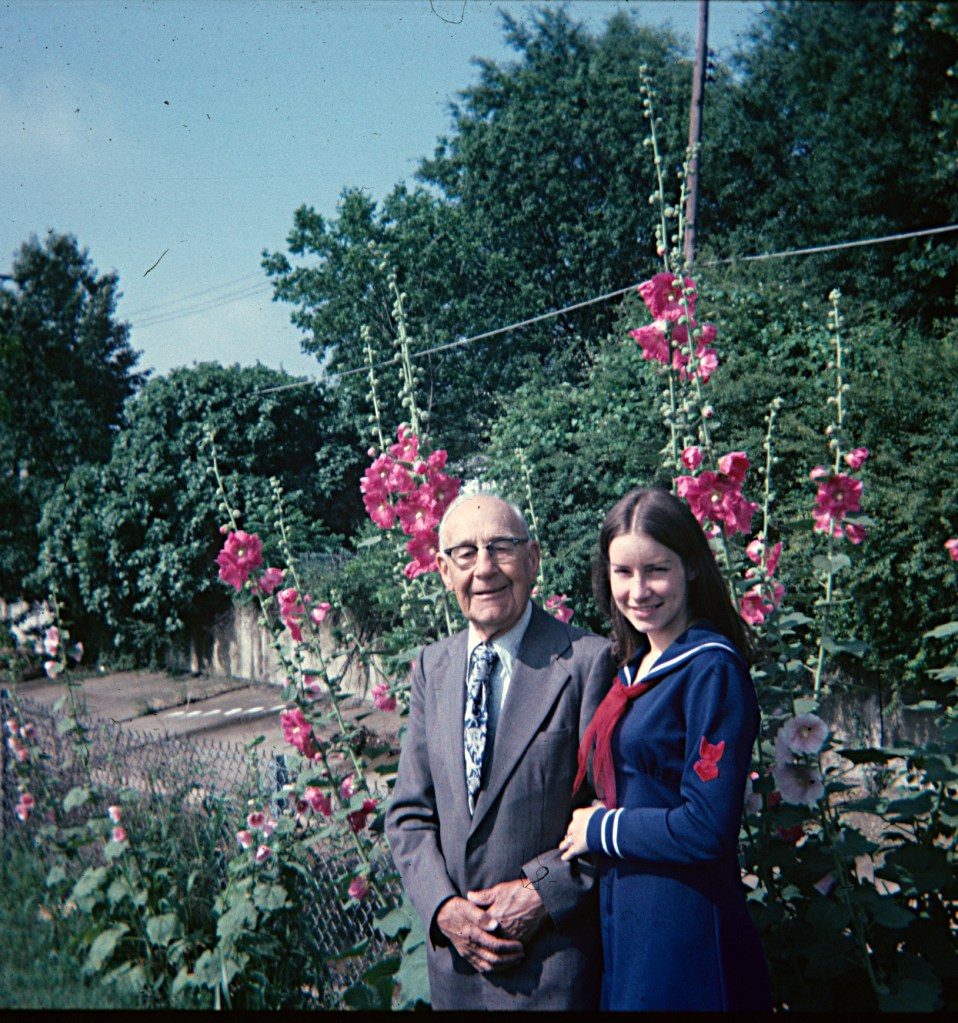
Without that, I return to an earthly example. I see Jesus in the eyes of my Grandpa Peterson. His gentle, kind eyes model for me what it feels like to come to Jesus as a little child and feel warmth and unconditional love.

Jesus Is the Joy of Living

Journal 2006

I have been struggling, fighting, working at getting some uninterrupted quiet time first thing in the morning. Not happening. This time is so precious to me, and when I have to give it up for whatever reason, it leaves me irritated. Why? What’s going on here, Lord? I know spiritual warfare is part of it.

I woke this morning with this childhood song in my heart: Jesus is the joy of living. But it doesn’t feel true today.

When, on this earth, will I quit struggling to keep Jesus as my joy? I get annoyed, upset, angry, peeved, frustrated, ticked off at so many stupid little things. I’m tired of it! Why can’t I just have a “poof pill”? POOF! And the anger is gone. Actually, giving up anger is the only way to make this happen, but it’s a lot of work getting to that place of peace. I’m a slow learner.

I know irritations in life are inescapable, but how I respond to them is up to me. Lord, give me peace.

A 2025 Update. I am in a different season of my life now and have more control over my schedule. Finding alone time is no longer an issue. Maybe that’s why my heart easily agrees that Jesus is the joy of living.

AI-generated

Where Do I Fit?

Journal 2006

It had been an intensive week with a D.I.D. (dissociative identity disorder) client. At the end of the week she stated, “I feel so broken and shattered. What good am I? What’s the point of my life, anyhow? How can God ever use me?”

His answer came to her in a visual. “I’m going to use all your broken parts to create a beautiful mosaic.”

I may not dissociate, but like all of humanity, my life is broken in some way. The parts of my heart lie scattered on a table in a jumbled mess. I give up trying to find all the pieces of this puzzle. I need someone with more creativity, skill, and a mastermind to figure it all out. I hold just one piece in my hand right now. I don’t have the time, talent, or energy to pick up more than one piece at a time. Show me, Lord, what to do with this one piece. Keep me from cutting myself on the edges as I work with it.

I see myself wedged in sideways into the mosaic. I can only influence what I can reach—my little corner of the world. But I can see in all directions—the needs of the world. And I can pray and cheer on the other pieces. And God is making something beautiful out of my life.

Experiencing The Holy Spirit

Journal 2006

There’s a debate swirling around these days about the role of the Holy Spirit. Some claim that only through study of the Scriptures can we know truth; others say we experience the Holy Spirit whispering truth in our ears. I say it’s both/and. We must know the Scriptures in order to test the spirit’s voice. The Holy Spirit’s words will never violate the written Word.

Some people argue, “You can’t trust your experiences,” but I retort, “That’s all we have! Everything that has ever happened to us is our experience, and we live our lives accordingly.” My experience will be different from yours, and this is okay. The goal is to get rid of the lies we believe in those experiences.

Some would admonish us, “Don’t seek an experience,” and I think they may be right. If one person experiences a spiritual high of some sort, I don’t have to go chasing after it to duplicate it. God will give me the experiences I need. My goal is to continually seek Him, pursue Him, and look for the treasures in His Word.

A spiritual experience can come from the outside—such as a visitation by an angel. This is not something I can manipulate or orchestrate. It’s God’s doing. But experiencing God on the inside, in my mind, happens because I choose to open myself up to Him—when I choose to obey, to let go of bitterness, anger, and unforgiveness. It comes when I fill my mind with good things and not evil ones. It happens when I guard my heart against the lies and wiles of the devil. It happens most often when I spend quiet, alone time in God’s presence, just being still. It’s the place of meditation. It’s where Jesus is. It’s where God’s Spirit speaks to my human spirit.

What Does It Mean to Follow?

Journal 2006

“Anyone who does not carry his cross and follow Me cannot be my disciple” (Luke 14:27).

What does following mean exactly?

It’s walking behind Someone on a footpath. When you come to a fork in the road—a crisis like death or illness or disaster—you continue to stay behind the Leader, not stray off the path or choose another fork. It’s trusting that the One you follow knows the way through the wilderness.

John 12:26 says, “If any of you wants to serve Me, then follow Me.”

What does it mean to serve? Is that the same as following?

When Jesus washed the disciples’ feet, He said, “What I’ve done, you do.” Did He mean that we should have foot-washing ceremonies? I serve my family by cooking for them, cleaning the house, running the household. But it’s more than that. Serving others is a heart attitude.

When I serve others, I’m following Jesus. When I follow Him, I will serve others.

A 2024 Update. When I first began meeting with clients for inner healing prayer, I was appalled to learn that some of them believed that serving others meant self-abasement, self-neglect, or laying themselves down as a rug to be trampled. But lying on the pathway renders them incapable of following the Leader. Fortunately, God is patient. He will allow us to stay there until we cry out to Him for help. Once we can stand, we can follow Him.

Navigating Legalism

Journal 2005

Our Pastor preached through the list of kingdom qualities in Matthew’s Sermon on the Mount and asked which quality we needed to focus on. I chose “avoid judgmentalism.”

The Pharisees [hypocrites] honor Me with their lips. But their heart is far from Me. But in vain do they worship Me, teaching as doctrine the precepts of men. (Matthew 7:6)

Here’s my definition of judgmentalism based on this passage: A self-righteous attitude about how others conduct themselves—usually because I don’t do this “sin” myself. And often the “sin” in question is regarding a tradition of man rather than breaking a direct command of Scripture.

Want some examples?

  • Women were forbidden to wear pants at the college I attended.
  • Red lipstick was considered worldly in my childhood culture.
  • Going to the movie theatre was a no-no.
  • Dancing was definitely in the category of sinful behavior.
  • Modesty was defined by skirt length.

Culture has a huge impact on this discussion. What’s modest for one culture is immoral for another. I think it comes down to the attitude of my heart. I can dress like a Puritan and not have a pure heart. The other end of the continuum is harder for me to gauge. At what point do I transition from a poor heart attitude to sin? Or is it a point? Can the discussion focus on the amount of material, or should the focus be 100% on the heart?

Next, I pondered the difference between a Pharisee’s judgment and the weaker brother’s judgment (1 Corinthians 8:11). In a previous church, the pastor urged us to refrain from a particular activity (fill in the blank here), so as not to offend a weaker brother, thus causing him to sin.

The Pharisee holds his standard of righteousness for his own glory. I don’t need to change my behavior to please him. The weaker brother (one who hasn’t been taught yet) has a desire for righteousness for God’s glory, and I need to respect him.

But there’s a third category of people to consider. 1 Corinthians 10:27 says, “If one of the Unbelievers should say to you, ‘This is meat sacrificed to idols,’ don’t eat it—for the sake of the conscience of the one who informed you.” Note that this unbeliever invites you to eat with him, so this conversation is in private—not referring to a system (which is where my mind goes with my former church). So then the observation [judgment, criticism] in this passage is coming NOT from a weaker brother, but rather from an unbeliever who “knows” the Christian’s standards.

To sum it all up, 1 Corinthians 10:31 says, “Whether, then, you eat or drink, or whatever you do, do all to the glory of God.”

I cannot judge another person’s motives. I am only responsible for my own heart. I just know that I prefer hugging the mountainside over seeing how close to the cliff’s edge I can get.

A 2024 Update. Legalism with all its “shoulds” and “have-tos” had a strong hold on me for many years, but I don’t struggle with these issues anymore. God gave me a mind to ask questions and to search the Scriptures, and God’s answers have brought peace to my heart.

Keeping the Sabbath

Journal 2016

I grew up under the teaching that as Gentile Christians, we were commanded to “keep the Sabbath day holy.” Never mind that our instructors mistakenly called Sunday “the Sabbath” or that, as I believe, we are no longer under the Law of Moses.

The Mosaic Law spelled out some parameters for Sabbath or Shabbat observance: no fires, no cooking, no traveling. The Pharisees took the Law a little further and defined the Sabbath according to what activities and to what extent they thought were or were not permissible as per their own definitions. In 39 categories, the Talmud defined work as “any activity that creates or that exercises control or dominion over one’s environment.” These included baking, making garments, making leather, and building structures. Today their Sabbath legalism extends to not pushing the buttons on an elevator or turning on electric lights.

Reform Judaism says, “One should avoid one’s normal occupation or profession on Shabbat whenever possible and engage only in those types of activities that enhance the joy, rest, and holiness of the day.” According to this definition, if I were to “keep the Sabbath,” my normal activities would be housework, computer work, and the business end of ministry. It would not preclude ministry itself according to Jesus’ example. He preached and healed all week long. You’d think He’d refrain on the seventh day and take this day off from “work.” But apparently His work wasn’t classified as labor.

Jewish law prohibits work, but it isn’t the same definition as our English word for work. The word Shabbat literally means “to cease” or “to sit.” While resting is implied, it’s not the meaning of the word. God created for six days, and then He ceased. He didn’t need to rest. I may not be Jewish, and yes, Jesus is my Sabbath rest, but I do need to “cease” on a regular basis. I need the change of pace, the chance to recoup, refresh, and recharge my body, mind, and soul.

So . . . generally, once a week, I turn off my computer, refrain from cleaning house, and occupy myself with things I enjoy doing—guilt-free, such as reading, doing a puzzle, or golfing with my husband (after church of course!)

What does “ceasing” look like for you?