Not My Calling

From my 2013 Journal.

I sat ho-humming through yet another yearly “revival” sermon on The Great Commission (Go/going, baptize, make disciples) ending with the usual admonishment that every believer was required to “go and do thou likewise,” when I stopped to take notice of the text. Were this Baptist preacher’s carefully crafted words meant to be taken literally? Though he’d be delighted if I witnessed to my neighbor, I’m sure his face would turn ashen if I, as a woman, volunteered to baptize a convert!

And how would he handle I Corinthians 1:17 where the Apostle Paul says, “God did not send me to baptize, but to preach the Gospel”? Would this preacher berate Paul for not following orders? Or the Apostles who declared, God has called us to preach, not to wait on tables? Can you tell I was feeling triggered!

God has called me to something specific, and if I focus on that, I will fulfill His great commission for my life. Why do I keep questioning this? Because of the voices from outside. As I sat quietly listening to God’s voice, I sensed Him saying, “Read the rest of the passage.”

. . . as the Lord has assigned to each his task. (I Cor.3:5-9)

I have an assigned task. I can quit worrying about whether I should be doing other tasks. Just do the one God assigned me to!

Each one should retain the place in life that the Lord assigned to him and to which God has called him. (I Cor. 7:17)

This verse refers to our position at the time of conversion:  whether slave/free, circumcised/uncircumcised. But the wording implies that God is the One Who places us in our position. I want to be faithful and content in the place God has assigned me and, call me a heretic, but I don’t think that includes a literal fulfilment of the three parts of The Great Commission.


Big Pants, Small Heart

From my 2013 Journal.

As I passed near the men’s clothing aisle of a new Goodwill store in town, I noticed a large woman, weight mostly distributed around her waist and thighs, holding up an enormous pair of pants that would have fit someone one-and-a-half times her size. “Can you believe this?” she exclaimed. “I’ve never seen pants so big! I’ve never seen anyone who could actually fit these! Wow! These are huge! Look at this!” she reiterated to her shopping companion.

Several thoughts raced through my mind:

  1. Why did she disbelieve that someone could actually fit them? I’ve seen people this large in person and on TV.
  2. She, herself, was (ahem) larger than average.
  3. Why was she making such a big deal about it—loudly—in public?
  4. Did comparing her large frame with someone larger make her feel better about herself?
  5. I felt more compassion for the large-pants man and less compassion for the lady. Why?

And then it hit me. I recognize myself in her. I do the same thing (sigh)—I make the biggest fuss about what triggers me the most. When I roll my eyes at someone else’s words or deeds, I recognize some unfinished business in my heart—some lack of compassion, some unresolved hurt, or some judgmentalism. The woman’s words simply revealed what was already in her heart. I don’t judge this woman—because I am too much like her. Perhaps I need to practice more grace . . . toward myself!

For out of the overflow of his heart he [a person] speaks. Matt. 7:15-23; Luke 6:43-45

How Much Evidence Do I Need?

From my 2016 Journal.

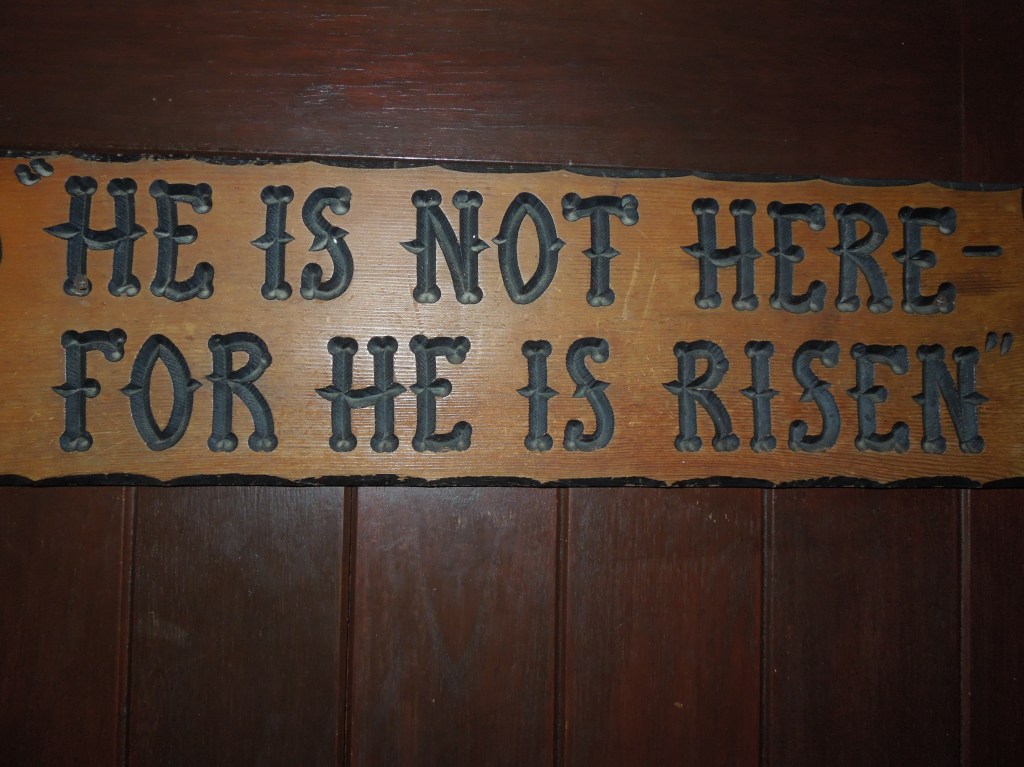
Jesus’ death left pain in its wake, and His followers stubbornly refused to believe the women who reported seeing Him after He had risen (Mark 16:14). I wonder what lie the disciples believed that kept denial in place?

  • Too good to be true.
  • I can’t let myself feel hope for fear I’ll be disappointed.
  • You can’t trust a woman’s word.

Jesus doesn’t need to dig around in their psyches to help them discover why they’re being stubborn. (That’s what I would have done.) He knows their hearts and rebukes them for their refusal to believe. God is patient with our struggles and fears and doubts, but He’s not so patient with stubborn disbelief. How many times did He say, “O ye of little faith?” There’s no pointing fingers here. I’m plenty guilty myself.

The women at the tomb believed as soon as the angels spoke truth to them. The men, however, continued to doubt when presented with the evidence (others’ testimony and an empty tomb). The disciples on the road to Emmaus couldn’t seem to grasp the truth, and Jesus rebuked them. Even when the disciples saw Jesus in the room where they gathered, and the joy center of their brain activated, they had a hard time believing.

We know that the brain is a complex organ—different parts are responsible for different functions: the occipital for eyes, the amygdala for emotion, the frontal cortex for logic and reasoning, and memory in a different part. Since God created the human brain, He knows what part gets activated during fear (like Peter sinking in the sea of Galilee). He knows that the frontal cortex shuts down during a fight/flight/freeze situation. Yet He seems impatient: Why do you doubt, Peter? Why do you have so little faith? Why don’t you men believe when the evidence is in front of you that I’m alive? Stop doubting!

What makes us doubt? Is the emotion center too strong? Are there lies imbedded in that emotion? Those with D.I.D. (Dissociative Identity Disorder) maintain strong denial parts, for if they believe trauma happened, then they’d have to admit it was real. Once truth enters the brain, however, and they experience an encounter with the living Lord Jesus, doubt and fear flee. Jesus knows all this, so is He really impatient . . . or is He challenging His disciples to accept HIM, the way, the truth, and the life?

Sometimes it’s hard to believe someone else’s testimony, but everyone (including Mary, the ten disciples, and eventually Thomas) believed when they saw the resurrected Jesus with their own eyes. Why? Because they experienced it for themselves. Truth experienced in the right brain translates into left-brain belief.

When evidence stares me in the face, what makes me dig in my heels and refuse to see truth? [2021 update: I’m not talking about political opinions on whether or not to wear masks!]

On the Subject of Music

From my 2015 Journal. I was raised on the great hymns of the faith at church, Gospel choruses at boarding school, Pioneer Girls camp songs (thanks, Miss Pat), and my mother’s favorite Gilbert and Sullivan record albums. (I memorized all the lyrics to “I Am the Very Model of a Modern Major-General” by the time I was 10.)

We had no electricity in our little African village, so record players had to be hand-cranked or run on low-quality batteries. I wasn’t exposed much to secular music or American culture until I was in high school.

Is it any wonder, then, that I struggle with contemporary worship music here in the USA? As hymns have been tossed out of our churches like old, worn-out socks, I find myself also tuning away from Christian radio stations and gravitating mostly to classical music when I’m alone in the car. Unlike the repetitious lyrics (I kid you not, I counted 38 repeats of one phrase this Sunday*), my preferred music soothes my soul and draws me upward.

I try not to judge you for your taste in music. Life would be boring if we were all alike. My eldest daughter sings along to every tune played over the intercom at Wal-Mart (there was music playing?). I respect your desire to listen to what matches your mood and gets your foot tapping and draws you into worship. But I prefer music that makes my soul relax. Am I weird? Is this temperament, personality, or a cultural or generational footprint that stamped itself on my soul?

As the music wars play on, I ponder what kind of music we’ll hear in heaven.** What will God’s voice sound like when “He quiets me with His love and rejoices over me with singing” (Zephaniah 3:17 NKJV)?

I do know that our churches would do well to vary their worship styles to draw more people in—from different generations, yes, but also for different temperament types. Not all of us are sanguines. We melancholies need something different for our souls. Just sayin’. (Though I’ll make an exception today and let you sing “Happy Birthday” to me.)

*A 2020 update. Recently our worship leader addressed the repetition issue. He explained that some people need positive reinforcement to solidify a truth in their heart—the same principle but opposite effect of writing lines for punishment at school (I speak from experience). For those of us who already know this particular truth, we can use the extra time praying for those who still need to hear it. I can now give more grace to my fellow worshippers instead of harboring a critical spirit.

**I just finished reading Imagine Heaven by John Burke, amazing accounts of near-death experiences. These people were incapable of describing the sound of angels singing or the thousands of human voices in many languages blended in harmony. There will be no music wars in heaven!

Character Flaw

From my 2013 Journal. I’ve always pictured Joshua, son of Nun, as a flawless character. But the Bible records one mistake that he made—a treaty with the Gibeonites (Joshua 9). Not an evil thing, not a disobedient decision, but a neglectful act: he forgot to consult with God.

This is a scary thought to me. I don’t (usually) blatantly sin, disobey, or rebel against God. But how often have I been neglectful, and—horrors—deceived. It happens to all of us. Joshua was one of the best—a man of faith, courage, and integrity. If he could be deceived, who am I to claim it will never happen to me?

Once Joshua realized his mistake, however, he rectified it.

  1. He confronted the deceivers.
  2. He kept his oath.
  3. He found a creative way to redeem his error.
  4. He learned from his mistake. He listened to God the next time!

God responded, “Don’t be afraid,” and then He gave the Israelites great victory over their enemies. God listened to Joshua’s prayer to make the sun stand still—a once-in-history experience.

There never has been a day like it before or since when the Lord listened to a man (Joshua 10:14).

Joshua’s story gives me hope. My mistakes do not have to define me or bind me.

Photo by Pedro Figueras on Pexels.com

What’s Your Grid?

From my 2012 Journal. Once I learn a perceived truth, I tend to filter all of life through that grid. For example, when I first learned about the benefits of homeopathic care, I shunned all allopathic doctors—until experience taught me that each has its merits for curing diseases.

One day I had a conversation with a gentleman who declared that the key to a child’s emotional health lies in his relationship with his father. This may be true in some or even in many instances, but not in all. It struck an emotional chord with him, however, and he began to take on some “shoulds.”

I’m currently reading When Helping Hurts by Steve Corbett and Brian Fikkert—a book on the subject of poverty and how not to hurt the poor in the midst of generous attempts to help. What strikes me is the matrix through which the authors view the subject—not that it’s wrong—but that all the verses and arguments are from one premise or topic. For example, the authors pose the question: Why were the Israelites sent into exile? “Idolatry” would be my immediate answer. But the authors concluded: because they didn’t properly care for the poor. Well . . . maybe . . . and that certainly could be part of the answer, but it’s not the only one (See Leviticus 26).

If I were writing a book about idolatry, I’d focus on that topic only and ignore the issue of caring for the poor. Or if I wrote a book on children or women or finances in the Bible, I’d examine all the Scriptures that pertain to just that topic. It’s normal to focus on one topic at a time—it’s all my brain can hold anyway—but I think I may develop tunnel vision in the process.

Grandma grid: My grandsons are the best!

Early in my ministry, TPM (Transformation Prayer Ministry) became my grid for all inner healing needs. While I was reading Boundaries by Cloud and Townsend, I started to view life through that filter. The founders of Temperament Analysis, Arno Profile System see every emotional solution through the grid of temperament needs.

Here are some grids for the topic of addiction.

  • The theologian calls it sin: stop doing it!
  • Solomon says it’s unwise: look at the consequences (Proverbs 23:29-35).
  • The counselor wants to know motive: why are you doing it?
  • The doctor suggests it’s a chemical imbalance: let’s help you detox.
  • The family says: you’re hurting me; you need help.
  • The addict says:  I’m not hurting anyone but myself and I’m fine.

Whose grid is correct? The study of psychology, boundaries, codependency, temperament, TPM, or any other system or method (including a set of doctrines)—these are not the authentic answers to human needs.

So here’s where I struggle. Because of my profession and training, my grid tends to be too narrow. The worst part of it is, I’m always thinking, “You could be fixed . . . if only you had the set of keys that I have in my possession. These keys could help unlock the doors on your pain—but either you don’t want to use them, or you don’t know that they exist.” Truthfully, however, my tools are plastic. Jesus is the Master Key; only He can unlock every door. Only God sees the whole picture all at once. He knows every answer, nuance, and issue.

A 2021 Update: I’ve since added HeartSync Ministries to my toolbox. But even this grid is imperfect. Only Jesus has the perfect toolbox.

What’s your grid?

Define Worldliness

From my 2012 Journal. When I was growing up, the adults in my life defined worldly as doing anything that looked like you might fit into or embrace the culture around you:

  • Wearing certain clothing (the list might include too short, too long, too revealing, too flashy, pants vs skirts)
  • Going to a bar / drinking alcohol / smoking / drugs
  • Facial hair on men / short hair on women
  • Going to the movies (or the pool hall or the bowling alley)
  • Wearing too much makeup (especially red lipstick) or jewelry
  • And, of course, dancing!

So I was surprised when I read that the Apostle Paul defined worldliness not with outward-appearance restrictors but as “jealousy and quarreling among yourselves.”

You are still worldly. For since there is jealousy and quarreling among you, are you not worldly? Are you not acting like mere humans? (I Corinthians 3:3)

Whom should I believe . . . ? Perhaps those adults in my life were more worldly than they cared to admit!

Scott and I, young and in love, and apparently not caring about outward appearance!

Should You Flee or Stay?

The shrewd man saw trouble and took cover; the simple kept going and paid the penalty (Proverbs 22:3).

From my 2012 Journal. I’ve often thought about how the Psalmist David fled from King Saul; but the 3 young captives Shadrach, Meshach, and Abednego stayed put and refused to bow before an idol at the king’s mandate. Corrie ten Boom hid Jews in Holland during Hitler’s regime, while others refused to harbor fugitives. What’s the right thing to do? Flee from harm’s way or stand your ground and take the consequences? What about Mary and Joseph? God could have simply put a miraculous, sword-proof shield around the holy family or made them invisible to the soldiers’ eyes. But God chose to remove them from the situation. He told them to flee to Egypt.

What would have happened if David had stood his ground and confronted Saul instead of running? Or if the Jews hadn’t gone into hiding? Or if Shad, Mesh, and Abed had fled the country?

When the Israelites were besieged by the Babylonian army, God instructed them not to resist—just surrender and go into captivity. Instead, the leaders and the people fought back, tried to escape, and hid—and many lost their lives as a result. Later, God told the remnant to do the opposite: stay put and not flee to Egypt. The key, I think, is obedience to the Spirit of God who knows what’s best.

I can’t say I’ve ever been in this situation, so it’s hard to predict what I might do. But I think about it. Have you ever experienced this dilemma? How did you choose and why?

If you refrain from rescuing those taken off to death—those condemned to slaughter—If you say, “we knew nothing of it,” surely he who fathoms hearts will discern [the truth]. He who watches over your life will know it. And he will pay each man as he deserves (Proverbs 24:11).

Choices, Consequences, and Character

From my  2012 Journal. A study of two men (II Kings 5)

Jordan River today

The story: A little girl is taken captive from Israel and placed in the service of a lady whose respected husband Naaman is a commander of the Syrian army. One day Naaman is diagnosed with leprosy and the servant girl tells her mistress that healing is possible back in her home country. By a circuitous route, Naaman winds up at the prophet Elisha’s doorstep. Elisha sends his servant Gehazi out the door to instruct Naaman to dip 7 times in the Jordan River. Naaman is ticked off (the dialogue is quite comical) and stomps away. But in the end, he obeys and gets healed.

Next, Naaman returns to Elisha’s house to reward him for this healing gift, but Elisha refuses to accept anything, and Naaman drives away in his chariot. The servant Gehazi, meanwhile, runs after Naaman, tells a fib, and walks away with some loot and hides it in his house. For this indiscretion, God inflicts leprosy on him. Talk about irony!

Naaman’s issue? Pride. He believed that God could heal him, but he expected God to perform in a certain way. When God didn’t meet his expectations, he got angry, but he eventually humbled himself. He made the right choice in the end.

Gehazi’s issue? Greed. But his one indiscretion left his life in ruins. (I wonder if he attempted a 7-dip trick in the Jordan to get rid of HIS leprosy!?)

So here’s a foreigner who gets a gift from God and an Israelite who gets punished. Why?

Lesson:  It’s really about what’s in the heart. Actions matter—we live with the consequences of our decisions. But if we guard our hearts, we suffer fewer consequences for poor choices.

Lesson:  It’s not who you’re living close to that determines your character. Naaman lived in a position of power under an ungodly, idol-worshipping king. Gehazi lived in a position of servitude to a godly prophet.

Christmas Musings

From my 2012 Journal. The Christmas story leaves me with more questions than answers. If you just read Matthew’s Gospel, chapter 1, you’d conclude that Jesus was born in Nazareth. But suddenly Chapter 2 declares He was born in Bethlehem–no explanation as to why or how. Without Luke’s account, we’d be left to speculation: that Mary and Joseph left Nazareth due to the shame and embarrassment of Mary’s pregnancy.

We speculate about the town gossip that Mary endured, but I wonder . . . In those days pregnant women remained confined. It was not a condition to be flaunted and exposed like it is today. Even as recent as my mother’s day, any woman with child was termed “p.g.”–rather than the blatant “pregnant.” Because an unwed mother was such a shameful thing, I wonder if it was kept secret, hush-hush. How else could Joseph have “quietly” divorced her? And the marriage could have taken place as quickly as possible so the secret wouldn’t be discovered. Maybe. It’s a thought. But we always assume the other.

Another random thought: In a day when so many children died in birth or infancy and some mothers during childbirth as well, it must have been a tremendous comfort to Mary to hear “This son will live.”

And an afterthought: before sonograms existed, only a handful of people in history knew for sure what the gender of the baby was before birth. Think about it—are they ANY pre-birth announcements of GIRL babies?

Happy birthday, Jesus–even if we don’t know what the actual day was!