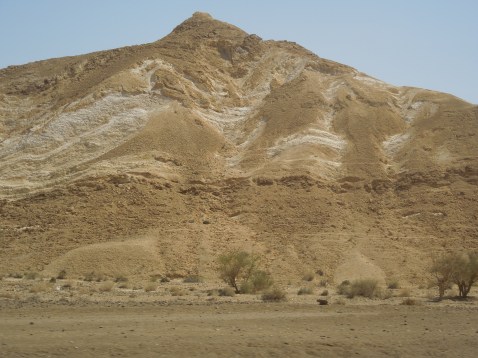
Mountaintop Experiences

DSCN3170 wilderness mountain

The Transfiguration (Matthew 17)

One day Peter, James, and John, closest earthly friends of Jesus, climb to the top of a high mountain. They’re dirty, tired, sweaty, hungry, and thirsty. The journey is long and arduous, and they are clueless as to why Jesus is leading them here. It’s nice to be away from the pressing crowds, though, where it’s quiet and they can feel the wind and have time to think about all that’s happened so far. It’s a high mountain, and it takes all their energy to climb, and they wonder when they’ll ever reach their destination. The privileged three might miss their families, but it’s exciting to be singled out to spend quality time with their Rabbi.

And then it happens—Jesus’ transfiguration, meeting biblical heroes Moses and Elijah, the enveloping brilliant light cloud, the very voice of God in their ears. It’s overwhelming, it’s exhilarating, it’s terrifying, it’s unique in history.

But this mountaintop experience is not meant to be the norm—in spite of Peter’s suggestion to create shelters for the three of them. This was a once-in-a-lifetime experience, and they are not permitted to share it with anyone—at least for now. This is a “between me and God” holy moment—it’s nobody’s business but theirs. And there’s a purpose for it—maybe to strengthen their faith or to give them courage or enlightenment. Maybe Jesus is bursting with excitement and wants to share His true story experientially with His best friends.

And now it’s time to come down from the mountain. They can’t live there, but it’s now part of their story that shapes how they think and feel. They are different for having experienced it. And when the time is right (after the resurrection and not before), they will be given permission to tell others—it’s a testimony—both theirs as a witness and a verification of who Jesus is.

What mountaintop experience have you had? Did you tell someone, or have you kept it between you and the Lord? Why?


Go, Preach, and Baptize

Go ye therefore, and teach all nations, baptizing them in the name of the Father, and of the Son, and of the Holy Ghost. (Matthew 28:19 KJV)

From my 2011 Journal. My childhood was immersed in the culture of evangelism.  My missionary dad preached in remote villages of Nigeria and established a church. My mother’s medical work and reading classes were all for the purpose of getting a foot in the door for evangelism. We MKs (Missionary Kids) could quote the Great Commission forward and backward (in King James of course). Many of our hymns and choruses reflected the missionary calling: “Bringing in the Sheaves,” “The Ninety-and-Nine,” and “Rescue the Perishing.” Preachers berated us for staying in our “holy huddle” and not reaching out to the lost. Bible school professors instructed us on how to knock on doors and “draw the net.”

One Sunday I sat guilt-ridden through one more passionate three-point evangelistic sermon on how each believer was required to “Go, preach, and baptize.” I may have had opportunities to share

Paul baptized

My brother’s baptism at Kent Academy

my faith, but I had never preached to or baptized anyone. Feeling triggered, I wondered how this Baptist preacher would feel if I, as a woman, actually offered to stand in his pulpit and preach . . . or asked to take his place in the baptistery. I began to push back against the notion that evangelism was the only viable gift of the Spirit. Was the Great Commission given only to men? Only to the Apostles? Was I being disobedient if I have never dipped anyone?

What if discipleship is what God has called me to rather than evangelism? Maybe I’m a Dorcas or a Ruth. Maybe I have the gift of mercy rather than exhortation. It’s time to stop our shame messages and learn to work together as a body—each with his or her own gifts.


Anger Water

Pour forth the overflowings of thine anger. Job 40:11 ASV

Anger is a hot topic—literally. Some people visualize their anger as white-hot or like red flames. But this verse in Job references anger as “overflowing.” It makes me think of a liquid metaphor where there are different kinds of anger:  there’s the slow, low, simmering kind and there’s the roiling, boiling kind. They’re both hot to touch.

Boiling waterDepending on the vessel (the type of soul one has), anger water can be contained (as in a pressure cooker or cooking pot) or it can cause a meltdown (if placed in a plastic container for instance—I know by experience). What difference would it make if the container were made of steel or cardboard or glass? Most of us are not capable of holding onto anger for very long before we feel its effects in our body,  and our “overflowings” spill out and burn others. Or as a Facebook meme stated, “If you don’t take the time to heal from what hurt you, then you’ll bleed all over those who didn’t hurt you.”

In contrast, God’s anger is slow, longsuffering, patient. God’s vessel is capable of withstanding the hottest heat without exploding. It’s best to siphon off our anger into His vessel because He can hold it. But eventually even His anger reaches the “overflowing” stage. (See the book of Revelation.)

God the Father

For you have not received a spirit of slavery leading to fear again, but you have received a spirit of adoption as sons by which we cry out, “Abba! Father!” (Rom. 8:15 NASB)

From my 2011 Journal. For a long time I’ve tried to figure out my picture of God the Father. And all I could get was seeing Him sitting on a giant throne, stern and stiff and still, sort of like Abe Lincoln’s marble statue in Washington. And seeing Him on the throne is all well and good, but that doesn’t show me the “Papa/Abba” side of Him. Sitting on the throne is His job—King, Ruler, Sovereign Judge over the Universe.

Dad 2We’re often told that our view of God looks a lot like our view of our earthly father. I adored and respected and admired my dad, but we never had a close, intimate, soul-to-soul relationship. I always felt safe and protected, and he taught me a lot, but it was never the warm and fuzzy sort of nurturing feelings. He just didn’t “get” little kids. Okay, so maybe there’s an element of truth there about my view of God the Father.


As I prayed this morning, I asked God for a new picture—one that demonstrates His love for me. And this is what I saw:  I’m snuggled under the covers, ready for bed, and God the Father is sitting beside me, bedtime story in hand, answering my most puzzling life questions that arise at the end of the day when all is quiet and still. There’s deep love in His eyes. His kiss on my cheek is gentle. His hands tucking me in are careful and kind, but most of all, full of love for me, His child. I’m safe and warm, no fear, no worries or needs. He’s taking care of me. He loves me. That’s Who my Papa is. By day? King of the Universe. At night? The reader of stories, the delight of my day and night. Thank You, Abba, that I’m your child.

What does Father look like to you?

Small Bites


As I read the Scriptures, I find I can only chew on one small portion at a time. When I’m studying faith in Hebrews 11, it’s hard to focus on I Corinthians 13 and love. When I’m reading the Psalms, I’m focused on praise and thanksgiving. I have to trust that whatever bite I’m chewing on at the time is what my soul needs.

Sometimes my soul needs water because I’m thirsty (“as the deer panteth for the water”). Sometimes it enjoys dessert (the mountaintop experiences in life). But other times, a sip of bitter coffee (admitting I’m wrong) offsets the sweetness of forgiveness. Meat and starch for energy. I need it all . . . but I can only take (and enjoy) one bite at a time.

And so I lay aside the guilt that says I’m not praising enough, or I’m lingering too long over the coffee. I need balance. And I can trust God to bring into my life whatever He has planned for me to help me grow in my walk with Him.

What are you chewing on today?

Small bites 2

Shame and Shoulds

From my 2011 Journal. There are certain words, facial expressions, and people’s attitudes that shut me down. One of them is “You should or shouldn’t . . .” My instant response is to go on the defense: “Why should I?” or “Why shouldn’t I?” That self-protective defiant attitude covers timidity to be who I was created to be.

shameI may refuse to listen to your words because they heap shame on me, but I find it’s an uphill battle to sever the ties with them. I am determined to climb this mountain even if I have to do it alone, but the weariness of the battle gets to me.

Jesus says, “Level ground would have been easier, but mountain climbing shows what you’re made of and tests your endurance and strengthens your muscles and heart. Not a bad thing. Keep climbing!” And eventually I am able to see your words for what they are—your belief system, not mine.

I’m reading Unlocking Your Family Patterns by Cloud, Townsend, Carter, and Henslin. I identify with the chapter “Learning to Achieve Adulthood.” The premise is that as children, we always feel “one-down” to adults. Growing up means coming to the place in life where we feel “equal” or “even.” My own shoulds and shaming words or posture are my attempt to feel “one-up.”

Whether your words or mine, I can turn those “shoulds” to “coulds.”

  • I should be praying more = I could be praying more.
  • I should be more available = I could be more available.
  • I should clean my house today = I could clean house today (or not!).

I’m ready to get rid of these echoes in my mind and heart. No longer will I hide my true self to protect me from your words or deeds. I can graciously and lovingly place them back on you and stand firm in what God created me to be—free of shame and life-sucking rules.

What shame messages are you battling to erase?


The People’s Choice Award

KingLike a child begging a parent for candy before dinner, I wonder if there are times when we beg too hard for what we want, and God gives it to us—but it’s not for our best. Better to examine our hearts, motives and emotions to discover why we’re begging for something. Better to ask, “according to God’s will” and from a heart of peace that is aligned with what God has predetermined is best for us or our loved one.

Once more, just before the public declaration of God’s choosing, the prophet Samuel warned the people of their folly in desiring a king (I Samuel 12). It’s like the Israelites begging for meat in the wilderness: God answered their prayers, but then they suffered the consequences.

So why did the people want a king? “To be like the other nations” it says in one place. But verse 12 gives us more insight:

But when you saw that Nahash king of the Ammonites was moving against you, you said to me [Sam], “No, we want a king to rule over us”—even though the Lord your God was your king (NIV).

Their folly began with bending to the culture, followed by fear of the enemy, which led to stubbornness and rebellion against God.

What gives me hope is that even after God granted their request for a king, He still gave them a second chance to do right.

If you fear the Lord and serve and obey him and do not rebel against his commands, and if both you and the king who reigns over you follow the Lord your God—good! (v. 14). [But IF the opposite is true, watch out!]

Even when we sin and foolishly ask for something that’s not good for us, God can still redeem the situation—IF we repent.

Sibling Rivalry

sibling rivalry

Yes, this was staged by my grandsons. They are actually perfect little angels, of course.

Every evening after supper, my dad would lead us in family devotions. After reading a portion of Scripture, each person, starting with the youngest, was expected to say a prayer. Too young, perhaps, to come up with my own, Dad would prompt me: “Help me not to fight with Grace Anne and Paul!” Thankfully, any sibling conflicts we had as children have long been resolved and forgotten, and we three sibs feel only love and adoration for each other today. But not every family is so fortunate.

The famous David and Goliath story (I Samuel 17:29) begins with David’s dad Jesse sending him to the Philistine battleground with food and supplies for his older brothers. David arrives at the site, sees Goliath, and starts asking questions. Eliab, David’s oldest brother, gets angry and attacks him verbally, sarcastically. And David responds with, “What have I done now? Was it not a harmless question?”

You wonder how long this sibling conflict has been going on. We can only imagine, but I suspect that Eliab is sore that David got anointed king instead of him, the firstborn. There’s hurt, pride, and jealousy.

And David? It’s not his fault that he’s been chosen by God. It’s inevitable, it seems, that others will criticize, put down, and try to discourage God’s anointed one. But David did not take pride in his own strength; instead he gave the credit to God: The LORD delivered me from the bear and the lion . . . and He will deliver me from this Philistine.

The Result:  God replaced the curses of his big brother with the blessings of a new and better brother:  Jonathan.

It’s interesting to note that after David flees from King Saul, his family (including his brothers), hear of it and come to him. I wonder what Eliab thinks of him now? And how will he feel when David becomes his ruler?

Do you have a sibling (or a sibling in the Lord) who has shunned you, picked on you, or criticized you?  Or maybe you’re jealous that your sister or brother got all the attention, good looks, and talents. How do you respond?

Dry and Thirsty

O taste and see that the Lord is good . . . (Psalm 34:8).

From my 2010 journal. I had company here for a couple weeks, and my alone time with the Lord suffered as a result. Each day my spirit felt thirstier and thirstier. Strangely, I felt like I was sitting on the edge of a paved parking lot facing the road with no cars in sight.

I asked the Lord what He wanted me to do, and He said, “Go back inside the store.”

marketAnd when I turned around, I saw that it was one of those exotic Asian stores where everything smells pungent, but you have no clue how to cook with any of the ingredients. Jesus is with me, and I’m glad, but something else needs to be done.

Ahhh, at the far side of the store are endless supplies of samples to taste. Some things are tasty to me. Some things are tastier to others. It’s all good food, but I don’t have to like it all. I can eat my full and then it’s okay if I’m back in the parking lot for a while. I’m close to the food supply! My soul and spirit feel refreshed.

What do you do to refresh your soul?

Response to Grief

It intrigues me why some people grow bitter and some grow sweeter while facing a personal tragedy. What makes the difference?

rachel (white) berry

I Samuel 29 records the story of when David and his men return to their city of Ziglag and discover it has been destroyed and all their women and children taken into captivity.

Understandably, David was greatly distressed, and he wept “till there was no more strength in him.” BUT “David encouraged and strengthened himself in the Lord His God.” And then he sought the Lord through Abiathar the priest and asked the Lord for direction.

The response of David’s men is in stark contrast. They experienced the same bitter grief, but they turned on David and wanted to stone him.

It reminds of when the children of Israel blamed Moses for their plight in the wilderness.

It reminds me of Americans who blame their President when they lose a son in war.

It reminds me of MKs (missionary kids) who blame their Mission for their boarding school experience.

In our grief, we tend to make illogical accusations and decisions. It’s much easier to blame others instead of taking responsibility for our own emotions and choices. Blame is a way to discharge pain. It wasn’t David’s fault for what happened to his followers’ wives. It wasn’t the President who shot the bullet. It wasn’t the Mission that cruelly punished the child.

Grief brings out what’s already in our hearts. Who are you blaming for your pain?