Unbalanced

From my 2015 Journal.

I have been working at breakneck speed for too long. I neglected to rest after an Intensive Retreat with a client, and when I finally found half a day to myself, instead of relaxing, I trudged right up to bedtime. Drowning in over-commitment and pulled in too many directions, my stressed body and chaotic mind won’t shut down. I keep writing lists and the lists keep growing. My mind’s hard drive is full and, with no margin, I’m afraid it will crash. Meanwhile, any quality time with family and God suffers.

Currently, I’m planning two reunions, five trips, editing a magazine, teaching Sunday school, and preparing for two Bible study groups. And in the midst of these commitments, the floodgates for ministry opportunities opened wide. I crave peace and quiet, but drama reigns. I must cease striving and be still, put down my calendar and to-do list, set aside my goals (for now) and return to my priorities.

Visual: I see a picture of me as a teacher with her pupils (i.e. my to-do list). I delight in seeing a room full of wiggly children, but I have tolerated an unruly, chaotic classroom for too long. I place each child in her own cubicle—a cylindrical tube with a lid. I can keep the lids latched, but that takes away the fun away of watching little fingers waving in the air for attention. I instruct them to raise their hands for permission to stand and be recognized before speaking. The others must sit still and wait their turn. Okay . . . which child wants to go first?

Oh! Now I see Jesus behind me, directing their order. I don’t even have to worry about choosing.

Suddenly, a curtain descends in front of the group, the noise in my head stops, and I am alone with Jesus. Whew! I needed this. Refresh, refocus, return.

Be still before the Lord (Zechariah 2:13).

Unripe Fruit

From my 2013 Journal.

Recently, I broached a subject with a friend about an issue I’d noticed in her life. Her steely hard, plant-the-feet-in-the-ground, defensive posture, and irrational response all told me this subject was a trigger, and I needed to back off. She’s obviously not ready to receive my input, and so I have to let it go.

I know her heart desires truth, but she’s not ready to face her pain. And that’s okay. It’s God’s job to gently woo her to Himself and prepare her heart to be willing.

Don’t pick unripe fruit!

Keeping a Dream Alive

From my 2013 Journal.

Reading a biography or memoir may be interesting, entertaining, or even inspiring—but rarely life-changing, unless it intersects with my own—when I identify with the character in some way.

This morning I read Caleb, the spy’s story in Joshua 14. At age 40, he saw a piece of property he wanted in the land of Canaan, but because of the Israelites’ rebellion, he had to wander with them for 40 years in the desert. At age 85, he asked leader Joshua for that same territory, determined to rout the inhabitants with God’s help. Talk about keeping a dream alive!

Caleb’s faith sharply contrasts with the descendants of Joseph who complained they didn’t have enough land for their families. Joshua said to them, “Go clear the forest and you’ll have enough” (Joshua 17:17-18).

“But they have iron chariots!” they whined.

I can see Joshua rolling his eyes. “You’re numerous and powerful; you can do it.”

So I try to connect with this story. What dream have I held onto? Some dreams, I know, I must grieve and let go. But if God-directed, what excuses do I use not to fulfill it? Sometimes I need patience, endurance, and perseverance to wait.

What dream have you kept alive?

Food for Today

From my 2013 Journal.

All art forms have potential to touch the soul. Some (like paintings, photography, and sculptures) are tangible and static, and you can linger over them. Performances (like music and theatre) are fluid—you can’t capture and freeze them except in your mind. Different art forms appeal to different senses (sculpture—eye/touch, music—ear, performance—eye/ear). The written word can be tactile (holding the book, typing a manuscript) or cerebral, creating images with words.

As a visual learner, auditory input is so transient for me. When the music stops, it doesn’t stay in my head like it does for my daughter Sharon. And, unlike daughters Cindy and Katie, visual art doesn’t linger either, once I look away. Stories, for me, last the longest, though I quickly forget the details.

Could it be that feeding the spirit is also transitory? I learn a lesson or a truth but quickly forget to apply it to the next lesson or circumstance. I have a hard time holding on to it. If I can’t remember the Scriptures I read yesterday, does this mean I may as well quit reading? Of course not. Just because I can’t remember what I ate for breakfast yesterday doesn’t mean I wasn’t nourished.

What’s the solution? Daily doses of food for the mind, soul, body, and spirit.

Overwhelmed

From my 2015 Journal.

If I let it, the news this week could leave me feeling overwhelmed:

  • Earthquake in Nepal
  • Flooding and tornadoes in Texas
  • Riots in Baltimore
  • Beheadings in Syria
  • Shootings on campuses
  • Starvation in India

Meanwhile, I go about my sheltered, stress-free, cushy life. Catastrophes in other parts of the world don’t affect my daily life and decisions. If they did, I’d be the one in crisis and I couldn’t function. If I don’t feel pain when you’re in pain, that’s a good thing. I don’t want a doctor operating on me when he has a broken arm. I need him to be healthy and well.

For two full days this week I listened to three abuse victims’ agonizing sobs. They weren’t in any physical danger, but they believed they could not go on living. Was I compassionate? Yes, of course. But I did not absorb their pain. It’s not healthy or productive for me to do so. That’s Jesus’ job.

Whose pain have you taken on that doesn’t belong to you?

Not My Calling

From my 2013 Journal.

I sat ho-humming through yet another yearly “revival” sermon on The Great Commission (Go/going, baptize, make disciples) ending with the usual admonishment that every believer was required to “go and do thou likewise,” when I stopped to take notice of the text. Were this Baptist preacher’s carefully crafted words meant to be taken literally? Though he’d be delighted if I witnessed to my neighbor, I’m sure his face would turn ashen if I, as a woman, volunteered to baptize a convert!

And how would he handle I Corinthians 1:17 where the Apostle Paul says, “God did not send me to baptize, but to preach the Gospel”? Would this preacher berate Paul for not following orders? Or the Apostles who declared, God has called us to preach, not to wait on tables? Can you tell I was feeling triggered!

God has called me to something specific, and if I focus on that, I will fulfill His great commission for my life. Why do I keep questioning this? Because of the voices from outside. As I sat quietly listening to God’s voice, I sensed Him saying, “Read the rest of the passage.”

. . . as the Lord has assigned to each his task. (I Cor.3:5-9)

I have an assigned task. I can quit worrying about whether I should be doing other tasks. Just do the one God assigned me to!

Each one should retain the place in life that the Lord assigned to him and to which God has called him. (I Cor. 7:17)

This verse refers to our position at the time of conversion:  whether slave/free, circumcised/uncircumcised. But the wording implies that God is the One Who places us in our position. I want to be faithful and content in the place God has assigned me and, call me a heretic, but I don’t think that includes a literal fulfilment of the three parts of The Great Commission.

Joy Killers

From my 2015 Journal. I voluntarily spend time around joy killers—people complaining of emotional pain. It’s my calling and my ministry to listen for hours to stories of horrendous abuse and its effects . . . but I’m tired.

And I remember the before . . .

I’m a little girl, twirling with the swirling leaves, shouting delight as wind flings its rain smells, ready to cool the parched earth. Hair tousled, uninhibited, unselfconscious, no to-do list, living in the moment. Exuberant. Carefree.

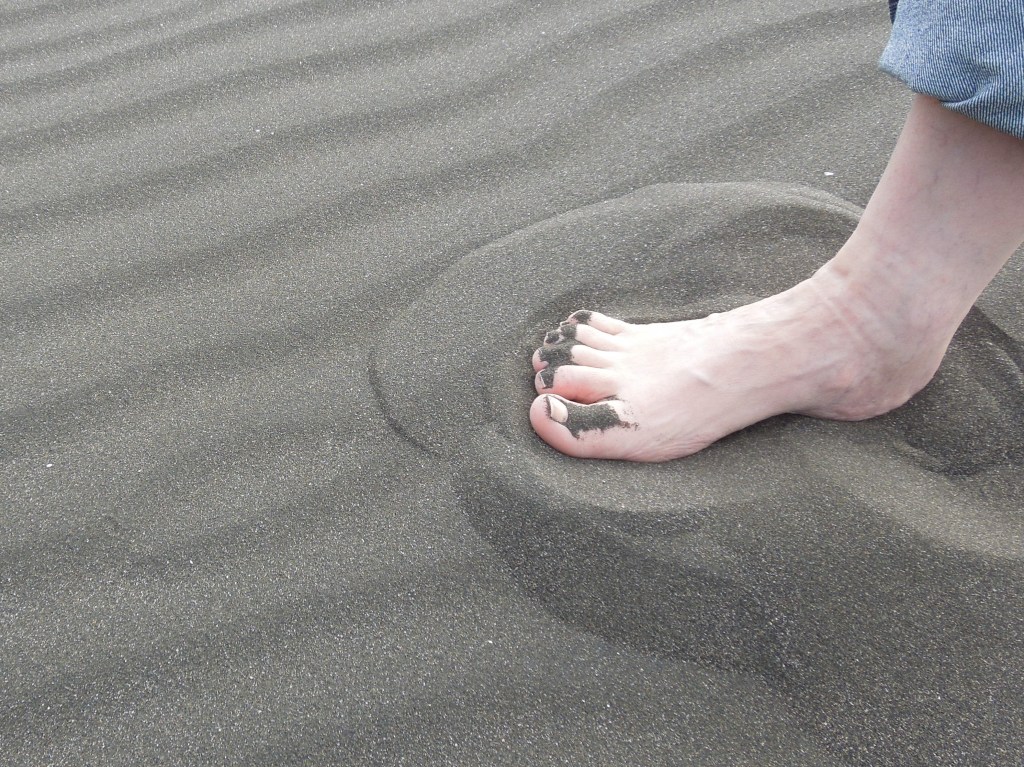
And then I’m an energized young woman, flinging laughter to the wind, racing down the beach, warm sand between my toes and water lapping at my feet. Collapsing to the ground to watch clouds and birds, sandy-haired, relaxed. Carefree.

I’m a middle-aged woman, slower now. I can’t run and jump as well, but my spirit and soul soar free above the earth. Enjoying the ethereal, shimmering expanse of the ocean. Carefree.

I watch as my body turns sluggish, age spots appear, mind slips away from the present, and my soul settles into tired places. How do I recapture my exuberance when a stale wind hangs thick around me? I can’t sustain the energy of joy. I’m too tired, too distracted, too full of that R word responsibility, heavy weights in my shoes pinning me to the earth.

And I remember I am the one who controls my own joy-killing.

Like young David, I must shed King Saul’s heavy armor and travel light. I detach the weights from my wrists and ankles, kick off my shoes, inhale fresh air, and feel warm sand once more. I’ve been carrying stuff that isn’t mine to bear. Forgive me, Lord.

Enjoy the journey. Joy, joy, joy!

Big Pants, Small Heart

From my 2013 Journal.

As I passed near the men’s clothing aisle of a new Goodwill store in town, I noticed a large woman, weight mostly distributed around her waist and thighs, holding up an enormous pair of pants that would have fit someone one-and-a-half times her size. “Can you believe this?” she exclaimed. “I’ve never seen pants so big! I’ve never seen anyone who could actually fit these! Wow! These are huge! Look at this!” she reiterated to her shopping companion.

Several thoughts raced through my mind:

  1. Why did she disbelieve that someone could actually fit them? I’ve seen people this large in person and on TV.
  2. She, herself, was (ahem) larger than average.
  3. Why was she making such a big deal about it—loudly—in public?
  4. Did comparing her large frame with someone larger make her feel better about herself?
  5. I felt more compassion for the large-pants man and less compassion for the lady. Why?

And then it hit me. I recognize myself in her. I do the same thing (sigh)—I make the biggest fuss about what triggers me the most. When I roll my eyes at someone else’s words or deeds, I recognize some unfinished business in my heart—some lack of compassion, some unresolved hurt, or some judgmentalism. The woman’s words simply revealed what was already in her heart. I don’t judge this woman—because I am too much like her. Perhaps I need to practice more grace . . . toward myself!

For out of the overflow of his heart he [a person] speaks. Matt. 7:15-23; Luke 6:43-45

How Much Evidence Do I Need?

From my 2016 Journal.

Jesus’ death left pain in its wake, and His followers stubbornly refused to believe the women who reported seeing Him after He had risen (Mark 16:14). I wonder what lie the disciples believed that kept denial in place?

  • Too good to be true.
  • I can’t let myself feel hope for fear I’ll be disappointed.
  • You can’t trust a woman’s word.

Jesus doesn’t need to dig around in their psyches to help them discover why they’re being stubborn. (That’s what I would have done.) He knows their hearts and rebukes them for their refusal to believe. God is patient with our struggles and fears and doubts, but He’s not so patient with stubborn disbelief. How many times did He say, “O ye of little faith?” There’s no pointing fingers here. I’m plenty guilty myself.

The women at the tomb believed as soon as the angels spoke truth to them. The men, however, continued to doubt when presented with the evidence (others’ testimony and an empty tomb). The disciples on the road to Emmaus couldn’t seem to grasp the truth, and Jesus rebuked them. Even when the disciples saw Jesus in the room where they gathered, and the joy center of their brain activated, they had a hard time believing.

We know that the brain is a complex organ—different parts are responsible for different functions: the occipital for eyes, the amygdala for emotion, the frontal cortex for logic and reasoning, and memory in a different part. Since God created the human brain, He knows what part gets activated during fear (like Peter sinking in the sea of Galilee). He knows that the frontal cortex shuts down during a fight/flight/freeze situation. Yet He seems impatient: Why do you doubt, Peter? Why do you have so little faith? Why don’t you men believe when the evidence is in front of you that I’m alive? Stop doubting!

What makes us doubt? Is the emotion center too strong? Are there lies imbedded in that emotion? Those with D.I.D. (Dissociative Identity Disorder) maintain strong denial parts, for if they believe trauma happened, then they’d have to admit it was real. Once truth enters the brain, however, and they experience an encounter with the living Lord Jesus, doubt and fear flee. Jesus knows all this, so is He really impatient . . . or is He challenging His disciples to accept HIM, the way, the truth, and the life?

Sometimes it’s hard to believe someone else’s testimony, but everyone (including Mary, the ten disciples, and eventually Thomas) believed when they saw the resurrected Jesus with their own eyes. Why? Because they experienced it for themselves. Truth experienced in the right brain translates into left-brain belief.

When evidence stares me in the face, what makes me dig in my heels and refuse to see truth? [2021 update: I’m not talking about political opinions on whether or not to wear masks!]

Taking the Scenic Route

From my 2015 Journal.

I ran roughshod over a client’s will today in an inner healing prayer session, and God gently rebuked me with the thought:  “Sometimes you push toward the goal and miss what’s on the way.”

I admit that I’m a very goal-oriented person, going pell-mell through life, trying to meet deadlines, and I miss the fun in the process. Think road trip. If there’s a time crunch, take the freeway. But the scenic route is more relaxing, candy for the soul. The trade-off, of course, is more hours of traveling, more expense, and potentially missing out on what’s waiting for you on the other end of your trip because you took so long. But the process is part of the adventure.

I understand now how my work with the souls of clients can do more harm than good—that I can inadvertently traumatize them. Yikes! But then I must give myself grace—gaining experience is also part of the process.

I feel like I’m holding the reins of a team of highly charged horses, but Jesus says, “Be still.” How am I supposed to win the race if I calm the horses?

And again I hear, “Sometimes you push toward the goal and miss what’s along the way.”

My inner drive (my horses) need help!

Jesus says to give Him the reins. He lets the horses charge around the track to release their pent-up energy. Then we can begin a more controlled, deliberate walk around the track (or in this case, plow the field—because you don’t need racehorses on a farm!)

Which do you prefer—highway or scenic route?