Praying for the Sick

From my 2009 Journal. I get a little confused when I hear others pray and teach on prayer for the sick. Chrissy claims the blood of Jesus “by His stripes we are healed” for anyone who is sick and expects instant physical healing. She had a little crisis of faith when her father passed away. One pastor says it’s weak praying to say, “If God wills” because we shouldn’t be asking for healing unless we know it’s His will. What if, he says, the illness is “unto death” and we don’t know the person’s heart? What if he/she needs to let go of rebellion before God wants to heal him/her? How can we ask if we don’t know what to ask for?

Maybe it’s God’s will that all be healed, but Man still has a will and a choice as to how he treats his body, and God is not obligated to override his choices. I can’t ask God to make a person choose something, but I can trust God to know how to get a person’s attention like He did for Jacob or for Jonah.

Somewhere there must be discernment in our prayers for the sick. The biblical author James says to pray for the sick, and the elders of the church should anoint with oil. Should we do this for every sniffle?

Sometimes I think we’re so focused on physical healing, we forget to pray for the spiritual. Jesus often mentioned the faith of the person who asked for healing. The disciples healed many sick after the resurrection. Did they stop to ask if the person wanted healing or what was preventing their healing?

Maybe our prayer for the sick could be, “Reveal to X anything that is preventing his healing, give him courage to face his pain, may God be honored through his responses and reactions, and heal his body if it will give God greater glory.”

I take comfort in the fact that God knows my heart. He can interpret my words and intent and use them for His glory. He knows me well enough to know what I believe and mean.

2020 Update.  I find it interesting to look back at how I struggled 10 years ago. Those questions no longer burn in my heart. It’s not that I have fewer questions; it’s that I’m more content with not knowing all the answers. I just ask and let God sort it out.  This past week a dear friend and prayer warrior had a massive stroke. The church gathered together to pray for her, but our emotions were conflicted. We wanted to see Mary Lee fully restored to health, but we opened our hearts and hands to release her to heaven. We trusted God to do what was best. Today she is dancing with the angels, and I’m okay with God saying no to the cries of our heart to give her physical life back.

photo of woman lying in hospital bed

Photo by Andrea Piacquadio on Pexels.com

Just a Little Talk with Jesus

red ant on green leaf

Photo by Jimmy Chan on Pexels.com

From my 2009 Journal. God is SO big—bigger than my puny imagination can handle. I can see Him occupying heaven’s space with earth as His footstool. I feel like an ant in His sight. How does an ant talk to Someone so magnificent?

And Jesus says:

“I know. That’s why I came down to your level and became an ant. We want relationship with you. Why do you make prayer such a chore? Such a to-do list? Such a grocery list? Just talk to Me! I already know what’s on your mind and in your thoughts and in your heart. You don’t have to speak it for Me to know it. But I love having conversation with you. I love it when you tell Me about your day and when you’re worried and why you’re afraid and who you’re concerned about. Just talk. Just tell Me. And if you’d rather draw a picture in your mind, that’s okay too. I love you, you know. You already know you can trust Me. You just need to learn to relax and enjoy Me. You keep saying you need friends. I’m the best friend you’ll ever have!”

Thou shalt not

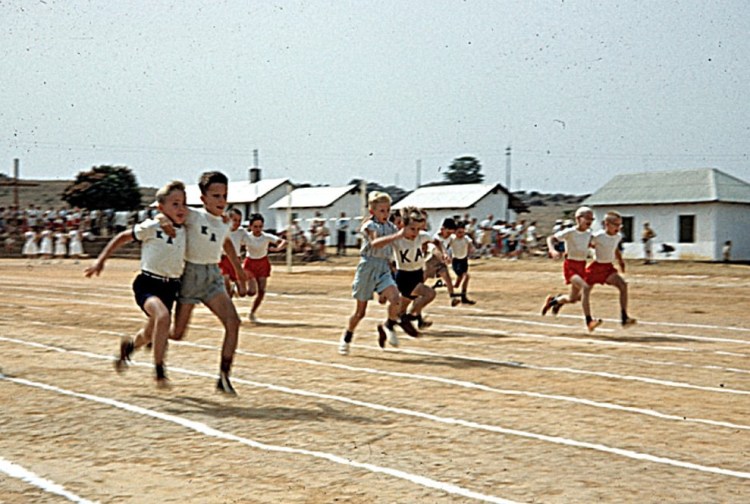
From my 2009 Journal. It was game night at our missionary boarding school. The staff had planned a relay where both the boys and the girls had to run to a suitcase, open it, put on all the clothes, run back to the starting line, strip off those clothes and hand them to the next child. The second in line would then put on the clothes, run to the suitcase, pack them all back inside, and return to the starting line to tag the next child.

In the midst of our fun, one Auntie abruptly stopped the game and quoted Scripture: “A woman must not wear men’s clothing, and a man must not wear women’s clothing.” End of game.

At first, I was mad, but then I thought, “Oh no! What if we were doing something wrong?”

So when I got back to the dorm, I looked up the quoted Scripture where the same passage admonished the Israelites to wear fringes on their garments and not to wear clothes of wool and linen woven together. How could this staff member apply one rule and neglect another? I felt vindicated, self-righteous, disgusted. We’d been cheated out of our fun and made to think we might be sinning in our play time.

God’s answer to me? “Give up your self-righteousness, Karen. I will honor the Auntie for following her conscience, though misguided.”

We had a pastor once who frequently misquoted Scripture. It was due to a little lack of training, a lack of study and preparation, and a whole lot of fear-based, emotion-driven beliefs. Or perhaps he wasn’t really called to be a pastor! He thought he was doing right, but he ended up splitting the church.

I feel passionate about proper exegesis of Scripture. So much ignorance, false teaching, and silly conclusions result from improper understanding of context. When someone misquotes Scripture, however, what should be my response? First, recognize the error. Second, correct the error if given the opportunity. Third, be gracious. Love trumps proving I’m right.

Need an example?

The prophet Amos sets forth the argument that God always gives His children a warning before He punishes them.

There’s a cause and effect in the following scenarios:

  • God has spoken: a prophet must prophecy.
  • A lion roars: people are in fear.
  • A trumpet sounds in the city: there’s an alarm and people fear.

The opposite is also true. If there’s no cause, then there’s no effect:

  • You wouldn’t find two people meeting together to go for a walk unless they agreed ahead of time to do so.
  • A lion won’t roar if he doesn’t have prey.
  • A bird can’t be ensnared if there’s no trap.

Conclusion: If you see misfortune or evil occur, you can know that the Lord caused it.

And the misquote? People use Amos 3:3 “Can two walk together unless they agree?” to persuade a believer not to marry an unbeliever.

In context, it’s an argument for Israel to believe and understand that Amos’s prophecies are right. And in context, it’s about the absurdity of something occurring that wasn’t planned. To update the analogy: No one is going to show up in the conference room if a meeting hasn’t been scheduled.

Now there is wisdom in cautioning a couple regarding their disparity in faith; just don’t abuse Scripture to make your point.

What other Scripture misquotes have you noticed?

KA Race b

3-Legged Race at Kent Academy

Habakkuk’s Struggle

From my 2009 Journal. While reading through the book of Habakkuk, I notice the prophet’s anguished struggle with God’s inaction.

How long, LORD, must I call for help, but you do not listen? Or cry out to you, “Violence!” but you do not save? (1:2 NIV).

 Why do you make me look at injustice? Why do you tolerate wrongdoing? (1:3).

Your eyes are too pure to look on evil; you cannot tolerate wrongdoing. Why then do you tolerate the treacherous? Why are you silent while the wicked swallow up those more righteous than themselves? (1:13).

Humans have wrestled with God’s choices from the beginning of time. We try to reconcile our theology of a good and caring God with our perception of His actions or inaction. Why is it so hard to just accept God and His will and His way? I think it’s because we have a built-in need for fairness and justice, and we want control of our world.

What makes you struggle with God?

2020 Update.  Our world is a mess right now, but is it really any different from Habakkuk’s day: violence, injustice, wrongdoing, wickedness. My struggle is not really about what’s going on in the world, but rather what’s going on in my heart. When I ask why questions, I don’t really want an intellectual answer. I want God to fix the pain in my heart so I can be at peace. But it’s a struggle to let go of my own agenda.

man covering face with hands near car trunk

Photo by Karolina Grabowska on Pexels.com

What should I do today?

lion roaring inside cager

Photo by Pixabay on Pexels.com

From my 2009 Journal. Miracle stories in the Bible like Noah and the ark, Israelites crossing the Red Sea, Jericho’s walls, and Jonah’s fish survival occurred at specific times in history, often far apart. I wonder how many thousands of God-stories never get recorded? Miracles happen daily around the world, but they’re not written down for all eternity in a best-seller book. These Bible stories feel larger than life (Elijah and the prophets of Baal, David and Goliath). Is that because they’re the stories of my childhood? They’re like bright spotlights in a dark place. They stand out starkly against the ordinary, the mundane.

I think of Daniel who lived a long life, day in and day out fulfilling his duties, but he has some defining moments, some spotlight experiences, where his character passed the test. Thousands of us live ordinary, daily lives in the kingdom. It’s important what I do today, in the mundane, choosing righteousness, so that when I am tried for my faith, I’ll continue to be who I am in the daily times.

2020 Update. Today I choose to love you even when you judge me for wearing a mask or not. Today I will remain joyful when toilet paper is scarce. Today I refuse to speak ill of your political candidate because I have not walked in his shoes or yours. Today I will remain calm and peaceful when my city’s citizens riot in the streets. Today I will love my husband and take food to a hurting neighbor and pray with a friend. Today I get to choose my attitude and responses when I’m isolated or in a crowd.

What are you going to do today to prepare for tomorrow’s God story?

Do My Job, Not Yours

honeycomb close up detail honey bee

Photo by Pixabay on Pexels.com

From my 2009 Journal. I just finished reading a book about a Canadian woman’s saga of her three abortions and how she became an activist for the pro-life movement. The story makes me want to rush out and get involved in her cause . . . but I don’t. God often gives us our passions and our calling based on our own experiences. It’s no accident that I have a ministry to MKs (Missionary Kids). If I should sign up to help the anti-abortion cause, join a feed-the-hungry organization, commit to becoming a leader in  the church youth group, travel overseas as a missionary, and fight for justice on Capitol Hill all at the same time, I’d be rather scattered, unfocused, overworked and useless. I’m not called to do everything. I’m to be obedient to God’s calling on MY life. Each ant or bee has his job description in the colony or hive, and it takes all of us working together to accomplish God’s work in the kingdom. (Did you know there are about 10 different jobs in a beehive?)

Does that mean I should be indifferent to the sanctity of human life? Uncaring about missions? Ignore all needs of poverty? Of course not. But I have limited time and energy and resources, and I’m most effective for the kingdom of God when I focus on my assigned job on God’s team.

What’s your job description in the kingdom?

Tomato Plants and Trials

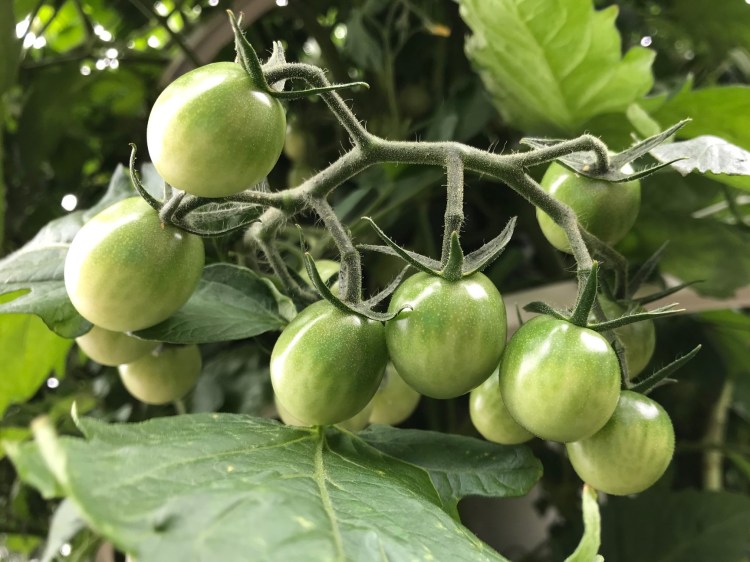
With our daughter Cindy’s encouragement, Scott and I decided this year to try our hand at growing some veggies in a hydroponic Tower Garden on our back deck. We had no idea what to expect, so we blithely inserted our tiny shoots of celery, basil, cucumbers, lettuce, kale, onions, marigolds, and tomatoes into the little black holes. Daily, we enjoyed plucking off fresh salad ingredients for our lunches.

The tomato plants didn’t start to grow until later when the weather turned hotter. I looked on the Internet to find out how to prune them and diligently plucked off the errant shoots so that the main branches would grow strong and healthy. All was going great until those tomato plants assumed their power and soon dominated the entire structure, blocking out the sun for all the other plants. It’s a good thing we like tomatoes, for we’re about to get a bumper crop of them! (Cindy subsequently urged me to cut them back even more.)

When I hurt or face a trial, I might assume that God is mad at me or that I’ve done something wrong and He’s punishing me. The truth, however, might be that He is simply pruning me to bear more fruit. I can embrace the trial, learn from it, and give God permission to prune me. And enjoy the bumper crop of joy and patience and love to spread around my neighborhood.

Cherry tomatoes anyone?

Tower Garden 3

BOXES OF PRAYERS

Each prayer is like a seed that gets planted in the ground. It disappears for a season, but it eventually bears fruit that blesses future generations (Mark Batterson in Praying Circles around Your Children).

From my 2009 Journal. As I continue to struggle with the concept of prayer, I can see myself seated in the middle of a room, conversing with Jesus. A large number of boxes line the periphery of the room. What are those? I wonder.

Boxes 2

“They are your prayers,” He says. “You had a question about them?”

How did He know? (Well, duh. He knows everything.)

“Yes,” I say. “I want to know what good are they?” They’re in files, categorized and maybe even numbered, but here they all sit, here in my mind. What good are they? I can go to a box, pull out a file, read what I wrote, but so what?

“Would you like Me to take them off your hands?” He asks.

“Sure. You’re welcome to them.” I have no clue what He’s going to do with them, but I agree.

Several angels enter and start picking them up, loading them onto carts, and removing them from the room.

“So now what?”

“Just sit and talk to Me,” He says.

“What shall we talk about?” I ask.

“Anything we like,” He responds. “Got anything on your mind?”

Nothing comes to mind.

“Okay,” He says. “Want to play checkers?”

Really?! This is the answer to my question “What good are they?”

“Do you trust Me?”

“Explicitly,” I reply.

“Then don’t worry about it. The angels know what to do with them.”

I watch as one angel pulls out a file and reads the contents. He laughs. Is he mocking me? Was it a silly little prayer that I tucked into that folder?

“Not at all!” responds Jesus to my thoughts. “It’s giving him something to do. He has an errand to run and delights in fulfilling my commands.”

“Your commands?! But that was my prayer!” I exclaim.

“But you gave it to me, didn’t you? You said you trusted Me with it. Now it’s mine to do with as I please. Some of the prayers will get dispatched immediately. Others need to stay in the box a little longer—it’s not time yet. A few of these files don’t belong there. We’ll sort them out and discard the redundant ones and the soiled ones. (We will replace those with clean copies before they’re dispatched.) A few we’ll just toss in the fire if you don’t mind.”

“Mind? Of course not! I trust You to figure out which is which.”

“Good,” says Jesus. “Your move.”

I mull over what He’s just told me. “So I don’t need to figure out what to pray or write down? Just do it, file it, and keep handing the boxes off to You?”

“Yep, that’ll work.”

“Jesus . . . thank You.”

“You’re welcome. You still have a question?”

“Yeah . . . does a bigger folder get more attention than a smaller one? For example, if I pray for someone once, it creates one sentence on one sheet of paper and makes one skinny file. But if I pray for someone daily, their folder gets stuffed and may even need a filing cabinet to hold them all.

I sense at once that no single piece of paper gets lost. But . . .

“So what’s your question?”

“Do You give preference to bigger files?”

“Do you trust Me?”

“Yes, of course.”

“Really?”

“I think so.”

“What would happen if this room burned down and all the boxes were gone?”

“It would feel like a waste.”

“But what if one paper survived? What if it was made of an incorruptible material?”

I raise my eyebrows.

“What if that one item was your heart? Prayers are important enough, but it’s your heart that I care about even more.”

“Wow!”

And all this time my focus was on how many prayers I prayed, how long I prayed, what I prayed—all the “shoulds” and “supposed tos.”

There’s no should in a love relationship.

2020 Vision

The key to healthy memory functioning at ANY age is attention (p. 20).

 From my 2009 Journal. When my eyes began to change around age 40, I decided to get progressive lenses so I would never have to search for a pair of reading glasses. But now I’m losing my mind. Sigh.

I just read the book Where Did I Leave My Glasses? (The What, When, and Why of Normal Memory Loss) by Martha Weinman Lear.

glasses

 Conclusion: I’m normal! Yay! Here are some of my takeaways from the book.

  • I can’t change or improve memory loss, but I can improve my ability to cope with it (the author gives some compensatory strategies).
  • Do you need to make introductions and you’ve forgotten names? Try “Do you two know each other?” and hope they introduce each other!
  • Multitasking ability actually does decrease with age (but since I was poor at it in my youth, I’m doomed!)
  • Tip: Focus on one thing at a time. Deliberately block out a time for one task, no interruptions. (Good luck with that!)
  • “I never said that” and “I always knew it” are ego protection statements. “The need to feel right is a huge factor in how we remember and how we forget” (p. 110).
  • “Just because it looks like a duck and walks like a duck and quacks like a duck, make no assumptions. Not when the subject is memory” (p. 115).

Now, what was I saying . . . ?

Church Buildings

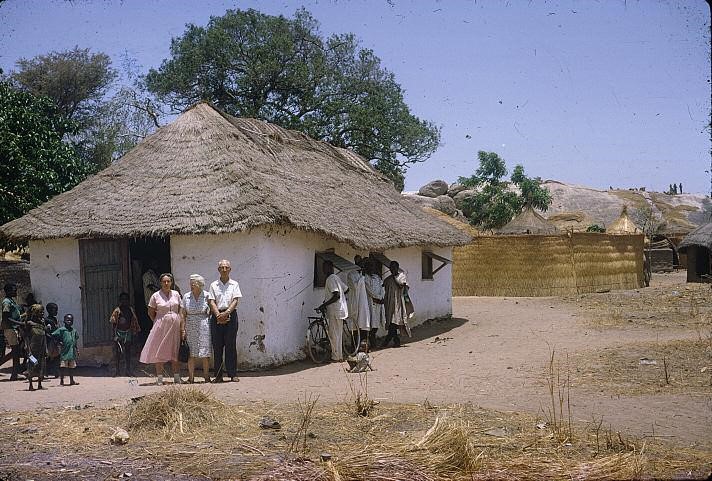
Church Miya
Our church at Miya, Nigeria

From my 2009 Journal. Every church Scott and I have attended over the years has gone through a building program to expand its facilities. I’ve concluded that the leadership can never please everyone with their proposed budget or style of building. What does God require of us? Which principles do we use? Is it wrong to build a cathedral? Or erect a mud hut with no electricity? Even “in moderation” is a debatable continuum.

One side of the debate goes like this: Do everything with excellence. Build big and beautiful and lasting and use the latest technology to attract a bigger crowd so more will receive the precious Word of God. And be sure to give sacrificially.

The other side says to build as plainly as possible so you have more to give to the poor and to missions so others can hear the Word. And be sure to give sacrificially.

Both approaches have the same bottom line. Who’s right? The debate seems to center around money, but I suspect comfort and beauty and creativity also play a role in how we make choices.

What do you think?

Cathedral