The Nonsense of Fashion

From my 2015 Journal. I have been rebelling against fashion since I was in junior high. When girls at my boarding school were begging to wear shorter skirts, I insisted on lowering my hems. One day in Home Economics class we discussed what colors complemented each other. Apparently wearing orange and pink together was a no-no (We hadn’t hit the psychedelic 70s yet). And so, on a dare from my roommate, I agreed to put together a skirt/blouse combo that clashed and to wear it to breakfast that morning.

I was proud of the fact that I had enough guts to go against established “rules of fashion” and be my own person. I felt confident enough in who I was to pull off the dare. But, to my chagrin, one of the Aunties pulled me aside to inform me that what I was wearing was a less than desirable combination of colors.

I felt indignant. How could she think so little of me? Even when I informed her that I wasn’t ignorant, that it was done on a dare, the damage in my soul was done. I felt embarrassed where before I felt confident.

I take this emotion to Jesus, and He smiles.

“Why are You smiling?” I ask.

“I love that you have self-confidence to be who you are. Never mind the Auntie. She didn’t know. It was her motherly-instruction side coming out. Wear whatever you choose—with confidence.”

But then I remember what it was like when my own girls entered junior high. Suddenly I was being compared to “cool” mothers who dressed fashionably while my girls were feeling mortified that their mom was stuck in the Dark Ages. “She grew up in Africa,” seemed to excuse away my ignorance, though truthfully I had fully embraced my mother’s mantra “comfort before fashion” and “inner beauty is more valuable than outward clothing.”

Today, after getting a better handle on my temperament and how I’m wired, I realize my fashion choices are really less about my upbringing, and more about being comfortable with who I am. I still admit to ignorance about what’s in or out. My daughter Sharon says it’s because I don’t really care, and perhaps she’s right. But since I don’t want to appear like I just stepped off the boat, I usually take her or a trusted friend along when I go clothes shopping (though I maintain the right of refusal if their tastes are too far removed from mine).

Like most Missionary Kids felt when they returned to their passport country, I preferred not to look like a total misfit.  I’ll never forget the lime-green, cast-off dress donated to me by some well-meaning soul during one furlough. How was I to know that my peers would whisper about it behind my back?

Does what I wear offend you? Do you think less of me for it? What I choose to wear reflects who I am—and if I like who I am, that’s what’s important. Stand tall, stand “proud.” Be confident in who God made you to be. (P.s. in Michigan it’s acceptable to wear socks with sandals. Just sayin’.)

Sandals 2

Why Have You Forsaken Me?

cross

Around three o’clock, Jesus cried out with a loud voice, “Eloi, Eloi, lema sabachthani?” which means, “My God, my God, why have you forsaken me?” Mark 15:34 (NET)

From my 2016 Journal. A victim often asks the question, “Where were You, God, when the abuse happened?” In my experience, God seldom answers the “why” question immediately. Generally, there’s an emotion (often anger) standing in the way, behind the “why” that needs to be addressed first.

I believe it was Jesus’ humanity speaking when He asked, “Why have You, Abba Father, forsaken Me?” In my opinion, contrary to many preachers and songs that claim that the Father turned His back on His Son, God had NOT forsaken Him. Never! But in this moment of extreme physical torture, head throbbing from thirst, body in tatters, fighting to breathe, bruised and battered, His back on fire as it rubbed against the wood, three hours felt like an eternity. One minute would be more than the average man could handle. Minute by minute agony, waiting for the end to come. Wishing it to just be over.

Jesus had intimate communion with His Papa all along. He’d wrestled with His own will just twelve hours earlier and submitted to His Father’s plan. But in one’s pain, it’s hard to focus, to think, to use logic. The focus is all on the removal of pain.

“Where are You, Father? I can’t feel You near. I can’t see You or hear You.”

The abused take it a step further: “You could have chosen to stop it and You didn’t; what kind of a cruel God are You, anyway?”

Jesus’ anguished cry could not include sin or blasphemy or lies. “Why have You forsaken Me? It FEELS like You have.”

Jesus is quoting Psalm 22. The words, “My God, my God, why have you abandoned me?” are only the first few words of verse one. The rest says, “I groan in prayer, but help seems far away.” (Note the word seems.)

Verse 19 declares, “But you, O LORD, do not remain far away! You are my source of strength! Hurry and help me!”

Jesus knew the whole Messianic Psalm by heart. It’s a Psalm of agony and truth, but it ends in triumph. Jesus knew this had to be His lot in order to fulfill prophecy.  He did not have the physical strength to quote the entire Psalm, but He could begin it, and those Jews who heard it would immediately recognize its source and be able to fill in the rest.

The abuse victim cries out, “Where were You, God? Why did You forsake me?”

And the Father gently replies, “I was there all along.”

Should I or Shouldn’t I?

Teach us to consider our mortality, so that we might live wisely. Ps. 90:12

From my 2016 Journal. I hear of causes, movements, meetings and appeals for help that I could join. But I have limited resources, time, dollars, and energy. Each money appeal, request or event that crosses my path has to be filtered through these considerations. And I must check in with the Commander-in-Chief before I move on it—even if it’s a good and worthy cause.

A friend recently sent out an appeal on Facebook to gather items to be donated to a local charity. The words I heard in my head were “I should do that in order to fulfill God’s heart for serving the poor and needy.” It makes no logical sense to admit I feel guilty for not doing it, so I know it’s trigger-based.

Guilt and shame and “enough” are nailed to the cross, so what is in my heart that wants to hold onto this “should”?

VISUAL: Shoulds are a heavy burden to carry—like an unwieldy, large sack of potatoes. If I don’t carry it, I think, who will? Since the potatoes are my responsibility, I can’t hand them over to Jesus. For example, He can’t diet or exercise for me or walk a casserole dish over to my sick next-door neighbor. That job is mine to carry out.

“True,” Jesus says. “There are certain things you were created to carry, not Me. So here’s what you can do. Put the sack down and empty all the potatoes out onto a tarp and let’s sort them together. First, throw away the bad ones (the lies). Now sort the rest into types, colors, sizes, or any way that makes sense to you.”

So first I sort them by kind—russets, red, fingerlings, etc. Seeing different colors and sizes is easier from there.

“Today we’re going to make a stew,” He says. “We don’t need a whole sack full of potatoes. Nor do we need every kind. Only pick up what you need for right now this morning. This afternoon you’ll need a different kind.”

Whew! This feels much more manageable now.

After seeing this visual, I was able to slow my thought processes down. I cleaned house thoroughly, ran to the grocery store, got the car washed, and filled up the gas tank—all with a feeling of peace. Next I drove almost three hours through heavy traffic to attend a funeral and drove home at night. Only in the last half hour did I begin to feel tired. Thank You, Lord, for teaching me to set down my potato sack! Maybe tomorrow I’ll find time to go through my closet for gently-used clothing to donate to the homeless shelter.

potatoes-vegetables-erdfrucht-bio-162673


When Prayer Is Not a Good Thing

From my 2016 Journal. Sometimes we pray out of our triggers; and God, for some reason, listens and answers our prayers—even when they’re not good for us or for others.

Moses begged God not to destroy the people of Israel and start over with a new nation. What if Moses hadn’t prayed and God did destroy His chosen people? Israel’s history would have been very different and forty years of desert wandering avoided.

Hezekiah begged for more years to be added to his life, and after God granted him an extra fifteen, this king turned to idolatry.

Abraham begged God to spare Lot’s life, and incest and warring nations ensued.

Hannah cried out for a son and then lived with the pain of giving Samuel up to be raised by an ungodly priest.

And yet—God is capable of turning bad into good.

And yet—we also suffer the consequences of our poor choices.

I wonder if I have ever begged God for something that was not good for me, and He relented, and I paid the consequences, but He turned it for good . . . I can’t think of anything right now, but I suspect I’ll be quite surprised when I find out the truth in heaven.

I think the lesson here is learning to ask God first what His will is, and then praying that prayer, rather than trying to twist His arm to do mine.

Have you ever noticed that the majority of our church prayer requests are for physical needs? We list all known ills from a sister-in-law’s cousin Becky who has cancer to Great-uncle Bob who just had a toenail removed. We pray and ask for healing and get all excited when someone is “miraculously” healed. But what if . . . just what if . . . God had a better plan but He relented and gave me what I asked for? Even Jesus was discerning as to whom He touched and whom He healed. And He certainly didn’t raise everyone from the dead.

For me, personally, I want to glorify God whether I’m ill or well. I can’t ask for something with great assurance unless I discern first that He desires it, lest like a child begging for candy, I do more harm than good. But if I ask for good things, I can trust my loving, heavenly Father to supply what I need.

What’s your experience?

Candy

To Pray or not to Pray

From my 2016 Journal. A conversation

Karen: There are a lot of people out there who need my prayers.

Jesus: (with raised eyebrows) Oh really?

Karen: Well, isn’t that true? We’re taught, commanded, instructed to pray.

Jesus: (smiles) True. But that’s not why you pray.

Karen: It’s not?

Jesus: You pray because you love Me and I love you. It’s not a duty, a job, or a task to fulfill, a checklist to complete. People don’t need your prayers. I’m quite capable of taking care of them.

Karen: Ouch. Yes, Lord.

Jesus: I just want you to be with Me. I’ll guide your mind. Talk to Me about these people who are on your heart. I will listen, and I will consider your requests, but I know what’s best, and My will shall be done on earth as it is in heaven. I know your concerns. I know your thoughts before you even express them. But spoken words are important. “Believe in your heart and confess with your mouth.”

I have been a lifelong student on the subject of prayer and have met many who are skilled at verbalizing their prayers, but I have yet to meet anyone who believes they have mastered the discipline of an inner prayer life. Tell me what you’ve learned on your journey of intimacy with God.

Prayer

Who Am I Displeasing?

DispleasureFrom my 2015 Journal. I grew up in a boarding school where we had nightly devotions together as a group in the girls’ dorm. One particular spinster Auntie (as we called our dorm mothers) got frustrated one night with our continuing chatter and instructed us to all be silent. She began to lead us in a chorus, and I leaned over to the girl next to me and whispered, “Listen.” I wanted her to hear me sing the counter melody.

My punishment for this one-word infraction was to forgo afternoon playtime for a week in order to write out by hand 1,000 (yes, one thousand) times:  “I displease the Lord when I am not quiet in devotions.” You see—I remember the exact words all these years later! The repetition, or perhaps the injustice I felt, kept my anger alive until one day I chose to forgive her.

And then I laughed out loud when Jesus replaced those words to reflect His truth: “I displease Auntie when I am not quiet in devotions, and Jesus loves me even when I’m not quiet in devotions.”

But there’s more to the story. God graciously allowed me as a grownup to reconnect with this Auntie, and I was able to hear her life story and listen to her heart. And, no, I did not recount this incident to her since I felt no malice toward her anymore. That is the power of forgiveness.


Happy face

Enough Is Enough

His loyal love towers over His faithful followers. (Ps. 103:11b NET)

From my 2016 Journal. There’s a part of me that is unable (unwilling?) to receive/believe God’s love for me. Why? What in me cannot accept it?

EnoughThe word enough comes to mind—I’m always trying to earn God’s love. Where is this insidious lie buried in my heart? Somewhere in childhood perhaps. It was the culture of my boarding school to always strive for perfection. Getting anything less than 100 was unacceptable. But I discover it’s not from the teacher; it’s coming from within. Why? What do I believe about myself if I fall short? That I didn’t try enough, study enough, work hard enough? When I make “less than” I feel . . .

Memory:  A fourth-grade spelling test when I drew a blank over the word earnest. I knew it, I had studied it, but for some reason, my brain shut down when the teacher called out the word. I feel a little angst that the teacher will think less of me when she sees my paper. But so what? Because I will think less of me?

Jesus says, “Look into My eyes.” I imagine I see disappointment, judgment, and condemnation. He kneels beside my desk and asks, “Karen, why are you scared?”

“I want to be at the top.”

“Why?”

“The view at the top is more spectacular than the climb up the mountain.”

“It’s exhilarating to be at the top,” He affirms, “but the effort to get there can be fun too. You’re not going to fall. You’re roped in, anchored to Me. And to the mountain.”

“But what if I make a mistake?” I counter. “What if my pitons don’t hold? What if . . . ?”

And suddenly my visual flips to its side. The mountain is an illusion. I’m not climbing UP; I’m moving FORWARD on a flat plane. There are bumps and small hills on the path for sure, but it’s safe. And Jesus walks beside me.

“Do You really love me?” I query.

“I really do.”

“Then why do I doubt?”

“Why indeed?” Nothing can separate me from His love . . . neither height, nor depth . . .

“Enough” is Satan’s word: you haven’t prayed enough, you don’t love enough, you don’t serve enough, you are not enough.

Jesus is enough. “Enough” was nailed to the cross. “Enough” has been filled and fulfilled.

The question is not, “Have I done enough?” The question is, “Am I connected to Jesus?” While in His presence, “enough” is satisfied.

There’s a song we used to sing: “I want my Lord to be satisfied with me.” I understand the sentiment, but I think the wording is faulty. I don’t have to do anything to satisfy Him. I can simply open all the doors to my heart, release all the guilt and shame and hiding, and let Him in. But I can never do enough to satisfy Him. A child doesn’t need to satisfy a parent. A child simply trusts and obeys.

Jesus paid the price, and the Father is satisfied with Jesus. And that is enough.

Gifts with Strings

Gifts 2

From my 2016 Journal. If I give a gift with strings attached, then I’m still holding the gift—I have not really given it away. But if I give a gift and I let go of the ends of the string, then the gift is in the other person’s hands and I have no more control over it. He/she may do with it whatever he/she wishes. Now that’s a true gift!

My mother modeled this principle well. She loved to make things with her hands—crocheting, knitting, needlepoint, petit point, and tatting. I remember one year she knitted a sweater and presented it to me. Honestly? It looked ghastly awful on me. The neckline was way too large, and it hung on me like a sack. But as she handed it to me she said these life-giving words:  I enjoyed making it; I’ve had my fun; you’re welcome to do with it as you wish. It’s yours.

I gave it away with no guilt or regret, and it blessed the person who actually wanted it.

Gift

Nikki’s Story

From my 2016 Journal. Twenty-five years ago, I volunteered to substitute-teach in a 4th grade girls’ Sunday school class at our church in Holland, Michigan. One girl in particular was rather recalcitrant, and I didn’t know how to handle her. So I was surprised at the end of class when she asked me to explain what salvation meant. I did not know at the time that she was a visitor.

I don’t remember what all I said, but I do recall reaching into my purse and retrieving a quarter. I held it in the palm of my hand and explained that salvation is a free gift that Jesus offers to us, just like I was offering her this quarter. She stared at it, puzzled. “It’s a free gift,” I repeated. “It’s yours.” Suddenly the light bulb went on, and she reached out and took it. “That,” I explained, “is what salvation is. All we have to do is receive it.” That day, Nikki accepted Jesus into her heart, and she taped the quarter into her Bible as a reminder of her decision. The following week her mother sought me out to thank me and to inform me that Nikki had radically changed since making this important decision.

Nikki continued to attend the church on up through high school, and one day her mother asked me for a favor. Her daughter was going to participate in a Chrysalis Retreat*—a time of intense spiritual growth—and she needed to gather letters from various people to encourage her on her journey. Of course I agreed to participate. Shortly thereafter, we moved to Tennessee, and we lost track of each other.

Imagine my delight and surprise this month when I got a message on my answering machine from a Nicole who said she was looking for a Karen who had written a letter for her Chrysalis bag. She said God was doing great things in her life, and she wanted to share it with me. She’d Googled my name, found my home phone number, and sent a friend request on Facebook. I was clueless as to who this person was until I called her back, and she relayed the story of the quarter. Then it all came back. Nicole—or Nikki as I knew her then—had recently watched the movie War Room and was in the process of creating her own prayer closet. She’d unearthed her bag and determined to contact each person who’d written her a letter to thank them for speaking truth into her life. What a joyful time of fellowship we had as we caught up on each other’s lives!

*chrysalis.upperroom.org/about

butterfly

Lessons from the Shingles

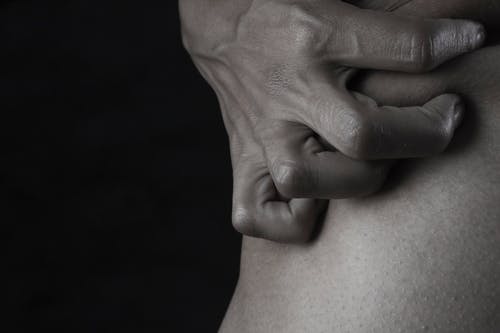
From my May 2016 Journal. Shingles, Day 9. When I came down with the shingles*, I had no idea what was in store for me in the days to come. But I determined right from the beginning that #1) I would have a positive attitude and #2) I would do my best to learn something from the experience.

With horrible nausea, I made two trips across town to the doctor, throwing up four to five times that day. Even with anti-nausea meds, I was barely functional. Finally the doc switched me to Phenergan. With one dose my life became bearable. I could tolerate the rash, the nonstop headache, the eye pain, and the loss of appetite. I thought of chemo patients and wondered how they tolerated such an assault to their bodies.

A book I read recently on healing mentioned that our perception of pain is related to the highest point of discomfort along with the final outcome of the ordeal (whether negative or positive). During the nausea, I thought I’d die. But as soon as it was under control, I suddenly thought, “Well, that wasn’t so bad!” How interesting is that!

As for lessons learned, so far the only thing I’ve come up with is this:

Before this all started, I heard a question posed on the radio: Who are you? My super-spiritual answer was “a daughter of the King.” But that’s not what my honest answer was. My initial response was related to what I DO: I’m an inner healing prayer minister.

In this last nine days of inactivity, I pondered the question again. I was perfectly content at this point with not being capable of praying with people. My identity this week had nothing to do with ministry. I felt no loss as to who I was. I was too sick to care. Would I have responded, “I’m a sick person”? Is that my identity or my condition?

I am loved. That is enough.

And so I’m grateful:

  • For a husband who’s taken excellent care of me.
  • For the little kindnesses from friends—a meal, a card, a run to the pharmacy, a visit.
  • That my pain has been very manageable.
  • For doctors and nurses and pharmacists and medicine, and a country where such is readily available.
  • For flexibility to cancel appointments without loss of job security.
  • For a comfortable couch, soft pillow, warm blanket, and a kitty for company.
  • That I only have a mild case of the shingles (I’ve heard horror stories).

Day 19, A few observations:

  • Schedules and to-do lists have become irrelevant.
  • Pain management easily takes front and center.
  • Time takes on a different dimension. I’m nearing three weeks of time standing still. One day is like every other—bed to couch, to attempt to do something, to couch. If something gets done, that’s good. If not, oh well!
  • I’m grateful for beauty—the moon, the roses, the trees and grass that I can see through my window, and the sunshine on my face when I sit on the deck for a few minutes.
  • It does no good to try to rush the healing process. You’ll just relapse.
  • Going down is quick. Getting back up takes effort and time.
  • Sleep is necessary.
  • Spiritual disciplines decline in direct proportion to how sick one is. I can gauge my recovery process according to how much I focus on prayer.
  • You can’t teach another person the lessons you’re learning. It will just be information to them until they experience it for themselves. (This is true for everything in life I think.)
  • It’s okay to just be—sometimes that’s all you can do. But it feels quite unproductive—which is my inner default drive—to do, do, do, produce, manage my goals, serve others. It’s hard to serve others when you’re self-focused.
  • Multitasking is no longer an option.

Observation after 5 weeks: I don’t like to talk about illness once I’m through the worst of it. Leave it alone please; let’s move on to something else. You have it far worse than I do. I don’t want to be the center of your focus and attention. Why? Where is that emotion coming from I wonder?

After 7 weeks: Following the shingles, I had laryngitis for four days followed by a full-blown cold, and then I lost a crown while out of town. I’ve had to fight to stay positive, but occasionally I leak! When it’s obvious I don’t feel well and I can’t hide it, people will ask and comment. But when it’s not obvious, I don’t like drawing attention to myself. But expressing it somehow helps me feel better. I watch my friends who have chronic pain who can be matter-of-fact about it—especially if asked—and others who verbalize it constantly, all the while declaring, “. . . but I won’t complain.” When does declaring facts morph into complaint? It starts, I think, in the heart.

So I have to check my attitude periodically. It is easy to get discouraged when the endpoint is unclear. What helps is to refocus, go to the castle of my heart, if even for a moment. It’s like a reset button. I cannot begin to imagine what it’s like to fight against cancer or to come to the end of one’s life with no hope of recovery from illness or aging. No wonder people turn crotchety!

So, Lord, help me to pass this test and learn my lessons.

*Shingles: an acute, painful inflammation of the nerve ganglia, with a skin eruption, caused by the same virus as chickenpox. Mine attacked the right side of my temple in the trigeminal nerve and my right eye (where I’ve battled with flare-ups ever since). I’m so thankful for an excellent ophthalmologist.

Shingles 2

Peaches keeping me company