Introduction
Barkono is a Hausa word meaning “pepper.” After losing all taste and smell for a full year after COVID-19, I decided to celebrate its 50-75% return by indulging in the joy of once more tasting spicy flavors.
I started by searching for ethnic restaurants in Murfreesboro. Not surprisingly, Chinese, Thai, and Mexican were the most prolific. And then I researched available varieties in Nashville—much more cosmopolitan of course.
Nigerian
In January, when Scott and I drove to Nashville for an appointment, we stopped on the way to visit our daughter Sharon who teaches ESL at Legacy Mission Village, a school for refugees. Though the culinary choices in that neighborhood were numerous, I opted for the only Nigerian restaurant in the city. We followed our GPS to Nico’s Restaurant and Bar. The large room was dark and empty except for one man sitting at a corner booth. He greeted these turawa (white people) and motioned us to a tiny, sliding glass window at the back of the restaurant.
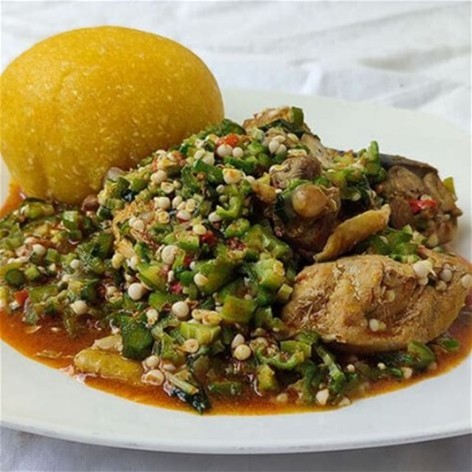
I asked the owner if she had any tuwo da miya (my favorite northern Nigeria dish). Sadly, she said she was from the South and only served fufu and pounded yam. I asked for the spiciest dish on the menu, and she recommended the okra soup.
Scott cannot handle anything spicy (yes, opposites do attract), and he cannot tolerate this African American eating any food with my fingers, so I ordered take out and reheated the dish when I got home that evening. Deliciously satisfying!
In September, My sister Grace arrived from California to join my brother and me for a sibling reunion in Georgia. On the way home from the airport, stopping at the Nico restaurant was a must. Two large, boiled chicken legs filled her bowl of okra soup. Not her favorite she said. I was happy to polish it off.

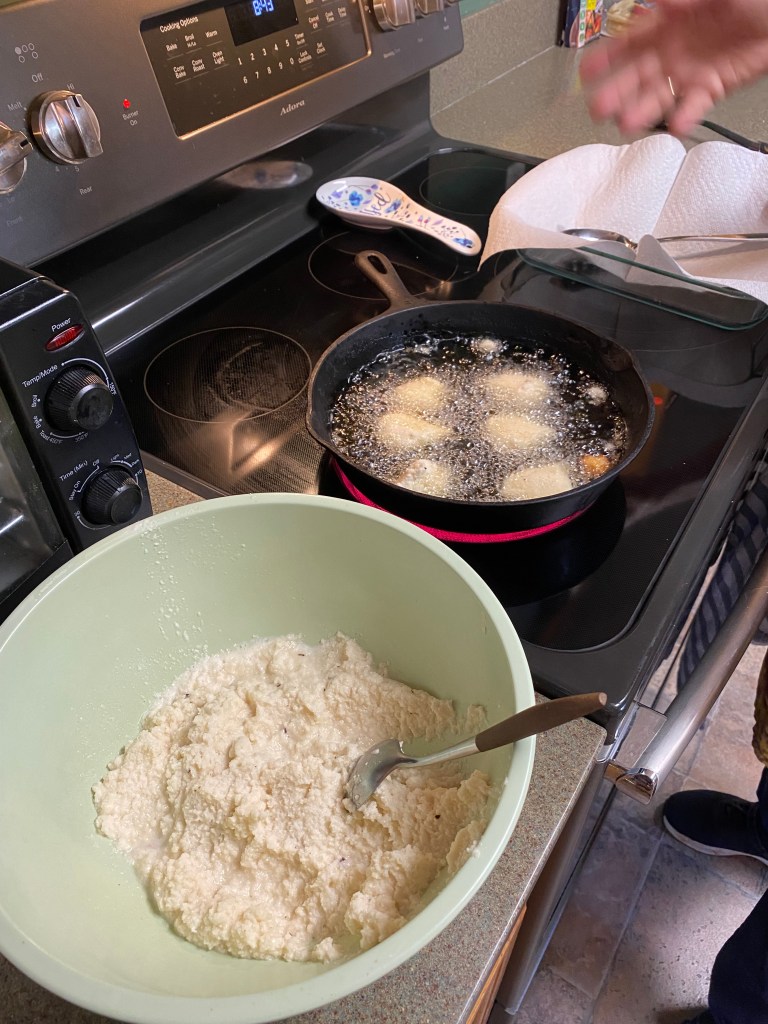
And then Grace asked me to make some kose (deep-fat-fried, black-eyed-pea beancakes). Much to Scott’s chagrin, it took a week to get the musty odor out of our house. I think the peanut oil was too old.
Korean
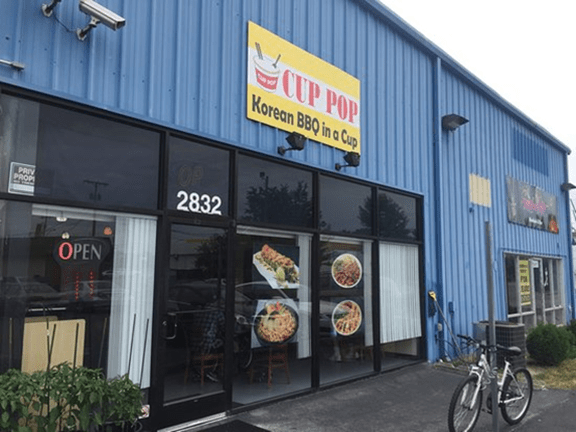
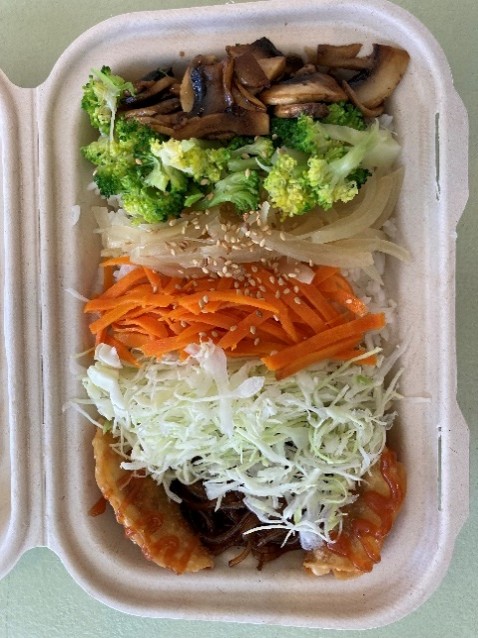
February’s wet, gloomy weather drove me to try Cup Pop Korean Restaurant, across the street from MTSU. Two ladies, chattering away in Korean (I presume) lent authenticity to the atmosphere of this little hole-in-the-wall eatery. I opted for vegetarian and spice level 2. (Next time I’ll bump it up to 3). Instructions were prominently posted on how to eat this delicacy: Pour your sauce cup over the rice/meat/veggies, stir, and enjoy. “But don’t pour over the dumpling,” the cashier admonished. Oh … my … goodness! I thought I only had enough room for half a serving, but I couldn’t stop myself from consuming the whole thing. Amazing! I brought home the remainder of my sauce, planning to toss it over my next bland meal.
Italian
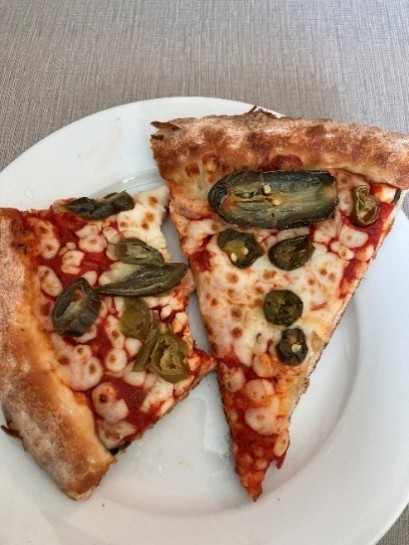
Once a week, Scott and I order online a large, one-topping pizza (half pepperoni for him and half jalapeño peppers for me) from our nearby Papa Johns. I’m on a first-name basis now with Seth who greets me as I walk through the door. A home movie and a pizza. Can’t get much better than that!
Indian
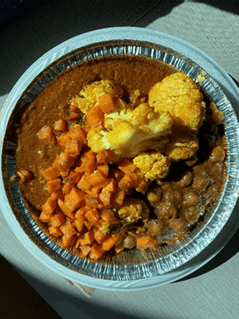
One day while waiting for a friend to get out of surgery, I was delighted to discover the hospital cafeteria that day was serving Indian butter chicken with cauliflower, sweet potatoes, and chickpeas over a bed of rice. Warmed my heart! I felt sorry for my friend’s pain, but this delicious meal made my wait tolerable.
Mexican
In March I indulged my craving for Chuys Mexican Restaurant’s creamy jalapeño dip and chicken tortilla soup. I always bring home leftovers.
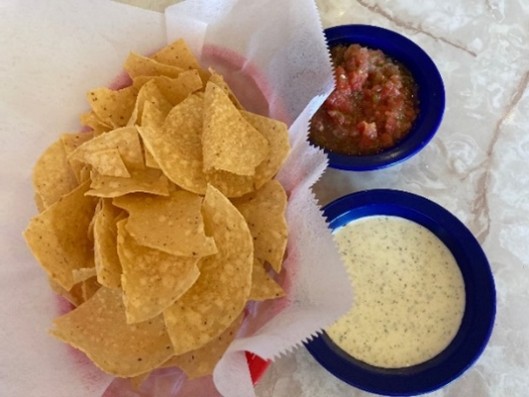
And since I was out of town for Mothers’ Day, Scott surprised me later with a trip to Mi Patria, a new Mexican restaurant in town. I tried their fish tacos. Quite tasty, but the only spice came in the salsa dip for the chips. Since Scott does not care for Mexican, and spice does not fare well with his system, this was truly a sacrifice for him. He had steak and fries.
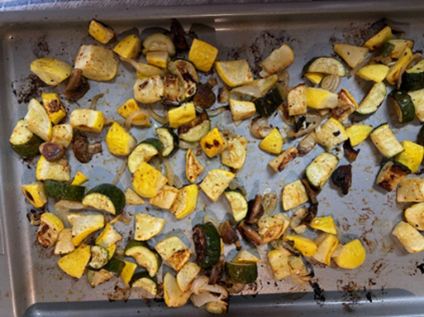
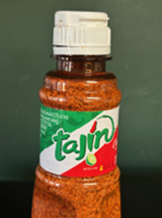
This summer, A friend gave me some home-grown summer squash (which I oven roasted with zucchini, mushrooms, and onions) and another friend gave me some tajin spice (chili peppers, sea salt, and dehydrated lime juice). Put the two together, and the result was indescribably delicious. I wonder what tajin would taste like on popcorn.


Thai
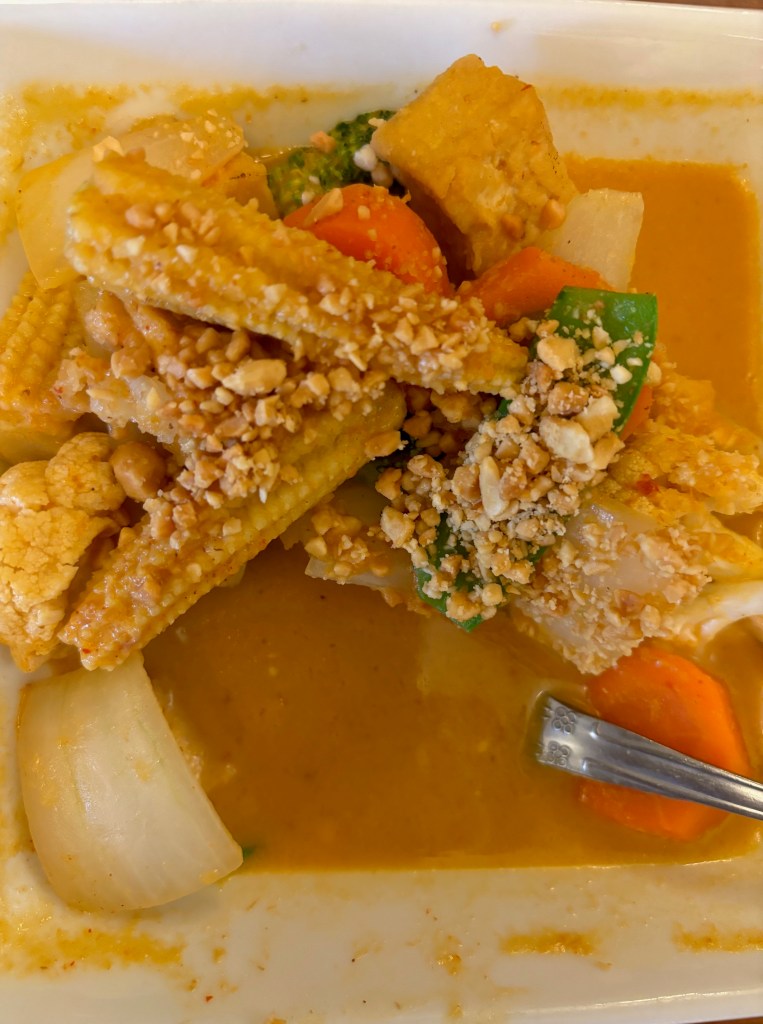
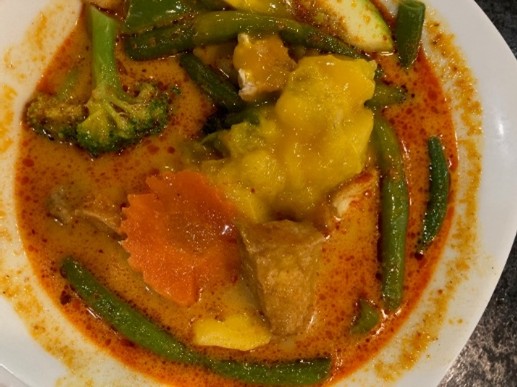
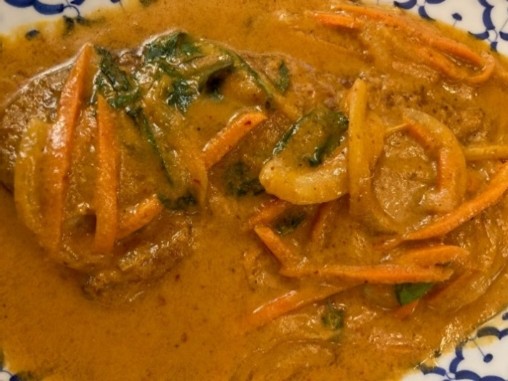
In April, my birthday month, friends treated me to two Thai restaurants. At Thai Pattaya, I ordered coconut curry with tofu and veggies (spice level 2) and at Bangkok Thai, red curry with fish (spice level 3).
In October, Scott and I returned to Bangkok Thai with a gift certificate for our anniversary, and I ordered the massaman curry dish with tofu. Though delicious, it was too mild and soupy. We were surprised when the bill came to $6 higher than the menu stated. Apparently, we had neglected to notice the $3-each extra charge for brown rice. But I guess I must have enjoyed it, because I consumed it all instead of taking home leftovers!
Ethiopian
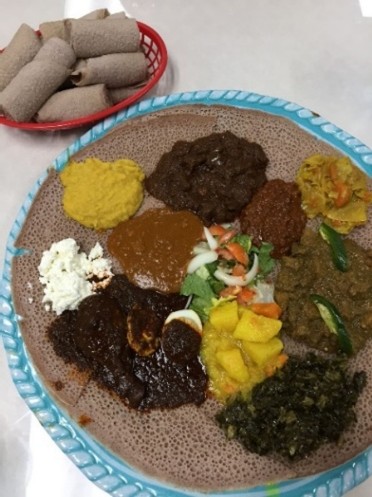
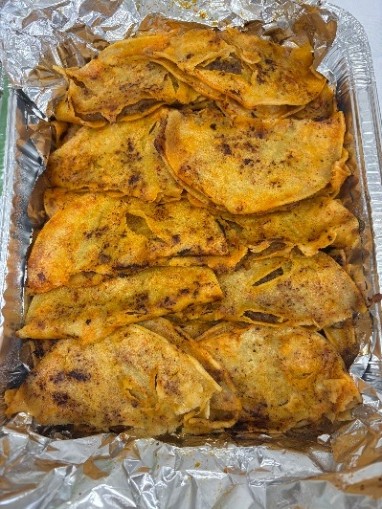
My Life Group at church meets for a potluck every other Sunday, and the theme one week was international food. Since I was already in Nashville to attend the open house for Legacy Village Mission, I stopped by Rehobth Ethiopian Café, a take-out- only establishment that still had the remnants of COVID-19 restrictions. Undeterred, I ducked under the plexiglass partition in the doorway to place my order. Though Minna, my ministry partner from Ethiopia, raved about the food, I felt disappointed. Apparently this restaurant matches the poor man’s injera that she grew up with, and I am more familiar with the upper-class variety (pictured here). Though I craved the spicy meat dish option (30 minutes to prepare), I chose the vegan combo (10 minutes) since I would have had to sit in my car in the 97-degree heat to wait for my order. I also missed the experience of sitting around the community dish with my friends, with no utensils but the three fingers on my right hand to snuggle tasty morsels in the delicious bread.
Mediterranean
This next story begins in 1970.
When Cheryl (my other ministry partner and boarding school classmate) had reconstruction knee surgery in June, her home health care provider, Jan, arrived and announced she was not the person originally scheduled to come. The ensuing conversation went something like this.
Cheryl: I just got back from an MK (Missionary Kid) boarding school class reunion.
Jan: I’m an MK too! Where did your parents serve?
Cheryl: Nigeria.
Jan: Me too!
Cheryl: What school did you attend?
Jan: Hillcrest.
Cheryl: My ministry partner went to Hillcrest!
Cheryl (texting me): Guess who’s in my home? A lady who went to Hillcrest.
Karen: What’s her maiden name and year of graduation?
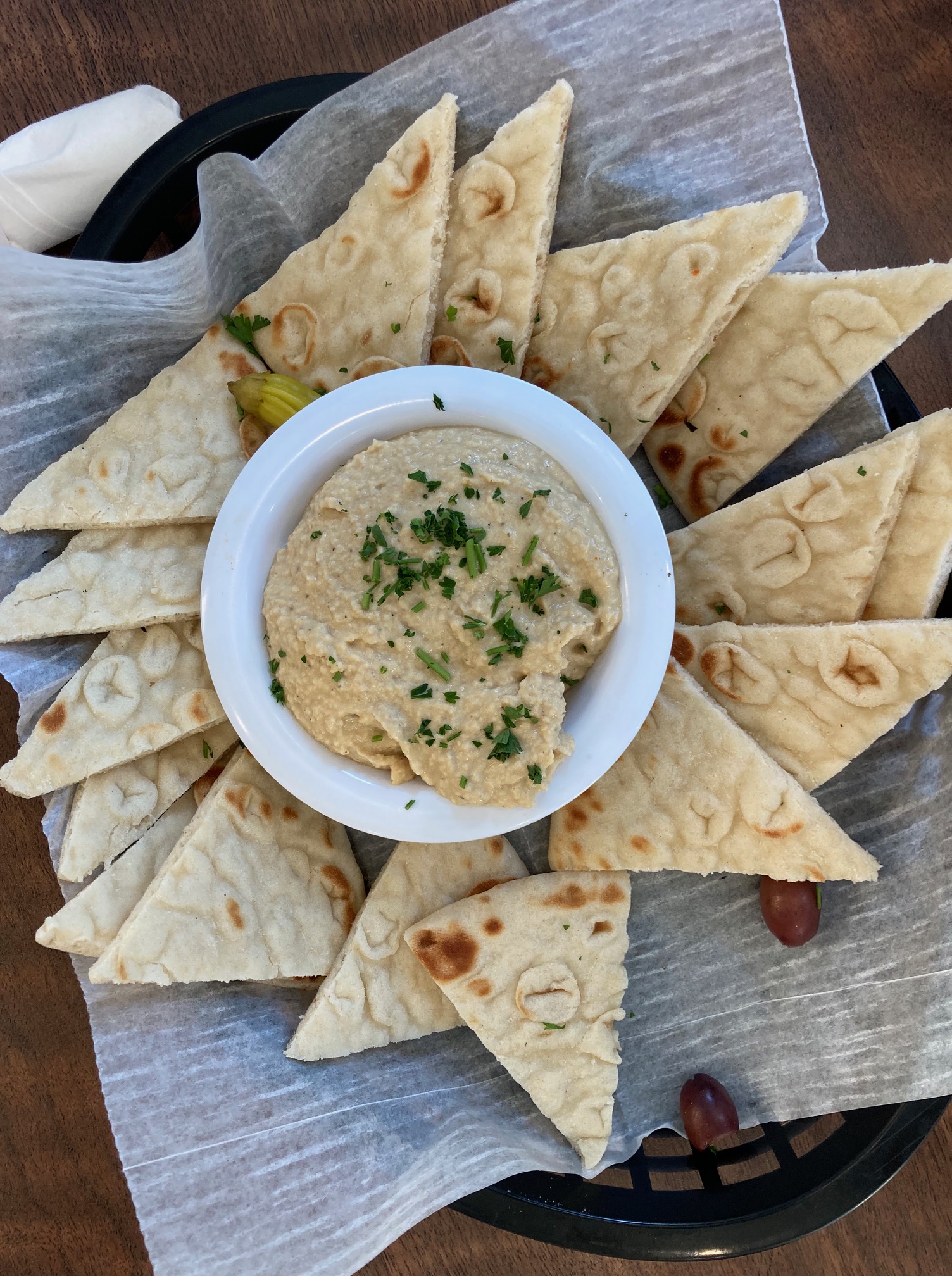
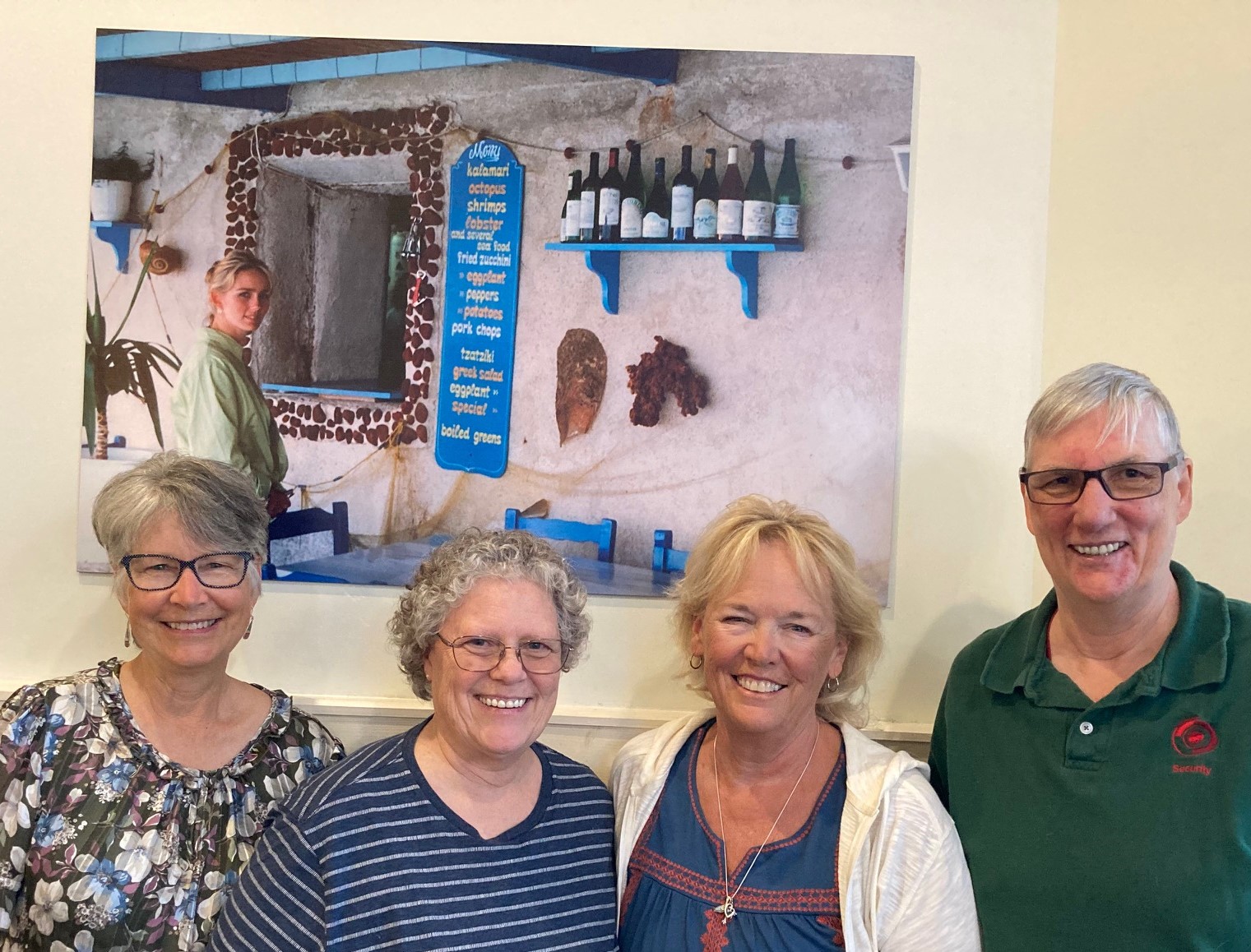
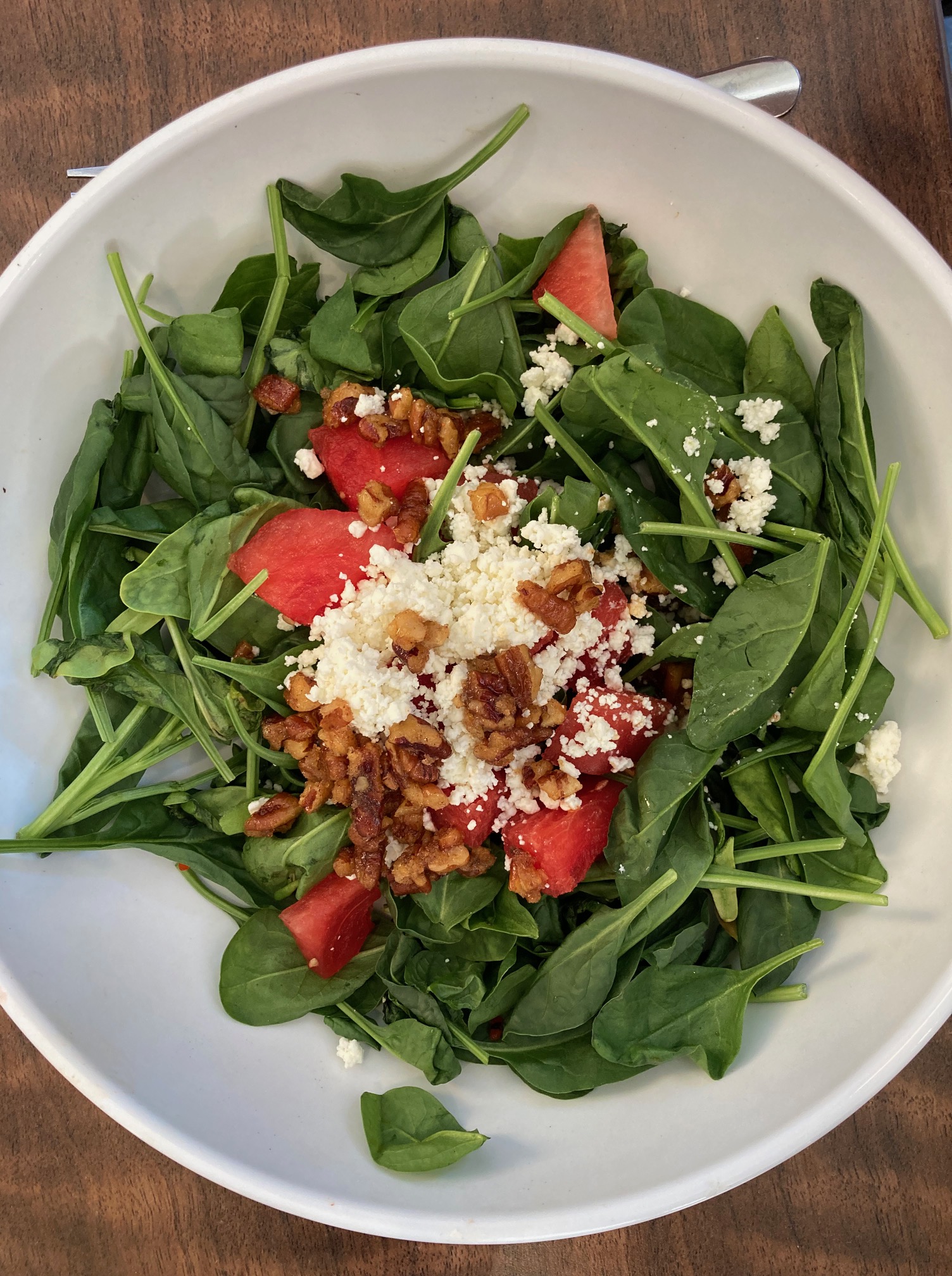
Thus, Jan (a classmate I had not seen in 52 years), Minna, Cheryl, and I met at Taziki’s Mediterranean Cafe. We shared some hummus, and I ordered an amazing watermelon, spinach, feta cheese, and candied pecans salad. Very refreshing on a hot summer day.
Venezuelan
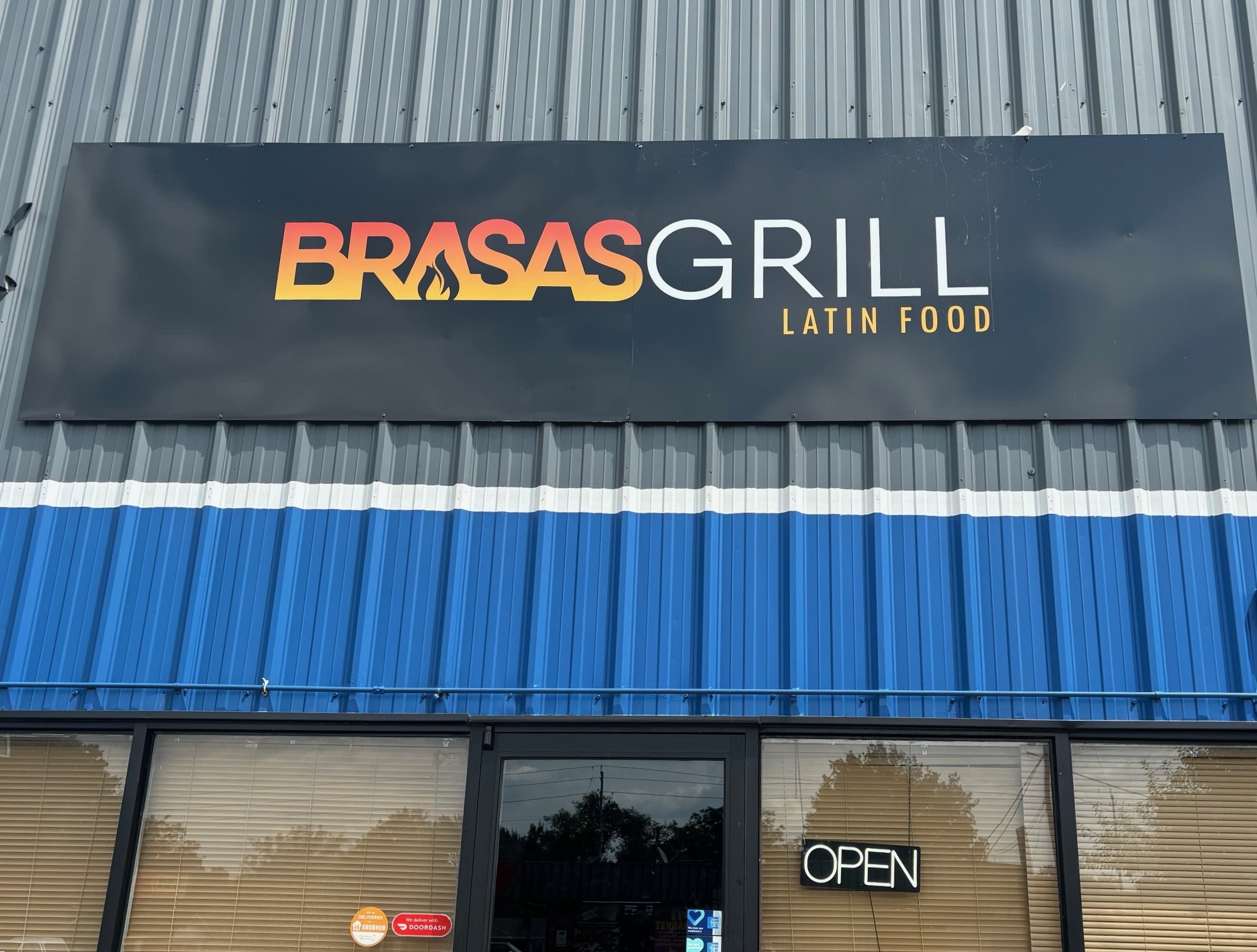
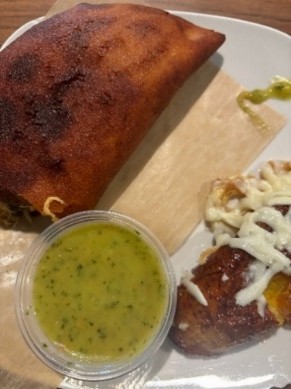
One day my daughter Sharon wanted me to meet a sweet Venezuelan couple from her ESL class who had recently moved to our town. For a taste of home, they recommended Brasas Grill. Thus my friend Carol and I agreed to meet for lunch in August (“As long as the food is not spicy,” she said. It wasn’t.) We ordered chicken-filled empanadas and sweet, caramelized plantains topped with delicious cheese. Tasty and filling, but one visit was enough.
Cuban
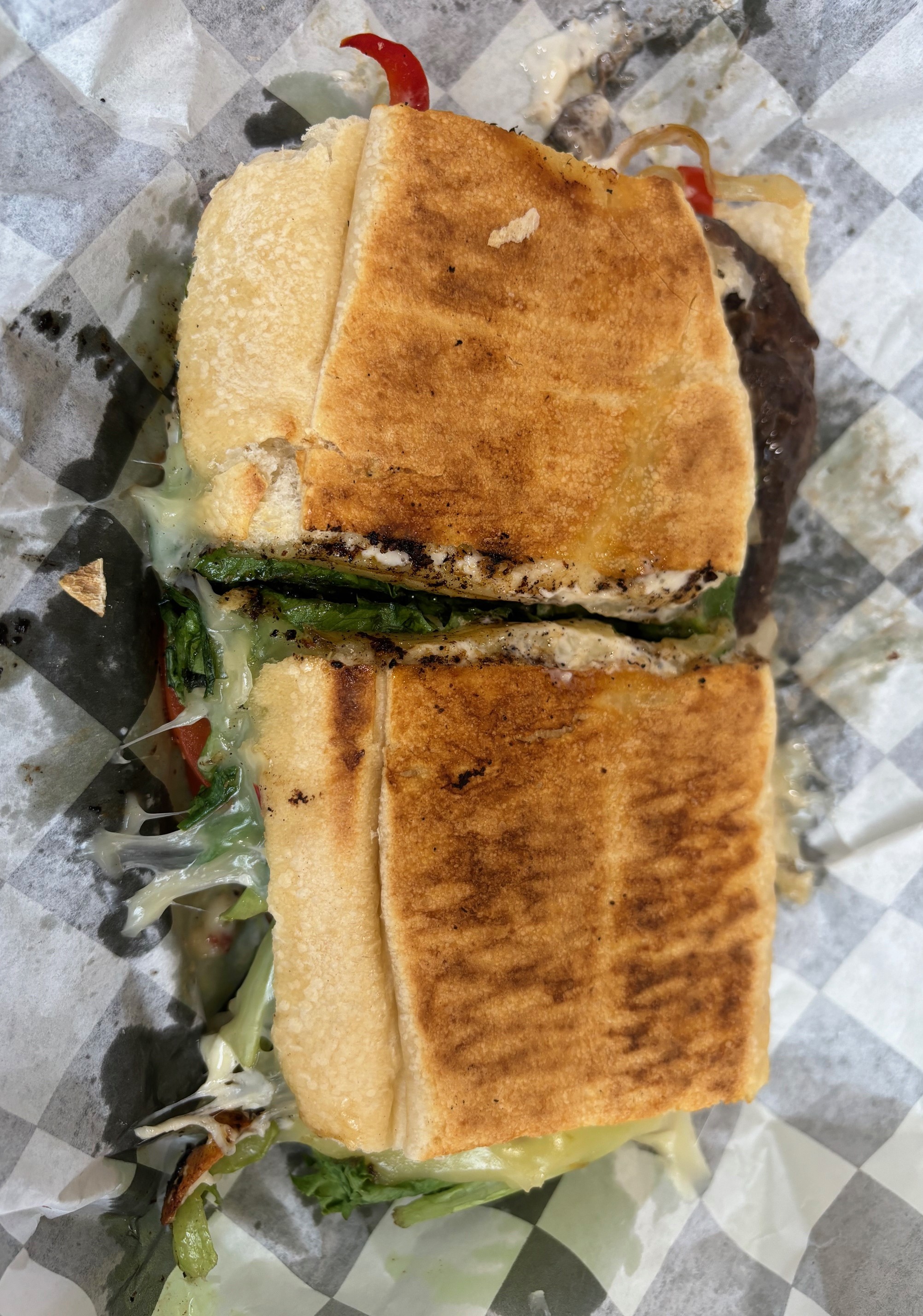
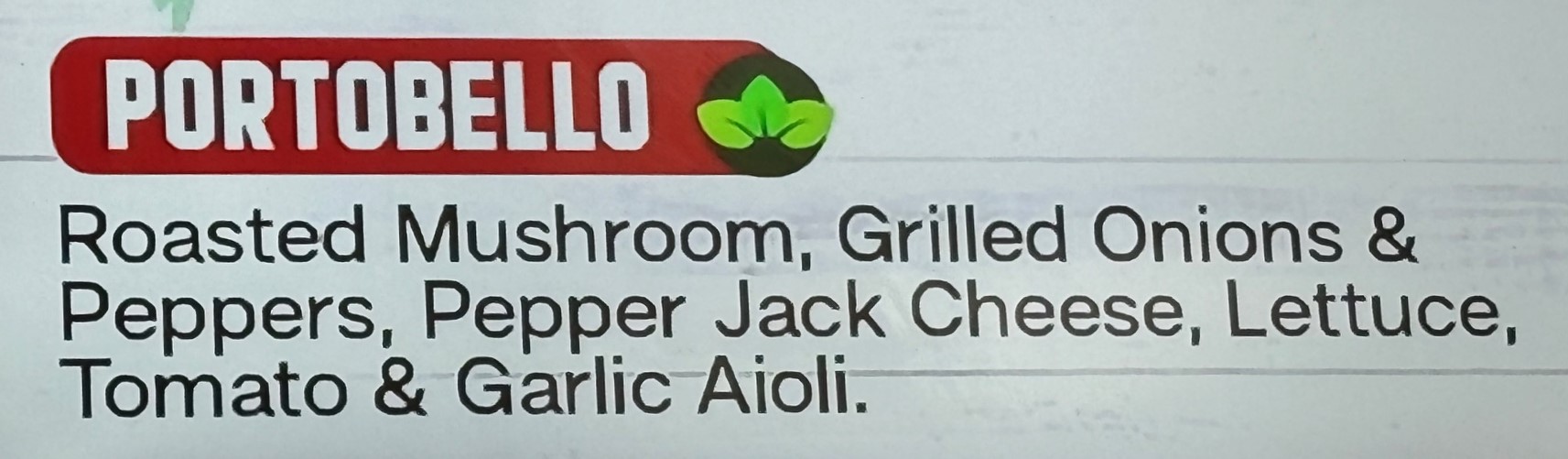
In October, I tagged along with Scott to Chattanooga where he participated in WMBW’s Share-on-thon. Going to the Hamilton Place Mall food court was an easy way to satisfy both our palates. I tried a portobello mushroom sandwich. Though not spicy enough to provide the flavor I was seeking, I enjoyed the crustiness of the toasted bread.

Laotian? Vietnamese?
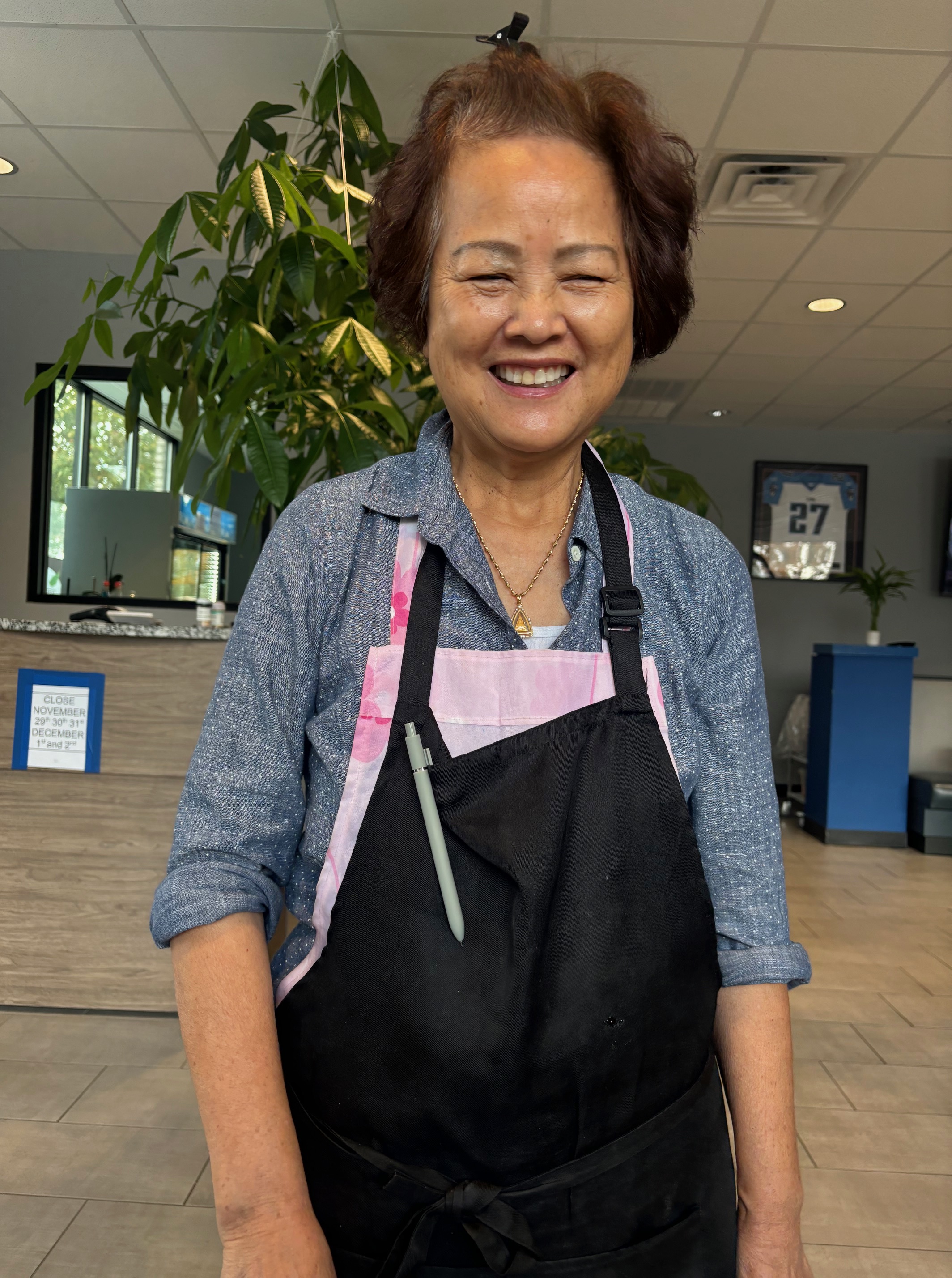
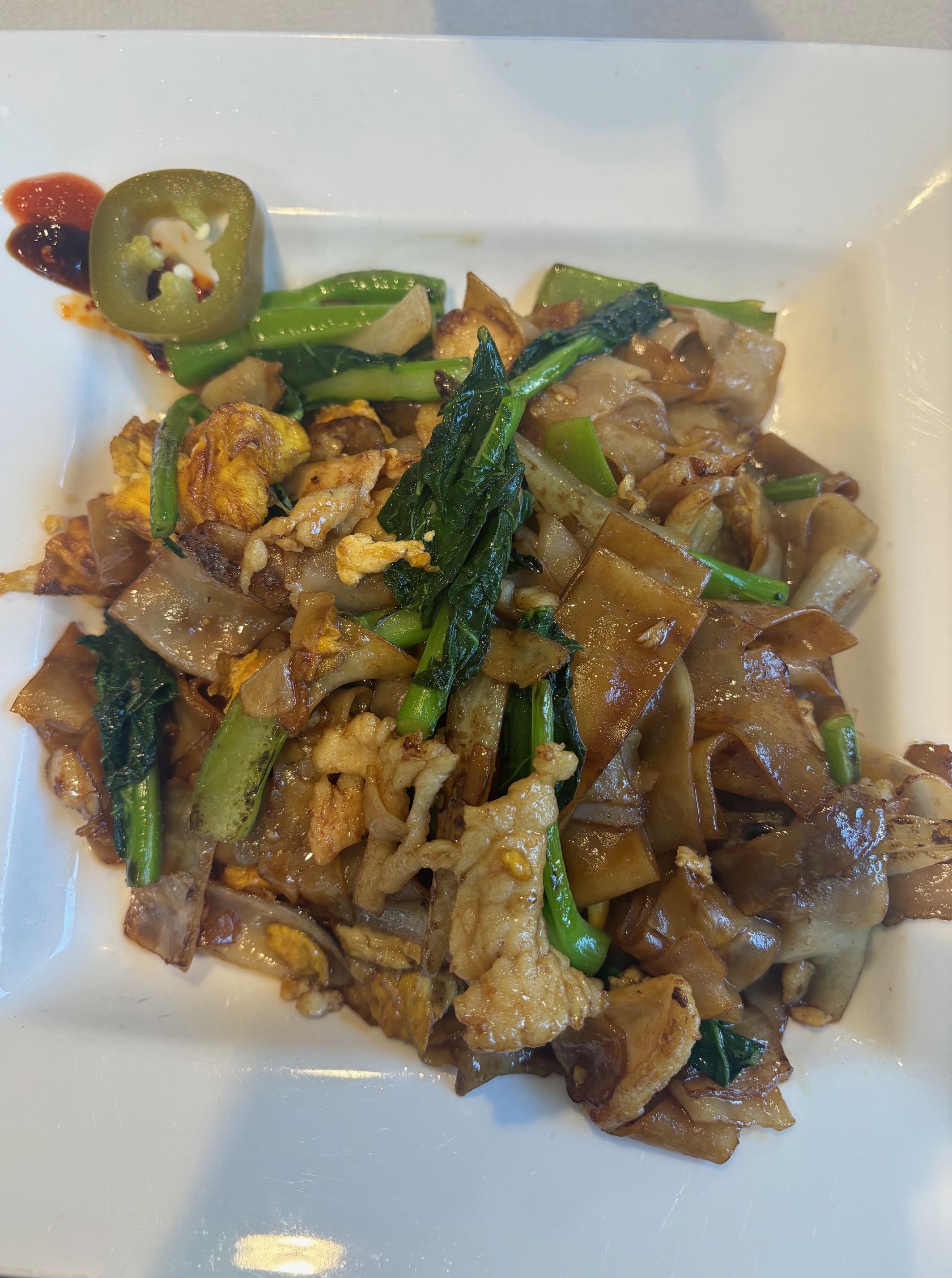
Quite by accident, I discovered an 18-month-old restaurant listed online as Laotian but supposedly Vietnamese just a few minutes from my church. Though near some run-down establishments, inside I found clean, bright booths and tables and a friendly face. Lin (not sure how she spells her name) greeted me enthusiastically and seated me with a one-page menu. Many of the items looked like Chinese or Thai, so I asked for her recommendation for a typical Laotian dish. “My favorite is Pad See Ew,” she said, “with wide rice noodles, Chinese (!) broccoli, and egg—but I don’t recommend you include the carrots.” I took her advice and ordered it with chicken.
This dish originates in Thailand, “so what makes it different?” I asked. “We like our food HOT,” she said. And she proceeded to fuss over the arrangement of condiments on the table, mixing Hoisin Sauce and Sriracha Chili Sauce on the side of my plate, topped with a jalapeño pepper. She then hovered nearby to see how I liked it. “Delicious!” I declared, and she grinned, satisfied. By the end of my meal, we’d exchanged names, I knew she was my age (70) and had lived in the USA for 43 years. Her two kids live out of state, and she works at the restaurant a couple hours a week to get out of the house. What a happy extrovert! To complete my experience, I wandered through the international grocery store next door and drooled over the guava and mango nectars.

International Potluck
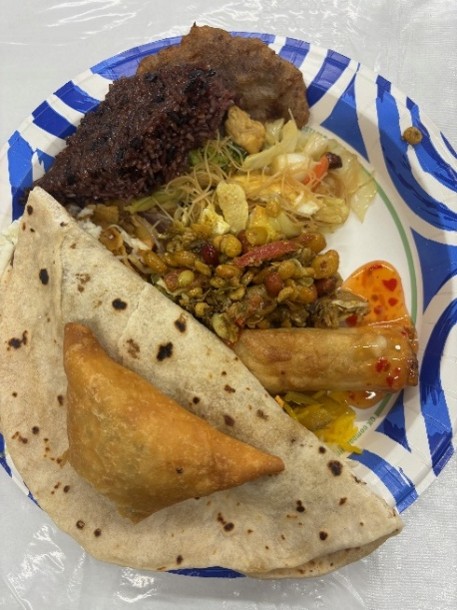
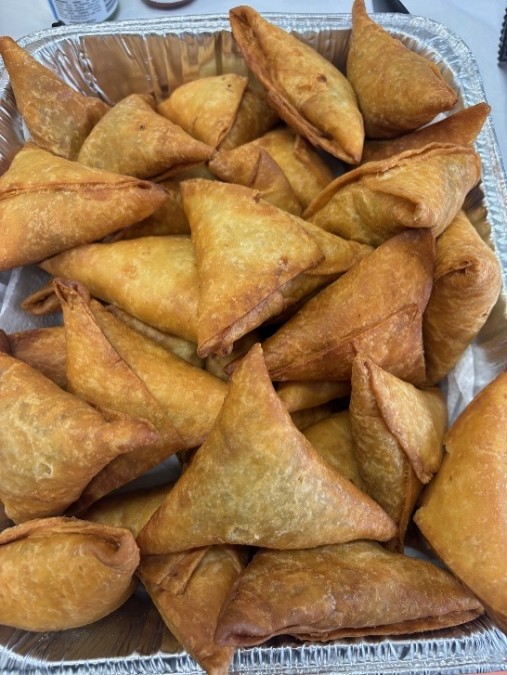
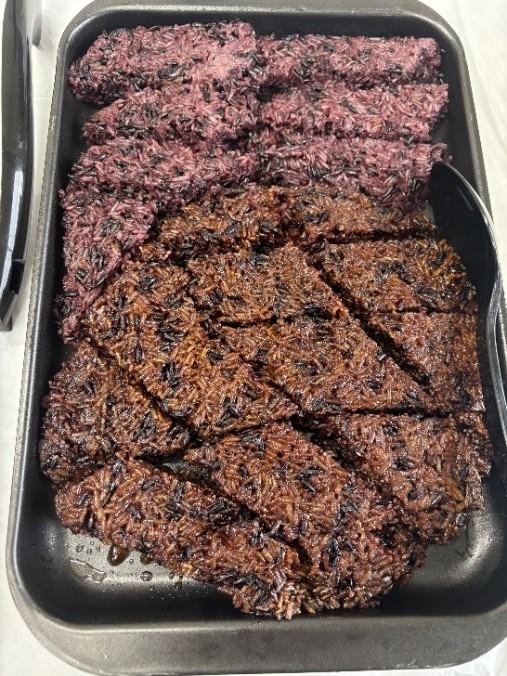
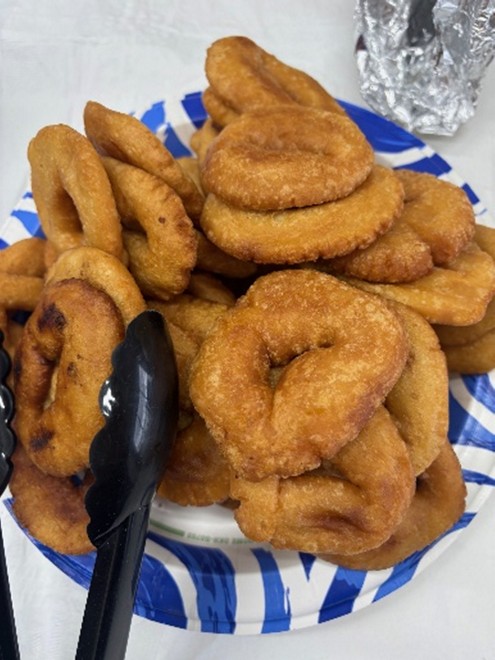
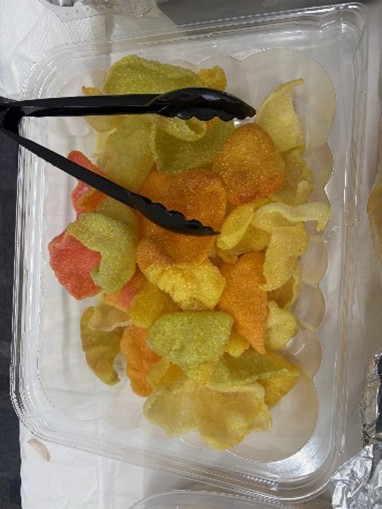
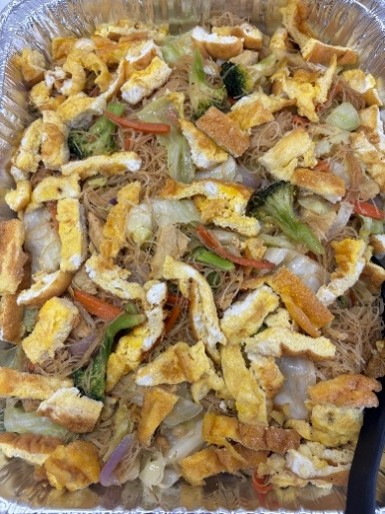
For my last hurrah, I shamelessly invited myself to one of Sharon’s many Christmas parties at Legacy Village, for I knew I’d find a variety of dishes from other countries, including Kurdish, Burmese, and Mexican. Sadly, though all the dishes were tasty, this year not a single one was spicy. To make up for it, I added hot sauces, gifts from friends this year: Cowboy Candy and The General’s Hot Sauce Hooah Jalapeño.
In Conclusion
If you’ve read this far, I suspect the first question you will ask is, “What was your favorite?” Ethiopian and Nigerian topped my list for the best flavor (no surprise there), and Korean for the most unusual. My most fun experience was meeting Lin at Ladna 88. In the end, I enjoyed any dish with barkono.
Thank you to my friends who joined me on this adventure or contributed toward it with your gifts. And thank you to my husband who tolerates my cravings for international cuisine—as long as I don’t eat with my fingers or cook it in my house.
If anyone cares to join or invite me, I’m feeling lickerish* as I search for my next tasty culinary experience.
*Lickerish (adj.) [archaic]: eager to consume delicious foods









 In the Pursuit of Peace