The Perils of Worry

Journal 2006

I confess I’m worried. About scholarships for our youngest daughter. About her school choices. About our savings account.

Worry is a wrinkled brow, a tightness in the neck, shoulders, and stomach. Worry keeps me focused on what is lacking instead of the potential. Worry keeps me bound. Worry is fear.

Worry is a frog on a lily pad floating downstream, hearing the roar of a waterfall ahead, and I’m helpless to stop, hop off the lily pad, or swim to the far shore against the current. What to do? It’s useless to fight. So, I relax, hang on, and get ready for the ride of my life. Over the waterfall, resurface, sputtering and gasping for air, lungs full of water. Feel like I’m dying. But I live to tell the tale. And I rest, recover, get up, and hop back onto my lily pad.

Face your worry. Imagine the end of the journey—survival or death. Either one, either way, there’s peace. So don’t worry!

Photo by ABCDee David on Pexels.com

The Mystery of the Godhead

Journal 2006

Do you ever wonder: If Jesus is encapsulated forever in some sort of bodily form, how will we each get a turn to see Him in heaven? We perceive Him now with our mind’s eye or our imagination.

Here’s a crude analogy: our pastor speaks in one sanctuary, but we can see him on screen in another one. Right now, here on earth, we each see Jesus on a screen in our mind. We don’t see the literal Jesus but rather what our individual, personalized screen perceives.

What about the Holy Spirit? If Jesus is “out there” projected in front of me (or beside or behind or above me), then the Holy Spirit is inside me, looking out. But how can the Holy Spirit be everywhere at once? Don’t tell me, “Because He’s a spirit.” Do I have one part of Him in my heart? Or do I have all of Him? My mind can’t wrap around “I have all of Him.” But I can grasp, “I have the part of Him that is meant for me, personalized.” And my part is part of your part—all the same Being—so that when two believers meet, their spirits recognize The Spirit inside each other, and they rejoice.

So . . . in terms my mind can grasp, when I sit down to pray, it is not sacrilegious to picture it thus: Jesus is sitting comfortably on a pillow in front of me, talking to me face to face. I often don’t have much to say, so I let Him do most of the talking. But He delights to hear my stories, too, and He wants me to share with Him my day and how much His gifts bring me joy. Sometimes, when I’m praying for someone, I don’t know what to pray for. And that’s when the “eye” (the part of the Holy Spirit inside me) says, “Well, I know all things. I know what this person needs. How about I talk to Jesus for you?”

And Jesus says, “Oh, and I have an ‘in’ with the Father. I’m praying for you, you know.”

And I ask, “Show me the Father,” and He says, “I AM the Father, because I and My Father are one.”

Confusing?! It’s like the Father is a cloak that surrounds Jesus; only He’s not “wearing” the Father. It’s like Jesus’ skin is the Father. They are one. Or . . . Jesus is the Father with skin on.

Whew! I’m out of words and images. I won’t truly understand till I get to heaven and see Jesus face to face (however that works) and that’s okay.

Navigating Body Needs

Journal 2017

“Sometimes you aren’t listening to your body because you’re listening to everybody else’s expectations.” AnnVoskamp.com

I’m reading a book entitled Plant Paradox that challenges much of what I’ve been taught. Who can I believe? Who has the answers? Opinions and research shift from one decade to the next. Eat potato skins, they say—that’s where the nutrients live; don’t eat the skins, others say, because that’s where the toxins stay. Egg yolks are bad for cholesterol; yolks and whites are best if eaten together. Don’t eat real butter—it has bad fat; don’t eat fake butter—it has too many chemicals. Aaackkk!

I just know that something has to give. I feel more tired and achy as the summer wears on—usually my most healthy season. Where is this inflammation coming from? How do I know what’s good for me and what’s not? Everyone has his or her pet opinion. And how do I balance buying organic vs. watching my budget? Or market-fresh vs. grocery stores vs. my shopping time? What’s most important to me? To God?

I eat pizza and pancakes every Saturday. And for company tonight I’m fixing a high-sugar dessert. How can I say no to that! My naturopath says to stay away from wheat and corn. The rheumatologist suggests avoiding nightshade veggies (tomatoes, peppers, eggplant)—all of which I just bought. Sigh.

I feel old when I’m tired and hurting and compare myself to an elderly couple at my church doing at their age what I don’t have the energy to do now at mine.

VISUAL: From the sidelines, I watch see this couple busily digging a ditch, while Jesus stands to one side observing us both. He hasn’t asked me to dig with these spry octogenarians, but somehow, I feel guilty.

“Look down at your feet,” He says.

I see water.

I don’t understand the significance. At first, I think, I need to bail this liquid out of my ditch. But then I realize the couple is digging for water, and I’ve already found mine. This is no reflection on them, no judgment—just an observation in the visual.

So, what’s next? I’m standing ankle-deep in clear, running water. It feels good on my sore feet. I’m allowed to stay here if I like . . . though I think, maybe I should help the couple dig for their water. Why should I stay here when others need me? So, I offer my services, but they wave me off.

“We love what we do!” they say. “If you like digging, you’re welcome to join us, but we don’t need your help. We’ve found our joy.”

Okay, I can live with that.

So, I stay here in the cool, refreshing water till something flows down my gully that requires attention. I’m grateful for those who answer the call to do. Today I am content to just be, a soft breeze caressing my cheek as I sit here on the patio of Starbucks, watching the cars go by, smelling coffee and perfume and fried food. It’s been a glorious day.

A 2024 Update. My inflammation is under control now and, fortunately, I don’t battle any allergies, or I might have a different opinion. I’ve settled on my mother’s philosophy and wisdom: eat what you want but in moderation. And eat lots of veggies.

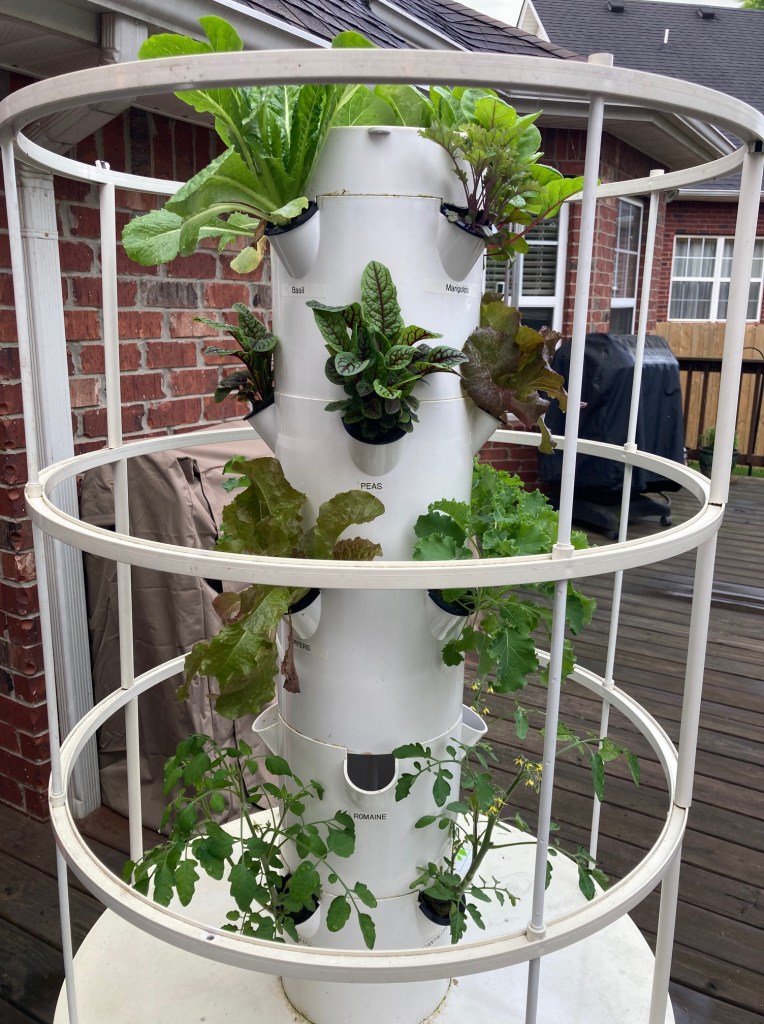
Starting my Tower Garden

Fashion Rebellion

Journal 2016

I have been rebelling against fashion since I was in junior high boarding school. While girls were begging to wear shorter skirts, I insisted on lowering my hems. One day in home economics class we learned what colors supposedly looked good together. Apparently orange and pink was a no-no (this was before the crazy ’70s entered the scene). One of my classmates dared me to put together a clashing skirt/blouse combo and wear it to breakfast that morning. I felt proud that I had enough guts to go against established rules of fashion and confident enough in who I was to pull off the faux pas.

But, to my chagrin, one of the Aunties pulled me aside to inform me that my wardrobe choice was a less than desirable combination of colors.

“How could she think so little of me?” I thought indignantly. Even when I told her that I wasn’t ignorant, that it was done on a dare, the damage in my soul was done. I felt embarrassed where before I felt confident.

I take this emotion to Jesus, and He smiles.

“Why are You smiling?” I ask.

“I love that you have self-confidence to be who you are. Never mind the Auntie. She didn’t know. She was simply trying to be helpful. Wear whatever you choose—with confidence.”

I wish I’d known this the year we were on furlough for my junior year of high school. Someone kindly donated their rejects to the poor missionary barrel, and I ignorantly donned a dress that apparently was out of style. One ill comment, and I never wore it again.

What I choose to wear reflects who I am, and to which master I serve. I want to be confident in who God made me to be.

A 2024 Update. Admittedly, I still have poor fashion sense and find it helpful to take a daughter along with me to shop for clothes—though I maintain the power of veto. I tend to follow my mother’s advice: wear only what’s comfortable.

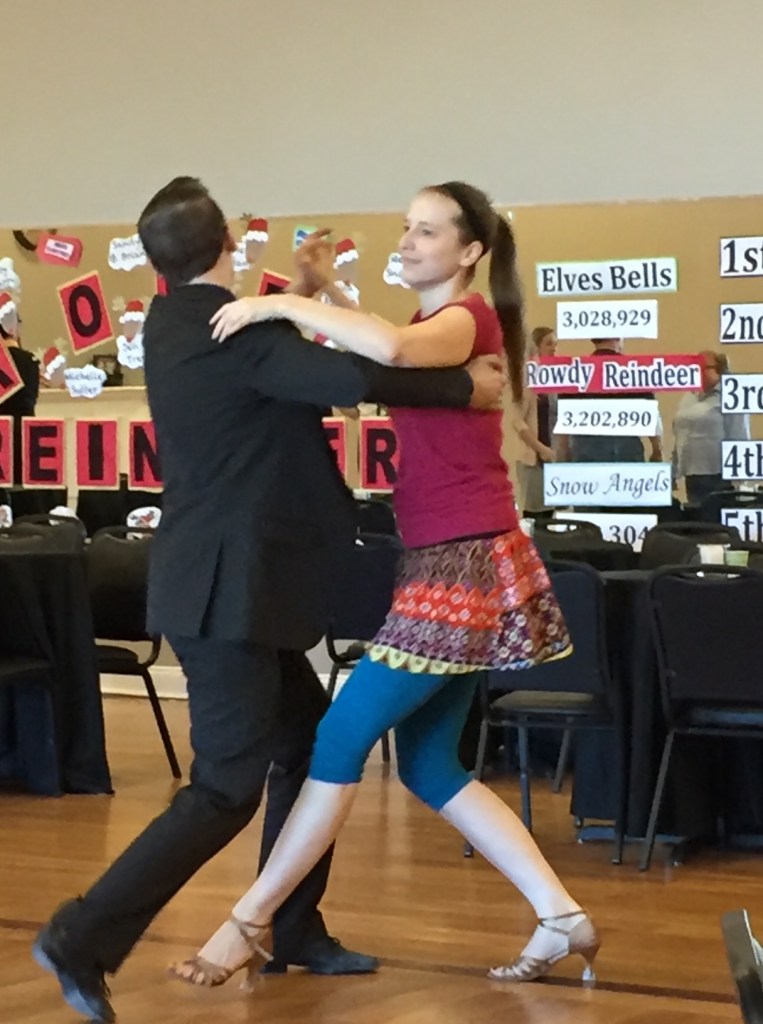
I made this dress in 1975. This really was in style then!

Life Is Story

Journal 2016

I am captivated by stories. I can sit in the pew, mind wandering during a sermon—until a story begins, and then I am all ears.

The Word of God is story–beginning in a garden, climaxing at the cross, and resolving in Revelation.

Every life is a unique story. Trena’s ended this week. She’s gone, but her the impact of her story lives on in her children and her grandkids.

I have recorded my story—what I’m willing to share anyway—in my journals (and now a few anecdotes in my blogs). But my story is not relegated to some words on paper. The impact of my story carries on in my future generations. Story matters. I want my story to end well, faithful to my Lord and King.

A 2024 Update. I asked my boarding school classmates at our reunion in May if anyone had written down their story. Several admitted to having begun the process by answering questions from a script. I did that with my parents. They each filled in daily questions for a full year, and then I created an Excel chart with the results. Next, Scott and I answered the same questions. It would be fun to see my girls’ answers to the same.

Question #34DadMomMeScott
What was your favorite meal as a child?Fish of any kind. Homemade ice cream or snow cones. Rhubarb pie, mincemeat pie. Pork roast and trimmings.Probably salmon in any form or goulash. Popcorn was not exactly a meal but to this day it is my favorite food!I loved fried meat of any kind, but particularly venison liver. But tuwo da miya topped everything.Soft-boiled egg mixed with potato. Whenever I went to the dentist or was sick, this is what Mom would fix for me.

The thought, however, of summarizing 70 years is daunting to me. And besides, I figure I have 20 more years (if I live as long as my parents did) to dig through all my journals to find the nuggets. And then I just get tired thinking about it. I know how much work is involved in the writing process. I think I’ll just go live my story for now!

Judgmentalism

Journal 2017

Two or three times in church today I found unwanted thoughts in my head—critiquing (I refuse to use the word criticize because I don’t want to go down that road) the person or event. We all do it—okay most of us do it.

It irritates me a little if a person says everything is perfect ALL the time. They are too delighted in everything—and then I realize as I say this, that all the people I know like this are sanguines—which I am not. Declaring everything is always perfect, good, and wonderful, feels disingenuous. It’s not reality. But neither is the doom and gloom of the pessimist. I’m somewhere in between.

What I don’t like is the unbidden thoughts I have regarding others. I used to judge and feel superior and all that nasty self-righteousness stuff. Now I just notice. But why, I ask myself, do I even need to notice? I guess the only way NOT to notice is to be blind.

Okay, I really must be honest with myself. It’s not the noticing that’s the problem. So what is it? Why does it matter? That’s where the emotion lies.

I find the memory and process it, and it feels better now. Noticing is okay; judging is unproductive.

Pharisees and Hypocrites

Journal 2016

To some who were confident of their own righteousness and looked down on everybody else . . . (Luke 18:9 NIV)

I am a recovering Pharisee. I identify more with the law than with grace, with Martha more than Mary, with the big brother rather than the prodigal son, with self-righteousness over God’s righteousness. God, help me!

Had I been at the synagogue the day Jesus healed the crippled woman, I would have been the Pharisee condemning Jesus for working on the Sabbath. That is my natural, Adamic nature, the old man, of the world. Yes, I’ve come a long, long way, but I’m not there yet—and won’t be until I get to heaven. Whenever I think I’m “better than,” I’ve crossed the line into self-righteousness.

So, I explore this thought:  If I choose wisely (the God path), does that make me better than those who choose to resist God? My flesh says, “Yes, thus making me superior.” But that is arrogance. Scorn does not become me. Disgust or rolling the eyes or looking down at someone—how can that be a good choice?

I am responsible for my own faith, my own choices, my own reactions, and responses. I don’t know another person’s heart—not really. We are each accountable to our own master—be it God or Satan or money or pain.

Since I’ve chosen God as my master, then I only answer to Him. It is not my job to judge another person’s choices. I might notice that they’ve chosen a poor master, and I can urge them to reconsider their path, but they may be bound in chains and may not know that freedom is available to them. Why get upset and rage at them for not opening their eyes—when they are truly blinded by the god of this world and cannot see until the God of Heaven opens their eyes.

But God has set me free from the law of sin and death. He gives light and life and freedom. No more condemnation, judgment, pride, or superiority. Let God be God and me the chiefest of sinners whom God has redeemed.

You will never understand the heart of a Pharisee unless you realize that he sees the plank in his eye as belonging to others. (Erwin Lutzer in his book Who Are You to Judge?)

See-saw Memory

Journal 2016

I felt a trigger this week that took me back to the sensation of being at the end of a teeter-totter. My playmate sat on the end of the board at ground-level, suspending me in the air, feet dangling, afraid she might step away and leave me to crash to the ground.

All my solutions for this discomfort didn’t work, so I invited Jesus into my picture. He stood beside me and grabbed me when the teeter-totter plunged. Safe in His arms.

Amazing how our minds work. I’m 63 years old, and the cells of my body and brain still remember the sensation I felt at age 8. We human beings are walking messes of triggers!

Photo by u00d6mer Derinyar on Pexels.com

So Many People!

Journal 2016

There are not enough hours in the day to pray for or develop and maintain a relationship with every person I know. I’m working on getting to know my immediate neighbors, but just when I made a good solid contact, they moved. Arrghh! How do I apportion my time wisely between friendships and acquaintances? I could spend 100% of my time with one client and it wouldn’t be enough to satisfy her need. A phone call a couple hours a month is all another relationship needs in order to remain best friends.

God orchestrated the Apostle Paul’s travels and people he connected with, and Paul had to be obedient. Even his jail time was used by God. How much control do I have over my relationships and time vs. how much does God control it? I’m only responsible for my part, not His. I have to trust Him to bring into my life exactly whom He wants me to talk to, spend time with, and minister to. If I’m moving forward, He can guide me.

A 2024 Update. I just returned from Florida where I reunited once again with my childhood boarding school classmates from around the world. As we reminisced over the last 70 years, the bonds only got stronger, but I don’t have time in my schedule to maintain daily contact with each one. People come into our lives for a season, and now it’s time to refocus on those whom I sit beside at church or chat with at the grocery store checkout lane. But these brothers and sisters will be forever in my heart.

On Doubt and Faith

Journal 2016

 “They did not believe it [the resurrection]” (Mark 16:11 NIV).

 “They did not believe them [the 2 men on the road to Emmaus] either” (Mark 16:11).

 “Jesus rebuked them for their lack of faith and their stubborn refusal to believe those who had seen him after he had risen” (Mark 16:14).

Why is it so hard to believe someone else’s testimony? And when evidence is right there in my face, why do I refuse to believe it? What makes me dig in my heals and deny the truth? Everyone (including Mary, the ten disciples, and eventually Thomas) finally believed when they experientially saw Jesus with their own eyes.

I suspect fear is at the bottom of it. When I’m working with clients with D.I.D. (Dissociative Identity Disorder), the denial parts might say, “If I believe it happened, then I’ll have to admit it was real.”

“Then what?” I’ll ask.

“Then I’ll feel overwhelmed (. . . or scared . . . or someone might find out . . . or I’ll be killed).”

I wonder what lie the disciples believed that kept their denial part in place: “It’s too good to be true (. . . or I can’t let myself feel hope for fear I’ll be disappointed).” I think that’s it. Jesus’ death was a HUGE disappointment, an overwhelmingly painful loss.

Yet when Jesus met them, He didn’t encourage them like He did when someone was fearful. He rebuked and chided them for their unbelief. According to I Samuel 15:23, stubbornness (ASV) rebellion (KJV) presumption (ESV) defiance (HCSB) is as the sin of witchcraft. Apparently, there was an element of demonic control or attachment that perhaps got planted at their point of pain. Jesus doesn’t need to dig around in their psyches to help them discover why they’ve dug in their heels. He bluntly rebukes them.

God is patient with our struggles, our fears, and our doubts, but He’s not so patient with lack of faith. How many times did He say, “O ye of little faith?” There’s no pointing of fingers here. I’m plenty guilty myself. But my heart strongly desires to root out all stubbornness, rebellion, and lack of faith.

I’m currently reading books on the neuroscience of the brain and wondering how to meld that knowledge with Jesus’ words.

The women at the tomb believed as soon as the angels spoke truth to them. The men, however, continued to doubt when presented with the evidence (the women’s testimony and an empty tomb). The disciples on the road to Emmaus couldn’t seem to grasp the truth, and Jesus rebuked them. Even when the disciples saw Jesus in the room, and the joy center of their brain was activated, they had a hard time believing.

We know that the brain is a complex organ—different parts of the brain are responsible for different functions. The occipital for eyes, the amygdala for emotion, the frontal cortex for logic and reasoning, and memory resides in a different part.

Jesus created the human brain. He knew what part of the brain was being accessed during fear (Peter walking on the water; the disciples in the storm on the sea of Galilee). He knew that the frontal cortex shuts down during a fight/flight/freeze situation. Yet He seemed impatient with them: “Why do you doubt? Why do you have so little faith? Why don’t you believe when the evidence is in front of you that I’m alive? Stop doubting!”

What makes us doubt? Is the emotion center too strong? Are there lies imbedded in that emotion? Once truth enters the brain, doubt and fear flee. Jesus understood all this, so was He really impatient or was He challenging them to accept HIM, the truth, the way, the life?

I think women often believe more easily than men. Perhaps that’s why Satan appealed to Eve first. Is that because our emotion center is more active than our reason center? Was Jesus instructing these men to get in touch with their emotional side? Women are also more apt to be duped, more gullible. I know I am.

Lord, help my unbelief.