Remembering COVID-19

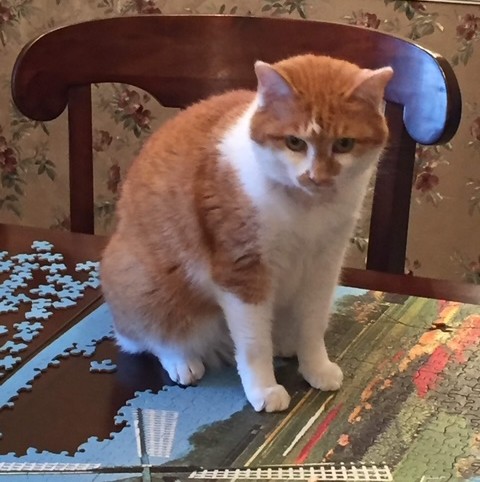
Today I begin with a 2025 Update. As we joyfully gather around the feast table with all our family this year, I pause to remember the angst of the pandemic. We survived it, and life went on, some of us changed forever due to circumstances beyond our control. For me, personally, I learned to embrace the change. As retirees, my husband and I had plenty to eat, a shelter over our heads, and no children underfoot to juggle school and job security. I had more time to read, do jigsaw puzzles, and hike solo on the Greenway. What’s not to like for an introvert!

Journal 2020

With the country on lockdown from COVID-19, I find I have a more open schedule, unsure how to plan my day. As a task-oriented person, I don’t know what I’m feeling . . .

Visual: I’m walking through a misty cloud, uncertain which path I’m supposed to take. I can hear the crunch of gravel under my feet, affirming I’m heading in the right direction, and in the small circle of light, I can see Jesus’ feet directly in front of me. Just keep following and trusting my senses, I tell myself.

Suddenly I find I’m blindfolded. Oh no! Now I’m dependent on following His footsteps, but they’re hard to hear over the crunching of my feet. Pause. Listen. Step toward the sound. What if He gets too far ahead of me? That’s silly, I think. He won’t leave me behind. Just listen . . .

I hear some sticks breaking off to the right. Is that Him? Is He leading me into the forest? Is it a distraction? An animal? All is still and quiet. I don’t dare move.

And then I hear a soft “mooo.” Whew! But it’s taken my focus off the footsteps in front of me.

“I’m here,” says Jesus quietly.

Relief. Ready for the next step, I feel His hand reaching back to take mine. “We’re about to cross a stream,” He says. “I need you to hold onto Me so I can guide you across.”

“Blindfolded still?” I ask.

“You may take it off,” He replies. “But it won’t help much. The fog is too thick, and you’ll try to rely on your eyes instead of the pressure of My hand guiding you.”

I trust Him. I leave the bandana on and begin my forward movement into the icy cold water. In my mind’s eye I can see the rocks as my feet try to get a grip on their slippery surface.

“I’ve got you,” Jesus reassures me. “Right foot next.” And so we continue across. My feet are cold, but the water is shallow. We are in no danger.

Jesus removes my blindfold, and I see a little spark and then a bonfire ahead of us. He wraps a blanket around my shivering shoulders, my feet toward the fire, and soon I feel drowsy. “Rest, Little One,” He says. “Rest, for the journey is long, and you’ll need your strength for the mountain up ahead. But don’t worry. The sun is rising, the mist will dry up, and soon you’ll be wishing for the cool water. We’ll fill our containers before we leave here to remember the days when you walked by faith and not by sight. For now, just rest and enjoy the quiet.”

And now I know what I was feeling—like I had to keep to a schedule, accomplish a to-do list, keep on track, use my time wisely. What if I allow myself to be lazy today and just do what I feel like doing in the moment, without an agenda. No “have-tos” just “get-tos.” What if today is a vacation day?

What Is Faith?

Journal 2006

Whenever I ask people to define faith, they glibly quote Hebrews 11:1.

Now faith is the substance of things hoped for, the evidence of things not seen.

But to me, this sentence is just meaningless words on a page. It wasn’t until I heard the following sermon that it finally clicked. Here’s what pastor said.

Faith is when you hear what God says, and you do it.

  1. It’s defined by what God says. (For every entry in Hebrews 11, they heard a command from God.)
  2. It’s determined by how you respond. (Check out the verbs in this chapter.)
  3. It’s deepened by the challenges you face, your experiences.
  4. It’s directed to the rewards He promised.

Faith is NOT simply belief. For example, I can believe that if I step off the edge of a cliff, I won’t fall. That’s stupidity, not faith.

Faith is acting on a command or a promise from God. Faith is standing on the edge of a cliff, and if GOD TELLS ME to step off the edge, I do it in obedience and trust. If I plummet to my death, so be it. He will take care of the results. Or He may have prepared an invisible bridge to the other side (like in Indiana Jones and Last Crusade)—but I wouldn’t have known it was there if I hadn’t taken the first step.

Daniel’s friends, Shadrach, Meshach, and Abednego (Daniel 3:16-28) obeyed God—in faith—and their attitude was, “Even if we die, God will take care of it.” But God chose to spare their lives for a greater purpose. Others, like Jim Elliott and his four fellow missionaries, obeyed and became martyrs—they stepped into faith and obedience and stepped right into the arms of Jesus.

A 2025 Update. I’d like to add that the object of my faith is of prime importance for the outcome. I can always trust God to do what’s best.

AI-generated

Finding Jesus

Journal 2006

Philip Yancy in his book The Jesus I Never Knew suggests that we get a false view of Jesus from our exposure to false teachings, life experiences, and poor examples. Perhaps my view of Jesus is slightly off-center I realize.

I watched the movie Anna and the King last night. The King of Siam has Christ-figure elements about him. His eyes are gentle and kind. His self-sacrifice for the sake of his wives and children. Room in his heart for one more. Of course there are major flaws in this analogy since he is human and a Buddhist, but there’s something about his character that draws me in, makes me sit up and take notice and love him.

Because I’m married, I can’t relax around most men—my heart stays on guard. But I’ve encountered three men in my life who make me think “Jesus.” One was a relative, one a friend, and another a stranger. Each had that quality or air that made me want to sit at his feet and learn.

Jesus is not my human daddy; He’s not my human husband; He’s not the King of Siam, a friend, or a relative. Who is He then? How do I picture Him? Am I afraid of Him? Is this why I need to come to Him as a little child, trusting, unself-conscious, needy, desiring to sit in His lap and be held …?

The verse in Isaiah that says there is no comeliness about Him that would draw us to Him trips me up. Of course that refers to His human form or perhaps to His battered body on the cross. But what if I could see Him in His risen, shining, radiant beauty? Would I be drawn to Him then?

I can approach Jesus and talk to Him about anything, and He doesn’t get angry or defensive or push me away. He listens with patience and waits for me to quit struggling, to relax and trust Him.

So how can I see Him? Many clients report seeing glorious revelations and pictures in another dimension. I visualize nothing. I have no inner landscape, no other world, no Land of Narnia. (How does one get to Narnia anyway without a wardrobe?) How does one get to see the face of Jesus? In the final scene in Finding Neverland, the playwright tells little Peter he can visit his deceased mother any time he pleases.

“How?” Peter asks.

“Just believe,” he says.

Just believe? How do you do that?

“Through the eyes of faith,” you might tell me.

But what is that? Give me more than words. Give me an experience. Give me a heavenly vision.

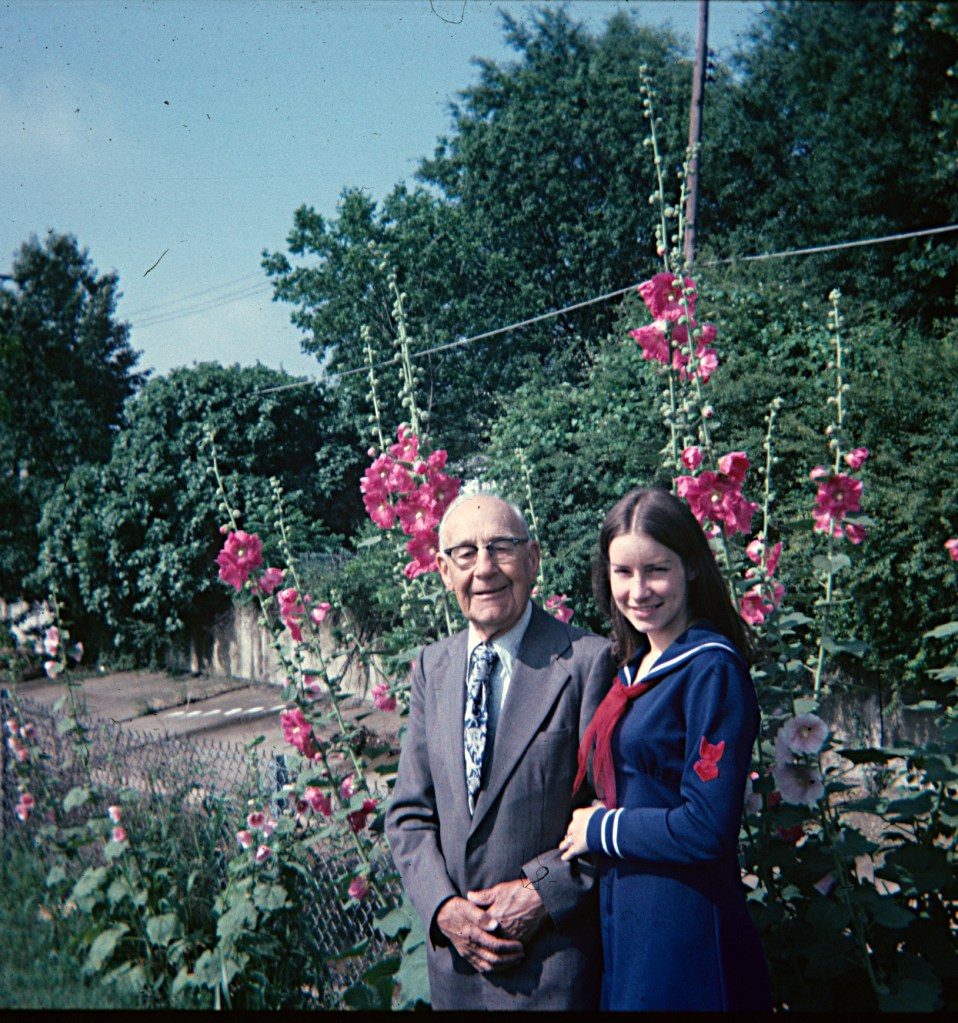
Without that, I return to an earthly example. I see Jesus in the eyes of my Grandpa Peterson. His gentle, kind eyes model for me what it feels like to come to Jesus as a little child and feel warmth and unconditional love.

On Doubt and Faith

Journal 2016

 “They did not believe it [the resurrection]” (Mark 16:11 NIV).

 “They did not believe them [the 2 men on the road to Emmaus] either” (Mark 16:11).

 “Jesus rebuked them for their lack of faith and their stubborn refusal to believe those who had seen him after he had risen” (Mark 16:14).

Why is it so hard to believe someone else’s testimony? And when evidence is right there in my face, why do I refuse to believe it? What makes me dig in my heals and deny the truth? Everyone (including Mary, the ten disciples, and eventually Thomas) finally believed when they experientially saw Jesus with their own eyes.

I suspect fear is at the bottom of it. When I’m working with clients with D.I.D. (Dissociative Identity Disorder), the denial parts might say, “If I believe it happened, then I’ll have to admit it was real.”

“Then what?” I’ll ask.

“Then I’ll feel overwhelmed (. . . or scared . . . or someone might find out . . . or I’ll be killed).”

I wonder what lie the disciples believed that kept their denial part in place: “It’s too good to be true (. . . or I can’t let myself feel hope for fear I’ll be disappointed).” I think that’s it. Jesus’ death was a HUGE disappointment, an overwhelmingly painful loss.

Yet when Jesus met them, He didn’t encourage them like He did when someone was fearful. He rebuked and chided them for their unbelief. According to I Samuel 15:23, stubbornness (ASV) rebellion (KJV) presumption (ESV) defiance (HCSB) is as the sin of witchcraft. Apparently, there was an element of demonic control or attachment that perhaps got planted at their point of pain. Jesus doesn’t need to dig around in their psyches to help them discover why they’ve dug in their heels. He bluntly rebukes them.

God is patient with our struggles, our fears, and our doubts, but He’s not so patient with lack of faith. How many times did He say, “O ye of little faith?” There’s no pointing of fingers here. I’m plenty guilty myself. But my heart strongly desires to root out all stubbornness, rebellion, and lack of faith.

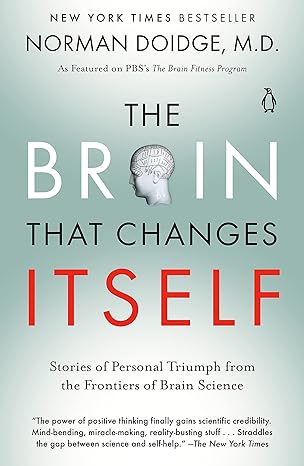
I’m currently reading books on the neuroscience of the brain and wondering how to meld that knowledge with Jesus’ words.

The women at the tomb believed as soon as the angels spoke truth to them. The men, however, continued to doubt when presented with the evidence (the women’s testimony and an empty tomb). The disciples on the road to Emmaus couldn’t seem to grasp the truth, and Jesus rebuked them. Even when the disciples saw Jesus in the room, and the joy center of their brain was activated, they had a hard time believing.

We know that the brain is a complex organ—different parts of the brain are responsible for different functions. The occipital for eyes, the amygdala for emotion, the frontal cortex for logic and reasoning, and memory resides in a different part.

Jesus created the human brain. He knew what part of the brain was being accessed during fear (Peter walking on the water; the disciples in the storm on the sea of Galilee). He knew that the frontal cortex shuts down during a fight/flight/freeze situation. Yet He seemed impatient with them: “Why do you doubt? Why do you have so little faith? Why don’t you believe when the evidence is in front of you that I’m alive? Stop doubting!”

What makes us doubt? Is the emotion center too strong? Are there lies imbedded in that emotion? Once truth enters the brain, doubt and fear flee. Jesus understood all this, so was He really impatient or was He challenging them to accept HIM, the truth, the way, the life?

I think women often believe more easily than men. Perhaps that’s why Satan appealed to Eve first. Is that because our emotion center is more active than our reason center? Was Jesus instructing these men to get in touch with their emotional side? Women are also more apt to be duped, more gullible. I know I am.

Lord, help my unbelief.

Battling Dis-ease

Journal 2017

I just read the autobiography of Tig Notaro, a lesbian standup comic who faced several debilitating trials: she got C-diff, her mother died, and then she contracted breast cancer. Her response to each event was extreme fear and despair.

When people face bad news, I expect them to react negatively, to fall apart, lament, battle, and struggle. So, it intrigued me when I listened recently to the testimony of Walter Wangerin, Jr., author of 40 books including The Book of the Dun Cow. He said that when he heard the diagnosis of cancer, surprisingly he had immediate peace and thought, “This is the next grand adventure.” He also said he does not embrace the war metaphor of battling cancer. It’s his own body, not an enemy, and he wants to work with it, not against it.

I know several others who faced mortality with peace. My friend Peggy submitted to brain surgery with great grace, giving God the glory, and lived to share her faith. I watched Holly L’s final public testimony at church as she faced a terminal illness. She admitted to the struggle, but she was victorious.

I watch others melodramatically declare they’re dying when they get a hangnail. What makes the difference in how we handle pain, bad news, or losses in life? Some of that may be temperament or the lies we believe or the depth of past trauma, but I believe a lot has to do with our walk with the Lord. I just know that when my time comes to face a trial, I pray I will embrace it and live with a testimony that God is in control.

Thoughts on Mark 6:7-13

There was a time in the training of the 12 disciples when Jesus let them practice preaching—like an internship. Some of His instructions make sense, but some seem a little extreme. I try to put myself in their sandals.

  • He sent them out in pairs—good for accountability, safety, and companionship.
  • He gave them authority over demons. Only Jesus had this power pre-cross. Today this authority is given to all believers (in His name).
  • He instructed them to travel light.
    • No food—yikes!
    • No suitcase or backpack—no backup resources
    • No money—really?!
    • No extra clothes—depending on others for warmth
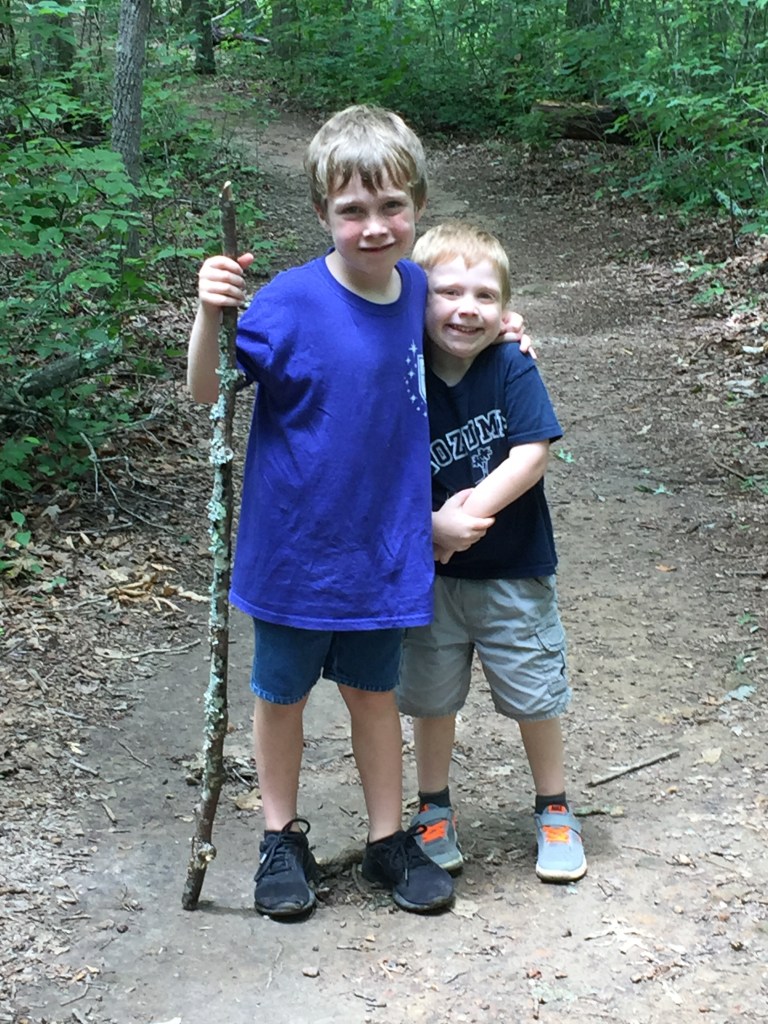
    • Yes, bring a staff—protection? walking aid?
    • Yes, sandals—why mention these? In a time when people probably went barefoot as much as shod, it’s interesting He includes this. Rough terrain? A symbol of something?

I suspect going without money would be the greatest faith stretcher for me. I would want to travel light if I were walking to Shelbyville, the next town over, but I would feel a little uncomfortable without money in my pocket and no fast food in sight.

  • They were to stay with people along the way—go to the town square and preach, and God would move in someone’s heart to invite them home for the night. (Yes, hospitality was the norm in those days, but what if no one stepped up?)
  • If a town didn’t receive them, they were to shake off the dust from their feet for testimony against them. (And my mind goes to: how far is the next town? I’m hungry!)

I believe Jesus’ instructions were strictly for those 12 men for that event, but are there any principles we could glean for today? Work in community. Do the ministry God calls us to do with the resources He provides. Trust God for our daily needs. Minister to those who want it rather than beating our heads against a wall trying to get through antagonism and resistance.

What would you add?

Never go alone

The Gift of Faith

Jesus said, “Were not ten healed? Where are the nine? Can none be found to come back and give glory to God except this outsider?” Then he said to him, “Get up. On your way. Your faith has healed and saved you” (Luke17: 17-19 The Message).

Jesus healed ten lepers, but only one thanked Him. The Samaritan had faith; I don’t know if the other nine had it or not. Did Jesus heal certain people out of compassion or because of their faith? He raised the dead—and that’s not because of their faith! In this case, the one leper demonstrated that he “got it.” I suspect God does a lot of things for us that go unacknowledged.

Maybe faith is like a promised Christmas present, an unopened box. Jesus hands it to me and says, “I’ve made you a promise. It’s in the box. But it’s not time to open it yet.” And faith says, “I believe You, Lord. And I will patiently wait till You say it’s time.”

Abraham was given a box. Inside was the promise of a son. But I think he got impatient waiting—or perhaps he thought God had handed him the wrong box, and so he set it aside and opened a different gift under the tree. But even with his mistake, God still handed him the right one and he still got to open it.

I have so many precious promise boxes under my tree I can’t even count them all! What box am I holding that I’m ignoring, substituting, not waiting for, anxious about?

When Jesus handed the one leper his gift, he remembered to write the thank you note. The other nine got their gift, too, but were so excited they forgot where it came from. We must pause, notice, respond in gratitude, and recognize the source of our healing, our salvation.

Keeping a Dream Alive

From my 2013 Journal.

Reading a biography or memoir may be interesting, entertaining, or even inspiring—but rarely life-changing, unless it intersects with my own—when I identify with the character in some way.

This morning I read Caleb, the spy’s story in Joshua 14. At age 40, he saw a piece of property he wanted in the land of Canaan, but because of the Israelites’ rebellion, he had to wander with them for 40 years in the desert. At age 85, he asked leader Joshua for that same territory, determined to rout the inhabitants with God’s help. Talk about keeping a dream alive!

Caleb’s faith sharply contrasts with the descendants of Joseph who complained they didn’t have enough land for their families. Joshua said to them, “Go clear the forest and you’ll have enough” (Joshua 17:17-18).

“But they have iron chariots!” they whined.

I can see Joshua rolling his eyes. “You’re numerous and powerful; you can do it.”

So I try to connect with this story. What dream have I held onto? Some dreams, I know, I must grieve and let go. But if God-directed, what excuses do I use not to fulfill it? Sometimes I need patience, endurance, and perseverance to wait.

What dream have you kept alive?

You Try Walking on Water!

From my 2009 Journal. God delighted in King Solomon and showered him with honor and wealth and blessing. But it looks to me as if God’s delight was conditional: If you do it My way, you’ll get rewarded. If not, I’ll zap you (I Kings 3:14). Is that how I tend to view God? The first time calamity strikes, I ask, “What did I do to anger God?”

Visual: It feels like I’m walking a tightrope: keep my balance, walk carefully the straight and narrow path, but I’m doomed because the winds of adversity will knock me off. I might start out well, but I’ll finish with little faith. It’s easy to take my eyes off Jesus at the finish line and look down in fear. Then boom! I’m done for.

It’s like Peter walking on the water. Something about his story has always bothered me. When Peter got scared of the waves and started to sink, Jesus’ words “O you of little faith, why did you doubt?” (Matt 14:31) feel like a rebuke, a statement of shame. I feel like coming to Peter’s defense and saying, “Yeah, but he was the only one who even got out of the boat and tried! Give Peter a break already! Why slap him down after he made the attempt?”

I can hear Peter defending himself: “I tried; I did my best, it was instinctual, and my best wasn’t good enough. Yes, I have weak faith; so what? I’m human after all.”

Were Jesus’ words really a rebuke as in “What’s the matter with you? Why didn’t you calm the storm? Why are you such a scaredy-cat about the weather?” Was Jesus angry at Peter? Weary? Disappointed? Disgusted? Sad? Or were his words simply an observation about the condition of Peter’s heart? I think Jesus had just held a mirror up to Peter’s face. (“But just wait till after the resurrection, Peter. you’re going to be a rock!”)

So back to the tightrope visual. God gave Solomon a pole—the Law and God’s promises. When he started to get imbalanced, he failed to correct his course and eventually he dropped the pole and tried to make it on his own. Disaster! Yes, I too am weak, frail, and easily blown off course. But have no fear—I, too, have a pole in my hand to steady me: The Word of God and the Living Word Himself.

Why do we ask how?

From my 2007 Journal. Why do I question God? When He declares something is true, why do I doubt it? Why do I fret so and try to figure things out for myself? I may think I have the solution for an issue I’m struggling with—but it is very limited. My imagination isn’t big enough to figure out His solutions.

God said to Moses: I will provide meat for the Israelites. Moses asked: HOW? Shall flocks and herds be killed? Collect all the fish in the sea? God said, Is the LORD’s arm too short? Now you will see whether or not what I say will come true for you (Numbers 11:23 NIV). You’d think that Moses, who had witnessed spectacular miracles before his very eyes, would not question God’s ability, power, and creativity. But he wants to know HOW God will provide.

Jesus said to his disciples: Feed the multitudes. The disciples asked: HOW can we do that? We don’t have enough money to go into town and get enough food for this many people. Jesus said, How many loaves do you have?

God says: I will supply all your need according to My riches. I ask: HOW?

DollarI’ve asked for resources for my daughters’ education and for their potential weddings, and then I fret when I think He may not come through, and I brainstorm ways I can get the money to make it happen. Instead, can I not sit back, relax, and watch Him work?

And so, dear Lord, I release to you my worry over where the money is going to come from. I will quit fretting, quit scheming, and simply ask. I ask for faith that will move mountains. I ask for willingness to be obedient when You speak and ask me to do something. I will trust You to guide our paths. I want to unleash Your creativity through faith instead of doubt. Lord, help my unbelief. I am releasing to Your care our checking account, our savings, our retirement funds, the college needs. I will allow You to direct how and when I need to work and how and when I need to be involved in ministry. Guide my footsteps today, Lord Jesus. I don’t know what Your plan is for me today, but I’m open to follow Your lead. Amen.

A 2018 Update. As I reminisce, I’m in awe at how God provided our financial needs. All three girls graduated from college debt-free. And two of our daughters, now married, managed to pull off their weddings within our budget. Now I can say that I, too, have witnessed miracles before my very eyes, and my faith has grown as a result.

Do you think asking HOW is a lack of faith? Why or why not?