God’s Judgment

Journal 2017

… His wrath can flare up in a moment. Blessed are all who take refuge in Him. (Psalm 2:12 NIV)

Here’s my visual for this verse: God is a fire-breather. If you’re “out there,” you’ll get zapped, but if you stay close to his heart, you are safe and protected.

The thought of God’s judgment is slightly terrifying to me: facing the Judge of the Universe to discover how many words, thoughts and deeds didn’t make it through His refining fire. It’s not like coming before the school principal with whom you have no relationship. It’s more like coming before your dad when you’ve misbehaved.

And yet, since our sins are covered and forgiven, the judgment for the believer is more like a lack of rewards, not punishment. “Not guilty,” the Father has declared. I do not need to fear or dread His coming judgment.

Regret will be punishment enough, I think. The question for me is, did I obey God’s commands to love Him and to love others?

Keep me close to your heart, dear Lord. Let me not stray far from Your embrace.

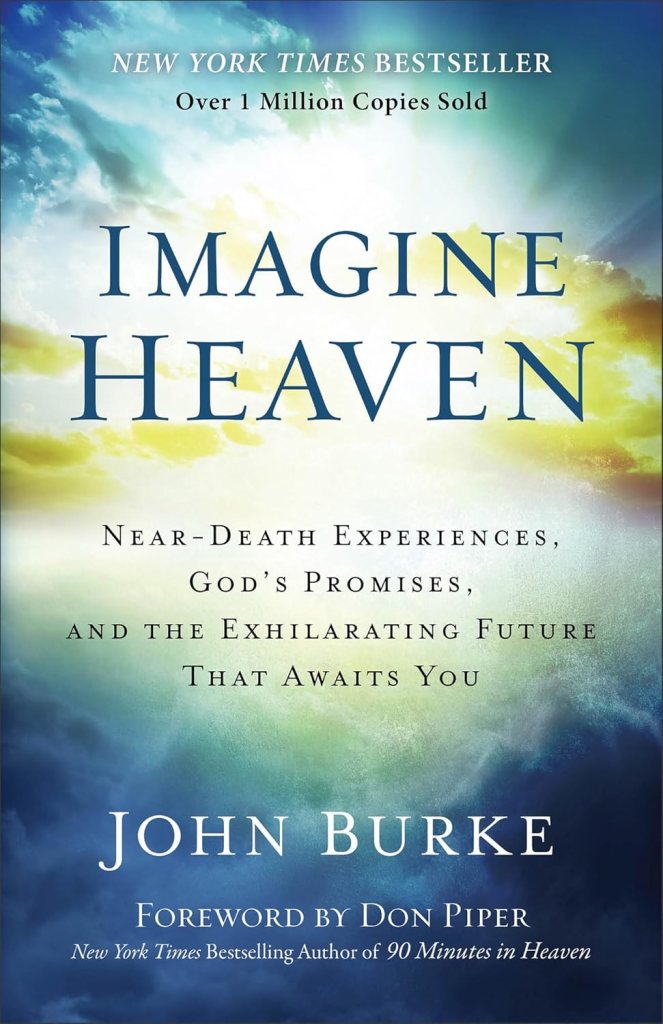
A 2025 Update. After reading Imagine Heaven by John Burke, my heart relaxed. Burke “compares more than one hundred gripping stories of near-death experiences (NDEs) to what Scripture says about our biggest questions of Heaven.” He suggests that our life review before Almighty God will not be filled with shame (my default when I disobey Him), but rather an understanding about my choices.

Lessons from Moses 3

Journal 2006

Moses’ Prayer

After Moses finally agreed to obey God, return to Egypt, and ask Pharaoh to let God’s people go, Pharaoh refused and made things worse for the Israelites. And Moses began to whine to God:

WHY have You dealt evil to this people?

WHY did You ever send me?

YOU haven’t delivered your people at all.

If God commands, and I obey, and things get worse before they get better, this is normal. Perseverance, endurance, and overcoming all require faith—especially when it gets darker.

When I’m in pain or distress, it’s hard to hear the Lord’s voice. Often my first response is to blame God for my predicament. After all, He’s the King of the Universe, capable of stopping it. But when I’m angry or belligerent, God rarely answers the question “Why?” Instead, He defends His character. “You are ignorant, O foolish man. I am the all-knowing. You don’t know what you’re talking about.”

I pray that in my hour of trial I will be an overcomer and remain faithful and not accuse Him of withholding His love. I feel so weak. It’s easy to trust God when there’s food on the table and my health is good.

Moses’ Anger

I wonder what ticked off Moses. Was he taking on the burdens of the people he was supposed to free? Was he mad that Pharoah wouldn’t heed his warning or obey his bidding? God doesn’t tell Moses His whole plan. He only reveals one plague at a time, and each time Moses probably thinks, “Okay. NOW he’ll let us go.” Did Moses take on the responsibility of making Pharoah budge? And when he wouldn’t, did it make him mad? I can sure identify with that! I’d like to see a few people budge!

So how do I respond when I don’t get my way? Can I trust that God has the situation under control? That He can move in the hearts of men to accomplish His will?

Moses’ Worry

God gave Moses a huge responsibility: lead a million people through a desert with no water, no food, and only armed with a memory full of miracle experiences. Everyone who had a problem came to him for a solution. What a heavy burden! Did God give him daily advice? Or did He only speak at the big crunch times?

Where do I turn when the tough times come? I can work hard to build my resources and slip backward. I can sit back and not work yet move forward. I could lose my health, my home, or my livelihood without warning. Is God on the throne if a tornado wipes us out? If the breadwinner dies?

When it happens to someone else, it’s just a story. When it happens to me . . .

Worry is a large, tangled ball of string with fear at its core. How do I get through that energy field of worry, through the tightly woven string ball to face my fear and replace it with peace?

AI-generated

Lessons from Moses 1

Journal 2006

Moses murdered an Egyptian. After the deed, he felt fear—fear of being found out. I wonder how he felt when the words, “Thou shalt not kill” appeared on the tablets of stone. Did he feel guilt? Remorse?

Sometimes I’m more concerned about being discovered than repenting of my sin. Words I’ve said in anger behind someone’s back leave me unrepentant till I’m found out by the one I slandered. Shame at my misdeed leads me to repentance.

I wonder if God’s original plan was for Moses to release the Israelites from bondage while he was still serving in Pharoah’s court. Perhaps the murder incident delayed God’s plan while He worked on Moses’ character.

God’s plan cannot be thwarted by man’s plan, but man can sure mess up God’s best or original plan! God lets us go our way until we see the error of our ways, and then He creatively works “all things for good.”

I wonder what difference it would make to our beliefs if we could see all the choices and various paths we could take in life. Would we believe sooner? Be more cautious of our words? Choose any more wisely? Every choice we make in life—every single step, word, or deed impacts us, the world, and others forever.

For example, if on Tuesday at 9 a.m. I choose to go to the grocery store, and I see a child being verbally abused by his mother, my simple smile could be the moment that freezes kindness and encouragement into that child’s life. And forty years later, God may bring that memory back to him and give him a safe place in his mind to start the healing process. Sound far-fetched? I don’t think so. If God ordained this event from the foundation of the world, and He is the One who prompts me to get groceries at 9 a.m. instead of at 10 a.m., then His plan is fulfilled.

AI-generated

But what if Satan sends a phone call that delays me by two minutes, and I miss this little encounter? Is God’s plan thwarted? I don’t think so. Perhaps He’ll send another person. Perhaps He’ll delay the mother too. Check. Checkmate. God wins!

Another checkmate example. When Moses argues with God that he’s incapable of doing what God asks, Moses gets his way—he doesn’t have to speak before Pharoah. But God gets His way when He chooses an alternate spokesperson: his brother Aaron.

Has my doubt or denial or stubbornness ever thwarted God’s best for me? Yes. But He still gets His will accomplished even though I may lose out on the best plan for me. Why is man’s heart so unbelieving? I piously think, given the circumstances, I would have been a Joshua or a Caleb or a Joseph or a Mary or an Esther. But in reality, I’m probably more like Moses.

The Perils of Worry

Journal 2006

I confess I’m worried. About scholarships for our youngest daughter. About her school choices. About our savings account.

Worry is a wrinkled brow, a tightness in the neck, shoulders, and stomach. Worry keeps me focused on what is lacking instead of the potential. Worry keeps me bound. Worry is fear.

Worry is a frog on a lily pad floating downstream, hearing the roar of a waterfall ahead, and I’m helpless to stop, hop off the lily pad, or swim to the far shore against the current. What to do? It’s useless to fight. So, I relax, hang on, and get ready for the ride of my life. Over the waterfall, resurface, sputtering and gasping for air, lungs full of water. Feel like I’m dying. But I live to tell the tale. And I rest, recover, get up, and hop back onto my lily pad.

Face your worry. Imagine the end of the journey—survival or death. Either one, either way, there’s peace. So don’t worry!

Photo by ABCDee David on Pexels.com

On Doubt and Faith

Journal 2016

 “They did not believe it [the resurrection]” (Mark 16:11 NIV).

 “They did not believe them [the 2 men on the road to Emmaus] either” (Mark 16:11).

 “Jesus rebuked them for their lack of faith and their stubborn refusal to believe those who had seen him after he had risen” (Mark 16:14).

Why is it so hard to believe someone else’s testimony? And when evidence is right there in my face, why do I refuse to believe it? What makes me dig in my heals and deny the truth? Everyone (including Mary, the ten disciples, and eventually Thomas) finally believed when they experientially saw Jesus with their own eyes.

I suspect fear is at the bottom of it. When I’m working with clients with D.I.D. (Dissociative Identity Disorder), the denial parts might say, “If I believe it happened, then I’ll have to admit it was real.”

“Then what?” I’ll ask.

“Then I’ll feel overwhelmed (. . . or scared . . . or someone might find out . . . or I’ll be killed).”

I wonder what lie the disciples believed that kept their denial part in place: “It’s too good to be true (. . . or I can’t let myself feel hope for fear I’ll be disappointed).” I think that’s it. Jesus’ death was a HUGE disappointment, an overwhelmingly painful loss.

Yet when Jesus met them, He didn’t encourage them like He did when someone was fearful. He rebuked and chided them for their unbelief. According to I Samuel 15:23, stubbornness (ASV) rebellion (KJV) presumption (ESV) defiance (HCSB) is as the sin of witchcraft. Apparently, there was an element of demonic control or attachment that perhaps got planted at their point of pain. Jesus doesn’t need to dig around in their psyches to help them discover why they’ve dug in their heels. He bluntly rebukes them.

God is patient with our struggles, our fears, and our doubts, but He’s not so patient with lack of faith. How many times did He say, “O ye of little faith?” There’s no pointing of fingers here. I’m plenty guilty myself. But my heart strongly desires to root out all stubbornness, rebellion, and lack of faith.

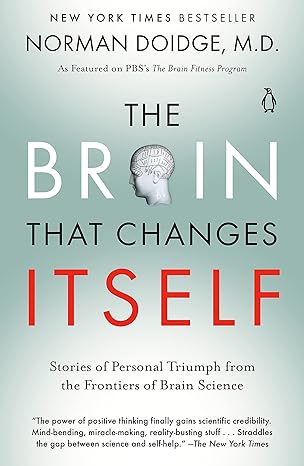
I’m currently reading books on the neuroscience of the brain and wondering how to meld that knowledge with Jesus’ words.

The women at the tomb believed as soon as the angels spoke truth to them. The men, however, continued to doubt when presented with the evidence (the women’s testimony and an empty tomb). The disciples on the road to Emmaus couldn’t seem to grasp the truth, and Jesus rebuked them. Even when the disciples saw Jesus in the room, and the joy center of their brain was activated, they had a hard time believing.

We know that the brain is a complex organ—different parts of the brain are responsible for different functions. The occipital for eyes, the amygdala for emotion, the frontal cortex for logic and reasoning, and memory resides in a different part.

Jesus created the human brain. He knew what part of the brain was being accessed during fear (Peter walking on the water; the disciples in the storm on the sea of Galilee). He knew that the frontal cortex shuts down during a fight/flight/freeze situation. Yet He seemed impatient with them: “Why do you doubt? Why do you have so little faith? Why don’t you believe when the evidence is in front of you that I’m alive? Stop doubting!”

What makes us doubt? Is the emotion center too strong? Are there lies imbedded in that emotion? Once truth enters the brain, doubt and fear flee. Jesus understood all this, so was He really impatient or was He challenging them to accept HIM, the truth, the way, the life?

I think women often believe more easily than men. Perhaps that’s why Satan appealed to Eve first. Is that because our emotion center is more active than our reason center? Was Jesus instructing these men to get in touch with their emotional side? Women are also more apt to be duped, more gullible. I know I am.

Lord, help my unbelief.

Lessons from Jeremiah 1

Before I formed you in the womb I knew you, before you were born I set you apart; I appointed you as a prophet to the nations. Jeremiah 1:5 (NIV)

Jeremiah was a Preacher’s Kid (his father was a priest), and God spoke directly to him. Pretty heady stuff when you do big things for God . . . until you realize it is God’s doing all along. God may choose (Moses, David, Samson, Jonah, or me), but we have a choice how we’ll respond (argument, submission, courage, rebellion).

What excuses do I make for not following God’s command? She’s too hard to love; he won’t listen; I can’t because; I don’t know how; I don’t have time; I don’t have the money. . .

Fear of the people’s response was Jeremiah’s driving objection. God’s answer? “Don’t be afraid because I AM with you.”

Then God touched his mouth and said, “Behold I have put My words in your mouth.” How cool is that! This book is Jeremiah’s story, his testimony. God will not respond to everyone the same way. He’s too creative for that. But we can glean principles from Jeremiah’s life like: the antidote to fear is experiencing God’s presence.

What’s Your Excuse?

Before I formed you in the womb I knew you, before you were born I set you apart; I appointed you as a prophet to the nations (Jeremiah 1:5, NIV).

From my 2009 Journal. Jeremiah was a PK (Preacher’s Kid), for his father was a priest. One day God spoke directly to him—I assume in an audible voice. It’s pretty heady stuff to be chosen by God!

But Jeremiah’s objection to this calling reflected his fears: “Alas, Sovereign Lord,” I said, “I do not know how to speak; I am too young” (1:6).

What excuses do I make for not following God’s command: she’s too hard to love; he won’t listen; I can’t because . . . ; I don’t know how; I don’t have time; I don’t have the money. . .

God’s answer to Jeremiah (and to me):  Don’t be afraid because I AM with you.

The antidote to fear is experiencing God’s presence.

I feel a connecting point with Jeremiah. When God called me to the ministry of inner healing prayer, the only reason I said no to my fears and yes to God was because I had a strong sense of His presence. You can read all about that story in our book Diamond Fractal.

Trembling at the Foot of the Mountain

From my 2010 journal. I realized today that I’m doubting my worth in Christ. I continually question whether or not I’m doing enough to please God. Why is it such a hard thing to believe? I’ve never doubted His love for me. Perhaps that’s because I felt my parents’ love. I do feel accepted by God. It’s not that.  Perhaps my feelings are born out of my childhood perception that God is watching: you better behave. I sense a fearsome reverence that doesn’t allow me to get too close.

mountainVisual:  I am the Israelite at the foot of the mountain who is forbidden from getting too close to the mountain. I’m never Moses and Joshua who climb the mountain and see God face-to-face. I stand at the foot and tremble at the smoke. Only the chosen one is permitted on the mountain. (The funny thing is, Moses had nothing to do with God choosing him. And besides that, he had a flawed character.)

In my visual, I realize that I want to be chosen.

As I surrender my feelings to God, I see myself as a little child, hanging onto the rope barrier at the foot of the mountain. The grownups have all returned to the camp to party, but I want to be close to God.

I see Jesus approach me from the mountain. He picks me up and carries me up the side of the mountain away from the noise of the camp, away from the revelry and the debauchery and sin. It’s quiet up here, silent and peaceful. And Jesus allays my fears that my parents will worry about my being gone.

Soon the sun begins to set and I shiver in the cold. He builds a fire and gives me a cloak for warmth as we sit down for an intimate conversation. In the end I understand that though I might not be chosen for Moses’ job or role,  I was chosen because “I sought the Lord and He heard me” (Ps. 34:4).

Now when the mountain trembles, I feel safe. Jesus will protect me. I’m His child. And He promises that He will “never leave me or forsake me.” He will not leave me on this mountainside by myself. When I pray to Him, He’s not far away anymore. He’s right there, close and intimate. We’re just having a conversation.

Does God feel far away to you? Or near?

Be Careful What You “If”!

From my 2009 Journal. Around 1895 Rudyard Kipling wrote a famous poem entitled “If.” (It’s well worth the read if you haven’t heard of it.) That word if is an awfully small word that can pack an awfully large punch. I hear it all the time in conversations: If you’re free . . . If you love me  . . . If I’ve offended you  . . . If there is a God. . . .

I got to noticing that little word if in the book of Judges, and recorded a few of my observations.

Remember the story of Gideon and the fleece (Judges 6)? The Israelites are distraught because the Midianites have overpowered them, and God shows up one day to tell Gideon that he’s been chosen to deliver his people from the oppressor. But Gideon is skeptical:

IF I have found favor in your sight, then give me a sign that it’s You who talks to me. (v. 17 NASB)

It’s not a bad request. We are indeed admonished to test the spirits (I John 4:1). God granted his request and confirmed His authority by lighting Gideon’s sacrifice and then disappearing. God is willing to respond to a genuine request for confirmation that it’s His voice we’re hearing.

Later, in obedience to God’s instructions, Gideon pulls down his father’s altar to Baal and the Asherah pole beside it. Using this wood, he offers a burnt offering on a new altar that he’s to build on top of the Baal one. When the irate town’s people show up at his dad’s house, his dad stands up for his son and says:

Will you contend for Baal? IF Baal is a god, let him contend for himself! (v. 31)

Sounds rather reasonable to me!

SheepskinSo now it comes time to face the Midianites, and Gideon gets cold feet. Here’s where the two famous dry/wet fleece tests occur. (If you need a story refresher, click here)

Fleece test #1. IF you will deliver Israel by my hand as you have said . . . (v. 36)

Fleece test #2. The if is not repeated, but it’s implied. (v. 39)

So I begin to ponder: how is Gideon’s response to God’s command different from Moses’ response to the burning bush command or Jonah’s response to the command to go to Nineveh?

Moses said:  I can’t!

Jonah said:  I won’t!

Gideon asked:  Can I?

Moses appears to be resistant, stubborn, willful, maybe even whiny. And Jonah is downright rebellious. Gideon, on the other hand, seems timid and fearful: Am I sure I heard You right, Lord? Later on when God tells Gideon to go down to the enemy’s camp, He anticipates Gideon’s response and says, But IF you are afraid to go down, go with Purah your servant down to the camp (7:9-10).

In all three stories, God’s will is accomplished and His mission fulfilled, but He responds differently to each character. With Gideon, God honors his need for courage and does what Gideon requests. This gives me hope when I am feeling less than courageous at God’s calling on my life. The true seeker of God will find Him faithful.

Following God’s words of assurance, the final antidote for Gideon’s fear is personal experience (when he goes down to the camp and overhears the Midianite’s dream). Gideon’s response? He worships. Fear is gone at last; he’s ready for battle. There are no more “ifs.”

After the rousing victory with only 300 soldiers, the Ephraimite tribe gets mad at Gideon for not asking them to join the battle. There is no fear response from Gideon at their accusations. Instead, humility has taken its place (Judges 8-1-3). Matthew Henry says, “Humility is the surest method of ending strife.”

God prepares His servants for His service. (I wish the story ended here, but it doesn’t. Gideon has other character flaws that need to be worked on.) I know I’m human and have fears and doubts, but I pray that every time God speaks, I’ll have faith to believe and leave my “ifs” behind!

Do you have time to read one more “IF”? This one is truly bizarre.

 Jephtha’s story (Judges 11) intrigues me. His dad is from Gilead, and his mom is a harlot. His half-brothers kick him out of the tribe saying he can have no inheritance with them. He flees to the town of Tob where worthless men gather around him and they go on raids together and he becomes a mighty warrior. When his half-brothers are attacked by the Ammonites, surprisingly they go to Jephtha to beg him to be their leader! Even more shocking, he agrees to do so.

But now it gets even more interesting. Jephtha makes a foolish vow. IF You [God] will indeed give the Ammonites into my hand, I will offer up for a burnt offering whatever comes out from my house to meet me (30-31). And we know the outcome . . . his only child, his daughter, comes out the door.

So what does Jephtha do? Incredibly, he shifts the blame! YOU [daughter] are the cause of great trouble to me; YOU have brought me very low (11:35, emphasis added).

Are vows retractable? I think so. Why could he not have suffered the consequences and taken the debt in her place? Why couldn’t he have gone to God, confessed his foolishness, and let God give him a creative alternative?

But his daughter is more righteous than he. She accepts the vow as binding. We don’t know if Jephtha actually sacrifices her on an altar or if she’s simply banished for the rest of her life and disallowed marriage. In any case, as often happens, our sin, ignorance, and foolishness impact others, whether intentional or not.

Be careful what you IF!