The tug of my human heart says I have the same temptation toward pride, the same bent, as Satan himself. I want to be like God. I want the universe to revolve around me. I want glory. Like the Apostle Paul, I want to shout, “O wretched man that I am; who shall deliver me from the body of this death [idolatrous desire]?” (Romans 7:24).
My visual is that I’m at the center of a circle, craving the world’s honor and praise. Though I want to experience significance, I don’t want this idolatry of self. I want to echo John the Baptist’s words: “He must increase; I must decrease.”
Paul viewed himself as a slave of God (the Master of the Mansion, a perfect gentleman who looks after and cares for His servants and who gives good gifts according to their service for Him.) Kitchen maid or head chef, butler or chimney sweep—we all have our jobs to do. If we do it with a complaining spirit, we shift the focus to the idolatry of self. If we serve with gratitude and love, our load feels lighter. We’re driven to excellence. We want the Master of the Mansion to look good. Shining the gold on the newel of the banister becomes an act of worship. Fetching His slippers is a privilege. We adore Him. Why? Because He makes each one of His servants feel significant. He catches our eye. He notices. “Nice job on the newel, Charlie. Thank you for remembering to feed my dogs, Susan. I love you, Karen.”
But there are other metaphors: “No longer do I call you My servants, but My friends (John 15:15). You are My bride (Isaiah 54:10). I bought you with a price (I Corinthians 7:23). You were sold for nothing, and you shall be redeemed without money” (Isaiah 52:3).
And we remember who we were and from whence we came. And we gladly, gratefully, joyfully enter into a love relationship with our Rescuer.
But then that niggling question comes—how did we get into the slave marketplace? How did we end up in the prostitute’s parlor? And we blame God. He created us, didn’t He? It’s His fault for bringing us into existence in the first place. And we face that universal question, “Why was I born?” Just so He could have more slaves? How bitter is that?
But no. He wants relationship. “He satisfies the longing soul and fills the hungry soul with goodness” (Psalm 107:9).
“Will you be My bride?” asks Jesus. I have searched for you, I have found you, I have courted you. Will you say yes? I will exchange your dirty garments for clean, bright white ones. I will give you a crown worthy of a queen.”
And in humility, all pride gone, I bow prostrate at His feet. I am unworthy. He deserves all the glory, the honor, the praise.
Coronation Day is coming. Preparations are in the works. I want my heart to be ready. I want to complete the tasks He’s given me to do in preparation of the wedding day and His coronation ceremony.
If I recorded only my struggles, you’d never know about my good times, the peaceful days. If I only recorded good memories and words of praise and gratitude to God, you wouldn’t know of my struggles, and you’d think I was a saint. Neither is true. I resonate with Paul’s words, “For in my inner being I delight in God’s law” (Romans 7:22 NIV). This may be referring to the Law of Moses, but I see it through Jesus’ words, the Law of Love: Love the Lord Your God . . . and your neighbor as yourself.
I love the Word of God, and I love THE WORD Himself. He is my only source of true joy, the author of my peace, my motive for loving my neighbor.
I don’t often record my praise and gratitude because they are a given—they bubble up inside me. But maybe it would be a good exercise to write them down as well. David did.
My praise, my worship, doesn’t sound like today’s music, nor does it sound like David’s. My praise is more contemplative, quieter, a simple thank you. It’s standing in the rain, arms raised to the heavens, drinking in the warmth and the water, dancing with Jesus, following His lead, a graceful ballet of love and appreciation.
“The mind . . . governed by the Spirit is life and peace” (Romans 8:6 NIV). One follows the other. Spirit-control yields peace. Spirit-non-control yields unrest.
I got to thinking about all the fun God must have had creating the world, and I saw a visual of my three girls building a dollhouse together, placing it on their little blue table, and forming little people (LP) to inhabit the dollhouse. The miniature figures might resemble their creators, but they are a far cry from Sharon, Cindy, and Katie who tower over their creation. My girls are living, breathing, intricate beings. Their dolls are lifeless, crude in comparison, tiny. When the girls tire of moving the pieces around, they decide to breathe life into them. But no longer can they control and manipulate the Little People because now they have a mind of their own!
[Side note: When one of our clients asked God the heart-wrenching question, “Why did you let my perpetrator hurt me?” Jesus’ response was: “He had free will. But he could only do so much. I sent angels to protect you from further danger and keep you from death.”]
Part 2
One Little Person, head down, is about to step off the table ledge. So, the girls gently blow on the LP, and he looks up, notices the danger, and turns away. But another LP comes to the edge, ignores the breath above her, and in determination and stubbornness to overcome the “obstacle,” steps over the edge and into “eternal destruction.”
[Side note. One client asked, “Why was there a breach in the wall of protection at the mission boarding school?” (Other staff didn’t see or stop the abuse). Jesus’ chilling answer: “Someone failed to pray, and there was also someone failing to listen.”]
Another LP takes off running and is about to trip over a log. Cindy reaches down and quickly moves the log out of the way. But the person is oblivious to her benefactor’s deed and never looks up to give thanks or acknowledge her creators’ hands. Another LP, who is aware of the girls, looks up, recognizes the source of the rescue, and gives thanks.
But the favorite Little Person of all three girls is “Dolly.” She not only knows that K & C and S exist and are involved in her life in the dollhouse, but she lifts their arms for hugs when the girls gently pick her up and hold her and cuddle and rock her. She responds to their love, and the girls giggle and smile with pleasure.
[Do I delight in my Savior? Does He delight in me?]
If I had to lose one of my five senses, I always said I’d rather not lose my eyesight. It never occurred to me that losing taste and smell could also be so debilitating. Since I had Covid, everything smells the same, and it’s not pleasant.
“An odor pleasing to the Lord” is stated five times in Numbers 15. Of course this phrase catches my eye. I may not be able to smell, but God can. And I want my attitude, thoughts, and deeds to be a pleasing odor in His nostrils.
But I need some help with this. I’m still trying to quit complaining about my loss. I have an appointment with food three times a day, and three times a day I have to face the loss of sensory pleasure. Does giving up hope jinx it? If I give up hope, am I doomed because my mind will no longer have positive energy? We teach clients they may need to give up, or let go of, the hope that their dad will ever love them. What does letting go look like for me?
VISUAL: I’m tied to one end of a rope, and the taste of food is on the other end. As long as I hold onto my end, I’m not free to explore other things. Letting go doesn’t mean I don’t ever eat again. It means I let go of the pleasure, the drug.
And so, I let the rope drop, and it retracts into the food. The flavors are still there, in the food; they’re just not tied to me anymore. They don’t belong to me and therefore have no power over me. Thank You, Lord. Now I can pick up the food and examine it—see it, feel its texture, and experience it as I am able to sense it. It is what it is.
The Israelites complained about having to eat manna every day (Numbers 11:1-9). They missed their fresh fish, along with the flavorful cucumbers, melons, leeks, onions, and garlic.
I used to fault these people for their ingratitude. Here they were in the wilderness being miraculously fed free food, and all they could think about was what they were missing . . . and I’m convicted of my lament over loss of taste and smell. I, too, remember what pungent flavors used to burst on my tongue and the rich smell of onions, garlic, and pepper sauteed in a frying pan. I miss the diversity of flavors. I’m with you, dear travelers, in your complaint. But I want to discover the sweetness of holy manna, the gratitude for what I do have instead of the grief over what I’ve lost. How do I learn to leave Egypt behind and embrace the promise of a new land?
I see no fire of God burning at the edge of the camp, but I feel the fire of conviction in my heart for looking back. The smells and tastes in heaven are far superior to anything dull here on earth, and I look forward to what will be restored.
Returning to Egypt meant rejecting God (v. 19). I have not committed this sin, but complaining about my circumstances is a slap in the face of my God who gives me daily, adequate nourishment for my body. I must begin a more rigorous regimen of gratitude for God’s provision.
They asked for meat, and God sent quail. Be careful what I ask for . . .
Jesus said, “Were not ten healed? Where are the nine? Can none be found to come back and give glory to God except this outsider?” Then he said to him, “Get up. On your way. Your faith has healed and saved you” (Luke17: 17-19 The Message).
Jesus healed ten lepers, but only one thanked Him. The Samaritan had faith; I don’t know if the other nine had it or not. Did Jesus heal certain people out of compassion or because of their faith? He raised the dead—and that’s not because of their faith! In this case, the one leper demonstrated that he “got it.” I suspect God does a lot of things for us that go unacknowledged.
Maybe faith is like a promised Christmas present, an unopened box. Jesus hands it to me and says, “I’ve made you a promise. It’s in the box. But it’s not time to open it yet.” And faith says, “I believe You, Lord. And I will patiently wait till You say it’s time.”
Abraham was given a box. Inside was the promise of a son. But I think he got impatient waiting—or perhaps he thought God had handed him the wrong box, and so he set it aside and opened a different gift under the tree. But even with his mistake, God still handed him the right one and he still got to open it.
I have so many precious promise boxes under my tree I can’t even count them all! What box am I holding that I’m ignoring, substituting, not waiting for, anxious about?
When Jesus handed the one leper his gift, he remembered to write the thank you note. The other nine got their gift, too, but were so excited they forgot where it came from. We must pause, notice, respond in gratitude, and recognize the source of our healing, our salvation.
I confess I have an abysmal sense of direction, and it’s getting worse with age. I Googled “bad sense of direction” to get some tips for improving my odds and collected maps for cities I frequent. Every day for the first month, I studied our local map, trying to memorize street names and cement a visual mind map to guide me. What a useless endeavor! Apparently, I am incapable of thinking and driving at the same time.
When I read a blog by someone who unashamedly labeled his poor sense of direction a HANDICAP (and many people resonated with his plight), I concluded I cannot change my brain enough to warrant shedding my trusty GPS. So, there you have it—one Word for the Year tossed in the trash, and I needed a replacement.
Following my recovery from Covid in November 2020, I decided to chronicle my journey with another hidden HANDICAP—loss of taste and smell. First, I tried the famous burnt-orange trick that went viral (useless) and sniffed three different essential oils three times daily for the suggested smell training ritual. For two weeks I quadrupled my intake of zinc. Nothing.
I spit out my first cup of coffee, tasteless as water. When I tried sniffing freshly ground coffee beans, a disgusting malodor greeted my nose. At least I’m smelling something, I reasoned, but this annoying odor lingered nonstop for months. Everything smelled the same: smoke, pizza, cat litter. I became the designated dirty-diaper queen for my youngest grandchild.
In the first three months, I burned up three frying pans because I couldn’t rely on smell to alert me. I no longer dared leave the kitchen during the simmering process. I lost what little interest I had in cooking or making menu decisions. For the first time in our 46 years of marriage, I didn’t care if I ate my husband’s bland-diet preference over my spicy palate. It all tasted the same, so what was the point?! I now had to rely on him to inform me if meat had spoiled or the seasoning wasn’t right in a casserole.
One day we decided to treat our grandsons to ice cream. As we approached the drive-through, I asked the 10-year-old what he thought I should order since I wouldn’t be able to taste it. “Cheapest thing on the menu, Grandma!” he said. Smart kid! And later, his 7-year-old brother asked, “Why eat anything at all?” I explained that food fuels the body, but regrettably, I had begun to choose peanut-butter-and-jelly sandwiches over healthy salads. Growing our Tower Garden felt pointless.
With the loss of eating pleasure, I learned to tune more into how hunger felt instead of eating what I craved but, disappointingly, I lost no weight. Eventually I began to differentiate between salty, sweet, bitter, and sour, but could taste no nuances of flavor. I put hot sauce on everything, trying to elicit a little zing for the tongue.
I tried hard not to complain but failed miserably and so began a regimen of gratitude for my other four senses. When I finally got tired of hearing myself complain, I asked God for a better solution and stumbled on Isaiah 65:5b: These people are a stench in my nostrils, an acrid smell that never goes away. (NLT)
And that’s when He gave me this idea: every time I smelled that repulsive odor, I would think about the stench in God’s nostrils and pray for someone. It helped refocus my attitude.
By August I noticed a subtle shift in relinquishing the malodor and enjoyed a hot curry Indian dish. Coffee became my gauge for progress. I went from gagging to tolerating a quarter cup, to drinking half a cup if I held my nose during the brewing process. I jumped in glee when I got a whiff of burnt toast. Someone claimed if you didn’t get your smell and taste back after nine months, it would be permanent. Oh, Lord, I hope not! I was into my ninth month and counting . . .
In September, someone suggested I try fascial counterpressure (whatever that was!). I found a practitioner 30 minutes away and promptly made an appointment but returned home with no noticeable results and fewer dollars in my wallet.
In October, I read Numbers 11:1-9 where the Israelites complained about eating manna every day. They missed their pungent fish, along with the flavorful cucumbers, melons, leeks, onions, and garlic. I could relate! I used to fault these people for their ingratitude, but now I felt convicted over my similar lament. I so missed the diversity of flavors. I wanted to discover the sweetness of holy manna and be thankful for what I had instead of grief over what I’d lost. How could I learn to leave Egypt behind and embrace the promise of a new land?
I continued to struggle with my attitude, complaining about my loss. I had an appointment with food three times a day, and three times a day I had to face the keen disappointment of loss of pleasure. Five times in Numbers 15 the phrase “an odor pleasing to the Lord” caught my attention. I couldn’t smell, but God could; and I wanted my attitude, thoughts, and deeds to be a pleasing odor in His nostrils.
It was like I was holding onto the end of a rope connected to taste and smell. Letting go of the rope didn’t mean I wouldn’t eat; it meant letting go the pleasure, the drug. When I dropped the rope, I watched in astonishment as it retracted like a tape measure into the food. The flavors were still there, but they were no longer tied to me. They don’t belong to me and therefore have no power over me. Now I can pick up food, examine it, see it, feel its texture, and experience it. It is what it is.
Over a year later now, I have adjusted (mostly) to my hidden handicap, and I rejoice in every whiff of smoke or incremental change in flavor. It’s okay that I can’t smell dirty diapers, but I sure do miss my coffee!
Oh taste and see that the Lord is good: blessed is the man that trusteth in him. (PS 34:8 KJV)
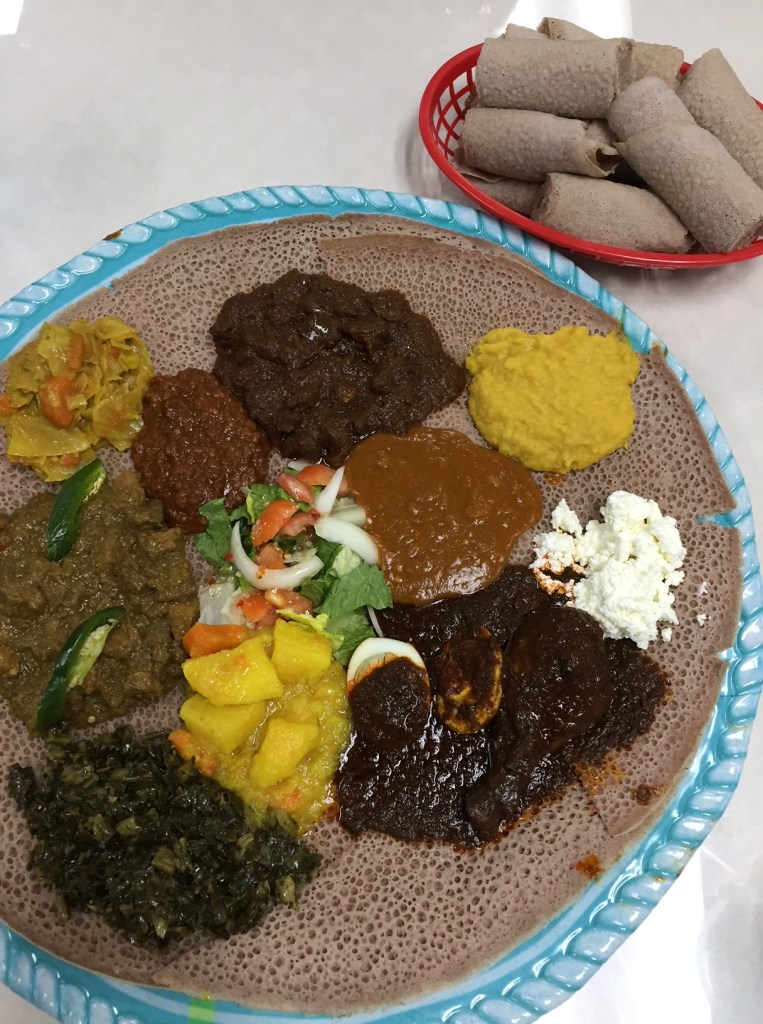
My biggest disappointment is not being able to taste injera ba wat (Ethiopian food)
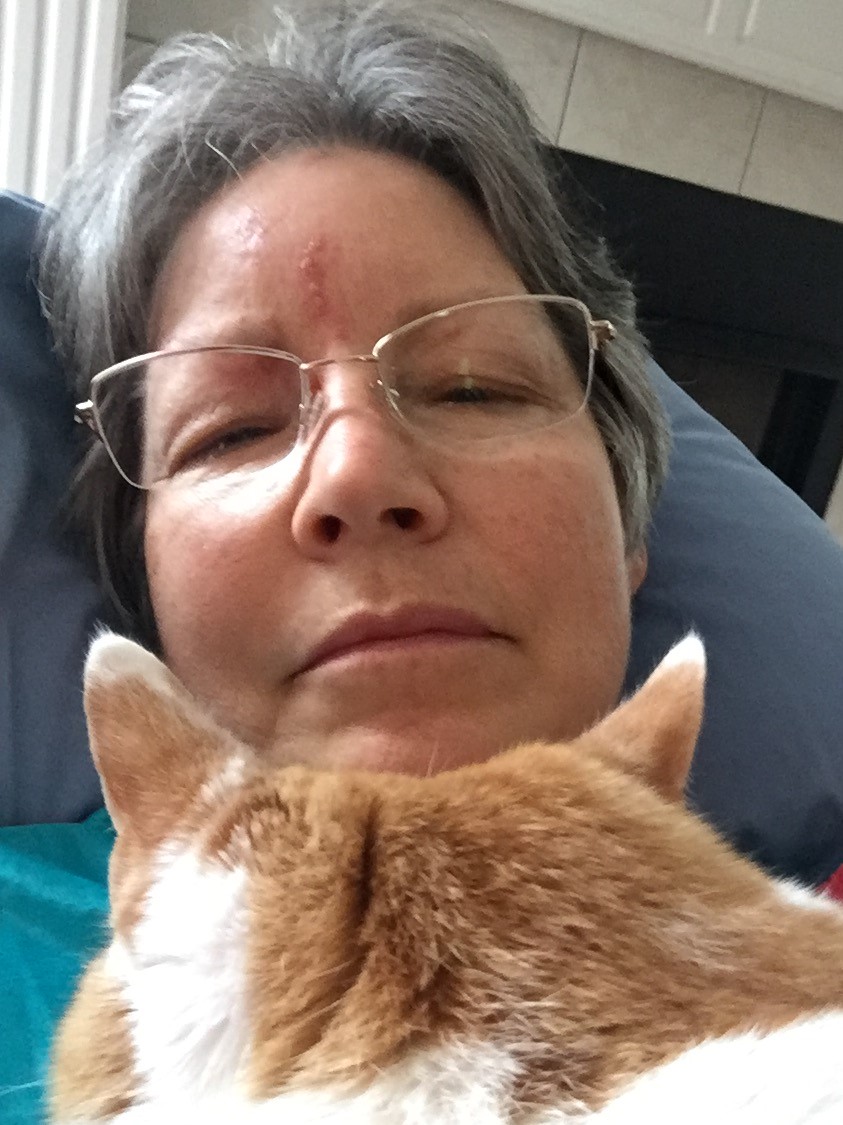
From my May 2016 Journal. Shingles, Day 9. When I came down with the shingles*, I had no idea what was in store for me in the days to come. But I determined right from the beginning that #1) I would have a positive attitude and #2) I would do my best to learn something from the experience.
With horrible nausea, I made two trips across town to the doctor, throwing up four to five times that day. Even with anti-nausea meds, I was barely functional. Finally the doc switched me to Phenergan. With one dose my life became bearable. I could tolerate the rash, the nonstop headache, the eye pain, and the loss of appetite. I thought of chemo patients and wondered how they tolerated such an assault to their bodies.
A book I read recently on healing mentioned that our perception of pain is related to the highest point of discomfort along with the final outcome of the ordeal (whether negative or positive). During the nausea, I thought I’d die. But as soon as it was under control, I suddenly thought, “Well, that wasn’t so bad!” How interesting is that!
As for lessons learned, so far the only thing I’ve come up with is this:
Before this all started, I heard a question posed on the radio: Who are you? My super-spiritual answer was “a daughter of the King.” But that’s not what my honest answer was. My initial response was related to what I DO: I’m an inner healing prayer minister.
In this last nine days of inactivity, I pondered the question again. I was perfectly content at this point with not being capable of praying with people. My identity this week had nothing to do with ministry. I felt no loss as to who I was. I was too sick to care. Would I have responded, “I’m a sick person”? Is that my identity or my condition?
I am loved. That is enough.
And so I’m grateful:
For a husband who’s taken excellent care of me.
For the little kindnesses from friends—a meal, a card, a run to the pharmacy, a visit.
That my pain has been very manageable.
For doctors and nurses and pharmacists and medicine, and a country where such is readily available.
For flexibility to cancel appointments without loss of job security.
For a comfortable couch, soft pillow, warm blanket, and a kitty for company.
That I only have a mild case of the shingles (I’ve heard horror stories).
Day 19, A few observations:
Schedules and to-do lists have become irrelevant.
Pain management easily takes front and center.
Time takes on a different dimension. I’m nearing three weeks of time standing still. One day is like every other—bed to couch, to attempt to do something, to couch. If something gets done, that’s good. If not, oh well!
I’m grateful for beauty—the moon, the roses, the trees and grass that I can see through my window, and the sunshine on my face when I sit on the deck for a few minutes.
It does no good to try to rush the healing process. You’ll just relapse.
Going down is quick. Getting back up takes effort and time.
Sleep is necessary.
Spiritual disciplines decline in direct proportion to how sick one is. I can gauge my recovery process according to how much I focus on prayer.
You can’t teach another person the lessons you’re learning. It will just be information to them until they experience it for themselves. (This is true for everything in life I think.)
It’s okay to just be—sometimes that’s all you can do. But it feels quite unproductive—which is my inner default drive—to do, do, do, produce, manage my goals, serve others. It’s hard to serve others when you’re self-focused.
Multitasking is no longer an option.
Observation after 5 weeks: I don’t like to talk about illness once I’m through the worst of it. Leave it alone please; let’s move on to something else. You have it far worse than I do. I don’t want to be the center of your focus and attention. Why? Where is that emotion coming from I wonder?
After 7 weeks: Following the shingles, I had laryngitis for four days followed by a full-blown cold, and then I lost a crown while out of town. I’ve had to fight to stay positive, but occasionally I leak! When it’s obvious I don’t feel well and I can’t hide it, people will ask and comment. But when it’s not obvious, I don’t like drawing attention to myself. But expressing it somehow helps me feel better. I watch my friends who have chronic pain who can be matter-of-fact about it—especially if asked—and others who verbalize it constantly, all the while declaring, “. . . but I won’t complain.” When does declaring facts morph into complaint? It starts, I think, in the heart.
So I have to check my attitude periodically. It is easy to get discouraged when the endpoint is unclear. What helps is to refocus, go to the castle of my heart, if even for a moment. It’s like a reset button. I cannot begin to imagine what it’s like to fight against cancer or to come to the end of one’s life with no hope of recovery from illness or aging. No wonder people turn crotchety!
So, Lord, help me to pass this test and learn my lessons.
*Shingles: an acute, painful inflammation of the nerve ganglia, with a skin eruption, caused by the same virus as chickenpox. Mine attacked the right side of my temple in the trigeminal nerve and my right eye (where I’ve battled with flare-ups ever since). I’m so thankful for an excellent ophthalmologist.






 In the Pursuit of Peace