Caught in the Act

Journal 2006

The other day I made a disparaging remark about someone, turned around, and there she stood! I don’t know if she heard me or not. I pray she didn’t. But I felt awful. I can’t apologize to her since I don’t know if she heard me, for if she didn’t, it would only make things worse.

You’d think I’d learn not to say negative things about people or put others down behind their backs. If I only spoke words that I would say in front of them, I wouldn’t get caught red-handed (I wonder where that expression comes from?*). God forgive me!

Lord, help me remember to keep my mouth shut! And show me how to release the guilt.

A 2025 Update. What I’ve discovered is that when I have negative thoughts toward a person, there’s always a negative emotion beneath the words. It is always best to work through what I’m feeling before I open my mouth. But when I do slip up, I try to give myself grace and thank the Lord for revealing another unhealed place in my heart.


*Here are two claims for the origin of “caught red-handed.” Most sources say the red refers to blood, but I prefer the one about strawberry jam!

AI-generated

The Origin of “Caught Red-Handed”

Caught Red-handed – Meaning & Origin Of The Phrase

Guilt and Forgiveness—a Visual

Journal 2005

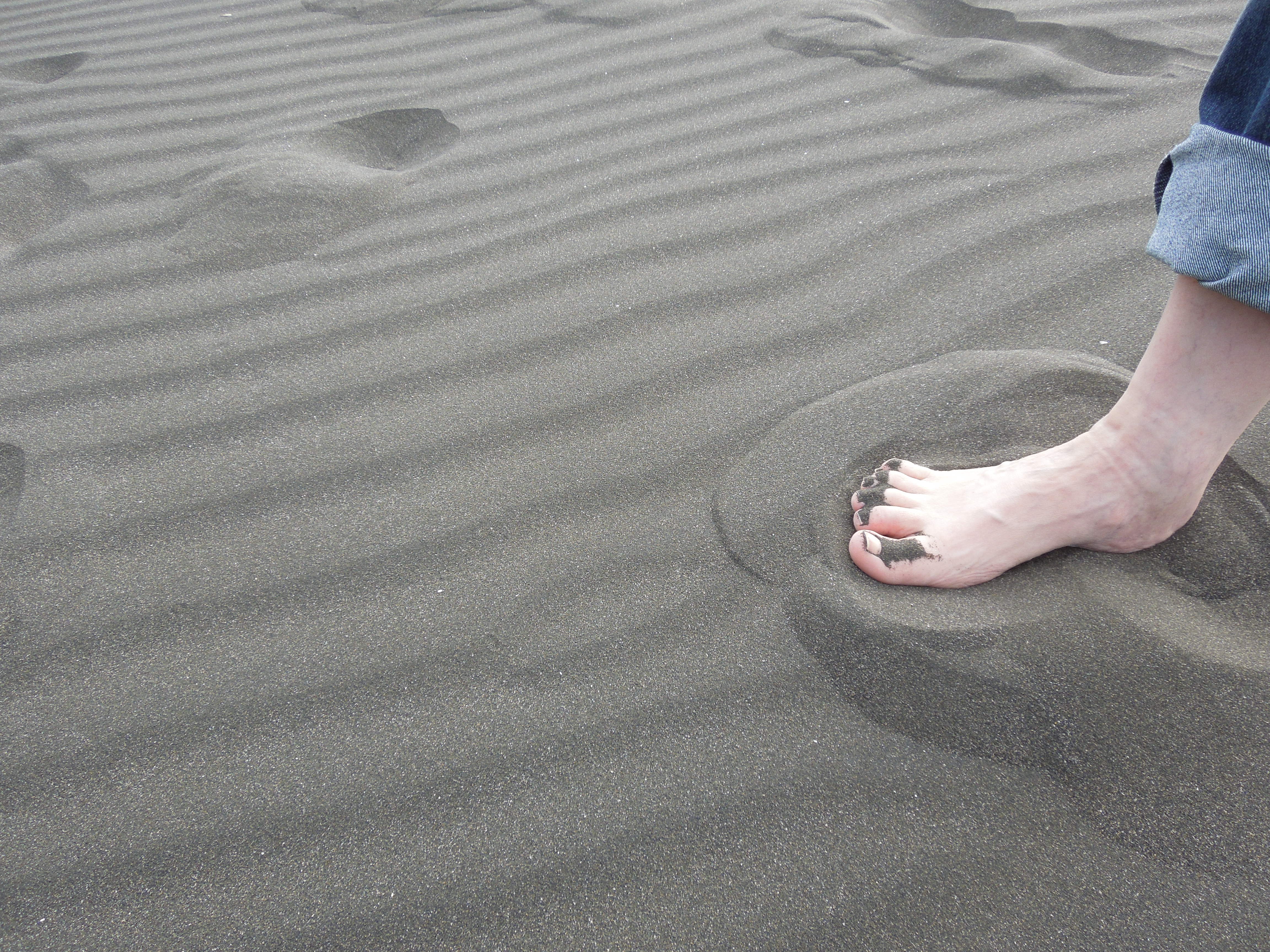
Guilt is like walking on a sandy beach, leaving footprints for all to see. And when shame tries to smooth over the prints, I create more footprints in my retreat.

Forgiveness is God sending His wind (the Holy Spirit) to blow across the sand, erasing all the prints. And even if I fail again, the wind continues to blow.

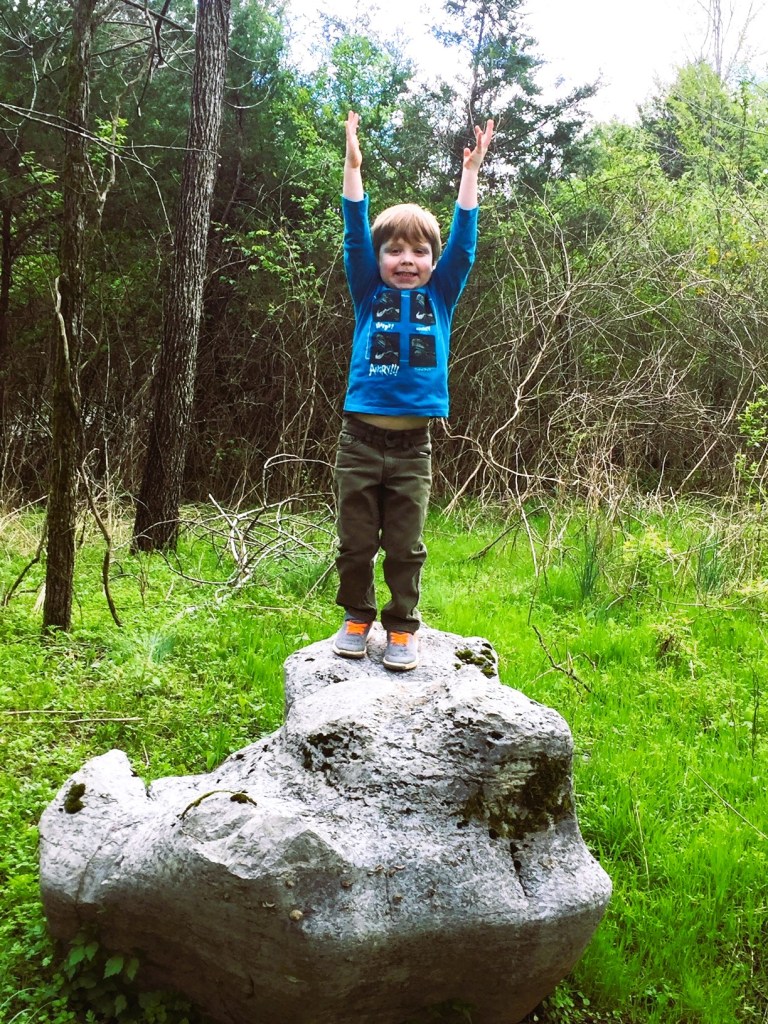
How much better to scramble onto a rock, where no footprints can be made, and no guilt and shame exist.

I’m on the Rock, hallelujah,

I’m on the Rock to stay,

For He lifted me from the miry clay—

I’m on the Rock to stay.

(Hymn, public domain)

God’s Job

Journal 2017

I [Paul] planted, Apollos watered, but God gave the increase. So then neither he who plants is anything, nor he who waters, but God who gives the increase. (I Corinthians 3:5-9 NKJV)

Several days a week as a senior in high school, I bicycled through an industrial park to arrive at my first-ever job at an aerosol packaging plant. On the way home, I felt compelled to stop and share my faith with anyone who would listen. It was my duty to obey God’s command to fulfill the Great Commission, and I wanted no one’s blood on my head.

All my life I had heard guilt-grip preaching for not evangelizing, testifying, and making disciples. It was always about me, what I’d done or not done for the kingdom. And more often than not, it was driven by fleshly works—fear, pride, and “shoulds.”

I can plant, but I didn’t make the seed. I can water, but I didn’t make the rain. And I certainly have nothing to do with the plant bursting forth into life and growing.

I can hear the “buts” arising. If I hadn’t planted or watered, would there have been a chance for life to sprout?

I have one job in life and one only: love God with all my heart and love others. My responsibility ends where His command ends. He didn’t tell me personally to plant or to water. He told me to be an agent of healing. I cannot heal. But I can point people to Jesus and introduce them to the Healer.

“Each one will receive his own reward according to his own labor” (v. 8).

A 2024 Update: Questioning what we were taught in childhood is a healthy exercise, especially when life’s experiences don’t match those words. Throwing away every word, however, is not necessarily helpful. Evangelism and discipleship training is important, and we all must be ready to give a testimony for what God has done in our lives. My struggle to shed the shoulds, however, led me to a deeper understanding of how God wired me and what He has called me to do with my time here on earth.

Time Management

Journal June 7, 2017

There are seasons and rhythms of our lives when things go dead and sometimes when they sprout to new life. Years, months, weeks, and days cycle round and round. What I do this day may seem very insignificant, yet small habits yield big results and can set the course of my history.

I seem to be in a special season right now, however brief, without clients daily clamoring for my time. For three days my husband will be golfing, and I have potential alone time. I think of all the things I could do with this precious gift, and I feel conflicted. I know what my heart wants to do, and that is to write. And so, I indulge myself. It feels like pure joy and delight to organize thoughts, rearrange them, and make them permanent by recording them. I asked the girls about writing a blog, and I got a resounding yes! Is this a priority? Do I have the time . . .?

VISUAL: I’m a disciple in the boat on the Sea of Galilee, and Jesus is about to walk by. I call out to Him, “Will you join me in the boat?”

He is more than willing. He climbs in, sits, and hands me some bread. It’s just the two of us.

“You’re worried,” He comments.

Yes, I suppose I am. I wait for Him to tell me what about, but I know Him well. He will pause to let me figure it out.

“I’m worried that I will not use my time wisely. Time is a finite commodity.”

I find it easier to function with a predetermined schedule, decisions in place, and brain on autopilot. It reminds me of scheduled time at boarding school with bells and sirens that dictated our routine. Decisions were made for us. Summers, on the other hand, were wide open with no expectations, and laziness was sure to follow.

“Go on,” He prompts.

“I don’t want to waste it.”

“Are you wasting it?” He asks.

I don’t think I am. Then what’s the issue? It’s a matter of portioning it out to match the allotted time I have at my disposal.

“You’re feeling rushed—like you want to do what your heart wants to do, but your head is giving you alternative coulds and shoulds.”

Yes! That’s it! So how do I silence those words and voices? I want to write, but my head says, “You need to file and exercise and clean house and visit neighbors.” This issue is about alone time—there are certain things I can do best when I’m uninterrupted.

Jesus leans back, hands behind His head and smiles at me. “You have a problem, then, don’t you?”

I know He’s teasing me. I’m way too serious and stressed over this.

“What do you want to do?” He asks.

“Write!” I exclaim.

“But . . .?”

I feel rising exhilaration . . . and guilt.

I ask Him for a visual. He shows me a row of boxes, some smaller, some larger, each containing one task on my to-do list.

During my time allotted for each box, I have permission to compartmentalize and block out all the other thoughts that belong to other boxes.

And so, just for today, I’ll write, uninterrupted, without guilt or remorse. I’ll seize the precious time that I have and just focus. The dirty dishes can wait.

A 2024 Update. I smile as I read back on this journal entry. I feel no guilt now whatsoever over taking time out of a busy (or not-so-busy) schedule to write. It’s one of my default activities along with sitting at my dining room table arranging jigsaw puzzle pieces. Reading a book in the middle of the day, though—now that feels decadent. Perhaps I need to address any emotion behind that thought!

Hiding Who We Are

Journal 2017

In the Good Friday service tonight, I saw a visual of a thin waif. As we partook of the elements of communion, I shared them with her and she revived.

“Who is this, Lord?” I asked.

“She’s the young mom you were, trying to raise your daughters, mistakes and all. You’ve not been kind to that self.”

And as we sang, I helped the waif nail her shame, chains, and guilt, regrets, disappointments and should-haves to the cross, and I forgave her for being “less than.”

Looking back, I wonder how different I would have been as a wife and mom had I known then what I know now. I would have stayed more present, rather than hiding my true self. I kept her safe and hidden for almost 20 years, and another 10 before she fully came back to life.

I can hide parts of my heart from myself or from others or even try to hide them from God. But God knows each part intimately and wants connection with each one.

Check out these verses on hiddenness.

Times are not hidden from the Almighty (Job 24:1 KJV).

Thou desirest truth in the inward parts: and in the hidden part thou shalt make me to know wisdom (Psalm 51:6 KJV).

And God who knows the heart . . . (Acts 15:8 ESV).

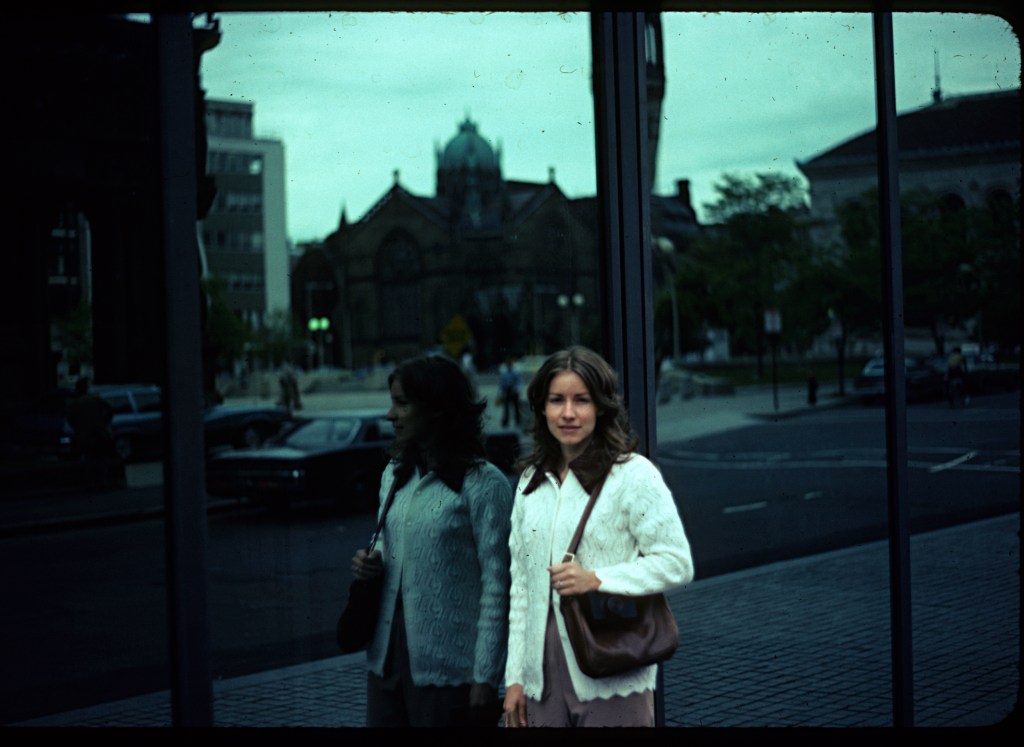
Reflection of myself, 1978

Prayer Shame

Journal 2017

I’ve been on a journey all my life to discover the secret of prayer. When I read others’ stories, they don’t match mine. I shift between guilt (not enough) to apathy and forgetfulness, from rote to relationship, from works to worry, from self-condemnation to self-awareness.

I’m reading the biography of Rees Howells who discovered that prayers were best made when they were God-directed. For example: don’t pray for healing unless God directs me to. Yet I do pray for healing of my every ache and pain as well as for everyone in my life who is suffering. But I don’t really expect Him to heal, or I’m so surprised when He does.

Today, Lord, I want to listen, wait, and ask for what is on Your heart. I want to be a prayer warrior.

“Hmmm,” says Jesus. “What does a warrior do?”

Well, he fights—fights for truth, fights against an enemy, defends himself, defends the weak. The weapons of warfare are spiritual, not physical. I know I’m supposed to just stand once I’m fully armed. So I guess the first step is to make sure I’m fully armed. You’re faithful to point out the chinks in my armor. And I know how to stand . . .

“But . . . ?”

But I don’t know how to use words. I don’t know what to say or what to pray for.

“Then why don’t you repeat after me?”

Huh?

“Like when you learned your ABCs or the prayer I gave the disciples or The Lord Rebuke You prayer or . . .”

So it’s that simple? Repeat after You? I can do that. Okay, I’m listening.

“Dear Lord,” He begins.

Wait a minute! You’re sitting right here with me. Why do I need to address You? When I’m talking to my husband, and he’s the only one in the room, I don’t have to say his name to get his attention—unless he’s not listening of course. Do I need to start “Dear Lord” every time?

He laughs. “No, of course not,” He teases. “I was just seeing if you were paying attention.”

Very funny. Ok, try again. I’m listening.

“Hi, Karen.”

Hi, Lord.

I wait. He seems to be thinking. (God has to think? Doesn’t He always know exactly what to say?)

“Okay, repeat after Me:

            I, Karen, do solemnly swear to tell the whole truth and nothing but the truth, so help me, God.”

This is not funny! What kind of prayer is that!?

“I like honesty. I want you to tell yourself the truth as well as to Me.”

Okay, I’m all in.

“Good. Now tell Me the truth. What’s in your heart?”

Well . . . I’m worried that . . .

“Choose your words. Take your time—and be honest.”

Okay . . . I’m worried that I’ll be judged for how little I pray.

“You mean little in chronos time?”

I suppose.

“Who’s keeping track?”

I suppose I am, for one.

“And?”

And . . . I feel guilty if I neglect to pray, to ask for favors, to cover people with the prayer of protection, to intercede for their needs.

“Intercede . . . ooooh that’s a big word.”

You’re teasing me. (I’m feeling petulant.)

“What do you want, Karen?”

What do I want? What do I really want? I want a heart that is so connected and in tune with You that conversation (prayer) flows as naturally and comfortably as breathing. I want every thought I think and every breath I take to be in sync with Yours. I want our conversation to feel natural, not formal; intimate, not forced or stilted. When I pray for people, I feel like I’m straining to think up stuff to say, but I’m not always sure what to say or if that’s what their true need is. I also want to know how often I should pray for someone. Expectations are daily, and somehow if I miss a day, I believe it’s my fault if they fail or are vulnerable to Satan’s attacks. How’s that for being honest?

“That’s better. What else?”

There’s more?

“Oh, yes. Dig a little deeper.”

It’s about me, isn’t it? It’s about pride. What if someone should discover what a fraud I am? That I don’t spend x number of hours a day on my knees. Or I can’t say with sincerity, “I prayed for you today.” How would that feel? Shameful? Embarrassing? Guilty? Or, since we’re being honest here, how I look compared to so-and-so. How sick is that?

“Anything else?”

Oh, I think that’s enough shame for the moment.

“Okay, what do you want to do about it?”

Me? I thought it was Your job to lift shame and give me truth and offer something in its place.

“Why should I? I didn’t put it there!”

Then who did? Oops . . . I guess I did. Help me, Lord, please. I want to give it up. I really do. But self-shame and blame is too heavy a brick to lift by myself.

(He hands me a sledgehammer.)

I smash the brick into smaller pieces, small enough for me to carry. What to do with them, though? It seems we’re building a brick wall for some sort of dwelling. I’m not sure I understand the significance yet, but brick now feels useful—like it’s serving a purpose.

Oh! I see it now . . . I think we’re building a house of prayer. Okay . . . but still not sure about this.

“There’s more to come,” He says. “For now, let’s stop and get a bite of lunch.”

Sounds good to me!

Guilt and Shame—a Visual

GUILT is like treading on a sandy beach leaving visible footprints. SHAME tries to smooth sand over the prints, but as you walk away, you create more footprints.

GRACE is God sending His wind (the Holy Spirit) and blowing across the sand, erasing all the prints. And even if you fail again, the wind continues to blow.

But how much better to scramble up onto a rock where no footprints can imprint, and no guilt and shame exist.

“I’m on the Rock, hallelujah,

I’m on the Rock to stay,

For He lifted me from the miry clay—

I’m on the Rock to stay.”

On the Edge of a Cliff

Journal 2005

Going for an Oral Interpretation major in college, I once performed a reading with a powerful visual about standing atop a cliff, desperately trying to stop people from going over the edge (presumably to hell). The point was to urge believers to evangelize. I even know one missionary who went overseas because of this visual. But all I ever felt was guilt, helplessness, and powerlessness.

As I sit with my emotions, I notice there are danger signs at the edge of the cliff. In fact, there are warning signs before the danger signs. I’m praying desperately for people to open their eyes and take notice, and if I take my eyes off the scene, I’ll miss someone. Still I feel helpless. I have to DO something. If I sit down to rest, I’ll get stampeded! Where do responsibility and trust intersect?

Jesus says, “Back away from the edge of the cliff, find a bench, sit there and wait. Offer cold drinks and sandwiches to the weary travelers. Invite; don’t panic. Invite them to rest with me and talk. Tell them about the cliff and encourage them to share the news with the other travelers on their path. And if while I’m talking to one, and another passes by, I can just wave and smile. And if I need to sleep for a while, I can ask Jesus (or an angel) to tap me on the shoulder when I need to wake up and pay attention. Whew! That feels better.

Guilt and Forgiveness—a Visual

Karekare Black Beach 491

Karekare Black Beach, NZ

Guilt is like strolling on a sandy beach—you leave footprints for all to see. You may try to cover your shame by smoothing sand over the prints; but as you walk away, you create more footprints.

Forgiveness is God sending His wind (the Holy Spirit), blowing across the sand, erasing all the prints. And even if you fail again, the wind continues to blow.

But how much better to scramble up onto a solid, flat rock where no footprints can be made and no guilt and shame exist.

I’m on the Rock, hallelujah,

I’m on the Rock to stay,

For He lifted me from the miry clay—

I’m on the Rock to stay.


Should I or Shouldn’t I?

Teach us to consider our mortality, so that we might live wisely. Ps. 90:12

From my 2016 Journal. I hear of causes, movements, meetings and appeals for help that I could join. But I have limited resources, time, dollars, and energy. Each money appeal, request or event that crosses my path has to be filtered through these considerations. And I must check in with the Commander-in-Chief before I move on it—even if it’s a good and worthy cause.

A friend recently sent out an appeal on Facebook to gather items to be donated to a local charity. The words I heard in my head were “I should do that in order to fulfill God’s heart for serving the poor and needy.” It makes no logical sense to admit I feel guilty for not doing it, so I know it’s trigger-based.

Guilt and shame and “enough” are nailed to the cross, so what is in my heart that wants to hold onto this “should”?

VISUAL: Shoulds are a heavy burden to carry—like an unwieldy, large sack of potatoes. If I don’t carry it, I think, who will? Since the potatoes are my responsibility, I can’t hand them over to Jesus. For example, He can’t diet or exercise for me or walk a casserole dish over to my sick next-door neighbor. That job is mine to carry out.

“True,” Jesus says. “There are certain things you were created to carry, not Me. So here’s what you can do. Put the sack down and empty all the potatoes out onto a tarp and let’s sort them together. First, throw away the bad ones (the lies). Now sort the rest into types, colors, sizes, or any way that makes sense to you.”

So first I sort them by kind—russets, red, fingerlings, etc. Seeing different colors and sizes is easier from there.

“Today we’re going to make a stew,” He says. “We don’t need a whole sack full of potatoes. Nor do we need every kind. Only pick up what you need for right now this morning. This afternoon you’ll need a different kind.”

Whew! This feels much more manageable now.

After seeing this visual, I was able to slow my thought processes down. I cleaned house thoroughly, ran to the grocery store, got the car washed, and filled up the gas tank—all with a feeling of peace. Next I drove almost three hours through heavy traffic to attend a funeral and drove home at night. Only in the last half hour did I begin to feel tired. Thank You, Lord, for teaching me to set down my potato sack! Maybe tomorrow I’ll find time to go through my closet for gently-used clothing to donate to the homeless shelter.

potatoes-vegetables-erdfrucht-bio-162673