The waves crash over the little boat, and the disciples shake Jesus awake. Their accusation intrigues me:
Don’t you care if we drown?
I hear the same cry from some of my clients: Don’t you care that I’m hurting?
Jesus was asleep, oblivious to the storm, so how could they accuse Him of not caring? In His humanity He was exhausted and needed rest. It’s ludicrous when a client accuses me of not caring because I’m not available to process with her the moment she gets triggered. Of course I care, but there’s not much I can do for her in the moment except pray she’ll have the strength to keep rowing.
Fear drove the disciples’ words and deeds. What did they want Jesus to do when they woke Him up? Help row? Be prepared to swim if they sank? Perhaps they felt alone and wanted His comforting presence. The storm was bothering the ones who were afraid. It wasn’t bothering the One who was resting.
What if the disciples hadn’t woken Him up? Would they indeed have drowned? What if they’d stopped struggling, stopped rowing and gone to sleep? They weren’t really in any danger, for God still had work for each of them to do. At the right time, Jesus stilled the storm.
May I rest in you today, Lord, no matter what storm rages around me.
Mark 6:5
He was not able to do a miracle there [in Nazareth], except to lay his hands on a few sick people and heal them.
Why?
Mark says, “Because of their unbelief.”
Perhaps this verse is the source of the false teaching that if you’re sick, it’s your own fault because of your lack of faith—you just didn’t believe hard enough. The issue, however, is not about one’s self-effort but a disbelief in who the Healer is. If you don’t believe that Jesus is the Son of God, the Messiah, the creator of the universe, no amount of “faith that I will be healed” is good enough.
Faith is not quantifiable. How do you know when you have “enough faith”? Either you believe that Jesus is who He said He was, or you don’t. Faith is better demonstrated in, “If You will, You can make me whole.” The focus is not on me, but on Him.
Mark 6:56
After the incident with the woman who had an issue of blood, people would ask Jesus if they could touch the edge of His cloak, and all who touched it were healed. I suspect her story spread like wildfire—that she had the audacity to believe and act on it, but Jesus had called her out for it, so now they asked first.
Were there any who asked that got turned away by him? Did He ask them questions first and interview them? Did He simply ignore or tune out the ones who were suspect? Did He have the human capability of selective hearing and blocking out extraneous noise or visual cues? Did He take time with each person to connect with him or her, or did multiple people touch Him, and there were mass healings? Did touching people and ministering to them drain Him physically, mentally, emotionally, spiritually? Was He more introvert or extrovert? (Even an extrovert requires downtime.)
We learn from other people’s successes. The bleeding woman had audacious faith. She was desperate, willing to do whatever it took to receive her healing. Her act of boldness, in turn, I believe, gave courage to others to try the same thing.
May I, Lord, have audacious faith, believing You are all powerful, all knowing, omnipresent. But I want to be polite enough to ask if You’re okay with my actions to find healing.
“Abin mamaki” is a Hausa phrase for “a thing of wonder.” This year I wanted to open my heart in wonder and awe, to deliberately notice things in a new way and record what I discovered. Not surprising, God’s creation in all its glory (water, sky, animals, flowers, rocks, and trees) topped my list, but I also marveled at how He gave man the ability to capture this nature on film. I stood in awe of some people’s aptitude for building, writing, or cooking. I recalled in wonder how God connects us, heals us, and sustains us.
If you read to the end of this long post, it will be “abin mamaki.” If you just want to read one entry, here is my list of topics with a link to each. What else would you add?
Back in February 2020, I joined a book club, but we quickly had to shut it down as COVID-19 struck. So this year, when someone on my neighborhood Facebook page asked about interest in starting another one, I jumped right in. We meet once a month in each other’s homes. What a great way to make new friends with a common interest!
I wondered one day which books were most widely read or published in the world. A quick Google search gave contradictory results based on the parameters of the question (e.g. single book or series), but every list placed the Bible at the top.
Here’s an AI-generated list that omitted The Book of Mormon (listed #4) and the Bhagavad Gita (listed #5) from other lists.
The Holy Bible, ~5 to 6 billion copies
Quotations from Chairman Mao Zedong, 900 million copies (from one publisher)
The Qur’an, 800 million copies
Don Quixote, by Miguel de Cervantes, 500 million copies
A Tale of Two Cities, by Charles Dickens, 200 million copies
The Lord of the Rings, by J. R. R. Tolkien, 150 million copies
The Hobbit, by J. R. R. Tolkien, 140.6 million copies
Harry Potter and the Philosopher’s Stone, by J. K. Rowling, 120 million copies
The Little Prince, by Antoine de Saint-Exupery, 100 million copies
And Then There Were None, by Agatha Christie, 100 million copies
Check out this list of best-selling books from Wikipedia. I was familiar with most of them except The Alchemist by Paulo Coelho. After reading it, however, I’m not sure what all the fuss is about.
Two books that left their imprint on me this year:
Atomic Habits, by James Clear. I don’t place much confidence in most self-help books, so I was astonished at the results when I applied these principles to three new habits I wanted to maintain. Who knew!
Captive of the Simbas, by Margaret Hayes, inspired me to greater heights of faith. Miss Hayes was a missionary nurse serving in the Congo in the 1960s when guerrilla fighting broke out. Along with a group of fellow missionaries, she was reported killed in a savage massacre. She was, in fact, the only one to escape.
The Wonder of Human Creation
As my sleepy eyes popped open one morning, I glanced at all the manmade materials in my bedroom—from handmade gifts sitting on a shelf, to the curtains in the window, to the very structure of my home with its walls, doors, carpet, and paint—all things I take for granted.
Then I examined my ceiling fan and wondered what process created such a useful item. The parts came from various manmade materials, were assembled in a factory, and then transported to retail stores via trucks, ships, or trains. Finally, some individual chose this one out of a myriad of styles to add to my home’s décor. A Google search found this astonishing YouTube video of how ceiling fans are made in India.
I marvel at man’s creativity—a reflection of our Creator’s character. We imitate Him when we create. I found this thought-provoking podcast “On Purpose with Jay Shetty,” posted on July 16, 2025. Jay sits down with author, artist, and creative mentor, Amie McNeed, for a heartfelt conversation about reconnecting the artist inside all of us.
A quick AI prompt poetically stated, “Manmade materials are more than tools. They are the physical embodiment of imagination, the bridge between what is and what could be. They have allowed us to build cathedrals and skyscrapers, to mend hearts and travel to the moon, to connect continents with a whisper and capture beauty for all time.”
The Wonder of Water
Long before I was born, my father dug a 30-foot well, lined it with cement, rigged a barrel atop a tower with a handpump, and ran a pipe to our kitchen so we could have running water in the sink. In this photo I am pulling up a bucket by hand. Water was first boiled, then filtered, before it became potable. We also caught rainwater in large barrels strategically placed near the house eaves. Bathing required carting heated water from the woodstove to our tin bathtub. When all five of us were clean (sort of), it took two people to grasp the handles and dump the dirty water at the base of the fruit trees in the backyard. I never want to take running water for granted. In my home in America, I can wash my dishes, toss clothes into a washing machine, and take a hot shower without effort.
This summer, as I paddled lazily in the deep end of our community swimming pool, I marveled at the properties of water that can keep me suspended on a floating device, hydrate me internally, create ice cubes for my lemonade, drive a steam engine, and be powerful enough to decimate whole villages in middle Texas.
The Wonder of Breath
So much of what I experience in a client’s prayer session cannot be shared with others due to confidentiality. It’s their story to tell, not mine. But when I witness something truly remarkable, it’s hard not to want to shout to the universe: Look what God did—again! Here’s one story.
“Sabrina” regularly defaults into retreating into nothingness in order to avoid pain. Paranoia, with a persecution complex, she’s perpetually a victim with “I am” statements that include “I am worthless” and “I don’t deserve love and attention.”
One day she arrived so depressed I didn’t think she’d be able to climb out of the pit. I let her talk for an hour, waiting for the right moment to step in. With her voice barely above a whisper, she said, “I can’t breathe.” She continued talking, and I continued praying.
“Focus on the breath,” I heard from the Lord.
Just that morning I’d been meditating on the attributes of the Holy Spirit, with “Breath of God” being the last entry in my journal. With Sabrina’s permission, I placed my hand over her chest and prayed for the breath of God to fill her lungs. (I’ve never done this before with any other person.)
“It’s lighter!” she exclaimed. “I can breathe!” The next thing I knew, she was giggling loudly as she related a funny story.
The next morning, I listened to the old hymn “Holy Spirit, Faithful Guide.” I have the Comforter, the Counselor, the Breath of Life inside me to guide me if I’ll just listen.
Near the end of the year, I picked up a little book titled Breath—The New Science of a Lost Art, by James Nestor. Aside from his inane premise of billions of years of man’s evolution, he made some astonishing claims about the power of correct breathing. One observation caught my attention: we alternate breathing patterns (left and right nostrils) in conjunction with the sun and moon. And breathing only through the left nostril taps into the right brain emotion center whereas breathing only through the right nostril crosses over to the left-brain logic center. Fascinating stuff.
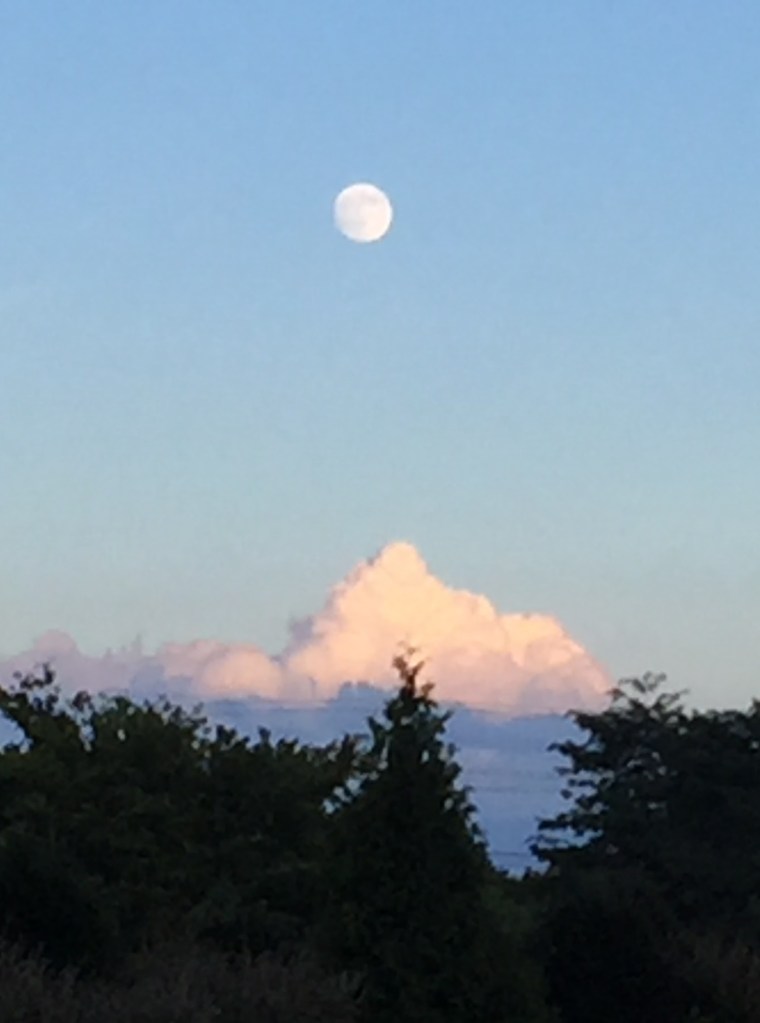
We arrived at our Life Group Christmas party at a country home. A brilliant full moon next to two large stars (or planets?) in the clear night sky made me long for Africa. I tried to imagine what it would be like to stand on the moon, look back at the earth, and gaze at galaxies upon galaxies out there that my God created. How small and insignificant I feel, yet how deeply loved that He cares for me … one tiny speck in His vast universe. Our finite minds are incapable of imagining such immensity.
To be a writer is to be a lover of words. Though I enjoy the tactile nature of a book in my hands, I relish the ease of looking up definitions in e-books. Here are some gems I found this year. Please don’t gloat if you already know them!
Ailurophile means “cat lover,” derived from the Greek ailuros, meaning “cat,” and phile, meaning “lover.” Later in the year, I discovered this word ranked first in the list of The Most Beautiful Words in the English Language.
Boustrophedon: a method of writing that runs from right to left, then from left to right. I found this word in the book Under the Tuscan Sun, by Frances Mayes.
Flamboyance: that’s what a flock of flamingos is called. This I learned while on a bus tour in Curaçao.
Lickerish (which sounds like licorice) means “eager to consume delicious foods.” At least that’s what I thought till I discovered this definition is archaic. Today it means “lecherous.” Oh dear!
Murmuration: the term used to describe the fascinating phenomenon of very large groups of birds, fish, or insects moving together, including changing direction together. The name comes from the murmur-like sound made by the birds as they move in unison.
Mephitic: (especially of a gas or vapor) foul-smelling; noxious. I learned this word in the novel Accordion Crimes by Annie Proulx. (Maybe I can use this word the next time I flush the toilet.)
What does Noelmean anyway? According to my research, it’s another word for Christmas. The French say, “Joyeux Noel” (Happy Christmas). It comes from the Latin natalis (birth day) with the same root as natal or nasci (to be born). Nativity has the same root meaning.
Tonsorial. (Sounds like it belongs to that infected thing at the back of my throat that the doctor removed!) While I was searching for the meaning of Noel in dictionary.com, this word-for-the-day stared me in the face. It means “having to do with barbers or barbershops.” Who knew!
The Wonder of Connections
I love being someone else’s answer to prayer.
My husband was not feeling well after a medical procedure, but at the last minute, he agreed to go to a Christmas party. I checked in with him all evening to assure him we could leave any time he felt uncomfortable. When the activities wound down, we discovered our car was hemmed in, and we’d be one of the last ones to leave. With few people left in the room, our host introduced me to one of the guests and commented that we had a lot in common.
Within a few minutes, she told me she’d been asking God for someone to minister to her. She’d never heard of inner healing prayer, but she made an appointment with me on the spot.
I just marvel, again, at God’s timing and orchestrating of events to bring about His purposes. We had a divine appointment and didn’t even know it.
I was listening to “Chris Fabry Live” on Moody Radio when I learned about Malcolm Guite, an author, poet, singer, songwriter, and the former chaplain of Gurdon College, Cambridge. What caught my attention was that he was born in Nigeria (as was I). His first name is a traditional name for a second child in Yoruba: Ayo Deji. Ayo means “joy” and Deji means “again.” So it’s “second joy.” He mentioned how much he loved the glorious rain and thunderstorms (yes!). His dad taught the classics, but he was also a Methodist preacher and very much involved with the Methodist Church in Nigeria. Next, they went to Zimbabwe (formerly Rhodesia), and eventually back to England. While his dad was in Canada, he sent Malcome to a boarding school (another connection). Check out his heart-stopping poetry.
We had just recently moved from Nigeria to the USA for my sixth-grade year at Samuel Strong Elementary in Elkhart, Indiana. Walking to school one day, I stopped to admire some pretty yellow flowers growing by the sidewalk and bent to pick a bouquet for my teacher. Though Mr. Mann graciously received my gift, my excitement turned to shame when a fellow classmate hooted, “Why are you giving our teacher weeds?” (“Weed” is a derogatory human classification without consideration for the One who designed it.)
How was I to know what a dandelion was?
That grade school memory returned as I stopped to admire the intricacies of God’s creation on the sidewalks in our Tennessee neighborhood. I still think dandelions are beautiful.
A friend recently sent me this excerpt from Signals of Transcendence, by Os Guinness. The author relates a story about GK Chesterton wherein “he was stopped in his tracks by ‘looking at a dandelion.’ The world was dark and the world was broken. Cynicism was easy. . .” Chesterton stopped to notice that there was beauty in the world and not just brokenness. Both needed to be explained, together. The beauty was as evident as the brokenness, and the brokenness as the beauty. But then, too, there was a wonder in the sheer existence of simple things, such as a dandelion.
The book goes on: “Chesterton was not talking about the beauty and the wonder that are so obvious that they are almost a cliché—the miracle of the birth of a baby, the majesty of a sunset over the ocean [see below], or the crystal beauty of a Mozart piano concerto. He was talking of a little common flower that everyone sees, few people pick, and even fewer think about. But thinking about it, he noted that ‘even mere existence, reduced to its mere primary limits, was extraordinary enough to be exciting.’ Anything was magnificent compared with nothing.”
Colors! The sunrise from our cruise ship balcony and the breathtaking blues of the Caribbean Sea
The Wonder of Discovery
Our 50th wedding anniversary family cruise to the Caribbean brought several surprises. We had raised our three girls in Holland, Michigan, and Scott and I had been to the Netherlands, but It felt a little odd to see wooden shoes in Curaçao—a Dutch colony.
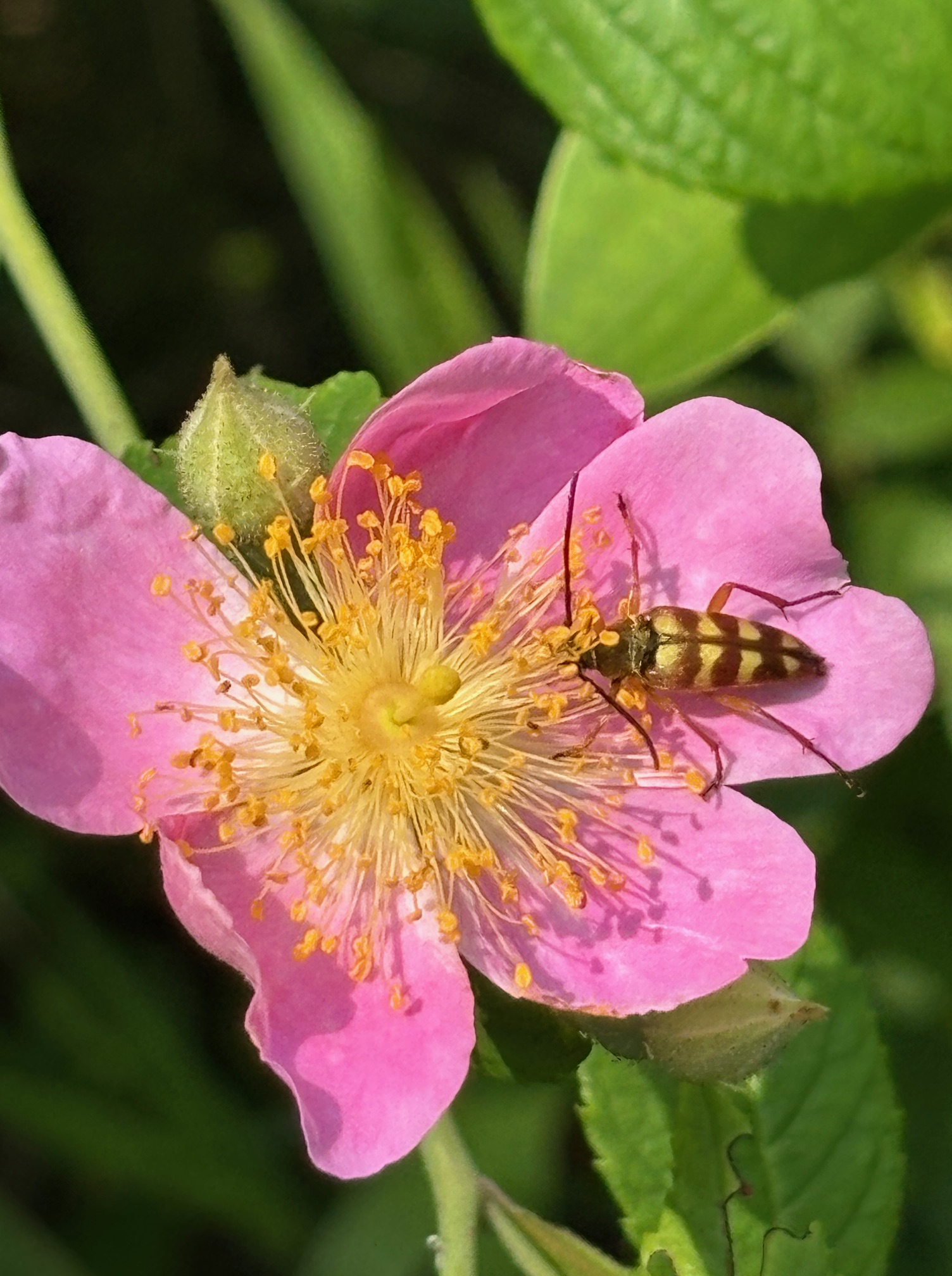
One day I snapped a photo of a beautiful purple flower on a walk near a graveyard in Decatur, Tennessee. I was astonished to discover it was from kudzu—a familiar, rapidly growing invasive perennial vine in the South that smothers all vegetation in its path. And it’s edible!
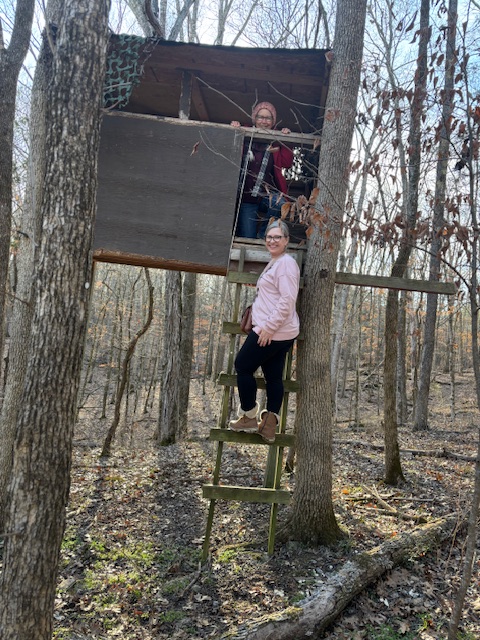
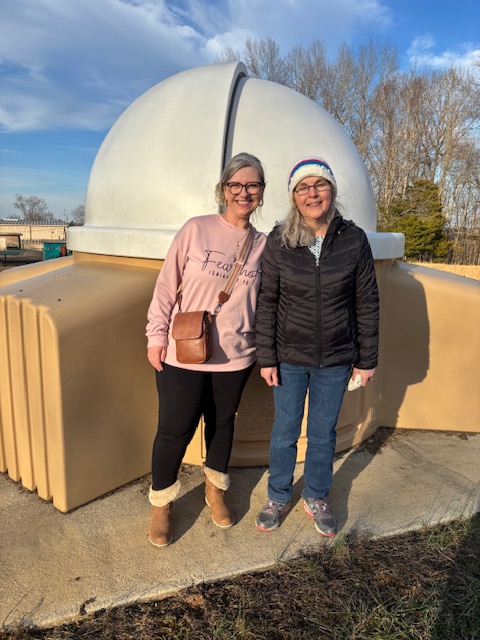
A few ladies joined me on a little hike on the property of Horton Haven Christian Camp following our annual Ladies’ Retreat. Three discoveries brought joy to my heart: a deer blind (which I climbed to the top for the view), a random campfire by the trail, and a dome in the middle of the field. We circled the structure to find a sign that read “observatory.” Too bad it was padlocked. On other trails, I discovered some amazing nature.
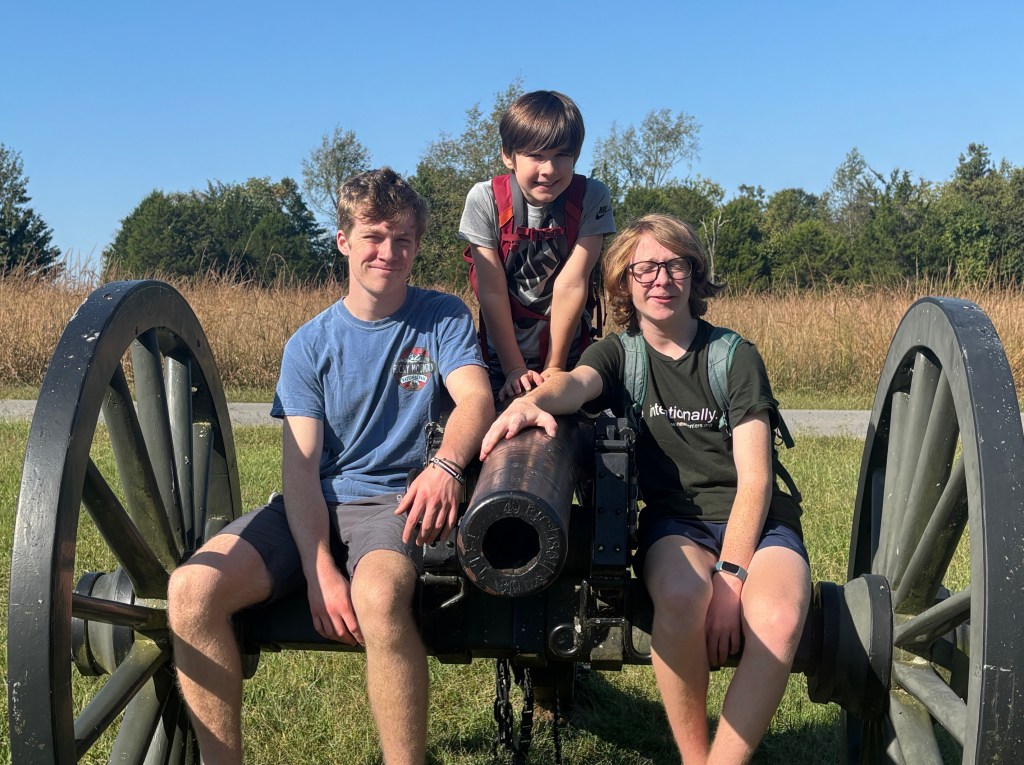
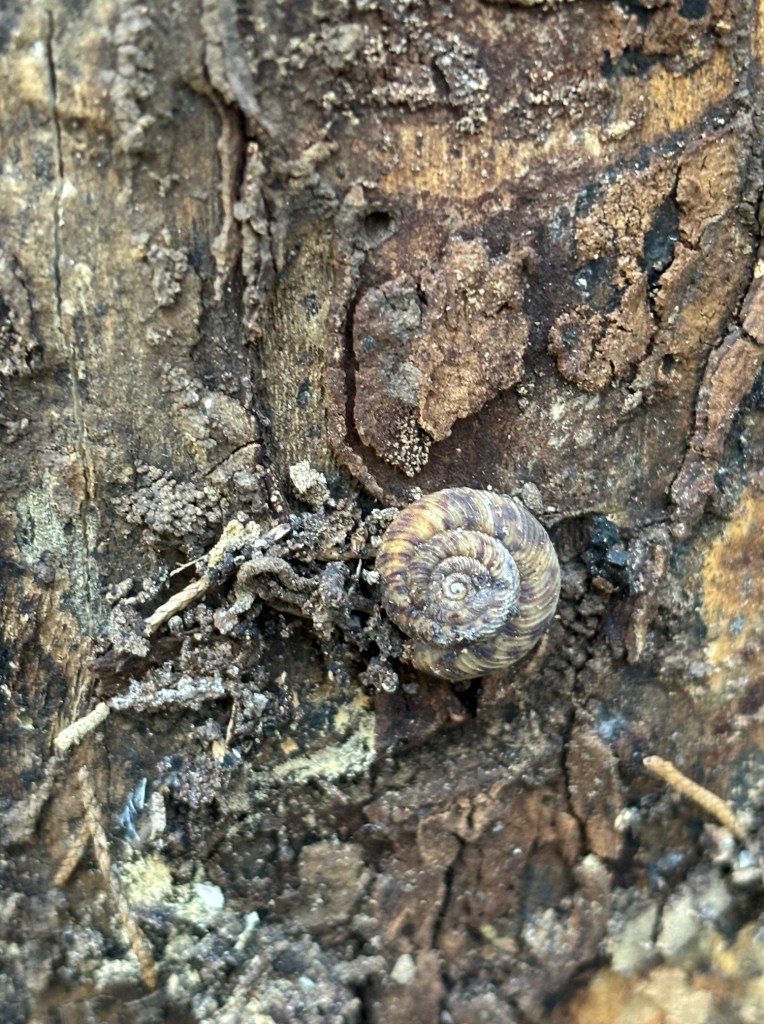
On a walk on the Greenway with my three oldest grandsons, we climbed down to a dry streambed and discovered a bed of seashells.
The Wonder of Birds
My favorite new app this year is Merlin Bird ID. Press a button to listen for birdsong, and voila! It identifies the bird.
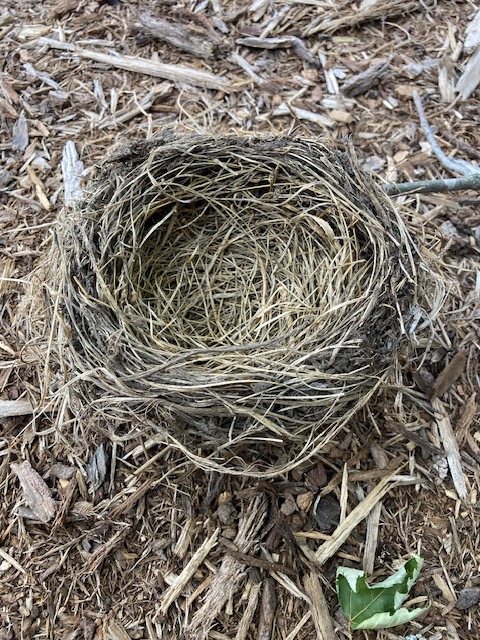
I wake up to birds chirping outside my window each morning, and when I walk or hike, I keep my eyes open for abandoned birds’ nests on bare winter branches or on the ground.
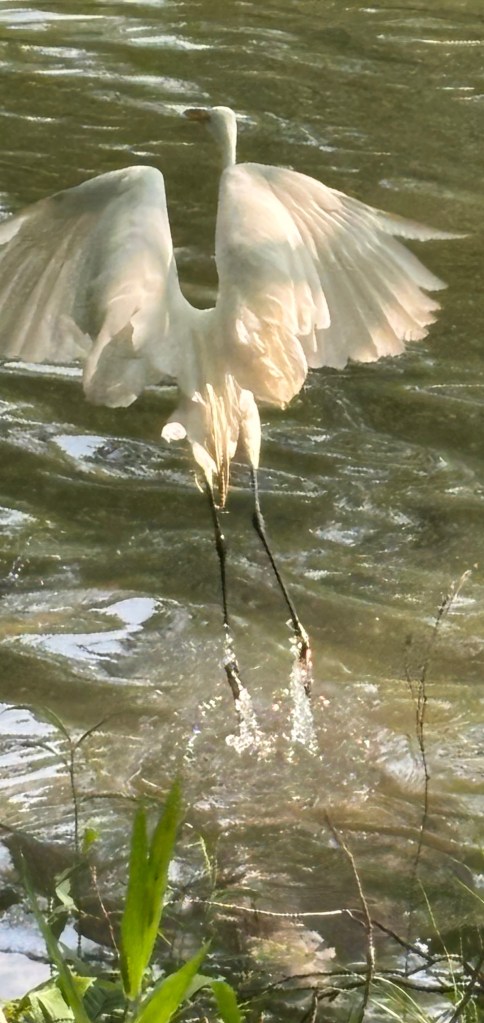
One day I watched a solo heron rising from the river, feathers glinting in the sun. Another day it was the astonishing sight of thousands of blackbirds lined up like tiny soldiers across multiple electric wires by the highway. And the hypnotic, acrobatic, twisting, swirling, shape-shifting bird dance, a murmuration (See “The Wonder of New Words”) in their autumn flight. How do they follow each other? How do they decide when to move? Who’s the leader? What if one bird gets left behind? Keeping together, I discovered, provides safety from larger birds as they migrate.
So many hymns we enjoy today sprang out of personal tragedy. The most famous one is the Spafford story behind “It Is Well with My Soul.” But others need to be retold.
The majority of the hymns I grew up with were composed in the 1600-1800s. Prior to the advent of hymns, only the Psalms were sung in corporate worship. Churches split when hymns were first introduced (sound familiar?) To make the transition, one congregation allowed dissenters to leave before they sang one new hymn at the end of each service. If only we’d known our church history when the music wars raged in the 1960s and ’70s over “contemporary Christian music.” I now rue my lament over my lost heritage and my disparaging remarks about contemporary artists. Each generation needs to find its own voice.
While singing “Joy to the World,” I pondered the refrain “The WONDER of His love.” I was also captivated by the repetition of the word King in almost every Christmas carol we sang. Not baby, but KING. Jesus may have arrived on earth as a helpless infant, but His destiny is KING of the universe. Perspective is everything. Mental health depends on it. Wonder expands the space in my mind to create room for peace and joy. My to-do list, my schedule, my projects, and even people get pushed to the periphery as I focus on wonder. It deletes the antsy-ness of claustrophobia. My shoulders release their tension; my breathing deepens.
Here are some lovely artists I discovered on YouTube, along with a link to a sample of their music:
The pure, sweet voice of Rosemary Siemens with violin accompaniment.
Acapeldridge: Four-part harmony by the same artist (a little strange to watch)
Luke Powell, a South African pastor who tells the story behind the hymns. Here’s one: Born in England, Louisa Stead moved to the USA. One day while she and her little family were enjoying Long Island Beach, her husband ran into the waves to try to rescue a drowning boy. Tragically, both were lost. And thus Louisa wrote, “Tis So Sweet to Trust in Jesus.” She then became a missionary to South Africa and later to Rhodesia.
Throughout the year, I frequently found myself humming “The Wonder of It All” written by George Beverly Shea, gifted musician for Billy Graham’s crusades.
Verse 1
There’s the wonder of sunset at evening,
The wonder as sunrise I see;
But the wonder of wonders that thrills my soul
Is the wonder that God loves me.
Verse 2
There’s the wonder of springtime and harvest,
The sky, the stars, the sun;
But the wonder of wonders that thrills my soul
Is a wonder that has only begun.
Refrain
O, the wonder of it all! The wonder of it all!
Just to think that God loves me.
O, the wonder of it all! The wonder of it all!
Just to think that God loves me.
One day I randomly opened a hymnbook to the song “Jesus, I Am Resting, Resting.”My heart resonated with the words that were written by a poet, Jean Pigott, who died at age 37. She gave the hymn to her brother Thomas who went to China as a missionary under the China Inland Mission. He, in turn, shared it with Hudson Taylor who whistled it during extreme circumstances in the Boxer Rebellion. Thomas was executed, along with his wife and son and 41 fellow missionaries, on July 9, 1900.
Though I pray day after day with hurting people, I find my heart can stay at rest, at peace, if I focus on God.
One day I discovered Elohim Songs—”a worship space blending English and Hebrew lyrics, inspired by God’s Names and Promises: Elohim, Adonai, Yahweh.” They “create original Messianic worship songs, using AI-assisted tools not for worldly trends, but to glorify God. Every melody, word, and sound is crafted to draw hearts closer to the Father. Here you’ll find Scripture-based ballads, English-Hebrew lyric videos, and songs about God’s faithfulness from youth to old age. Let technology serve His Kingdom. Shalom!”
The Wonder of History
Well, not really … but. History was always my worst subject in school—all those dates and names, and nowhere to hang those little pegs in my mind. So when I discovered “Crash Course” on YouTube, I was hooked. Witty, fast-paced, visually appealing, and informative. I may not agree with all John Green’s commentary, but he keeps my attention.
Check out “Christianity from Judaism to Constantine: Crash Course World History #11”
The Wonder of Photography
When I was in Grade 6, my family did the touristy thing and drove into Yellowstone National Park to see Old Faithful. That’s about all I remember from that day. I wish now that we’d visited the Rainbow Hot Springs and hiked near the Yellowstone River (the longest free-flowing river in North America).
I didn’t know about the massive ecosystem until I watched Yellowstone One-Fifty with Kevin Costner, a 2022 documentary on the 150th anniversary of the founding of Yellowstone National Park. Costner explores the Park “to find out if it’s still as wild and untouched as it was on the day of its birth.” The photography is breathtaking, awe-inspiring, and well worth an hour of your time.
Stunning, mind-blowing, astonishing, spectacular… okay, I’ve run out of words. Tom Hanks narrated a 10-part Sunday series on NBC called The Americas. The photography of never-before-seen, up-close nature kept me exclaiming, “How did they film that!?”
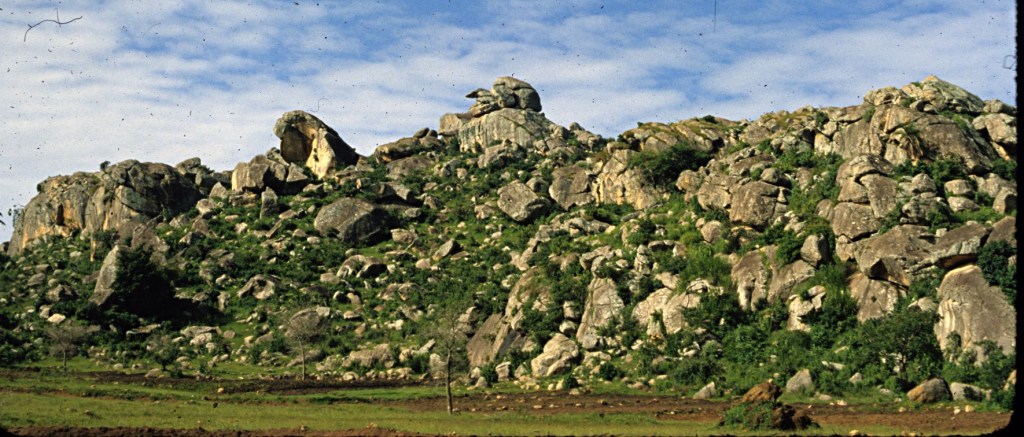
The Wonder of Rocks
I have always had an affinity for rock formations as they take me back to my childhood in Nigeria. Camel Rock was my favorite hiking destination.
We came across these cairns while in Aruba. Who piled them and why?
The Wonder of Trees
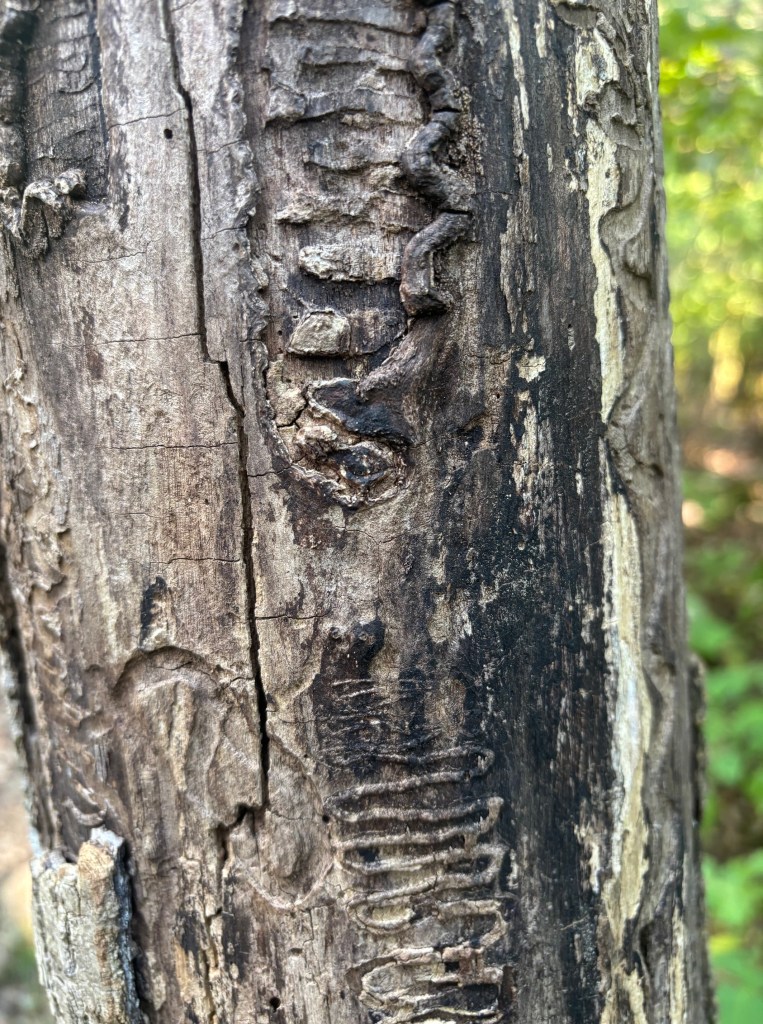
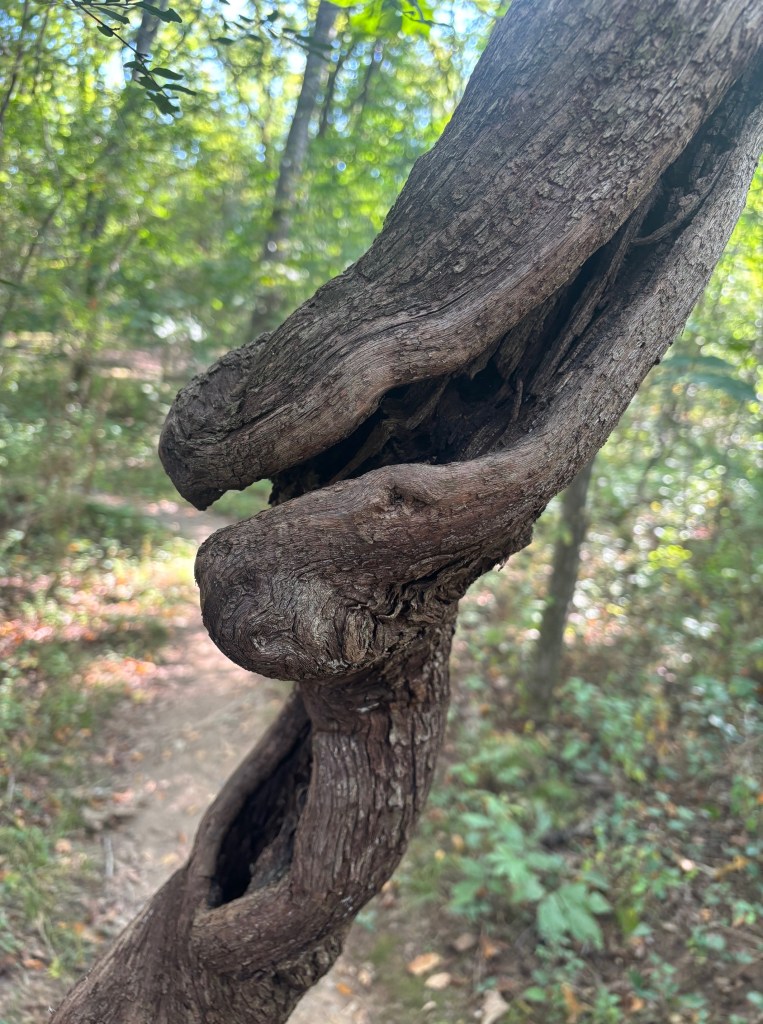
Anyone who knows me can tell you I’m obsessed with trees. I found these gems this year etched into dying tree trunks. And how in the world did this vine find its way to the top branch of a tree?!
The Wonder of Friendships and Health
After spending 5 weeks recovering from the flu and viral pneumonia earlier this year, I am grateful for my health. I struggled to remain positive, and I’m in awe of a couple friends who manage much greater illness far better than I.
The first is Joyce, my accountability partner for the past 35 years, who suffers from RA. She had two stints in the hospital this year for an infection and is now home after rehab. My heart aches for her suffering. Yet in our conversations she always manages to ask me how I’m doing. Her positivity is infectious.
The other is Tammy, who received the gift of a heart transplant this year. She’s a friend to all but makes you think you’re her best friend. The doctors told her she was one in a million in her recovery, and I believe them. She returned to dancing just weeks after getting out of the hospital. Wow! Her joyful spirit inspires me.
To round off our year-long celebration of our 50th anniversary, we stayed a couple nights in this romantic, cozy Terralodge dome house in Sewanee, Tennessee. The king-sized bed faced a floor-to-ceiling window that looked out onto a forest of oak trees. We had just settled in when we heard a ka-pow! over our heads. Was that a shotgun, we wondered. But no. It was the sound of acorns slamming into the deck or roof. We giggled every time one hit.
The Wonder of Food
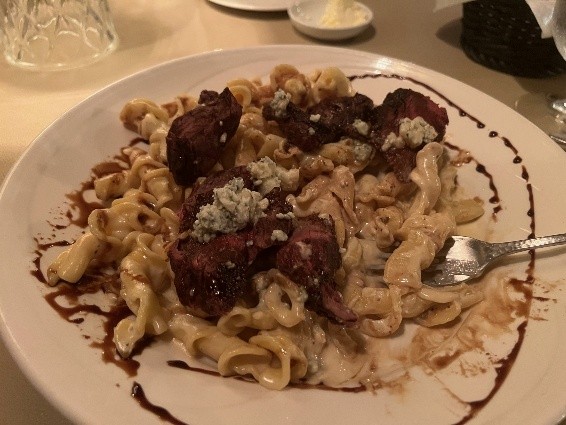
Wanting to try something new on the menu at High Point Restaurant on Monteagle Mountain, my eye caught the words “lion’s mane.” My imagination ran wild as I tried to envision chewing tufts of hair from the head of the king of the beasts. “It’s the name of a mushroom,” our server explained. Always something to learn!
The Wonder of Healing
In 25 years of ministering to people through inner healing prayer, I can only name a handful whom we have been unable to help in some way. But when I first met Addie (not her real name), I thought she might be one of those failures. Every month for two years, I prayed with her with minimal change in her lie-based thinking. I tried every tool in my toolbox, and nothing made her budge. She firmly believed she was bad, a nobody, unworthy of love. She pled with me not to give up on her, so we kept plugging away. One day in desperation, I begged God to show me another way. That week, He used a book, a song, a list, and a massage therapist to teach me something new. When we met again, I asked her if we could try something different. Within minutes, a physical pain in her side began to subside. She looked at me in astonishment. “It’s been there for 35 years!” she said. And then followed the Lord’s sweet words to her, “You were not to blame.”
But that’s not the end of the story. We began to use this new tool with other clients, and they, too, exclaimed at the healing they received. Their gratitude warmed our hearts. All glory goes to God.
The Wonder of the Word
As a child, I often stared at the photo of Jesus holding a rescued sheep in His arms. I’d heard the story a hundred times about how God rejoices more over finding one lost sheep than over the 99 who didn’t go astray. I can hear George Beverly Shea’s deep bass voice singing, “There were ninety and nine who safely lay in the shelter of the fold…” The missionary message was clear: go save the lost . . . but I wasn’t one of them.
I just couldn’t identify with that disobedient rascal. I tried so hard to be good, to obey, to follow the Shepherd. I felt jealous of the one in His arms. Maybe I should quit following the rules and be bad—would Jesus race after me then and love me more?
I feel so self-righteous. I obeyed, I followed, I stayed in the pen like He told me to. Of course, unlike the wayward one, I didn’t have to endure the cold, the loneliness, the lostness, the trap, the brambles. I wouldn’t wish that on anybody. But I’m petulant that Jesus seems to care more for the brat.
But as I read Matthew 18 (again for the umpteenth time), I noticed something for the first time. The context of this story is about children. Jesus had pulled a child into His embrace and instructed His disciples that they needed to humble themselves as LITTLE CHILDREN in order to get into the kingdom of God. And that anyone who hurt one of these LITTLE ONES should have a millstone hung around his neck and drowned. Verse 14 (NIV, emphasis added) says, “In the same way your Father in heaven is not willing that any of these LITTLE ONES should perish.”
And now I see it. I’m a full-grown, mature sheep. Of course my motherly instincts kick into high gear when a little lamb wanders from the flock or falls into a ditch. Go, Jesus! Run to him/her! That perspective changes everything. Whew! No more jealousy. So crazy that after 70 years I paid attention to the context.
The Wonder of Marriage
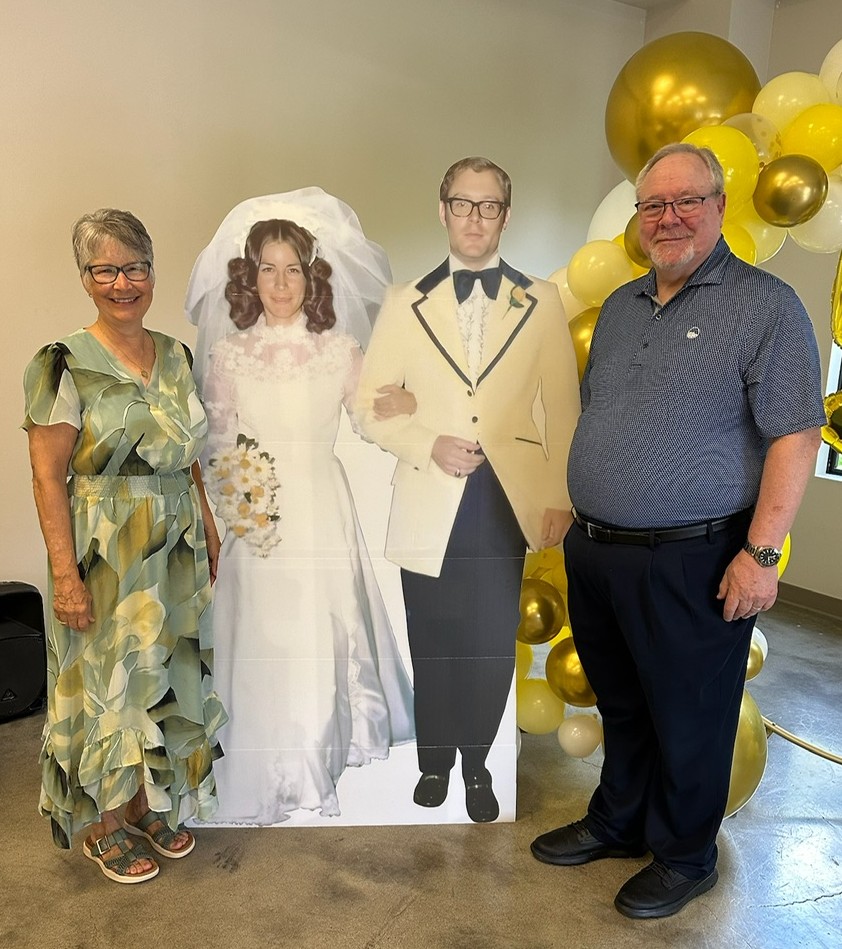
On August 8, 1975, Scott and I exchanged wedding vows. Fifty years later, as we gathered with family and friends to celebrate this milestone, I had ample time to reflect on our stories and to trace the hand of God on our lives. The beautiful young server at a romantic dinner for two asked us our secret for making it this far. “Two things,” we said. We committed to each other that we would never threaten divorce when we disagreed (which was on just about everything!) and that we would never go to bed angry at each other (a few times that vow stretched into the morning hours, but we always resolved our arguments as soon as possible.) Where have the years gone? How can I love this man more today than the day I married him? It’s “abin mamake!”
These words startle me. They challenge the popular teaching that God wants everyone healed.
I’m really struggling today with my arthritis. I can tolerate the pain in my hands and feet but find it difficult to cope with the back pain and tightening muscles. I don’t want to be all-consumed with the body, yet it’s the vehicle for the soul to function. Do I just accept what’s happening, or do I seek help? Everybody I talk to has his or her pet remedy or solution. I need a diagnostic tool, but most of all, I need God’s guidance.
Can my infirmity bring more glory to Him than my healing? Is there something He wants to teach me in this situation that I could not learn another way?
AI-generated
A 2025 Update. I’m delighted to report the arthritis is gone! But that’s a story for another day.
God said to Moses, “Now go; I will help you speak and will teach you what to say” (v. 12).
When God tells me to do something, He will give me the tools to accomplish His assigned task.
In another incident, due to his wife Zipporah’s influence, Moses opposed God when he refused to circumcise his son, and God almost killed him. But the fear of losing her husband won over the distaste of the sight of blood, and Zipporah herself performed the surgery!
When God wants something done, He’ll make it happen, but how much better to cooperate with Him the first time He asks! Don’t try to out-manipulate God. He’s smarter and wiser. He’ll always win in the end.
The broken and bruised Little One lurched forward onto the desert stones, her parched lips whispering a desperate, “Help.”
A large-winged, iridescent creature glided swiftly from the sky, casting shade over her limp body. In one motion, he lifted her high above the earth. The wind cooled her fevered brow, and she slept. When she opened her eyes, they were soaring over a mountain and descending into a lush green valley where she spied a ribbon of river sparkling in the sunlight.
The creature landed gently near the entrance to a cozy cottage. As if on cue, the heavy oak door swung open, and a kind-faced, elderly gentleman reached for her as her spindly legs crumpled beneath her.
“Come in, my child,” he invited.
A warm glow from the fireplace revealed a table spread with a feast beyond compare. Exotic fruits and colorful vegetables spilled artfully around platters of venison, quail, and racks of lamb. Never before had she seen such abundance.
“You may eat all you want, but only a little at a time, as much as your stomach can handle.” And he began to feed her from his own hand. When she had eaten her fill, she fell asleep at the table, dreaming of lamb chops and fresh fruit and homemade bread.
The next morning, she awoke in a bed of feathers, refreshed but weak. Where was the old man? She wandered outside to explore. There by the cottage ran the river she’d noticed from the sky. And in the middle, standing chest-high, a young man beckoned her to join him. When he saw her fear, he waded to shore, offered his hand, and led her close to the edge where she tested the water with one toe. Surprised at its warmth, she allowed him to pull her further in, waist high. The mineralized liquid soothed her aching muscles and cleansed her wounds of the poisons. Finally, she plunged completely under and came up splashing and laughing. The dirt and the grime of a lifetime dissolved into a rainbow of bubbles. The man smiled, enjoying her fun. She could have stayed in this River of Delight all day, but the man had more he wanted to show her.
“Come,” he said—in the same tone the old man had used.
Curious, she thought.
He wrapped a soft towel around her shoulders and handed her a robe. Strangely unselfconscious in his presence, she slipped out of her dirty rags and let the shimmering white garment fall neatly to her feet, covering her bony frame.
“It’s beautiful!” she murmured.
She followed him down the path and around to the back of the cottage. A kaleidoscope of color met her eye. In the center of the garden stood a massive fountain with flowers and vines of all varieties growing out of its walls. A stone bench circled the base of the fountain where small pilgrims could climb to reach the water or the elderly could sit. The man reached for a dipper, scooped up some of the pristine liquid, and held it out to her. Again, she felt fear surging up from deep within.
“It’s safe,” is all he said. And she drank. And she felt life in her bones, and her flesh felt restored, and her spirit revived.
For a year the Little One stayed in this valley of paradise, learning lessons from the Master Teacher, until one day he spoke these words: “You are strong enough now, my child, to venture forth. Invite others to come here—but you must show them the way. And if, like you, they’re too weak to travel by foot, simply call, and I will send my winged spirit to carry them here.”
And the Little One, strong in the power of His might, went forth and gathered in the lame, the blind, the broken, the bleeding, and the wounded, and brought them to the feet of the Master. And they, too, experienced fullness of joy in the River of Delight. And the cottage swelled with happy voices—but was never full—for there was always room for one more. And the Fountain of Life never ran dry.
Psalm 36:7-9 NIV
How priceless is your unfailing love, O God!
People take refuge in the shadow of your wings.
They feast on the abundance of your house;
you give them drink from your river of delights.
For with you is the fountain of life; in your light we see light.
I call God as my witness . . . that it was in order to spare you that I did not return to Corinth. (2 Corinthians 1:23-2:4 NIV)
If the Apostle Paul had shown up in my counseling office, I wonder what I would have said to him? He says he chose not to return to Corinth “in order to spare them.” But it sounds more like he was protecting his heart. He claims he stayed away from the Corinthians out of love for them, but in the same breath he admits: So I made up my mind that I would not make another painful visit to you. For if I grieve you, who is left to make me glad but you whom I have grieved? In psychological jargon, we’d say this was a codependent statement.
This giant in the faith, who faced torture and rejection and beatings and jail time and hardships and the burden of fulfilling God’s call on his life had triggers a-plenty. Why am I surprised? In other passages, he freely admits his short-comings, inadequacies, struggles, and fears.
I’ve been taught that Paul’s writings were inspired (not doubting that) but I think most of my life I’ve also been taught that, as a result, everything he states is truth. But was Paul being true to his own heart? Was he really staying away because he loved the Corinthians . . . or was he protecting his own pain? We don’t know of course. We only know his words.
Now . . . maybe it was wisdom to stay away—why go where he’d be rejected? But that never stopped Paul before. Why does it bother me to think that Paul MIGHT be triggered? Or does it bother me that I’m questioning his heart?
All Scripture is inspired, but not all Scripture is instruction. Sometimes it’s history. II Corinthians is a letter—it records what Paul wrote to a specific group of believers in a specific time period. It was instruction to THEM.
Here’s where discernment is necessary. How do we know what was divine doctrine vs. a reflection on local culture? Who gets to decide? Some sects of Christianity wear hats or head coverings. They want to obey the Scriptures in all things. But others believe wearing a head covering was a cultural issue and doesn’t make one spiritual.
What about instructions to Timothy? Qualifications for a pastor preclude women being in leadership (or do they?) Is that God-ordained or cultural? Who gets to decide? If we release all outward show or behavior as a non-issue and listen only to the heart, does that answer the question: it’s not whether male or female is in charge but where the heart is? [NOTE: check out Bill Rudd’s book Should Women Be Pastors or Leaders in the Church? Very insightful!]
I’ve been taught the New Testament as law and less about heart. Rules to follow instead of relationship. Does that make everyone a law unto themselves? Where do we draw the line between biblical mandate and godly principle?
Apparently the Corinthians were living in sin, full of factions, and accusatory of Paul being boastful, having no authority, and being a burden to them. Much of this letter is self-defense on Paul’s part. He ranges from sarcasm to humility.
We (or I) have placed Paul on a high pedestal of sainthood, like he could do no wrong after his conversion. He’s earned our respect for his position, perseverance, and persecution. But I’ve never heard anyone preach about his character flaws. Paul’s defensive self is in full battle gear in this letter. You can feel the anger and hurt from the Corinthians’ false accusations. Does my respect for Paul slip just a little as I read this letter? Or should I excuse and defend him for what he says?
Should Paul have defended his position as an Apostle? Did he have a right to confront the Corinthians about their sin? Of course. But Paul was not perfect. His choleric nature is showing. I’m curious if his letter convicted them or shamed them or made them dig their heels in even deeper?
What would this letter have sounded like if Paul had dealt with his hurt before responding? Would it have had the same impact on the Corinthians? Self-defense can be idolatry. It is substituting self for God. But does God forgive us? Of course! Our sin is under the blood. But there is a better way—let God be our defense. God can use my hurts and my defenses to accomplish His perfect will. But if I have a choice (and I do), I’d choose His defense over mine and healing of the hurt over carrying the wound around in my heart.
So, here’s a question: if someone wrongs me, should I confront them? Do I need to? Or can I deal with my hurt and overlook the wrong done? If I’m at peace, my motive for the confrontation changes. Then it becomes not about protecting my pain but about what is best for the other person.
It’s really hard to be reasonable when one is triggered. So how does it look to others when MY triggers show? Do they offer me grace? I hope so. And, in turn, may I be gracious when I see others triggered. I guess I can cut Paul some slack if he’s a little codependent.
In the book Rees Howells-Intercessor, the author Norman P. Grubb says, “This is the law of intercession: that only so far as we have been tested and proved willing to do a thing ourselves can we intercede for others. Christ is our Intercessor because He took the place of each one prayed for” (p. 93).
The thought here is that we cannot intercede for someone unless we are willing to answer the prayer ourselves. Rees prayed that God would spare the life a woman who was dying; but if she died, he would have to be willing to care for her children since the father was out of the picture. When she died, he was prepared to take up the slack, but her sisters stepped in at the last minute. His intercession included being willing to lay down his life for another.
Regarding medicine vs. faith for healing, he was not opposed to medicine and would recommend it. His prayer for healing was usually applied to those for whom medicine had failed—and only after he was SURE that God had told him that the person would be healed. He didn’t pray for it or believe it unless the Lord told him what to pray for.
Always, always do what God says, even when it feels bizarre. He seldom works the same way twice. Only once did the children of Israel march seven times around a city. And when they tried to conquer Ai, they failed because God didn’t tell them to do so.
Rees Howells had a policy of “First need, first claim.” Whenever he had money, he’d give it away to whatever need presented itself to him, believing God would supply his own need when the time came.
The ultimate test came when God asked Rees and his wife to leave their son behind so they could go to Africa to become missionaries. We read this today and shake our heads. Some of the Gowans Home* kids might disagree that the sacrifice was worth it. Some would protest that God wouldn’t ask a person to do that (though He did it Himself when He left His only Son to die on a cross).
I think God calls certain people to an exceptional life of faith. When He has an extraordinary job for them to do, their testing is also extraordinary. God had a special hand on Rees and on George Mueller and today on Angus Buchan (Read the book or see the movie Faith Like Potatoes).
Are we all expected to make sacrifices in our intercessions?
*GH was a home in Canada for missionaries’ children in the 40s and 50s. It was not safe in those days to take children overseas to disease-ridden countries or during wartime, so missionaries left their children behind for four to five years at a time.
This morning, when I asked God how best to pray for my friend Suzie, He gave me this visual.
Jesus scooped me up on His white horse, and we flew over to Suzie’s heart castle. I was dismayed to look down and see the devastation. The enemy had penetrated in spite of the thick stone walls around the property. The castle and the grounds had been burned and blackened, and only the charred remains of the beautiful oak trees dotted the landscape.
“So where is Suzie?” I cried.
“Listen,” He said.
And then I heard it. Cries of anguish came from the direction of the one standing turret. I knew then that Suzie was trapped inside, fighting for her life. She had barred and locked the door from the inside, fully armed, on high alert. The enemy troops surrounded the walls and were gleefully gloating, not paying much attention except to their own shenanigans. They knew they were helpless to penetrate the turret, but they didn’t care. They knew that eventually Suzie would run out of food and water, and their mission of destruction would be accomplished.
My inclination was to rush in with a flaming sword and rescue the damsel in distress, but I knew Jesus far too well than to make plans without him. Besides, He had told me I didn’t need to bring any weapons with me because I had Him; and as long as I stayed close to Him, I’d be okay. I looked at Jesus to see what He would do.
We glided over the walls and landed softly in front of the turret. I laughed in glee as the enemy hordes scattered like rats to the edges of the compound. What will He do next, I wondered. Will He knock, inform her that all is well, and that would be that?
Instead, we slid off the horse, and He sat by the door and pulled out a bag of marbles. “Care to play?” He asked.
What!? Really? Well, okay, I trust He knows what He’s doing.
I glanced up to see a shadow cross the window above us.
“What’s happening?” I asked.
“She’s noticing the quiet,” He whispered.
I listened. The screeching of the devils around us had stopped, but no sound of birds could be heard or rustling in the trees. Just silence.
Okay, that’s good, I thought. What’s next?
“She needs to know that she’s safe before she will put down her weapons, stop fighting, and rest,” He said. (He had read my thoughts, of course.)
“So why don’t we just go on in and rescue her?” I asked. “You can go through walls.”
“I could . . . but it might scare her, and she’d pick the weapons back up if she hears noises on the stairs. I want her to learn to trust Me. I’m not like the destroyer who’s out to get her. But she doesn’t know that yet.”
“But she might starve to death while You wait for her!” I exclaimed.
He smiled. “Don’t worry, Little One. She’s been starving a long time already. That’s why she called for my help.”
“Then why don’t You help her?” I asked.
“I will . . . as soon as she opens the door and lets Me in.”
“But . . . ?”
“But what?”
The question died on my lips. I already knew the answer. I had learned firsthand the lesson of waiting—when I’m ready . . . when the Kairos time is right . . . at the appointed time, all shall be well.
“Thank You, Jesus, for letting me come with You today. I asked You to help her because I knew You would. But it’s always fun to watch You work. What’s next?”
“Wait and see the salvation of the Lord.”
And so we continued to play marbles on the soft dirt. Then Jesus began to whistle a tune—a lovely melody. (I love it when Jesus sings over me. I hoped it would reach Suzie’s ears so she could hear it too.)
And that’s when we heard the sobbing. Deep, wrenching sobs of pain coming from within the turret walls.
“Now, Jesus?” I looked to see what He would do. I wanted to rush in and scoop her in my arms and tell her all would be well.
He just shook His head, silent, and I knew I was expected to stay still and remain quiet. We both looked up at the same time. A shadow and then a tousled head appeared in the window. She glanced furtively about trying to determine where the sound was coming from. But all she could see was the desolation below in her garden. We were too close to the door for her to see us from that angle.
And so we waited. But it didn’t take long. We heard the sound of footsteps on the spiral stairs, closer and closer to the door. I held my breath. What would she do next? I glanced at Jesus. A little smile played about his lips. I could hear her breathing heavily on the other side of the door, waiting for something. Jesus paused for one beat, then two, and then very softly knocked on the door. “Suzie? It’s Me. Jesus. It’s okay. It’s safe to come out now. You are safe with Me.”
“How do I know it’s You?” she demanded. I’ve been tricked before.
“Tell you what,” He replied. “Why don’t you open the window in your front door and peek outside. Don’t open the door itself until you know it’s Me and not the enemy.”
“Yes, but the last time I did that, I saw what I thought was an angel of light. But when I opened the door, all hell broke loose.”
“Good point,” He countered. “Did you use the Demon Test first?”
“What’s that?” she asked.
“I know how much you love My words. You can trust them. They are life and they are true. Remember where I instructed John to write, ‘By this you know the Spirit of God: Every spirit that confesses that Jesus Christ is come in the flesh is of God, and every spirit that does not confess that Jesus Christ has come in the flesh is not of God” (I John 4:2-3)?’ Ask Me to say these words. The demons are incapable of saying them you know.”
“Okay . . . let me think about that . . . okay, yes, I do trust Your written words. So . . . whoever you are, say those words!”
“Jesus Christ is come in the flesh.”
Slowly and cautiously, the window swung open, and Suzie peered out. Jesus winked at her and smiled. “Good job!” He exclaimed.
And then He nodded over to the black spirits at the perimeter of the compound. Try making them say those words.
“Tell me ‘Jesus Christ is come in the flesh’!” she yelled in their direction.
Some of them smirked; others cringed; but they all looked away, silent.
Jesus waited.
“But what if I open this door and they come rushing back here?”
Silently, Jesus held up His flaming sword so she could see the words written on it:
And take . . . the sword of the Spirit, which is the word of God (Eph. 6.17). For the word of God is living and powerful, and sharper than any two-edged sword, piercing even to the division of soul and spirit, and of joints and marrow, and is a discerner of the thoughts and intents of the heart (Heb. 4:12).
“They really don’t like My sword.” He grinned.
And then I smiled because I knew what was coming. I’d seen it hundreds of times. I heard the bolts scraping open. Slowly the door swung inward, and Suzie stepped out into the bright sunshine. She blinked, trying to adjust her eyes. And I saw Jesus sheath the sword and stretch out His hand in invitation. She hesitated. She still wasn’t sure she could trust Him. Maybe He was mad at her. Maybe He was going to whip out that sword to cut her in two. The thought was still very scary.
He lowered His arm. “Care to sit down and play marbles with us?” He asked.
“Marbles!? Are you mad?’ she said. “This place is in shambles; my kingdom is decimated, and you want to play marbles?! Aren’t you going to fix this place? That’s why I prayed to You, you know. You let this happen. Where were You when I was being attacked by the enemy? Where were You when my grandma’s life was cut short? You didn’t care that my parents divorced and left me to fend for myself.”
“Who are you really mad at, Suzie?” He asked gently.
“I’m mad at myself! I’m mad that I trusted you; I’m mad that I trusted other people and they betrayed me. But I’m mad at You too.”
Suddenly she stopped. I could see the fear in her eyes. She had just told off the King of the Universe. Would He strike her down for such insolence and disrespect? He’d done it before. She’d read about it when he disciplined the Israelites. Would He react to her the same way? She shrank back into herself, still on high alert, ready to bolt back into the turret and slam the door if necessary.
Instead, He waited, saying nothing.
When He didn’t make a move, she whispered, “Don’t you care!?” I could hear the silent scream behind the question.
“Yes, I care very much,” He replied. “I cared so much that I died for you so that you could be set free . . . if you want it.”
“Of course I want it,” she retorted. “But You didn’t do anything to stop it. And You didn’t come when I called.”
He waited, silent and patient.
“Well!? Aren’t you going to do something?”
“I’d love to, Suzie. But first, would you be willing to hand your anger to Me? I’m big enough to take it, you know. You’ve been carrying this for so long. How has it helped you? What has your anger done for you?”
“It’s kept me quite safe, thank you.”
He glanced up at the turret. “Sure, sure . . . quite safe . . . and starving.”
“Tell you what,” He added.” How about we do an exchange? You give me your anger, and I’ll give you some bread.”
By this time, Suzie knew her blood sugar was crashing, and she couldn’t keep up the tirade for much longer. Meekly, she handed over the fireball she’d been clutching under her arm, and He produced a warm, fresh-out-of-the-oven slice of bread, thickly slathered with melted butter and raspberry jam. Quickly she wolfed it down and then drank deeply from the bottled water He handed her. It tasted like nothing she’d experienced before—cool and warm at the same time, fizzy, like little sparkles of light dancing on her tongue. And she remembered those ancient words, “I am the Bread of Life; I will give you springs of Living Water.”
Suddenly, she knew she wanted more. More where this came from.
“Jesus?”
“Yes, my child?”
“Thank You.”
There was more, much more, to this story to come I knew. The kingdom had yet to be rebuilt and restored. But I knew there was time, plenty of time, because I knew that God’s timing is always perfect. For now, it was good to know that Suzie was with Jesus, getting to know Him and learning His ways, and would be pouring out all of her pain in the days ahead. It had been a good day.
Returning to one’s roots can be emotionally charged, therapeutic, exhilarating, liberating, or terrifying, depending on your memories. When my sister suggested we revisit our old haunts in Elkhart, Indiana, where we spent our 1965-66 furlough year, I readily agreed. It was the last time we ever lived together. I was in Grade 6, and my sister in Grade 11. My parents and I returned there in 1970, and I stayed an extra year when they left me for my senior year of high school to return to the mission field. Both my siblings were on their own by then. Here’s an excerpt from my journal:
It’s the middle of the night and my thoughts are ricocheting so fast I can’t sleep. How does one record thoughts, emotions, impressions, and for whose benefit? Where to begin? These are MY memories. With whom do I share them? When I take a photo of our old house, my immediate thought is I want to send it to my mom [who is deceased]. Thankfully, I’m experiencing this trip with my sister, which is hugely satisfying. But I record them for myself so that in my old age I have somewhere to refresh and keep the memories alive. I don’t share these with my children because they weren’t there. But maybe someday they’ll visit some spot on earth and stand there and say, “My mother’s spirit was here.”
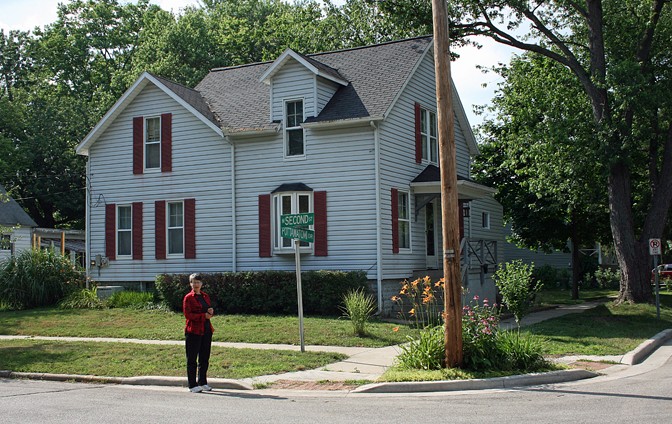
I stand outside our parsonage home on Second Street and “watch” my sixth-grade-self playing Jingle Jump on the sidewalk. I see me climbing the tree in the front yard and climbing out my bedroom window onto the roof. Playing with our dog Duke and ironing in front of the TV in the basement. Marimba lessons and finding marbles in the heat register in my brother’s bedroom and slip-sliding in the oversized bathtub and buying toothpaste because I saw it advertised on TV. My huge empty bedroom upstairs with my sister on the other side. I learned to use the telephone. Snapshots in my mind of packing for our summer trip across the USA. My mom was sick with Hodgkin’s that year, and we complained of Dad’s cooking. This is my story, my history. I’ve relived it in my mind many times.
The neighborhood is seedy now and multi-racial. The neighbor across the street came over to chat and told us the house is in foreclosure. I want so much to see inside, but it’s unsafe, he said.
My best friend Kathy lived at the end of Pottawatomi Street, and we walked the six blocks to school each day together, past a Mom-and-Pop grocery store where we bought wax pop bottles or wax lips filled with sweet liquid and candy cigarettes. We formed the TGTG club (The Glued Together Girls). She loved to stay overnight at our house because her daddy was raping her at hers, and I was too ignorant to know. She taught me to make snow angels and play king of the mountain. We played hundreds of games of Yahtzee, biked down to McDonald’s in the winter for a warm bite of hamburger and French fries.
More memories flooded in when we visited the old Grace Bible Church Tabernacle who had showered us furloughing missionaries with love and Tupperware. We met the current pastor who has a ministry to inner city dwellers. Then on to Central High School where I graduated with 900 other seniors—a huge culture shock to this African girl. I wonder what memories surfaced for my sister as we visited her high school and the home where she stayed for her senior year.
My former Samuel Strong School building now houses a business. So many memories. Open-stall bathrooms in the basement, being teased for being the teacher’s pet, volleyball in the low-ceilinged gym. Declining to be a crossing guard because I didn’t know what that was. Skating on ice on the pavement for the first time. Being teased for gifting dandelions to the teacher (Who knew they were weeds!) Kathy destroying a page from Playboy magazine she found on the sidewalk, and I had no clue what it was. Kathy wondering how babies got fed, and she was surprised that I knew (well, duh—I watched mothers nursing all the time in Africa, including in church) and me surprised that she didn’t know this basic fact of life.
We drove to the house where we lived in 1970, but though I saw the curtains moving, no one answered the door when I knocked. More memories sling their way across my brain. When we visited the house where I lived with an older couple in my senior year, the current owners invited me in. Too many painful memories to record from that year. But revisit them I must if I want to heal from them. Perhaps another day. . .
A 2023 Update. Physically revisiting a site may trigger emotions, but it’s worth it. I understand the power of letting go of the past, and over the years, I have revisited each of those memories and found healing and release. This summer our family is planning a trip back to Michigan where we raised our girls. New memories will soon overlay old ones as they share with their husbands and children what it was like where they grew up. Let the fun begin!
I struggle with the concept of predestination. Romans 9 makes it clear that before the twins Jacob and Esau were born, before they’d made any life choices, God declared that the elder would serve the younger.
Why?
To carry out God’s purpose of selection “which depends not on works or what man can do, but on Him who calls them” (v.11). God decided ahead of time. It had nothing to do with man’s choices. God loved Jacob; He hated Esau.
Question: Was God unjust to do this?
Answer: No! “I’ll have mercy on whom I want to have mercy and compassion on whom I want to have compassion” (v. 15).
Think of it this way:
He didn’t reject Esau; he just didn’t have mercy on him.
He could have hated Jacob, but instead He had mercy on him.
Verse 16 says God’s gift of mercy is not a question of human will or effort, but rather of God’s mercy. God doesn’t have mercy on me because I deserve it.
Somehow in my self-righteousness, I believe God owes me because I’ve done something right. Some part of me wants to take credit for how good I am. But I’m looking at the world through faulty lenses, not from God’s perspective. (Job’s friends made the same mistake.)
This same chapter in Romans says God raised up Pharaoh for God to display His power so that God’s Name could be proclaimed around the world. God is the Potter. He gets to choose and decide what He wants to do with the clay in His hands—the clay that He created and formed out of nothing. My part is to submit and be grateful for His mercy. Even my ability to make good and right choices is a gift from Him.
All humanity is in a big pit, wretched and blind, with sores all over our bodies, up to our waist in filth, “ripe for destruction” (Romans 11:32). God’s mercy reaches down and offers to pull us out of the pit. I am too weak, however, to even raise my arms to Him. In His mercy, He chooses me. He bathes me, puts salve on my sores, and restores my sight. I didn’t do anything to deserve His love, grace, and mercy. But once I’ve been chosen, in gratitude I pledge allegiance to serve Him with my whole heart and for always.
I see Him reaching down to pull another one out of the pit. But this one resists God’s efforts to rescue him. He wants to try to get out of the pit on his own, but he can’t. He, too, needs God’s mercy, but he blames God for the condition he’s in.
God’s choices are all about His glory and His Name:
. . . display My power, My name proclaimed (v 17)
. . . make known His power and authority (v 22)
. . . wealth of His glory (v 23)
If I view God as self-serving, arrogant, and egotistical, I become a reluctant worshiper. It feels like a power struggle, like a kid who doesn’t want to take a bath—petulant, balking, what’s-the-point, I-like-being-dirty, leave-me-alone kind of feeling. I’ll take one because I have to because you’re the parent, bigger and stronger than I am, and you have the authority and power to force me into the tub. Never mind that it’s good for me! Stubborn, arms crossed, crying, “I’ll get the water all dirty!” How foolish! I’m caked in red-clay hair, filthy feet, and body sweat.
When at last I give in, God sends a gentle shower and sweet-smelling soap for silky soft hair, moisturized skin, and scrubbing bubbles between the toes. And then He engulfs me in a gigantic fluffy wrap, gives me warm flannel PJs with feet in them, and tucks me between clean sheets.
So, what about “His Name? His glory? His power”? After I’m all safe and secure, He returns to His job—the most powerful ruler of the universe. He has work to do in His executive office, affairs of state I don’t need to know or worry about. But if I get scared in the night or need a drink, all I have to do is call His Name. It’s not that He’ll come running to meet my demands, but He’ll assess the need and respond accordingly. He knows if I’m truly thirsty, or if I just need the reassurance of His presence.
And the funny thing is, one way He protects His Name is by demonstrating to the world His love and care for His family. Moses appealed to His sense of power, authority, and reputation when God was ready to destroy the Israelites. “What will the nations think? he queries Yahweh.
God may be the most powerful force in the universe, but He’s my Daddy!
Journal 2005Visual: We all have a lot of stinky stuff inside our hearts. And we walk about with clothespins on our noses so that we won’t (or can’t) smell ourselves. But others smell us, and they’re repelled. Eventually, the clothespin pinches hard enough that we remove it, or we start to sweat and it slips off, and when we smell ourselves, we don’t like it. I think God sometimes removes the clothespin, and we blame Him or others for the stench, never realizing it comes from or own b.o.! So, we have a choice—keep the clothespin on our nose or allow ourselves to smell and get motivated to clean up with God’s help. Freedom is not having to wear a clothespin on one’s nose because the inner aroma is now sweet.
Lord, in Your sovereign timing, would You remove the clothespins I’ve been keeping on my nose? And once removed, will You help me get rid of the stench and fill me with Your fresh air instead? Lilacs and cinnamon and peppermint and guava nectar and mangos and freshly baked bread, and sweet air after a rain and roast beef and rose petals—but mostly lilacs.Amen.
2022 Update. I’ve changed my mind about the statement “I think God sometimes removes the clothespin.” He never violates our will. It is our choice to leave the clothespin on, and He waits patiently for us to remove it before He can clean up what’s inside.

























 In the Pursuit of Peace