Journal 2006
This was not my favorite day! I had my goals, expectations, and vision of an uninterrupted day to catch up on my work. It started at 4:30 a.m. with the cat waking me up, and it went downhill from there. I spent very little time at my desk, ran errands instead, met others’ needs, and ended the day an emotional wreck. No alone time and thwarted at every turn, I felt off balance, out of kilter.
How do I balance plans with interruptions? Why does it upset my equilibrium when I don’t get my way? I should have known . . . I should have anticipated . . . I should have been others-centered instead of self-centered, runs through my brain.
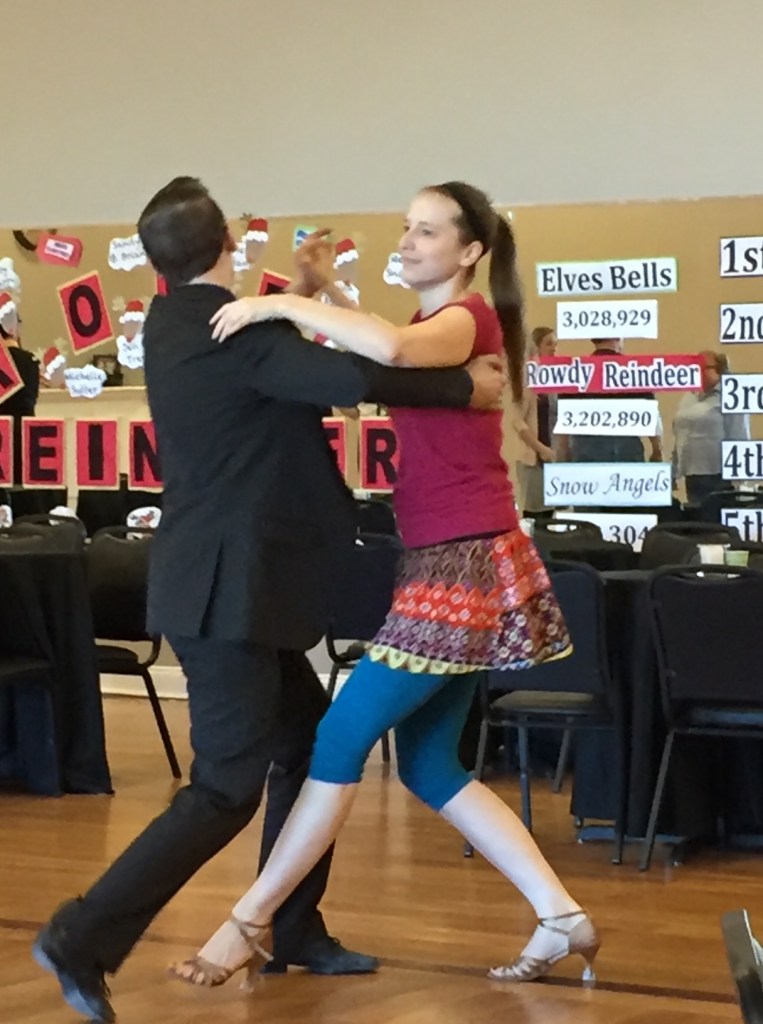
I used to have a tight control over my schedule. I was on the dance floor without a partner. I could sit on the side and play solitaire, get up and get a snack at my leisure, or sway to the music if I wanted to. I affected very few people with my decisions.
And then I got married. Having a dance partner meant I couldn’t sit down as often. Sometimes he served me drinks; sometimes I served him, and at all times we were aware of each other’s presence and needs. If we both were in the mood to dance, we did. If we both wanted to rest, we did. If one did and the other did not, we had to compromise or sacrifice. It was easier sometimes to give in than to fight over it; other times easier to think only about my own needs.
And just as I began to learn that dance, we had children. We adjusted to their varying heights and were less free to move around. I spent far more time fetching drinks for everyone and making trips to the bathroom than keeping time to the music. There was no standing still.
Next, a lot of messy people joined the dance floor asking for help. Some were unseemly characters. Others dressed nicely, but they didn’t know how to dance. Others were too weak and sick to dance. And the world of the dance floor suddenly became more complicated. While I was responding to the needs of the lonely ones on the bench or the thirsty ones in wheelchairs, my husband may have been in the mood to dance. And out of the corner of my eye, I watched one of our girls dancing her own dance with a guy. And my eyes and my heart were torn or divided or distracted or overwhelmed.
Add to that the God-element. In a fifth dimension, unseen to the human eye, the Holy Spirit and the evil one mingled among and through us, stirring us up, catching us when we stumbled, whispering lies or truth in each of our ears as we danced and sat and ate and drank.
I have a restlessness inside. Some days I just wish life would return to the days when I was a solo dancer, in control of my own decisions.
I know I must get away, and so I slip away from my dance partner, away from the tug of the needy ones, away from the vigilance on my children, and head to the balcony to drink in the night air and enjoy the stars. But just as I reach the top step, a noisy group comes spilling out of the room to join me, and the magic of the night is lost.
Instead, I find a quiet bench in the garden. I can still hear the music, and I know I can be interrupted at any time. I just want to go Home (with a capital “H”) where it’s safe, soft, peaceful, quiet. But it’s not time yet.
And so, for now, I slip further into the gardens, hiding behind a tree, hoping not to be found. But my dance partner is lonely and comes seeking me. And I set aside my own needs and return once more to the dance hall.
And the restlessness continues. It has nothing, really, to do with what’s going on around me. It’s not the people, the noise, or the distractions. It’s what’s going on inside my heart–an open door, a furnace burning inside my chest, stoked by anger. And even when I go home (lowercase “h”) the fire remains. Hot. There’s no escaping it.
In the middle of the dance floor, with my permission Jesus reaches out His hand, extinguishes the fire, and says, “Give Me the treasure of your heart.”
I’m willing, but I don’t understand—I don’t know what’s in it. Again, with my permission, He reaches into the door of my heart and retrieves a box. “Where your treasure is, there will your heart be also,” He explains. And I expect Him to take it up to heaven and deposit it under the throne. (Isn’t that what Matthew 6:20-21 teaches? “Lay up for yourselves treasures in heaven . . .”) But, instead, He places my box inside His own heart. “For safe keeping,” He says.
And now it doesn’t matter what goes on around me because I’m following my Treasure. When He says, “Dance,” I dance. When He says, “Rest,” I rest. When He says, “Serve,” I do that.
It’s not about controlling my world but about controlling my mind.


 In the Pursuit of Peace