The Odor of Heaven

Journal 2018

Your robes are all fragrant with myrrh and aloes and cassia. Ps. 45:8 ESV

We talk of the beauty of heaven and even the sounds, but seldom do I think about the anticipated smells.

I grew up in a different country than my husband. To prepare him for a visit to the land of my birth, I showed him pictures; I spoke to him in Hausa; he touched the curios I’d transported from overseas. But how could I share with him the smells of a place he’d never been to? He loathed my malodorous dadawa (fermented beans used as bouillon in tuwo da miya), but I wanted him to experience frangipani and guavas and baobab fruit. The minute he stepped onto the airline bound for Nigeria, the biggest assault to his senses was not the sights or the sounds, but the smells. I thought he’d pass out!

I can’t say that I have a favorite fragrance, but I am partial to the headiness of bread baking in the oven, the duskiness of rain approaching, or the intoxicating scent of sheets drying on a clothesline. I know little of myrrh and aloe and cassia. I can’t get excited about something I can’t relate to. The very words sound overpowering. I prefer light, fresh scents. I avoid darkly scented candles, most perfumes (including Essential oils) and heavily scented deodorants. Both my cat litter and my detergent must be unscented.

For sure, our visual capacity will increase in heaven, but will our sense of smell be different as well? I just know that there will be no malodor or distaste associated with my King’s garments. We will be drawn to it, delight in it. There will be nothing artificial or decaying or sour or bitter. It will be unlike anything we’ve ever experienced here on earth. I have no hooks on which to hang an odor I’ve never smelled before.

When we use words to describe something visual, we include a myriad of parameters: height, weight, shape, color, etc. But when we try to describe a smell, we’re reduced to one-word descriptors or similes, often connected to taste: bittersweet, salty, bland, lemony, spicy, peppery, acidic. Smells can have qualities such as delicate, overpowering, pungent, or acrid. But even those fall short when trying to describe an odor you don’t taste like pine or roses or rotting flesh.

We have associations with smell, like my mother’s cinnamon rolls, like a boy’s locker room, or like a friend’s Chanel No. 5. Our brains have smell memories—one whiff of something and we’re transported back to a time when we first experienced emotion with it. I know one MK (Missionary’s Kid) who stowed a scarf inside a sealed jar so she could pull it out occasionally to bring back her olfactory memories.

Besides a reference to His garments, I checked a concordance for other scripture references to fragrance. “Sweet smelling” is used most often in the Bible. I doubt this means sickly sweet but rather in a beautiful (a sight word), soft (tactile), pleasant sense.

  • Evil odor
  • Foul odor
  • Fragrance or pleasing aroma of Christ
  • Fragrance of His knowledge
  • Good ointments
  • Lebanon (cedar)
  • Mandrakes (wonder how they smell)
  • Of a field which Jehovah blessed: sweet
  • Of death or of life
  • Of the cloud of incense
  • Of the face like citrons
  • Of water
  • Perfume
  • Pleasant fruits
  • Pleasing odor
  • Spikenard oil
  • Sweet aromas
  • Sweet fig trees
  • The smell of battle
  • The smell of fire
  • We are a sweet fragrance to God.
  • His breath

Aroma, scent, savor, tang, reek, stench, feted, stink, and whiff—and that about exhausts the list, both in the dictionary and in the scriptures.

What’s your favorite scent and why?

A 2025 Update. This meditation is even more poignant to me after my year-long sense deprivation with COVID-19. Like a blind person who looks forward to seeing heaven’s beauty, I can’t wait to get my first deep whiff of heaven’s scents.
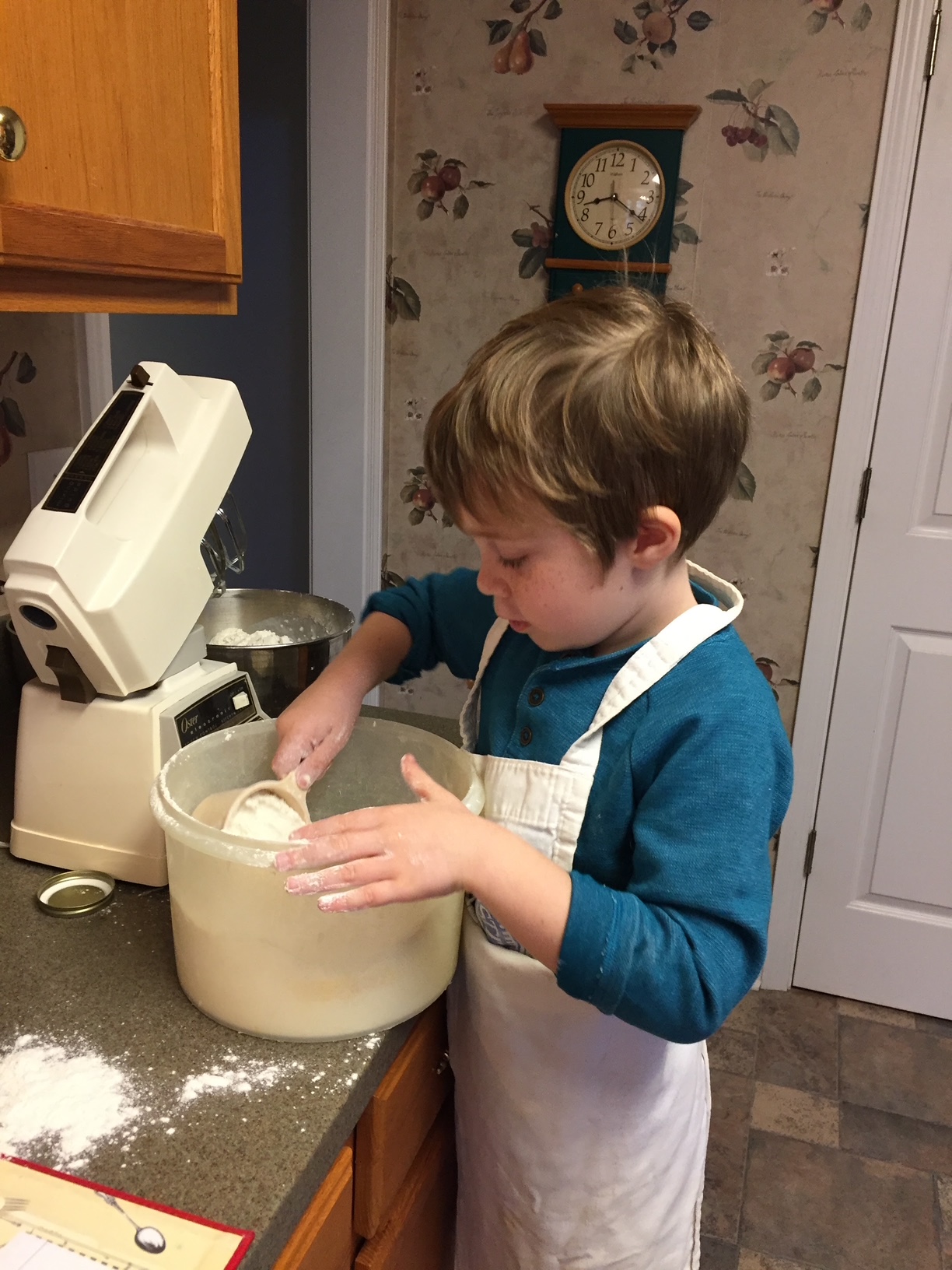

Passing on the tradition with my grandsons

Heaven and Earth

Journal 2006

In the book Heaven: Everything You Always Wanted to Know About Heaven, Randy Alcorn teaches that the eternal heaven and earth will become one, that we will live on a literal earth, similar to the Garden of Eden. But in the intermediate heaven, we’ll be aware of what’s going on (on earth) and may even pray for our loved ones.

What if heaven, the kingdom of God, is spatially here right now, in another dimension, but we just can’t see it? Many people on earth today experience a portal into another world. Characters in the fictional series The Chronicles of Narnia, my D.I.D. (dissociative identity disorder) friends, and Jesus Himself, saw/see angels and demons, the past and the future, but in a different dimension. Why can some “see” and others cannot? Is that where certain gifts of the Spirit come into play? Is it that an abused child is exposed to this portal (forbidden to the rest of us to seek it) by the demons?

In The Shining Man with Hurt Hands, Ellis Skofield tells how he worked with multiples (D.I.D.) in chatrooms on the Internet. Here’s his explanation of that fifth dimension (the model for most of us). Our mind controls our body in the material world. In the spiritual world, our spirit hears from the Holy Spirit OR is tempted by other spirits. Our spirit then transfers what it hears to our mind, where we decide to ignore or act on the received data with our bodies.

For us ordinary folks, there’s an almost impenetrable wall between these two worlds, and the Bible commands us not to try to see through it. However, mediums, satanic cults, and occultists of many stripes see through that wall all the time. Inadvertently, so do many multiples, and their ability to do so is what gives us an approach through which we can help them.

I understand the concept; I’m just not comfortable with the diagram layout. I see it more as three-dimensional, but I can’t draw it. I see the Holy Spirit inside the mind, which is inside the body; and the evil spirits dwell outside the body of the believer. But the diagram is helpful for seeing the separation of the material vs. immaterial (for now) worlds.

What is your experience with this, and how would you draw it?

Heavenly Worship

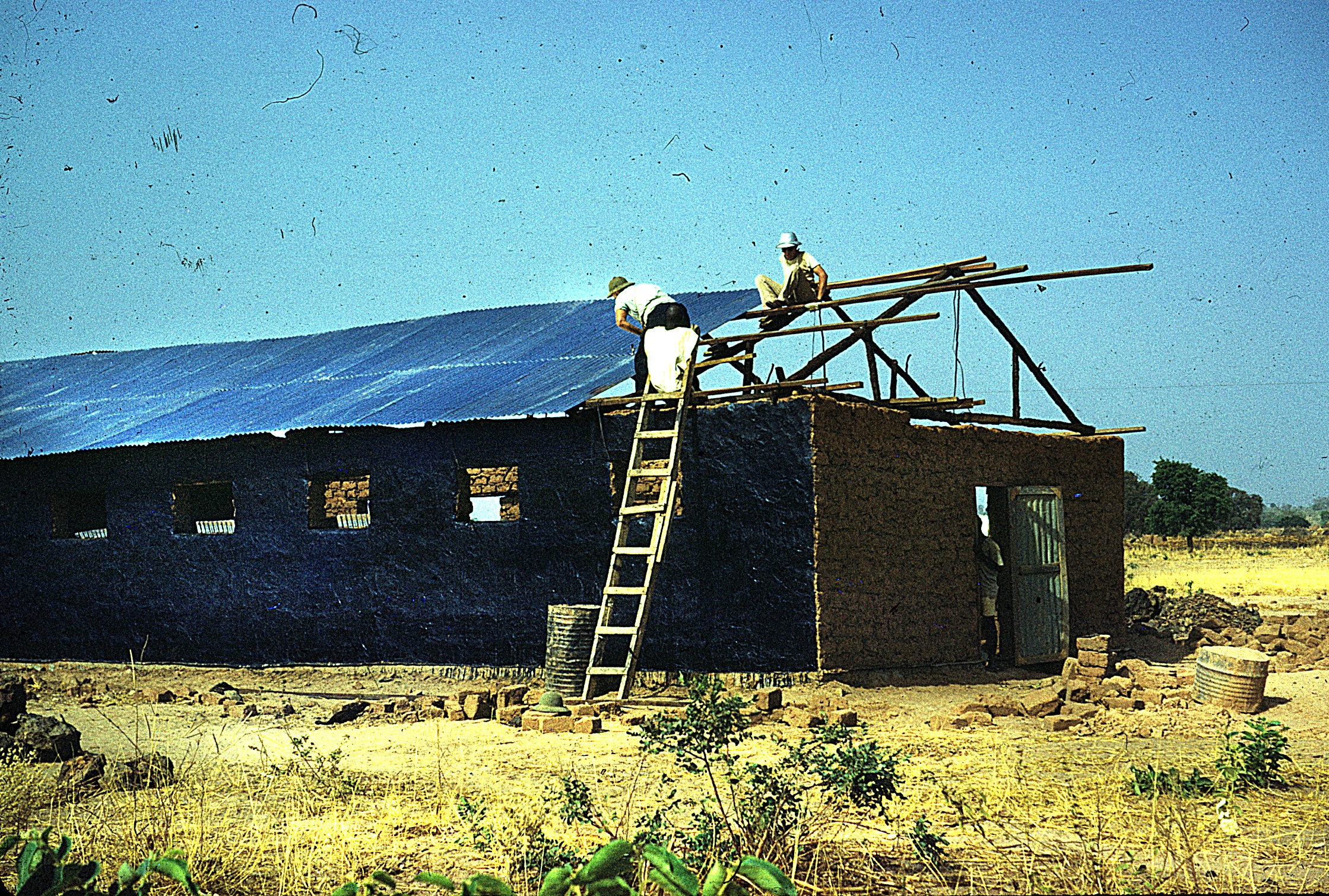
(1950s) Dad building our church out of mud brick and a tin roof. What remains in 2014 after storm damage.

From my 2013 Journal.

My first memories of church included sitting for hours on a backless mud bench, singing mostly American hymns translated into Hausa, accompanied by my missionary mother playing the accordion. Dad’s preaching would lull me to sleep if Mom didn’t occupy me with crackers. Women sat on one side of the church, men on the other, and nearly-naked children squished shoulder to shoulder on the floor or front pews. In later years, local pastors and women playing indigenous musical instruments led the joyful service.

This week, when one of my African-American neighbors died, his dear wife invited three of us white folks over to meet some of her friends who had arrived to provide comfort. They all circled up, holding hands, singing and praying—loud, long, repetitive, simultaneously. We three stood quietly apart, singing softly, joining in with our hearts. Later, at the funeral, the preacher’s sermon included thunderous shouting, huffing with each sentence, accompanied by organ crescendos and a robed choir.

I thought back to an Easter service at the Eastern Orthodox Church where I visited with a Jordanian friend. Worship included quiet a capella music and chanting, solemn contemplative rituals, and a brief homily. Beautiful icons, candles and incense completed the sensory experience.

At my contemporary interdenominational church, the congregational singing predictably goes from loud hand-clapping, hand-raising, drum-beating musical numbers with guitars and electronic keyboard accompaniment led by a group of performers followed by one quiet song before the conversational-style, 30-minute sermon.

Worship cultures . . . each with their own traditions, expectations, idiosyncrasies. There’s no right or wrong way—unless the heart and mind aren’t engaged.

And my preference? I’m somewhere in the middle—neither monkishly contemplative nor exuberantly outward in expression. Quiet suits me best as an introvert. And call me a heretic, but give me an intimate dialogue or deep conversation any day over a sermon lecture. Yet I still choose to attend churches that might not suit my personal preferences. I need the variety of the body.

What will heaven’s worship be like? In the book of Revelation, John records moments of loud and times of silence. Somehow all nations, tribes, and tongues will be unified in their worship and will enjoy Him together. I can’t wait!

Heavenly Thoughts

From my 2009 Journal. I’m at the SIM Sebring Retirement Center. These godly old missionary saints in Florida just keep giving and giving. Some give gifts of time, others of service, some of tangible gifts. Some exude gifts of beauty and grace while others serve with gusto.

I think that whatever gifts God gives us here on earth will continue to be used in heaven to serve others. What do I have to offer though? People will have perfect knowledge and won’t need me to sit and listen for hours and pray with them. Maybe I’ll get to organize the angel wardrobes or help check in the new arrivals on the heavenly database list!

What language will we speak? The same as Adam and Eve? Will we get to meet all the people we ministered to unawares? Will we go around apologizing for all the dumb things we did and said to each other here on earth? Will we grow in knowledge? I do know that we will have the full truth that answers the need of our pain. Will we experience emotion in heaven? Will we all be smart? Wear different colors or all be dressed in white?

God’s kingdom as described in Isaiah 11 and 12 sounds perfect, glorious, fair, peaceful, delightful, comfort-filled, right, and true. I long for that kingdom now. But we must wait for it with patience. My daddy longed for it. He set his eyes on heaven in the last years of his life and didn’t want to stay here any longer. Mom, on the other hand, kept her feet firmly planted on earth and refused to look heavenward till it was time. Somewhere there’s a balance. I want to live on both planes at the same time. Yes, I long for heaven, but I must be content where I am now. The Apostle Paul felt this same conflict in his soul: Heaven is far better, but for your sakes I must stay here.

The physical world of the heavenly kingdom sounds glorious. But I can experience a taste of the spiritual realm (grace, mercy, love, peace) now, carried around like a jewel inside my heart. Heaven’s treasures and resources funnel into my heart here on earth, and I can draw on that strength any time I desire or need it.

What will it be like to meet Jesus for the first time? John the Baptist experienced Him on a physical plane—he touched Him, saw Him with his eyes, observed His works, was present for the declaration of the Father’s affirmation “This is My beloved Son; hear ye Him.” John said he wasn’t worthy to unloose Jesus’ shoelaces. We tend to brag about whom we’ve touched—people like a President, the Queen of England, famous actors or singers. What would it be like to revere someone so much that it would be an honor to touch his foot?

I feel intimate with Jesus, but on a spiritual plane, not physical. How will I respond when I see Him “in the flesh”? I have no precedent on which to base my future experience. I used to think that the second you died, you were ushered immediately into the presence of Jesus. “Absent from the body; present with the Lord” after all. Now I tend to imagine there’s a process you must go through first.

Here’s how I picture it: the angels who have been assigned to you accompany your spirit to the heavenly realm. There they offer you a drink of Living Water and give you an opportunity to bathe away your earthly impurities before they outfit you in your new pure white robes—just like Joseph had to bathe and receive clean clothes and be prepared before he could see Pharaoh. And then you’re told when your appointment is, and you’re debriefed in protocol for approaching royalty. Perhaps you’re even given a tour of your new quarters and a little view of the royal city. Perhaps you’ve even gotten to spend time with your loved ones who excitedly try to prepare you for what’s to come—your first meeting with your risen Lord. The excitement is running high. You can scarcely contain yourself.

And then the moment I’ve been waiting for—the “welcome home.” And I’m way too overwhelmed and shy to approach Him—I would not dare think of reaching out to touch His royal person. I’m flat on my face like a Nigerian villager before his chief.

But then something happens. He reaches out to me; He lifts me to my feet (“The lifter of our heads”) and embraces me, and I feel His enormous, infinite love and acceptance, and I realize in an instant how many times I failed Him on earth, how many times I responded in anger or unforgiveness or self-righteousness, and lost opportunities to serve Him. And I find myself asking for the privilege of serving Him—in any capacity—just so I get to be near Him and see Him and drink in His beauty. After all, there are millions of us up here, from every tribe and nation, and we all feel the same way—we’re all falling over each other to be near this Presence.

But He asks, “Are you willing to serve Me in the royal kitchen? In the royal nursery? As a chauffeur or greeter for newcomers? As a gardener in the kingdom? As an overseer of the mansion complex? And of course you say yes—anything for You, Jesus, and with pleasure. And the work we’re given to do will be “right down our alley.” I doubt I’ll be gardening, but I might be organizing things!

How do you picture heaven?