Experiencing The Holy Spirit

Journal 2006

There’s a debate swirling around these days about the role of the Holy Spirit. Some claim that only through study of the Scriptures can we know truth; others say we experience the Holy Spirit whispering truth in our ears. I say it’s both/and. We must know the Scriptures in order to test the spirit’s voice. The Holy Spirit’s words will never violate the written Word.

Some people argue, “You can’t trust your experiences,” but I retort, “That’s all we have! Everything that has ever happened to us is our experience, and we live our lives accordingly.” My experience will be different from yours, and this is okay. The goal is to get rid of the lies we believe in those experiences.

Some would admonish us, “Don’t seek an experience,” and I think they may be right. If one person experiences a spiritual high of some sort, I don’t have to go chasing after it to duplicate it. God will give me the experiences I need. My goal is to continually seek Him, pursue Him, and look for the treasures in His Word.

A spiritual experience can come from the outside—such as a visitation by an angel. This is not something I can manipulate or orchestrate. It’s God’s doing. But experiencing God on the inside, in my mind, happens because I choose to open myself up to Him—when I choose to obey, to let go of bitterness, anger, and unforgiveness. It comes when I fill my mind with good things and not evil ones. It happens when I guard my heart against the lies and wiles of the devil. It happens most often when I spend quiet, alone time in God’s presence, just being still. It’s the place of meditation. It’s where Jesus is. It’s where God’s Spirit speaks to my human spirit.

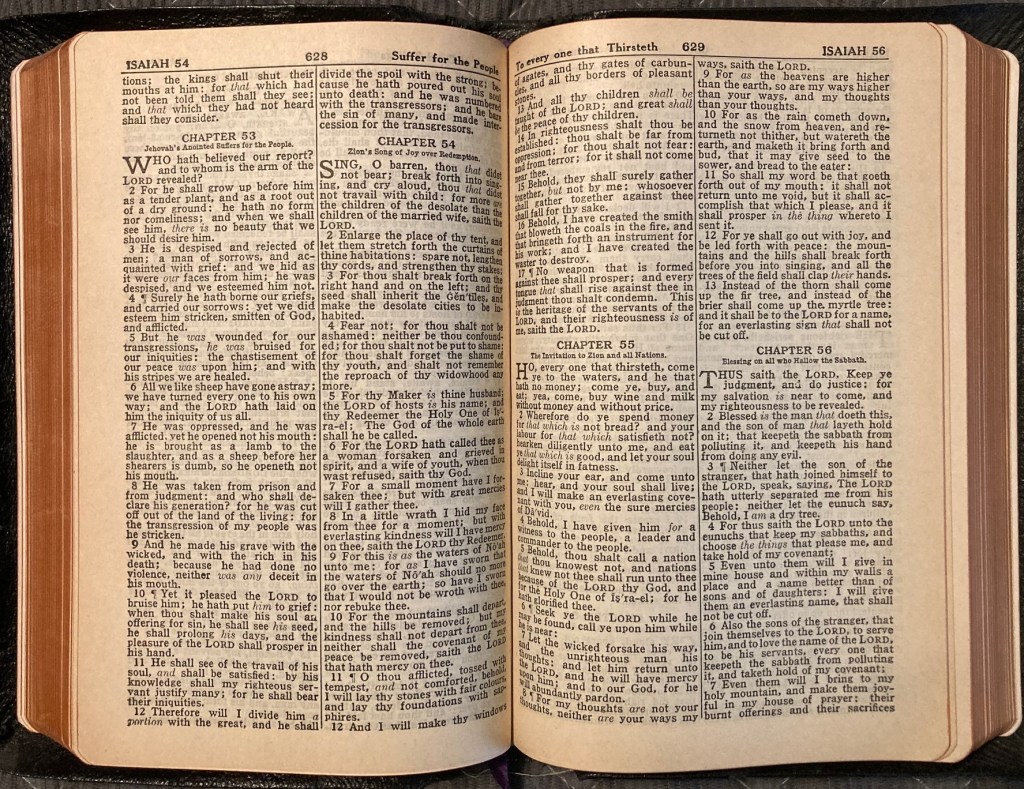
Word vs. Spirit

Journal 2005

As I study the passages in the Word about the Holy Spirit, I wonder where the balance is between study and experience. My Bible training was all academic: interpretation, dissection, exegesis. If I only have the written Word and no Holy Spirit inside to interpret them, I simply have a collection of symbols on a page, lifeless and meaningless. But if I didn’t have the written Word, how would I know what my experience meant? But Jesus IS the Word—the Living Word. He brings the symbols to life and gives them meaning. I need both.

I wonder why God chose to use words to communicate with us. Why not comic-book pictures? Or is the world itself and its experience a visual? A picture would not be reproducible in certain countries or eras. But words endure, can be passed down through the generations. Can be heard. But for those who are visual . . .  I guess God gives each of us the visuals in our minds that meet our needs the best. But then, so do words.

A 2023 Update. After praying with people for the past 22 years, I’ve come to realize how important both words and visuals are. Clients will say, “I know the truth in my head, but I don’t feel it in my heart.” What they are describing is left-brain (words, logic) vs. right-brain (pictures, emotion). Our experience comes first, followed by interpretation of the event. When I read Scripture, I’m engaging my left brain. When the Holy Spirit speaks directly to my heart (emotions), I experience the truth and it gets correctly interpreted.

The Word and the Spirit

Journal 2005

Sometimes I learn more truth through other people’s processing than I do through my own. Yesterday, while praying with a client over the phone, God answered a question for her that answered a question for me: If we have the Holy Spirit, why do we need the Bible? And if we have the Bible, why do we need the Holy Spirit?

Now, I could have given her a plausible explanation that would have satisfied me. However, it made the most sense to her when she visualized a classroom. We need both the Teacher and the textbook. A student gets information from the text—facts, history, stories, and even poetry, but she has a relationship with the Teacher. The Teacher asks and answers questions about the text; He explains, expands, and embellishes it. And how does He know so much about the textbook? He’s the author!

Holy Spirit or Evil Spirit?

Journal 2005. We are working with a lady who has D.I.D. (Dissociative Identity Disorder) and is involved in a charismatic church. She had been through numerous experiences of so-called deliverance—all very dramatic and theatrical. She allowed the demons to jerk her around and use her body, and when we commanded them to quit, they didn’t. That’s when we discovered the reason: she liked the theatrical nature of her experiences. After we dealt with that emotion, and she agreed to let it go, it was easy and undramatic to tell the demons to depart. No jerks, no manifestations. She was amazed it was so easy. And then her very telling comment: A lot of what I thought was God’s doing was actually demons. Hmmm.

I think Baptists have a correct doctrine of the Holy Spirit, but other groups have experiential knowledge of Him. I want both.