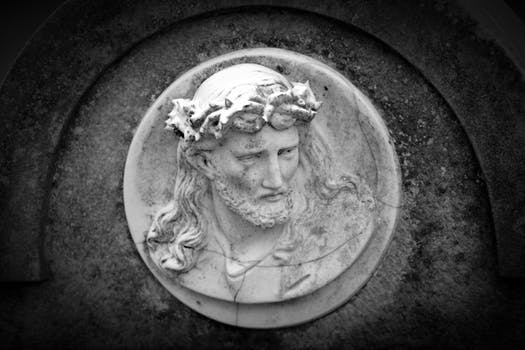
Morning Meditation

Journal 2004

Words cannot describe the love I feel for Jesus, the third member of the Trinity. He’s beside me, ever present, watching me, protecting me, surrounding me, providing companionship, leading me, following me to see where my own footsteps take me. A friend—but not casual. A perfect friend—one who loves me just the way I am, but who loves me too much to leave me just the way I am. My Friend is so enamored with me (I haven’t figured out why yet) that He saved my life. Perhaps it’s because He made me. (In a small way I understand because of the way I fiercely love my own children because they’re flesh of my flesh, and in a sense I “created” them, and they were born perfect in my eyes.)

I was falling over a cliff, and Jesus grabbed me and pulled me to safety. But in the process, He had to go over the edge Himself—willingly He did this. And when He hit the bottom, His life blood was splattered. And I remained safely at the top of the cliff, trembling for my near miss with death. And grieving for the loss of my Friend and wishing I could die instead because it was my own foolishness that put Christ in that position to have to rescue me. But in the end, I see it’s better Him than me who went over the edge, because that would have been the end of me—kerplatz, splat! And then Jesus would have been left at the top, friendless.

Okay, never mind that there are millions of others around Him—but hey—they did the same thing I did—they foolishly got too close to the edge as well, but somehow He became the safety net for all mankind, forever, all at once, and permanently too, so when they fall off, they land safely in the net, and Jesus’ shepherd’s crook gently fishes them out. And trust me, there’s not one person who ever lived who didn’t get too close to the edge and lose his step and tumble over—except of course for the babies who were too young to crawl to the edge. (They were safe in their playpens.) Oh, by the way, some who went over the edge didn’t really believe the safety net was there, and they fell right on through. Ouch.
But back to the kerplatz on the canyon floor. If that had been ME down there? Like I said, it would have been all over but the shoutin’. But not Jesus. He had the power to do what no one else could—gather up the broken pieces, mend HIMSELF, grab His spirit and put it back into His body—except that somehow, He morphed that broken, bruised flesh into something permanent and new with new powers. Now He could fly and leap over tall buildings in a single bound. And coming back up to the top of the ledge, He told me I’d never fall over the edge again.

“How come?” I asked.
“Watch,” He said. And then He flattened the terrain with a single word. No more cliff! So we began to walk arm in arm, sometimes hand in hand; and occasionally, like a gentleman, He carried me over the rough spots and the puddles. And sometimes I let go of His hand to explore something nearby that looked more interesting than what was on the path He was leading us down. But invariably, it was fools’ gold I discovered. Sigh. Better to stay on the path with my Friend, my Savior.

He’s got a big machete and can swipe away all the snakes we encounter along the way. He’s got good eyes. He always sees them first. Sometimes He points them out to me so I can sidestep and avoid them. Sometimes He warns me, but my mind is elsewhere, and I get bitten. Yikes! But He carries an antidote with Him. One drop of His precious blood from the vial neutralizes the poison.

Sometimes I see a huge mountain or obstacle in the way, blocking our path, and I get frustrated or scared or uncertain. But my Companion just laughs. “I’ve been here before,” He says. “Come, I’ll show you the path around the mountain.” Or sometimes He surprises me and says we need to climb over or through the mountain. And He shows me the hidden entrance.
And He never leaves my side. As long as I hold onto Him, His energy flows into me to keep climbing, keep trudging, feet steady. He keeps reminding me of the beautiful valley of Sonshine on the other side. Sometimes on these treks, especially through the mountain, the way gets pitch black, and I lose my orientation. But He says all I have to do is ask, and He starts to glow with His own internal light. And He lets me see the myriad points of light—angels guarding the footpath, some up ahead, and some behind. And I step forward in confidence.

My Friend is very patient with me. He doesn’t ridicule me for my doubt or my ignorance or my stupidity. I wish I could be just as good a friend to Him. “But then, you’re not God, are you?” He smiles. “So quit looking at you, and keep your eyes on Me. I know what’s best for both of us. I’ve been to the other side, and I know the journey is worth it. Come on; let’s keep walking. One step at a time.”

There are no words to describe this Friend of mine. I love Him, and He loves me. And that is enough.

I stand, I stand in awe of You

Relationship with the God of Habakkuk

Journal 2018

In the book of Habakkuk, I read about the mighty power of the God of the universe and how He is coming to uproot and decimate wicked nations, churn the sea, flatten mountains, and cause the whole earth to go silent at His Majesty. How can I deign to have a relationship with such a deity? Surely it’s all one-sided. He holds all the power, the glory, the omniscience. I am less than an ant in his sight, powerless, useless, puny and lowly. How does an ant have relationship with a giant? Yes, Jesus came down to the ant’s level for a time, but He returned to His glory, His Majesty, His omnipotence. He is no longer bound by an earth suit.

Yet when I visualize Jesus, I see Him in earthly form. When I try to relate to Him, I don’t see Him in unapproachable light. And when I try to picture the Father, I have to bring Him down to my level of comprehension—like a compassionate grandfather figure who enfolds me in His strong arms of love and protection. I am not capable of seeing Him in all His glory. Our minds were not given that capacity to truly experience Him and the truth of His existence. I feel so … I am so …. unworthy.

I do not want to give up the intimacy of seeing God through my earthly eyes. Is it wrong to picture Him this way when, in truth, He is far beyond my capacity to imagine? There’s a tension of longing and desire to know God for who He truly is, but I don’t think the human body is capable of comprehension of the divine. I accept it by faith. I sense no judgment or condemnation for using earthly visuals to describe the infinite. Jesus did it. He’d say, “The Kingdom of heaven is like …” and then use an earthly illustration for his disciples to grasp the intangible. Jesus is like a shepherd, a door, bread for life, a friend, a brother, a king. But metaphors fall short of reality.

How do you picture God?

A 2025 Update. I recall a story I heard from the pulpit about a father who came upon his little boy hunched over his box of crayons.

“What are your drawing?” asked the father.

“I’m drawing a picture of God.”

“But no one knows what God looks like,” his dad said.

“They will when I’m done,” the boy replied.

Joyful Jesus by Jechoon Choi, https://www.dgraphicartsdesign.com/

Finding Jesus

Journal 2006

Philip Yancy in his book The Jesus I Never Knew suggests that we get a false view of Jesus from our exposure to false teachings, life experiences, and poor examples. Perhaps my view of Jesus is slightly off-center I realize.

I watched the movie Anna and the King last night. The King of Siam has Christ-figure elements about him. His eyes are gentle and kind. His self-sacrifice for the sake of his wives and children. Room in his heart for one more. Of course there are major flaws in this analogy since he is human and a Buddhist, but there’s something about his character that draws me in, makes me sit up and take notice and love him.

Because I’m married, I can’t relax around most men—my heart stays on guard. But I’ve encountered three men in my life who make me think “Jesus.” One was a relative, one a friend, and another a stranger. Each had that quality or air that made me want to sit at his feet and learn.

Jesus is not my human daddy; He’s not my human husband; He’s not the King of Siam, a friend, or a relative. Who is He then? How do I picture Him? Am I afraid of Him? Is this why I need to come to Him as a little child, trusting, unself-conscious, needy, desiring to sit in His lap and be held …?

The verse in Isaiah that says there is no comeliness about Him that would draw us to Him trips me up. Of course that refers to His human form or perhaps to His battered body on the cross. But what if I could see Him in His risen, shining, radiant beauty? Would I be drawn to Him then?

I can approach Jesus and talk to Him about anything, and He doesn’t get angry or defensive or push me away. He listens with patience and waits for me to quit struggling, to relax and trust Him.

So how can I see Him? Many clients report seeing glorious revelations and pictures in another dimension. I visualize nothing. I have no inner landscape, no other world, no Land of Narnia. (How does one get to Narnia anyway without a wardrobe?) How does one get to see the face of Jesus? In the final scene in Finding Neverland, the playwright tells little Peter he can visit his deceased mother any time he pleases.

“How?” Peter asks.

“Just believe,” he says.

Just believe? How do you do that?

“Through the eyes of faith,” you might tell me.

But what is that? Give me more than words. Give me an experience. Give me a heavenly vision.

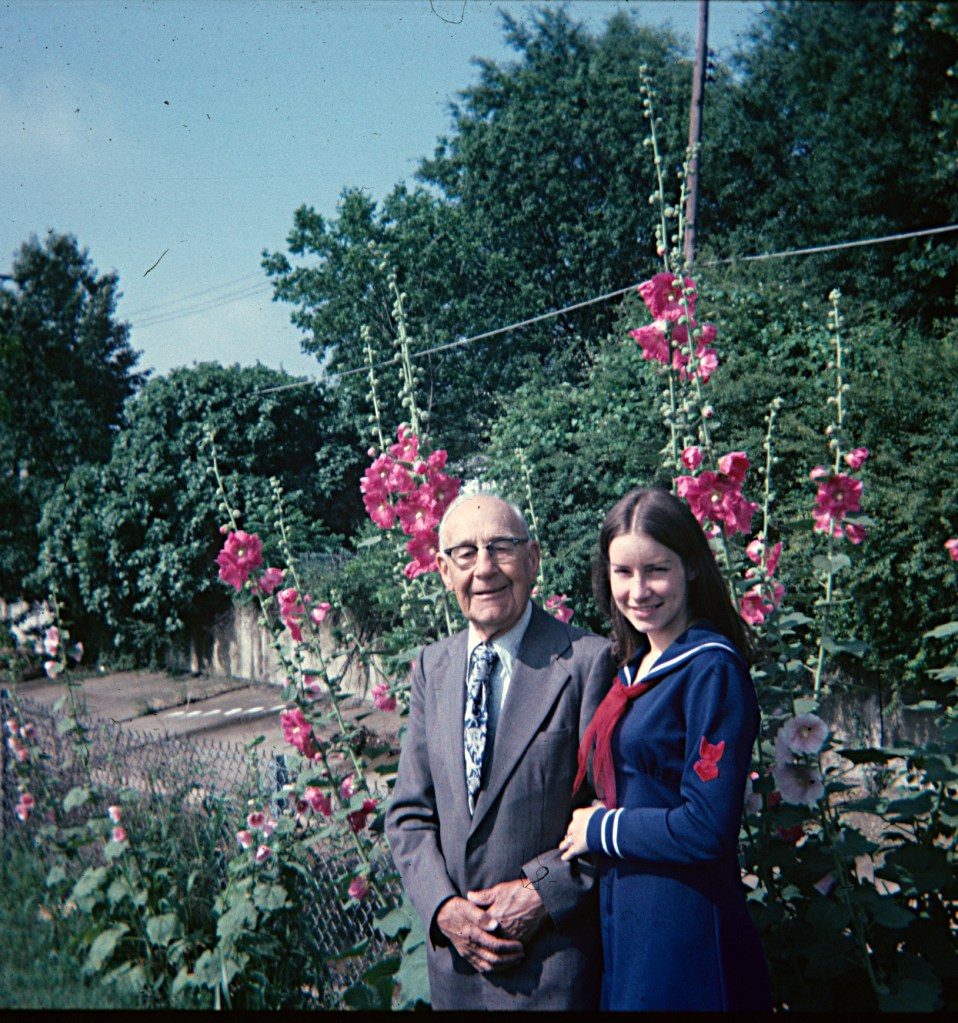
Without that, I return to an earthly example. I see Jesus in the eyes of my Grandpa Peterson. His gentle, kind eyes model for me what it feels like to come to Jesus as a little child and feel warmth and unconditional love.

It’s Not About You

From my 2012 Journal. After a client processes a painful memory, often his or her response is, “I feel so much better” or “the pain is gone” or “I feel lighter.” So it’s a little startling when someone comes out of a session exclaiming, “Jesus is so wonderful!” or “God is amazing!”

These words remind me a little of the responses from those whom Jesus healed while on earth. I suspect more of them exclaimed, “I’m healed!” or “I can see!” or “I can walk!” or “My leprosy is gone!” Very few responded with “What an amazing Healer!” This is not a criticism, but an observation. We most often respond based on how something affects us. It’s human nature.

In 2009, Angus Buchan, a South African evangelist, had a heart attack while speaking to a large crowd, and he was air-lifted away to a hospital. Feeling helpless, he heard God say, “It’s not about you, Angus. You’re just the messenger.”

Holocaust survivor Corrie ten Boom said that at her funeral she wanted nothing to be said about her—only about Jesus. Honestly, I’m not there yet. I want to hear what people would say about me at my funeral. Even in death, apparently, I want the spotlight to be on me. I pray that by the time I die, I’ll be ready to fade into the shadows and put Jesus center stage. After all, it’s not about me, but about Christ and what He did.

Photo by Marcelo Jaboo on Pexels.com

BOXES OF PRAYERS

Each prayer is like a seed that gets planted in the ground. It disappears for a season, but it eventually bears fruit that blesses future generations (Mark Batterson in Praying Circles around Your Children).

From my 2009 Journal. As I continue to struggle with the concept of prayer, I can see myself seated in the middle of a room, conversing with Jesus. A large number of boxes line the periphery of the room. What are those? I wonder.

Boxes 2

“They are your prayers,” He says. “You had a question about them?”

How did He know? (Well, duh. He knows everything.)

“Yes,” I say. “I want to know what good are they?” They’re in files, categorized and maybe even numbered, but here they all sit, here in my mind. What good are they? I can go to a box, pull out a file, read what I wrote, but so what?

“Would you like Me to take them off your hands?” He asks.

“Sure. You’re welcome to them.” I have no clue what He’s going to do with them, but I agree.

Several angels enter and start picking them up, loading them onto carts, and removing them from the room.

“So now what?”

“Just sit and talk to Me,” He says.

“What shall we talk about?” I ask.

“Anything we like,” He responds. “Got anything on your mind?”

Nothing comes to mind.

“Okay,” He says. “Want to play checkers?”

Really?! This is the answer to my question “What good are they?”

“Do you trust Me?”

“Explicitly,” I reply.

“Then don’t worry about it. The angels know what to do with them.”

I watch as one angel pulls out a file and reads the contents. He laughs. Is he mocking me? Was it a silly little prayer that I tucked into that folder?

“Not at all!” responds Jesus to my thoughts. “It’s giving him something to do. He has an errand to run and delights in fulfilling my commands.”

“Your commands?! But that was my prayer!” I exclaim.

“But you gave it to me, didn’t you? You said you trusted Me with it. Now it’s mine to do with as I please. Some of the prayers will get dispatched immediately. Others need to stay in the box a little longer—it’s not time yet. A few of these files don’t belong there. We’ll sort them out and discard the redundant ones and the soiled ones. (We will replace those with clean copies before they’re dispatched.) A few we’ll just toss in the fire if you don’t mind.”

“Mind? Of course not! I trust You to figure out which is which.”

“Good,” says Jesus. “Your move.”

I mull over what He’s just told me. “So I don’t need to figure out what to pray or write down? Just do it, file it, and keep handing the boxes off to You?”

“Yep, that’ll work.”

“Jesus . . . thank You.”

“You’re welcome. You still have a question?”

“Yeah . . . does a bigger folder get more attention than a smaller one? For example, if I pray for someone once, it creates one sentence on one sheet of paper and makes one skinny file. But if I pray for someone daily, their folder gets stuffed and may even need a filing cabinet to hold them all.

I sense at once that no single piece of paper gets lost. But . . .

“So what’s your question?”

“Do You give preference to bigger files?”

“Do you trust Me?”

“Yes, of course.”

“Really?”

“I think so.”

“What would happen if this room burned down and all the boxes were gone?”

“It would feel like a waste.”

“But what if one paper survived? What if it was made of an incorruptible material?”

I raise my eyebrows.

“What if that one item was your heart? Prayers are important enough, but it’s your heart that I care about even more.”

“Wow!”

And all this time my focus was on how many prayers I prayed, how long I prayed, what I prayed—all the “shoulds” and “supposed tos.”

There’s no should in a love relationship.

Why Have You Forsaken Me?

cross

Around three o’clock, Jesus cried out with a loud voice, “Eloi, Eloi, lema sabachthani?” which means, “My God, my God, why have you forsaken me?” Mark 15:34 (NET)

From my 2016 Journal. A victim often asks the question, “Where were You, God, when the abuse happened?” In my experience, God seldom answers the “why” question immediately. Generally, there’s an emotion (often anger) standing in the way, behind the “why” that needs to be addressed first.

I believe it was Jesus’ humanity speaking when He asked, “Why have You, Abba Father, forsaken Me?” In my opinion, contrary to many preachers and songs that claim that the Father turned His back on His Son, God had NOT forsaken Him. Never! But in this moment of extreme physical torture, head throbbing from thirst, body in tatters, fighting to breathe, bruised and battered, His back on fire as it rubbed against the wood, three hours felt like an eternity. One minute would be more than the average man could handle. Minute by minute agony, waiting for the end to come. Wishing it to just be over.

Jesus had intimate communion with His Papa all along. He’d wrestled with His own will just twelve hours earlier and submitted to His Father’s plan. But in one’s pain, it’s hard to focus, to think, to use logic. The focus is all on the removal of pain.

“Where are You, Father? I can’t feel You near. I can’t see You or hear You.”

The abused take it a step further: “You could have chosen to stop it and You didn’t; what kind of a cruel God are You, anyway?”

Jesus’ anguished cry could not include sin or blasphemy or lies. “Why have You forsaken Me? It FEELS like You have.”

Jesus is quoting Psalm 22. The words, “My God, my God, why have you abandoned me?” are only the first few words of verse one. The rest says, “I groan in prayer, but help seems far away.” (Note the word seems.)

Verse 19 declares, “But you, O LORD, do not remain far away! You are my source of strength! Hurry and help me!”

Jesus knew the whole Messianic Psalm by heart. It’s a Psalm of agony and truth, but it ends in triumph. Jesus knew this had to be His lot in order to fulfill prophecy.  He did not have the physical strength to quote the entire Psalm, but He could begin it, and those Jews who heard it would immediately recognize its source and be able to fill in the rest.

The abuse victim cries out, “Where were You, God? Why did You forsake me?”

And the Father gently replies, “I was there all along.”

To Pray or not to Pray

From my 2016 Journal. A conversation

Karen: There are a lot of people out there who need my prayers.

Jesus: (with raised eyebrows) Oh really?

Karen: Well, isn’t that true? We’re taught, commanded, instructed to pray.

Jesus: (smiles) True. But that’s not why you pray.

Karen: It’s not?

Jesus: You pray because you love Me and I love you. It’s not a duty, a job, or a task to fulfill, a checklist to complete. People don’t need your prayers. I’m quite capable of taking care of them.

Karen: Ouch. Yes, Lord.

Jesus: I just want you to be with Me. I’ll guide your mind. Talk to Me about these people who are on your heart. I will listen, and I will consider your requests, but I know what’s best, and My will shall be done on earth as it is in heaven. I know your concerns. I know your thoughts before you even express them. But spoken words are important. “Believe in your heart and confess with your mouth.”

I have been a lifelong student on the subject of prayer and have met many who are skilled at verbalizing their prayers, but I have yet to meet anyone who believes they have mastered the discipline of an inner prayer life. Tell me what you’ve learned on your journey of intimacy with God.

Prayer

Mountaintop Experiences

DSCN3170 wilderness mountain

The Transfiguration (Matthew 17)

One day Peter, James, and John, closest earthly friends of Jesus, climb to the top of a high mountain. They’re dirty, tired, sweaty, hungry, and thirsty. The journey is long and arduous, and they are clueless as to why Jesus is leading them here. It’s nice to be away from the pressing crowds, though, where it’s quiet and they can feel the wind and have time to think about all that’s happened so far. It’s a high mountain, and it takes all their energy to climb, and they wonder when they’ll ever reach their destination. The privileged three might miss their families, but it’s exciting to be singled out to spend quality time with their Rabbi.

And then it happens—Jesus’ transfiguration, meeting biblical heroes Moses and Elijah, the enveloping brilliant light cloud, the very voice of God in their ears. It’s overwhelming, it’s exhilarating, it’s terrifying, it’s unique in history.

But this mountaintop experience is not meant to be the norm—in spite of Peter’s suggestion to create shelters for the three of them. This was a once-in-a-lifetime experience, and they are not permitted to share it with anyone—at least for now. This is a “between me and God” holy moment—it’s nobody’s business but theirs. And there’s a purpose for it—maybe to strengthen their faith or to give them courage or enlightenment. Maybe Jesus is bursting with excitement and wants to share His true story experientially with His best friends.

And now it’s time to come down from the mountain. They can’t live there, but it’s now part of their story that shapes how they think and feel. They are different for having experienced it. And when the time is right (after the resurrection and not before), they will be given permission to tell others—it’s a testimony—both theirs as a witness and a verification of who Jesus is.

What mountaintop experience have you had? Did you tell someone, or have you kept it between you and the Lord? Why?


Jesus, the Gentle

When two people meet, there is an exchange of energy. There are life-givers who release energy into your soul, and others who receive energy from you. (Blessing the Spirit, by Gunter and Burk, p. 7)

Hug

From my 2007 Journal. I have experienced a gentle touch and an encouraging word from a friend. It feels good, comforts, calms, soothes, draws me in, relaxes, releases tension. It’s lightweight. Jesus’ touch is like that. You want more. You want to stay there where it’s smooth and soft.

In my grief today Jesus told me, “I’m a gentle lover.”

The opposite does not feel good. Harsh, hard, repelling, forceful, pushy, annoying, irritating, pesky, jangling, heavy, recoiling, repulsive, hurts, makes you steel your nerves. That’s what hate-filled words feel like. They are a physical force and a spiritual attack.

Jesus the Gentle. Lover of my soul. I want to be more like Him.

Perception Correction

When I was a little girl growing up in Africa, all of the Sunday school papers that arrived from the U.S. depicted Jesus as white, Caucasian. That seemed quite normal to me till one day my white friend’s mom handed me a stack of black-and-white Bible story photos to color for her children’s class. The flesh-colored crayon just didn’t seem right for Jesus’ face, and so I chose brown.

How do you perceive Jesus? What does He look like to you? We know HJesuse was Jewish and probably had dark skin and dark eyes (darker than I am, lighter than the Nigerians). Do Africans see Him as black? Do Asians picture Him as having their skin tone? In our prejudices and comfort, do we view Him as being culturally the same as we are? Would I identify with or be drawn to a black Jesus? An Asian Jesus? Would a Hispanic view Him as a God of love if He were Caucasian?

Does it matter how I picture Him? In heaven will we all see Him as He really is? Or will we each see Him differently through our own eyes? Personally, I think we’ll all see Him the same—because we will know the truth. Race will no longer be an issue. And we’ll all share a heavenly culture.

Visual: On earth, it looks like each culture is separated into different rooms or cubicles. We can visit each others’ rooms if we like. We can even marry or be adopted into different rooms. But the groups continue to remain segregated for the most part by race or culture.

But in heaven? There will be no partitions, no walls, rooms or cubicles. Just unity. Why? Our focus will no longer be on each other. Our focus will all be on Him. Why not start practicing that now?