Lessons from Moses 3

Journal 2006

Moses’ Prayer

After Moses finally agreed to obey God, return to Egypt, and ask Pharaoh to let God’s people go, Pharaoh refused and made things worse for the Israelites. And Moses began to whine to God:

WHY have You dealt evil to this people?

WHY did You ever send me?

YOU haven’t delivered your people at all.

If God commands, and I obey, and things get worse before they get better, this is normal. Perseverance, endurance, and overcoming all require faith—especially when it gets darker.

When I’m in pain or distress, it’s hard to hear the Lord’s voice. Often my first response is to blame God for my predicament. After all, He’s the King of the Universe, capable of stopping it. But when I’m angry or belligerent, God rarely answers the question “Why?” Instead, He defends His character. “You are ignorant, O foolish man. I am the all-knowing. You don’t know what you’re talking about.”

I pray that in my hour of trial I will be an overcomer and remain faithful and not accuse Him of withholding His love. I feel so weak. It’s easy to trust God when there’s food on the table and my health is good.

Moses’ Anger

I wonder what ticked off Moses. Was he taking on the burdens of the people he was supposed to free? Was he mad that Pharoah wouldn’t heed his warning or obey his bidding? God doesn’t tell Moses His whole plan. He only reveals one plague at a time, and each time Moses probably thinks, “Okay. NOW he’ll let us go.” Did Moses take on the responsibility of making Pharoah budge? And when he wouldn’t, did it make him mad? I can sure identify with that! I’d like to see a few people budge!

So how do I respond when I don’t get my way? Can I trust that God has the situation under control? That He can move in the hearts of men to accomplish His will?

Moses’ Worry

God gave Moses a huge responsibility: lead a million people through a desert with no water, no food, and only armed with a memory full of miracle experiences. Everyone who had a problem came to him for a solution. What a heavy burden! Did God give him daily advice? Or did He only speak at the big crunch times?

Where do I turn when the tough times come? I can work hard to build my resources and slip backward. I can sit back and not work yet move forward. I could lose my health, my home, or my livelihood without warning. Is God on the throne if a tornado wipes us out? If the breadwinner dies?

When it happens to someone else, it’s just a story. When it happens to me . . .

Worry is a large, tangled ball of string with fear at its core. How do I get through that energy field of worry, through the tightly woven string ball to face my fear and replace it with peace?

AI-generated

Pain and Prayer

Journal 2006

I think I absorb more of the pain from the world than I realize. So, just for today I want to lay each request, each burden, at God’s feet rather than carry them myself.

I visualize each person or organization I pray for as a domino on God’s tray. Some stand straight, some lie on their sides, and others lean over the edge. But all are in God’s hands. And like a butler balancing an assortment of goodies on a tray, so God carries the world—His world—in His capable hand. And I, the child heir, can skip along beside Him, knowing that He has all things under His care and control. I’m free to watch Him or join Him in His work, or I’m free to run off and play. And sometimes I do one and sometimes I do the other. But it’s no longer my responsibility. It seems silly for the child to point out mishaps and misdemeanors to the butler. He’s well aware of them, and it’s His job to wipe up the spills.

So, what is prayer? Prayer is tugging on the butler’s hand. When He leans down, I whisper in his ear: “I’m scared. Did you see that? Can You help me with my homework? Can You help my friend Susie who fell and scraped her knee?” And He smiles and nods and comes to the rescue. I’m too little to do a grown-up’s job.

Image AI generated

Was Paul Codependent?

Journal 2017

I call God as my witness . . . that it was in order to spare you that I did not return to Corinth. (2 Corinthians 1:23-2:4 NIV)

If the Apostle Paul had shown up in my counseling office, I wonder what I would have said to him? He says he chose not to return to Corinth “in order to spare them.” But it sounds more like he was protecting his heart. He claims he stayed away from the Corinthians out of love for them, but in the same breath he admits: So I made up my mind that I would not make another painful visit to you. For if I grieve you, who is left to make me glad but you whom I have grieved? In psychological jargon, we’d say this was a codependent statement.

This giant in the faith, who faced torture and rejection and beatings and jail time and hardships and the burden of fulfilling God’s call on his life had triggers a-plenty. Why am I surprised? In other passages, he freely admits his short-comings, inadequacies, struggles, and fears.

I’ve been taught that Paul’s writings were inspired (not doubting that) but I think most of my life I’ve also been taught that, as a result, everything he states is truth. But was Paul being true to his own heart? Was he really staying away because he loved the Corinthians . . . or was he protecting his own pain? We don’t know of course. We only know his words.

Now . . . maybe it was wisdom to stay away—why go where he’d be rejected? But that never stopped Paul before. Why does it bother me to think that Paul MIGHT be triggered? Or does it bother me that I’m questioning his heart?

All Scripture is inspired, but not all Scripture is instruction. Sometimes it’s history. II Corinthians is a letter—it records what Paul wrote to a specific group of believers in a specific time period. It was instruction to THEM.

Here’s where discernment is necessary. How do we know what was divine doctrine vs. a reflection on local culture? Who gets to decide? Some sects of Christianity wear hats or head coverings. They want to obey the Scriptures in all things. But others believe wearing a head covering was a cultural issue and doesn’t make one spiritual.

What about instructions to Timothy? Qualifications for a pastor preclude women being in leadership (or do they?) Is that God-ordained or cultural? Who gets to decide? If we release all outward show or behavior as a non-issue and listen only to the heart, does that answer the question: it’s not whether male or female is in charge but where the heart is? [NOTE: check out Bill Rudd’s book Should Women Be Pastors or Leaders in the Church? Very insightful!]

I’ve been taught the New Testament as law and less about heart. Rules to follow instead of relationship. Does that make everyone a law unto themselves? Where do we draw the line between biblical mandate and godly principle?

Apparently the Corinthians were living in sin, full of factions, and accusatory of Paul being boastful, having no authority, and being a burden to them. Much of this letter is self-defense on Paul’s part. He ranges from sarcasm to humility.

We (or I) have placed Paul on a high pedestal of sainthood, like he could do no wrong after his conversion. He’s earned our respect for his position, perseverance, and persecution. But I’ve never heard anyone preach about his character flaws. Paul’s defensive self is in full battle gear in this letter. You can feel the anger and hurt from the Corinthians’ false accusations. Does my respect for Paul slip just a little as I read this letter? Or should I excuse and defend him for what he says?

Should Paul have defended his position as an Apostle? Did he have a right to confront the Corinthians about their sin? Of course. But Paul was not perfect. His choleric nature is showing. I’m curious if his letter convicted them or shamed them or made them dig their heels in even deeper?

What would this letter have sounded like if Paul had dealt with his hurt before responding? Would it have had the same impact on the Corinthians? Self-defense can be idolatry. It is substituting self for God. But does God forgive us? Of course! Our sin is under the blood. But there is a better way—let God be our defense. God can use my hurts and my defenses to accomplish His perfect will. But if I have a choice (and I do), I’d choose His defense over mine and healing of the hurt over carrying the wound around in my heart.

So, here’s a question: if someone wrongs me, should I confront them? Do I need to? Or can I deal with my hurt and overlook the wrong done? If I’m at peace, my motive for the confrontation changes. Then it becomes not about protecting my pain but about what is best for the other person.

It’s really hard to be reasonable when one is triggered. So how does it look to others when MY triggers show? Do they offer me grace? I hope so. And, in turn, may I be gracious when I see others triggered. I guess I can cut Paul some slack if he’s a little codependent.

The Death

Something died inside

The day he said, “Do not.”

The end of a dream,

The end of her world,

Joy and light slipped into oblivion,

Trampled under the heavy-footed boot of disdain.

She did not cry,

No tears were shed,

Only a sorrow too deep for words.

A loss,

A mourning.

Her precious gem,

Her jewel,

So carefully crafted, loved and cherished,

Crushed beneath his careless words.

Dead, gone, to be no more . . .

A vow? Perhaps.

She’d never do that again—

Not cast her pearl before the swine—

Just keep it to herself,

Not to be shared with him.

What next?

Pile high the dreams on funeral byre

And let them float on down the stream.

Released.

Good-bye.

Empty-handed, return.

Now what?

Wait.

Hold your apron, Maiden,

And let the Master

Fill your skirts with gold,

Solid, precious, overflowing stones of worth.

No man can crush My words.

They’re not gone, forgotten, disappeared—

They’re there within your heart!

Journal April 2, 2005. A memory healed.

Journey Through Pain

Journal 2005. At the beginning of the century, an infected tooth sent inflammation raging through my body. I didn’t know the source at the time, and it took three doctors to help me get it under control. Vioxx makes my ears ring constantly, and I’m about to try Celebrex instead. I wonder how I’ll respond to it. Right now, I’m relatively pain-free—as long as I don’t overdo. Hands, feet, eyes, and back are the weakest.

I want to record my journey with pain, and I start while I’m feeling fairly well. I know my perspective will progressively change over time—just as emotional healing changes us inwardly. Right now, I want to avoid pain. It gets in the way of my to-do list, but I don’t want to be dominated by it.

I don’t want to be a whiner or a complainer. I don’t want to be a baby, but I also am no hero when it comes to pain endurance. I’m quick to run to relief wherever I can find it. I don’t want the attention or focus to be on me, but when I’m hurting, I need to let people know so that they don’t expect too much of me. I pretty much want to be left alone to my misery. Chronic pain vs. temporary seems different, however. If it’s temporary (like a cut finger or the flu), I’ll tell all. If it’s chronic, I’ll keep my mouth shut unless I know a solution.

I don’t want my life to revolve around my health. But if I were sick with cancer, it would have to. That’s where my focus would lie. In my emotional healing journey, I’ve allowed myself the luxury of focusing on the pain so I can get through it and past it. Why am I so reluctant to do the same with the body? It’s so temporal—yet it is the vessel God gave me by which I function. What good does it do anyone if I’m in bed? Guess I’ll cross that bridge when I come to it.

A 2022 Update. Today I am off all medication and doing much better. Unfortunately, in 2016 a bout of shingles attacked my right eye, and I’ve battled flare-ups once or twice a year ever since. But I’m not in pain, so all is well. I’d prefer not to have to learn any more pain lessons, please.

Overwhelmed

From my 2015 Journal.

If I let it, the news this week could leave me feeling overwhelmed:

  • Earthquake in Nepal
  • Flooding and tornadoes in Texas
  • Riots in Baltimore
  • Beheadings in Syria
  • Shootings on campuses
  • Starvation in India

Meanwhile, I go about my sheltered, stress-free, cushy life. Catastrophes in other parts of the world don’t affect my daily life and decisions. If they did, I’d be the one in crisis and I couldn’t function. If I don’t feel pain when you’re in pain, that’s a good thing. I don’t want a doctor operating on me when he has a broken arm. I need him to be healthy and well.

For two full days this week I listened to three abuse victims’ agonizing sobs. They weren’t in any physical danger, but they believed they could not go on living. Was I compassionate? Yes, of course. But I did not absorb their pain. It’s not healthy or productive for me to do so. That’s Jesus’ job.

Whose pain have you taken on that doesn’t belong to you?

Does God Feel Pain?

God touched Jeremiah’s mouth and said, “Behold I have put My words in your mouth.”

From my 2009 Journal. The book of Jeremiah is his story, his testimony of how God spoke to him and called him to action. It includes strong imagery about the relationship between God the Lover and Israel who spurned His love.

  • I broke your bond and yoke to free you, but you shattered and snapped the bonds with Me.
  • I planted you, a choice vine, wholly of pure seed. But you turned into degenerate shoots of wild vine.
  • You wash yourself with much soap, yet your guilt and iniquity are still on you. You’re spotted, dirty and stained.
  • You’re like a female camel or donkey in heat! (Lots of lovers).
  • The images go on and on.

Donkey

God will not interact with everyone the same way. He’s too creative for that. But we can glean principles from Jeremiah’s life, truths that apply to us in this generation. It struck me today that God the Father experienced pain, rejection, and abandonment long before God the Son experienced it on earth. I want to live my life in such a way that I don’t ever cause Him pain, but I’m forever grateful that Jesus took all my pain onto His own body on the cross. 

Chronic Physical Pain

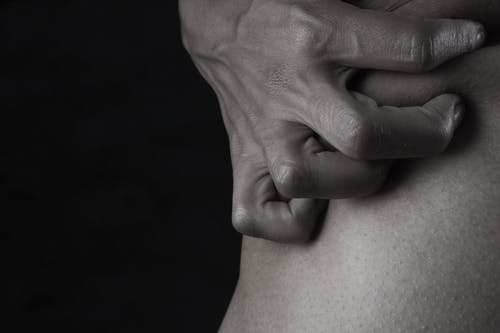
Pain pexels-photo-922436

From my 2009 Journal. I have learned a lot about handling physical pain through observing my friends who live with chronic conditions.

Friend #1: Rarely offers information, but will willingly answer my inquiries about her health. One day I asked her why. She said, “My mom was in constant pain and everyone knew it because she told you so . . . constantly. And I determined not to be like her.”

Friend #2: Occasionally mentions her chronic pain but never complaining, always enduring. “People don’t like to hear about your pain,” she observed. “I WILL praise God in the midst of it.”

Friend #3: Uses what she’s learned to teach others. “I have learned from my pain; now let me teach you. God is enough. He gives me strength.”

Friend #4: Everyone knows about her pain—because it’s the main focus and topic of every conversation. “Why doesn’t God do something about it?!”

Since I have not been tested yet in this area, I wonder how I will respond someday when it’s my turn?

Lessons from the Shingles

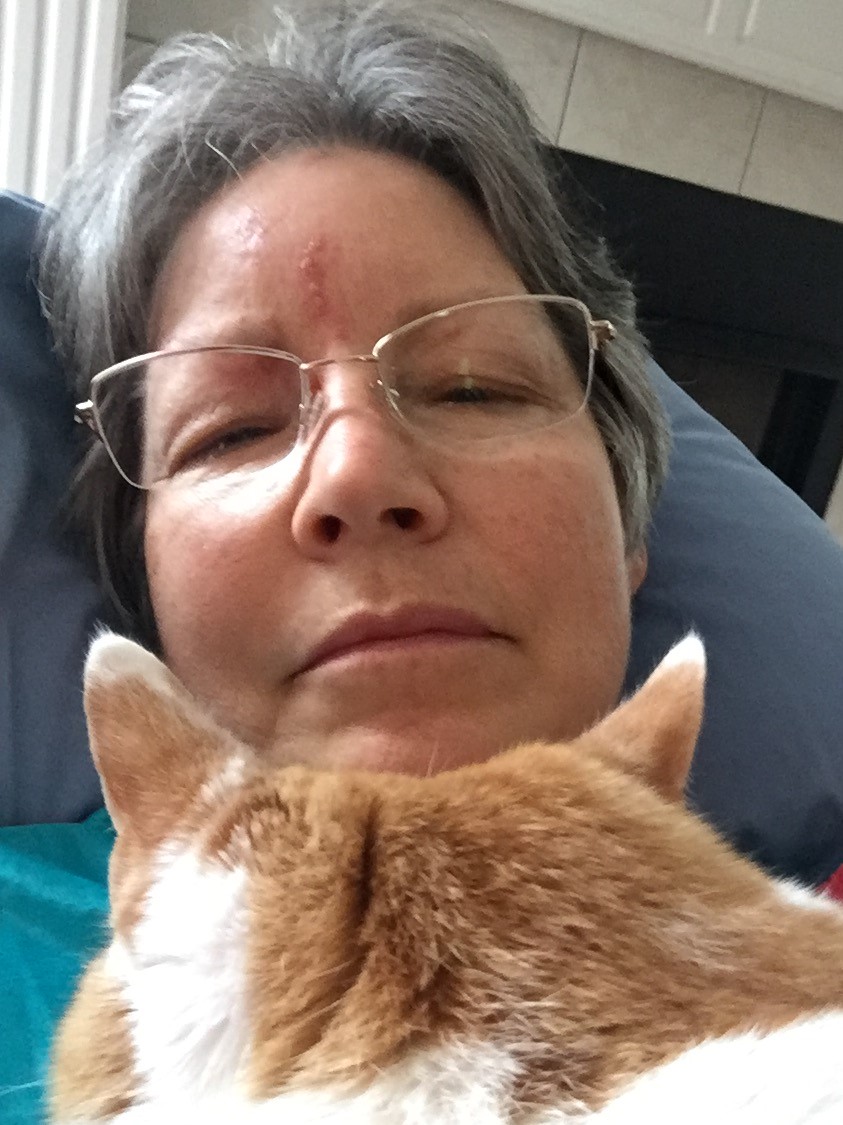
From my May 2016 Journal. Shingles, Day 9. When I came down with the shingles*, I had no idea what was in store for me in the days to come. But I determined right from the beginning that #1) I would have a positive attitude and #2) I would do my best to learn something from the experience.

With horrible nausea, I made two trips across town to the doctor, throwing up four to five times that day. Even with anti-nausea meds, I was barely functional. Finally the doc switched me to Phenergan. With one dose my life became bearable. I could tolerate the rash, the nonstop headache, the eye pain, and the loss of appetite. I thought of chemo patients and wondered how they tolerated such an assault to their bodies.

A book I read recently on healing mentioned that our perception of pain is related to the highest point of discomfort along with the final outcome of the ordeal (whether negative or positive). During the nausea, I thought I’d die. But as soon as it was under control, I suddenly thought, “Well, that wasn’t so bad!” How interesting is that!

As for lessons learned, so far the only thing I’ve come up with is this:

Before this all started, I heard a question posed on the radio: Who are you? My super-spiritual answer was “a daughter of the King.” But that’s not what my honest answer was. My initial response was related to what I DO: I’m an inner healing prayer minister.

In this last nine days of inactivity, I pondered the question again. I was perfectly content at this point with not being capable of praying with people. My identity this week had nothing to do with ministry. I felt no loss as to who I was. I was too sick to care. Would I have responded, “I’m a sick person”? Is that my identity or my condition?

I am loved. That is enough.

And so I’m grateful:

  • For a husband who’s taken excellent care of me.
  • For the little kindnesses from friends—a meal, a card, a run to the pharmacy, a visit.
  • That my pain has been very manageable.
  • For doctors and nurses and pharmacists and medicine, and a country where such is readily available.
  • For flexibility to cancel appointments without loss of job security.
  • For a comfortable couch, soft pillow, warm blanket, and a kitty for company.
  • That I only have a mild case of the shingles (I’ve heard horror stories).

Day 19, A few observations:

  • Schedules and to-do lists have become irrelevant.
  • Pain management easily takes front and center.
  • Time takes on a different dimension. I’m nearing three weeks of time standing still. One day is like every other—bed to couch, to attempt to do something, to couch. If something gets done, that’s good. If not, oh well!
  • I’m grateful for beauty—the moon, the roses, the trees and grass that I can see through my window, and the sunshine on my face when I sit on the deck for a few minutes.
  • It does no good to try to rush the healing process. You’ll just relapse.
  • Going down is quick. Getting back up takes effort and time.
  • Sleep is necessary.
  • Spiritual disciplines decline in direct proportion to how sick one is. I can gauge my recovery process according to how much I focus on prayer.
  • You can’t teach another person the lessons you’re learning. It will just be information to them until they experience it for themselves. (This is true for everything in life I think.)
  • It’s okay to just be—sometimes that’s all you can do. But it feels quite unproductive—which is my inner default drive—to do, do, do, produce, manage my goals, serve others. It’s hard to serve others when you’re self-focused.
  • Multitasking is no longer an option.

Observation after 5 weeks: I don’t like to talk about illness once I’m through the worst of it. Leave it alone please; let’s move on to something else. You have it far worse than I do. I don’t want to be the center of your focus and attention. Why? Where is that emotion coming from I wonder?

After 7 weeks: Following the shingles, I had laryngitis for four days followed by a full-blown cold, and then I lost a crown while out of town. I’ve had to fight to stay positive, but occasionally I leak! When it’s obvious I don’t feel well and I can’t hide it, people will ask and comment. But when it’s not obvious, I don’t like drawing attention to myself. But expressing it somehow helps me feel better. I watch my friends who have chronic pain who can be matter-of-fact about it—especially if asked—and others who verbalize it constantly, all the while declaring, “. . . but I won’t complain.” When does declaring facts morph into complaint? It starts, I think, in the heart.

So I have to check my attitude periodically. It is easy to get discouraged when the endpoint is unclear. What helps is to refocus, go to the castle of my heart, if even for a moment. It’s like a reset button. I cannot begin to imagine what it’s like to fight against cancer or to come to the end of one’s life with no hope of recovery from illness or aging. No wonder people turn crotchety!

So, Lord, help me to pass this test and learn my lessons.

*Shingles: an acute, painful inflammation of the nerve ganglia, with a skin eruption, caused by the same virus as chickenpox. Mine attacked the right side of my temple in the trigeminal nerve and my right eye (where I’ve battled with flare-ups ever since). I’m so thankful for an excellent ophthalmologist.

Shingles 2

Peaches keeping me company

I Have a Question

Last week I talked about Gideon’s “Ifs.” Here’s another one, but with a twist.

Then Gideon said to him, “O my lord, IF the LORD is with us, WHY then has all this happened to us? And WHERE are all His miracles which our fathers told us about, saying, ‘Did not the LORD bring us up from Egypt?’” (Judges 6:13 NASB, emphasis added).

Question mark

My clients often get stuck on the questions “Why?” and “Where?” Why did God allow the abuse? Why didn’t He rescue me? Why doesn’t He care about me? Where was He when it happened? Why didn’t He stop it?

And God seems to remain silent. He knows that answering the why and where questions won’t satisfy the heart because He knows what emotion or pain lies behind them.

When Gideon asks the why question, God does not answer him. Instead God replies: Go in this your might and you shall save Israel . . . Have I not sent you? (14)

In the next verse, Gideon responds with another question: HOW can I deliver Israel when I’m the least of the least?

Again, God doesn’t directly respond to this reasoning.

The problem is, when we ask the wrong questions, we often come to wrong conclusions and make false assumptions and accusations.

Gideon concludes: But now the LORD has abandoned us and given us into the hand of Midian (13).

When I’m attacked, falsely accused, demanded an answer of, my tendency is to go on the defense, attack back, or try to justify my actions. A better choice is to sidestep and find out what the other person is feeling. God knew that Gideon was feeling fear. Answering his questions wouldn’t satisfy his heart, because those weren’t the right questions. Twice, God sidesteps the questions and answers, “I am the solution, your answer, your source of power and strength” (14, 16).

Next time you’re tempted to ask God why or where, try asking instead: How do I feel that  . . . God allowed the abuse, didn’t answer my prayer, it seemed He wasn’t there, etc.? And then be willing to listen for God’s satisfying answer to your pain.

On a side note, after the pain is gone, sometimes God does indeed answer the client’s WHY questions. I’ve heard answers from Him such as, “Are you willing to let Me use this pain to minister to others?” and “I gave all men choices, and I won’t violate their will; neither will I violate yours.” And the WHERE? He always answers, “I was there with you, feeling your pain.”

What questions do you ask when you’re in pain?