Pain and Prayer

Journal 2006

I think I absorb more of the pain from the world than I realize. So, just for today I want to lay each request, each burden, at God’s feet rather than carry them myself.

I visualize each person or organization I pray for as a domino on God’s tray. Some stand straight, some lie on their sides, and others lean over the edge. But all are in God’s hands. And like a butler balancing an assortment of goodies on a tray, so God carries the world—His world—in His capable hand. And I, the child heir, can skip along beside Him, knowing that He has all things under His care and control. I’m free to watch Him or join Him in His work, or I’m free to run off and play. And sometimes I do one and sometimes I do the other. But it’s no longer my responsibility. It seems silly for the child to point out mishaps and misdemeanors to the butler. He’s well aware of them, and it’s His job to wipe up the spills.

So, what is prayer? Prayer is tugging on the butler’s hand. When He leans down, I whisper in his ear: “I’m scared. Did you see that? Can You help me with my homework? Can You help my friend Susie who fell and scraped her knee?” And He smiles and nods and comes to the rescue. I’m too little to do a grown-up’s job.

Image AI generated

Responsibility

Journal 2005

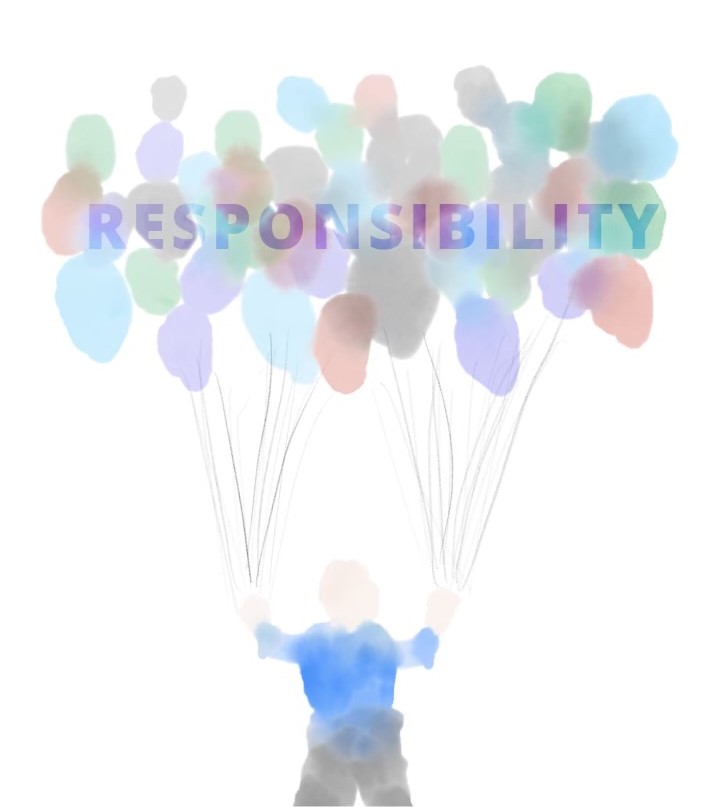
I have a long list of worries I need to shed NOW! The word responsibility is a balloon banner over my head with strings attached to each of my concerns. With hands cramping from their tight grip, occasionally one string escapes my grasp, and I scramble to grab it without letting go of the others. If I let them all go, does this mean I’m not a responsible person?

But near burnout, I wish I could let them all go. I want to be a kid again where I’m free to explore, and my meals miraculously appear on the table, and play is my most serious activity.

Suddenly the wind catches the balloons, and up, up, up, into the air I go. But now I’m in trouble if let go. My muscles are burning. I want off this ride!

“Look up,” says Jesus. I see He’s holding the responsibility banner, and I’m on a puppet stage. He’s responsible for the “responsible.” That takes the pressure off decision-making, but I’m still not satisfied. He created me with free will, and I don’t want to be a puppet. I don’t want His job as director of the play, nor can I be in the audience. What am I supposed to do?

“Let go of the strings,” He says. Willing to surrender at last, I unclench my fists and drop my arms. I do not fall. I do not collapse. I let go of worry and make life-giving choices.

Rest. Peace.

Thanks to my son-in-law Josh for the graphic.

On the Edge of a Cliff

Journal 2005

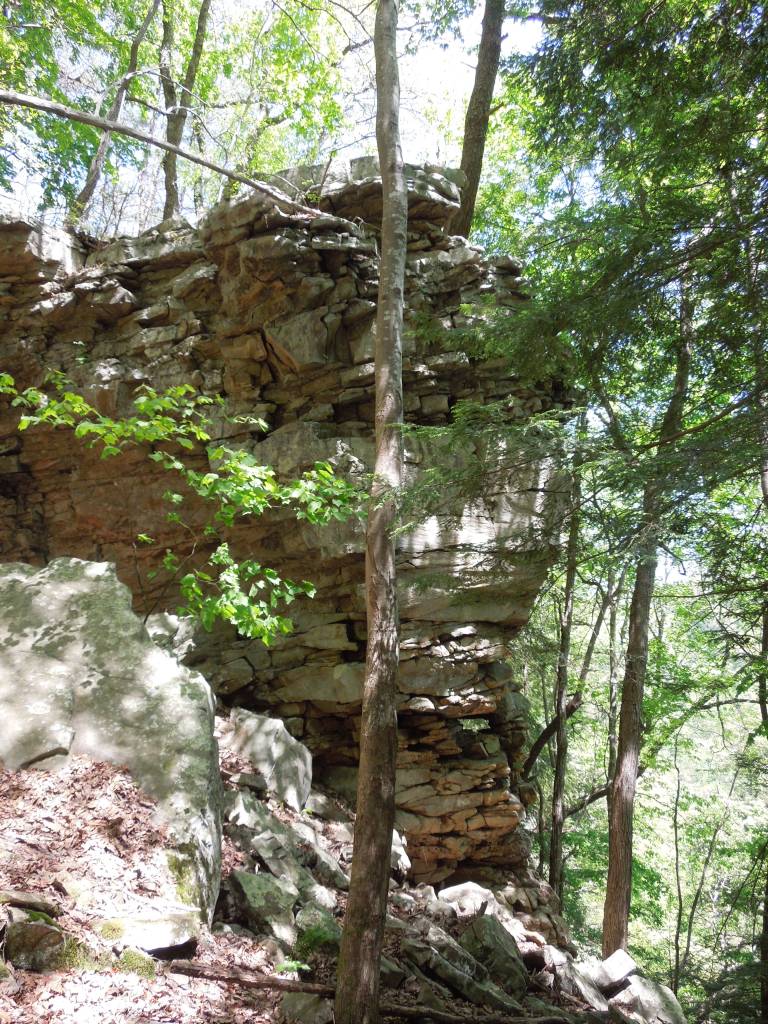
Going for an Oral Interpretation major in college, I once performed a reading with a powerful visual about standing atop a cliff, desperately trying to stop people from going over the edge (presumably to hell). The point was to urge believers to evangelize. I even know one missionary who went overseas because of this visual. But all I ever felt was guilt, helplessness, and powerlessness.

As I sit with my emotions, I notice there are danger signs at the edge of the cliff. In fact, there are warning signs before the danger signs. I’m praying desperately for people to open their eyes and take notice, and if I take my eyes off the scene, I’ll miss someone. Still I feel helpless. I have to DO something. If I sit down to rest, I’ll get stampeded! Where do responsibility and trust intersect?

Jesus says, “Back away from the edge of the cliff, find a bench, sit there and wait. Offer cold drinks and sandwiches to the weary travelers. Invite; don’t panic. Invite them to rest with me and talk. Tell them about the cliff and encourage them to share the news with the other travelers on their path. And if while I’m talking to one, and another passes by, I can just wave and smile. And if I need to sleep for a while, I can ask Jesus (or an angel) to tap me on the shoulder when I need to wake up and pay attention. Whew! That feels better.

Joy Killers

From my 2015 Journal. I voluntarily spend time around joy killers—people complaining of emotional pain. It’s my calling and my ministry to listen for hours to stories of horrendous abuse and its effects . . . but I’m tired.

And I remember the before . . .

I’m a little girl, twirling with the swirling leaves, shouting delight as wind flings its rain smells, ready to cool the parched earth. Hair tousled, uninhibited, unselfconscious, no to-do list, living in the moment. Exuberant. Carefree.

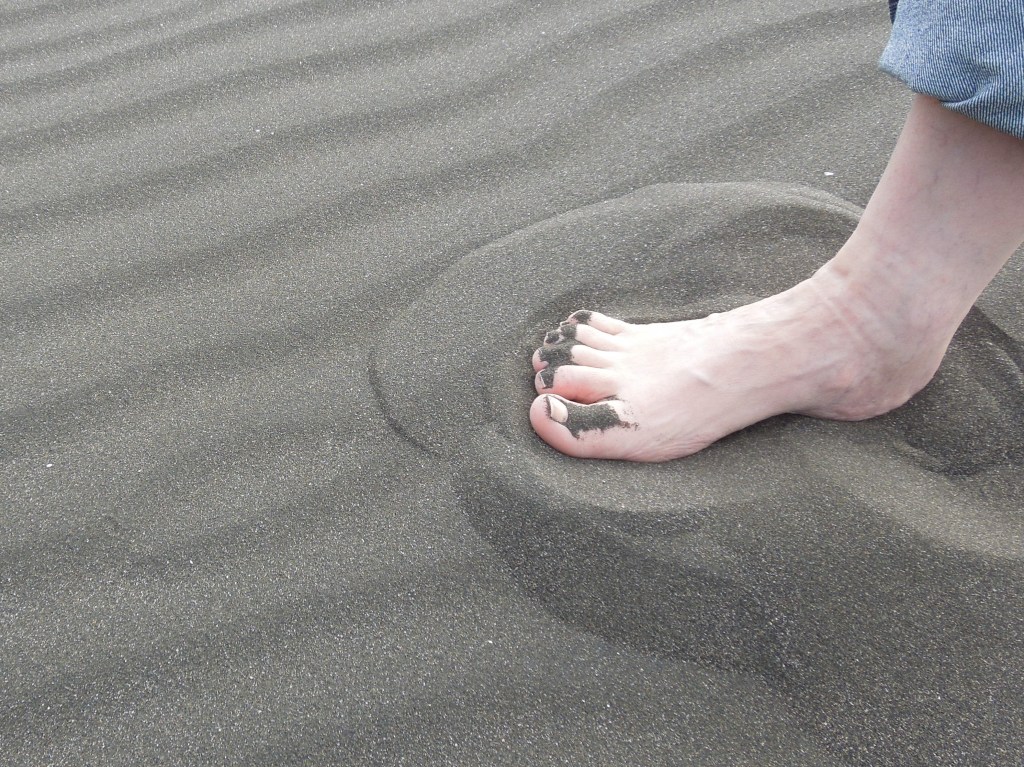
And then I’m an energized young woman, flinging laughter to the wind, racing down the beach, warm sand between my toes and water lapping at my feet. Collapsing to the ground to watch clouds and birds, sandy-haired, relaxed. Carefree.

I’m a middle-aged woman, slower now. I can’t run and jump as well, but my spirit and soul soar free above the earth. Enjoying the ethereal, shimmering expanse of the ocean. Carefree.

I watch as my body turns sluggish, age spots appear, mind slips away from the present, and my soul settles into tired places. How do I recapture my exuberance when a stale wind hangs thick around me? I can’t sustain the energy of joy. I’m too tired, too distracted, too full of that R word responsibility, heavy weights in my shoes pinning me to the earth.

And I remember I am the one who controls my own joy-killing.

Like young David, I must shed King Saul’s heavy armor and travel light. I detach the weights from my wrists and ankles, kick off my shoes, inhale fresh air, and feel warm sand once more. I’ve been carrying stuff that isn’t mine to bear. Forgive me, Lord.

Enjoy the journey. Joy, joy, joy!

The Responsibility Backpack

Responsibility (n): a moral obligation to behave correctly toward or in respect of; a thing that one is required to do as part of a job, role, or legal obligation

Responsibility is a backpack. It’s light if nothing is in it. But if another person inserts a nature-climbing-backpack-mountain-cloud_1320-154load of rocks, it feels like there’s nothing I can do, except carry it. I may release resentment, but I’m still carrying the load because the person is unable to do so right now. Tired. Tiring. Willing—because I have no choice, but hard nonetheless.

Oh, I could take the backpack off and lay it down, but that’s not really an option. Remember: “He’s not heavy; he’s my brother.” But that thought doesn’t help. The rocks are still heavy on my back. “Let Jesus carry it” doesn’t cut it either. I believe He’s the One who put them there in the first place! It’s my responsibility.

Why do I feel like I need to bow my soul in sympathy when a hurting person bares her heart to me? When a natural disaster occurs? When someone is dying or sick or depressed? I don’t want to be blasé about it, but I also can’t carry the weight and the pain for another person.

But it’s when I feel something that I spring into action. If I don’t feel, does that mean I don’t care? If I don’t care, will I spring into action? Is it a trigger or a prompting of the Holy Spirit?

What am I believing? That I need to curb my emotions and inner joy when I’m working with depressed and wounded people? It would be like joking at a funeral parlor—disrespectful of the mourners. But in the process, I weigh down my own soul.

The Scriptures say, Carry each other’s burdens (Gal. 6:2) AND Each one should carry their own load (Gal. 6:5). So which is it: carry my own or carry another’s? When I’m praying with someone, I’ve agreed to take their load for a bit, but it can get heavy after a while.

So . . . when a person I’m ministering to hands me her burden, it’s okay if it’s only a backpack or a lunch basket. But when she hands me a boulder that I’m unable to lift, I can’t just walk away and say, “Sorry, that’s your problem.” Instead, I can stop, ask the person what she wants to do with her boulder, and then pray for God to lift it for her.

Or . . . if a person hands me her backpack, after a while I can hand it back to her and say, “I can’t carry it for you anymore. You carry it, because when it’s in your hands, you can then make the choice to hand it to Jesus instead.”

As soon as I come to the end of the trail, I can put this backpack down. But then I must pick up another and start down another trail. There’s no break; no rest in between. And not many rest stops along the trail.

Jesus says, “I can carry you as well as your backpack.”

And so, dear Lord, I ask today that You carry me. I am weary, tired, worn out, weak. I need a blessing today, a miracle, some cool clear water to refresh me.

Jesus says, “I am your Sabbath rest.” And that is enough.

(From my 2007 Journal)