The Odor of Heaven

Journal 2018

Your robes are all fragrant with myrrh and aloes and cassia. Ps. 45:8 ESV

We talk of the beauty of heaven and even the sounds, but seldom do I think about the anticipated smells.

I grew up in a different country than my husband. To prepare him for a visit to the land of my birth, I showed him pictures; I spoke to him in Hausa; he touched the curios I’d transported from overseas. But how could I share with him the smells of a place he’d never been to? He loathed my malodorous dadawa (fermented beans used as bouillon in tuwo da miya), but I wanted him to experience frangipani and guavas and baobab fruit. The minute he stepped onto the airline bound for Nigeria, the biggest assault to his senses was not the sights or the sounds, but the smells. I thought he’d pass out!

I can’t say that I have a favorite fragrance, but I am partial to the headiness of bread baking in the oven, the duskiness of rain approaching, or the intoxicating scent of sheets drying on a clothesline. I know little of myrrh and aloe and cassia. I can’t get excited about something I can’t relate to. The very words sound overpowering. I prefer light, fresh scents. I avoid darkly scented candles, most perfumes (including Essential oils) and heavily scented deodorants. Both my cat litter and my detergent must be unscented.

For sure, our visual capacity will increase in heaven, but will our sense of smell be different as well? I just know that there will be no malodor or distaste associated with my King’s garments. We will be drawn to it, delight in it. There will be nothing artificial or decaying or sour or bitter. It will be unlike anything we’ve ever experienced here on earth. I have no hooks on which to hang an odor I’ve never smelled before.

When we use words to describe something visual, we include a myriad of parameters: height, weight, shape, color, etc. But when we try to describe a smell, we’re reduced to one-word descriptors or similes, often connected to taste: bittersweet, salty, bland, lemony, spicy, peppery, acidic. Smells can have qualities such as delicate, overpowering, pungent, or acrid. But even those fall short when trying to describe an odor you don’t taste like pine or roses or rotting flesh.

We have associations with smell, like my mother’s cinnamon rolls, like a boy’s locker room, or like a friend’s Chanel No. 5. Our brains have smell memories—one whiff of something and we’re transported back to a time when we first experienced emotion with it. I know one MK (Missionary’s Kid) who stowed a scarf inside a sealed jar so she could pull it out occasionally to bring back her olfactory memories.

Besides a reference to His garments, I checked a concordance for other scripture references to fragrance. “Sweet smelling” is used most often in the Bible. I doubt this means sickly sweet but rather in a beautiful (a sight word), soft (tactile), pleasant sense.

  • Evil odor
  • Foul odor
  • Fragrance or pleasing aroma of Christ
  • Fragrance of His knowledge
  • Good ointments
  • Lebanon (cedar)
  • Mandrakes (wonder how they smell)
  • Of a field which Jehovah blessed: sweet
  • Of death or of life
  • Of the cloud of incense
  • Of the face like citrons
  • Of water
  • Perfume
  • Pleasant fruits
  • Pleasing odor
  • Spikenard oil
  • Sweet aromas
  • Sweet fig trees
  • The smell of battle
  • The smell of fire
  • We are a sweet fragrance to God.
  • His breath

Aroma, scent, savor, tang, reek, stench, feted, stink, and whiff—and that about exhausts the list, both in the dictionary and in the scriptures.

What’s your favorite scent and why?

A 2025 Update. This meditation is even more poignant to me after my year-long sense deprivation with COVID-19. Like a blind person who looks forward to seeing heaven’s beauty, I can’t wait to get my first deep whiff of heaven’s scents.
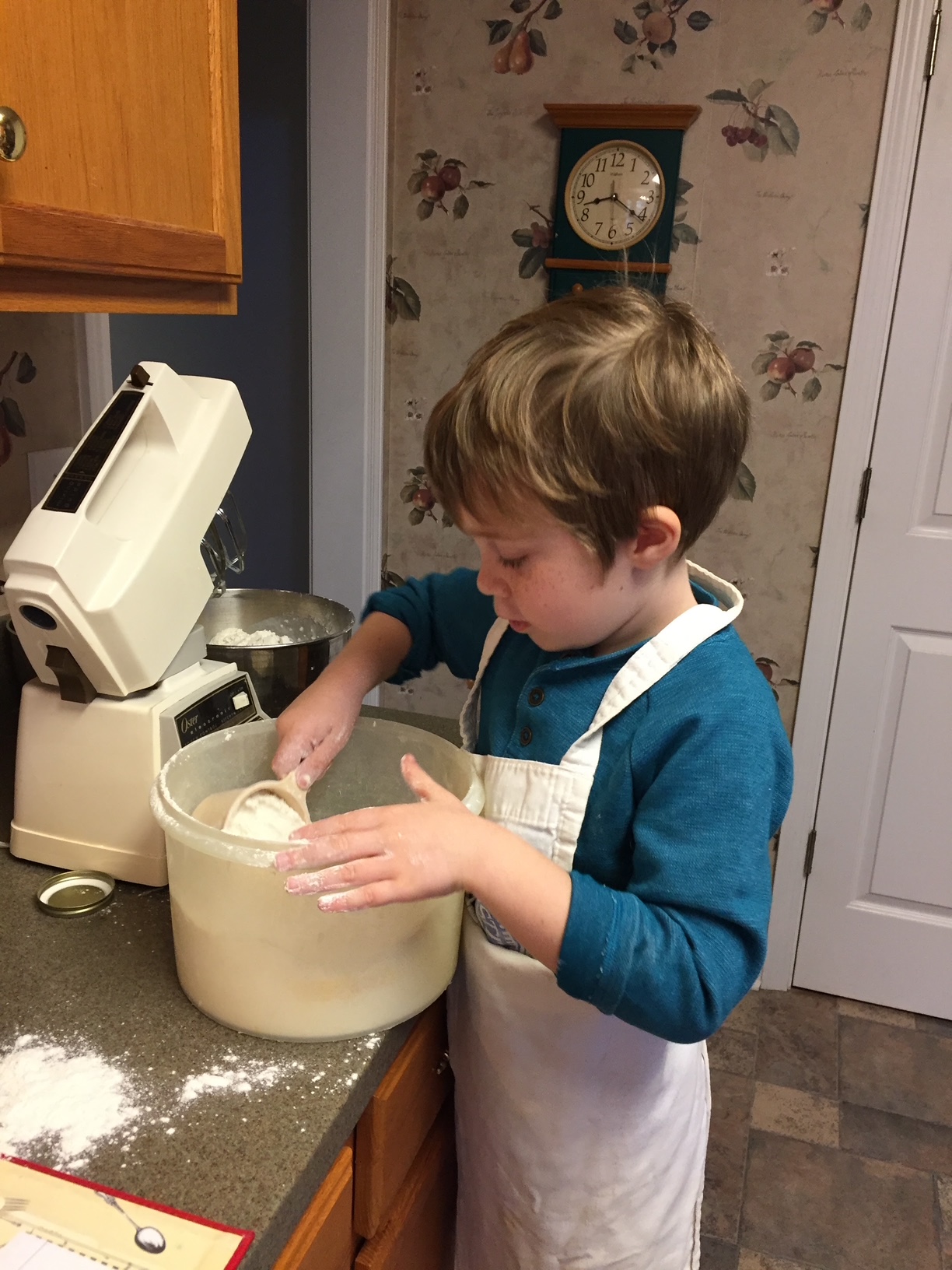

Passing on the tradition with my grandsons

Clothespins and B.O.

Journal 2005 Visual: We all have a lot of stinky stuff inside our hearts. And we walk about with clothespins on our noses so that we won’t (or can’t) smell ourselves. But others smell us, and they’re repelled. Eventually, the clothespin pinches hard enough that we remove it, or we start to sweat and it slips off, and when we smell ourselves, we don’t like it. I think God sometimes removes the clothespin, and we blame Him or others for the stench, never realizing it comes from or own b.o.! So, we have a choice—keep the clothespin on our nose or allow ourselves to smell and get motivated to clean up with God’s help. Freedom is not having to wear a clothespin on one’s nose because the inner aroma is now sweet.

Lord, in Your sovereign timing, would You remove the clothespins I’ve been keeping on my nose? And once removed, will You help me get rid of the stench and fill me with Your fresh air instead? Lilacs and cinnamon and peppermint and guava nectar and mangos and freshly baked bread, and sweet air after a rain and roast beef and rose petals—but mostly lilacs. Amen.

2022 Update. I’ve changed my mind about the statement “I think God sometimes removes the clothespin.” He never violates our will. It is our choice to leave the clothespin on, and He waits patiently for us to remove it before He can clean up what’s inside.

Word for the Year 2021: Handicap

I confess I have an abysmal sense of direction, and it’s getting worse with age. I Googled “bad sense of direction” to get some tips for improving my odds and collected maps for cities I frequent. Every day for the first month, I studied our local map, trying to memorize street names and cement a visual mind map to guide me. What a useless endeavor! Apparently, I am incapable of thinking and driving at the same time.

When I read a blog by someone who unashamedly labeled his poor sense of direction a HANDICAP (and many people resonated with his plight), I concluded I cannot change my brain enough to warrant shedding my trusty GPS. So, there you have it—one Word for the Year tossed in the trash, and I needed a replacement.

Following my recovery from Covid in November 2020, I decided to chronicle my journey with another hidden HANDICAP—loss of taste and smell. First, I tried the famous burnt-orange trick that went viral (useless) and sniffed three different essential oils three times daily for the suggested smell training ritual. For two weeks I quadrupled my intake of zinc. Nothing.

I spit out my first cup of coffee, tasteless as water. When I tried sniffing freshly ground coffee beans, a disgusting malodor greeted my nose. At least I’m smelling something, I reasoned, but this annoying odor lingered nonstop for months. Everything smelled the same: smoke, pizza, cat litter. I became the designated dirty-diaper queen for my youngest grandchild.

In the first three months, I burned up three frying pans because I couldn’t rely on smell to alert me. I no longer dared leave the kitchen during the simmering process. I lost what little interest I had in cooking or making menu decisions. For the first time in our 46 years of marriage, I didn’t care if I ate my husband’s bland-diet preference over my spicy palate. It all tasted the same, so what was the point?! I now had to rely on him to inform me if meat had spoiled or the seasoning wasn’t right in a casserole.

One day we decided to treat our grandsons to ice cream. As we approached the drive-through, I asked the 10-year-old what he thought I should order since I wouldn’t be able to taste it. “Cheapest thing on the menu, Grandma!” he said. Smart kid! And later, his 7-year-old brother asked, “Why eat anything at all?” I explained that food fuels the body, but regrettably, I had begun to choose peanut-butter-and-jelly sandwiches over healthy salads. Growing our Tower Garden felt pointless.

With the loss of eating pleasure, I learned to tune more into how hunger felt instead of eating what I craved but, disappointingly, I lost no weight. Eventually I began to differentiate between salty, sweet, bitter, and sour, but could taste no nuances of flavor. I put hot sauce on everything, trying to elicit a little zing for the tongue.

I tried hard not to complain but failed miserably and so began a regimen of gratitude for my other four senses. When I finally got tired of hearing myself complain, I asked God for a better solution and stumbled on Isaiah 65:5b: These people are a stench in my nostrils, an acrid smell that never goes away. (NLT)

And that’s when He gave me this idea: every time I smelled that repulsive odor, I would think about the stench in God’s nostrils and pray for someone. It helped refocus my attitude.

By August I noticed a subtle shift in relinquishing the malodor and enjoyed a hot curry Indian dish. Coffee became my gauge for progress. I went from gagging to tolerating a quarter cup, to drinking half a cup if I held my nose during the brewing process. I jumped in glee when I got a whiff of burnt toast. Someone claimed if you didn’t get your smell and taste back after nine months, it would be permanent. Oh, Lord, I hope not! I was into my ninth month and counting . . .

In September, someone suggested I try fascial counterpressure (whatever that was!). I found a practitioner 30 minutes away and promptly made an appointment but returned home with no noticeable results and fewer dollars in my wallet.

In October, I read Numbers 11:1-9 where the Israelites complained about eating manna every day. They missed their pungent fish, along with the flavorful cucumbers, melons, leeks, onions, and garlic. I could relate! I used to fault these people for their ingratitude, but now I felt convicted over my similar lament. I so missed the diversity of flavors. I wanted to discover the sweetness of holy manna and be thankful for what I had instead of grief over what I’d lost. How could I learn to leave Egypt behind and embrace the promise of a new land?

I continued to struggle with my attitude, complaining about my loss. I had an appointment with food three times a day, and three times a day I had to face the keen disappointment of loss of pleasure. Five times in Numbers 15 the phrase “an odor pleasing to the Lord” caught my attention. I couldn’t smell, but God could; and I wanted my attitude, thoughts, and deeds to be a pleasing odor in His nostrils.

It was like I was holding onto the end of a rope connected to taste and smell. Letting go of the rope didn’t mean I wouldn’t eat; it meant letting go the pleasure, the drug. When I dropped the rope, I watched in astonishment as it retracted like a tape measure into the food. The flavors were still there, but they were no longer tied to me. They don’t belong to me and therefore have no power over me. Now I can pick up food, examine it, see it, feel its texture, and experience it. It is what it is.

Over a year later now, I have adjusted (mostly) to my hidden handicap, and I rejoice in every whiff of smoke or incremental change in flavor. It’s okay that I can’t smell dirty diapers, but I sure do miss my coffee!

Oh taste and see that the Lord is good: blessed is the man that trusteth in him. (PS 34:8 KJV)

My biggest disappointment is not being able to taste injera ba wat (Ethiopian food)

For further reflection:

I checked out the Scriptures (RSV) and found the following words: Nose 12x, Nostrils 14x, Smell 20x, and Odor 43x. I even found a blog on the subject: Just a Thought . . . God’s Nose (constantcontact.com)