Back-paddling at a Waterfall

Journal  2006

I’m feeling peevish today—I need a week to work uninterrupted. As an introvert, I thrive on solitude, but for the last month, I’ve had to be “on” with people—either needy ones or as company in someone else’s home. It’s not that I don’t enjoy my life, but I just need a break from it. When others around me are struggling, it affects my mood. I feel like I keep giving and giving without getting replenished.

In the River of Life, I would prefer to float on my back and watch the sky. Instead, I’m back-paddling at the top of a waterfall.

When I finally stop rowing, I fly over the waterfall with a God-given parachute. But at the bottom, my boat spins in an eddy, and I white-knuckle my grip to keep from capsizing or slamming into the rocks. I’m in survival mode and must remain vigilant for more rapids ahead. This wild ride is no longer exhilarating or fun. I’m cold and wet and want to get out and dry by a fire.

Endurance. Perseverance. Steadfastness.

I feel the weight of people’s woes and my responsibility to meet their needs. I feel the burden of maintaining friendships and working to contribute toward our family’s finances. I could spend all day at the feet of Jesus, but the house won’t clean itself, and the food doesn’t cook itself, and I have to think about my health, prayer obligations, books to read, goals to accomplish, and, and, and.

Balance. Rest. Pleasure.

I’m a linear thinker who knocks off my to-do list one item at a time, but relationships, interrupting phone calls, and the messiness of life get in the way.

I think it’s about losing control. I used to have control over my own life, but now I live at the mercy of other people’s choices. It makes me feel lost at sea without my oars.

Jesus asks my permission to handle the oars. All I have to do is sit and watch and wait, He says. When He commands, “There’s a fish; let down your net,” I obey. And when He says, “It’s time to rest,” I can lie down on the cushions and sleep, knowing He is in charge. And sometimes He hands me a Karen-sized oar and says, “Now paddle hard!” because we’re about to go over some rapids.

A 2025 Update. Reading this entry makes me tired! I am in such a different place now emotionally. I am at peace, unhurried, at rest. Perhaps my circumstances have changed, but I suspect I’m simply at a different place in my healing journey as a recovering co-dependent.

Burgess Falls

Keeping the Sabbath

Journal 2016

I grew up under the teaching that as Gentile Christians, we were commanded to “keep the Sabbath day holy.” Never mind that our instructors mistakenly called Sunday “the Sabbath” or that, as I believe, we are no longer under the Law of Moses.

The Mosaic Law spelled out some parameters for Sabbath or Shabbat observance: no fires, no cooking, no traveling. The Pharisees took the Law a little further and defined the Sabbath according to what activities and to what extent they thought were or were not permissible as per their own definitions. In 39 categories, the Talmud defined work as “any activity that creates or that exercises control or dominion over one’s environment.” These included baking, making garments, making leather, and building structures. Today their Sabbath legalism extends to not pushing the buttons on an elevator or turning on electric lights.

Reform Judaism says, “One should avoid one’s normal occupation or profession on Shabbat whenever possible and engage only in those types of activities that enhance the joy, rest, and holiness of the day.” According to this definition, if I were to “keep the Sabbath,” my normal activities would be housework, computer work, and the business end of ministry. It would not preclude ministry itself according to Jesus’ example. He preached and healed all week long. You’d think He’d refrain on the seventh day and take this day off from “work.” But apparently His work wasn’t classified as labor.

Jewish law prohibits work, but it isn’t the same definition as our English word for work. The word Shabbat literally means “to cease” or “to sit.” While resting is implied, it’s not the meaning of the word. God created for six days, and then He ceased. He didn’t need to rest. I may not be Jewish, and yes, Jesus is my Sabbath rest, but I do need to “cease” on a regular basis. I need the change of pace, the chance to recoup, refresh, and recharge my body, mind, and soul.

So . . . generally, once a week, I turn off my computer, refrain from cleaning house, and occupy myself with things I enjoy doing—guilt-free, such as reading, doing a puzzle, or golfing with my husband (after church of course!)

What does “ceasing” look like for you?

Out of Control

Journal 2006

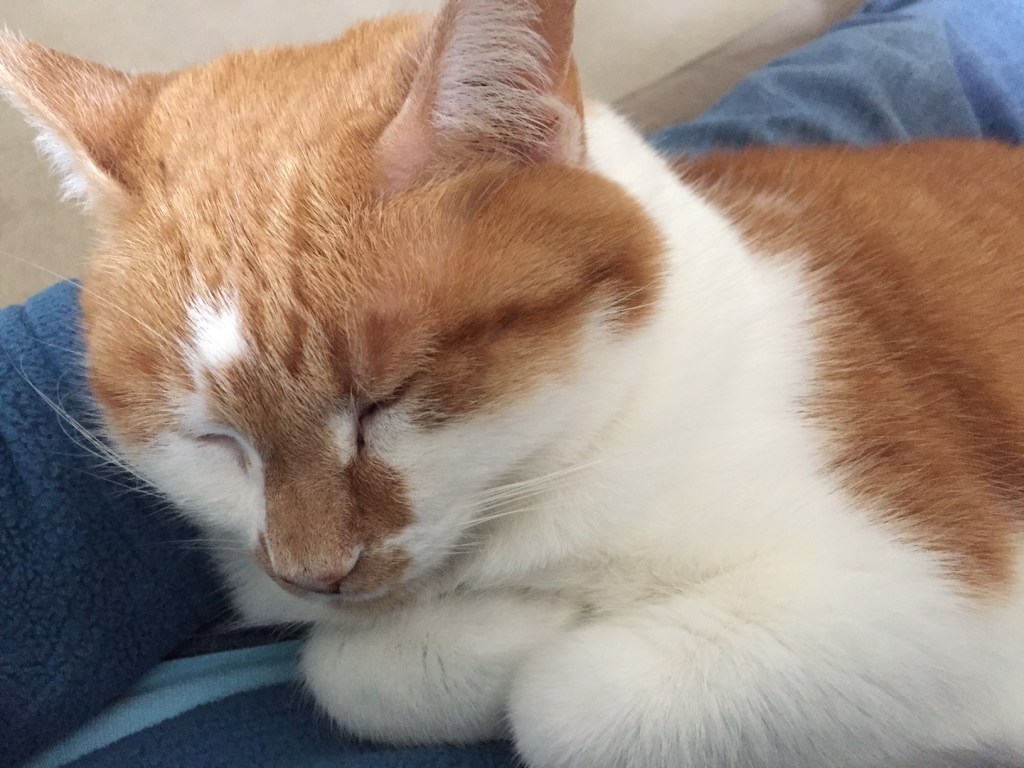
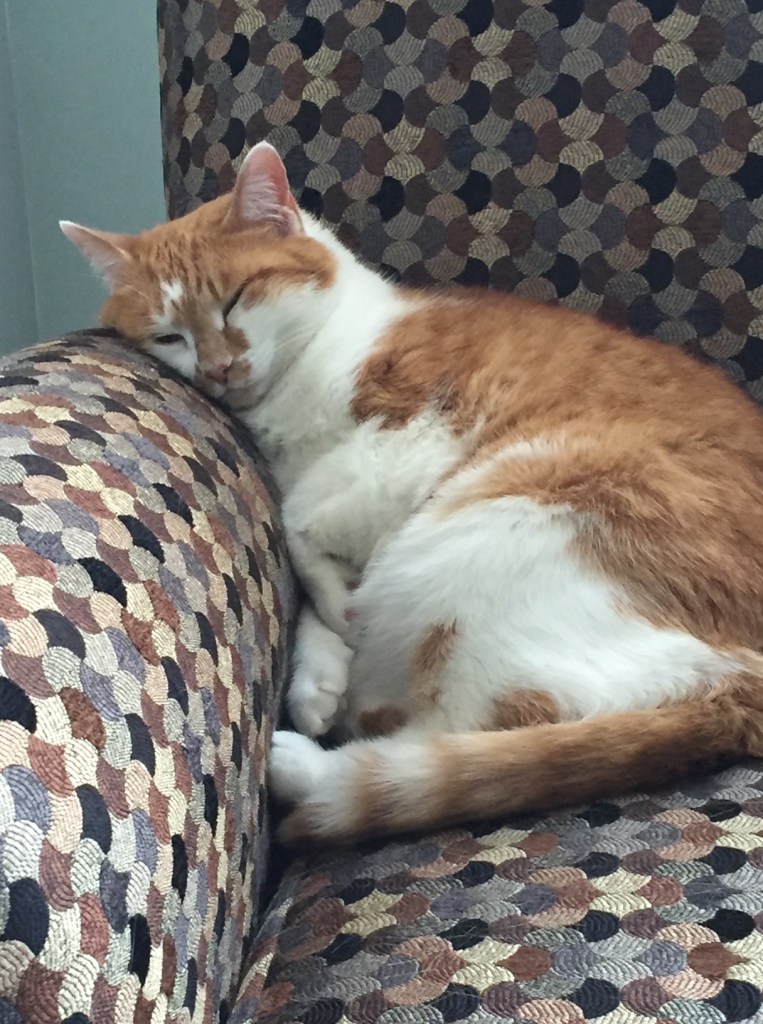
This was not my favorite day! I had my goals, expectations, and vision of an uninterrupted day to catch up on my work. It started at 4:30 a.m. with the cat waking me up, and it went downhill from there. I spent very little time at my desk, ran errands instead, met others’ needs, and ended the day an emotional wreck. No alone time and thwarted at every turn, I felt off balance, out of kilter.

How do I balance plans with interruptions? Why does it upset my equilibrium when I don’t get my way? I should have known . . . I should have anticipated . . . I should have been others-centered instead of self-centered, runs through my brain.

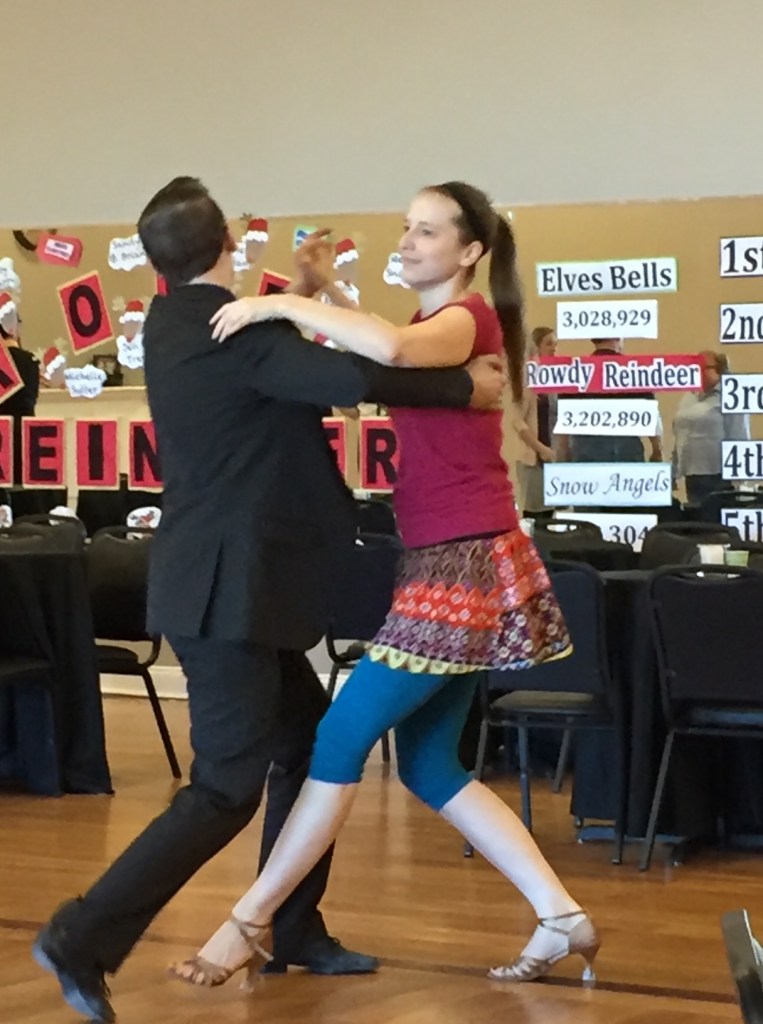
I used to have a tight control over my schedule. I was on the dance floor without a partner. I could sit on the side and play solitaire, get up and get a snack at my leisure, or sway to the music if I wanted to. I affected very few people with my decisions.

And then I got married. Having a dance partner meant I couldn’t sit down as often. Sometimes he served me drinks; sometimes I served him, and at all times we were aware of each other’s presence and needs. If we both were in the mood to dance, we did. If we both wanted to rest, we did. If one did and the other did not, we had to compromise or sacrifice. It was easier sometimes to give in than to fight over it; other times easier to think only about my own needs.

And just as I began to learn that dance, we had children. We adjusted to their varying heights and were less free to move around. I spent far more time fetching drinks for everyone and making trips to the bathroom than keeping time to the music. There was no standing still.

Next, a lot of messy people joined the dance floor asking for help. Some were unseemly characters. Others dressed nicely, but they didn’t know how to dance. Others were too weak and sick to dance. And the world of the dance floor suddenly became more complicated. While I was responding to the needs of the lonely ones on the bench or the thirsty ones in wheelchairs, my husband may have been in the mood to dance. And out of the corner of my eye, I watched one of our girls dancing her own dance with a guy. And my eyes and my heart were torn or divided or distracted or overwhelmed.

Add to that the God-element. In a fifth dimension, unseen to the human eye, the Holy Spirit and the evil one mingled among and through us, stirring us up, catching us when we stumbled, whispering lies or truth in each of our ears as we danced and sat and ate and drank.

I have a restlessness inside. Some days I just wish life would return to the days when I was a solo dancer, in control of my own decisions.

I know I must get away, and so I slip away from my dance partner, away from the tug of the needy ones, away from the vigilance on my children, and head to the balcony to drink in the night air and enjoy the stars. But just as I reach the top step, a noisy group comes spilling out of the room to join me, and the magic of the night is lost.

Instead, I find a quiet bench in the garden. I can still hear the music, and I know I can be interrupted at any time. I just want to go Home (with a capital “H”) where it’s safe, soft, peaceful, quiet. But it’s not time yet.

And so, for now, I slip further into the gardens, hiding behind a tree, hoping not to be found. But my dance partner is lonely and comes seeking me. And I set aside my own needs and return once more to the dance hall.

And the restlessness continues. It has nothing, really, to do with what’s going on around me. It’s not the people, the noise, or the distractions. It’s what’s going on inside my heart–an open door, a furnace burning inside my chest, stoked by anger. And even when I go home (lowercase “h”) the fire remains. Hot. There’s no escaping it.

In the middle of the dance floor, with my permission Jesus reaches out His hand, extinguishes the fire, and says, “Give Me the treasure of your heart.”

I’m willing, but I don’t understand—I don’t know what’s in it. Again, with my permission, He reaches into the door of my heart and retrieves a box. “Where your treasure is, there will your heart be also,” He explains. And I expect Him to take it up to heaven and deposit it under the throne. (Isn’t that what Matthew 6:20-21 teaches? “Lay up for yourselves treasures in heaven . . .”) But, instead, He places my box inside His own heart. “For safe keeping,” He says.

And now it doesn’t matter what goes on around me because I’m following my Treasure. When He says, “Dance,” I dance. When He says, “Rest,” I rest. When He says, “Serve,” I do that.

It’s not about controlling my world but about controlling my mind.

Sabbath Rest

From my 2016 Journal. Every Sunday, my missionary parents practiced Sabbath rules according to their own definition. We did not enter a restaurant or store, travel, cook, play table games, or indulge in handwork on that day. I began to question this logic when I discovered that Jewish Sabbath occurred from sundown to sundown Friday to Saturday, and never mind that we didn’t keep the rest of the Levitical laws.

Mosaic Law gave general rules for Sabbath (Shabbat) observance: no lighting fires in your house or cooking (Exodus 35:3) and limited traveling (Joshua 3:4-5). The ancient Pharisees interpreted and refined Sabbath rules according to their own parameters, and today their legalism extends to not pushing elevator buttons, turning on electric lights, or using any device-driven means of transportation.*

Jewish law prohibits work on Shabbat, but while resting is implied, the word Shabbat literally means “to cease” or “to sit.” God didn’t need rest after creating for six days. He simply ceased.

Reform Judaism says, “One should avoid one’s normal occupation or profession on Shabbat whenever possible and engage only in those types of activities that enhance the joy, rest, and holiness of the day.”

With this in mind, if I were trying to “keep the Sabbath” I would avoid housework, computer work, and the business end of my ministry. It would not preclude ministry itself according to Jesus’ example. He preached and healed all week long. You’d think He’d refrain on the seventh day and take this day off, but apparently His work wasn’t classified as labor.

I may not be Jewish, and yes, Jesus is my Sabbath rest, but I do need to “cease.” I need the change of pace, the chance to recoup, refresh, and recharge my body, mind, and soul.

So . . . once a week, I often turn off my computer, refrain from cleaning house, and occupy myself with things I enjoy doing—guilt-free, such as reading, doing a puzzle, or golfing with my husband (after church of course!)

What does your Shabbat look like?

*How far am I allowed to walk on Shabbat? – Shabbat (chabad.org)

*Laws of Shabbat for Beginners (aish.com)