Big Pants, Small Heart

From my 2013 Journal.

As I passed near the men’s clothing aisle of a new Goodwill store in town, I noticed a large woman, weight mostly distributed around her waist and thighs, holding up an enormous pair of pants that would have fit someone one-and-a-half times her size. “Can you believe this?” she exclaimed. “I’ve never seen pants so big! I’ve never seen anyone who could actually fit these! Wow! These are huge! Look at this!” she reiterated to her shopping companion.

Several thoughts raced through my mind:

  1. Why did she disbelieve that someone could actually fit them? I’ve seen people this large in person and on TV.
  2. She, herself, was (ahem) larger than average.
  3. Why was she making such a big deal about it—loudly—in public?
  4. Did comparing her large frame with someone larger make her feel better about herself?
  5. I felt more compassion for the large-pants man and less compassion for the lady. Why?

And then it hit me. I recognize myself in her. I do the same thing (sigh)—I make the biggest fuss about what triggers me the most. When I roll my eyes at someone else’s words or deeds, I recognize some unfinished business in my heart—some lack of compassion, some unresolved hurt, or some judgmentalism. The woman’s words simply revealed what was already in her heart. I don’t judge this woman—because I am too much like her. Perhaps I need to practice more grace . . . toward myself!

For out of the overflow of his heart he [a person] speaks. Matt. 7:15-23; Luke 6:43-45

How Much Evidence Do I Need?

From my 2016 Journal.

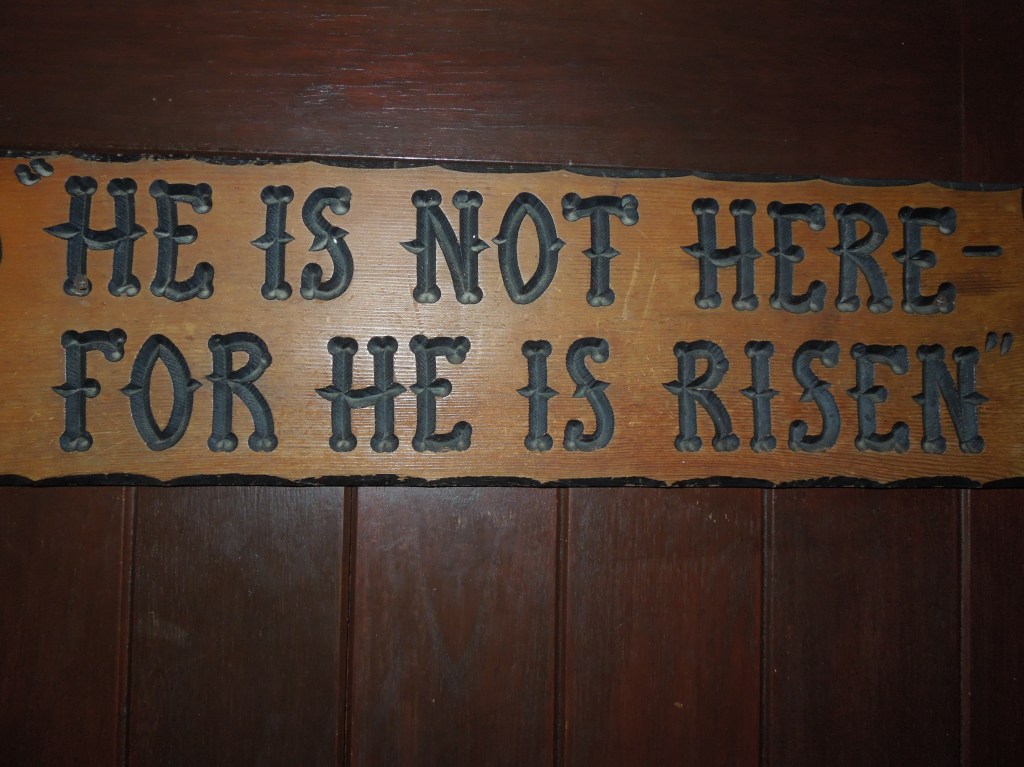
Jesus’ death left pain in its wake, and His followers stubbornly refused to believe the women who reported seeing Him after He had risen (Mark 16:14). I wonder what lie the disciples believed that kept denial in place?

  • Too good to be true.
  • I can’t let myself feel hope for fear I’ll be disappointed.
  • You can’t trust a woman’s word.

Jesus doesn’t need to dig around in their psyches to help them discover why they’re being stubborn. (That’s what I would have done.) He knows their hearts and rebukes them for their refusal to believe. God is patient with our struggles and fears and doubts, but He’s not so patient with stubborn disbelief. How many times did He say, “O ye of little faith?” There’s no pointing fingers here. I’m plenty guilty myself.

The women at the tomb believed as soon as the angels spoke truth to them. The men, however, continued to doubt when presented with the evidence (others’ testimony and an empty tomb). The disciples on the road to Emmaus couldn’t seem to grasp the truth, and Jesus rebuked them. Even when the disciples saw Jesus in the room where they gathered, and the joy center of their brain activated, they had a hard time believing.

We know that the brain is a complex organ—different parts are responsible for different functions: the occipital for eyes, the amygdala for emotion, the frontal cortex for logic and reasoning, and memory in a different part. Since God created the human brain, He knows what part gets activated during fear (like Peter sinking in the sea of Galilee). He knows that the frontal cortex shuts down during a fight/flight/freeze situation. Yet He seems impatient: Why do you doubt, Peter? Why do you have so little faith? Why don’t you men believe when the evidence is in front of you that I’m alive? Stop doubting!

What makes us doubt? Is the emotion center too strong? Are there lies imbedded in that emotion? Those with D.I.D. (Dissociative Identity Disorder) maintain strong denial parts, for if they believe trauma happened, then they’d have to admit it was real. Once truth enters the brain, however, and they experience an encounter with the living Lord Jesus, doubt and fear flee. Jesus knows all this, so is He really impatient . . . or is He challenging His disciples to accept HIM, the way, the truth, and the life?

Sometimes it’s hard to believe someone else’s testimony, but everyone (including Mary, the ten disciples, and eventually Thomas) believed when they saw the resurrected Jesus with their own eyes. Why? Because they experienced it for themselves. Truth experienced in the right brain translates into left-brain belief.

When evidence stares me in the face, what makes me dig in my heels and refuse to see truth? [2021 update: I’m not talking about political opinions on whether or not to wear masks!]

Taking the Scenic Route

From my 2015 Journal.

I ran roughshod over a client’s will today in an inner healing prayer session, and God gently rebuked me with the thought:  “Sometimes you push toward the goal and miss what’s on the way.”

I admit that I’m a very goal-oriented person, going pell-mell through life, trying to meet deadlines, and I miss the fun in the process. Think road trip. If there’s a time crunch, take the freeway. But the scenic route is more relaxing, candy for the soul. The trade-off, of course, is more hours of traveling, more expense, and potentially missing out on what’s waiting for you on the other end of your trip because you took so long. But the process is part of the adventure.

I understand now how my work with the souls of clients can do more harm than good—that I can inadvertently traumatize them. Yikes! But then I must give myself grace—gaining experience is also part of the process.

I feel like I’m holding the reins of a team of highly charged horses, but Jesus says, “Be still.” How am I supposed to win the race if I calm the horses?

And again I hear, “Sometimes you push toward the goal and miss what’s along the way.”

My inner drive (my horses) need help!

Jesus says to give Him the reins. He lets the horses charge around the track to release their pent-up energy. Then we can begin a more controlled, deliberate walk around the track (or in this case, plow the field—because you don’t need racehorses on a farm!)

Which do you prefer—highway or scenic route?

Interruptions

From my 2015 Journal.

The Plan: The family is gone, so I can work all day on editing Simroots, a magazine for AMKs (Adult Missionary Kids).

The Reality (no kidding!) I counted:

            21 phone calls

            69 texts

            64 emails

            5 pieces of mail

            1 person at the door

            6 visits to my office

            0 Simroots

By the end of the day, I felt exhausted!

Visual:  I’m on a train with my bags packed, briefcase in hand, ready to move toward my destination. But every few feet, the train jerks to a stop. Sometimes people get on and some get off. Sometimes I step off in frustration from the discomfort of the jerking, but I dare not wander too far for fear I’ll not be on the train when it finally breaks free and starts moving again.

By the end of the day, I haven’t even left the station! What to do? I go inside the train station and find an indoor pool (don’t ask) and try to relax and unwind. But I’m still unnerved by the motion of the train. Being a task-oriented person, I prefer a bullet train—fast track, no station stops. I feel agitated, unsettled, irritated . . . certainly not at peace. If I’d known I was on a defective commuter train, I could have adjusted my expectations and been fine with it.

No, this is not the first time I’ve experienced this.

The related Memory:  While desperately in need of a nap when my baby was sleeping, the neighbor boy across the street relentlessly pounded away on something in his front yard. I’d just fall asleep when he’d pound again, jerking me awake. Irritated is too soft a word for what I was feeling!

Instead of praying that the boy would stop (I tried that), I could have prayed for supernatural rest. Instead of getting irritated that I wasn’t getting Simroots done, I could have turned my attention fully to the interruptions. And I could have stepped off the train and asked Jesus to tell me when it was time to get back on. Even if the train leaves without me, I can always catch the next one.

A 2021 Update: I have since learned that I’m more productive if I ask the Lord for direction first about what tasks He wants me to accomplish that day and in what order. When my mind is set, I then ask Him to hold the interruptions, except for those that come from Him. Then once a month I climb aboard a bullet train, a scheduled Karen Day with no interruptions allowed.

How do you feel about interruptions?

I Want to Be in Control

From my 2012 Journal. I’ve had a recurring nightmare of being lost and unable to reach my destination. Perhaps my brain is trying to process my unresolved fear of searching for my next classroom in the maze of a two-story American high school after attending a small boarding school in Africa. Or the roots are in my preschool panic when I couldn’t find my dad in the tall grass while hunting guinea fowl together. There is something in all of us that wants to be in control of our lives, and we don’t like the feeling when we’re not.

I have no desire to be in charge of a PTA, a church, or a nation. I didn’t even like being in charge of my own kids when I was parenting. But I do want to be in charge of my own classroom as a teacher, over my own food choices, over my schedule, over my own body, and over my finances. I don’t like it when others violate my will.

So what do I do if I’m under someone else’s jurisdiction (a boss, a parent, a policeman, the law of the land)? I might respond negatively or positively according to whether or not I agree with them or whether the mandate is reasonable or not. If I’m serving a boss who is irritable, unpredictable, overbearing, or unkind, it takes effort and poise and grace and an abundance of God’s Spirit to submit to his or her authority.

But what if I serve under a person whom I highly respect and adore, who is gracious, kind and polite and loves me back? How would my attitude be different? You’d assume I would respond with ease but, sadly, I still fight to be in control.

I serve a perfect Master. What keeps me from responding well to Him when He gives me orders? It’s an on-going struggle for me to submit—until I face my fears of feeling lost or out of control—and that’s when God steps in and brings safety and comfort, just like my dad did when I cried out to him in the jungle grass.

On the Subject of Music

From my 2015 Journal. I was raised on the great hymns of the faith at church, Gospel choruses at boarding school, Pioneer Girls camp songs (thanks, Miss Pat), and my mother’s favorite Gilbert and Sullivan record albums. (I memorized all the lyrics to “I Am the Very Model of a Modern Major-General” by the time I was 10.)

We had no electricity in our little African village, so record players had to be hand-cranked or run on low-quality batteries. I wasn’t exposed much to secular music or American culture until I was in high school.

Is it any wonder, then, that I struggle with contemporary worship music here in the USA? As hymns have been tossed out of our churches like old, worn-out socks, I find myself also tuning away from Christian radio stations and gravitating mostly to classical music when I’m alone in the car. Unlike the repetitious lyrics (I kid you not, I counted 38 repeats of one phrase this Sunday*), my preferred music soothes my soul and draws me upward.

I try not to judge you for your taste in music. Life would be boring if we were all alike. My eldest daughter sings along to every tune played over the intercom at Wal-Mart (there was music playing?). I respect your desire to listen to what matches your mood and gets your foot tapping and draws you into worship. But I prefer music that makes my soul relax. Am I weird? Is this temperament, personality, or a cultural or generational footprint that stamped itself on my soul?

As the music wars play on, I ponder what kind of music we’ll hear in heaven.** What will God’s voice sound like when “He quiets me with His love and rejoices over me with singing” (Zephaniah 3:17 NKJV)?

I do know that our churches would do well to vary their worship styles to draw more people in—from different generations, yes, but also for different temperament types. Not all of us are sanguines. We melancholies need something different for our souls. Just sayin’. (Though I’ll make an exception today and let you sing “Happy Birthday” to me.)

*A 2020 update. Recently our worship leader addressed the repetition issue. He explained that some people need positive reinforcement to solidify a truth in their heart—the same principle but opposite effect of writing lines for punishment at school (I speak from experience). For those of us who already know this particular truth, we can use the extra time praying for those who still need to hear it. I can now give more grace to my fellow worshippers instead of harboring a critical spirit.

**I just finished reading Imagine Heaven by John Burke, amazing accounts of near-death experiences. These people were incapable of describing the sound of angels singing or the thousands of human voices in many languages blended in harmony. There will be no music wars in heaven!

A God Event

From my 2013 Journal. A few years ago I bought a granny-type bicycle with roomy baskets over the rear tire. It’s ideal for quick trips to our Kroger just four blocks away. One day when I wheeled my loaded grocery cart out to my bike, I realized that I’d overshot my basket capacity.

I knew my husband had to leave the house early the next morning to pick up a co-worker at the Nashville airport, drive the 45 minutes back home to pick me up, drive to Chattanooga, pick up another co-worker, and then we all planed to head on to his former boss’s funeral. Reluctantly, I called Scott to see if he could come load the groceries into his car.

Though hurting and grumpy, Scott playfully followed me home, while I groused that I felt like I was being stalked! Scott couldn’t hear it, but from my bicycle’s vantage point, I noticed a funny noise coming from the front of his car. When we discovered a large spike embedded in the tire, Scott raced to Firestone just before the place closed for the day to get it patched.

If we’d woken to a flat tire the next morning, the whole day’s schedule would have been a disaster.

Thank you, Lord, for orchestrating this event in spite of our poor attitudes!

Fighting Fires

From my 2016 Journal. I feel like I’ve been fighting fires for months—rows of houses are ablaze or burned to the ground, and I’m tired of holding the hose, climbing ladders, and rescuing people. I’m weary, and the fires keep spreading. I also see gleeful little gremlins throwing gasoline over the houses.

Lord, I need your help!

A strong wind blows the fire back on itself, and water from the sky douses the flames. But suddenly the scene shifts and my perspective changes. The water is actually coming from a watering can, and the blaze is no bigger than a campfire. I’m just a little ant, so everything looks enormous—unlike from God’s perspective. All my effort and fretting just made me tired.

And so I ask the Lord, “What is my role? Do You want me to hold fire hoses or stand back and watch you work?” I think of Moses who obediently went to Egypt, but it was God who did all the work once he arrived.

I’m tired before going to my next appointment.

“Just show up and obey My instructions,” He says. “And I’ll do the rest.”

That helps. I can rest in that thought.

God Appointments

Excerpt from Diamond Fractal

Sometimes God makes appointments for us that aren’t penciled into the calendar. One day I had a lot of errands to run, and as I thought through the best route to take for the greatest efficiency and gas consumption, Wal-Mart came up first on my list. I parked the car, grabbed a cart, and “accidentally” met one of our clients coming out of the store. The look on her face was priceless, as she exclaimed, “I just prayed ten to fifteen minutes ago: Lord, I need to see Karen or Minna right now!” She was in crisis mode as she was on her way to a family member’s funeral.

And so God’s business was done in a makeshift office (her air-conditioned car in Wal-Mart’s parking lot) as we prayed together and she released her panic and dread to the Great Physician. “God is so good,” she kept reiterating. Indeed He is! Later she reported, “The funeral was amazing! No terror or panic. Just peace. I cannot thank you enough for following the leading of God and being there. I don’t know what I would have done.” There are truly no words to describe the love, mercy, and grace of our Father in heaven.

Another day, I walked into the dental office a few minutes early and sat in the waiting room. Immediately, the only other person in the room (an African-American man) turned to me and said, “I hate being here. I’ve served in the military and I’ve jumped out of airplanes, but I’m scared of a little ol’ dental appointment.”

“Why are you so fearful of it?” I asked.

Pause. “I’ll tell you why,” he replied. “When I was a little boy, my father had to wear dentures, and I remember the awful pain he had to go through.”

“Why was that so fearful to you?” I asked again.

He thought a moment. “Because I could imagine the tools the dentist had to use to extract his teeth.”

“What were you imagining?” I asked.

“A chisel and a screwdriver.”

And so I asked him gently, “Would you like me to pray with you?” His eyes lit up, he grabbed my hands, and exclaimed, “Sure!”

“Just look at the picture of the tools and focus on the fear,” I told him. And then I prayed, “Lord, what do You want to show this man in that picture?”

Immediately he relaxed. “He took them [the tools] away!”

“And how’s the fear now?”

“It’s gone! Wow!”

And then we had the sweetest time of fellowship, as he shared about his ministry to special-needs adults with a Christian organization down the street. The whole transaction maybe took all of ten to twelve minutes, but it was just long enough for God to jump in and do His miracle in this man’s heart.

Character Flaw

From my 2013 Journal. I’ve always pictured Joshua, son of Nun, as a flawless character. But the Bible records one mistake that he made—a treaty with the Gibeonites (Joshua 9). Not an evil thing, not a disobedient decision, but a neglectful act: he forgot to consult with God.

This is a scary thought to me. I don’t (usually) blatantly sin, disobey, or rebel against God. But how often have I been neglectful, and—horrors—deceived. It happens to all of us. Joshua was one of the best—a man of faith, courage, and integrity. If he could be deceived, who am I to claim it will never happen to me?

Once Joshua realized his mistake, however, he rectified it.

  1. He confronted the deceivers.
  2. He kept his oath.
  3. He found a creative way to redeem his error.
  4. He learned from his mistake. He listened to God the next time!

God responded, “Don’t be afraid,” and then He gave the Israelites great victory over their enemies. God listened to Joshua’s prayer to make the sun stand still—a once-in-history experience.

There never has been a day like it before or since when the Lord listened to a man (Joshua 10:14).

Joshua’s story gives me hope. My mistakes do not have to define me or bind me.

Photo by Pedro Figueras on Pexels.com