Washing Windows

Journal 2006.

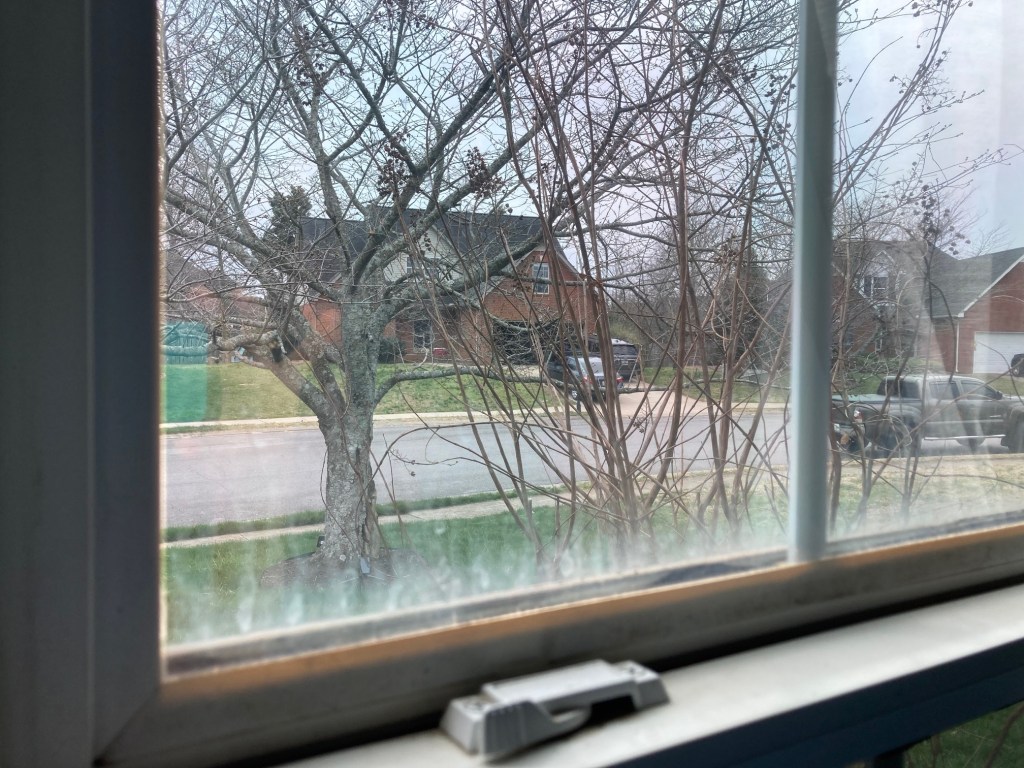
The Scene:  I am inside my house, facing our big picture window while a friend stands outside facing me. We each have Windex and some paper towels in hand. I wash my side. She washes hers.

The Need:  A clean window

The Conflict: I can see her dirt; she can see mine. We can’t see our own.

The Cause:  The light shines through differently from each of our perspectives.

The Solution:  Trust. Trust the other person to point out the spots I missed. Keep rubbing till she nods her approval.

The Lesson:  That’s what friends are for. A trusted friend is invaluable for pointing out my dirt. My job is to respond in gratitude for helping me get my soul-window clean—not to get angry that she pointed out my dirt.

Avoiding Rudeness

Journal 2008

But some “worthless fellows” despised King Saul, brought him no gift, and said, “How can this man save us?” (I Sam.10:27)

When Samuel announced Saul would be God’s chosen king, these worthless fellows were rude and loud-mouthed. Their characters were questionable. And Saul’s response? He held his peace. He acted like he was deaf.

By today’s standards, we think it’s commendable to ignore rudeness, but I wonder—as king, would Saul have been better off disciplining these men in some way? Apparently, he didn’t know his power yet. After Saul’s first victory in battle, the people urged him to deal with the worthless fellows, but again he said no, not today. “Today is a day of deliverance.” And that day he was crowned king. Was his response wise or foolish?

Later, while at war with the Philistines, his men were scattered, and he was given explicit orders to wait a week for Samuel to come to make a sacrifice. When Sam confronted him, Saul responded, “. . . I forced myself to offer a burnt offering.” Really!? What kind of foolish statement is that?! Shades of Aaron’s “I threw the gold in the fire and out came a calf!” Contrast those statements with David who later “encouraged and strengthened himself in the Lord.”

Chapter after chapter reveal stories of Saul’s poor choices and character. For 40 years, he did kingly things: He fought against Israel’s enemies and “made it worse for them” and “He did valiantly and smote the Amalekites and delivered Israel out of the hands of those who plundered them.” But . . . we don’t remember him for his victories. We can only see his faults—which eclipse the good that he does.

So . . . I wonder . . . was Saul’s avoidance of rudeness or conflict a sign of weakness or wisdom? How best should I handle other people’s rudeness today?

Juggling

Photo by Ron Lach on Pexels.com

Journal 2005. Today I feel like I’m juggling too many balls—Ping-Pong balls!—and they’re flying in all directions at once. And so I gather them all, carefully place them in a four-sided tray, and hand them to Jesus. When I ask Him which ball He wants me to hold today, oddly He offers me a large glove, crystal-clear and sparkling like a diamond. I’m scared to take it, but when I do, I discover it is weightless, for it’s made of pure light. And He? He tucks it deep inside my heart so my hands are free, but its light spills from my pores for all to see—His light.

And what of all those Ping-Pong balls that I handed Him?

“No problem,” He says. And He begins to juggle the stars and the planets in a spectacular, brilliant light show.

“How does He keep from dropping them all?” I wonder. And then I see the strings attached. He’s bonded to each one—each star, each orb—and, yes, to each Ping-Pong ball with chords of love and ownership and responsibility, for each ball represents a person in my life.

Just carry one “ball” today, Karen.

A 2022 Update. I’ve lamented already this new year that I was juggling too many hats—which represent my current roles. As fast as I could remove one from my head, another replaced it in rapid succession. I didn’t choose for all these deadlines to occur at the same time. Another metaphor I see is running a race with hurdles. I just can’t seem to catch my breath before the next one is upon me. “Just breathe,” says Jesus, “and keep your eyes focused on Me.” At last, the rotating hats slow their pace, and the hurdles space themselves out, and I go into recovery mode. It’s time to read a book, do a jigsaw puzzle, or take a walk. This race won’t last forever, and I’m grateful for the energy and strength to keep going.

Photo by Pixabay on Pexels.com
Photo by Andrea Piacquadio on Pexels.com

The Missionary Measuring Stick

Journal 2005

“As you sent me into the world, I have sent them into the world.” (John 17:18 NIV, when Jesus prayed for His disciples)

When I was growing up, missionaries loved to quote this verse and others like them to 1) guilt-trip Americans to become missionaries or 2) prove their pride in obedience to God’s command.

Here’s where my struggle has been for so long—believing that missionary life and calling is holier, better, and higher than any other calling. That was the message I grew up with. But after hearing story after story of nasty, ungodly missionaries, my bubble has burst. I have to take missionaries off that pedestal.

We were taught “sent into the world” doesn’t have to mean “sent to Africa.” It can mean “sent across the street to your neighbor,” but in the back of my child’s mind, that was not as spiritual or as high a calling as being sent to Africa. If you got sent to Africa, your measuring stick of importance was much longer than your measuring stick that only reached across the street.

The truth is, it’s not about works; it’s about relationship. It’s not about how many times I pray, go to church, tithe, read my bible, witness, do, do, do—but rather it’s about how much I love Jesus, and even more importantly, how much He loves me.

A 2022 Update. I almost didn’t post this entry because I am so very far removed from this mindset now. But perhaps in some circles the attitude is still present. Just substitute a different vocation or status (education, economic status, political clout, race). Any time I view myself as superior, it’s time to check in with humility.

Hypocrites

Journal 2006. Some people declare they won’t go to church because there are too many hypocrites there. Perhaps true. Perhaps we all have hypocrite blood in us.

Jesus wasn’t too tolerant of hypocrites. He preached against them, insulted them, and angrily confronted them. That was His right as the Son of God. Would it be appropriate for me, however, to speak to someone that way? To someone’s face? In public? One-on-one? I’d feel pretty uncomfortable saying directly to someone: “You hypocrite!” I don’t know a person’s heart. I can only judge outward action and speech.

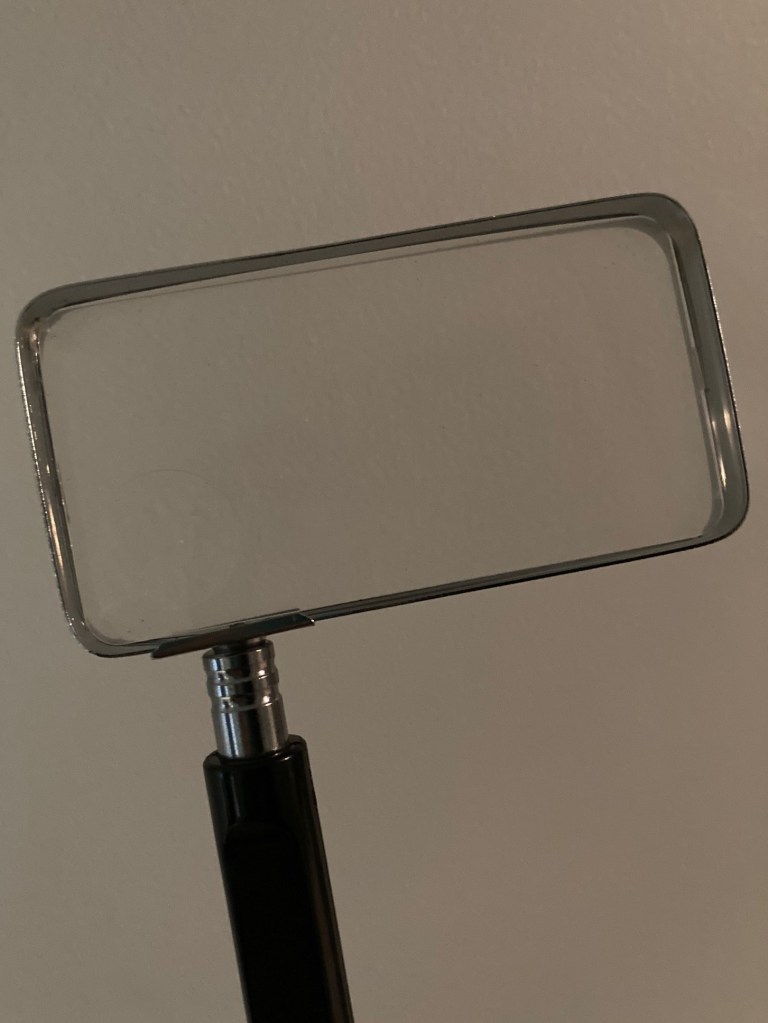
A hypocrite is someone who looks into a backless mirror—or is it a magnifying glass. . . . They cannot see their own reflection. They can only see others’ faults magnified.

Whose job is it to hold a mirror up to a person’s face? If I do it, the person may get angry at me, retaliate, and try to smash the mirror. If the Holy Spirit holds it up, then they are rejecting Him and not me. What if, however, God chooses to use me as someone’s mirror? Would I be willing? Only if He asked me to. Otherwise, I’d prefer the Holy Spirit to do the work.

And so, dear God, would You kindly hold up a mirror to my friend’s face? May she see her reflection, resulting in recognition and repentance. Yet You know the best time to give her that mirror. Too soon, and she may harden her heart. I have to trust You, Lord. Meanwhile . . . am I expected to love . . . a hypocrite?

Clothespins and B.O.

Journal 2005 Visual: We all have a lot of stinky stuff inside our hearts. And we walk about with clothespins on our noses so that we won’t (or can’t) smell ourselves. But others smell us, and they’re repelled. Eventually, the clothespin pinches hard enough that we remove it, or we start to sweat and it slips off, and when we smell ourselves, we don’t like it. I think God sometimes removes the clothespin, and we blame Him or others for the stench, never realizing it comes from or own b.o.! So, we have a choice—keep the clothespin on our nose or allow ourselves to smell and get motivated to clean up with God’s help. Freedom is not having to wear a clothespin on one’s nose because the inner aroma is now sweet.

Lord, in Your sovereign timing, would You remove the clothespins I’ve been keeping on my nose? And once removed, will You help me get rid of the stench and fill me with Your fresh air instead? Lilacs and cinnamon and peppermint and guava nectar and mangos and freshly baked bread, and sweet air after a rain and roast beef and rose petals—but mostly lilacs. Amen.

2022 Update. I’ve changed my mind about the statement “I think God sometimes removes the clothespin.” He never violates our will. It is our choice to leave the clothespin on, and He waits patiently for us to remove it before He can clean up what’s inside.

Possessions

Journal 2005. I remember my very first box of 64 crayons with a pencil sharpener on the side—a special gift from my beloved Grandpa Peterson, sent all the way across the ocean into the hands of a little girl whose mother taught the Africans by writing with her finger in the silky soft dirt. I guarded this treasure, arranging the colors by hue, gently returning each one to its proper slot, chagrined when I realized I had to peel back part of the paper in order to sharpen a crayon, and disappointed when it didn’t duplicate the original point.

When I pulled out my box of crayons at boarding school, someone borrowed them, leaving some crayons broken or misplaced. First, I got angry. They had no right to do that—even if done by accident. I felt disappointment, sadness, and Loss.

Possessions provide joy or creature comforts and can be great tools for accomplishing things for the kingdom. But holding onto them too tightly reveals what’s in my heart. Why do I feel so violated when someone touches my things? Am I too attached to them? Should I take care of my possessions? Of course. But I should not be in bondage to them. Eventually, I realized possessions are worthless in eternity. They are gifts from God for use here on earth, and if I recognize their source, I can hand ownership back to Him. I’m simply a steward of God’s possessions.

And so, Lord, I release that pristine box of crayons into Your hands. Break the bonds that hold me to it and color me a beautiful sunset instead.

To-Do List

Journal 2011. People talk about compartmentalizing their thought lives, and I’ve never fully grasped how they can do that. But one day when my to-do list was longer than my available hours, and my mind was too absorbed on one task to complete any others, I asked the Lord for a metaphor.

I mentally placed each of my tasks into a different room. One room is not more important than another, but I can’t be in two rooms at the same time. My brain is not wired to multi-task, so when I’m in one room, that’s all I focus on. People/relationships can walk in and out of each room I’m in, and I can stop and interact with them.

The first challenge for me right now is being in one room physically while I’m in another room mentally. I find I want to hurry up with the tasks in this room so I can get back to the Study or the Library or the Rec Room. The other challenge is deciding which room I need or want to be in and when. (Sadly, I tend to avoid going into the exercise room.)

And God? Thankfully He’s in every room of course. However, I desperately need concentrated, uninterrupted time in the Prayer Room.

Lord, help me to be mentally present with each person who enters my heart-house today. And will You be my Guide for what room(s) to work in and when?

January 2022 Update. This year started out with a large number of compounding stressors, and the jumbled stacks of papers in my office reflected the disorganization in my brain. Though disorienting, I didn’t cave or panic. I kept breathing and focusing on the next trouble-shooting task at hand until I could come to my scheduled Karen Day and hit the reset button.

The more we process our past, the healthier we get emotionally, and the more we can handle in the future.

Word for the Year 2021: Handicap

I confess I have an abysmal sense of direction, and it’s getting worse with age. I Googled “bad sense of direction” to get some tips for improving my odds and collected maps for cities I frequent. Every day for the first month, I studied our local map, trying to memorize street names and cement a visual mind map to guide me. What a useless endeavor! Apparently, I am incapable of thinking and driving at the same time.

When I read a blog by someone who unashamedly labeled his poor sense of direction a HANDICAP (and many people resonated with his plight), I concluded I cannot change my brain enough to warrant shedding my trusty GPS. So, there you have it—one Word for the Year tossed in the trash, and I needed a replacement.

Following my recovery from Covid in November 2020, I decided to chronicle my journey with another hidden HANDICAP—loss of taste and smell. First, I tried the famous burnt-orange trick that went viral (useless) and sniffed three different essential oils three times daily for the suggested smell training ritual. For two weeks I quadrupled my intake of zinc. Nothing.

I spit out my first cup of coffee, tasteless as water. When I tried sniffing freshly ground coffee beans, a disgusting malodor greeted my nose. At least I’m smelling something, I reasoned, but this annoying odor lingered nonstop for months. Everything smelled the same: smoke, pizza, cat litter. I became the designated dirty-diaper queen for my youngest grandchild.

In the first three months, I burned up three frying pans because I couldn’t rely on smell to alert me. I no longer dared leave the kitchen during the simmering process. I lost what little interest I had in cooking or making menu decisions. For the first time in our 46 years of marriage, I didn’t care if I ate my husband’s bland-diet preference over my spicy palate. It all tasted the same, so what was the point?! I now had to rely on him to inform me if meat had spoiled or the seasoning wasn’t right in a casserole.

One day we decided to treat our grandsons to ice cream. As we approached the drive-through, I asked the 10-year-old what he thought I should order since I wouldn’t be able to taste it. “Cheapest thing on the menu, Grandma!” he said. Smart kid! And later, his 7-year-old brother asked, “Why eat anything at all?” I explained that food fuels the body, but regrettably, I had begun to choose peanut-butter-and-jelly sandwiches over healthy salads. Growing our Tower Garden felt pointless.

With the loss of eating pleasure, I learned to tune more into how hunger felt instead of eating what I craved but, disappointingly, I lost no weight. Eventually I began to differentiate between salty, sweet, bitter, and sour, but could taste no nuances of flavor. I put hot sauce on everything, trying to elicit a little zing for the tongue.

I tried hard not to complain but failed miserably and so began a regimen of gratitude for my other four senses. When I finally got tired of hearing myself complain, I asked God for a better solution and stumbled on Isaiah 65:5b: These people are a stench in my nostrils, an acrid smell that never goes away. (NLT)

And that’s when He gave me this idea: every time I smelled that repulsive odor, I would think about the stench in God’s nostrils and pray for someone. It helped refocus my attitude.

By August I noticed a subtle shift in relinquishing the malodor and enjoyed a hot curry Indian dish. Coffee became my gauge for progress. I went from gagging to tolerating a quarter cup, to drinking half a cup if I held my nose during the brewing process. I jumped in glee when I got a whiff of burnt toast. Someone claimed if you didn’t get your smell and taste back after nine months, it would be permanent. Oh, Lord, I hope not! I was into my ninth month and counting . . .

In September, someone suggested I try fascial counterpressure (whatever that was!). I found a practitioner 30 minutes away and promptly made an appointment but returned home with no noticeable results and fewer dollars in my wallet.

In October, I read Numbers 11:1-9 where the Israelites complained about eating manna every day. They missed their pungent fish, along with the flavorful cucumbers, melons, leeks, onions, and garlic. I could relate! I used to fault these people for their ingratitude, but now I felt convicted over my similar lament. I so missed the diversity of flavors. I wanted to discover the sweetness of holy manna and be thankful for what I had instead of grief over what I’d lost. How could I learn to leave Egypt behind and embrace the promise of a new land?

I continued to struggle with my attitude, complaining about my loss. I had an appointment with food three times a day, and three times a day I had to face the keen disappointment of loss of pleasure. Five times in Numbers 15 the phrase “an odor pleasing to the Lord” caught my attention. I couldn’t smell, but God could; and I wanted my attitude, thoughts, and deeds to be a pleasing odor in His nostrils.

It was like I was holding onto the end of a rope connected to taste and smell. Letting go of the rope didn’t mean I wouldn’t eat; it meant letting go the pleasure, the drug. When I dropped the rope, I watched in astonishment as it retracted like a tape measure into the food. The flavors were still there, but they were no longer tied to me. They don’t belong to me and therefore have no power over me. Now I can pick up food, examine it, see it, feel its texture, and experience it. It is what it is.

Over a year later now, I have adjusted (mostly) to my hidden handicap, and I rejoice in every whiff of smoke or incremental change in flavor. It’s okay that I can’t smell dirty diapers, but I sure do miss my coffee!

Oh taste and see that the Lord is good: blessed is the man that trusteth in him. (PS 34:8 KJV)

My biggest disappointment is not being able to taste injera ba wat (Ethiopian food)

For further reflection:

I checked out the Scriptures (RSV) and found the following words: Nose 12x, Nostrils 14x, Smell 20x, and Odor 43x. I even found a blog on the subject: Just a Thought . . . God’s Nose (constantcontact.com)

Why Go to Church?

Journal 2005

God gifts and equips us to serve others, and ideally, this would be in a church setting. But a church we once attended erected a large roadblock in the path of our prayer ministry. Though they wouldn’t support us because of their fears, triggers, and misunderstanding of inner healing prayer, we continued to show up week after week. We loved the church and prayed for the leadership, but they forbade us to use our gifts in their building.

But I ask myself: What’s the point of going to church if I cannot minister to others? To be fed from the pulpit? Internet resources are boundless, and besides, I’m mature enough to feed myself.

To hear a little music performed? There are CDs for that [or live streaming today].

To worship God in a building? Nature would serve me better.

My felt need is fellowship. That, really, is the essence of why I attend church—to be with like-minded people, to worship together in harmony, to minister to others, to love them, encourage and support them. It’s not enough to warm a pew Sunday after Sunday without interacting with people.

Meanwhile, God led us to others outside the church who were hurting. One call even came from someone in Arkansas, who wanted to connect us to a friend in Germany. God’s work would not stop.

A 2021 Update: Two things. We eventually moved to a church where the leadership supports our ministry and encourages us to use our gifts with the body. Refreshing! We have a spiritual covering at last. But second—Covid. I watched in dismay as churches divided themselves along emotional lines of masking/not masking, closing/staying open during the pandemic. The results included people changing churches, people leaving church permanently, and others becoming more tight-knit as they bonded together in unity to minister to each other. I think this year has helped us reexamine why we go to church.

Why do you attend (or not)?