Two or three times in church today I found unwanted thoughts in my head—critiquing (I refuse to use the word criticize because I don’t want to go down that road) the person or event. We all do it—okay most of us do it.
It irritates me a little if a person says everything is perfect ALL the time. They are too delighted in everything—and then I realize as I say this, that all the people I know like this are sanguines—which I am not. Declaring everything is always perfect, good, and wonderful, feels disingenuous. It’s not reality. But neither is the doom and gloom of the pessimist. I’m somewhere in between.
What I don’t like is the unbidden thoughts I have regarding others. I used to judge and feel superior and all that nasty self-righteousness stuff. Now I just notice. But why, I ask myself, do I even need to notice? I guess the only way NOT to notice is to be blind.
Okay, I really must be honest with myself. It’s not the noticing that’s the problem. So what is it? Why does it matter? That’s where the emotion lies.
I find the memory and process it, and it feels better now. Noticing is okay; judging is unproductive.
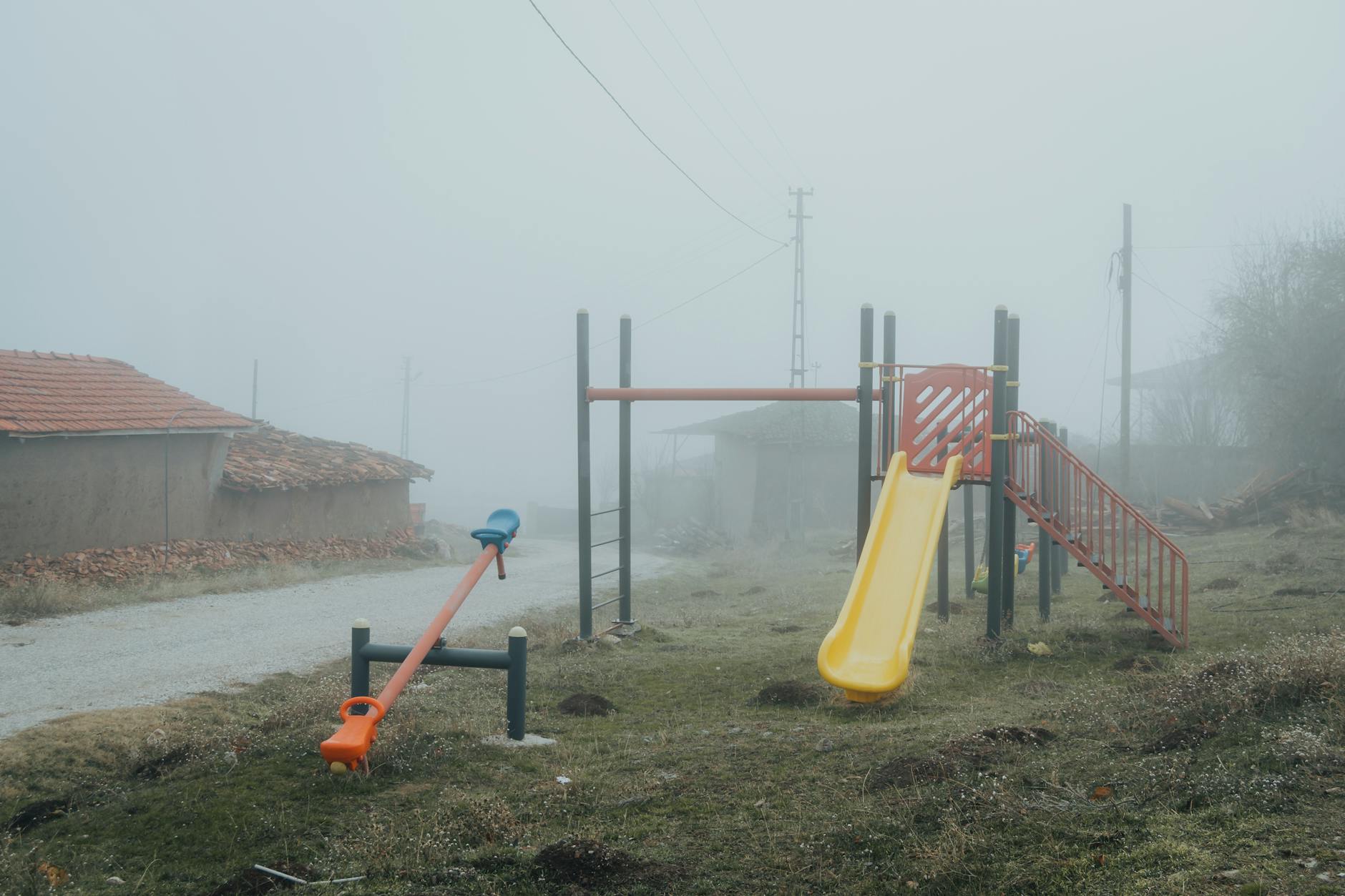
I felt a trigger this week that took me back to the sensation of being at the end of a teeter-totter. My playmate sat on the end of the board at ground-level, suspending me in the air, feet dangling, afraid she might step away and leave me to crash to the ground.
All my solutions for this discomfort didn’t work, so I invited Jesus into my picture. He stood beside me and grabbed me when the teeter-totter plunged. Safe in His arms.
Amazing how our minds work. I’m 63 years old, and the cells of my body and brain still remember the sensation I felt at age 8. We human beings are walking messes of triggers!
The broken and bruised Little One lurched forward onto the desert stones, her parched lips whispering a desperate, “Help.”
A large-winged, iridescent creature glided swiftly from the sky, casting shade over her limp body. In one motion, he lifted her high above the earth. The wind cooled her fevered brow, and she slept. When she opened her eyes, they were soaring over a mountain and descending into a lush green valley where she spied a ribbon of river sparkling in the sunlight.
The creature landed gently near the entrance to a cozy cottage. As if on cue, the heavy oak door swung open, and a kind-faced, elderly gentleman reached for her as her spindly legs crumpled beneath her.
“Come in, my child,” he invited.
A warm glow from the fireplace revealed a table spread with a feast beyond compare. Exotic fruits and colorful vegetables spilled artfully around platters of venison, quail, and racks of lamb. Never before had she seen such abundance.
“You may eat all you want, but only a little at a time, as much as your stomach can handle.” And he began to feed her from his own hand. When she had eaten her fill, she fell asleep at the table, dreaming of lamb chops and fresh fruit and homemade bread.
The next morning, she awoke in a bed of feathers, refreshed but weak. Where was the old man? She wandered outside to explore. There by the cottage ran the river she’d noticed from the sky. And in the middle, standing chest-high, a young man beckoned her to join him. When he saw her fear, he waded to shore, offered his hand, and led her close to the edge where she tested the water with one toe. Surprised at its warmth, she allowed him to pull her further in, waist high. The mineralized liquid soothed her aching muscles and cleansed her wounds of the poisons. Finally, she plunged completely under and came up splashing and laughing. The dirt and the grime of a lifetime dissolved into a rainbow of bubbles. The man smiled, enjoying her fun. She could have stayed in this River of Delight all day, but the man had more he wanted to show her.
“Come,” he said—in the same tone the old man had used.
Curious, she thought.
He wrapped a soft towel around her shoulders and handed her a robe. Strangely unselfconscious in his presence, she slipped out of her dirty rags and let the shimmering white garment fall neatly to her feet, covering her bony frame.
“It’s beautiful!” she murmured.
She followed him down the path and around to the back of the cottage. A kaleidoscope of color met her eye. In the center of the garden stood a massive fountain with flowers and vines of all varieties growing out of its walls. A stone bench circled the base of the fountain where small pilgrims could climb to reach the water or the elderly could sit. The man reached for a dipper, scooped up some of the pristine liquid, and held it out to her. Again, she felt fear surging up from deep within.
“It’s safe,” is all he said. And she drank. And she felt life in her bones, and her flesh felt restored, and her spirit revived.
For a year the Little One stayed in this valley of paradise, learning lessons from the Master Teacher, until one day he spoke these words: “You are strong enough now, my child, to venture forth. Invite others to come here—but you must show them the way. And if, like you, they’re too weak to travel by foot, simply call, and I will send my winged spirit to carry them here.”
And the Little One, strong in the power of His might, went forth and gathered in the lame, the blind, the broken, the bleeding, and the wounded, and brought them to the feet of the Master. And they, too, experienced fullness of joy in the River of Delight. And the cottage swelled with happy voices—but was never full—for there was always room for one more. And the Fountain of Life never ran dry.
Psalm 36:7-9 NIV
How priceless is your unfailing love, O God!
People take refuge in the shadow of your wings.
They feast on the abundance of your house;
you give them drink from your river of delights.
For with you is the fountain of life; in your light we see light.
Abraham, a man of faith, chooses deception with Sarah and bows to her wishes for Ishmael. The next Patriarchs, Isaac and Jacob, also practice deceit. David, a man after God’s own heart, succumbs to adultery and murder. Noah, who saves the world, overindulges in alcohol. And on it goes. Every human on earth has a character flaw. And so, I need to examine my life. Where have I failed to be true to myself and to God?
I can see the roots of my compromise in Grade 12 when my parents returned to Africa without me. My authority, my protection, was gone. The tempter came in the form of “Uncle J,” a broken man who desired to do right but carried too much pain inside. Couple that with my own rebellious and hurting heart, insecure and vulnerable, and I began to lower my moral standards and boundaries. There is no one but me who can claim responsibility, but Satan took advantage of my innocence.
I am who I am today because of those broken places in my heart. I may not have committed fornication or murder like David, but I kept a secret from preschool days where the seeds of guilt and shame were planted, took root, and grew.
Redemption is available to all, no matter what our character flaw. The past has been washed clean. I am free of guilt and shame. Yet I know the depravity of my heart. I know when judgmentalism and criticism and self-righteousness flit into my brain and I have to “take captive every thought” of unrighteousness. I see, I know, I recognize my bent toward self. Lord, have mercy. Keep me close to You so that I don’t stray.
There are seasons and rhythms of our lives when things go dead and sometimes when they sprout to new life. Years, months, weeks, and days cycle round and round. What I do this day may seem very insignificant, yet small habits yield big results and can set the course of my history.
I seem to be in a special season right now, however brief, without clients daily clamoring for my time. For three days my husband will be golfing, and I have potential alone time. I think of all the things I could do with this precious gift, and I feel conflicted. I know what my heart wants to do, and that is to write. And so, I indulge myself. It feels like pure joy and delight to organize thoughts, rearrange them, and make them permanent by recording them. I asked the girls about writing a blog, and I got a resounding yes! Is this a priority? Do I have the time . . .?
VISUAL: I’m a disciple in the boat on the Sea of Galilee, and Jesus is about to walk by. I call out to Him, “Will you join me in the boat?”
He is more than willing. He climbs in, sits, and hands me some bread. It’s just the two of us.
“You’re worried,” He comments.
Yes, I suppose I am. I wait for Him to tell me what about, but I know Him well. He will pause to let me figure it out.
“I’m worried that I will not use my time wisely. Time is a finite commodity.”
I find it easier to function with a predetermined schedule, decisions in place, and brain on autopilot. It reminds me of scheduled time at boarding school with bells and sirens that dictated our routine. Decisions were made for us. Summers, on the other hand, were wide open with no expectations, and laziness was sure to follow.
“Go on,” He prompts.
“I don’t want to waste it.”
“Are you wasting it?” He asks.
I don’t think I am. Then what’s the issue? It’s a matter of portioning it out to match the allotted time I have at my disposal.
“You’re feeling rushed—like you want to do what your heart wants to do, but your head is giving you alternative coulds and shoulds.”
Yes! That’s it! So how do I silence those words and voices? I want to write, but my head says, “You need to file and exercise and clean house and visit neighbors.” This issue is about alone time—there are certain things I can do best when I’m uninterrupted.
Jesus leans back, hands behind His head and smiles at me. “You have a problem, then, don’t you?”
I know He’s teasing me. I’m way too serious and stressed over this.
“What do you want to do?” He asks.
“Write!” I exclaim.
“But . . .?”
I feel rising exhilaration . . . and guilt.
I ask Him for a visual. He shows me a row of boxes, some smaller, some larger, each containing one task on my to-do list.
During my time allotted for each box, I have permission to compartmentalize and block out all the other thoughts that belong to other boxes.
And so, just for today, I’ll write, uninterrupted, without guilt or remorse. I’ll seize the precious time that I have and just focus. The dirty dishes can wait.
A 2024 Update. I smile as I read back on this journal entry. I feel no guilt now whatsoever over taking time out of a busy (or not-so-busy) schedule to write. It’s one of my default activities along with sitting at my dining room table arranging jigsaw puzzle pieces. Reading a book in the middle of the day, though—now that feels decadent. Perhaps I need to address any emotion behind that thought!
I read recently where a therapist placed three pillows on the floor and instructed her two clients to each pick a pillow on which to stand. “Your own pillow represents your soul,” she told them. “It belongs to no one else but you.” Next, she explained the middle pillow. “This one is called Relationship. Each of you may choose to go to the center pillow and discuss what you want out of the relationship, but at no time may you step on another person’s pillow. It is creepy and codependent to try to control somebody else’s soul.”
I started to explain this concept to a client one day when she was struggling to let go of some codependent relationships, but the Lord gave her a different visual. Jesus had been meeting with her in a small cabin (representing her soul) that was decorated exactly as she wanted it with warm cozy colors, a fireplace, and a comfy chair. She had also invited her adult children into her cabin and was not willing to send them out into the cold, even if she herself had to sit on the floor. “I’d do anything for my kids,” she declared.
The problem was that she was running out of food to feed those adults while her own soul was starting to shrivel and starve. Jesus explained to her that her children had their own cabins with plenty of food in them, and she was doing them a disservice by insisting they live with her. “Your cabin is unique to you,” He explained, “and you can’t fully grow into who you were meant to be if you share the space with others.”
“If I let them go,” she wondered, “does that mean I never get to see them again?”
“Oh, no,” Jesus replied. “You can always go visit them on their porch or they can come visit you, but you must not move into each other’s cabins to live.”
As I trace the steps of my own story, I can see how often I allowed others to take up residence in my cabin or on my pillow. Unwise and unhealthy choices stunted both of us. Through my processing, I’ve discovered that the more I keep healthy boundaries, the faster their healing occurs. It’s easy to say I wish I’d known all this at the beginning of my life, but in truth, knowing something and acting on it are two different things. I knew these truths on the left side of my brain, but right-side emotions kept jumping in and taking over. It feels like a long, slow process to get where I am today. Some days I wonder if I’ll ever learn the lessons God is trying to teach me. But as I read back over my journals, I discover that what used to trigger me no longer has power over me.
In the Good Friday service tonight, I saw a visual of a thin waif. As we partook of the elements of communion, I shared them with her and she revived.
“Who is this, Lord?” I asked.
“She’s the young mom you were, trying to raise your daughters, mistakes and all. You’ve not been kind to that self.”
And as we sang, I helped the waif nail her shame, chains, and guilt, regrets, disappointments and should-haves to the cross, and I forgave her for being “less than.”
Looking back, I wonder how different I would have been as a wife and mom had I known then what I know now. I would have stayed more present, rather than hiding my true self. I kept her safe and hidden for almost 20 years, and another 10 before she fully came back to life.
I can hide parts of my heart from myself or from others or even try to hide them from God. But God knows each part intimately and wants connection with each one.
Check out these verses on hiddenness.
Times are not hidden from the Almighty (Job 24:1 KJV).
Thou desirest truth in the inward parts: and in the hidden part thou shalt make me to know wisdom (Psalm 51:6 KJV).
And God who knows the heart . . . (Acts 15:8 ESV).
My mom had just flopped onto the sofa in the living room when I came to the locked screen door near her and demanded to be let in. She told me to go around to the unlocked kitchen door. I refused. I wanted my own way. I persisted until she gave in, too tired to argue with me or to stand her ground.
The moment she gave in, my seven-year-old self felt something shift inside. I had gained a little power—but at the cost of my self-respect and my mother’s disgust. It didn’t feel good even though I’d gained the victory. I guess I felt guilty.
I repent, first, of my stubborn heart and, second, of my insensitivity toward my mother’s weariness. I recognize that my actions were less than stellar, but I want to thank the Lord for putting such a strong spirit inside me. Mom always said I had a stubborn streak, but if that spirit could be channeled right, it would be a good thing. Thanks, Mom, for believing in me.
So, what is this wanting my own way, not wanting to be inconvenienced, to have to walk a few paces to enter another door. Was I lazy? Self-centered? I think at the time it was driven by tiredness. I think. But, of course, that’s no excuse.
Visual: This stubborn part of my heart looks like Gimli in Lord of the Rings: strong, stout, grumbly, gruff, and tough, but determined to finish his quest. Jesus invites him to chat, but Gimli mutters under his breath. He doesn’t care much about leaving the body (the hurting part of my heart) outside with a sprained ankle. But he comes in and plops down on a chair across from Jesus who is lounging by the fire. (Mom is still sitting on the couch, oblivious to the conversation that’s about to commence.)
“Drop the ‘tude!” I want to shout at Gimli. “You have strength already without it.” (I can see the wheels turning inside his head.)
“This is just who I am,” he says. “Get over it.”
Whew! He’s a tough nut to crack, Jesus. Good luck with this one!
Jesus gets up to tend the fire in the fireplace, and somehow this action begins to melt Gimli’s gruff exterior.
“I’m sorry, Jesus. I’ve been this way for as long as I can remember. I don’t know to be any other way.”
“You’re changing right now . . . “
“Well, yeah, you sorta have that effect on people.”
He smiles. “What’s on your heart, Gimli?”
Gimli looks down toward his chest. He may be a literalist, but he knows what Jesus means.
“I dunno. I just want my own way.”
“Why?”
“Because it feels good. It feels strong. In control.”
“I see.”
“You see what?”
“I see where you’re coming from.”
“You do?”
“Uh huh.”
“Then figure me out!”
“You’re doing fine yourself.”
“Okay, I suspect You’ll ask me next if I’m willing to give up control? And the good feelings . . . “
Jesus nods His head slightly. “Go on.”
“And I need to find a good reason to do that.”
Jesus waits.
“Well, aren’t You supposed to show me something?”
Jesus throws His head back and laughs. He’s enjoying Himself. Apparently He knows that I know that I’m doing it again—maintaining control of the conversation.
“All right, already. I know what I have to do. I’m just not sure if I know how. I trust You. I do know that.”
Comically, this literalist Guardian, who’s as wide as he is tall, climbs out of his chair and lies on his side on the floor.
“You know I’ll have a hard time getting up,” he grumbles.
Again, Jesus laughs out loud. He loves this character.
“Okay, so now what?”
“Now what, what?”
“What do I have to do next?”
“Nothing!”
“What!? I can’t stay like this all day! I’ve got work to do.”
Jesus heads over to the couch, gets a cushion, and places it under Gimli’s head; then He retrieves a blanket and gently drapes it over him. “Rest well, my friend. You’ve earned it.”
In seconds, Gimli is sound asleep, snoring loudly.
Next, Jesus goes to the screen door, unlatches it, picks up the tired and hurting body and carries it into the room. He tends to the ankle first and then invites the body to rest. She knows Jesus will never leave her side.
Gimli opens one eye. “Jesus?”
“She’s okay. Fast asleep on the couch.”
“Okay.” And Gimli drifts back to sleep, dreaming of wars and battles and victories won. But today was his greatest victory of all.
And what of my mom? She’s curled up in her chair, also fast asleep. And through my haze, I can hear Jesus softly humming, “I lay Me down . . .”
Thank You, Lord, for laying Yourself down. You sacrificed Your body, broken and bruised, for me. How can I do any less when You ask me to sacrifice MY body for others who don’t deserve it.
I’ve been on a journey all my life to discover the secret of prayer. When I read others’ stories, they don’t match mine. I shift between guilt (not enough) to apathy and forgetfulness, from rote to relationship, from works to worry, from self-condemnation to self-awareness.
I’m reading the biography of Rees Howells who discovered that prayers were best made when they were God-directed. For example: don’t pray for healing unless God directs me to. Yet I do pray for healing of my every ache and pain as well as for everyone in my life who is suffering. But I don’t really expect Him to heal, or I’m so surprised when He does.
Today, Lord, I want to listen, wait, and ask for what is on Your heart. I want to be a prayer warrior.
“Hmmm,” says Jesus. “What does a warrior do?”
Well, he fights—fights for truth, fights against an enemy, defends himself, defends the weak. The weapons of warfare are spiritual, not physical. I know I’m supposed to just stand once I’m fully armed. So I guess the first step is to make sure I’m fully armed. You’re faithful to point out the chinks in my armor. And I know how to stand . . .
“But . . . ?”
But I don’t know how to use words. I don’t know what to say or what to pray for.
“Then why don’t you repeat after me?”
Huh?
“Like when you learned your ABCs or the prayer I gave the disciples or The Lord Rebuke You prayer or . . .”
So it’s that simple? Repeat after You? I can do that. Okay, I’m listening.
“Dear Lord,” He begins.
Wait a minute! You’re sitting right here with me. Why do I need to address You? When I’m talking to my husband, and he’s the only one in the room, I don’t have to say his name to get his attention—unless he’s not listening of course. Do I need to start “Dear Lord” every time?
He laughs. “No, of course not,” He teases. “I was just seeing if you were paying attention.”
Very funny. Ok, try again. I’m listening.
“Hi, Karen.”
Hi, Lord.
I wait. He seems to be thinking. (God has to think? Doesn’t He always know exactly what to say?)
“Okay, repeat after Me:
I, Karen, do solemnly swear to tell the whole truth and nothing but the truth, so help me, God.”
This is not funny! What kind of prayer is that!?
“I like honesty. I want you to tell yourself the truth as well as to Me.”
Okay, I’m all in.
“Good. Now tell Me the truth. What’s in your heart?”
Well . . . I’m worried that . . .
“Choose your words. Take your time—and be honest.”
Okay . . . I’m worried that I’ll be judged for how little I pray.
“You mean little in chronos time?”
I suppose.
“Who’s keeping track?”
I suppose I am, for one.
“And?”
And . . . I feel guilty if I neglect to pray, to ask for favors, to cover people with the prayer of protection, to intercede for their needs.
“Intercede . . . ooooh that’s a big word.”
You’re teasing me. (I’m feeling petulant.)
“What do you want, Karen?”
What do I want? What do I really want? I want a heart that is so connected and in tune with You that conversation (prayer) flows as naturally and comfortably as breathing. I want every thought I think and every breath I take to be in sync with Yours. I want our conversation to feel natural, not formal; intimate, not forced or stilted.When I pray for people, I feel like I’m straining to think up stuff to say, but I’m not always sure what to say or if that’s what their true need is.I also want to know how often I should pray for someone. Expectations are daily, and somehow if I miss a day, I believe it’s my fault if they fail or are vulnerable to Satan’s attacks. How’s that for being honest?
“That’s better. What else?”
There’s more?
“Oh, yes. Dig a little deeper.”
It’s about me, isn’t it? It’s about pride. What if someone should discover what a fraud I am? That I don’t spend x number of hours a day on my knees. Or I can’t say with sincerity, “I prayed for you today.” How would that feel? Shameful? Embarrassing? Guilty? Or, since we’re being honest here, how I look compared to so-and-so. How sick is that?
“Anything else?”
Oh, I think that’s enough shame for the moment.
“Okay, what do you want to do about it?”
Me? I thought it was Your job to lift shame and give me truth and offer something in its place.
“Why should I? I didn’t put it there!”
Then who did? Oops . . . I guess I did. Help me, Lord, please. I want to give it up. I really do. But self-shame and blame is too heavy a brick to lift by myself.
(He hands me a sledgehammer.)
I smash the brick into smaller pieces, small enough for me to carry. What to do with them, though? It seems we’re building a brick wall for some sort of dwelling. I’m not sure I understand the significance yet, but brick now feels useful—like it’s serving a purpose.
Oh! I see it now . . . I think we’re building a house of prayer. Okay . . . but still not sure about this.
“There’s more to come,” He says. “For now, let’s stop and get a bite of lunch.”
This morning, when I asked God how best to pray for my friend Suzie, He gave me this visual.
Jesus scooped me up on His white horse, and we flew over to Suzie’s heart castle. I was dismayed to look down and see the devastation. The enemy had penetrated in spite of the thick stone walls around the property. The castle and the grounds had been burned and blackened, and only the charred remains of the beautiful oak trees dotted the landscape.
“So where is Suzie?” I cried.
“Listen,” He said.
And then I heard it. Cries of anguish came from the direction of the one standing turret. I knew then that Suzie was trapped inside, fighting for her life. She had barred and locked the door from the inside, fully armed, on high alert. The enemy troops surrounded the walls and were gleefully gloating, not paying much attention except to their own shenanigans. They knew they were helpless to penetrate the turret, but they didn’t care. They knew that eventually Suzie would run out of food and water, and their mission of destruction would be accomplished.
My inclination was to rush in with a flaming sword and rescue the damsel in distress, but I knew Jesus far too well than to make plans without him. Besides, He had told me I didn’t need to bring any weapons with me because I had Him; and as long as I stayed close to Him, I’d be okay. I looked at Jesus to see what He would do.
We glided over the walls and landed softly in front of the turret. I laughed in glee as the enemy hordes scattered like rats to the edges of the compound. What will He do next, I wondered. Will He knock, inform her that all is well, and that would be that?
Instead, we slid off the horse, and He sat by the door and pulled out a bag of marbles. “Care to play?” He asked.
What!? Really? Well, okay, I trust He knows what He’s doing.
I glanced up to see a shadow cross the window above us.
“What’s happening?” I asked.
“She’s noticing the quiet,” He whispered.
I listened. The screeching of the devils around us had stopped, but no sound of birds could be heard or rustling in the trees. Just silence.
Okay, that’s good, I thought. What’s next?
“She needs to know that she’s safe before she will put down her weapons, stop fighting, and rest,” He said. (He had read my thoughts, of course.)
“So why don’t we just go on in and rescue her?” I asked. “You can go through walls.”
“I could . . . but it might scare her, and she’d pick the weapons back up if she hears noises on the stairs. I want her to learn to trust Me. I’m not like the destroyer who’s out to get her. But she doesn’t know that yet.”
“But she might starve to death while You wait for her!” I exclaimed.
He smiled. “Don’t worry, Little One. She’s been starving a long time already. That’s why she called for my help.”
“Then why don’t You help her?” I asked.
“I will . . . as soon as she opens the door and lets Me in.”
“But . . . ?”
“But what?”
The question died on my lips. I already knew the answer. I had learned firsthand the lesson of waiting—when I’m ready . . . when the Kairos time is right . . . at the appointed time, all shall be well.
“Thank You, Jesus, for letting me come with You today. I asked You to help her because I knew You would. But it’s always fun to watch You work. What’s next?”
“Wait and see the salvation of the Lord.”
And so we continued to play marbles on the soft dirt. Then Jesus began to whistle a tune—a lovely melody. (I love it when Jesus sings over me. I hoped it would reach Suzie’s ears so she could hear it too.)
And that’s when we heard the sobbing. Deep, wrenching sobs of pain coming from within the turret walls.
“Now, Jesus?” I looked to see what He would do. I wanted to rush in and scoop her in my arms and tell her all would be well.
He just shook His head, silent, and I knew I was expected to stay still and remain quiet. We both looked up at the same time. A shadow and then a tousled head appeared in the window. She glanced furtively about trying to determine where the sound was coming from. But all she could see was the desolation below in her garden. We were too close to the door for her to see us from that angle.
And so we waited. But it didn’t take long. We heard the sound of footsteps on the spiral stairs, closer and closer to the door. I held my breath. What would she do next? I glanced at Jesus. A little smile played about his lips. I could hear her breathing heavily on the other side of the door, waiting for something. Jesus paused for one beat, then two, and then very softly knocked on the door. “Suzie? It’s Me. Jesus. It’s okay. It’s safe to come out now. You are safe with Me.”
“How do I know it’s You?” she demanded. I’ve been tricked before.
“Tell you what,” He replied. “Why don’t you open the window in your front door and peek outside. Don’t open the door itself until you know it’s Me and not the enemy.”
“Yes, but the last time I did that, I saw what I thought was an angel of light. But when I opened the door, all hell broke loose.”
“Good point,” He countered. “Did you use the Demon Test first?”
“What’s that?” she asked.
“I know how much you love My words. You can trust them. They are life and they are true. Remember where I instructed John to write, ‘By this you know the Spirit of God: Every spirit that confesses that Jesus Christ is come in the flesh is of God, and every spirit that does not confess that Jesus Christ has come in the flesh is not of God” (I John 4:2-3)?’ Ask Me to say these words. The demons are incapable of saying them you know.”
“Okay . . . let me think about that . . . okay, yes, I do trust Your written words. So . . . whoever you are, say those words!”
“Jesus Christ is come in the flesh.”
Slowly and cautiously, the window swung open, and Suzie peered out. Jesus winked at her and smiled. “Good job!” He exclaimed.
And then He nodded over to the black spirits at the perimeter of the compound. Try making them say those words.
“Tell me ‘Jesus Christ is come in the flesh’!” she yelled in their direction.
Some of them smirked; others cringed; but they all looked away, silent.
Jesus waited.
“But what if I open this door and they come rushing back here?”
Silently, Jesus held up His flaming sword so she could see the words written on it:
And take . . . the sword of the Spirit, which is the word of God (Eph. 6.17). For the word of God is living and powerful, and sharper than any two-edged sword, piercing even to the division of soul and spirit, and of joints and marrow, and is a discerner of the thoughts and intents of the heart (Heb. 4:12).
“They really don’t like My sword.” He grinned.
And then I smiled because I knew what was coming. I’d seen it hundreds of times. I heard the bolts scraping open. Slowly the door swung inward, and Suzie stepped out into the bright sunshine. She blinked, trying to adjust her eyes. And I saw Jesus sheath the sword and stretch out His hand in invitation. She hesitated. She still wasn’t sure she could trust Him. Maybe He was mad at her. Maybe He was going to whip out that sword to cut her in two. The thought was still very scary.
He lowered His arm. “Care to sit down and play marbles with us?” He asked.
“Marbles!? Are you mad?’ she said. “This place is in shambles; my kingdom is decimated, and you want to play marbles?! Aren’t you going to fix this place? That’s why I prayed to You, you know. You let this happen. Where were You when I was being attacked by the enemy? Where were You when my grandma’s life was cut short? You didn’t care that my parents divorced and left me to fend for myself.”
“Who are you really mad at, Suzie?” He asked gently.
“I’m mad at myself! I’m mad that I trusted you; I’m mad that I trusted other people and they betrayed me. But I’m mad at You too.”
Suddenly she stopped. I could see the fear in her eyes. She had just told off the King of the Universe. Would He strike her down for such insolence and disrespect? He’d done it before. She’d read about it when he disciplined the Israelites. Would He react to her the same way? She shrank back into herself, still on high alert, ready to bolt back into the turret and slam the door if necessary.
Instead, He waited, saying nothing.
When He didn’t make a move, she whispered, “Don’t you care!?” I could hear the silent scream behind the question.
“Yes, I care very much,” He replied. “I cared so much that I died for you so that you could be set free . . . if you want it.”
“Of course I want it,” she retorted. “But You didn’t do anything to stop it. And You didn’t come when I called.”
He waited, silent and patient.
“Well!? Aren’t you going to do something?”
“I’d love to, Suzie. But first, would you be willing to hand your anger to Me? I’m big enough to take it, you know. You’ve been carrying this for so long. How has it helped you? What has your anger done for you?”
“It’s kept me quite safe, thank you.”
He glanced up at the turret. “Sure, sure . . . quite safe . . . and starving.”
“Tell you what,” He added.” How about we do an exchange? You give me your anger, and I’ll give you some bread.”
By this time, Suzie knew her blood sugar was crashing, and she couldn’t keep up the tirade for much longer. Meekly, she handed over the fireball she’d been clutching under her arm, and He produced a warm, fresh-out-of-the-oven slice of bread, thickly slathered with melted butter and raspberry jam. Quickly she wolfed it down and then drank deeply from the bottled water He handed her. It tasted like nothing she’d experienced before—cool and warm at the same time, fizzy, like little sparkles of light dancing on her tongue. And she remembered those ancient words, “I am the Bread of Life; I will give you springs of Living Water.”
Suddenly, she knew she wanted more. More where this came from.
“Jesus?”
“Yes, my child?”
“Thank You.”
There was more, much more, to this story to come I knew. The kingdom had yet to be rebuilt and restored. But I knew there was time, plenty of time, because I knew that God’s timing is always perfect. For now, it was good to know that Suzie was with Jesus, getting to know Him and learning His ways, and would be pouring out all of her pain in the days ahead. It had been a good day.









 In the Pursuit of Peace