. . . His Spirit in your inner self [indwelling your innermost being and personality] (Ephesians 3:16 Amplified)
Since my innermost being is home to the Holy Spirit, I want to make Him feel as at home and comfortable as I possibly can. I know how icky it feels in my earthly home when there’s tension and discord and fighting and self-centeredness. How at home does the Holy Spirit feel when I’m angry, peevish, sulky, self-centered, lonely* or at worst—when I sin, leaving dirty smudges on the windows of His house, keeping others from seeing His light shine through?
[*“Why are you lonely? Aren’t I here?” says the Holy Spirit]
Guilt is like walking on a sandy beach, leaving footprints for all to see. And when shame tries to smooth over the prints, I create more footprints in my retreat.
Forgiveness is God sending His wind (the Holy Spirit) to blow across the sand, erasing all the prints. And even if I fail again, the wind continues to blow.
How much better to scramble onto a rock, where no footprints can be made, and no guilt and shame exist.
With a satisfying morning behind me, as I entered the room with a smile on my face, I immediately sensed a shift in the atmosphere. This person’s bad mood challenged my response.
I see a dark cloud swirling above her head. Since she’s cold and damp and miserable, no wonder she grumbles and complains. (Or does she relish the attention she gets from her drama?) Anyway—what is that to me? The problem is, I can’t get near her, or I’ll get drenched too—or worse, get zapped by the lightning coming out of her cloud. I confess I prefer to avoid prickly people, but if I do, I forfeit relationship and I can’t help them.
As I pray about my dilemma, the Lord says, “Wherever you are, rest in the eye of the storm, and the swirling wind about you will push her rain away so that you can draw near. You don’t have to be affected by her weather patterns.”
This was not my favorite day! I had my goals, expectations, and vision of an uninterrupted day to catch up on my work. It started at 4:30 a.m. with the cat waking me up, and it went downhill from there. I spent very little time at my desk, ran errands instead, met others’ needs, and ended the day an emotional wreck. No alone time and thwarted at every turn, I felt off balance, out of kilter.
How do I balance plans with interruptions? Why does it upset my equilibrium when I don’t get my way? I should have known . . . I should have anticipated . . .I should have been others-centered instead of self-centered, runs through my brain.
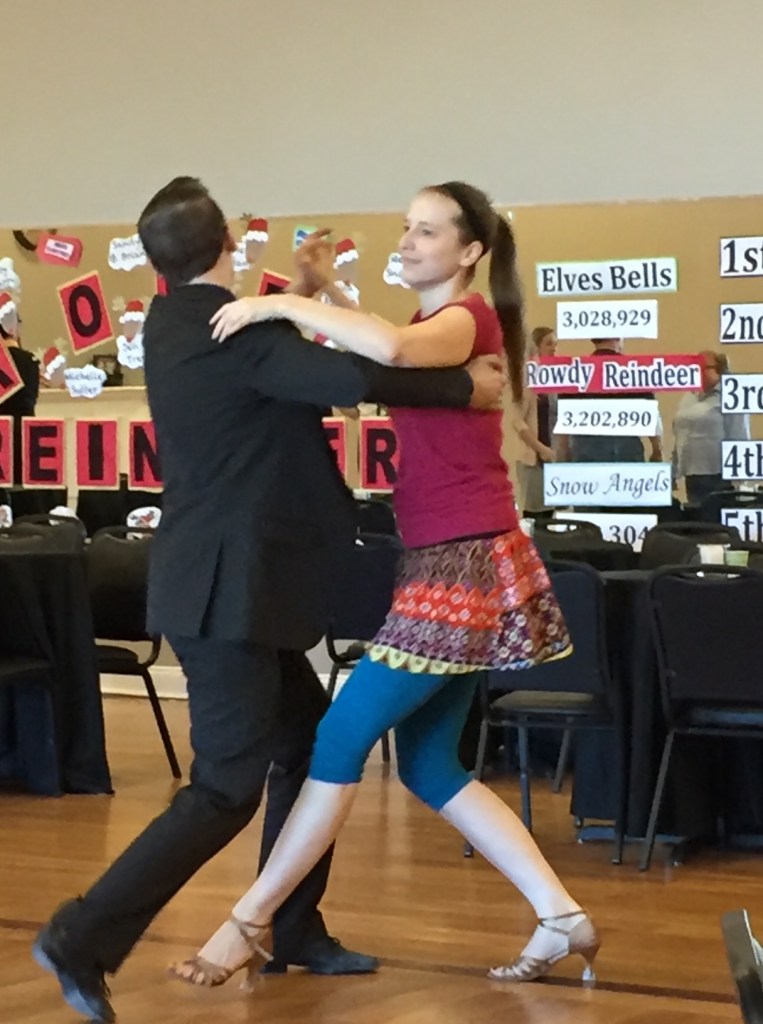
I used to have a tight control over my schedule. I was on the dance floor without a partner. I could sit on the side and play solitaire, get up and get a snack at my leisure, or sway to the music if I wanted to. I affected very few people with my decisions.
And then I got married. Having a dance partner meant I couldn’t sit down as often. Sometimes he served me drinks; sometimes I served him, and at all times we were aware of each other’s presence and needs. If we both were in the mood to dance, we did. If we both wanted to rest, we did. If one did and the other did not, we had to compromise or sacrifice. It was easier sometimes to give in than to fight over it; other times easier to think only about my own needs.
And just as I began to learn that dance, we had children. We adjusted to their varying heights and were less free to move around. I spent far more time fetching drinks for everyone and making trips to the bathroom than keeping time to the music. There was no standing still.
Next, a lot of messy people joined the dance floor asking for help. Some were unseemly characters. Others dressed nicely, but they didn’t know how to dance. Others were too weak and sick to dance. And the world of the dance floor suddenly became more complicated. While I was responding to the needs of the lonely ones on the bench or the thirsty ones in wheelchairs, my husband may have been in the mood to dance. And out of the corner of my eye, I watched one of our girls dancing her own dance with a guy. And my eyes and my heart were torn or divided or distracted or overwhelmed.
Add to that the God-element. In a fifth dimension, unseen to the human eye, the Holy Spirit and the evil one mingled among and through us, stirring us up, catching us when we stumbled, whispering lies or truth in each of our ears as we danced and sat and ate and drank.
I have a restlessness inside. Some days I just wish life would return to the days when I was a solo dancer, in control of my own decisions.
I know I must get away, and so I slip away from my dance partner, away from the tug of the needy ones, away from the vigilance on my children, and head to the balcony to drink in the night air and enjoy the stars. But just as I reach the top step, a noisy group comes spilling out of the room to join me, and the magic of the night is lost.
Instead, I find a quiet bench in the garden. I can still hear the music, and I know I can be interrupted at any time. I just want to go Home (with a capital “H”) where it’s safe, soft, peaceful, quiet. But it’s not time yet.
And so, for now, I slip further into the gardens, hiding behind a tree, hoping not to be found. But my dance partner is lonely and comes seeking me. And I set aside my own needs and return once more to the dance hall.
And the restlessness continues. It has nothing, really, to do with what’s going on around me. It’s not the people, the noise, or the distractions. It’s what’s going on inside my heart–an open door, a furnace burning inside my chest, stoked by anger. And even when I go home (lowercase “h”) the fire remains. Hot. There’s no escaping it.
In the middle of the dance floor, with my permission Jesus reaches out His hand, extinguishes the fire, and says, “Give Me the treasure of your heart.”
I’m willing, but I don’t understand—I don’t know what’s in it. Again, with my permission, He reaches into the door of my heart and retrieves a box. “Where your treasure is, there will your heart be also,” He explains. And I expect Him to take it up to heaven and deposit it under the throne. (Isn’t that what Matthew 6:20-21 teaches? “Lay up for yourselves treasures in heaven . . .”) But, instead, He places my box inside His own heart. “For safe keeping,” He says.
And now it doesn’t matter what goes on around me because I’m following my Treasure. When He says, “Dance,” I dance. When He says, “Rest,” I rest. When He says, “Serve,” I do that.
It’s not about controlling my world but about controlling my mind.
I confess I’m worried. About scholarships for our youngest daughter. About her school choices. About our savings account.
Worry is a wrinkled brow, a tightness in the neck, shoulders, and stomach. Worry keeps me focused on what is lacking instead of the potential. Worry keeps me bound. Worry is fear.
Worry is a frog on a lily pad floating downstream, hearing the roar of a waterfall ahead, and I’m helpless to stop, hop off the lily pad, or swim to the far shore against the current. What to do? It’s useless to fight. So, I relax, hang on, and get ready for the ride of my life. Over the waterfall, resurface, sputtering and gasping for air, lungs full of water. Feel like I’m dying. But I live to tell the tale. And I rest, recover, get up, and hop back onto my lily pad.
Face your worry. Imagine the end of the journey—survival or death. Either one, either way, there’s peace. So don’t worry!
Two or three times in church today I found unwanted thoughts in my head—critiquing (I refuse to use the word criticize because I don’t want to go down that road) the person or event. We all do it—okay most of us do it.
It irritates me a little if a person says everything is perfect ALL the time. They are too delighted in everything—and then I realize as I say this, that all the people I know like this are sanguines—which I am not. Declaring everything is always perfect, good, and wonderful, feels disingenuous. It’s not reality. But neither is the doom and gloom of the pessimist. I’m somewhere in between.
What I don’t like is the unbidden thoughts I have regarding others. I used to judge and feel superior and all that nasty self-righteousness stuff. Now I just notice. But why, I ask myself, do I even need to notice? I guess the only way NOT to notice is to be blind.
Okay, I really must be honest with myself. It’s not the noticing that’s the problem. So what is it? Why does it matter? That’s where the emotion lies.
I find the memory and process it, and it feels better now. Noticing is okay; judging is unproductive.
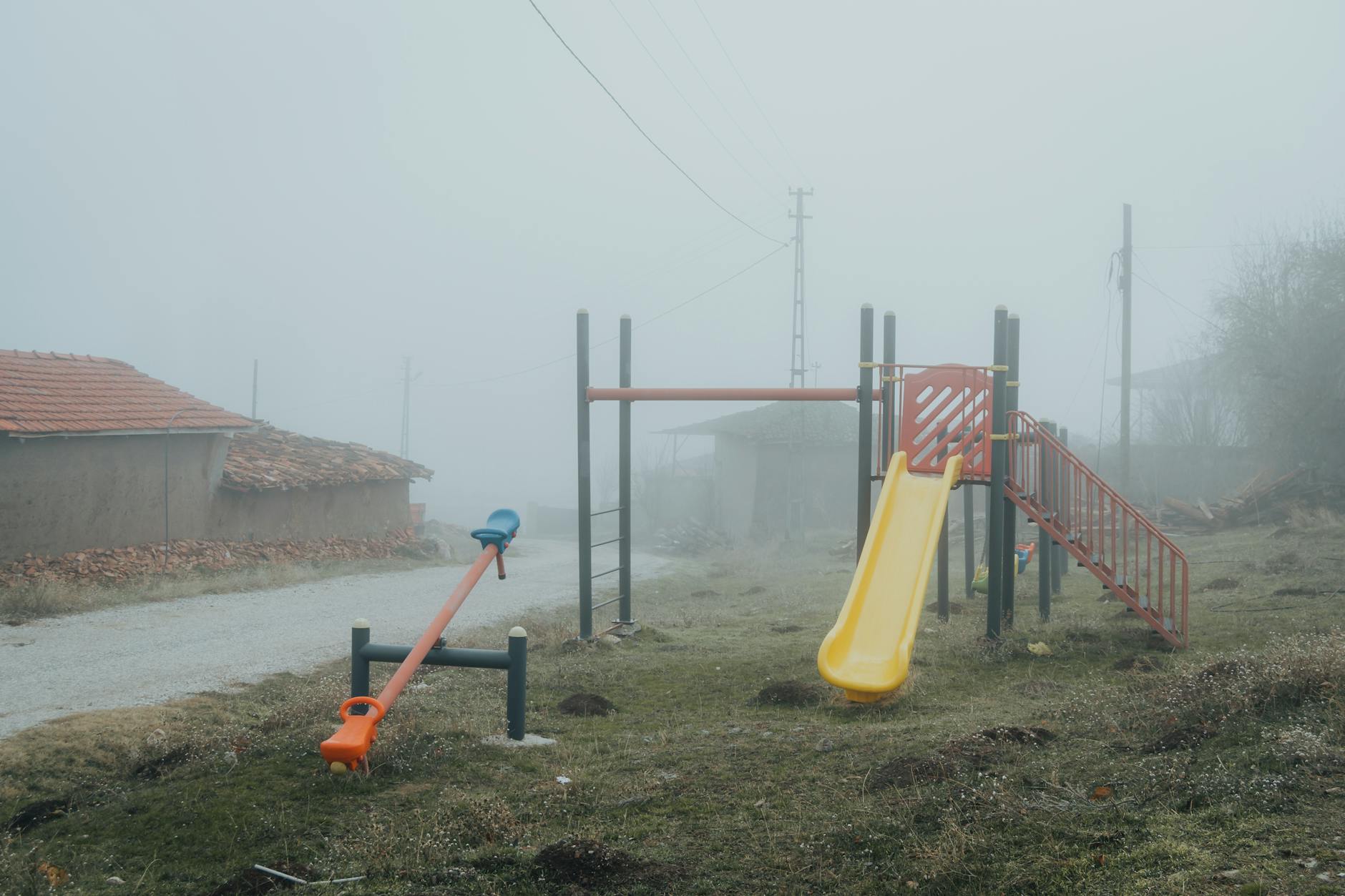
I felt a trigger this week that took me back to the sensation of being at the end of a teeter-totter. My playmate sat on the end of the board at ground-level, suspending me in the air, feet dangling, afraid she might step away and leave me to crash to the ground.
All my solutions for this discomfort didn’t work, so I invited Jesus into my picture. He stood beside me and grabbed me when the teeter-totter plunged. Safe in His arms.
Amazing how our minds work. I’m 63 years old, and the cells of my body and brain still remember the sensation I felt at age 8. We human beings are walking messes of triggers!
If I recorded only my struggles, you’d never know about my good times, the peaceful days. If I only recorded good memories and words of praise and gratitude to God, you wouldn’t know of my struggles, and you’d think I was a saint. Neither is true. I resonate with Paul’s words, “For in my inner being I delight in God’s law” (Romans 7:22 NIV). This may be referring to the Law of Moses, but I see it through Jesus’ words, the Law of Love: Love the Lord Your God . . . and your neighbor as yourself.
I love the Word of God, and I love THE WORD Himself. He is my only source of true joy, the author of my peace, my motive for loving my neighbor.
I don’t often record my praise and gratitude because they are a given—they bubble up inside me. But maybe it would be a good exercise to write them down as well. David did.
My praise, my worship, doesn’t sound like today’s music, nor does it sound like David’s. My praise is more contemplative, quieter, a simple thank you. It’s standing in the rain, arms raised to the heavens, drinking in the warmth and the water, dancing with Jesus, following His lead, a graceful ballet of love and appreciation.
“The mind . . . governed by the Spirit is life and peace” (Romans 8:6 NIV). One follows the other. Spirit-control yields peace. Spirit-non-control yields unrest.
I’m feeling disgruntled today, agitated, pacing, complaining. Jesus invites me to sit with Him for a bit.
“I’m weary of living and working with people whose hearts are closed. Soulmate is a mythical beast,” I tell Him.
“Am I not enough?” Jesus asks.
“Am I not enough?” the Holy Spirit queries.
“Am I not enough?” the Father says.
And my heart cries out, “I want You to be. So why am I not satisfied? Why do I cling to the illusion that flawed human beings are capable of meeting the deepest longings and intimate needs of my heart?”
“It’s not fair to expect people to be God to you,” observes Jesus. “That’s idolatry.”
And so I repent.
Be Jesus to others but let go of expecting them to be that to you.
The broken and bruised Little One lurched forward onto the desert stones, her parched lips whispering a desperate, “Help.”
A large-winged, iridescent creature glided swiftly from the sky, casting shade over her limp body. In one motion, he lifted her high above the earth. The wind cooled her fevered brow, and she slept. When she opened her eyes, they were soaring over a mountain and descending into a lush green valley where she spied a ribbon of river sparkling in the sunlight.
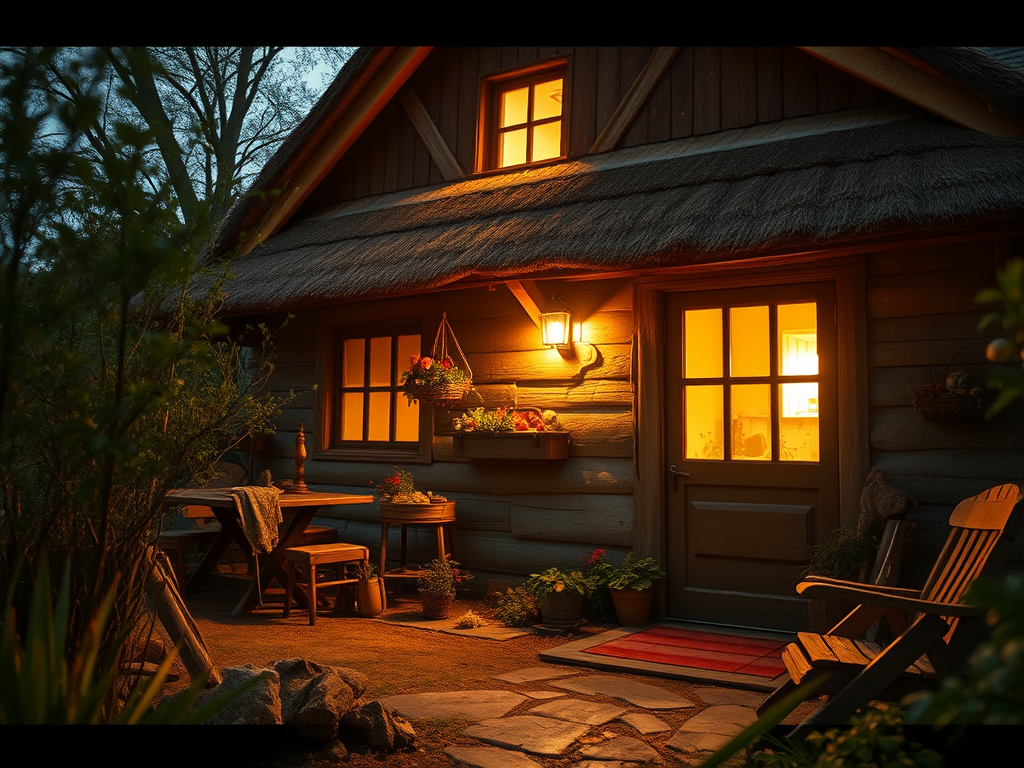
The creature landed gently near the entrance to a cozy cottage. As if on cue, the heavy oak door swung open, and a kind-faced, elderly gentleman reached for her as her spindly legs crumpled beneath her.
“Come in, my child,” he invited.
A warm glow from the fireplace revealed a table spread with a feast beyond compare. Exotic fruits and colorful vegetables spilled artfully around platters of venison, quail, and racks of lamb. Never before had she seen such abundance.
“You may eat all you want, but only a little at a time, as much as your stomach can handle.” And he began to feed her from his own hand. When she had eaten her fill, she fell asleep at the table, dreaming of lamb chops and fresh fruit and homemade bread.
The next morning, she awoke in a bed of feathers, refreshed but weak. Where was the old man? She wandered outside to explore. There by the cottage ran the river she’d noticed from the sky. And in the middle, standing chest-high, a young man beckoned her to join him. When he saw her fear, he waded to shore, offered his hand, and led her close to the edge where she tested the water with one toe. Surprised at its warmth, she allowed him to pull her further in, waist high. The mineralized liquid soothed her aching muscles and cleansed her wounds of the poisons. Finally, she plunged completely under and came up splashing and laughing. The dirt and the grime of a lifetime dissolved into a rainbow of bubbles. The man smiled, enjoying her fun. She could have stayed in this River of Delight all day, but the man had more he wanted to show her.
“Come,” he said—in the same tone the old man had used.
Curious, she thought.
He wrapped a soft towel around her shoulders and handed her a robe. Strangely unselfconscious in his presence, she slipped out of her dirty rags and let the shimmering white garment fall neatly to her feet, covering her bony frame.
“It’s beautiful!” she murmured.
She followed him down the path and around to the back of the cottage. A kaleidoscope of color met her eye. In the center of the garden stood a massive fountain with flowers and vines of all varieties growing out of its walls. A stone bench circled the base of the fountain where small pilgrims could climb to reach the water or the elderly could sit. The man reached for a dipper, scooped up some of the pristine liquid, and held it out to her. Again, she felt fear surging up from deep within.
“It’s safe,” is all he said. And she drank. And she felt life in her bones, and her flesh felt restored, and her spirit revived.
For a year the Little One stayed in this valley of paradise, learning lessons from the Master Teacher, until one day he spoke these words: “You are strong enough now, my child, to venture forth. Invite others to come here—but you must show them the way. And if, like you, they’re too weak to travel by foot, simply call, and I will send my winged spirit to carry them here.”
And the Little One, strong in the power of His might, went forth and gathered in the lame, the blind, the broken, the bleeding, and the wounded, and brought them to the feet of the Master. And they, too, experienced fullness of joy in the River of Delight. And the cottage swelled with happy voices—but was never full—for there was always room for one more. And the Fountain of Life never ran dry.
Psalm 36:7-9 NIV
How priceless is your unfailing love, O God!
People take refuge in the shadow of your wings.
They feast on the abundance of your house;
you give them drink from your river of delights.
For with you is the fountain of life; in your light we see light.








 In the Pursuit of Peace