Guilt-Free Fun

Journal 2017

The Christmas rush is over, the company is gone, and I’ve had several weeks of solitude and down time, and I’ve enjoyed every minute of the slower pace. It feels decadent, however, to recline in my easy chair with a book, start a jigsaw puzzle, or type entries into a blog. Why do I feel guilty for having fun, doing what I enjoy most?

Some part of my heart rises up to protest that I haven’t advanced my goals, completed a check list, accomplished more for the kingdom. This Guardian is the keeper of my lists, my schedule, the shoulds and what-ifs. This one needs some serious Jesus time!

Visual: I grip a silver platter containing a curly leaf of lettuce, a piece of candy, some fruit, some chocolate bars, a mug of coffee, a wooden ruler, and some stinky dog poop tied up in a sachet bag with a bow. (This one certainly doesn’t belong on the tray. How did that get there?) In the bag are all the shoulds and musts and words from other people dumped into a stinky heap. I don’t want to touch it. Jesus doesn’t want it either, so we double bag it and carry it out to the garbage can and spray some fresh scent in the air—light and breezy. We also don’t need the ruler or the dressing-less lettuce.

What’s next? Now the tray begins to overflow with fresh fruits and vegetables, but I can still see the desserts peeking out. Then meats of all kind crowd onto the plate. It’s starting to get overloaded, overwhelming, a mishmash of food that turns into a gloppy mess.

“Jesus, can we start over?” I ask. I liked it better when there was less on the platter: one pretty salad or a juicy slice of watermelon or a single square of chocolate.

Jesus just smiles. “I’ve been giving you just what you need these past weeks to prepare for the next. Enjoy the dessert. Savor it. Remember it. And trust Me to serve you what your body needs next.”

Codependency and the Relationship Pillow

Journal 2019

I read recently where a therapist placed three pillows on the floor and instructed her two clients to each pick a pillow on which to stand. “Your own pillow represents your soul,” she told them. “It belongs to no one else but you.” Next, she explained the middle pillow. “This one is called Relationship. Each of you may choose to go to the center pillow and discuss what you want out of the relationship, but at no time may you step on another person’s pillow. It is creepy and codependent to try to control somebody else’s soul.”

I started to explain this concept to a client one day when she was struggling to let go of some codependent relationships, but the Lord gave her a different visual. Jesus had been meeting with her in a small cabin (representing her soul) that was decorated exactly as she wanted it with warm cozy colors, a fireplace, and a comfy chair. She had also invited her adult children into her cabin and was not willing to send them out into the cold, even if she herself had to sit on the floor. “I’d do anything for my kids,” she declared.

The problem was that she was running out of food to feed those adults while her own soul was starting to shrivel and starve. Jesus explained to her that her children had their own cabins with plenty of food in them, and she was doing them a disservice by insisting they live with her. “Your cabin is unique to you,” He explained, “and you can’t fully grow into who you were meant to be if you share the space with others.”

“If I let them go,” she wondered, “does that mean I never get to see them again?”

“Oh, no,” Jesus replied. “You can always go visit them on their porch or they can come visit you, but you must not move into each other’s cabins to live.”

As I trace the steps of my own story, I can see how often I allowed others to take up residence in my cabin or on my pillow. Unwise and unhealthy choices stunted both of us. Through my processing, I’ve discovered that the more I keep healthy boundaries, the faster their healing occurs. It’s easy to say I wish I’d known all this at the beginning of my life, but in truth, knowing something and acting on it are two different things. I knew these truths on the left side of my brain, but right-side emotions kept jumping in and taking over. It feels like a long, slow process to get where I am today. Some days I wonder if I’ll ever learn the lessons God is trying to teach me. But as I read back over my journals, I discover that what used to trigger me no longer has power over me.

Living in peace is superior to living in pieces!

Feasting and Fasting

2009 Journal.

Once more as we stuff the turkey, open the can of cranberry sauce, and bake the pies, I wonder if this Thanksgiving feast is a waste of our money. Could we not choose to eat simply and give that money to the poor? Do I need to feel guilty over our indulgence? Christmas can also be tricky. Should we give all our gifts to charity? Always? No, I don’t think so. Should we spend all on ourselves? Again, no, that wouldn’t be right either. Somewhere there’s a balance.

There is a time and place for feasting as well as fasting. God commanded and scheduled Jewish feast days. In Luke 6, Jesus is caught attending a party, a feast, and His disciples are accused of not fasting like the Pharisees.

When you’re celebrating a wedding, you don’t skimp on the cake and wine. You feast. Later you may need to pull in your belt, but this isn’t the time. As long as the bride and groom are with you, you have a good time. When the groom is gone, the fasting can begin. (From The Message)

We need permission to feast.

We need persistence to fast.

Hiding Who We Are

Journal 2017

In the Good Friday service tonight, I saw a visual of a thin waif. As we partook of the elements of communion, I shared them with her and she revived.

“Who is this, Lord?” I asked.

“She’s the young mom you were, trying to raise your daughters, mistakes and all. You’ve not been kind to that self.”

And as we sang, I helped the waif nail her shame, chains, and guilt, regrets, disappointments and should-haves to the cross, and I forgave her for being “less than.”

Looking back, I wonder how different I would have been as a wife and mom had I known then what I know now. I would have stayed more present, rather than hiding my true self. I kept her safe and hidden for almost 20 years, and another 10 before she fully came back to life.

I can hide parts of my heart from myself or from others or even try to hide them from God. But God knows each part intimately and wants connection with each one.

Check out these verses on hiddenness.

Times are not hidden from the Almighty (Job 24:1 KJV).

Thou desirest truth in the inward parts: and in the hidden part thou shalt make me to know wisdom (Psalm 51:6 KJV).

And God who knows the heart . . . (Acts 15:8 ESV).

Reflection of myself, 1978

Inconvenienced

Journal 2017

My mom had just flopped onto the sofa in the living room when I came to the locked screen door near her and demanded to be let in. She told me to go around to the unlocked kitchen door. I refused. I wanted my own way. I persisted until she gave in, too tired to argue with me or to stand her ground.

The moment she gave in, my seven-year-old self felt something shift inside. I had gained a little power—but at the cost of my self-respect and my mother’s disgust. It didn’t feel good even though I’d gained the victory. I guess I felt guilty.

I repent, first, of my stubborn heart and, second, of my insensitivity toward my mother’s weariness. I recognize that my actions were less than stellar, but I want to thank the Lord for putting such a strong spirit inside me. Mom always said I had a stubborn streak, but if that spirit could be channeled right, it would be a good thing. Thanks, Mom, for believing in me.

So, what is this wanting my own way, not wanting to be inconvenienced, to have to walk a few paces to enter another door. Was I lazy? Self-centered? I think at the time it was driven by tiredness. I think. But, of course, that’s no excuse.

Visual: This stubborn part of my heart looks like Gimli in Lord of the Rings: strong, stout, grumbly, gruff, and tough, but determined to finish his quest. Jesus invites him to chat, but Gimli mutters under his breath. He doesn’t care much about leaving the body (the hurting part of my heart) outside with a sprained ankle. But he comes in and plops down on a chair across from Jesus who is lounging by the fire. (Mom is still sitting on the couch, oblivious to the conversation that’s about to commence.)

“Drop the ‘tude!” I want to shout at Gimli. “You have strength already without it.” (I can see the wheels turning inside his head.)

“This is just who I am,” he says. “Get over it.”

Whew! He’s a tough nut to crack, Jesus. Good luck with this one!

Jesus gets up to tend the fire in the fireplace, and somehow this action begins to melt Gimli’s gruff exterior.

“I’m sorry, Jesus. I’ve been this way for as long as I can remember. I don’t know to be any other way.”

“You’re changing right now . . . “

“Well, yeah, you sorta have that effect on people.”

He smiles. “What’s on your heart, Gimli?”

Gimli looks down toward his chest. He may be a literalist, but he knows what Jesus means.

“I dunno. I just want my own way.”

“Why?”

“Because it feels good. It feels strong. In control.”

“I see.”

“You see what?”

“I see where you’re coming from.”

“You do?”

“Uh huh.”

“Then figure me out!”

“You’re doing fine yourself.”

“Okay, I suspect You’ll ask me next if I’m willing to give up control? And the good feelings . . . “

Jesus nods His head slightly. “Go on.”

“And I need to find a good reason to do that.”

Jesus waits.

“Well, aren’t You supposed to show me something?”

Jesus throws His head back and laughs. He’s enjoying Himself. Apparently He knows that I know that I’m doing it again—maintaining control of the conversation.

“All right, already. I know what I have to do. I’m just not sure if I know how. I trust You. I do know that.”

Chris Tomlin’s song “I lay me down, I’m not my own, I belong to You alone, lay me down . . .” pops into my head.

Comically, this literalist Guardian, who’s as wide as he is tall, climbs out of his chair and lies on his side on the floor.

“You know I’ll have a hard time getting up,” he grumbles.

Again, Jesus laughs out loud. He loves this character.

“Okay, so now what?”

“Now what, what?”

“What do I have to do next?”

“Nothing!”

“What!? I can’t stay like this all day! I’ve got work to do.”

Jesus heads over to the couch, gets a cushion, and places it under Gimli’s head; then He retrieves a blanket and gently drapes it over him. “Rest well, my friend. You’ve earned it.”

In seconds, Gimli is sound asleep, snoring loudly.

Next, Jesus goes to the screen door, unlatches it, picks up the tired and hurting body and carries it into the room. He tends to the ankle first and then invites the body to rest. She knows Jesus will never leave her side.

Gimli opens one eye. “Jesus?”

“She’s okay. Fast asleep on the couch.”

“Okay.” And Gimli drifts back to sleep, dreaming of wars and battles and victories won. But today was his greatest victory of all.

And what of my mom? She’s curled up in her chair, also fast asleep. And through my haze, I can hear Jesus softly humming, “I lay Me down . . .”

Thank You, Lord, for laying Yourself down. You sacrificed Your body, broken and bruised, for me. How can I do any less when You ask me to sacrifice MY body for others who don’t deserve it.

Prayer Shame

Journal 2017

I’ve been on a journey all my life to discover the secret of prayer. When I read others’ stories, they don’t match mine. I shift between guilt (not enough) to apathy and forgetfulness, from rote to relationship, from works to worry, from self-condemnation to self-awareness.

I’m reading the biography of Rees Howells who discovered that prayers were best made when they were God-directed. For example: don’t pray for healing unless God directs me to. Yet I do pray for healing of my every ache and pain as well as for everyone in my life who is suffering. But I don’t really expect Him to heal, or I’m so surprised when He does.

Today, Lord, I want to listen, wait, and ask for what is on Your heart. I want to be a prayer warrior.

“Hmmm,” says Jesus. “What does a warrior do?”

Well, he fights—fights for truth, fights against an enemy, defends himself, defends the weak. The weapons of warfare are spiritual, not physical. I know I’m supposed to just stand once I’m fully armed. So I guess the first step is to make sure I’m fully armed. You’re faithful to point out the chinks in my armor. And I know how to stand . . .

“But . . . ?”

But I don’t know how to use words. I don’t know what to say or what to pray for.

“Then why don’t you repeat after me?”

Huh?

“Like when you learned your ABCs or the prayer I gave the disciples or The Lord Rebuke You prayer or . . .”

So it’s that simple? Repeat after You? I can do that. Okay, I’m listening.

“Dear Lord,” He begins.

Wait a minute! You’re sitting right here with me. Why do I need to address You? When I’m talking to my husband, and he’s the only one in the room, I don’t have to say his name to get his attention—unless he’s not listening of course. Do I need to start “Dear Lord” every time?

He laughs. “No, of course not,” He teases. “I was just seeing if you were paying attention.”

Very funny. Ok, try again. I’m listening.

“Hi, Karen.”

Hi, Lord.

I wait. He seems to be thinking. (God has to think? Doesn’t He always know exactly what to say?)

“Okay, repeat after Me:

            I, Karen, do solemnly swear to tell the whole truth and nothing but the truth, so help me, God.”

This is not funny! What kind of prayer is that!?

“I like honesty. I want you to tell yourself the truth as well as to Me.”

Okay, I’m all in.

“Good. Now tell Me the truth. What’s in your heart?”

Well . . . I’m worried that . . .

“Choose your words. Take your time—and be honest.”

Okay . . . I’m worried that I’ll be judged for how little I pray.

“You mean little in chronos time?”

I suppose.

“Who’s keeping track?”

I suppose I am, for one.

“And?”

And . . . I feel guilty if I neglect to pray, to ask for favors, to cover people with the prayer of protection, to intercede for their needs.

“Intercede . . . ooooh that’s a big word.”

You’re teasing me. (I’m feeling petulant.)

“What do you want, Karen?”

What do I want? What do I really want? I want a heart that is so connected and in tune with You that conversation (prayer) flows as naturally and comfortably as breathing. I want every thought I think and every breath I take to be in sync with Yours. I want our conversation to feel natural, not formal; intimate, not forced or stilted. When I pray for people, I feel like I’m straining to think up stuff to say, but I’m not always sure what to say or if that’s what their true need is. I also want to know how often I should pray for someone. Expectations are daily, and somehow if I miss a day, I believe it’s my fault if they fail or are vulnerable to Satan’s attacks. How’s that for being honest?

“That’s better. What else?”

There’s more?

“Oh, yes. Dig a little deeper.”

It’s about me, isn’t it? It’s about pride. What if someone should discover what a fraud I am? That I don’t spend x number of hours a day on my knees. Or I can’t say with sincerity, “I prayed for you today.” How would that feel? Shameful? Embarrassing? Guilty? Or, since we’re being honest here, how I look compared to so-and-so. How sick is that?

“Anything else?”

Oh, I think that’s enough shame for the moment.

“Okay, what do you want to do about it?”

Me? I thought it was Your job to lift shame and give me truth and offer something in its place.

“Why should I? I didn’t put it there!”

Then who did? Oops . . . I guess I did. Help me, Lord, please. I want to give it up. I really do. But self-shame and blame is too heavy a brick to lift by myself.

(He hands me a sledgehammer.)

I smash the brick into smaller pieces, small enough for me to carry. What to do with them, though? It seems we’re building a brick wall for some sort of dwelling. I’m not sure I understand the significance yet, but brick now feels useful—like it’s serving a purpose.

Oh! I see it now . . . I think we’re building a house of prayer. Okay . . . but still not sure about this.

“There’s more to come,” He says. “For now, let’s stop and get a bite of lunch.”

Sounds good to me!

Messy Relationships

Journal 2017

I woke up from a dream in which I felt extreme rage. My friend had rearranged all the cupboards and shelves in our bedroom, and I hated it—it was disorderly, ugly, impractical, and inconvenient. I was surprised at the vehemence I felt. Where did that come from?

I realize that these shelves reflect how my friend’s brain is organized. It’s different from mine. No wonder she has difficulty coping with life. The curious thing is why she rearranged MY shelves and cupboards. I did not give her permission to do so.

I’ve always had a strong sense of space and personal belongings. Growing up in boarding school, I owned one pencil, one pen, and one notebook, and I knew at all times where each was located. All our belongings were clearly labeled with our own names, and we understood the boundaries of personal property. The only things we traded were marbles, which were won or lost in competitions.

Order meant safety and comfort. Lack of order felt chaotic and out of control. How much of that is temperament and how much was my attempt to control my environment? My two dresser drawers were always neatly arranged because we were rewarded in the dorm for tidiness, but I seemed to gravitate toward that lifestyle anyway. My mother recalls the time that my big sister and I were instructed to set the table at home one night. In typical fashion, Grace hurriedly flung the silverware onto the table while I came behind her straightening them.

When I ask God for insight, Jesus takes me by the hand, and we fly high up into the atmosphere. “See My universe?” He says. “I like order too. The planets and atoms are all in their orbits.” Yet there’s more. Asteroids break loose and crash into the earth.

“What does all this mean?” I enquired.

“There’s a both/and.”

I scratch my head, puzzled.

“I made order. I created it. I created you (and your temperament) to have order and logic and straight lines. Yes, you function well when things are orderly. Others I fashioned more right-brained to think more creatively. They get flustered and feel boxed in when things are too lined up in a row. Do not berate yourself for how I created you.”

I knew there was a “but” coming.

“But relationships are messy. People are not robots. You can’t have a relationship with a robot. Yes, I made an orderly universe, but I also made people. People can disrupt your orderly world.”

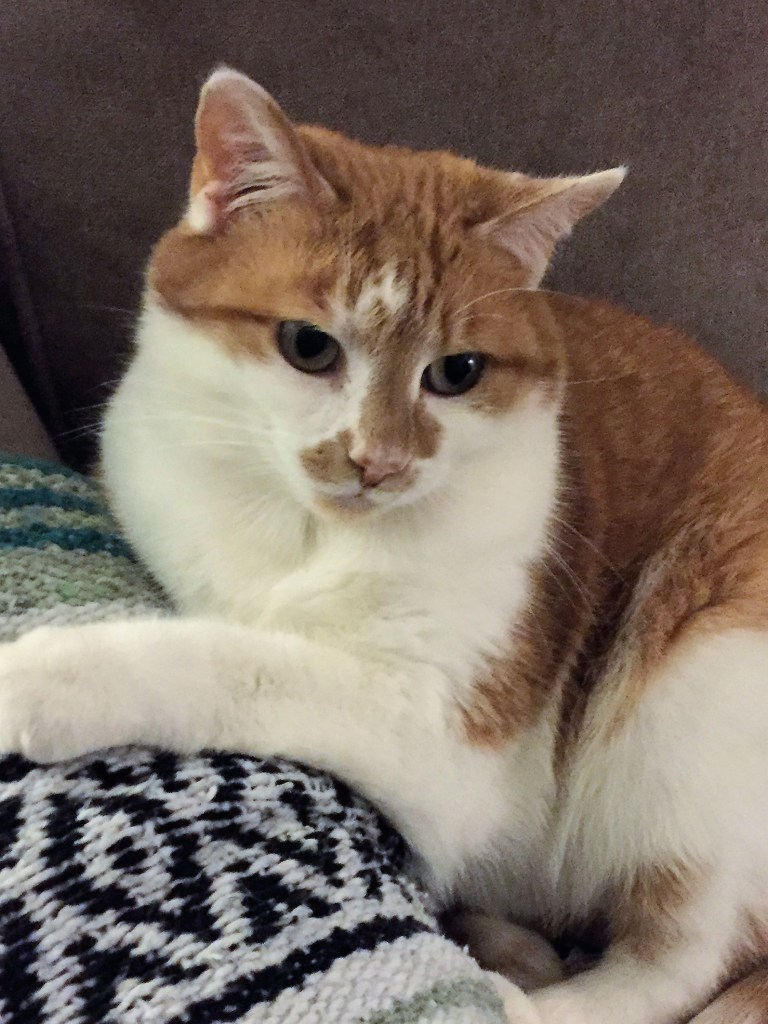
Just then, Peaches our cat jumped onto the bed, interrupting my writing as she rubbed against my pen and demanded to be petted.

“Did you mind the interruption to your orderly thoughts?” enquired Jesus.

“No, because she made me smile. I knew it was temporary. It is relational. I can’t have relationship with a pen.”

“Exactly.”

And with that thought, my rage dissipated. I’m glad God made us all different.

Taste and Smell

Journal 2021.

If I had to lose one of my five senses, I always said I’d rather not lose my eyesight. It never occurred to me that losing taste and smell could also be so debilitating. Since I had Covid, everything smells the same, and it’s not pleasant.

“An odor pleasing to the Lord” is stated five times in Numbers 15. Of course this phrase catches my eye. I may not be able to smell, but God can. And I want my attitude, thoughts, and deeds to be a pleasing odor in His nostrils.

But I need some help with this. I’m still trying to quit complaining about my loss. I have an appointment with food three times a day, and three times a day I have to face the loss of sensory pleasure. Does giving up hope jinx it? If I give up hope, am I doomed because my mind will no longer have positive energy? We teach clients they may need to give up, or let go of, the hope that their dad will ever love them. What does letting go look like for me?

VISUAL: I’m tied to one end of a rope, and the taste of food is on the other end. As long as I hold onto my end, I’m not free to explore other things. Letting go doesn’t mean I don’t ever eat again. It means I let go of the pleasure, the drug.

And so, I let the rope drop, and it retracts into the food. The flavors are still there, in the food; they’re just not tied to me anymore. They don’t belong to me and therefore have no power over me. Thank You, Lord. Now I can pick up the food and examine it—see it, feel its texture, and experience it as I am able to sense it. It is what it is.

Responsibility

Journal 2005

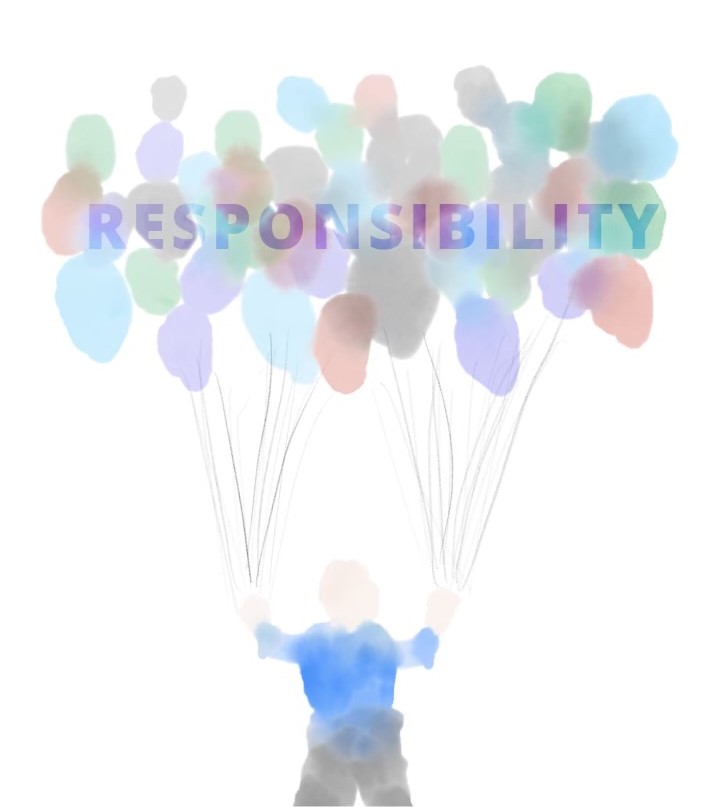
I have a long list of worries I need to shed NOW! The word responsibility is a balloon banner over my head with strings attached to each of my concerns. With hands cramping from their tight grip, occasionally one string escapes my grasp, and I scramble to grab it without letting go of the others. If I let them all go, does this mean I’m not a responsible person?

But near burnout, I wish I could let them all go. I want to be a kid again where I’m free to explore, and my meals miraculously appear on the table, and play is my most serious activity.

Suddenly the wind catches the balloons, and up, up, up, into the air I go. But now I’m in trouble if let go. My muscles are burning. I want off this ride!

“Look up,” says Jesus. I see He’s holding the responsibility banner, and I’m on a puppet stage. He’s responsible for the “responsible.” That takes the pressure off decision-making, but I’m still not satisfied. He created me with free will, and I don’t want to be a puppet. I don’t want His job as director of the play, nor can I be in the audience. What am I supposed to do?

“Let go of the strings,” He says. Willing to surrender at last, I unclench my fists and drop my arms. I do not fall. I do not collapse. I let go of worry and make life-giving choices.

Rest. Peace.

Thanks to my son-in-law Josh for the graphic.

Judgment or Discernment?

Journal 2005

I’ve been working through how to recognize the difference between God’s standard and men’s standard of conduct. For example, I came out of a system that taught it was a sin for a woman to wear pants, and though I threw that false belief out years ago, I wonder about wearing skimpy clothing. A judgmental attitude (which I’m prone to have) is a self-righteous attitude about how others conduct themselves—usually because I don’t do it myself. And often the item or “sin” in question reflects a tradition of man rather than breaking a direct command of Scripture. Discernment, on the other hand, involves understanding the intent of a command in Scripture and applying it to myself.

One’s choice of dress falls on a continuum: from a Middle Eastern burka all the way to public nudity. What’s modest for one culture may be immoral for another.* I’m sure my upbringing in an African village impacts my confusion. Does God’s Word dictate standards of dress, or does God look only on the heart? (I can dress like a Puritan and not have a pure heart.) The other end of the continuum is harder for me to gauge. At what point does my dress choice cross into sin? Can the discussion focus on the amount of material, or should the focus be 100% on the heart?

Or what about my media viewing choices? Is there a point at which what I watch becomes sin? Or is it all about the condition of the heart? I cannot judge another’s motives, but personally, I’d prefer wholesome rather than on-the-edge. Better to hug the mountain side than the cliff side in these gray areas.

*Funny story from Stormy Omartian’s book The Power of the Praying Woman. Seems an offended missionary decided he should supply the topless natives with t-shirts. The next day the ladies showed up at church proudly wearing their new garb—with holes cut out for their breasts (so they could nurse of course). Made perfect sense to me!

2023 Update. I must have worked through these questions sufficiently as I have no emotion today when the subject comes up. I know now that I am not responsible for anyone’s heart but my own, and I can trust God to convict me when needed and guide me into all truth.