From my 2015 Journal. It was time to find a new hairdresser. Mine was located on the other side of town, her prices went up, and I wasn’t always satisfied with her work. I wanted to find someone closer and cheaper and more consistent. So on the recommendation of someone in our neighborhood, I hopped on my bicycle and rode to the nearest salon, appointment at 9 a.m.
I arrived at 8:59 a.m. and the place was locked up tight. Maybe the owner was in the back. No problem. I can wait one minute. Or two or three . . . or four or five. Eventually, a lady sauntered over from the parking lot and unlocked the door. I moved closer. “Did you want to come in?” she mumbled?
Well, duh!
No greeting. No explanation as to why she was late, why she wasn’t there ahead of her clients, place unlocked and ready to receive customers with a smile. Phones were ringing, and off she went while I sat on a chair and waited, apparently no a/c on yet in the July heat. I was hot in more ways than one!
A couple minutes later, another worker moseyed in, put down her purse, opened up her iPad (really!?) and then I calmed down when I realized she was putting on some music for the establishment. Watch watch, wait.
Finally at 9:10 a.m. Miss #1 looks up from her computer and asks, “Are you Karen?” (Hmm. I’m the only one in the shop. Were there others expected? I suppose she could have assumed I was a walk-in. Still no explanation why they’re late.)
Miss #2 calls me to her chair. She’s friendly, sweet, asks questions, not too chatty. I like her. But I’m still steamed that she’s not professional enough to arrive on time and respect my schedule.
The price is right, the haircut fine (as far as I can tell), and I like her as a person. (I had no further interaction with Miss #1, the manager.)
So what’s wrong?
I need to tell them how to run a business, I fume inside. How do they expect to maintain customers if they can’t act professionally?
And so I leave the premises and ride around the neighborhood, praying as I go. I don’t want this angry emotion. It’s unprofessional! And so I hand Jesus the ball of fire that is burning in my palm. And He smiles. He knows there’s more. I know there’s more. What is underneath this anger? Is it disappointment? I have no time crunch. Why should I be upset about wasting a few extra minutes in my day?
“It’s because they’re so unprofessional,” I whine to Him. “I wouldn’t do that. I always arrive well ahead of my clients. What would they think of me if I showed up late without an apology like these two ladies did?”
And then, “Oh!” I exclaim in chagrin and embarrassment. “I know what it is. It’s self-righteousness—the ‘I’ syndrome.” Ugh. What an ugly word.
What does self-righteousness look like? I see myself wearing a large, shapeless, colorful but gaudy dress. Not too shabby, I think. It has color, it hides my unsightly curves, it’s functional.
“Would you be willing to let Me have it?” Jesus asks.
“Uh . . . okay, but I’ll be rather unclothed then.”
I pull the garment over my head and hand it to Him. And then wait. And wait.
I know that when I give Jesus something, He often likes to give me something in return. “Well, aren’t You going to hand me robes of righteousness instead to put on?”
“Nope,” He replies.
I’m a little taken aback. Isn’t that what Scripture says?
“I already gave them to you . . .” He softly answers “. . . when you accepted Me into your heart.”
I glance down then at my body and gasp. I am clothed in a dazzling white, sequined wedding gown, “adorned as a bride for her husband.”
Chagrined, I realize I had thrown a gaudy shift over top of my beautiful gown. Not pretty. “I’m so sorry, Jesus. Please forgive me for disrespecting Your gift.”
And so I think back to the ladies at the shop. It no longer matters that they came in a few minutes late and didn’t have the people skills to greet me warmly at the door. Perhaps this is my new mission field.
Postscript: I have since found a phenomenal hair stylist. Her name is Cindy Harris and she has a PhD in hair design (I didn’t know there even was such a thing!) I highly recommend her for all your makeover needs.
Cindy’s Total Image Salon located in Oasis Salon, 745 S Church St, Suite 301 in Murfreesboro, TN.




 From my 2015 Journal. I grew up in a boarding school where we had nightly devotions together as a group in the girls’ dorm. One particular spinster Auntie (as we called our dorm mothers) got frustrated one night with our continuing chatter and instructed us to all be silent. She began to lead us in a chorus, and I leaned over to the girl next to me and whispered, “Listen.” I wanted her to hear me sing the counter melody.
 The word enough comes to mind—I’m always trying to earn God’s love. Where is this insidious lie buried in my heart? Somewhere in childhood perhaps. It was the culture of my boarding school to always strive for perfection. Getting anything less than 100 was unacceptable. But I discover it’s not from the teacher; it’s coming from within. Why? What do I believe about myself if I fall short? That I didn’t try enough, study enough, work hard enough? When I make “less than” I feel . . .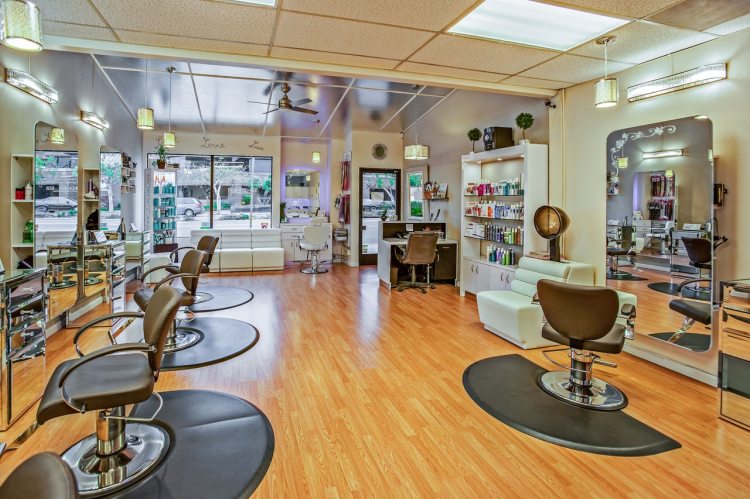

 I may refuse to listen to your words because they heap shame on me, but I find it’s an uphill battle to sever the ties with them. I am determined to climb this mountain even if I have to do it alone, but the weariness of the battle gets to me.
 Visual: I am the Israelite at the foot of the mountain who is forbidden from getting too close to the mountain. I’m never Moses and Joshua who climb the mountain and see God face-to-face. I stand at the foot and tremble at the smoke. Only the chosen one is permitted on the mountain. (The funny thing is, Moses had nothing to do with God choosing him. And besides that, he had a flawed character.)
 In the Pursuit of Peace