I learned to pray out loud at my daddy’s knee. Every morning and every night without fail, our little family of five gathered together to read the Bible and pray, starting with the youngest (me) and progressing to the eldest. If I hesitated in my prayer, Daddy would prompt, “Help me, God, not to fight with my brother and sister.” (I’m not sure God answered that prayer till we were grownups.)
As a child and into young adulthood, every Wednesday night our church gathered for corporate prayer. My current place of worship prays together through digital media or sends emails listing prayer needs. Healing of the body seems to be the main focus of our requests. Is that because it’s the focus of our hearts? Or is it simply the safest thing to pray for in public? I remember a young man one time who asked our Sunday school class to pray for his emotional struggle. That stopped us cold (how could he be so vulnerable we thought), till someone jumped in to try to fix him. Ouch.
In my private prayers, I sometimes use the acronym ACTS (A = Adoration, C = Confession, T = Thanksgiving, and S = Supplication). I know what to do with the A, C, and T, but supplication or intercessory prayer in a group setting continues to baffle me.
When it’s just me and Jesus, my prayers are honest and heart related. When I’m in an inner healing prayer session with a client, it’s an intimate, vulnerable setting with safe people. I know what to pray for as we focus on lies and truth and release of pain. But when I’m in a Sunday school class or Bible study, I only hear a grocery list of concerns about doctor visits and travel safety. Those are legitimate needs, but it’s sad to me that we don’t feel safe with each other in corporate settings. And so, though I do pray for physical healing, I often pray for the person’s heart as well.
What has been your experience with corporate prayer?
I’m struggling this morning with “the prayer list.” When I’m processing with clients, they see/hear immediate answers to prayer. If God doesn’t answer, I know to ask a different question or pray something else. Feedback is immediate.
When I’m praying through a list, however, I don’t know if I’m getting through. Perhaps that’s because my attention or focus has always been on the person him/herself. I visualize the person and try to think what I should pray for—and then I say it.
What dawns on me is that my eyes and ears are in the wrong place. If I look at the Master instead, He will guide my prayers so that they’re following what He wants for the person, not what Karen wants. It moves the focus away from a grocery list to a relationship—where He wanted it all along.
Lord, can I come sit in Your lap as a little child and talk to You about these creatures You’ve made—and loved so much that You died for them? They’re a sorry mess—the whole lot of them. And I’m one of them!
Shall we start with my friends x and y? They are so needy. What do You plan to do for them, Lord? Yeah, I know that’s Your business. But would You mind sending an angel or two to minister to their broken hearts and bind up their wounds; and would You hold them for me because I’m too far away to do so myself?
Thank You.
A 2025 Update. I just read A Change of Habit, by Sister Monica Clare. She was a Southern Baptist who, as a child, felt the call to become a nun. She lived a secular life, married, divorced, and then finally fulfilled her life-long dream and became an Episcopalian nun (I didn’t know there was such a thing!) But my takeaway was what the nuns taught her about prayer. This week I took a hike in the woods and soaked in my surroundings, fully alive and aware with all my senses on alert to the divine. Prayer is more than a list; it’s relationship. It’s awareness and stillness and listening.
Tornadoes in Nashville and Chattanooga (too close to home)
Tribal killings near Jos, Nigeria (where I was born)
Locust swarms in East Africa that may affect my Compassion kids
A friend in the hospital
I don’t know how to pray for these overwhelming needs. I serve a big God, and I’m in His hands, and I cannot take on His job.
VISUAL: I see a large metal bowl with all the world’s problems swirling together in a vast, soupy mess. God’s enormous hands hold the bowl steady while the contents are shaken.
And where am I? I’m not inside the glop … yet. I’m a little ant clinging to the rim of the bowl trying to be faithful to the few tasks God entrusts to me. Things could get jostled enough that I fall in, but until then, I’m safe. If I do fall, I’ll have to deal with that. Meanwhile, “He’s got the whole world in His hands.”
The picture is clearer now—it’s like when I make kosai, and all the hulls of the black-eyed peas rise to the top when I swirl the bowl. (I guess you have to have lived in northern Nigeria to understand this one.)
Instead of praying for the swirling to stop, how about I pray that I cooperate with God’s plan for the world. I see things rising to the top of the bowl—the scum that needs to be scooped and poured off, while the good stuff settles to the bottom. God is purifying His church. It’s all good.
My heart is heavy this morning with the news that a friend is nearing the end of her life, and another is struggling to function with a disease. Perhaps God put the heaviness there so that I will pray for my friends. Perhaps I’m believing a lie. Or maybe it’s tapping into something unresolved in my own heart. I see worry lines across my forehead.
In my mind, I lift my dying friend’s wasted skeleton and lay her gently in the lap of Jesus. He smiles. She is in good hands.
I see my other friend limping and leaning heavily on my left shoulder as I try to keep her upright. I’m sad and I don’t know why. My knees buckle under her weight, while Jesus waits for us to reach Him. Why isn’t He stepping forward to help? We sit for a while and rest, and still He tarries. I believe I have the responsibility to get her there, but I can’t. All I can do is sit with her till help comes. And as I relax and encourage her, Jesus sends angels to minister to her. They gently soothe her, but her earthly pain remains. Then I see the angels lift her, chair and all, to His feet. I follow and I watch.
“Are you ready, my child?” He whispers in her ear.
“Not yet,” she replies. And so he instructs the angels to carry her to Sick Bay.
It seems I’m next. “Come here, my child,” He says. “What’s troubling you?”
“It’s that word responsibility again,” I say. I know that whatever “it” is doesn’t belong to me.
“No, But love does. Staying with her and not walking away is what I ask of you.”
“That’s the easy part; I can do that.”
“Then visit her in Sick Bay and let her know she’s not alone in her pain.”
It’s often easier to try to fix another’s pain in order to relieve my own, but prayer is not about telling God what to do. It’s about letting go of my expectations and listening to His instructions.
Many years ago, a missionary couple put me on their mailing list without my consent, and for some reason I resented it. I don’t even recollect why, but for years, every time their prayer letter arrived in the mailbox, I tossed it in the trash; and later by e-mail, I’d hit the delete button without reading it. Petty, I know. Every other missionary letter I received I’d read and pray through it. This morning, however, I felt the small prick of conscience when the Holy Spirit said I needed to change my attitude toward this couple.
Once a day, beginning in the New Year, I open one Christmas card, reread the sentiment and personal notes, and pray for the person who sent it. I had just confessed my sin when I picked up the next card in the stack. I laughed out loud when it turned out to be from this missionary couple. God has such a sense of humor. And later that day, for the first time, I read their e-mail newsletter and felt engaged with their ministry.
Why does it take me so long to recognize my blind spots or to acknowledge my triggers? So much wasted time, bad brain space, and lost opportunity for prayer. I’m grateful for God’s patience, love, and forgiveness.
I think I absorb more of the pain from the world than I realize. So, just for today I want to lay each request, each burden, at God’s feet rather than carry them myself.
I visualize each person or organization I pray for as a domino on God’s tray. Some stand straight, some lie on their sides, and others lean over the edge. But all are in God’s hands. And like a butler balancing an assortment of goodies on a tray, so God carries the world—His world—in His capable hand. And I, the child heir, can skip along beside Him, knowing that He has all things under His care and control. I’m free to watch Him or join Him in His work, or I’m free to run off and play. And sometimes I do one and sometimes I do the other. But it’s no longer my responsibility. It seems silly for the child to point out mishaps and misdemeanors to the butler. He’s well aware of them, and it’s His job to wipe up the spills.
So, what is prayer? Prayer is tugging on the butler’s hand. When He leans down, I whisper in his ear: “I’m scared. Did you see that? Can You help me with my homework? Can You help my friend Susie who fell and scraped her knee?” And He smiles and nods and comes to the rescue. I’m too little to do a grown-up’s job.
In the book Rees Howells-Intercessor, the author Norman P. Grubb says, “This is the law of intercession: that only so far as we have been tested and proved willing to do a thing ourselves can we intercede for others. Christ is our Intercessor because He took the place of each one prayed for” (p. 93).
The thought here is that we cannot intercede for someone unless we are willing to answer the prayer ourselves. Rees prayed that God would spare the life a woman who was dying; but if she died, he would have to be willing to care for her children since the father was out of the picture. When she died, he was prepared to take up the slack, but her sisters stepped in at the last minute. His intercession included being willing to lay down his life for another.
Regarding medicine vs. faith for healing, he was not opposed to medicine and would recommend it. His prayer for healing was usually applied to those for whom medicine had failed—and only after he was SURE that God had told him that the person would be healed. He didn’t pray for it or believe it unless the Lord told him what to pray for.
Always, always do what God says, even when it feels bizarre. He seldom works the same way twice. Only once did the children of Israel march seven times around a city. And when they tried to conquer Ai, they failed because God didn’t tell them to do so.
Rees Howells had a policy of “First need, first claim.” Whenever he had money, he’d give it away to whatever need presented itself to him, believing God would supply his own need when the time came.
The ultimate test came when God asked Rees and his wife to leave their son behind so they could go to Africa to become missionaries. We read this today and shake our heads. Some of the Gowans Home* kids might disagree that the sacrifice was worth it. Some would protest that God wouldn’t ask a person to do that (though He did it Himself when He left His only Son to die on a cross).
I think God calls certain people to an exceptional life of faith. When He has an extraordinary job for them to do, their testing is also extraordinary. God had a special hand on Rees and on George Mueller and today on Angus Buchan (Read the book or see the movie Faith Like Potatoes).
Are we all expected to make sacrifices in our intercessions?
*GH was a home in Canada for missionaries’ children in the 40s and 50s. It was not safe in those days to take children overseas to disease-ridden countries or during wartime, so missionaries left their children behind for four to five years at a time.
I’ve been on a journey all my life to discover the secret of prayer. When I read others’ stories, they don’t match mine. I shift between guilt (not enough) to apathy and forgetfulness, from rote to relationship, from works to worry, from self-condemnation to self-awareness.
I’m reading the biography of Rees Howells who discovered that prayers were best made when they were God-directed. For example: don’t pray for healing unless God directs me to. Yet I do pray for healing of my every ache and pain as well as for everyone in my life who is suffering. But I don’t really expect Him to heal, or I’m so surprised when He does.
Today, Lord, I want to listen, wait, and ask for what is on Your heart. I want to be a prayer warrior.
“Hmmm,” says Jesus. “What does a warrior do?”
Well, he fights—fights for truth, fights against an enemy, defends himself, defends the weak. The weapons of warfare are spiritual, not physical. I know I’m supposed to just stand once I’m fully armed. So I guess the first step is to make sure I’m fully armed. You’re faithful to point out the chinks in my armor. And I know how to stand . . .
“But . . . ?”
But I don’t know how to use words. I don’t know what to say or what to pray for.
“Then why don’t you repeat after me?”
Huh?
“Like when you learned your ABCs or the prayer I gave the disciples or The Lord Rebuke You prayer or . . .”
So it’s that simple? Repeat after You? I can do that. Okay, I’m listening.
“Dear Lord,” He begins.
Wait a minute! You’re sitting right here with me. Why do I need to address You? When I’m talking to my husband, and he’s the only one in the room, I don’t have to say his name to get his attention—unless he’s not listening of course. Do I need to start “Dear Lord” every time?
He laughs. “No, of course not,” He teases. “I was just seeing if you were paying attention.”
Very funny. Ok, try again. I’m listening.
“Hi, Karen.”
Hi, Lord.
I wait. He seems to be thinking. (God has to think? Doesn’t He always know exactly what to say?)
“Okay, repeat after Me:
I, Karen, do solemnly swear to tell the whole truth and nothing but the truth, so help me, God.”
This is not funny! What kind of prayer is that!?
“I like honesty. I want you to tell yourself the truth as well as to Me.”
Okay, I’m all in.
“Good. Now tell Me the truth. What’s in your heart?”
Well . . . I’m worried that . . .
“Choose your words. Take your time—and be honest.”
Okay . . . I’m worried that I’ll be judged for how little I pray.
“You mean little in chronos time?”
I suppose.
“Who’s keeping track?”
I suppose I am, for one.
“And?”
And . . . I feel guilty if I neglect to pray, to ask for favors, to cover people with the prayer of protection, to intercede for their needs.
“Intercede . . . ooooh that’s a big word.”
You’re teasing me. (I’m feeling petulant.)
“What do you want, Karen?”
What do I want? What do I really want? I want a heart that is so connected and in tune with You that conversation (prayer) flows as naturally and comfortably as breathing. I want every thought I think and every breath I take to be in sync with Yours. I want our conversation to feel natural, not formal; intimate, not forced or stilted.When I pray for people, I feel like I’m straining to think up stuff to say, but I’m not always sure what to say or if that’s what their true need is.I also want to know how often I should pray for someone. Expectations are daily, and somehow if I miss a day, I believe it’s my fault if they fail or are vulnerable to Satan’s attacks. How’s that for being honest?
“That’s better. What else?”
There’s more?
“Oh, yes. Dig a little deeper.”
It’s about me, isn’t it? It’s about pride. What if someone should discover what a fraud I am? That I don’t spend x number of hours a day on my knees. Or I can’t say with sincerity, “I prayed for you today.” How would that feel? Shameful? Embarrassing? Guilty? Or, since we’re being honest here, how I look compared to so-and-so. How sick is that?
“Anything else?”
Oh, I think that’s enough shame for the moment.
“Okay, what do you want to do about it?”
Me? I thought it was Your job to lift shame and give me truth and offer something in its place.
“Why should I? I didn’t put it there!”
Then who did? Oops . . . I guess I did. Help me, Lord, please. I want to give it up. I really do. But self-shame and blame is too heavy a brick to lift by myself.
(He hands me a sledgehammer.)
I smash the brick into smaller pieces, small enough for me to carry. What to do with them, though? It seems we’re building a brick wall for some sort of dwelling. I’m not sure I understand the significance yet, but brick now feels useful—like it’s serving a purpose.
Oh! I see it now . . . I think we’re building a house of prayer. Okay . . . but still not sure about this.
“There’s more to come,” He says. “For now, let’s stop and get a bite of lunch.”
This morning, when I asked God how best to pray for my friend Suzie, He gave me this visual.
Jesus scooped me up on His white horse, and we flew over to Suzie’s heart castle. I was dismayed to look down and see the devastation. The enemy had penetrated in spite of the thick stone walls around the property. The castle and the grounds had been burned and blackened, and only the charred remains of the beautiful oak trees dotted the landscape.
“So where is Suzie?” I cried.
“Listen,” He said.
And then I heard it. Cries of anguish came from the direction of the one standing turret. I knew then that Suzie was trapped inside, fighting for her life. She had barred and locked the door from the inside, fully armed, on high alert. The enemy troops surrounded the walls and were gleefully gloating, not paying much attention except to their own shenanigans. They knew they were helpless to penetrate the turret, but they didn’t care. They knew that eventually Suzie would run out of food and water, and their mission of destruction would be accomplished.
My inclination was to rush in with a flaming sword and rescue the damsel in distress, but I knew Jesus far too well than to make plans without him. Besides, He had told me I didn’t need to bring any weapons with me because I had Him; and as long as I stayed close to Him, I’d be okay. I looked at Jesus to see what He would do.
We glided over the walls and landed softly in front of the turret. I laughed in glee as the enemy hordes scattered like rats to the edges of the compound. What will He do next, I wondered. Will He knock, inform her that all is well, and that would be that?
Instead, we slid off the horse, and He sat by the door and pulled out a bag of marbles. “Care to play?” He asked.
What!? Really? Well, okay, I trust He knows what He’s doing.
I glanced up to see a shadow cross the window above us.
“What’s happening?” I asked.
“She’s noticing the quiet,” He whispered.
I listened. The screeching of the devils around us had stopped, but no sound of birds could be heard or rustling in the trees. Just silence.
Okay, that’s good, I thought. What’s next?
“She needs to know that she’s safe before she will put down her weapons, stop fighting, and rest,” He said. (He had read my thoughts, of course.)
“So why don’t we just go on in and rescue her?” I asked. “You can go through walls.”
“I could . . . but it might scare her, and she’d pick the weapons back up if she hears noises on the stairs. I want her to learn to trust Me. I’m not like the destroyer who’s out to get her. But she doesn’t know that yet.”
“But she might starve to death while You wait for her!” I exclaimed.
He smiled. “Don’t worry, Little One. She’s been starving a long time already. That’s why she called for my help.”
“Then why don’t You help her?” I asked.
“I will . . . as soon as she opens the door and lets Me in.”
“But . . . ?”
“But what?”
The question died on my lips. I already knew the answer. I had learned firsthand the lesson of waiting—when I’m ready . . . when the Kairos time is right . . . at the appointed time, all shall be well.
“Thank You, Jesus, for letting me come with You today. I asked You to help her because I knew You would. But it’s always fun to watch You work. What’s next?”
“Wait and see the salvation of the Lord.”
And so we continued to play marbles on the soft dirt. Then Jesus began to whistle a tune—a lovely melody. (I love it when Jesus sings over me. I hoped it would reach Suzie’s ears so she could hear it too.)
And that’s when we heard the sobbing. Deep, wrenching sobs of pain coming from within the turret walls.
“Now, Jesus?” I looked to see what He would do. I wanted to rush in and scoop her in my arms and tell her all would be well.
He just shook His head, silent, and I knew I was expected to stay still and remain quiet. We both looked up at the same time. A shadow and then a tousled head appeared in the window. She glanced furtively about trying to determine where the sound was coming from. But all she could see was the desolation below in her garden. We were too close to the door for her to see us from that angle.
And so we waited. But it didn’t take long. We heard the sound of footsteps on the spiral stairs, closer and closer to the door. I held my breath. What would she do next? I glanced at Jesus. A little smile played about his lips. I could hear her breathing heavily on the other side of the door, waiting for something. Jesus paused for one beat, then two, and then very softly knocked on the door. “Suzie? It’s Me. Jesus. It’s okay. It’s safe to come out now. You are safe with Me.”
“How do I know it’s You?” she demanded. I’ve been tricked before.
“Tell you what,” He replied. “Why don’t you open the window in your front door and peek outside. Don’t open the door itself until you know it’s Me and not the enemy.”
“Yes, but the last time I did that, I saw what I thought was an angel of light. But when I opened the door, all hell broke loose.”
“Good point,” He countered. “Did you use the Demon Test first?”
“What’s that?” she asked.
“I know how much you love My words. You can trust them. They are life and they are true. Remember where I instructed John to write, ‘By this you know the Spirit of God: Every spirit that confesses that Jesus Christ is come in the flesh is of God, and every spirit that does not confess that Jesus Christ has come in the flesh is not of God” (I John 4:2-3)?’ Ask Me to say these words. The demons are incapable of saying them you know.”
“Okay . . . let me think about that . . . okay, yes, I do trust Your written words. So . . . whoever you are, say those words!”
“Jesus Christ is come in the flesh.”
Slowly and cautiously, the window swung open, and Suzie peered out. Jesus winked at her and smiled. “Good job!” He exclaimed.
And then He nodded over to the black spirits at the perimeter of the compound. Try making them say those words.
“Tell me ‘Jesus Christ is come in the flesh’!” she yelled in their direction.
Some of them smirked; others cringed; but they all looked away, silent.
Jesus waited.
“But what if I open this door and they come rushing back here?”
Silently, Jesus held up His flaming sword so she could see the words written on it:
And take . . . the sword of the Spirit, which is the word of God (Eph. 6.17). For the word of God is living and powerful, and sharper than any two-edged sword, piercing even to the division of soul and spirit, and of joints and marrow, and is a discerner of the thoughts and intents of the heart (Heb. 4:12).
“They really don’t like My sword.” He grinned.
And then I smiled because I knew what was coming. I’d seen it hundreds of times. I heard the bolts scraping open. Slowly the door swung inward, and Suzie stepped out into the bright sunshine. She blinked, trying to adjust her eyes. And I saw Jesus sheath the sword and stretch out His hand in invitation. She hesitated. She still wasn’t sure she could trust Him. Maybe He was mad at her. Maybe He was going to whip out that sword to cut her in two. The thought was still very scary.
He lowered His arm. “Care to sit down and play marbles with us?” He asked.
“Marbles!? Are you mad?’ she said. “This place is in shambles; my kingdom is decimated, and you want to play marbles?! Aren’t you going to fix this place? That’s why I prayed to You, you know. You let this happen. Where were You when I was being attacked by the enemy? Where were You when my grandma’s life was cut short? You didn’t care that my parents divorced and left me to fend for myself.”
“Who are you really mad at, Suzie?” He asked gently.
“I’m mad at myself! I’m mad that I trusted you; I’m mad that I trusted other people and they betrayed me. But I’m mad at You too.”
Suddenly she stopped. I could see the fear in her eyes. She had just told off the King of the Universe. Would He strike her down for such insolence and disrespect? He’d done it before. She’d read about it when he disciplined the Israelites. Would He react to her the same way? She shrank back into herself, still on high alert, ready to bolt back into the turret and slam the door if necessary.
Instead, He waited, saying nothing.
When He didn’t make a move, she whispered, “Don’t you care!?” I could hear the silent scream behind the question.
“Yes, I care very much,” He replied. “I cared so much that I died for you so that you could be set free . . . if you want it.”
“Of course I want it,” she retorted. “But You didn’t do anything to stop it. And You didn’t come when I called.”
He waited, silent and patient.
“Well!? Aren’t you going to do something?”
“I’d love to, Suzie. But first, would you be willing to hand your anger to Me? I’m big enough to take it, you know. You’ve been carrying this for so long. How has it helped you? What has your anger done for you?”
“It’s kept me quite safe, thank you.”
He glanced up at the turret. “Sure, sure . . . quite safe . . . and starving.”
“Tell you what,” He added.” How about we do an exchange? You give me your anger, and I’ll give you some bread.”
By this time, Suzie knew her blood sugar was crashing, and she couldn’t keep up the tirade for much longer. Meekly, she handed over the fireball she’d been clutching under her arm, and He produced a warm, fresh-out-of-the-oven slice of bread, thickly slathered with melted butter and raspberry jam. Quickly she wolfed it down and then drank deeply from the bottled water He handed her. It tasted like nothing she’d experienced before—cool and warm at the same time, fizzy, like little sparkles of light dancing on her tongue. And she remembered those ancient words, “I am the Bread of Life; I will give you springs of Living Water.”
Suddenly, she knew she wanted more. More where this came from.
“Jesus?”
“Yes, my child?”
“Thank You.”
There was more, much more, to this story to come I knew. The kingdom had yet to be rebuilt and restored. But I knew there was time, plenty of time, because I knew that God’s timing is always perfect. For now, it was good to know that Suzie was with Jesus, getting to know Him and learning His ways, and would be pouring out all of her pain in the days ahead. It had been a good day.
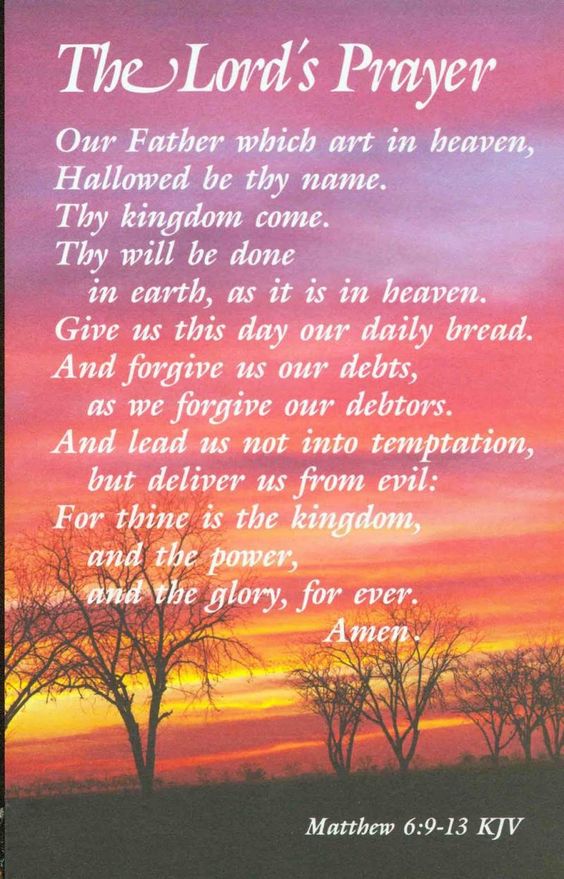
How many times have I glibly recited The Lord’s Prayer without understanding this phrase: “Lead us not into temptation, but deliver us from evil”? I have found no satisfactory explanation or commentary on this part of the prayer. I reject the notion that God is the source of temptation (which is what it sounds like). Wouldn’t it be better to say, “Lead us OUT OF temptation”?
Perhaps “testing” is the better translation for “temptation,” in which case does it mean: Don’t bring us into testing. Or keep us away from testing. But that’s not sound theology either, for He does indeed test us.
“Deliver us from evil” could mean: Deliver us from the evil that’s in our hearts. Or: deliver us from the Evil One (Satan and his minions).
If I ask Him to remove the stuff in my heart that draws me to sin, God won’t need to test me in this area. Perhaps the prayer is: Lord, help me to pass the test when I encounter evil.





 In the Pursuit of Peace