The Gift of Faith

Jesus said, “Were not ten healed? Where are the nine? Can none be found to come back and give glory to God except this outsider?” Then he said to him, “Get up. On your way. Your faith has healed and saved you” (Luke17: 17-19 The Message).

Jesus healed ten lepers, but only one thanked Him. The Samaritan had faith; I don’t know if the other nine had it or not. Did Jesus heal certain people out of compassion or because of their faith? He raised the dead—and that’s not because of their faith! In this case, the one leper demonstrated that he “got it.” I suspect God does a lot of things for us that go unacknowledged.

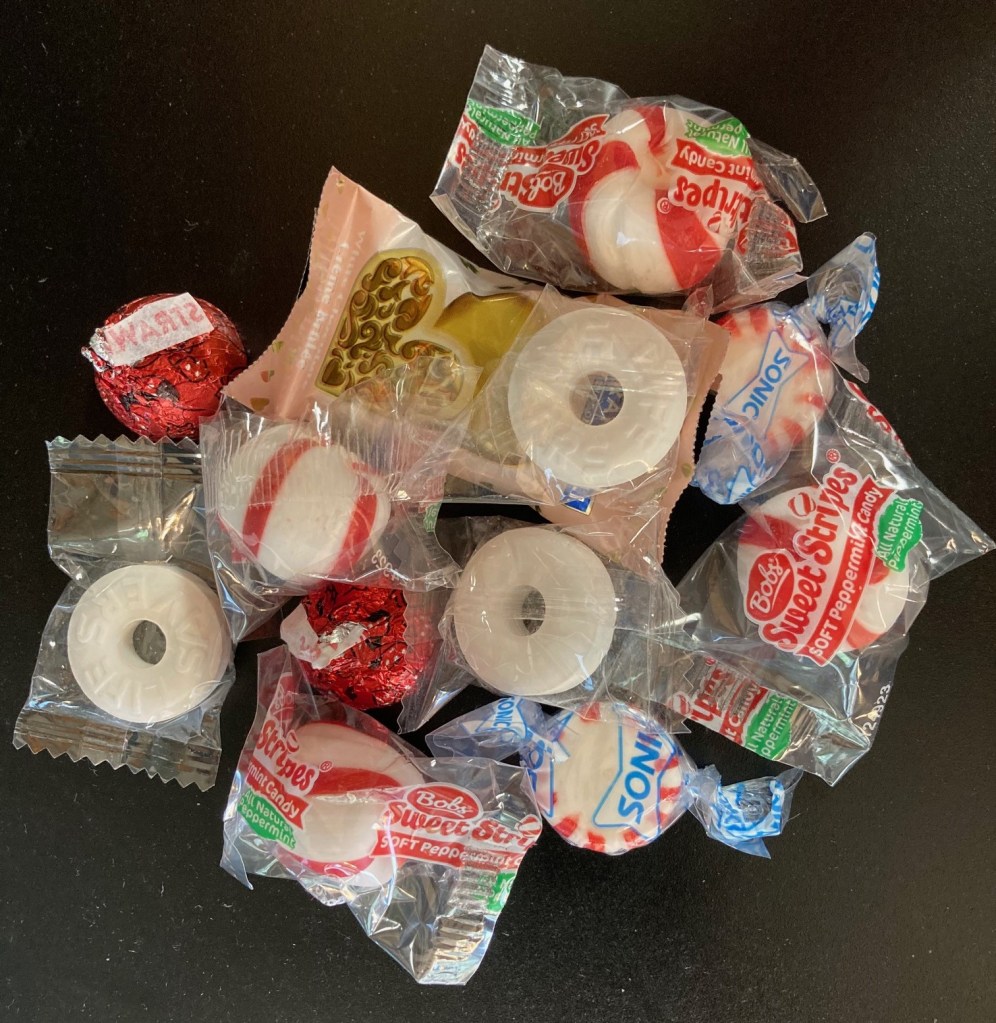
Maybe faith is like a promised Christmas present, an unopened box. Jesus hands it to me and says, “I’ve made you a promise. It’s in the box. But it’s not time to open it yet.” And faith says, “I believe You, Lord. And I will patiently wait till You say it’s time.”

Abraham was given a box. Inside was the promise of a son. But I think he got impatient waiting—or perhaps he thought God had handed him the wrong box, and so he set it aside and opened a different gift under the tree. But even with his mistake, God still handed him the right one and he still got to open it.

I have so many precious promise boxes under my tree I can’t even count them all! What box am I holding that I’m ignoring, substituting, not waiting for, anxious about?

When Jesus handed the one leper his gift, he remembered to write the thank you note. The other nine got their gift, too, but were so excited they forgot where it came from. We must pause, notice, respond in gratitude, and recognize the source of our healing, our salvation.

On Prejudice

Prejudice is an adverse opinion or leaning formed without just grounds or before sufficient knowledge. (Webster’s Dictionary)

From my 2005 Journal.

I had a dream last night in which a professor told me I had an issue with prejudice. I denied it—but part of me recognizes the truth.

Prejudice has a negative connotation, but prejudice simply means “pre-judging.” We live most of life that way. Before I sit in a chair, I pre-judge that it will hold me up. Why? Because I’ve had prior knowledge and experience with chairs. What happens when we pre-judge people, however? The problem comes when we attribute one characteristic to an entire race, not allowing for individual differences.

What’s the relationship between pre-judging, expectations, and anticipation? When does it become negative, wrong, sinful, unproductive, or damaging? In a court of law, to pre-judge is to declare guilty or not guilty without prior or proper trial. What would be the opposite? No judgment at all? Or . . . judgment after the fact instead of before? How is it possible to avoid pre-judgment of people?

Isn’t prejudice merely a trigger? Reduced to that, it would be easy to detect and feel one’s own prejudice—because there is emotion involved. There are or can be good triggers, can’t there? Or is that suspect too? Pre-judging what Christmas will be like can set you up for disappointment.

A 2022 Perspective: I went through a lengthy period where the Lord worked on my heart about my judgmental attitude. Obviously, I’m not perfect in this area, but looking back, I can see how very far I’ve come.

Don’t judge a book by its cover.

Spiritual Fruit

Love, joy, peace, patience, kindness, goodness, faithfulness, gentleness, self-control (Gal. 5:22-23)

From my 2005 Journal.

I’m not sure where or when in my spiritual journey (from the pulpit?) I picked up the notion that we were supposed to strive to do the list of Fruits of the Spirit. “Look over this list,” they’d say. “Which one do you lack? Work at this one today. Be more (“more” is unquantifiable) loving, put on a joyful countenance, exercise patience or self-control.” Shame for failing in any area became a natural by-product of this teaching.

But one day I began to ponder the nature of fruit, and then, thankfully, I heard (from the pulpit?) a correct interpretation of this verse. Spiritual fruit is not a to-do list but rather a by-product, a result of abiding in the Spirit, of being attached to the vine, of mind renewal. I can choose to exhibit the fruits by determination and self-effort, and that is not a bad thing. I can choose not to punch my friend in the face if I’m mad at her. But how much easier and freeing to have these qualities flow out of me naturally, graciously, without effort as a result of inner healing prayer and mind renewal. Even “abiding in the vine” is no longer a grit-my-teeth, work-at-it endeavor. Rather, it is a natural by-product of connecting all parts of my heart to the Lord.

Fruit plate created by my friend Renate.

The River of Life

From my 2009 Journal

When people and things disrupt my workflow, how can I tell if an interruption is a distraction or a God-event? Is it like a child’s bumper lane in a bowling alley, meant to keep me out of the gutter? Or is it a snare, a stick-pile in the river?

The rapids are the events over which I have no control, and I’m glad I have an experienced Guide with me Who knows where the hazards are. He expects me to use my paddle as I’m able and engage in the fight to stay upright, but He’s strong enough to keep me on an even keel.

Sometimes, when I’m about to be dumped into the river, I just hang onto the sides for dear life. But I’m not going to drown (unless it’s my time to go Home). When He comes to rescue me, I must relax and not struggle against Him. He has the lifeline in His hands. Thankfully, not all of life is rapids. Sometimes it’s okay to drift and to rest.

So, whether I encounter shallows, a stick-pile, or the rapids, I don’t have to figure out its source. I just need to navigate what comes with patience, faith, and grace.

Rules vs. Freedom

From my 2009 Journal. Do we have any rules we need to abide by as believers? Moses’ Law says “Don’t murder.” Jesus says it’s what’s in your heart that’s important. Is “don’t hate” a rule? I suppose you could say that. Rules generally govern actions, and hatred is not an action (unless it’s acted upon). But if you take care of the attitude (hatred) in your heart, you’ll have no temptation to do the action (murder).

We usually judge a person’s actions, though I have to say I’m guilty of judging a person’s heart based on their actions. I wouldn’t know what’s in their heart if I didn’t see their action.

Romans 14 refers to religious activity: eating meat offered to idols and special observances of days. I have freedom, Paul says, to eat meat or not eat meat, to observe a day “unto the Lord” or not. It’s not the action that pleases God, but the attitude of the heart. Are you doing it out of obedience to your conscience or out of disobedience? Are you doing it with a grateful heart? If you do it but aren’t thankful, what good is it?

Bottom line: don’t judge someone else’s religious activities (assuming they are believers) and don’t put an obstacle or stumbling block in another person’s way. Verse 14 says food offered to idols in and of itself is not unclean. But if in your heart you believe it’s unclean, then to you it is. Don’t do it!

Guilt and Shame—a Visual

GUILT is like treading on a sandy beach leaving visible footprints. SHAME tries to smooth sand over the prints, but as you walk away, you create more footprints.

GRACE is God sending His wind (the Holy Spirit) and blowing across the sand, erasing all the prints. And even if you fail again, the wind continues to blow.

But how much better to scramble up onto a rock where no footprints can imprint, and no guilt and shame exist.

“I’m on the Rock, hallelujah,

I’m on the Rock to stay,

For He lifted me from the miry clay—

I’m on the Rock to stay.”

On Hatred

Journal 2005

At my missionary boarding school, I was taught it was a sin to hate. Therefore, if we hated someone, we’d piously say, “Oh, I don’t hate her; I just strongly dislike her!” As if we didn’t say the words, we were not guilty of the deed.

This week the Spirit of God confronted my self-righteousness with a memory where I carried hatred in my heart. As I released that emotion, years of bondage slipped away, and I felt free. Nobody but Jesus knew that sin was there. And nobody but Jesus and the person who prayed with me for deliverance knows it’s gone. But will others sense a change in me? I don’t know. I feel the change, and I know that something is different.

TV and Movies

From my 2009 Journal

I was reared in a small African village without the basics of running water, electricity, or flush toilets and, thus, no TV or movies. I remember as a first grader on furlough being mesmerized by black-and-white cartoons flashing across the screen of my Grandpa Peterson’s small TV set, and then again four years later, on our next furlough, unable to unglue my eyes from this novelty.

I struggle to navigate parenthood without experiential knowledge in monitoring entertainment. What makes a good story great? What details make it acceptable? What scenes are suitable for my children to watch? What images will leave them with nightmares and fears? At what age do I allow exposure to realistic scenes? When is violence and sexual content and adult language appropriate and for what audience? I don’t think I can predict what that limit is . . . until it’s too late. These decisions for my children are messy ones for each stage of their growth. How can I be wise, balanced, and sensitive to their needs? How can I push back against the culture?

Unfortunately, some children experience far too much reality for their age; others are exposed to it by their peers. How long can I or should I shelter their innocence? Information, should they desire to gain access, is readily available but, as a parent, I have a responsibility to guide them.

The Word and the Spirit

Journal 2005

Sometimes I learn more truth through other people’s processing than I do through my own. Yesterday, while praying with a client over the phone, God answered a question for her that answered a question for me: If we have the Holy Spirit, why do we need the Bible? And if we have the Bible, why do we need the Holy Spirit?

Now, I could have given her a plausible explanation that would have satisfied me. However, it made the most sense to her when she visualized a classroom. We need both the Teacher and the textbook. A student gets information from the text—facts, history, stories, and even poetry, but she has a relationship with the Teacher. The Teacher asks and answers questions about the text; He explains, expands, and embellishes it. And how does He know so much about the textbook? He’s the author!

Six Tributaries

Journal 2005

Lynda Graybeal, administrator of Renovare (www.renovare.org) suggests we need a “balanced vision” of 6 streams or dimensions of the Christian life (Conversations, Vol 3:1, p. 52). Though I was reared in one particular stream, I have dipped my toes in each of these tributaries and found grace in each of them. All make up the body of Christ. All have partial truth. All can learn from the others.

Contemplative – The prayer-filled life

Holiness – The virtuous life

Charismatic – The Spirit-empowered life

Social Justice – The compassionate life

Evangelical – The Word-centered life

Incarnational – The sacramental life

Which stream refreshes you the most? Which one challenges you?