Webster defines slander as “false and damaging statements about someone.”
This verse convicts me. I never intentionally say false things about others, but I can make assumptions that might not be accurate. I know it’s not right or fair or honoring, but my words of judgment fly out when I’m feeling triggered. We are all made in the image of God, part of the same race, so when I slander another human being, I hurt myself in the process.
What is the difference, I wonder, between stating a fact about someone (e.g. he’s an alcoholic) and slandering him (e.g. you’ll never believe what Michael did yesterday…) The first may just be acknowledging the truth, while the motive of the second is clearly meant to spread gossip. Is my intent to bring this person down to my level? To delight in sharing a juicy bit of news?
I heard recently someone’s recollection of her mother—that she never said an unkind word about other people. How commendable! “If you can’t say something nice about someone, don’t say anything at all,” is often attributed to the daughter of President Theodore Roosevelt. I want my words as an older, mature woman, to protect others in my speech, not tear them down because of my stuff coming to the surface—which, in the end, merely reveals the darkness of my own heart.
I repent and ask God’s forgiveness and mercy as He teaches me to #1 work through my triggers, and #2 hold my tongue.
Do not pay attention to every word people say or you may hear your servant cursing you …. For you know in your heart that many times you yourself have cursed others. Ecclesiastes 7:21-22 (NIV)
“Abin mamaki” is a Hausa phrase for “a thing of wonder.” This year I wanted to open my heart in wonder and awe, to deliberately notice things in a new way and record what I discovered. Not surprising, God’s creation in all its glory (water, sky, animals, flowers, rocks, and trees) topped my list, but I also marveled at how He gave man the ability to capture this nature on film. I stood in awe of some people’s aptitude for building, writing, or cooking. I recalled in wonder how God connects us, heals us, and sustains us.
If you read to the end of this long post, it will be “abin mamaki.” If you just want to read one entry, here is my list of topics with a link to each. What else would you add?
Back in February 2020, I joined a book club, but we quickly had to shut it down as COVID-19 struck. So this year, when someone on my neighborhood Facebook page asked about interest in starting another one, I jumped right in. We meet once a month in each other’s homes. What a great way to make new friends with a common interest!
I wondered one day which books were most widely read or published in the world. A quick Google search gave contradictory results based on the parameters of the question (e.g. single book or series), but every list placed the Bible at the top.
Here’s an AI-generated list that omitted The Book of Mormon (listed #4) and the Bhagavad Gita (listed #5) from other lists.
The Holy Bible, ~5 to 6 billion copies
Quotations from Chairman Mao Zedong, 900 million copies (from one publisher)
The Qur’an, 800 million copies
Don Quixote, by Miguel de Cervantes, 500 million copies
A Tale of Two Cities, by Charles Dickens, 200 million copies
The Lord of the Rings, by J. R. R. Tolkien, 150 million copies
The Hobbit, by J. R. R. Tolkien, 140.6 million copies
Harry Potter and the Philosopher’s Stone, by J. K. Rowling, 120 million copies
The Little Prince, by Antoine de Saint-Exupery, 100 million copies
And Then There Were None, by Agatha Christie, 100 million copies
Check out this list of best-selling books from Wikipedia. I was familiar with most of them except The Alchemist by Paulo Coelho. After reading it, however, I’m not sure what all the fuss is about.
Two books that left their imprint on me this year:
Atomic Habits, by James Clear. I don’t place much confidence in most self-help books, so I was astonished at the results when I applied these principles to three new habits I wanted to maintain. Who knew!
Captive of the Simbas, by Margaret Hayes, inspired me to greater heights of faith. Miss Hayes was a missionary nurse serving in the Congo in the 1960s when guerrilla fighting broke out. Along with a group of fellow missionaries, she was reported killed in a savage massacre. She was, in fact, the only one to escape.
The Wonder of Human Creation
As my sleepy eyes popped open one morning, I glanced at all the manmade materials in my bedroom—from handmade gifts sitting on a shelf, to the curtains in the window, to the very structure of my home with its walls, doors, carpet, and paint—all things I take for granted.
Then I examined my ceiling fan and wondered what process created such a useful item. The parts came from various manmade materials, were assembled in a factory, and then transported to retail stores via trucks, ships, or trains. Finally, some individual chose this one out of a myriad of styles to add to my home’s décor. A Google search found this astonishing YouTube video of how ceiling fans are made in India.
I marvel at man’s creativity—a reflection of our Creator’s character. We imitate Him when we create. I found this thought-provoking podcast “On Purpose with Jay Shetty,” posted on July 16, 2025. Jay sits down with author, artist, and creative mentor, Amie McNeed, for a heartfelt conversation about reconnecting the artist inside all of us.
A quick AI prompt poetically stated, “Manmade materials are more than tools. They are the physical embodiment of imagination, the bridge between what is and what could be. They have allowed us to build cathedrals and skyscrapers, to mend hearts and travel to the moon, to connect continents with a whisper and capture beauty for all time.”
The Wonder of Water
Long before I was born, my father dug a 30-foot well, lined it with cement, rigged a barrel atop a tower with a handpump, and ran a pipe to our kitchen so we could have running water in the sink. In this photo I am pulling up a bucket by hand. Water was first boiled, then filtered, before it became potable. We also caught rainwater in large barrels strategically placed near the house eaves. Bathing required carting heated water from the woodstove to our tin bathtub. When all five of us were clean (sort of), it took two people to grasp the handles and dump the dirty water at the base of the fruit trees in the backyard. I never want to take running water for granted. In my home in America, I can wash my dishes, toss clothes into a washing machine, and take a hot shower without effort.
This summer, as I paddled lazily in the deep end of our community swimming pool, I marveled at the properties of water that can keep me suspended on a floating device, hydrate me internally, create ice cubes for my lemonade, drive a steam engine, and be powerful enough to decimate whole villages in middle Texas.
The Wonder of Breath
So much of what I experience in a client’s prayer session cannot be shared with others due to confidentiality. It’s their story to tell, not mine. But when I witness something truly remarkable, it’s hard not to want to shout to the universe: Look what God did—again! Here’s one story.
“Sabrina” regularly defaults into retreating into nothingness in order to avoid pain. Paranoia, with a persecution complex, she’s perpetually a victim with “I am” statements that include “I am worthless” and “I don’t deserve love and attention.”
One day she arrived so depressed I didn’t think she’d be able to climb out of the pit. I let her talk for an hour, waiting for the right moment to step in. With her voice barely above a whisper, she said, “I can’t breathe.” She continued talking, and I continued praying.
“Focus on the breath,” I heard from the Lord.
Just that morning I’d been meditating on the attributes of the Holy Spirit, with “Breath of God” being the last entry in my journal. With Sabrina’s permission, I placed my hand over her chest and prayed for the breath of God to fill her lungs. (I’ve never done this before with any other person.)
“It’s lighter!” she exclaimed. “I can breathe!” The next thing I knew, she was giggling loudly as she related a funny story.
The next morning, I listened to the old hymn “Holy Spirit, Faithful Guide.” I have the Comforter, the Counselor, the Breath of Life inside me to guide me if I’ll just listen.
Near the end of the year, I picked up a little book titled Breath—The New Science of a Lost Art, by James Nestor. Aside from his inane premise of billions of years of man’s evolution, he made some astonishing claims about the power of correct breathing. One observation caught my attention: we alternate breathing patterns (left and right nostrils) in conjunction with the sun and moon. And breathing only through the left nostril taps into the right brain emotion center whereas breathing only through the right nostril crosses over to the left-brain logic center. Fascinating stuff.
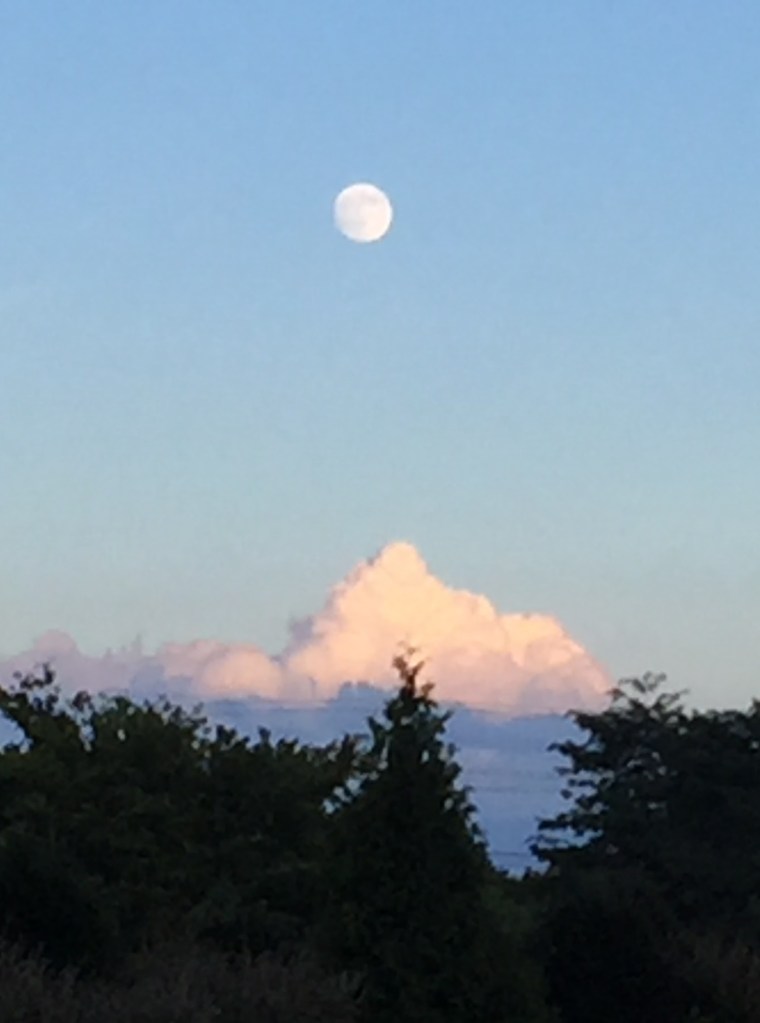
We arrived at our Life Group Christmas party at a country home. A brilliant full moon next to two large stars (or planets?) in the clear night sky made me long for Africa. I tried to imagine what it would be like to stand on the moon, look back at the earth, and gaze at galaxies upon galaxies out there that my God created. How small and insignificant I feel, yet how deeply loved that He cares for me … one tiny speck in His vast universe. Our finite minds are incapable of imagining such immensity.
To be a writer is to be a lover of words. Though I enjoy the tactile nature of a book in my hands, I relish the ease of looking up definitions in e-books. Here are some gems I found this year. Please don’t gloat if you already know them!
Ailurophile means “cat lover,” derived from the Greek ailuros, meaning “cat,” and phile, meaning “lover.” Later in the year, I discovered this word ranked first in the list of The Most Beautiful Words in the English Language.
Boustrophedon: a method of writing that runs from right to left, then from left to right. I found this word in the book Under the Tuscan Sun, by Frances Mayes.
Flamboyance: that’s what a flock of flamingos is called. This I learned while on a bus tour in Curaçao.
Lickerish (which sounds like licorice) means “eager to consume delicious foods.” At least that’s what I thought till I discovered this definition is archaic. Today it means “lecherous.” Oh dear!
Murmuration: the term used to describe the fascinating phenomenon of very large groups of birds, fish, or insects moving together, including changing direction together. The name comes from the murmur-like sound made by the birds as they move in unison.
Mephitic: (especially of a gas or vapor) foul-smelling; noxious. I learned this word in the novel Accordion Crimes by Annie Proulx. (Maybe I can use this word the next time I flush the toilet.)
What does Noelmean anyway? According to my research, it’s another word for Christmas. The French say, “Joyeux Noel” (Happy Christmas). It comes from the Latin natalis (birth day) with the same root as natal or nasci (to be born). Nativity has the same root meaning.
Tonsorial. (Sounds like it belongs to that infected thing at the back of my throat that the doctor removed!) While I was searching for the meaning of Noel in dictionary.com, this word-for-the-day stared me in the face. It means “having to do with barbers or barbershops.” Who knew!
The Wonder of Connections
I love being someone else’s answer to prayer.
My husband was not feeling well after a medical procedure, but at the last minute, he agreed to go to a Christmas party. I checked in with him all evening to assure him we could leave any time he felt uncomfortable. When the activities wound down, we discovered our car was hemmed in, and we’d be one of the last ones to leave. With few people left in the room, our host introduced me to one of the guests and commented that we had a lot in common.
Within a few minutes, she told me she’d been asking God for someone to minister to her. She’d never heard of inner healing prayer, but she made an appointment with me on the spot.
I just marvel, again, at God’s timing and orchestrating of events to bring about His purposes. We had a divine appointment and didn’t even know it.
I was listening to “Chris Fabry Live” on Moody Radio when I learned about Malcolm Guite, an author, poet, singer, songwriter, and the former chaplain of Gurdon College, Cambridge. What caught my attention was that he was born in Nigeria (as was I). His first name is a traditional name for a second child in Yoruba: Ayo Deji. Ayo means “joy” and Deji means “again.” So it’s “second joy.” He mentioned how much he loved the glorious rain and thunderstorms (yes!). His dad taught the classics, but he was also a Methodist preacher and very much involved with the Methodist Church in Nigeria. Next, they went to Zimbabwe (formerly Rhodesia), and eventually back to England. While his dad was in Canada, he sent Malcome to a boarding school (another connection). Check out his heart-stopping poetry.
We had just recently moved from Nigeria to the USA for my sixth-grade year at Samuel Strong Elementary in Elkhart, Indiana. Walking to school one day, I stopped to admire some pretty yellow flowers growing by the sidewalk and bent to pick a bouquet for my teacher. Though Mr. Mann graciously received my gift, my excitement turned to shame when a fellow classmate hooted, “Why are you giving our teacher weeds?” (“Weed” is a derogatory human classification without consideration for the One who designed it.)
How was I to know what a dandelion was?
That grade school memory returned as I stopped to admire the intricacies of God’s creation on the sidewalks in our Tennessee neighborhood. I still think dandelions are beautiful.
A friend recently sent me this excerpt from Signals of Transcendence, by Os Guinness. The author relates a story about GK Chesterton wherein “he was stopped in his tracks by ‘looking at a dandelion.’ The world was dark and the world was broken. Cynicism was easy. . .” Chesterton stopped to notice that there was beauty in the world and not just brokenness. Both needed to be explained, together. The beauty was as evident as the brokenness, and the brokenness as the beauty. But then, too, there was a wonder in the sheer existence of simple things, such as a dandelion.
The book goes on: “Chesterton was not talking about the beauty and the wonder that are so obvious that they are almost a cliché—the miracle of the birth of a baby, the majesty of a sunset over the ocean [see below], or the crystal beauty of a Mozart piano concerto. He was talking of a little common flower that everyone sees, few people pick, and even fewer think about. But thinking about it, he noted that ‘even mere existence, reduced to its mere primary limits, was extraordinary enough to be exciting.’ Anything was magnificent compared with nothing.”
Colors! The sunrise from our cruise ship balcony and the breathtaking blues of the Caribbean Sea
The Wonder of Discovery
Our 50th wedding anniversary family cruise to the Caribbean brought several surprises. We had raised our three girls in Holland, Michigan, and Scott and I had been to the Netherlands, but It felt a little odd to see wooden shoes in Curaçao—a Dutch colony.
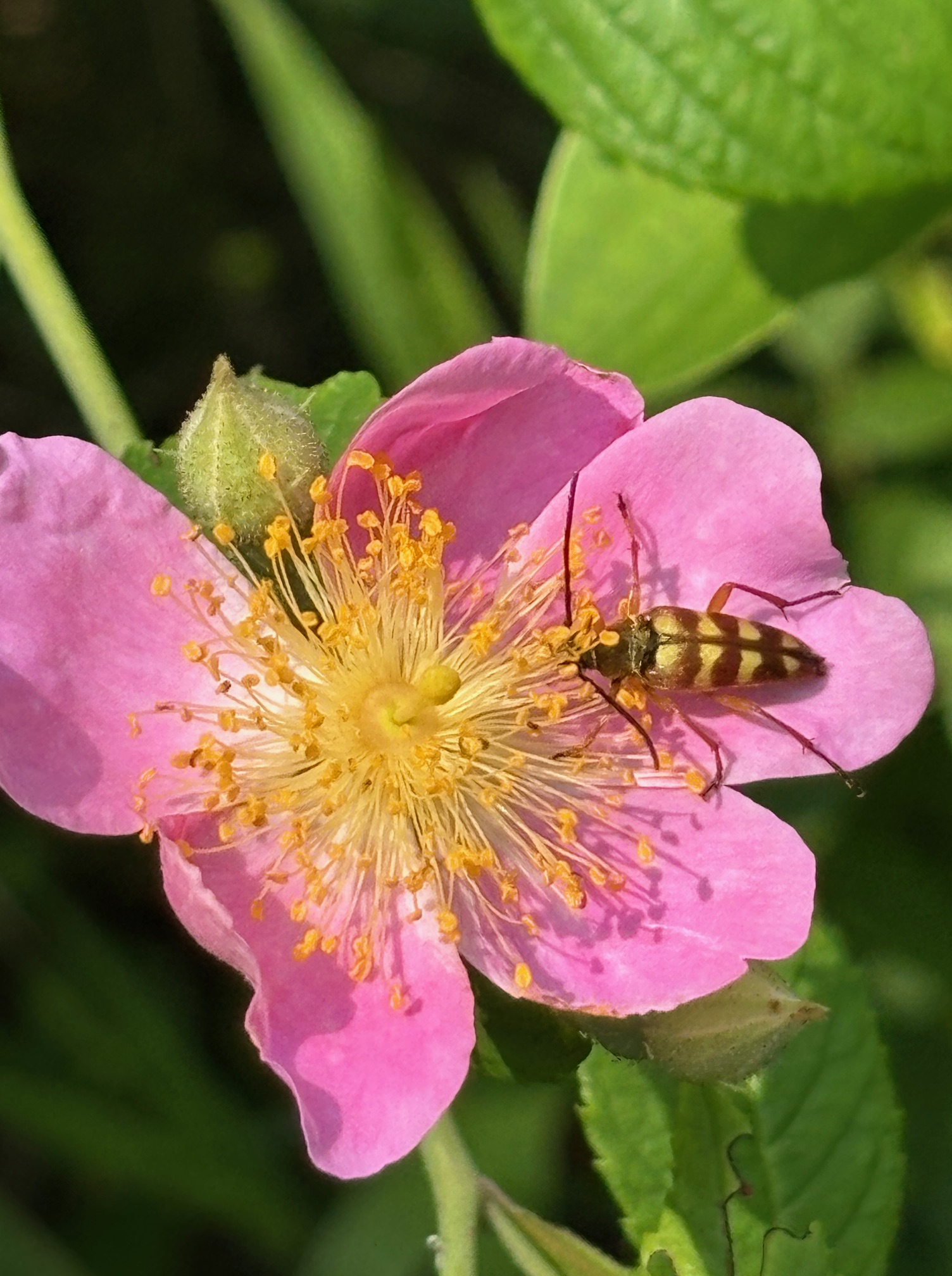
One day I snapped a photo of a beautiful purple flower on a walk near a graveyard in Decatur, Tennessee. I was astonished to discover it was from kudzu—a familiar, rapidly growing invasive perennial vine in the South that smothers all vegetation in its path. And it’s edible!
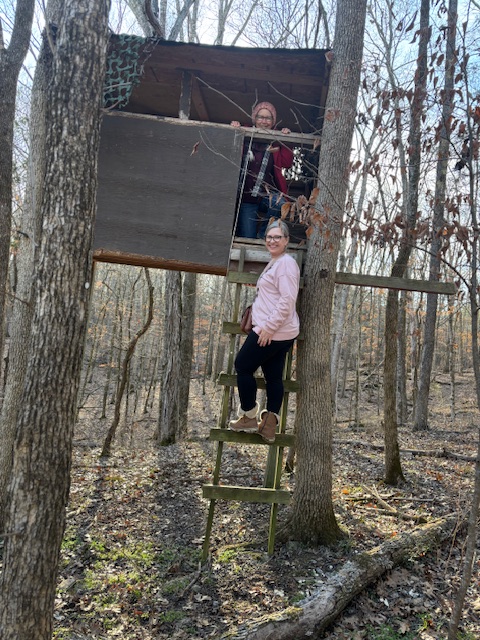
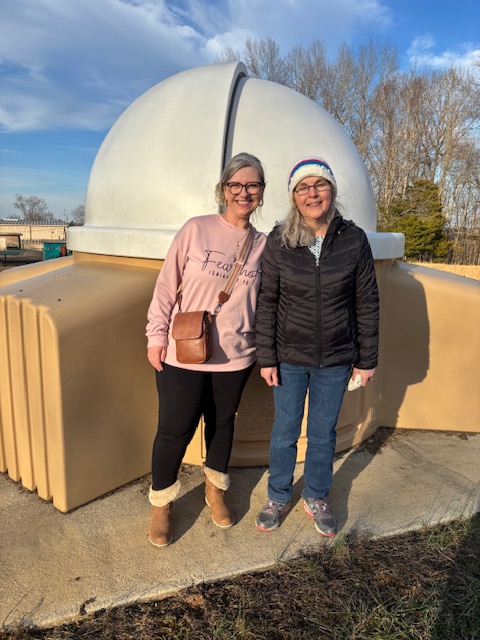
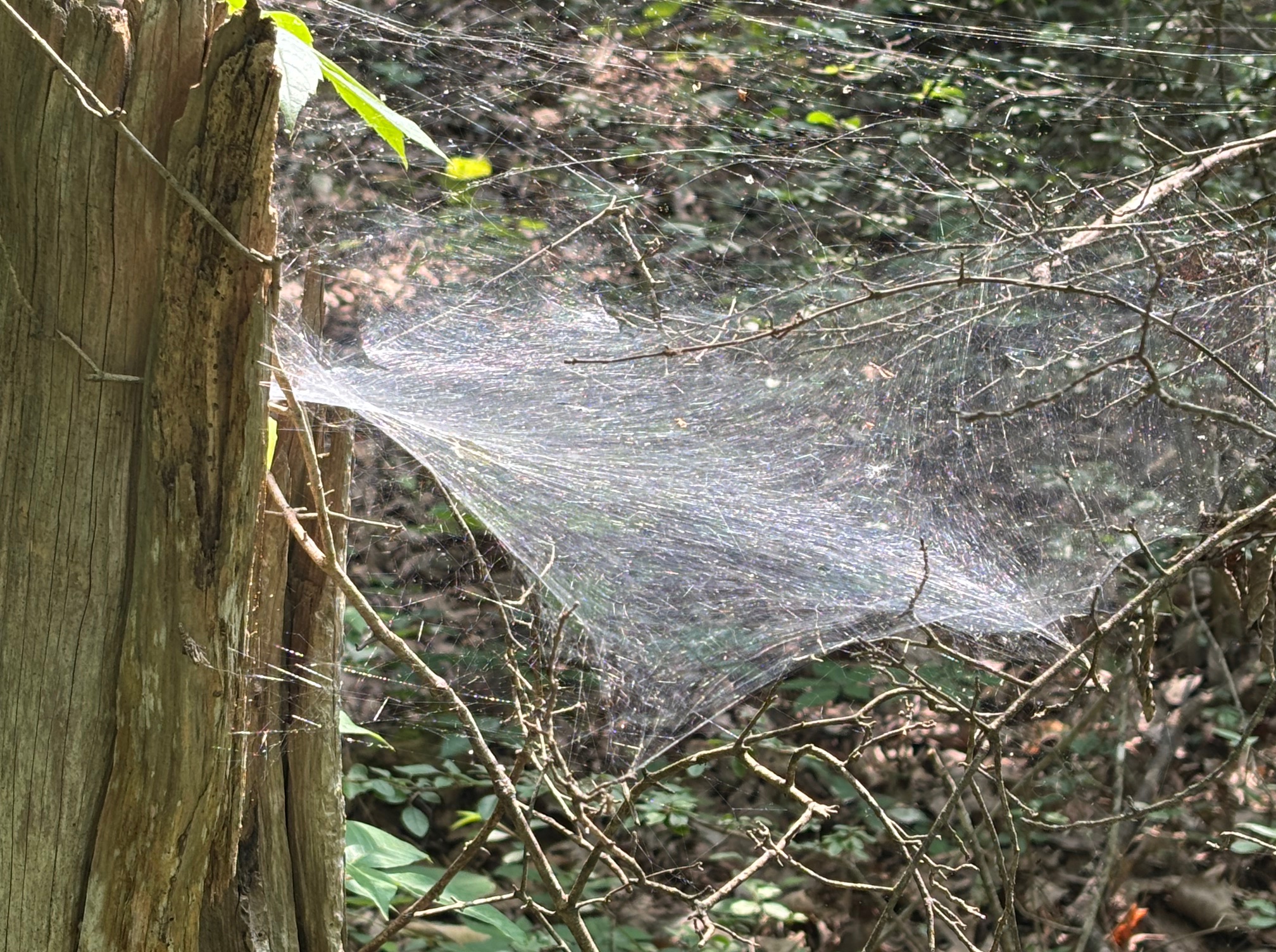
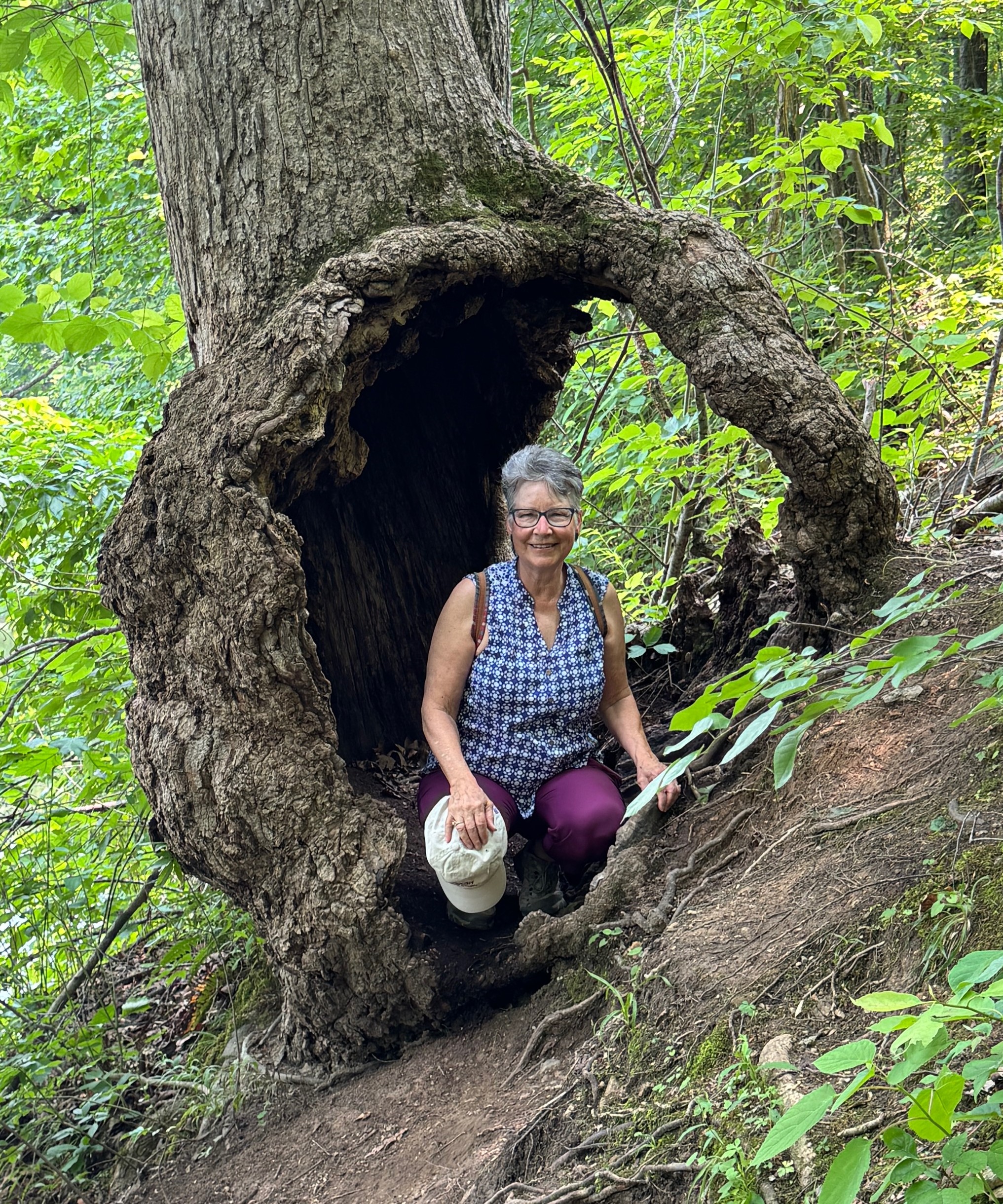
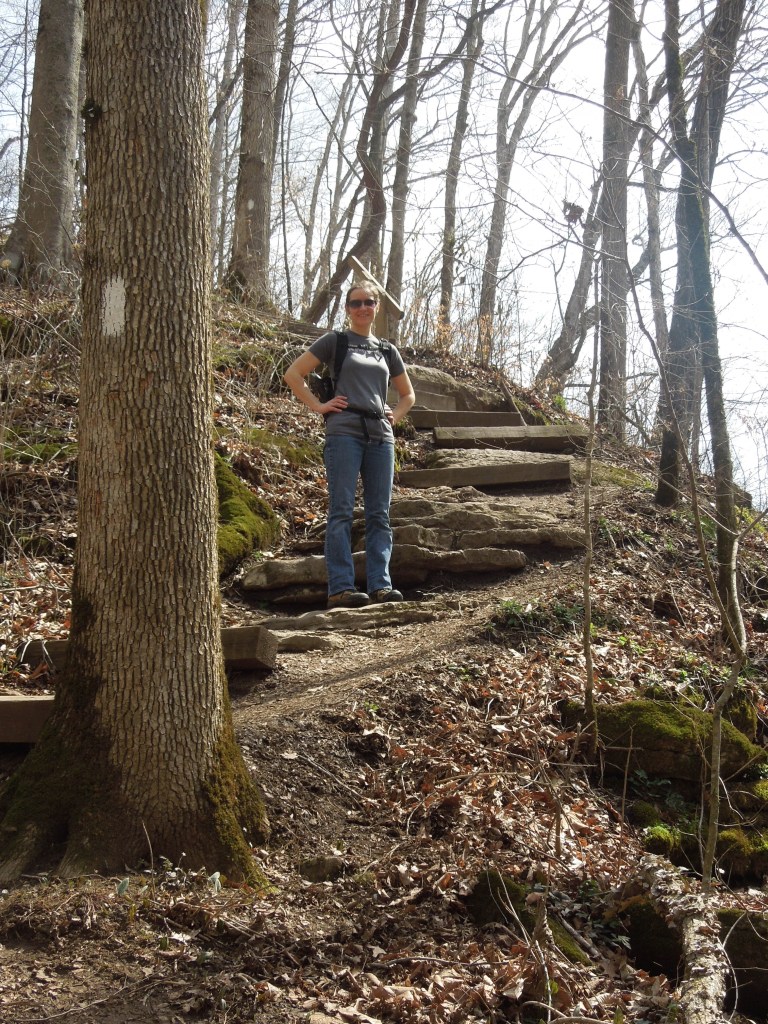
A few ladies joined me on a little hike on the property of Horton Haven Christian Camp following our annual Ladies’ Retreat. Three discoveries brought joy to my heart: a deer blind (which I climbed to the top for the view), a random campfire by the trail, and a dome in the middle of the field. We circled the structure to find a sign that read “observatory.” Too bad it was padlocked. On other trails, I discovered some amazing nature.
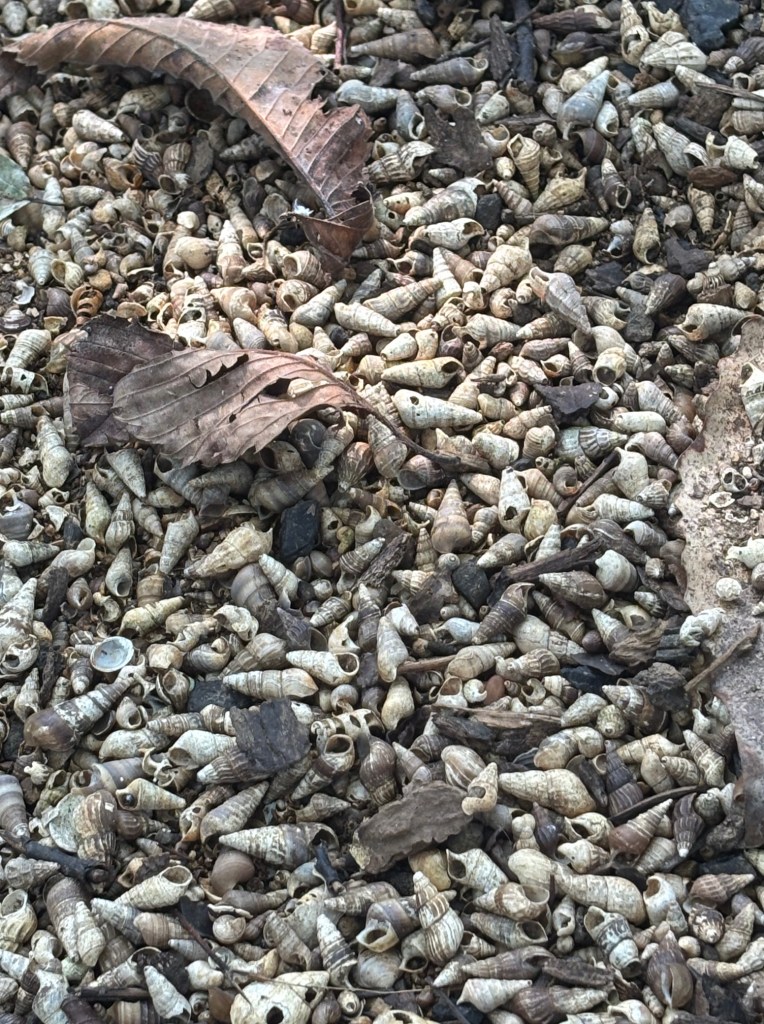
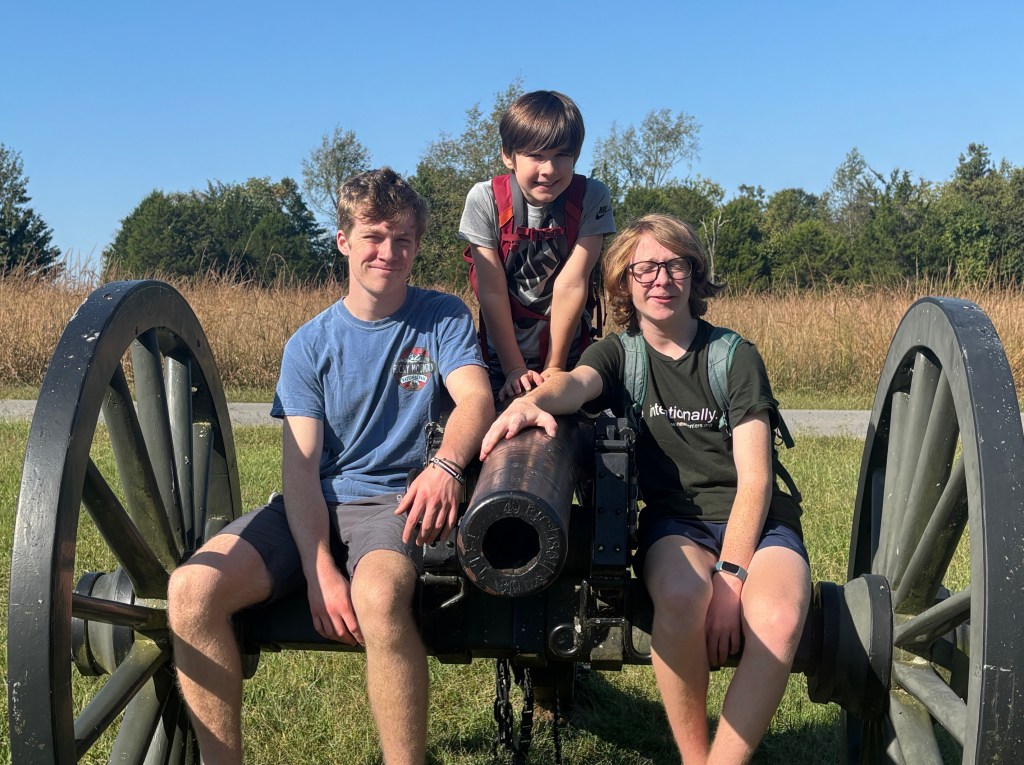
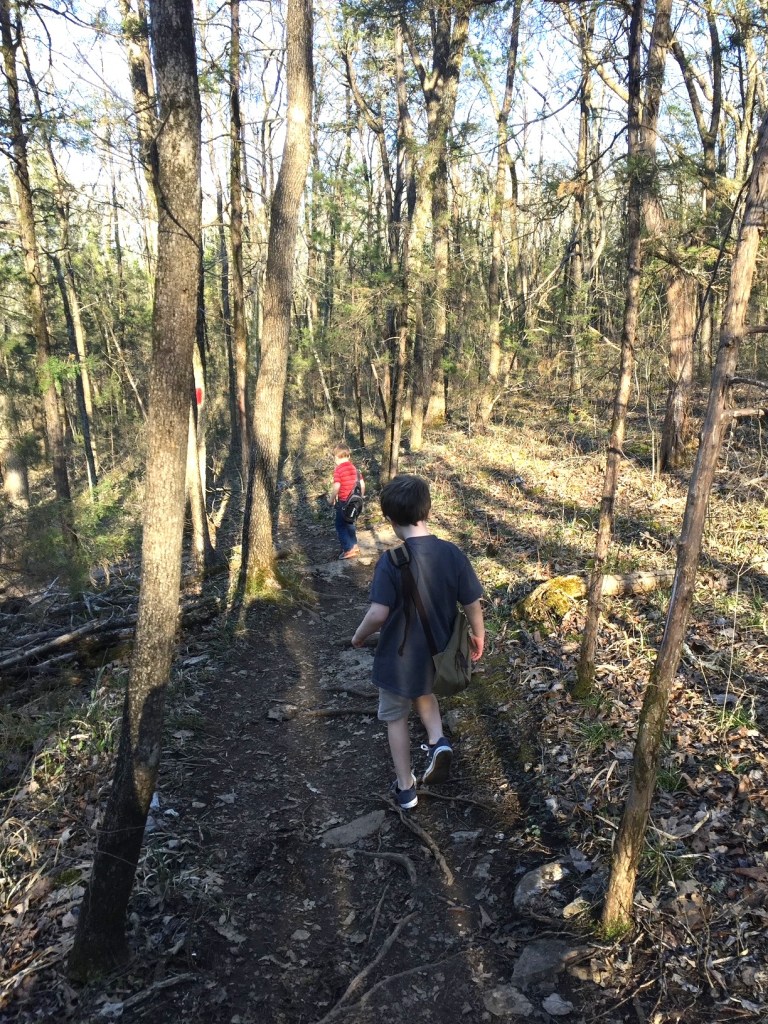
On a walk on the Greenway with my three oldest grandsons, we climbed down to a dry streambed and discovered a bed of seashells.
The Wonder of Birds
My favorite new app this year is Merlin Bird ID. Press a button to listen for birdsong, and voila! It identifies the bird.
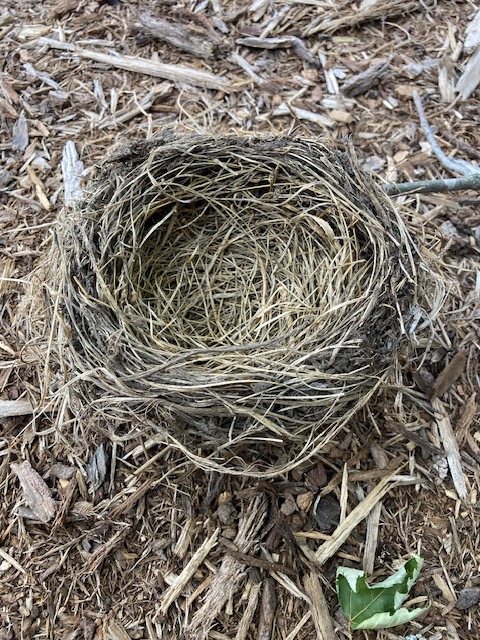
I wake up to birds chirping outside my window each morning, and when I walk or hike, I keep my eyes open for abandoned birds’ nests on bare winter branches or on the ground.
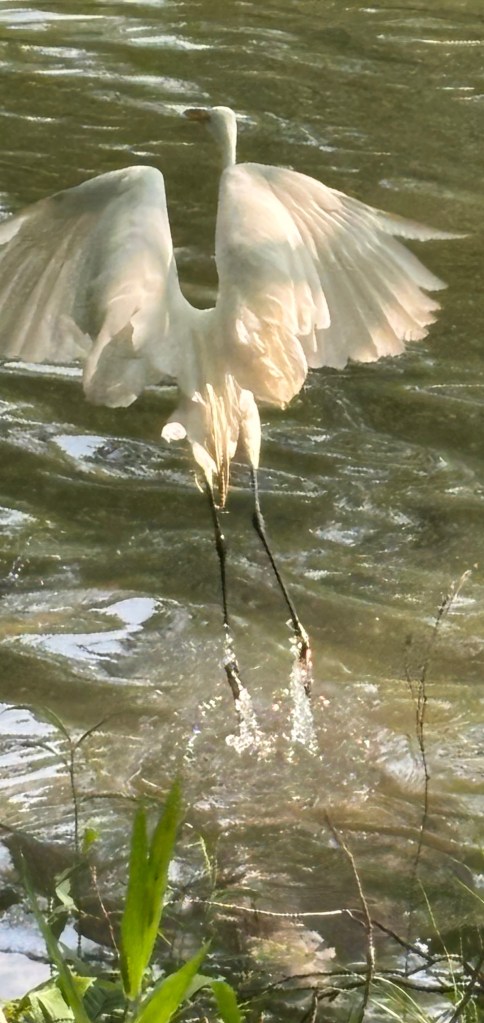
One day I watched a solo heron rising from the river, feathers glinting in the sun. Another day it was the astonishing sight of thousands of blackbirds lined up like tiny soldiers across multiple electric wires by the highway. And the hypnotic, acrobatic, twisting, swirling, shape-shifting bird dance, a murmuration (See “The Wonder of New Words”) in their autumn flight. How do they follow each other? How do they decide when to move? Who’s the leader? What if one bird gets left behind? Keeping together, I discovered, provides safety from larger birds as they migrate.
So many hymns we enjoy today sprang out of personal tragedy. The most famous one is the Spafford story behind “It Is Well with My Soul.” But others need to be retold.
The majority of the hymns I grew up with were composed in the 1600-1800s. Prior to the advent of hymns, only the Psalms were sung in corporate worship. Churches split when hymns were first introduced (sound familiar?) To make the transition, one congregation allowed dissenters to leave before they sang one new hymn at the end of each service. If only we’d known our church history when the music wars raged in the 1960s and ’70s over “contemporary Christian music.” I now rue my lament over my lost heritage and my disparaging remarks about contemporary artists. Each generation needs to find its own voice.
While singing “Joy to the World,” I pondered the refrain “The WONDER of His love.” I was also captivated by the repetition of the word King in almost every Christmas carol we sang. Not baby, but KING. Jesus may have arrived on earth as a helpless infant, but His destiny is KING of the universe. Perspective is everything. Mental health depends on it. Wonder expands the space in my mind to create room for peace and joy. My to-do list, my schedule, my projects, and even people get pushed to the periphery as I focus on wonder. It deletes the antsy-ness of claustrophobia. My shoulders release their tension; my breathing deepens.
Here are some lovely artists I discovered on YouTube, along with a link to a sample of their music:
The pure, sweet voice of Rosemary Siemens with violin accompaniment.
Acapeldridge: Four-part harmony by the same artist (a little strange to watch)
Luke Powell, a South African pastor who tells the story behind the hymns. Here’s one: Born in England, Louisa Stead moved to the USA. One day while she and her little family were enjoying Long Island Beach, her husband ran into the waves to try to rescue a drowning boy. Tragically, both were lost. And thus Louisa wrote, “Tis So Sweet to Trust in Jesus.” She then became a missionary to South Africa and later to Rhodesia.
Throughout the year, I frequently found myself humming “The Wonder of It All” written by George Beverly Shea, gifted musician for Billy Graham’s crusades.
Verse 1
There’s the wonder of sunset at evening,
The wonder as sunrise I see;
But the wonder of wonders that thrills my soul
Is the wonder that God loves me.
Verse 2
There’s the wonder of springtime and harvest,
The sky, the stars, the sun;
But the wonder of wonders that thrills my soul
Is a wonder that has only begun.
Refrain
O, the wonder of it all! The wonder of it all!
Just to think that God loves me.
O, the wonder of it all! The wonder of it all!
Just to think that God loves me.
One day I randomly opened a hymnbook to the song “Jesus, I Am Resting, Resting.”My heart resonated with the words that were written by a poet, Jean Pigott, who died at age 37. She gave the hymn to her brother Thomas who went to China as a missionary under the China Inland Mission. He, in turn, shared it with Hudson Taylor who whistled it during extreme circumstances in the Boxer Rebellion. Thomas was executed, along with his wife and son and 41 fellow missionaries, on July 9, 1900.
Though I pray day after day with hurting people, I find my heart can stay at rest, at peace, if I focus on God.
One day I discovered Elohim Songs—”a worship space blending English and Hebrew lyrics, inspired by God’s Names and Promises: Elohim, Adonai, Yahweh.” They “create original Messianic worship songs, using AI-assisted tools not for worldly trends, but to glorify God. Every melody, word, and sound is crafted to draw hearts closer to the Father. Here you’ll find Scripture-based ballads, English-Hebrew lyric videos, and songs about God’s faithfulness from youth to old age. Let technology serve His Kingdom. Shalom!”
The Wonder of History
Well, not really … but. History was always my worst subject in school—all those dates and names, and nowhere to hang those little pegs in my mind. So when I discovered “Crash Course” on YouTube, I was hooked. Witty, fast-paced, visually appealing, and informative. I may not agree with all John Green’s commentary, but he keeps my attention.
Check out “Christianity from Judaism to Constantine: Crash Course World History #11”
The Wonder of Photography
When I was in Grade 6, my family did the touristy thing and drove into Yellowstone National Park to see Old Faithful. That’s about all I remember from that day. I wish now that we’d visited the Rainbow Hot Springs and hiked near the Yellowstone River (the longest free-flowing river in North America).
I didn’t know about the massive ecosystem until I watched Yellowstone One-Fifty with Kevin Costner, a 2022 documentary on the 150th anniversary of the founding of Yellowstone National Park. Costner explores the Park “to find out if it’s still as wild and untouched as it was on the day of its birth.” The photography is breathtaking, awe-inspiring, and well worth an hour of your time.
Stunning, mind-blowing, astonishing, spectacular… okay, I’ve run out of words. Tom Hanks narrated a 10-part Sunday series on NBC called The Americas. The photography of never-before-seen, up-close nature kept me exclaiming, “How did they film that!?”
The Wonder of Rocks
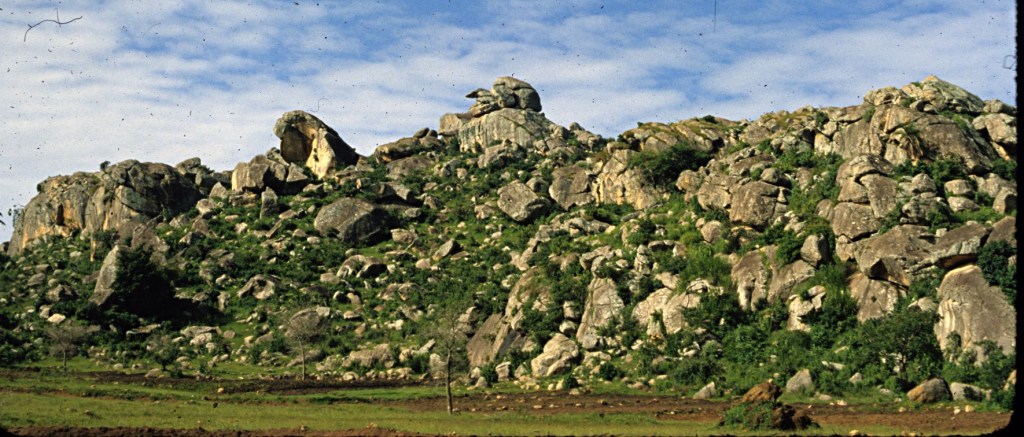
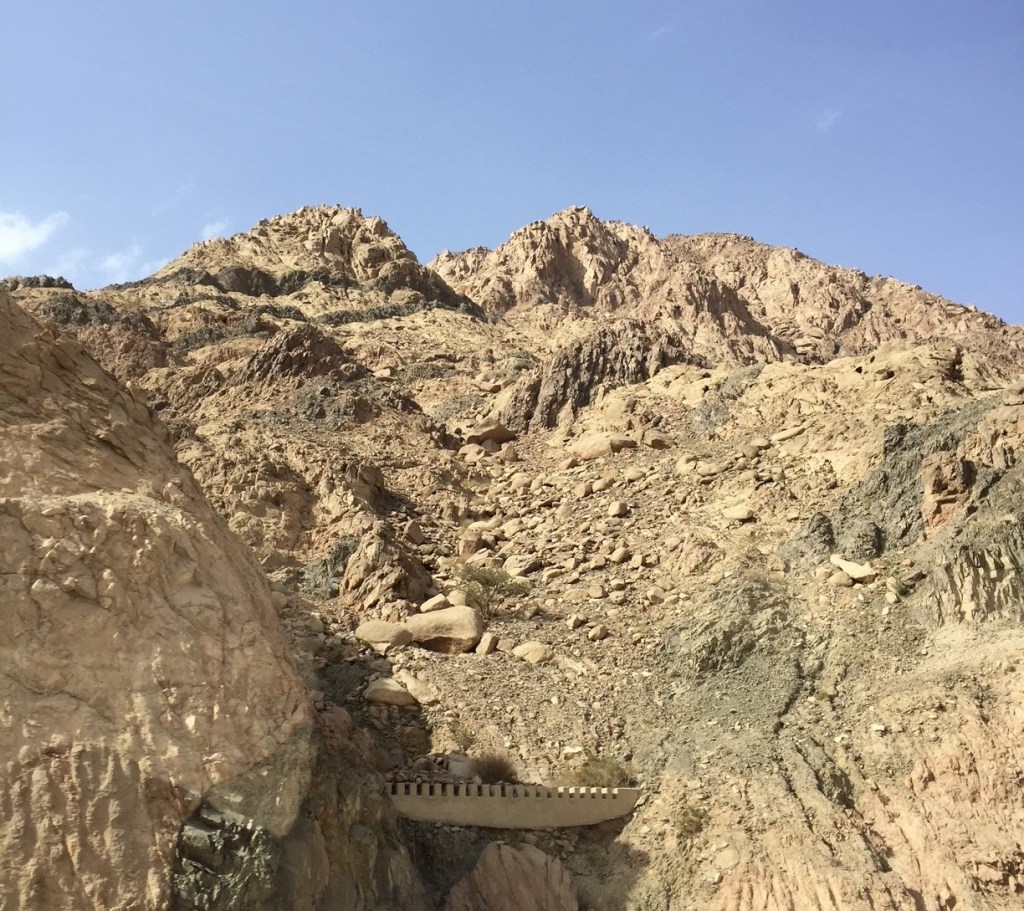
I have always had an affinity for rock formations as they take me back to my childhood in Nigeria. Camel Rock was my favorite hiking destination.
We came across these cairns while in Aruba. Who piled them and why?
The Wonder of Trees
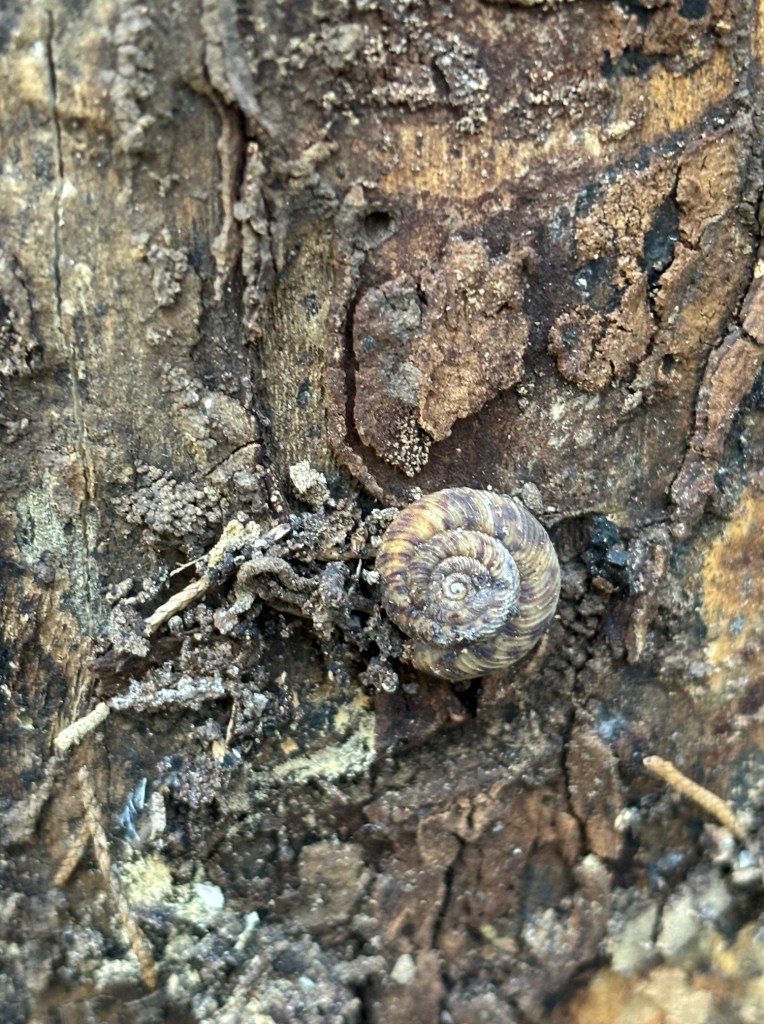
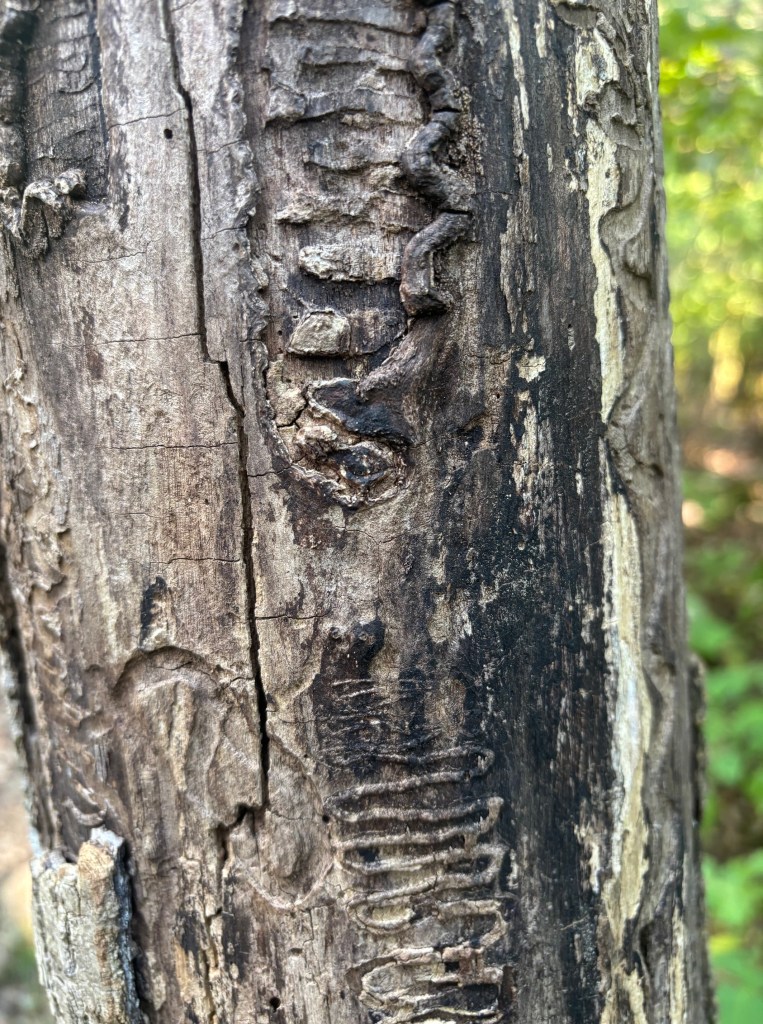
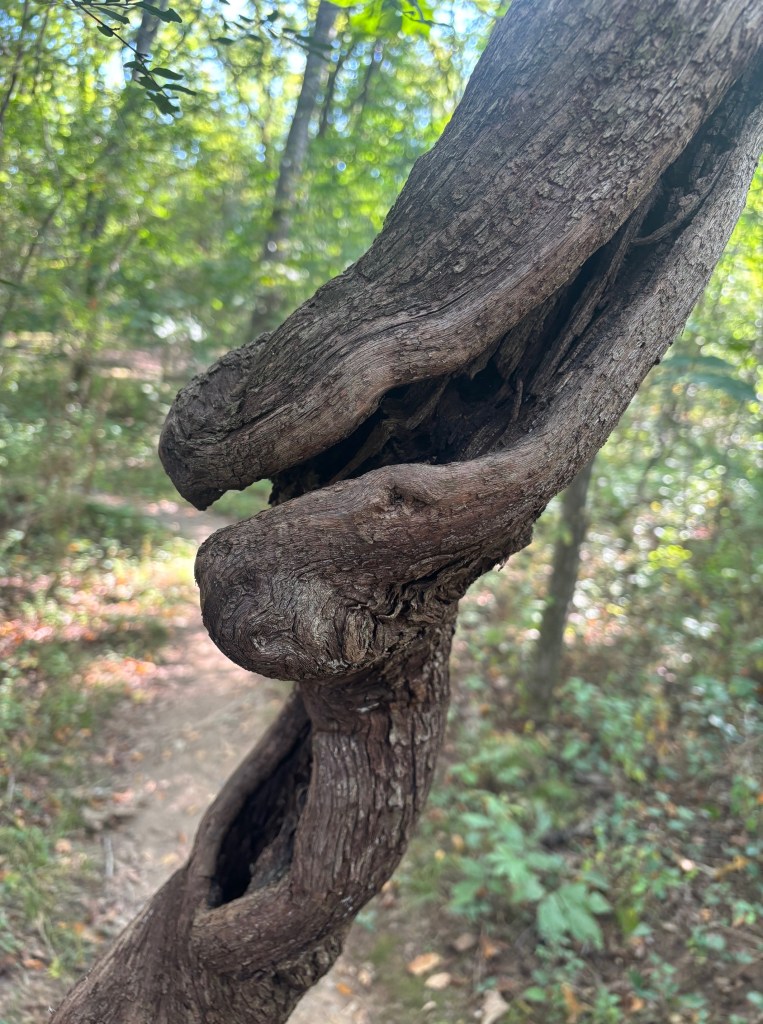
Anyone who knows me can tell you I’m obsessed with trees. I found these gems this year etched into dying tree trunks. And how in the world did this vine find its way to the top branch of a tree?!
The Wonder of Friendships and Health
After spending 5 weeks recovering from the flu and viral pneumonia earlier this year, I am grateful for my health. I struggled to remain positive, and I’m in awe of a couple friends who manage much greater illness far better than I.
The first is Joyce, my accountability partner for the past 35 years, who suffers from RA. She had two stints in the hospital this year for an infection and is now home after rehab. My heart aches for her suffering. Yet in our conversations she always manages to ask me how I’m doing. Her positivity is infectious.
The other is Tammy, who received the gift of a heart transplant this year. She’s a friend to all but makes you think you’re her best friend. The doctors told her she was one in a million in her recovery, and I believe them. She returned to dancing just weeks after getting out of the hospital. Wow! Her joyful spirit inspires me.
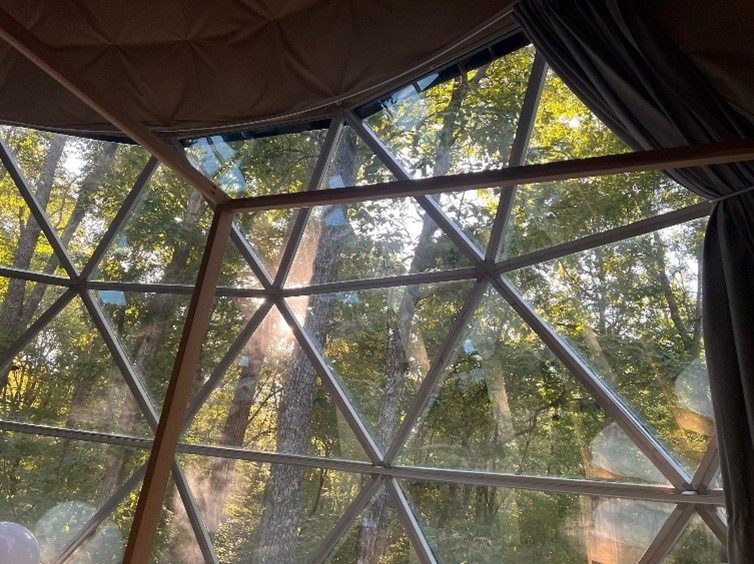
To round off our year-long celebration of our 50th anniversary, we stayed a couple nights in this romantic, cozy Terralodge dome house in Sewanee, Tennessee. The king-sized bed faced a floor-to-ceiling window that looked out onto a forest of oak trees. We had just settled in when we heard a ka-pow! over our heads. Was that a shotgun, we wondered. But no. It was the sound of acorns slamming into the deck or roof. We giggled every time one hit.
The Wonder of Food
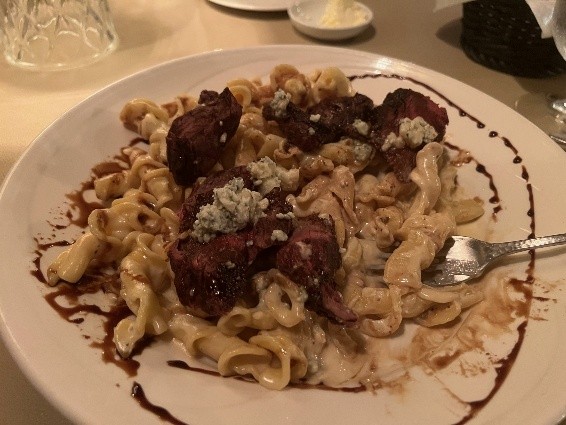
Wanting to try something new on the menu at High Point Restaurant on Monteagle Mountain, my eye caught the words “lion’s mane.” My imagination ran wild as I tried to envision chewing tufts of hair from the head of the king of the beasts. “It’s the name of a mushroom,” our server explained. Always something to learn!
The Wonder of Healing
In 25 years of ministering to people through inner healing prayer, I can only name a handful whom we have been unable to help in some way. But when I first met Addie (not her real name), I thought she might be one of those failures. Every month for two years, I prayed with her with minimal change in her lie-based thinking. I tried every tool in my toolbox, and nothing made her budge. She firmly believed she was bad, a nobody, unworthy of love. She pled with me not to give up on her, so we kept plugging away. One day in desperation, I begged God to show me another way. That week, He used a book, a song, a list, and a massage therapist to teach me something new. When we met again, I asked her if we could try something different. Within minutes, a physical pain in her side began to subside. She looked at me in astonishment. “It’s been there for 35 years!” she said. And then followed the Lord’s sweet words to her, “You were not to blame.”
But that’s not the end of the story. We began to use this new tool with other clients, and they, too, exclaimed at the healing they received. Their gratitude warmed our hearts. All glory goes to God.
The Wonder of the Word
As a child, I often stared at the photo of Jesus holding a rescued sheep in His arms. I’d heard the story a hundred times about how God rejoices more over finding one lost sheep than over the 99 who didn’t go astray. I can hear George Beverly Shea’s deep bass voice singing, “There were ninety and nine who safely lay in the shelter of the fold…” The missionary message was clear: go save the lost . . . but I wasn’t one of them.
I just couldn’t identify with that disobedient rascal. I tried so hard to be good, to obey, to follow the Shepherd. I felt jealous of the one in His arms. Maybe I should quit following the rules and be bad—would Jesus race after me then and love me more?
I feel so self-righteous. I obeyed, I followed, I stayed in the pen like He told me to. Of course, unlike the wayward one, I didn’t have to endure the cold, the loneliness, the lostness, the trap, the brambles. I wouldn’t wish that on anybody. But I’m petulant that Jesus seems to care more for the brat.
But as I read Matthew 18 (again for the umpteenth time), I noticed something for the first time. The context of this story is about children. Jesus had pulled a child into His embrace and instructed His disciples that they needed to humble themselves as LITTLE CHILDREN in order to get into the kingdom of God. And that anyone who hurt one of these LITTLE ONES should have a millstone hung around his neck and drowned. Verse 14 (NIV, emphasis added) says, “In the same way your Father in heaven is not willing that any of these LITTLE ONES should perish.”
And now I see it. I’m a full-grown, mature sheep. Of course my motherly instincts kick into high gear when a little lamb wanders from the flock or falls into a ditch. Go, Jesus! Run to him/her! That perspective changes everything. Whew! No more jealousy. So crazy that after 70 years I paid attention to the context.
The Wonder of Marriage
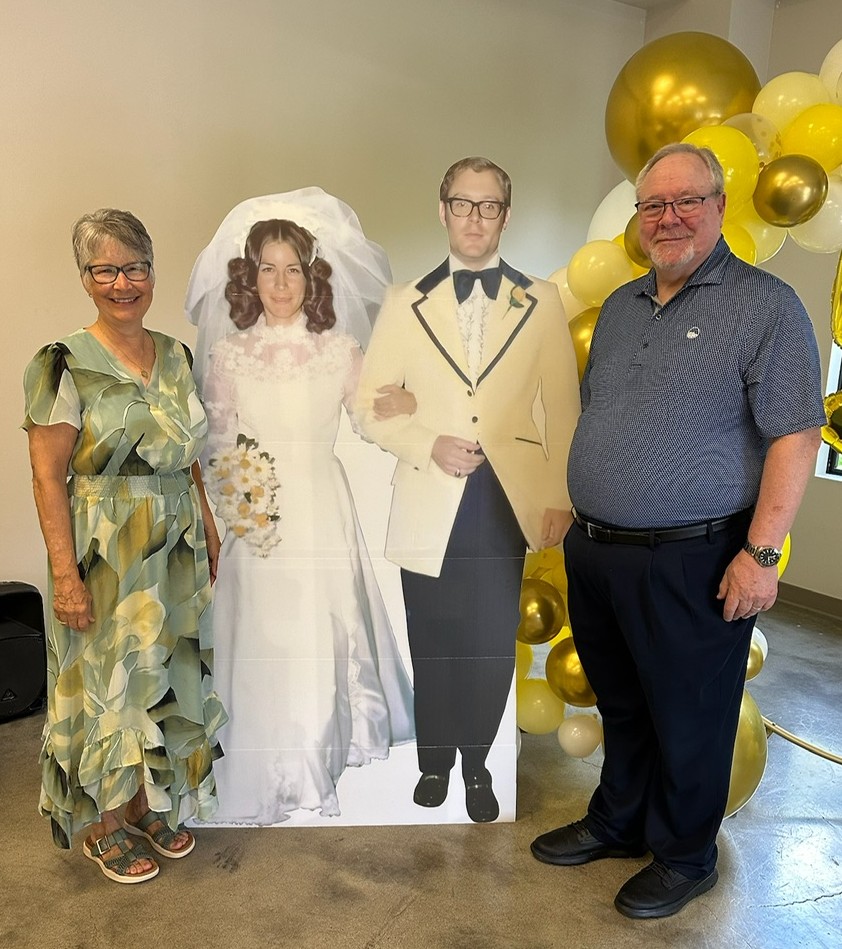
On August 8, 1975, Scott and I exchanged wedding vows. Fifty years later, as we gathered with family and friends to celebrate this milestone, I had ample time to reflect on our stories and to trace the hand of God on our lives. The beautiful young server at a romantic dinner for two asked us our secret for making it this far. “Two things,” we said. We committed to each other that we would never threaten divorce when we disagreed (which was on just about everything!) and that we would never go to bed angry at each other (a few times that vow stretched into the morning hours, but we always resolved our arguments as soon as possible.) Where have the years gone? How can I love this man more today than the day I married him? It’s “abin mamake!”
My schedule today is full, and I can feel the familiar and uncomfortable pressure in my stomach and tight shoulders. My head knows I have the exact number of minutes in a day required to accomplish God’s work, but part of me goes into panic, rushing, planning mode in order to keep on top of things—which, in the end, is quite counterproductive!
VISUAL: I have a Panic Guardian who’s sitting on the apex of my heart cathedral roof. “I have to stay on top of things!” he says.
How comical! No matter what logic I try to reason with him, he’s not budging. There’s a party going on below, inside where it’s cozy and warm, but no, he wants to stay up here where he can stay vigilant and survey the lay of the land. He doesn’t want to miss anything.
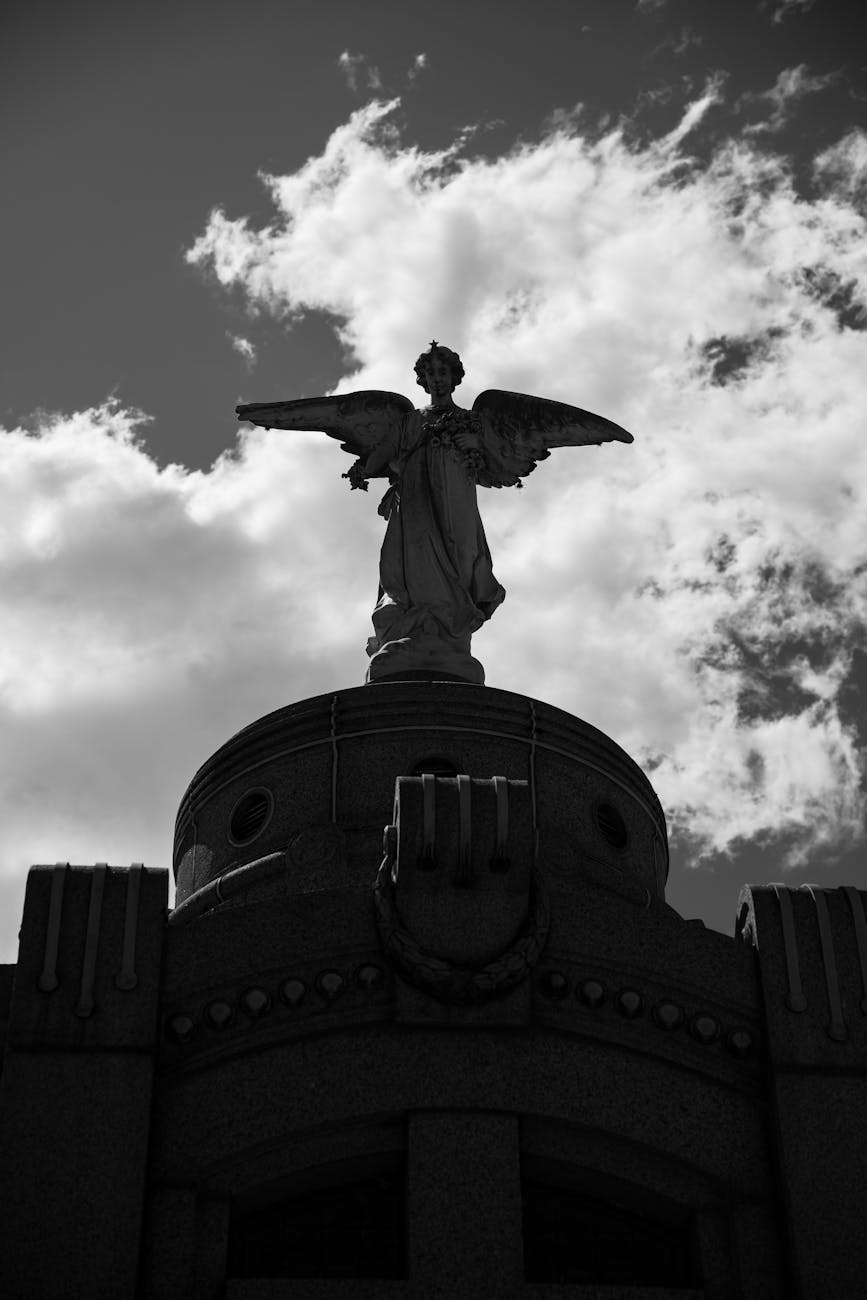
“Can you trust Me to watch out for you?” says Jesus. “What if I set an angel up here to keep guard?”
The Guardian ponders a moment. After all, angels have superpowers and can see farther and deeper than I can and know better the dangers out there. That thought seems to relax him a bit. “But be sure to come and get me, the moment you sense trouble!” he admonishes the guardian angel.
Angel just smiles. “That’s my job,” he replies, “and I don’t get as tired as you trying to balance on the narrow edge of a rooftop!”
My Panic Guardian goes inside the castle and surveys the feast and festivities, but he’s still on alert for any sign of trouble overhead. He can’t fully relax and participate. That’s his job, after all. I need an internal signal, he thinks. Something to alert me—like an alarm bell that will get my attention over the noise of the revelry.
And so Jesus hands him a special alarm—one that vibrates, noiseless, in his chest. How clever!
“Let’s test it!” he says to Jesus, who agrees and gives a signal to the angel to set off the alarm. Guardian flies up to the roof. “Where’s the danger?” he asks.
“There is none,” the angel replies. “You just asked to test it.”
“Oh, right.” With a quick glance around him, Guardian returns to the party, confident that he’ll be alerted when it’s time, but resting when all is calm.
The pressure dissipates, my shoulders relax, and I go on with my day in peace.
Son of God, whose eyes are like blazing fire and whose feet are like burnished bronze . . .
When I process with clients, they commonly visualize Jesus in human images. Perhaps they see Him in shepherds’ robes or white attire or perhaps a gigantic lap on which to crawl. Seldom does a client describe Him as John did in Revelation. Here, He seems distant, unapproachable, kingly, sovereign. How do you approach intimacy with a deity like that?
In the context of Revelation 2, God is calling out sin, rebuking, encouraging, warning. In a prayer session, He’s gentle and patient and wooing. What’s the difference? The posture of the postulant? When we humble ourselves, He’s approachable. When we’re rebellious and stiff-necked and pursuing pride and sin, He responds accordingly.
The church at Thyatira is commended at first for their love and faith, service and perseverance, and doing more than at first.
But . . . They tolerated the prophetess Jezebel’s teaching that led to sexual immorality and eating food sacrificed to idols.
God patiently said: I gave her time to repent of her immorality.
But . . . She was unwilling.
And perhaps that is why Jesus appears to them with blazing fire eyes.
You are worthy, our Lord and God, to receive glory and honor and power . . .
There is something heretical in my humanity that rebels against wanting to cede all my power, glory, and authority to someone Who created me. I didn’t ask to be created, but He wants me to worship Him. What kind of a being, a master, a king, a creator, a ruler, does that to his subjects?
I want to slap myself for even voicing such insubordination, but it would be wrong not to bring the thought into the light and examine it, repent of it, and receive truth. What in me is so arrogant? Am I guilty of the pride that caused Satan to fall? I want this gone!
It feels like we’ve been placed on this earth as a great experiment, but we failed, and so God had to find a way to clean up the mess He made. And the only way He could assuage His guilt was to sacrifice His own Son. But if He hadn’t created us in the first place, He wouldn’t have gotten Himself into this pickle, this mess. (Truly skewed thinking!)
I need help to straighten this out, Lord.I go to You for comfort and answers while I beat on Your chest in anger and frustration. I’m like a little kid who kicks and screams when told it’s naptime and I don’t want to go.
The temper tantrum does me no good, but I sure do like to assert my will, my control over my destiny. But in the end, the Parent is stronger than me, and I must yield to His authority, and I’m better for having taken a nap. But I still don’t like it.
But the Toddler Me sure enjoys being cuddled, read to, fed, clothed and kept safe and secure. Toddler Me wants the love, needs the love, but my immaturity wants and needs to assert myself so I can grow and develop through struggling and suffering.
I love my Father. I wouldn’t trade Him for anything. So why do I throw a tantrum when He knows what’s best for me? “I don’t WANT to take a nap!” I holler.
I repent. I will go willingly to my resting place, lie down, and give thanks for what He does for me, for Who He is. I give Him honor that is His due and gratitude for His patience with my childishness.
Revelation 19:6-8
Fine linen [the bride’s dress] stands for the righteous acts of the saints.
Much debate has gone into the question of which parts of the revelation to John are literal and which are figurative. But this verse is a no-brainer. The Scriptures tell us the interpretation or the meaning behind the visual. The entire church (not a single individual) is depicted as the bride of Christ. And the more righteous acts we do, the better the garment.
We Protestants like to camp on salvation by grace alone, but we aren’t quite as swift to focus on righteous acts. We hang onto pride and hatred and bitterness and anger and self-righteousness while we do our “good deeds.” What makes an act righteous? Not necessarily the deed itself, but the attitude, motive, and emotion behind it. If I give to the poor (a righteous act), that is good. But if I give to get self-glory (like the Pharisees giving alms), Christ didn’t have much good to say about that deed. On the other hand, if I have a good attitude but never carry out my good intentions, that also is rather meaningless. We need both/and.
I’m struggling this morning with “the prayer list.” When I’m processing with clients, they see/hear immediate answers to prayer. If God doesn’t answer, I know to ask a different question or pray something else. Feedback is immediate.
When I’m praying through a list, however, I don’t know if I’m getting through. Perhaps that’s because my attention or focus has always been on the person him/herself. I visualize the person and try to think what I should pray for—and then I say it.
What dawns on me is that my eyes and ears are in the wrong place. If I look at the Master instead, He will guide my prayers so that they’re following what He wants for the person, not what Karen wants. It moves the focus away from a grocery list to a relationship—where He wanted it all along.
Lord, can I come sit in Your lap as a little child and talk to You about these creatures You’ve made—and loved so much that You died for them? They’re a sorry mess—the whole lot of them. And I’m one of them!
Shall we start with my friends x and y? They are so needy. What do You plan to do for them, Lord? Yeah, I know that’s Your business. But would You mind sending an angel or two to minister to their broken hearts and bind up their wounds; and would You hold them for me because I’m too far away to do so myself?
Thank You.
A 2025 Update. I just read A Change of Habit, by Sister Monica Clare. She was a Southern Baptist who, as a child, felt the call to become a nun. She lived a secular life, married, divorced, and then finally fulfilled her life-long dream and became an Episcopalian nun (I didn’t know there was such a thing!) But my takeaway was what the nuns taught her about prayer. This week I took a hike in the woods and soaked in my surroundings, fully alive and aware with all my senses on alert to the divine. Prayer is more than a list; it’s relationship. It’s awareness and stillness and listening.
Tornadoes in Nashville and Chattanooga (too close to home)
Tribal killings near Jos, Nigeria (where I was born)
Locust swarms in East Africa that may affect my Compassion kids
A friend in the hospital
I don’t know how to pray for these overwhelming needs. I serve a big God, and I’m in His hands, and I cannot take on His job.
VISUAL: I see a large metal bowl with all the world’s problems swirling together in a vast, soupy mess. God’s enormous hands hold the bowl steady while the contents are shaken.
And where am I? I’m not inside the glop … yet. I’m a little ant clinging to the rim of the bowl trying to be faithful to the few tasks God entrusts to me. Things could get jostled enough that I fall in, but until then, I’m safe. If I do fall, I’ll have to deal with that. Meanwhile, “He’s got the whole world in His hands.”
The picture is clearer now—it’s like when I make kosai, and all the hulls of the black-eyed peas rise to the top when I swirl the bowl. (I guess you have to have lived in northern Nigeria to understand this one.)
Instead of praying for the swirling to stop, how about I pray that I cooperate with God’s plan for the world. I see things rising to the top of the bowl—the scum that needs to be scooped and poured off, while the good stuff settles to the bottom. God is purifying His church. It’s all good.
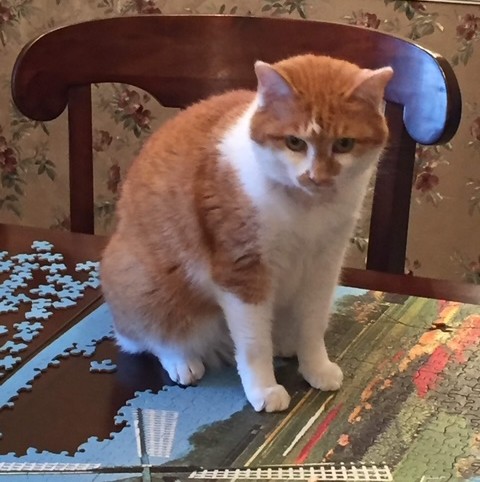
Today I begin with a 2025 Update. As we joyfully gather around the feast table with all our family this year, I pause to remember the angst of the pandemic. We survived it, and life went on, some of us changed forever due to circumstances beyond our control. For me, personally, I learned to embrace the change. As retirees, my husband and I had plenty to eat, a shelter over our heads, and no children underfoot to juggle school and job security. I had more time to read, do jigsaw puzzles, and hike solo on the Greenway. What’s not to like for an introvert!
Journal 2020
With the country on lockdown from COVID-19, I find I have a more open schedule, unsure how to plan my day. As a task-oriented person, I don’t know what I’m feeling . . .
Visual: I’m walking through a misty cloud, uncertain which path I’m supposed to take. I can hear the crunch of gravel under my feet, affirming I’m heading in the right direction, and in the small circle of light, I can see Jesus’ feet directly in front of me. Just keep following and trusting my senses, I tell myself.
Suddenly I find I’m blindfolded. Oh no! Now I’m dependent on following His footsteps, but they’re hard to hear over the crunching of my feet. Pause. Listen. Step toward the sound. What if He gets too far ahead of me? That’s silly, I think. He won’t leave me behind. Just listen . . .
I hear some sticks breaking off to the right. Is that Him? Is He leading me into the forest? Is it a distraction? An animal? All is still and quiet. I don’t dare move.
And then I hear a soft “mooo.” Whew! But it’s taken my focus off the footsteps in front of me.
“I’m here,” says Jesus quietly.
Relief. Ready for the next step, I feel His hand reaching back to take mine. “We’re about to cross a stream,” He says. “I need you to hold onto Me so I can guide you across.”
“Blindfolded still?” I ask.
“You may take it off,” He replies. “But it won’t help much. The fog is too thick, and you’ll try to rely on your eyes instead of the pressure of My hand guiding you.”
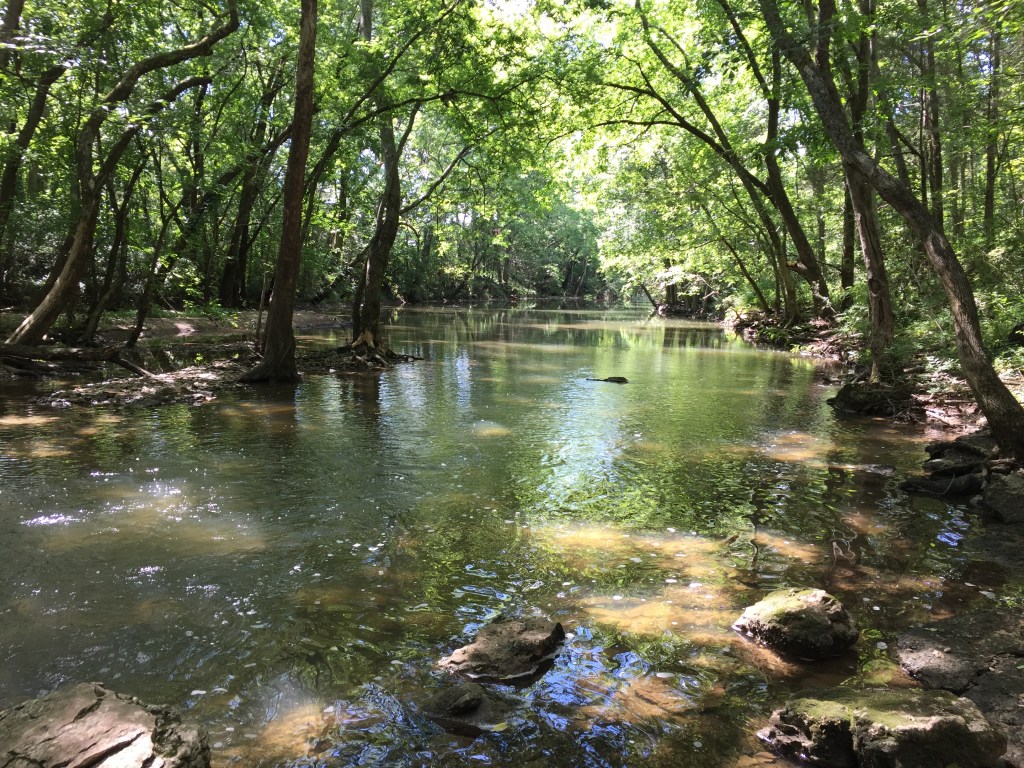
I trust Him. I leave the bandana on and begin my forward movement into the icy cold water. In my mind’s eye I can see the rocks as my feet try to get a grip on their slippery surface.
“I’ve got you,” Jesus reassures me. “Right foot next.” And so we continue across. My feet are cold, but the water is shallow. We are in no danger.
Jesus removes my blindfold, and I see a little spark and then a bonfire ahead of us. He wraps a blanket around my shivering shoulders, my feet toward the fire, and soon I feel drowsy. “Rest, Little One,” He says. “Rest, for the journey is long, and you’ll need your strength for the mountain up ahead. But don’t worry. The sun is rising, the mist will dry up, and soon you’ll be wishing for the cool water. We’ll fill our containers before we leave here to remember the days when you walked by faith and not by sight. For now, just rest and enjoy the quiet.”
And now I know what I was feeling—like I had to keep to a schedule, accomplish a to-do list, keep on track, use my time wisely. What if I allow myself to be lazy today and just do what I feel like doing in the moment, without an agenda. No “have-tos” just “get-tos.” What if today is a vacation day?
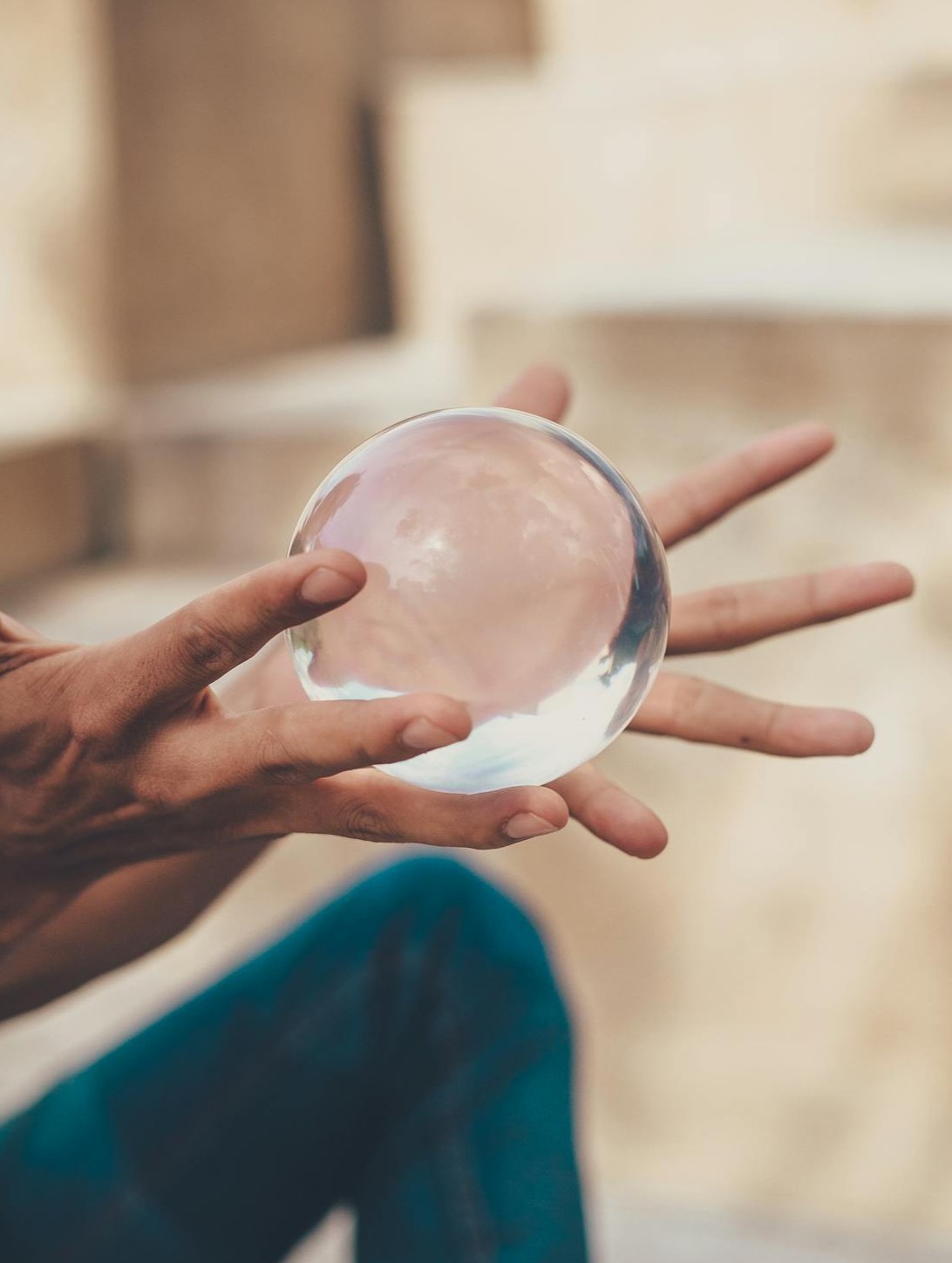
Today I feel like I’m juggling too many Ping-Pong balls. As they fly helter-skelter out of my hands, I stop, herd them into a four-sided tray, and hand them to Jesus. When I ask Him which ball He wants me to pick first, He hands me a different one—large, crystal-clear and sparkling like a diamond. Though scared to touch it, I reach out and find it is weightless, made of pure light. And He? He places it deep into my heart so that my hands are free. I carry it safely tucked inside my body, but its light spills from my pores for all to see—His light.
“But what about all those Ping-Pong balls I gave You?” I ask.
“No problem,” He says. “I’m a Master Juggler.” And He begins to toss the stars and the planets in a spectacular, brilliant light show.
“How does He keep from dropping all of them?” I wonder. And then I see the strings attached. He’s bonded to each one—each star, each orb—and, yes, to each Ping-Pong ball. Chords of love and ownership and responsibility.
“Just carry the heart ball today,” He says, “and I’ll help you juggle the rest.”
Words cannot describe the love I feel for Jesus, the third member of the Trinity. He’s beside me, ever present, watching me, protecting me, surrounding me, providing companionship, leading me, following me to see where my own footsteps take me. A friend—but not casual. A perfect friend—one who loves me just the way I am, but who loves me too much to leave me just the way I am. My Friend is so enamored with me (I haven’t figured out why yet) that He saved my life. Perhaps it’s because He made me. (In a small way I understand because of the way I fiercely love my own children because they’re flesh of my flesh, and in a sense I “created” them, and they were born perfect in my eyes.)
I was falling over a cliff, and Jesus grabbed me and pulled me to safety. But in the process, He had to go over the edge Himself—willingly He did this. And when He hit the bottom, His life blood was splattered. And I remained safely at the top of the cliff, trembling for my near miss with death. And grieving for the loss of my Friend and wishing I could die instead because it was my own foolishness that put Christ in that position to have to rescue me. But in the end, I see it’s better Him than me who went over the edge, because that would have been the end of me—kerplatz, splat! And then Jesus would have been left at the top, friendless.
Okay, never mind that there are millions of others around Him—but hey—they did the same thing I did—they foolishly got too close to the edge as well, but somehow He became the safety net for all mankind, forever, all at once, and permanently too, so when they fall off, they land safely in the net, and Jesus’ shepherd’s crook gently fishes them out. And trust me, there’s not one person who ever lived who didn’t get too close to the edge and lose his step and tumble over—except of course for the babies who were too young to crawl to the edge. (They were safe in their playpens.) Oh, by the way, some who went over the edge didn’t really believe the safety net was there, and they fell right on through. Ouch.
But back to the kerplatz on the canyon floor. If that had been ME down there? Like I said, it would have been all over but the shoutin’. But not Jesus. He had the power to do what no one else could—gather up the broken pieces, mend HIMSELF, grab His spirit and put it back into His body—except that somehow, He morphed that broken, bruised flesh into something permanent and new with new powers. Now He could fly and leap over tall buildings in a single bound. And coming back up to the top of the ledge, He told me I’d never fall over the edge again.
“How come?” I asked.
“Watch,” He said. And then He flattened the terrain with a single word. No more cliff! So we began to walk arm in arm, sometimes hand in hand; and occasionally, like a gentleman, He carried me over the rough spots and the puddles. And sometimes I let go of His hand to explore something nearby that looked more interesting than what was on the path He was leading us down. But invariably, it was fools’ gold I discovered. Sigh. Better to stay on the path with my Friend, my Savior.
He’s got a big machete and can swipe away all the snakes we encounter along the way. He’s got good eyes. He always sees them first. Sometimes He points them out to me so I can sidestep and avoid them. Sometimes He warns me, but my mind is elsewhere, and I get bitten. Yikes! But He carries an antidote with Him. One drop of His precious blood from the vial neutralizes the poison.
Sometimes I see a huge mountain or obstacle in the way, blocking our path, and I get frustrated or scared or uncertain. But my Companion just laughs. “I’ve been here before,” He says. “Come, I’ll show you the path around the mountain.” Or sometimes He surprises me and says we need to climb over or through the mountain. And He shows me the hidden entrance.
And He never leaves my side. As long as I hold onto Him, His energy flows into me to keep climbing, keep trudging, feet steady. He keeps reminding me of the beautiful valley of Sonshine on the other side. Sometimes on these treks, especially through the mountain, the way gets pitch black, and I lose my orientation. But He says all I have to do is ask, and He starts to glow with His own internal light. And He lets me see the myriad points of light—angels guarding the footpath, some up ahead, and some behind. And I step forward in confidence.
My Friend is very patient with me. He doesn’t ridicule me for my doubt or my ignorance or my stupidity. I wish I could be just as good a friend to Him. “But then, you’re not God, are you?” He smiles. “So quit looking at you, and keep your eyes on Me. I know what’s best for both of us. I’ve been to the other side, and I know the journey is worth it. Come on; let’s keep walking. One step at a time.”
There are no words to describe this Friend of mine. I love Him, and He loves me. And that is enough.
Someone challenged me to “look Jesus in the eyes.” I don’t know how to do this. I don’t see pictures in my head like an artist does. So when I “see” Jesus, it’s an indistinct outline of the form of a man. How then can I possibly look into His eyes?
AI-generated
When I ask Jesus to reveal Himself to me, all I see in my visual is a distorted, grotesquely shaped mask that covers His face. Am I afraid to see Him in all his glowing, white-hot, pure light, like when Moses had to wear a veil? I don’t think my human eyes could tolerate seeing Him in His glorified form. And yet He wasn’t glowing when He appeared to the disciples in His resurrected body. Why can’t I experience that as well?
“Do you want the mask off?” Jesus asks.
Well, why wouldn’t I? Who put it there in the first place?
My Heart Guardian steps up. “I’ll do it,” he says. And when he rips the mask off, I see the misshapen, disfigured face like the Phantom of the Opera. And Isaiah’s words leap at me: “There is no comeliness . . .” (referring to the cross). He was bruised . . .”
I once saw an artist’s rendition of Jesus. It wasn’t ugly . . . just plain and uncomely. And I didn’t want to continue looking. I want my Jesus to look handsome, majestic, chiseled and rugged and buff with gorgeous features that would make me fall in love with Him and His form. I felt disappointed . . . like this can’t truly be Jesus. I want Him to look perfect. But then I see Akiane’s drawing of Jesus and I like it. Or Jechoon Choi’s Joyful Jesus.
We all have distortions of reality. We have no photograph of Jesus hidden in the archives. No one living today has seen Him in the flesh or walked with Him. And even a drawing doesn’t produce the same result as being in someone’s presence. I can’t wait to see Him face to face.





















 In the Pursuit of Peace
