He must increase, but I must decrease. (John 3:30 KJV)
Fresh out of college, I landed a job teaching English and speech at a private Christian school. Inexperienced and apprehensive, I tried to put on a confident mask as I entered the classroom and directed the school’s plays and programs. The more insecure I felt, however, the more I craved affirmation and accolades.
I want to follow John the Baptist’s example, but how do I decrease while Jesus increases? How do I avoid seeking accolades and point people to Jesus instead? Mother Teresa and Johnny Earickson Tada come to mind as humans who have accomplished great things for God with few resources, yet they always point people to the One they worship. How would that look to me?
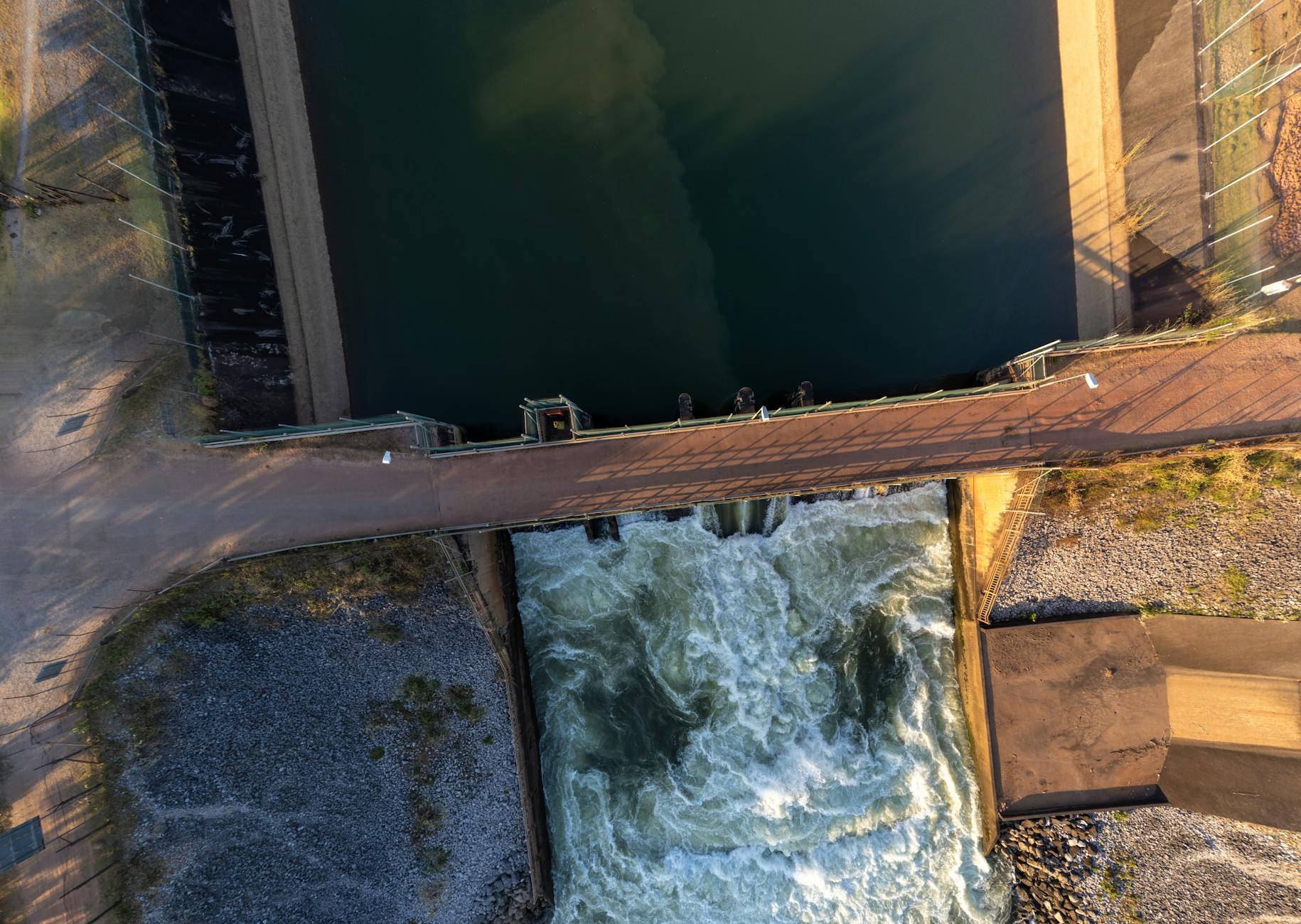
Visual: I am at a Y junction of a channel of water (i.e. man’s accolades) rushing toward me. When the waters arrive at the Y, I close the gate on my side and divert the water to the right fork, causing the water to flow toward Christ instead. When praises come my way, I divert them to my Lord. If I don’t, I may drown in the force of the water. He alone is strong enough to receive the full force of gushing praise. I cannot prevent the water from flowing, but I can divert the water to the proper channel.
I dreamt last night that my daughter was dating a Black boy who had a chip on his shoulder because he thought I was prejudiced. I felt defensive that anyone would think I was racist. I woke from my dream as I was lecturing him about how color blind I was and how I was more interested in how he treated my daughter.
What concerns me is that I’m afraid I do struggle with prejudice or prejudgment because of where I grew up. The prevailing colonial superiority in Nigeria at the time and my mother’s response to the people we worked with set the tone for pride in my little heart. I could tell you many little incidents. I have long since repented of my attitude, but if I have a dream like this, I suspect something still lingers there.
Visual. I see a baby lying supine in a box. Curious, I start to pick her up and discover her entire backside is open, raw, oozing, bleeding. Horrified, I quickly release her and disinfect my hands, repulsed by the baby’s condition.
I am powerless to fix this baby. When I ask Jesus about it, I get the impression that this baby represents some wounded part of my heart. I think of the verse “The heart is deceitful” (Jeremiah 17:9) and realize I’ve been fooling myself about not being prejudiced. I DO judge.
“So, Lord, what are You going to do with this child? She’s grotesque.”
“I’ve already died for her,” He replies. “She’s already whole and healed.”
Sure doesn’t look like that to me. I feel disgusted.
“Pick her up,” He commands.
I’m loathe to do so, and I’m not even sure how to do it. All her insides will fall out if I move her. It’s like my stacked cookie cutters. If I try to lift one out, the rest get left behind. The irony of the metaphor is not lost on me, however. Humans are not cookie cutters. Or maybe we are all cookie cutters made in the image of God, but individual as snowflakes. Some are small, others large, but we all are used for the same dough, and the cookie tastes the same no matter the shape or size.
Somehow that image is what I need, for as I gently lift the baby, the blood on her backside washes away and skin begins to grow, leaving scars in its wake. Embarrassed, I’m tempted to conceal her in a blanket, but I refrain. I try to embrace her, but she’s stiff, like she’s been burned. I looked to Jesus. “Help her,” I plead, And He does. Her body begins to soften, and my heart begins to melt.
“Thank you, Lord, for creative dreams that propel me toward healing.”
Note: I’ve discovered the key to processing negative dreams is to focus on the presenting emotion. Usually there’s a memory attached to that emotion that contains some unresolved pain.
I find it a constant battle to still my jiggling foot, slow down inside, and be still. I’ve always been a goal setter: schedule a task, get it done, move on to the next. Without a looming task or goal, I get antsy. I feel unproductive, for there’s no measurable outcome, nothing tangible to check off my list. That hurry-sickness drive propels me forward to accomplish things, but it leaves tension in my neck, back, and shoulders.
When I do manage to achieve inner stillness, I experience growth and restoration akin to the sleep cycle of my day. Somehow, I need to find a balance between work and rest.
Resting is sitting on a snow sled at the top of a hill, anticipating the ride of my life, then whizzing down the slope until I come to a full stop. Exhilarating! Rest, pause, let the rush wash over me, then collect my sled, hat, and scarf and trudge back up the hill to repeat the cycle. Rest is that pause between reaching my goal and preparing for the next one. I don’t ride all the time, I don’t climb all the time, and I don’t stay in the rest phase all the time.
A 2026 Update. I watch my adult girls and the frenetic pace they keep trying to balance children, work, and home chores, and I remember the angst of that season of my life. I’m still a list-maker, but I’m in the sweet spot where I can still climb the mountain and still enjoy the ride down. With a few more years behind me, however, my aging body and gained wisdom dictate that I require more rest time at the bottom of the hill!
So it happened again. Four people today leaned on me for help and support. I love ministering to hurting people, but this was overload with no breaks in between. The hike I took helped—except for the chigger bites which are driving me crazy. I put repellent on my ankles, but I never thought to put it on my waist and elbows. Sigh.
Lord, how did you recover when the crowds became too much? I suspect you were a perfect blend of introvert and extrovert, yet You withdrew alone at night. But how did you function the next day? I need You close today, Lord. I can’t do this on my own.
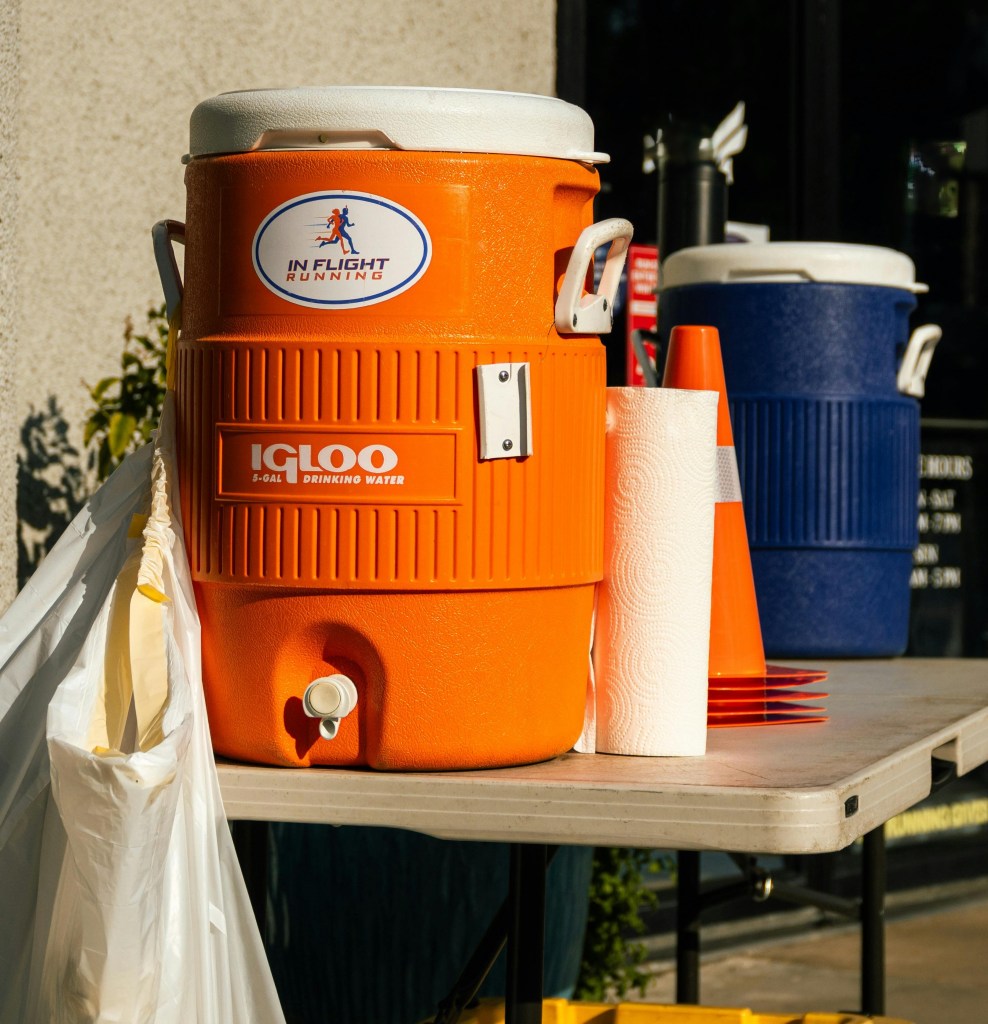
VISUAL: I am a Kool-Aid container at camp, and the sweaty campers keep lining up to drain me dry. I’m a vessel, created to hold refreshment for others, but I can’t do my job if the container is empty. I know there is an endless supply of Kool-Aid, but I cannot do anything to refill myself. I wish the Kool-Aid filler would hurry up! I can’t control how much He pours in and how much the campers deplete me.
The Lord comes and lifts the container (me) and takes me to the kitchen where I get a good cleaning, inside and out. I’ve been sitting in the sun too long, the sludge starting to accumulate, and I wasn’t providing a safe and cool drink anymore.
I am now resting and drying on the counter, while I recover. I’m not ready to return to work, but I can trust the Father to keep me here till it’s time to return. Meanwhile, He sets a different jug down in my spot. Now the kids won’t get thirsty.
In deep despair, the Psalmist Heman cries out to God, who seems to be silent. He blames God for his predicament and pain, claiming He has taken his companions and loved ones from him, and he feels God’s wrath.
Blame is a shifting of pain. I find when I quit blaming others (especially God) for my pain and turn around and face it, then pain can pour out and release, and God’s sweet and gentle voice will answer.
When a person blames me for her pain, it’s okay to examine my heart to see what actions of mine might have hurt her, but as long as she is deflecting her pain by blaming me, she will not heal inside.
Psalm 90
Because of his life experiences, Moses is keenly aware of the power of God’s wrath. I can’t identify with Moses, for my life experiences don’t include tragedy, earthquakes, rebellious neighbors, war, desert hardships, or enemies chasing me and threatening me. I am grateful that I get to live in America, in a strong brick house, with enough food that I never go to bed hungry, on a safe street, with freedom to worship. I don’t take my life for granted.
But I echo Moses’ prayer:
May the favor of the Lord our God rest upon us. Establish the work of our hands for us. Yes, establish the work of our hands. (v. 17 NIV)
Psalm 91
Whoever dwells in the shelter of the Most High will rest in the shadow of the Almighty. (v. 1))
I need rest—not just physical, but emotional and spiritual. The key, according to this verse, is to dwell. Dwelling somewhere is not work. It just is. I don’t have to work at dwelling in my house. It’s where I live, work, sleep, eat, enjoy relationship. I don’t live at your house; I live in mine, where I’m most comfortable. Things are familiar.
My body is God’s temple, and He dwells in me. He never leaves, He’s always there, and I want Him to feel at home here in my house. Sometimes I go to a different room and shut the door on Him, but He’s still there waiting outside the door for me to unlock it so we can have sweet fellowship once more.
Psalm 92
The righteous… Will still bear fruit in old age. They will stay fresh and green, proclaiming, “The Lord is upright. He is my rock and there is no wickedness in him.” (vv. 12-15)
I don’t consider myself “old age,” but this brings comfort to my soul. Still bearing fruit, staying fresh and green, still proclaiming. Some days I don’t feel fresh and green, but I like the thought of still bearing fruit.
I watch some friends who never seem to age, and others who are withering. I suspect this has to do more with the physical and perhaps even the mental, but the spirit can stay strong.
Psalm 136
God used the same water (the Red Sea) to rescue Israel and to annihilate the Egyptian army. Same water, different results. This started me thinking of other scenarios where something has a dual purpose or outcome.
The tongue: bless or curse
Wind: provide cool in the heat or destroy as a tornado
Fire: warm and cook or decimate forests and homes
Trauma: keep us stuck in hurt or result in a healing ministry
When Jesus healed a man with a withered hand on the Sabbath, the Pharisees became so angry they plotted to kill Jesus. They had more regard for keeping rules than ministering to people. In turn, Jesus was deeply distressed and angry at the hardness of the Pharisees’ hearts.
Acting out. For example, discharging energy by raising our voice, destroying things, or using forceful aggression. We don’t really experience the anger, so we don’t get rid of it. It stays with us, and it destroys relationships.
Denying it. When we fear anger in ourselves or others, we dissociate from it, leading to feelings of powerlessness, unimportance, resentment, and aggressive outbursts when it builds up.
Trying to contain it, repress it, or hold it inside. This leads to sarcasm, put-downs, and terse impatience, leaving people feeling disrespected.
Anger as an emotion is not sin. It’s what we do with it that becomes destructive to ourselves and to others. Anger is usually a guardian part of our heart that covers another emotion. For example, it’s easier to feel anger than to feel fear or pain. But self-protecting anger keeps pain alive, hidden away. It’s only when we agree to let anger go that we can begin to heal.*
But what if there were a fourth response? Good creative anger, staying present in the energy of it for a while, leads to addressing the difficulties of this world. For example, Jesus stayed present with His anger when He cleared out the temple. The organization MADD (Mothers Against Drunk Driving) began with one woman’s brave decision to turn her anger and grief into action. But even righteous anger over an injustice is best handed over to God, whose job it is to make everything fair and just in His own time.
So how can you harness your anger for good? Begin to take note of your anger patterns. How does your body respond? Where do you feel the tension? Learn to recognize your pattern while it’s occurring. Do you tend to hold it inside? Let it explode onto people and things? Once you’ve identified your anger, you get to decide whether to feel it, hide it, keep it, or release it. The challenge is, according to the Scripture, there should be a shelf life on your anger: until the sun goes down. Otherwise, we give opportunity for the evil one to take advantage of us (Ephesians 4:26). What a different world this would be if we all followed this pattern!
*Sometimes a client will say, “I feel annoyed,” not realizing that anger is on a continuum from mild annoyance to full-blown rage (annoyed, cross, peeved, irritated, irked, exasperated, vexed, angry, furious, wrathful, rage-filled). These are all choice emotions to help us manage an underlying one.
As I pray through a long list of people I know and love, it strikes me that every one of us struggles with something.
The chick struggles to break free of its shell. The caterpillar turned butterfly struggles out of its cocoon. The fetus struggles to exit the birth canal. The tender shoot struggles to push through the hard ground. Even the Messiah struggled.
Struggling implies hardship, straining, work, motivation, conflict, wrestling, effort to free oneself from restraint or constriction, achieving something new in the face of difficulty or resistance. Struggling strengthens us, proves us, and tests what we’re made of, and the effort is worth it when we reach the end of the race or resolve the conflict.
There is a time, however, when struggling is counterproductive. Sometimes God waits for us to stop struggling in our own power before He frees us. It’s when we relax and acknowledge our limitations that we find our greatest growth.
I have an overwhelming list of people I want to pray for, and I can’t keep up with them all.
Visual: I am in a square room with many doors, and each open door has monsters (demons) guarding them, preventing me from exiting. I know I cannot fight them all at once, but I still grab my Sword of the Spirit and flail it around. Suddenly, I lose my grip, the sword flies through the air, and it lodges in the wall above one of the doors. I laugh out loud. Well, that was a most ineffective use of my weapon!
So Jesus teaches me like a Jedi warrior how to use my sword: Keep calm, maintain control, and you only have to fight one ogre at a time.
And which one is that? I wonder. Instantly, I know its name: Doubt.
Doubt in my prayer life. Doubt that I’m doing it right or not doing enough or… And so, I invite Doubt into the prayer room. Jesus stands outside the arena, watching me. “Parry here, thrust there. Watch your vulnerable side. Good job. Stay alert,” He calls.
Once I’ve practiced, I invite Doubt into the ring, thrust forward with my sword, and the ogre vanishes like smoke. The doorway is now clear, and I can exit into a lush green garden.
“May I spend some time here with you?” Jesus and I ask at the same time, and we both laugh.
“See this rose?” “Note this bush.” “Do you like this tree?”
Yes, yes and yes!
“I made them all for you to enjoy,” He says. I can see the delight on His face.
“But what about that prayer room?” I ask. “Aren’t I supposed to be in there fighting ogres?”
“At some point,” He replies. “But for now, I want you to relax and rest here with Me and learn to delight in Me. Then when you do fight, you carry My heart and My strength with you, and you’re not fighting on your own. Rest here with Me and enjoy My presence, and I will teach you. I will let you know when it’s time to return to the room. Just stay close to Me for now. In this garden, pay attention, look and listen. There are things to learn in the quietness and stillness that you cannot learn in the midst of a battle.”
I’m okay with that, I think, but I don’t know what to do with the multi-page list I’ve been carrying around.
“We’ll use that for weed control,” He replies. And He carefully lays the papers in a special place in the garden, covers them with dirt, and walks away. “They are important to this garden,” He says. “They aren’t going anywhere.”
“Oh!” I exclaim. “There are little seeds embedded in the pages! When the rain comes, they’ll begin to sprout and grow. I don’t have to keep planting them.”
“I’ll keep watch over them with you, and My gardener helpers will make sure they get the proper nutrients,” He says.
And now I see it. The prayers I pray on behalf of other people are like seeds. The more I plant, the bigger the crop, but I’m not capable of or responsible for making them sprout or blossom. Now I’m eager to find even more seeds to plant.
“Look no further,” Jesus says, smiling, as He pulls out a packet from His pocket.
“Show me where to plant them,” I say.
“Some will be planted in your heart and some in others’ hearts. Some will fall on rocky paths, some will get choked by thorns, some will fall on good soil. (Sound familiar?) Just keep planting and sowing, and I’ll take care of the rest.”
Jesus declares He’s there to preach, but He keeps getting sidetracked by people just wanting their physical needs met. Yet He doesn’t view meeting people’s needs as a distraction. He has compassion on them, even as He continues to fulfill His mission to preach. But there were consequences to His compassion (v. 40). Jesus is hindered from preaching in the villages after He agrees to heal a leper who disobeys Jesus’ command to go to the priest and to keep quiet about it. Jesus may not have been as comfortable sitting on a rock in the sun outside the village instead of meeting people in the privacy of a home or in the synagogue. But God’s Word will not be thwarted. The people find Him and come to Him.
When Jesus gave instructions to His disciples about finding a colt, they were to say to the owner, “The Lord needs it AND will send it back here shortly.” I’ve never before noticed the “and.”
Who kept up with it the whole time they were in Jerusalem? Who returned the colt and when? I know the donkey incident fulfilled scripture, but I still ask, on a practical level, why He did it. Why ride when no one else does? And why a colt?
On Regret (Mark 14:72)
After he denied Jesus three times, Peter broke down and wept.
This strong, overconfident braggadocio with a choleric temperament falls apart when confronted with his own failure. Weeping and repentance are appropriate, but regret can paralyze. Afterwards, shame rushes in to keep one bound. Only Jesus’ gentle question, “Peter, do you love Me?” releases all the shame and regret.
On Envy (Mark 15:9)
Pilot knew that the chief priests handed Jesus over to him out of envy. Envy so blinded their hearts and minds that they were ready to commit murder and release a murderer, Barabbas. How ironic and twisted is that?
Why envy and jealousy? What did Jesus have that they didn’t and that they wanted? A following? Respect? Their pride revolved around self-righteousness. Keeping and teaching the law required years of study and hard work. They had their Ph.D. in the subject, after all, and along comes an uneducated Galilean who has more wisdom and more knowledge than they’ve gained in a lifetime of study. And something else—He has power. They’d never seen anything like it, and they were afraid because they were losing control. When we lose control, we feel powerless and vulnerable, and we don’t like that feeling. What if Jesus was teaching the truth? Then my lifetime of self-effort turns to dust, and I am left humble and humiliated like Saul.
Humble yourself in the sight of God and He will lift you up (James 4:10).
The way up is down. Counterintuitive. “Let go and let God” is more than a cliche.
Jesus’ Torture (Mark 14)
We usually focus on the whipping, which would be pain beyond endurance in itself, but today as I read this account, I realized He most likely had brain damage or a concussion due to the blows on His thorn-crowned head. And add to that, sleep deprivation. No one without supernatural ability could stay present through this all and have a coherent thought in his head. All a person wants in the midst of torture is for the pain to cease. How did Jesus stay true to Himself?
“My God, My God” (Mark 15:33)
A popular song claims that the Father turned His face away at the cross. What utter nonsense. Jesus was feeling temporary separation from His Father, but God does not turn His back on us when we suffer or sin. The Father’s love is infinite and complete, and He embraced the pain along with His Son. Turning away would be avoidance or denial. Pain yes, but not separation. As part of the Trinity, the Spirit felt pain at the cross as well.
My trauma clients often ask, “Where were You, God, when it happened?”
And He always answers, “I was there. I felt your pain along with you.”
The waves crash over the little boat, and the disciples shake Jesus awake. Their accusation intrigues me:
Don’t you care if we drown?
I hear the same cry from some of my clients: Don’t you care that I’m hurting?
Jesus was asleep, oblivious to the storm, so how could they accuse Him of not caring? In His humanity He was exhausted and needed rest. It’s ludicrous when a client accuses me of not caring because I’m not available to process with her the moment she gets triggered. Of course I care, but there’s not much I can do for her in the moment except pray she’ll have the strength to keep rowing.
Fear drove the disciples’ words and deeds. What did they want Jesus to do when they woke Him up? Help row? Be prepared to swim if they sank? Perhaps they felt alone and wanted His comforting presence. The storm was bothering the ones who were afraid. It wasn’t bothering the One who was resting.
What if the disciples hadn’t woken Him up? Would they indeed have drowned? What if they’d stopped struggling, stopped rowing and gone to sleep? They weren’t really in any danger, for God still had work for each of them to do. At the right time, Jesus stilled the storm.
May I rest in you today, Lord, no matter what storm rages around me.
Mark 6:5
He was not able to do a miracle there [in Nazareth], except to lay his hands on a few sick people and heal them.
Why?
Mark says, “Because of their unbelief.”
Perhaps this verse is the source of the false teaching that if you’re sick, it’s your own fault because of your lack of faith—you just didn’t believe hard enough. The issue, however, is not about one’s self-effort but a disbelief in who the Healer is. If you don’t believe that Jesus is the Son of God, the Messiah, the creator of the universe, no amount of “faith that I will be healed” is good enough.
Faith is not quantifiable. How do you know when you have “enough faith”? Either you believe that Jesus is who He said He was, or you don’t. Faith is better demonstrated in, “If You will, You can make me whole.” The focus is not on me, but on Him.
Mark 6:56
After the incident with the woman who had an issue of blood, people would ask Jesus if they could touch the edge of His cloak, and all who touched it were healed. I suspect her story spread like wildfire—that she had the audacity to believe and act on it, but Jesus had called her out for it, so now they asked first.
Were there any who asked that got turned away by him? Did He ask them questions first and interview them? Did He simply ignore or tune out the ones who were suspect? Did He have the human capability of selective hearing and blocking out extraneous noise or visual cues? Did He take time with each person to connect with him or her, or did multiple people touch Him, and there were mass healings? Did touching people and ministering to them drain Him physically, mentally, emotionally, spiritually? Was He more introvert or extrovert? (Even an extrovert requires downtime.)
We learn from other people’s successes. The bleeding woman had audacious faith. She was desperate, willing to do whatever it took to receive her healing. Her act of boldness, in turn, I believe, gave courage to others to try the same thing.
May I, Lord, have audacious faith, believing You are all powerful, all knowing, omnipresent. But I want to be polite enough to ask if You’re okay with my actions to find healing.