From my 2015 Journal. My father was a prolific letter writer, and I followed his example for many years, handwriting weekly missives to all my friends. On more than one occasion, someone has kept a letter I’ve sent and, long after I’d forgotten about it, shared it with me. It’s scary to think that something I said 40 to 50 years ago impacted someone so much that they kept it on file. Technology, meanwhile, has opened up a venue for exposing us like no other medium I know. I’m often surprised to see copies of letters or documents that were kept, photocopied, and posted online for the entire world to see. These become permanent records somewhere “out there” for future generations to mine through and discover.
Back in New Testament times, letters were carefully preserved and copied by hand, shared with several churches, and passed down through the generations. John the evangelist wrote a personal letter to “the elect lady” in II John and told her not to allow certain people into her home and not to give them encouragement or Godspeed. Typically, in the past, I’ve read the Scriptures as if every word were written to me. Thus, when I’d read this passage, I would try to figure out who in the world I shouldn’t “allow into my home.” That is an unhealthy exercise in futility! Since no husband is mentioned in this book, I assume John was giving her some advice about protecting herself and her faith.
The Word of God is inspired, and the Holy Spirit moved in men’s hearts, but sometimes men wrote out of their triggers, and most certainly out of their personalities. When I read the epistles as letters to a specific person or persons at a specific point in time, it feels like I’m peeking into someone’s private mailbag. I’m not sure I’d want some of my Facebook posts, letters, emails, or texts broadcast all over the world, published, and reprinted for future generations!
And then there’s that slanderous reference to Diotrephes.
I wrote something to the church, but Diotrephes, who loves to be first among them, does not acknowledge us (III John 1:9 NET).
Yikes! How I would blush to see my name referred to like this in a public letter! Perhaps Diotrephes was too full of pride to care. But I wonder at the time if John had any inkling how permanent his words were to become.
I once wrote an angry letter to an organization with whom I still have a relationship. I regret that now. Did my letter get permanently filed under “Difficult People”? I have since learned my lesson: never respond in writing while I’m feeling triggered. Work through my emotions first and my tone will change.
How would my communication change if I knew my words were permanent?



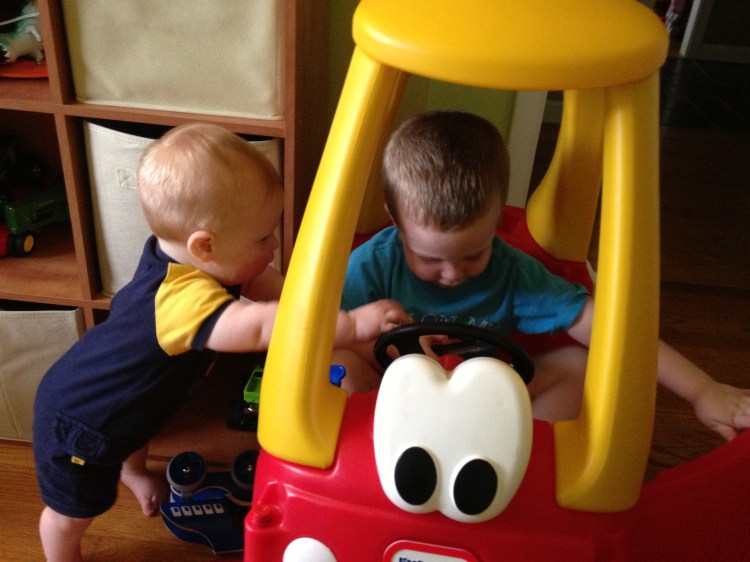
 From my 2015 Journal. Three-year-old Ben spent the day with me while his mom was out of town and big brother Jack was at school. Together we unloaded and loaded the dishwasher, emptied all the trash, shredded a ream of paper, lined up all the toy cars and trucks, assembled some puzzles, read some books, and played games together. He learned how to climb up the ladder at the playground, snacked every hour, and went potty frequently, needing some help still with getting his pants up and down. I let him do everything he could by himself—until he asked for help, and then I eagerly stepped in to proffer my assistance. We made messes, we picked them up. I told him over and over again how much I loved him.
 Depending on the vessel (the type of soul one has), anger water can be contained (as in a pressure cooker or cooking pot) or it can cause a meltdown (if placed in a plastic container for instance—I know by experience). What difference would it make if the container were made of steel or cardboard or glass? Most of us are not capable of holding onto anger for very long before we feel its effects in our body, and our “overflowings” spill out and burn others. Or as a Facebook meme stated, “If you don’t take the time to heal from what hurt you, then you’ll bleed all over those who didn’t hurt you.”
 Years ago, Scott and I attended a concert at the Tivoli Theatre in Chattanooga. I don’t remember now which groups performed, but the lyrics from an old Gospel song stuck with me for a long time. The refrain was “I don’t have to . . . I get to.”
 From my 2011 Journal. We’re teaching the life of Elisha in Momentum (Sunday school for grades 4-6), and our leader Lori challenged us to ask ourselves 3 sets of questions.