A Theology of War

Journal 2024

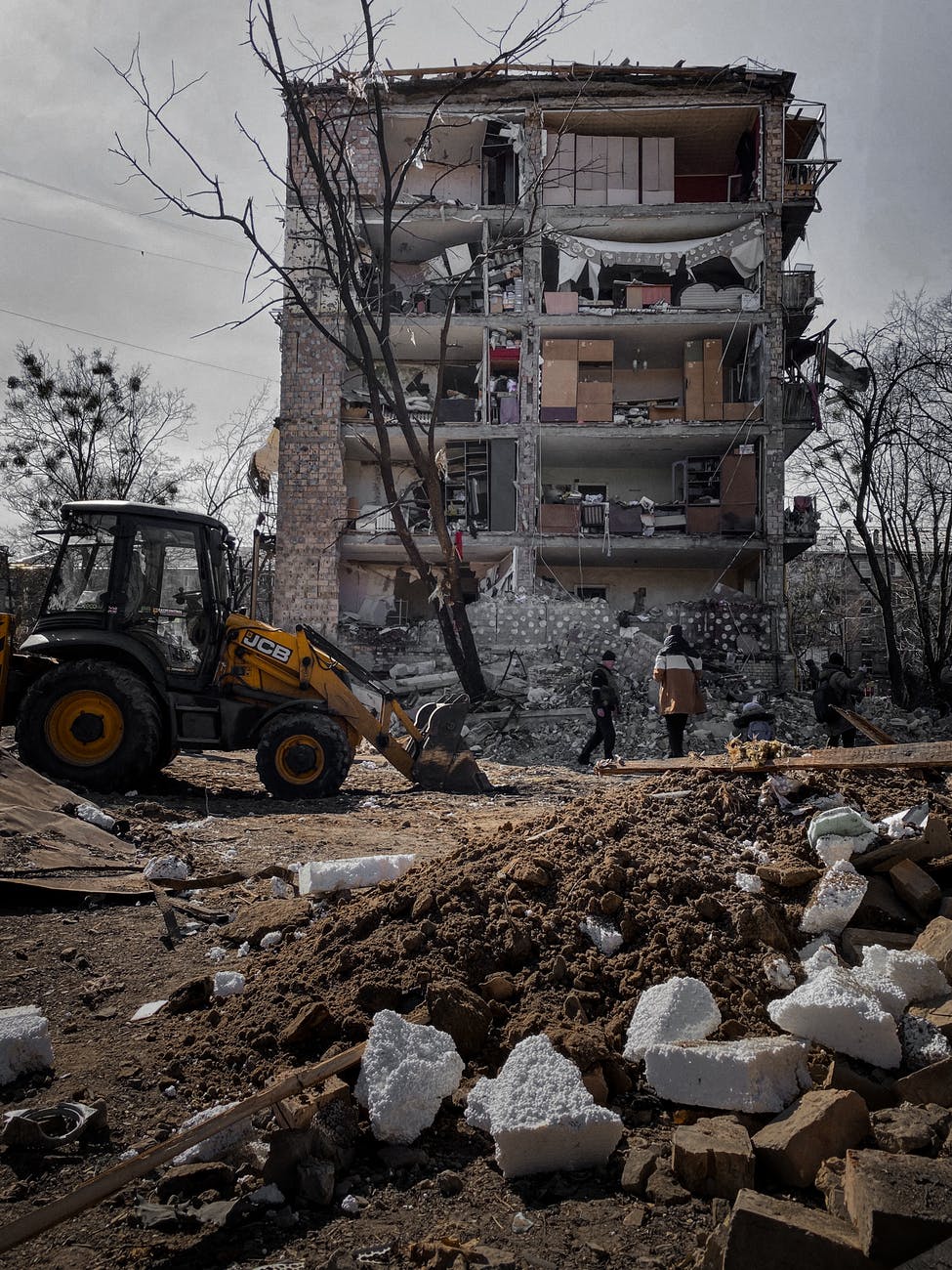
I don’t get war. It’s cruel, and people suffer and die.  Women have often claimed that if we ruled the world, we’d sit down over a cup of tea and work things out verbally. None of this physical violence, thank you!

In the book of I Samuel, David raids towns, kills everyone, and takes the bounty. In today’s society, we’d call that aggression, and we’d retaliate. Why did God build into man’s heart the desire to fight? I understand the decimation of evil (e.g. The Great Flood, Hitler’s regime), but God allows evil men to go to war as well.

I found some helpful thoughts on GospelCoalition.org.

“On the one hand, war is evil. But on the other, war, or at least some wars, can produce some degree of good by establishing peace, maintaining justice, and protecting the lives of innocent people.”

The Review of War: Four Christian Views, edited by Clouse

  1. Herman A. Hoyt – Nonresistance

“Though the use of force and going to war may be legitimate for government, it is wrong for Christians.” He argues that the “Age of Grace is qualitatively distinct from the dispensation of law in which Israel lived and fought.”

“… responsible to obey their government but only when it promotes God’s will.”

Non-combatant service is okay.

  1. Myron S Augsburger – Christian Pacifism (nonresistance)

“Peace is much more than the absence of war.”

“Only love can counteract the evil violence in the world.”

  1. Arthur Holmes – The Just War Theory

“Christians are obligated to fight in those wars which are just … love does not supersede the law of justice … justice tempered by love … love … goes the extra mile but also demands the protection of the innocent … moreover, not all evil can be avoided. Every action, no matter how pure the intentions, has some evil results … the just war theory insists that the only just cause for going to war is a defence against aggression.”

“If all parties adhere to this rule, then nobody would ever be an aggressor, and no war would ever occur.”

The Just War Theory reconciles the belief that taking life is wrong with the state’s duty to protect its people … violence is only permissible when it’s a lesser evil than the other options.

  1. Harold O.J. Brown – The Crusade or Preventative War

“Eager participation in war efforts which attempt to prevent or correct outrageous injustices.”

“If self-defence is justifiable, … then under some circumstances a preemptive strike must also be justifiable.”

All these theories are well and good, but how do they line up with David’s raids? God commanded Israel to wipe out the Canaanites. I Samuel 28:18 hints at the why. He said to Saul: “Since you did not obey the Lord and did not carry out his fierce anger against the Amalakites the Lord has done this to you today.” God was angry with the pagan, godless, Satan-worshiping nations, and He wanted Israel to cleanse the land.

What about Israel defending their land today? Or the view from the Palestinians’ side? Or the USA joining the fight against terrorism?

How do YOU justify war?
Poster reading “Small Habits, Big Change” with daily habit benefits and a notebook

Lessons from Jeremiah 3

Preachers love to quote God’s statement in Malachi “I hate divorce,” shaming those who end up in divorce court. But after reading Jeremiah, I now know why God hates divorce: He knows its heartache firsthand.

God said He was Lord and Husband to Israel. After giving them the best, He thought in return they’d call him “My Father” and would not turn away from following Him. His bride, however, in her adultery, “polluted and defiled the land” and “I, the Lord, put faithless Israel away and given her a bill of divorcement.” He gave Israel opportunity after opportunity to repent and return to Him, but eventually God divorced her!

Some divorces do not fall under biblical guidelines, but God said it was permissible if there was an unfaithful spouse. He knows what that feels like.

Lessons from Jeremiah 2

I wish I could sketch Jeremiah’s word pictures. With strong imagery, he describes the marriage relationship between God and Israel. He betrothed her in Egypt, married her at Sinai, and gave her fruitful land as a wedding gift. But Israel spurned her Lover’s gift as well as her Lover.

God is appalled, horrified sad, and rightly angry. He’s never seen anything like it. “Has a nation ever changed its gods (even though they are not gods),” He said. They have committed two evils: 1) “They have forsaken Me, the fountain of living waters,” and 2) “They have hewn for themselves broken cisterns that can’t hold water.” What an amazing visual! He gave them something more special than the warm springs at Yankari Game Reserve, and they are playing in empty rain barrels with holes in them.

And then Jeremiah uses more visuals:

  • I broke your bond and yoke to free you, but you shattered and snapped the bonds with Me.
  • I planted you, a choice vine, wholly of pure seed. But you turned into degenerate shoots of wild vine.
  • You wash yourself with much soap, yet your guilt and iniquity are still on you. You’re spotted, dirty and stained.
  • You’re like a female camel or donkey in heat! (Lots of lovers).

The images go on and on. It strikes me that God experienced pain, rejection, and abandonment long before Jesus experienced it on earth.

Jeremiah is preaching to God’s lover who forsook Him. This is Israel’s story. What is mine?

On War

Journal 2008. How does God feel about war?

I confess I struggle with the concept of holy war. We condemn the Medieval Crusaders, and we condemn its use by certain people groups today. But when God wanted the Israelites to oust seven wicked Canaanite nations, He commanded holy war.

These are the nations the LORD left to test all those Israelites who had not experienced any of the wars in Canaan (he did this only to teach warfare to the descendants of the Israelites who had not had previous battle experience). They were left to test the Israelites to see whether they would obey the Lord’s commands, which he had given their ancestors through Moses. (Judges 3:1- 2, 4)

According to these verses, he used an enemy to test the Israelite’s obedience to Him, but He also gave them the training and tools to win. Was He capable of wiping out the evil nations by Himself? Of course. He did it in Noah’s day. But for some reason, He wanted His people involved in the process. He wanted relationship, trust, and obedience.

How do I feel about war?

I also confess I have no first-hand experience with warfare. I believe greed, hatred, and revenge are all wrong motives for starting a war. But war in obedience to God’s command, to defend the poor or helpless, to free the captive—I can justify that.

In any war, both sides pray to God for victory and saved lives. How can He answer equitably? What’s a suitable prayer then?

So let all Your enemies perish, O Lord! But let those who love Him, be like the sun when he rises in his might. (Judges 5:31)

A 2022 Update. This morning I read this perspective from torahclass.com, Acts Lesson 30. What do you think?

The land of Canaan was not a gift of conquest from God to the Israelites; it was a gift of inheritance. Why an inheritance? Why not as a spoil of war? Because God already owned the land; He had hundreds of years earlier promised to give it to Abraham; it became Abraham’s land the instant God promised it. All that remained was for Abraham’s descendants to possess it. So the Lord merely evicted the unlawful squatters, and then turned over to the rightful inheritors (Israel) that which He had long ago bequeathed to them. For God is a Father to His children, Israel and that’s what fathers do.

Photo by u0410u043bu0435u0441u044c u0423u0441u0446u0456u043du0430u045e on Pexels.com