Triggered by Triggers

Journal 2018

Why do I get triggered when others get triggered?

Why is it okay for me to feel something negative while I judge you for losing it? What about my own ungodly reactions? How hypocritical can I be? You have to endure me, too, when I get angry and say things I shouldn’t. Don’t I want you to love me anyway and give me grace? Of course! But I get weary of your ungodly choices. I expect you to be farther along in your healing, so why don’t I expect the same of me? Why do I hold you to a different standard? It’s such a battle for the mind.

So why does your trigger affect me? Maybe it has to do with expectations. I expect to live in a perfect world. I expect to have a perfect day. I expect a birthday to be all about me. I expect Christmas to be full of joy and peace. I expect to not have my boundaries trampled. I expect you to have the emotional maturity of your physical age. I expect to have good health till the day I die, and my clothes to always fit, and the roof to never leak. I expect my mango to be sweet and my new car to never get dented. I want to live in a state of perfect harmony and peace, and your reactions allow a foul wind to blow. And when my expectations aren’t met, I’m sad, angry, and disappointed.

When that happens, do I pout? Clam up? Put on a happy face? Steel myself mentally or physically for your responses and reactions? Give up all expectations or just expect the worst?

When I erect a steel-plate armor to protect myself, I’m encased in a jail cell. My heart grows cold, and I distance myself from my Heavenly Father (the source of love) and from a compassionate heart.

I repent of my self-protection and preservation. I give permission to Jesus to drill and unscrew and remove my steel plate so I can step out, free of bondage. Without my armor, however, I am weak, pale, starved, and thirsty for connection. Jesus gently ministers to my shrunken frame, murmuring, “I’ll be your protection. I love you. I will never leave you or forsake you. You are Mine.”

In my visual, Jesus leads me up to the roof of the Castle of My Heart, where we sit in rocking chairs, enjoying the sunshine together. He doesn’t say much, but I’m suddenly aware that even this perfect state could be disrupted at any time. Off to our left, a messenger arrives bearing a white envelope on a silver platter. A letter for me? It’s so pretty and pure. A love letter, I hope. But I’m expecting the worst. I’m reluctant to open it. Will I find gray ashes inside?

Now I can see the metaphor clearly. I want the missive to be a love letter, a perfect day, my desired Christmas gift, a friend who never criticizes my choices, a carefree marriage, and always-obedient children. My expectations are founded on gray ashes.

“Open it,” Jesus commands, and when I do, I’m startled when a pure white dove flutters out and flies away. I peek inside to find a ruby red heart. I’m puzzled.

“Your heart is what determines your destiny,” He says. “Your perfect day cannot be spoiled by someone else’s choices if your heart is pure.” And with that, He places the heart inside my chest. “Your heart is protected and surrounded by my love and care, and nothing can touch it there except your own willful choices to use your own self-protection or to refuse to release your pain.”

Father, I invite you and implore You to protect my heart where I’m vulnerable and weak, so that I don’t fall prey to the enemy’s lies and deception.

AI-generated

Meltdown Day

Journal 2006

Galatians 5:19-21 lists “acts of the flesh” as “immorality, impurity, sensuality, idolatry, sorcery, enmities, strife, jealousy, outbursts of anger, disputes, dissensions, factions, envying, drunkenness, carousing, and things like these.”

I’m not too worried about drunkenness, orgies, sorcery, and idolatry. But what of selfishness? Or outbursts of anger? Or envy? Are we not all guilty of these at some point?

This is more than a list. It’s an admonition for self-examination. And so my prayer today, Lord, is for You to reveal and expose any area in my life that does not exhibit a fruit of the Spirit.

Later. That’s the quickest answer to prayer I’ve ever had! Yesterday was an emotionally draining day. It will forever be known in my mind as “Meltdown Day.”

Probably ten years ago, I got ticked off with a friend over an issue that affected me. She promised to take care of it, but she never did. Year after year, I stewed inside, waiting for her to fulfill her promise. Up to now, she’d always put up a brick wall when I brought up the subject.

Well, yesterday, the subject came up again, and I was surprised when she said she’d handle it. Now, it appeared that a little door had opened in her wall, and it felt safe to walk through it.

Wrong. She got triggered and slammed that door in my face. The why is her story, her issue. But my response was so out of character and out of line that I knew it tapped into something deep inside. I had been working through a grief issue just before this incident, and it was not finished yet. This seemed to blow it wide open.

I grabbed some Kleenex, hopped onto my bicycle, and rode to our local playground. I cried for over an hour before I started to process my anger, envy, and grief. It took another couple hours to talk it out with my friend.

Deep wounds take a long time to heal and release, I think. But why are they there in the first place? Perhaps because of our own sin. Perhaps because of other people’s sin against us. Or maybe it’s just lies we believe. Guilty. I raise my hand. Guilty.

Lord, forgive my stubborn heart.

See-saw Memory

Journal 2016

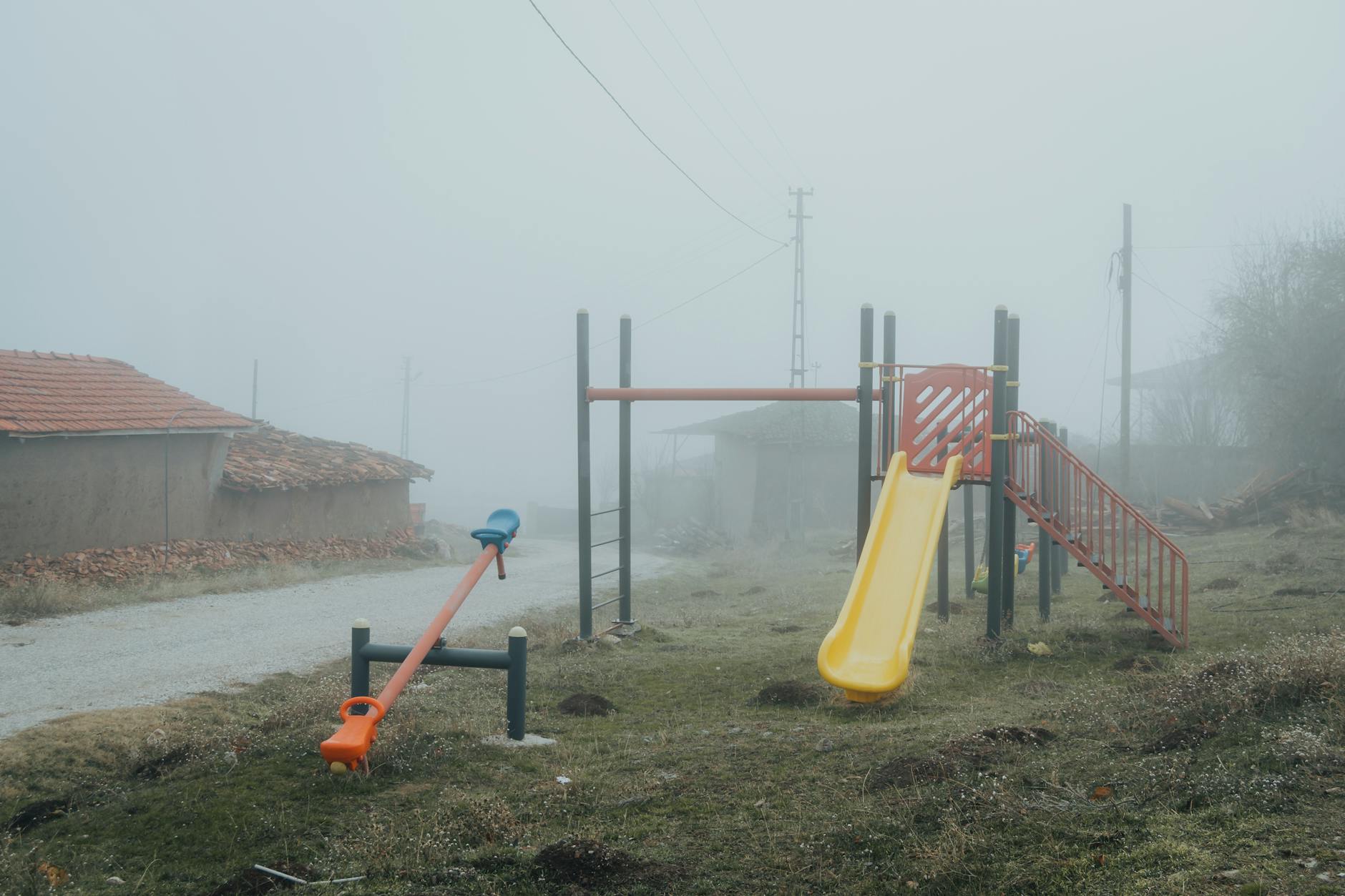
I felt a trigger this week that took me back to the sensation of being at the end of a teeter-totter. My playmate sat on the end of the board at ground-level, suspending me in the air, feet dangling, afraid she might step away and leave me to crash to the ground.

All my solutions for this discomfort didn’t work, so I invited Jesus into my picture. He stood beside me and grabbed me when the teeter-totter plunged. Safe in His arms.

Amazing how our minds work. I’m 63 years old, and the cells of my body and brain still remember the sensation I felt at age 8. We human beings are walking messes of triggers!

Photo by u00d6mer Derinyar on Pexels.com

Making Decisions While Triggered

Journal 2017

I’ve learned the hard way, it’s never wise to do or say something while I’m triggered. Inevitably, the words come out harsher than planned, and I make poor decisions, making matters worse. The consequences for my reactions sometimes lead to further bad choices. What a mess to clean up!

After the 12 Israelite spies returned from the land of Canaan, 10 of the spies were triggered. And in their fearful emotions, they made some foolish statements: Wouldn’t it be better for us to return to Egypt? Let’s appoint a leader and return to Egypt. (Numbers 14:3-4) Are they crazy! Leave the protection of their God? Return to the Pharoah who hates them? They’re out of their minds—literally—with fear.

Upon hearing of their punishment from God (to wander in the desert for 40 years), the 10 spies decided to go out on their own and attack the scary Amalakites. They left camp without the Lord’s direction—and perished. How foolish!

What would have happened if they had worked through their fear before opening their mouths to Moses? No wandering in the desert for 40 years. No trail of decaying bodies. And yet . . . God was able to turn even their triggers into something good. God’s will cannot be thwarted.

You are free to choose; you are not free to choose the consequences of your choices. (Samuel Thomas)

The Shame of Rebuke

Journal 2005.

It’s always bothered me that Jesus reprimanded His disciples. In Matthew 8:23-27 it was over their fear of the storm on the sea. Another time over their lack of understanding. In the Garden of Gethsemane, it was for succumbing to sleep. He sounds impatient, and impatience isn’t a fruit of the Spirit.

Perhaps it’s because I identify strongly with the disciples, and I feel the sting of the rebuke on my cheek. The God of the universe claims to understand my frailty because He came to earth to experience it . . . and now I get smacked for it. I feel their shame.

I remember a teacher’s rebuke. Blindsided. I didn’t know I’d done something wrong.

When you choose to wrong someone deliberately, you deserve rebuke. But when the act is mere childishness, a misunderstanding, it feels unjust to have harsh words aimed at you. God deals with children differently than He does adults. I understand that. Would it sting worse to get rebuked as an adult? “Scolded” is a child’s word. That’s what it feels like to me. Like He’s treating them like children.

If a rebuke is unjustified, it’s the adult’s trigger. If I feel anger, revenge, or shame, that’s my issue. If the rebuke is justified, and it’s done in love, it’s discipline and for my good. It has always FELT to me like Jesus was triggered. But that’s impossible because it implies (by my definition) that He believes a lie somewhere.

Conclusion: I don’t like to think that Jesus was angry or even irritated at His disciples (that’s how grownups sometimes get when they discipline children). I think He was discipling, disciplining, and training. In the boat incident, He instructed them to go by way of the sea. I suspect He knew there was a storm coming, and He wanted to test them. At best, he followed the Father’s prompting to travel this route.

Matthew Henry states, “He slept at this time to try the faith of His disciples.” Maybe. Or perhaps His body was simply bone weary from all the ministry. In any case, I give the disciples credit for looking to Jesus as the source of their salvation. “Lord, save us.”

He asks, “Why are you fearful?” Does He answer His own question when He responds, “You have so little faith”?

I want to jump up and defend the disciples. Storms are fearful things! And who among them had the power or faith to rebuke the sea? None of them. Not I. Were they guilty of sin? Or of mere human frailty? Yes, I have weak faith as well.

While in the Garden, Jesus said, “Couldn’t you stay awake and watch for an hour?” (Matthew 26:40). It felt like a scolding and that He was unaware of and insensitive to their needs. But today I see it differently. It’s like He warned them to stay on the safe side of the fence, but they kept crawling over it. Finally, He put barbed wire on the top so they got the point (pun intended)—your obedience could be a matter of life and death. There’s danger on the other side. Don’t you see it? It was less a scolding and more a warning, an urging—look out! Your only weapon is prayer. The Evil One is lurking about. Be ready. Prepare for the attack. But they were unaware of the danger. And though they were willing intellectually to obey, their bodies were their masters.

I am God’s child, and I accept His rebuke if I go astray. But shame is not from Him.

On the Sea of Galilee

How God Sees Me

Remember that Gideon fellow and the fleece? (Judges 6:12) When we first meet him, he is sitting under an oak tree where there is a wine press and a rock when an angel of the Lord visits him and declares: The Lord is with you, you mighty man of courage.

Warrior

What a joke! Gideon was petrified! He responds with: If? Why? Where? Didn’t?

But God saw Gideon differently than Gideon saw himself. When the Lord declares it so, it is so!

How does God see me? What name has He given me that I cannot see or agree with? (Beautiful? Precious? Loved? Pure? Forgiven? Gifted? Full of worth?)

Gideon protests: But now the Lord has forsaken us and given us into the hands of Midian.

It’s true that God had given the Israelites into the hands of the Midianites, but Gideon’s doubts and questions led him to a false conclusion. It FELT like God had forsaken them, but the truth was God had not forsaken Israel. He was disciplining them for the purpose of training and turning their hearts toward Him.

When we feel emotions that are not fruits of the Spirit, we are prone to believe lies.

Show me, Lord, how You see me, and give me courage to believe You with the eyes of faith. I want to cooperate with the Spirit of the Living God. Reveal to me, Lord, where my faith is weak and my doubts are strong. I want to be a mighty warrior for your kingdom.

Keep Your Mouth Shut!

I’ve said some pretty stupid and hurtful things when I’ve been emotionally triggered. And once words were spoken, they were awfully hard to put back in the box. I wonder what set off Miriam, Moses’ sister?

Miriam and Aaron began to talk against Moses because of his Cushite wife, for he had married a Cushite.  “Has the LORD spoken only through Moses?” they asked. “Hasn’t he also spoken through us?” (Numbers 12:1-2a NIV).

We only meet Moses’ first wife Zipporah a couple times in the Scriptures and then nothing during the wilderness march. Does Moses take a second wife or is Zipporah now dead? We don’t know.

Do you suppose the Cushite wife made a comment over dinner preparations one day to her in-laws about how privileged and great her husband was? And Miriam and Aaron got jealous or defensive? After all, had God not used them (especially Aaron) in a mighty way in Egypt as the front-man speaker to Pharaoh? And hadn’t Miriam felt some ownership in caring for her baby brother when he was placed in the Nile? By association, she was the privileged one, in the inner circle. Who was this Cushite woman who was horning her way into the family business? Why can’t I speak against my own brother? she thinks. Who does he think he is? I’m a part of this team, aren’t I? Did Miriam feel left out?

In any case, this interesting phrase follows: And the LORD heard this. As a parent, I could listen to my children squabbling in another room and not say or do anything. But when the altercation brought one of them to tears or one was teased or hurt or put down, I tried to intervene and mete out justice or punishment to the offender and comfort to the wounded.

Whatever was going on in this family, it got God’s attention, and He came to Moses’ defense. “Suddenly” (without warning, in the midst of their conversation), says the Scripture,  God speaks to the three of them: Come to the tent of meeting.

Uh-oh. Someone’s in trouble. The parent steps in to take control. Only there’s no questioning here about who said what or who’s to blame. He knows! The cloud pillar comes down to the door, and there’s no escaping this confrontation.

“Aaron and Miriam—step forward,” God commands. It’s a lineup of guilty parties. “Step out of the lineup, you two.”

Hear My words. (Words had been spoken by the created. Now words are to be spoken by the Creator.) When there is a prophet among you, I, the LORD, reveal myself to them in visions, I speak to them in dreams. But this is not true of my servant Moses; he is faithful in all my house. With him I speak face to face, clearly and not in riddles; he sees the form of the LORD. Why then were you not afraid to speak against my servant Moses?

And instantly Miriam becomes leprous. But why only her? Why not Aaron as well? Had God “spoken by Aaron”? Well yes, He had. But He had never (at least in the recorded word) spoken by Miriam. So perhaps Aaron’s part in the guilt was in not defending his brother?

I’m intrigued with Moses’ reaction. Instead of revengeful thoughts (Ha! Miriam deserved it! She’s getting what she asked for—she had no right to say what she did), he flies to her aid. He pleads with God to restore her. Why?

And Aaron who had just reviled his brother cries out: O, my lord, I plead with you; lay not the sin upon us. (Us? He’s not the one being punished, but he was in the lineup. He drove the getaway car—a co-conspirator.)  We have done foolishly. (He recognizes his/their guilt. The God of the Universe has exposed his heart.)

And God listens to Moses and agrees to remove Miriam’s leprosy—after seven days outside the camp. 

We live with the consequences of our indiscretions.

But Miriam’s response? Nothing. Nada. Silence. Don’t you know Miriam never made that mistake again? What a painful life lesson to learn:

Keep your mouth shut when you’re triggered!

Mouth