Be a Tree

Journal 2018

Two days in a row I rose from my bed feeling weary. Is this mild depression? Driven to get some fresh air and exercise, on Saturday I donned a light jacket, packed what I needed for the day, and headed to the Greenway. I snapped some photos and tried not to think. Just walk. Bare trees and brown hues dominated the landscape in the winter chill. I saw a red-headed woodpecker, two fat robins, some ducks on the water, a cardinal, and several squirrels with nuts in their mouths. Under one overpass, I was shocked to see how high the water had flooded at some point. Leaves twined tightly around branches above my head.

Returning to the trailhead, I sat on a bench to rest, but my body felt antsy, jiggly. As I tried to relax, I heard God say, “Be a tree.”

“But a tree doesn’t move!” I exclaimed.

“Precisely.”

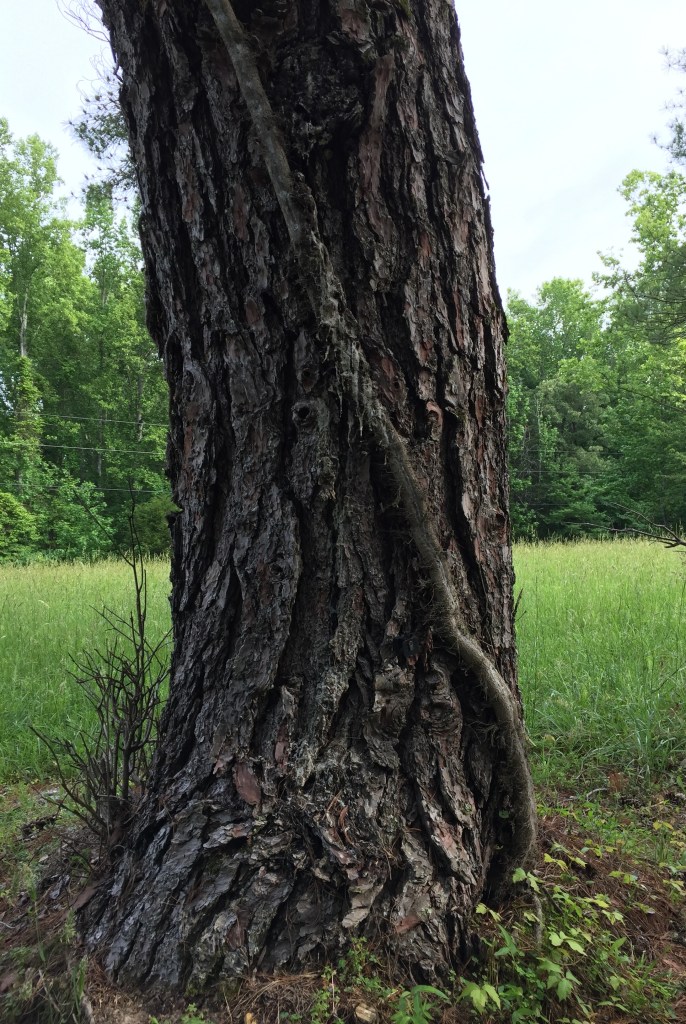
A tree. Rooted. Still. Unmovable. Sturdy. Stable. Allowing the animals to come to me. I don’t have to find them; they will find me. Just be. Be still and know that I am God. Be still. Be still.

Be still before the Lord and wait patiently for Him. Psalm 37:7 (NIV)

In awe of this simple injunction from the Holy Spirit, I began to walk again. But it wasn’t enough. I could still feel the dread of having to be “on” at my next meeting.

I came to another bench warmed by the sun and stretched out on my back. I needed to release whatever load I was still carrying. In my mind I saw a steel cord across my chest with weights on the ends, holding me down. I heard the word responsibility.

Again? Still? Why do I keep struggling with this?

I asked the Lord to cut the cord or remove the balls, and surprisingly He refused.

What? A weight too heavy for Him to lift? I don’t understand.

“OK, Lord, do it your way.”

And I watched as He lifted the cord a few inches off my chest, suspended lightly on His index finger. Now I could choose to stay or to move. That felt better.

And so I walked some more.

“Is there more, Lord?” I still feel tired in my soul.

Then I saw a closet door. When I opened it, a mass of material goods tumbled out. “What a mess!” I cried. “I don’t have the energy to clean it up and sort through the pile.”

“Your decision-maker is tired,” He said. “It’s time to sort and tidy your environment. You’ve been living in clutter and chaos in your home for six weeks now with Christmas, company, family messes, extra meals, and three big projects completed in three weeks. Your office and sleeping space are not restful or peaceful. It’s time to take back your place and create a peaceful environment.”

“That I can do,” I thought. And with that, the oppressive, heavy feeling began to lift.

“Be a tree. Be still. Look to Me to make your decisions. Declutter and find peace once more.”


All during church the next day I tried to process, to rejuvenate, to just sit and soak in God’s presence. I visualized a part of my heart like a squirrel scampering around the tree, so many branches to explore, unable to settle. Then I saw one branch overladen with fruit (and perhaps some excess stuff) drooping to the ground. It represented my to-do-list responsibilities, my ongoing projects, my schedule, and my ministry relationships. It represented the month of January and the burdens I’ve been carrying. I knew the little squirrel needed to stay away from that branch, but he lusted after the fruit. Perching on another branch on Sunday meant trying to focus on other things for a while, but that simply did not work. And so, I gave up the escapist, self-disciplined route to focus on what it might feel like to venture out onto that over-burdened branch. I was afraid it would snap and fall to the ground, and the fruit would rot before it could ripen.

And that’s when I saw a metal bar (God’s strength) underneath the branch supporting the weight. Now the squirrel could perch on the bar and still reach various fruits without breaking the whole limb. That felt a whole lot lighter and safer.

The next morning, I felt more rested and alert instead of groggy and grumpy. And that evening I did not get overwhelmed when we hosted a Super Bowl party for our entire family. Let’s see what tomorrow brings.

He shall be like a tree planted by the rivers of water, that bringeth forth his fruit in his season; his leaf also shall not wither; and whatsoever he doeth shall prosper. Psalm 1:3 (KJV)

Like a cedar of Lebanon he will send down his roots; his young shoots will grow. His splendor will be like an olive tree, his fragrance like a cedar of Lebanon. People will dwell again in his shade. Hosea 14:5b-7a NIV

The Odor of Heaven

Journal 2018

Your robes are all fragrant with myrrh and aloes and cassia. Ps. 45:8 ESV

We talk of the beauty of heaven and even the sounds, but seldom do I think about the anticipated smells.

I grew up in a different country than my husband. To prepare him for a visit to the land of my birth, I showed him pictures; I spoke to him in Hausa; he touched the curios I’d transported from overseas. But how could I share with him the smells of a place he’d never been to? He loathed my malodorous dadawa (fermented beans used as bouillon in tuwo da miya), but I wanted him to experience frangipani and guavas and baobab fruit. The minute he stepped onto the airline bound for Nigeria, the biggest assault to his senses was not the sights or the sounds, but the smells. I thought he’d pass out!

I can’t say that I have a favorite fragrance, but I am partial to the headiness of bread baking in the oven, the duskiness of rain approaching, or the intoxicating scent of sheets drying on a clothesline. I know little of myrrh and aloe and cassia. I can’t get excited about something I can’t relate to. The very words sound overpowering. I prefer light, fresh scents. I avoid darkly scented candles, most perfumes (including Essential oils) and heavily scented deodorants. Both my cat litter and my detergent must be unscented.

For sure, our visual capacity will increase in heaven, but will our sense of smell be different as well? I just know that there will be no malodor or distaste associated with my King’s garments. We will be drawn to it, delight in it. There will be nothing artificial or decaying or sour or bitter. It will be unlike anything we’ve ever experienced here on earth. I have no hooks on which to hang an odor I’ve never smelled before.

When we use words to describe something visual, we include a myriad of parameters: height, weight, shape, color, etc. But when we try to describe a smell, we’re reduced to one-word descriptors or similes, often connected to taste: bittersweet, salty, bland, lemony, spicy, peppery, acidic. Smells can have qualities such as delicate, overpowering, pungent, or acrid. But even those fall short when trying to describe an odor you don’t taste like pine or roses or rotting flesh.

We have associations with smell, like my mother’s cinnamon rolls, like a boy’s locker room, or like a friend’s Chanel No. 5. Our brains have smell memories—one whiff of something and we’re transported back to a time when we first experienced emotion with it. I know one MK (Missionary’s Kid) who stowed a scarf inside a sealed jar so she could pull it out occasionally to bring back her olfactory memories.

Besides a reference to His garments, I checked a concordance for other scripture references to fragrance. “Sweet smelling” is used most often in the Bible. I doubt this means sickly sweet but rather in a beautiful (a sight word), soft (tactile), pleasant sense.

  • Evil odor
  • Foul odor
  • Fragrance or pleasing aroma of Christ
  • Fragrance of His knowledge
  • Good ointments
  • Lebanon (cedar)
  • Mandrakes (wonder how they smell)
  • Of a field which Jehovah blessed: sweet
  • Of death or of life
  • Of the cloud of incense
  • Of the face like citrons
  • Of water
  • Perfume
  • Pleasant fruits
  • Pleasing odor
  • Spikenard oil
  • Sweet aromas
  • Sweet fig trees
  • The smell of battle
  • The smell of fire
  • We are a sweet fragrance to God.
  • His breath

Aroma, scent, savor, tang, reek, stench, feted, stink, and whiff—and that about exhausts the list, both in the dictionary and in the scriptures.

What’s your favorite scent and why?

A 2025 Update. This meditation is even more poignant to me after my year-long sense deprivation with COVID-19. Like a blind person who looks forward to seeing heaven’s beauty, I can’t wait to get my first deep whiff of heaven’s scents.

Passing on the tradition with my grandsons

Relationship with the God of Habakkuk

Journal 2018

In the book of Habakkuk, I read about the mighty power of the God of the universe and how He is coming to uproot and decimate wicked nations, churn the sea, flatten mountains, and cause the whole earth to go silent at His Majesty. How can I deign to have a relationship with such a deity? Surely it’s all one-sided. He holds all the power, the glory, the omniscience. I am less than an ant in his sight, powerless, useless, puny and lowly. How does an ant have relationship with a giant? Yes, Jesus came down to the ant’s level for a time, but He returned to His glory, His Majesty, His omnipotence. He is no longer bound by an earth suit.

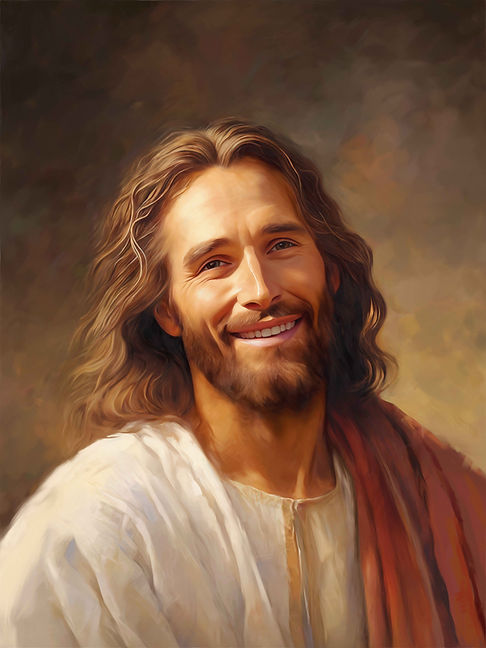
Yet when I visualize Jesus, I see Him in earthly form. When I try to relate to Him, I don’t see Him in unapproachable light. And when I try to picture the Father, I have to bring Him down to my level of comprehension—like a compassionate grandfather figure who enfolds me in His strong arms of love and protection. I am not capable of seeing Him in all His glory. Our minds were not given that capacity to truly experience Him and the truth of His existence. I feel so … I am so …. unworthy.

I do not want to give up the intimacy of seeing God through my earthly eyes. Is it wrong to picture Him this way when, in truth, He is far beyond my capacity to imagine? There’s a tension of longing and desire to know God for who He truly is, but I don’t think the human body is capable of comprehension of the divine. I accept it by faith. I sense no judgment or condemnation for using earthly visuals to describe the infinite. Jesus did it. He’d say, “The Kingdom of heaven is like …” and then use an earthly illustration for his disciples to grasp the intangible. Jesus is like a shepherd, a door, bread for life, a friend, a brother, a king. But metaphors fall short of reality.

How do you picture God?

A 2025 Update. I recall a story I heard from the pulpit about a father who came upon his little boy hunched over his box of crayons.

“What are your drawing?” asked the father.

“I’m drawing a picture of God.”

“But no one knows what God looks like,” his dad said.

“They will when I’m done,” the boy replied.

Joyful Jesus by Jechoon Choi, https://www.dgraphicartsdesign.com/

Approaching Burnout

Journal 2018

I can feel my mind and body edging toward burnout. It’s been an intense people- as well as project-oriented month. I need an entire day of alone time, but that’s not about to happen anytime soon.

VISUAL

I see a large room densely filled with high-energy party people. The noise is deafening. I’d prefer to stay outside, under the stars, alone and quiet. Sometimes that’s necessary, sometimes that’s possible. But I need to work through what it feels like to have to open the door and enter even when my reserves are gone.

Jesus says to sit with Him first. Outside.

I can do that. A pond in front of our park bench reflects the moon. It’s quiet, peaceful. I don’t want to talk or think or plan or look at a clock or a calendar.

AI-generated

LATER

I spent all my free time reading a novel, guilt-free, no agenda, no thinking, just resting. I’m doing better but still craving more down time.

My mind continually goes to the Apostle Paul. What he endured is astounding. How did he physically survive all the persecution and emotional trauma? How did he not crack under the pressure? Was his drivenness from his temperament or from his experience? I feel like such a wimp next to this giant in the faith.

As I write this, I recognize false guilt: I believe I’m inferior, less than, a gnat next to a giant.

Jesus says, “Why are you comparing yourself to Paul? Why not to Me?”

My head wants to say, “Impossible,” but my heart wants to snuggle up next to Him and accept His unconditional love.

I feel His gentle rebuke. “What is Paul to you? I have different plans for different people. Do not take on what is not yours.”

It’s time to let that one go. I can learn from Paul, from his triumphs and mistakes, but I must keep my eyes on Jesus.

ANOTHER VISUAL

The visual changes as the Apostle Paul and I are now the same height, mere mortals obeying our Master. One is not inferior or superior, except in our choices. I may make wise or foolish choices based on the hand that’s been dealt me. I will not pout or gloat if I win or lose a game if I play it the best I know how with hints from the Master Dealer. Just play the hand smartly, take some risks or play it safe. But most of all, play graciously. Let my mistakes go, but learn from my faux pas and don’t repeat them. And do not get jealous if someone gets more wild cards than I do or if I get none at all. Play fair and without complaining and enjoy the game.

Thoughts on Jude

Journal 2017

According to Jude verse 1, the author is writing to “those who have been called, who are loved by the Father, kept by Jesus Christ.” Yet with strong and powerful metaphors, Jude spends the majority of his book pointing out evil people (false prophets and teachers) who are destined for destruction.

I have a hard time relating to this book because I don’t have much personal contact with evil people. In my ministry, I meet with those who are broken—often because of evil people in THEIR world.

I have great compassion for those who are hurting and want help. But Jesus died for the false prophet, the Hitlers, the Pharisees, and even the perpetrators. The invitation is to all. All are invited, all may come to the Feast of Love, but some by choice reject the invitation. God says he resists the proud. He loves his creation enough to die for us all, but he is intolerant of willful refusal to accept his invitation. I cannot judge men’s hearts, but I can certainly see their deeds and hear their words. Jude called them out and said they were ripe for destruction and hell, as were Sodom and Gomorrah.

I’d rather meditate on verses 20-22 that urge me to build others up, pray in the Holy Spirit, keep myself in God’s love as I wait for His return, and be merciful to those who doubt.

The verse I respond to the most is the glorious doxology in verse 24. He’s able to keep me from stumbling. He will present me faultless before his glorious presence. Glory, majesty, power, and authority are ascribed to Christ alone, past, present and future. Amen and amen.

God’s Judgment

Journal 2017

… His wrath can flare up in a moment. Blessed are all who take refuge in Him. (Psalm 2:12 NIV)

Here’s my visual for this verse: God is a fire-breather. If you’re “out there,” you’ll get zapped, but if you stay close to his heart, you are safe and protected.

The thought of God’s judgment is slightly terrifying to me: facing the Judge of the Universe to discover how many words, thoughts and deeds didn’t make it through His refining fire. It’s not like coming before the school principal with whom you have no relationship. It’s more like coming before your dad when you’ve misbehaved.

And yet, since our sins are covered and forgiven, the judgment for the believer is more like a lack of rewards, not punishment. “Not guilty,” the Father has declared. I do not need to fear or dread His coming judgment.

Regret will be punishment enough, I think. The question for me is, did I obey God’s commands to love Him and to love others?

Keep me close to your heart, dear Lord. Let me not stray far from Your embrace.

A 2025 Update. After reading Imagine Heaven by John Burke, my heart relaxed. Burke “compares more than one hundred gripping stories of near-death experiences (NDEs) to what Scripture says about our biggest questions of Heaven.” He suggests that our life review before Almighty God will not be filled with shame (my default when I disobey Him), but rather an understanding about my choices.

What Is Faith?

Journal 2006

Whenever I ask people to define faith, they glibly quote Hebrews 11:1.

Now faith is the substance of things hoped for, the evidence of things not seen.

But to me, this sentence is just meaningless words on a page. It wasn’t until I heard the following sermon that it finally clicked. Here’s what pastor said.

Faith is when you hear what God says, and you do it.

  1. It’s defined by what God says. (For every entry in Hebrews 11, they heard a command from God.)
  2. It’s determined by how you respond. (Check out the verbs in this chapter.)
  3. It’s deepened by the challenges you face, your experiences.
  4. It’s directed to the rewards He promised.

Faith is NOT simply belief. For example, I can believe that if I step off the edge of a cliff, I won’t fall. That’s stupidity, not faith.

Faith is acting on a command or a promise from God. Faith is standing on the edge of a cliff, and if GOD TELLS ME to step off the edge, I do it in obedience and trust. If I plummet to my death, so be it. He will take care of the results. Or He may have prepared an invisible bridge to the other side (like in Indiana Jones and Last Crusade)—but I wouldn’t have known it was there if I hadn’t taken the first step.

Daniel’s friends, Shadrach, Meshach, and Abednego (Daniel 3:16-28) obeyed God—in faith—and their attitude was, “Even if we die, God will take care of it.” But God chose to spare their lives for a greater purpose. Others, like Jim Elliott and his four fellow missionaries, obeyed and became martyrs—they stepped into faith and obedience and stepped right into the arms of Jesus.

A 2025 Update. I’d like to add that the object of my faith is of prime importance for the outcome. I can always trust God to do what’s best.

AI-generated

The Moral Dilemma of Vengeance

Journal 2006

The Dilemma: Shechem, the son of Hamor the Hivite, defiles Dinah, the daughter of the Patriarch Jacob. (Genesis 34)

Man’s Solution: Simeon and Levi (Dinah’s brothers) decide to avenge the wrong. They deceive Shechem and the leaders in the city, kill all the males, and along with Jacob’s other sons, seize all the plunder, including women and children. (As an aside, I find it interesting that it’s Levi, the future priestly line, who avenges. A strong sense of justice and fairness becomes imbalanced.)

It seems that God allowed for vengeance in the Old Testament (an eye for an eye), even though the Mosaic Law had not been given yet. Yet murder is not an equal retribution for rape. If only the brothers had asked God what to do, He could have brought judgment on Shechem, and his blood wouldn’t have fallen on the brothers’ heads.

God’s Solution: Jacob is now scared of retribution, and God answers that fear. He instructs Jacob to move to Bethel (where he first met God at the ladder to heaven) and to build an altar. (Genesis 35:1).

Man’s Response: The Scripture doesn’t say God instructed Jacob to get rid of idols. Maybe He did say it, or maybe Jacob is taking the final step of obedience and loyalty to His God. Remember that Rachel (Jacob’s favorite wife) had taken her father’s idols when they fled Paddan Aram. I also suspect the women and children whom the brothers captured from Shechem’s town also brought idols with them. Nonetheless, Jacob instructs all his household to give him all their idolatrous paraphernalia (which he buries) and to purify themselves and put on fresh garments—outward symbols of an inward change of heart.

God’s Response: When Jacob obeys, God protects. “The terror of God fell on the towns all around them so that no one pursued them” (Genesis 35:5 NIV).

My Response: When I’ve been wronged, it’s easy to believe that taking vengeance into my own hands will make me feel better. But “Vengeance is mine,” says the Lord (Deuteronomy 32:35). His retribution is fair and just and better than anything I can dream up.* Best to let those feelings go and face my pain.

I may take many detours in life, responding with poor choices, but I’m safest in the place where God dwells, in obedience, and in purity.

*I’ll never forget the day I was working with a D.I.D. client. When Jesus asked one of her Little Ones if she’d let HIM punish her perpetrator instead, her eyes got big. “He be in big trouble!” she exclaimed.

AI-generated

The Potter’s Right

Journal 2006

Has the potter no right over the clay, to make out of the same mass (lump) one vessel for beauty and distinction and honorable use, and another for menial or ignoble and dishonorable use? (Romans 9:21 AMPL)

The correct response to this question is yes, of course, the potter (in this context, God) has this right. But if you’re like me, you might struggle with accepting it. If I have given God the right to my life, am I willing to be a Ming vase with all its beauty and value? A cooking vessel that takes a lot of heat? Or a serviceable, smelly chamber pot?

And so, I ponder what kind of pottery He created me to be. I think He’s chosen me to be a water vessel—a practical, no frills, serviceable carrier of Living Water to those who are thirsty. Sometimes it’s a heavy load to bear—until I realize I’m not the one who’s supposed to transport it. My shape and size are created for the task He’s given me. All I need to do is be faithful. Daily. Hourly. And if He chooses to form my sister into a Ming vase or my friend into a chamber pot, that is His business. He knows what every person should be—all for His glory and purpose.

What kind of vessel do you think He made you? Are you at peace with His choice?

AI-generated

Created in God’s Image

Journal 2006

God created man in His own image, in the image and likeness of God He created him: male and female He created them. (Genesis 1:27 AMP)

What, exactly, is God’s “image”? I know what the theologians say, but the word trips me up. By definition, image implies something visible. Yet God is not visible—or is He? God is a spirit, yet Jesus now has a glorified body. Could it be possible for God the Father or His Son to have an essence that resembles Adam? What form did He have before the reincarnation? Is it possible that God possessed shape and form (like a man) only on a grand scale (like we’re miniatures in comparison) but that His spirit was as large as (or larger than) the universe. Maybe His spirit is His aura or His energy field.

And isn’t it interesting that God created two people rather than three? God is three in one, and in a sense, so is man (body/soul/spirit). Yet it takes two (male and female) to procreate. God doesn’t procreate Himself, but He has both male and female characteristics. What a mystery!

Photo by billow926 on Pexels.com