When Abraham’s concubine Hagar fled to the desert, she said to the Lord who met her there, “You are the God (Hebrew El-Roi) who sees me” (NIV).
God sees me …
When I was a little girl, we sang the chorus, “Oh be careful little hands what you do (eyes what you see; ears what you hear; feet where you go), for the Father up above is looking down in love ….” I skipped over the “in love” part and concluded this meant I better not be naughty because God was watching my every move.
Later it became a comfort to think that He was always with me, no matter what I did or how I messed up.
But my Hebrew Bible commentary suggests a different thought. The ancients believed that if you saw a divine being, you’d die. The Hebrew Bible reads, “Have I not gone on seeing after He saw me?”
Which of the three explanations is correct? Perhaps the third, but there is truth in all three. A God who sees can be a deterrent to trying to hide, a comfort when we come out of hiding (when shame is gone, there is joy in the relationship), and an awe-filled realization that He is merciful.
Genesis 17:1, El Shadai
We often translate El Shadai as “God Almighty,” but El Shadai originally meant “God, the one of the mountain” or “The Lord, Him of Sinai” (Judges 5:5). This was how God revealed Himself to the patriarchs.
Genesis 17:20, Ishmael’s 12
Numbers are important in the Bible. I find it fascinating that God told Ishmael he would become the father of 12 chieftains (cf. the 12 tribes of Israel and 12 disciples).
Genesis 17:23, Slavery
Abraham, the Father of 3 religions, owned both purchased slaves and home-born slaves, and all had to be circumcised. Ever since the Civil War, we in the USA have a profound belief that all men deserve to be free. Slavery is abhorrent to us. In Abraham’s day it was the norm, a common practice to conquer a city and enslave the inhabitants.
Is the act of enslavement a sin in God’s eyes, or is the greater issue how the master treats the enslaved? Did Abraham treat his slaves kindly and with respect? A deeper dive into the subject suggests that perhaps these were indentured servants or bondservants. See what you think.
When the Lord told Sarah she had laughed at the mention of pregnancy in her old age, she denied it. The text tells us it was because she was frightened. (Fear is usually the motivation for lying.)
But what if lying is for the purpose of saving a life, or smuggling Bibles into China or hiding Jews in the Holocaust? I’ve never been able to figure this one out. Is it the act or the motive that makes it sin?
[I learned that the rabbis explain that when two moral beliefs collide, the higher moral standard (e.g. saving a life) trumps the lower (e.g. lying to hide someone).]
Why do we always fault Sarah for laughing and forget that Abraham did too? At one time his faith wobbled when he suggested God should use Ishmael to fulfill His promise for an heir. Abraham’s summary word for his life was faith, but he had to learn to trust. It didn’t come automatically. Yes, Abraham had great faith, but he laughed when God announced he would hold a son within a year. Could Abraham’s laughter have come from a heart of sheer joy? The text doesn’t say.
I wonder what word summarizes my life? When have I wobbled?
Genesis 19, Lot’s Two Daughters
Talk about redemption! Lot’s incestual relationship with his daughters produced the following:
Moab, the ancestor of Ruth, the ancestor of King David, the ancestor of King Jesus
Ammon, the ancestor of Naamah (King Solomon’s wife), the ancestor of Rehoboam, King of Judah
“Out of the ashes of Sodom … a seed of messianic redemption thus lies in the squalid events of Genesis 19:30 – 38.” (Gen Rab 41:4, Hebrew Bible, p. 42)
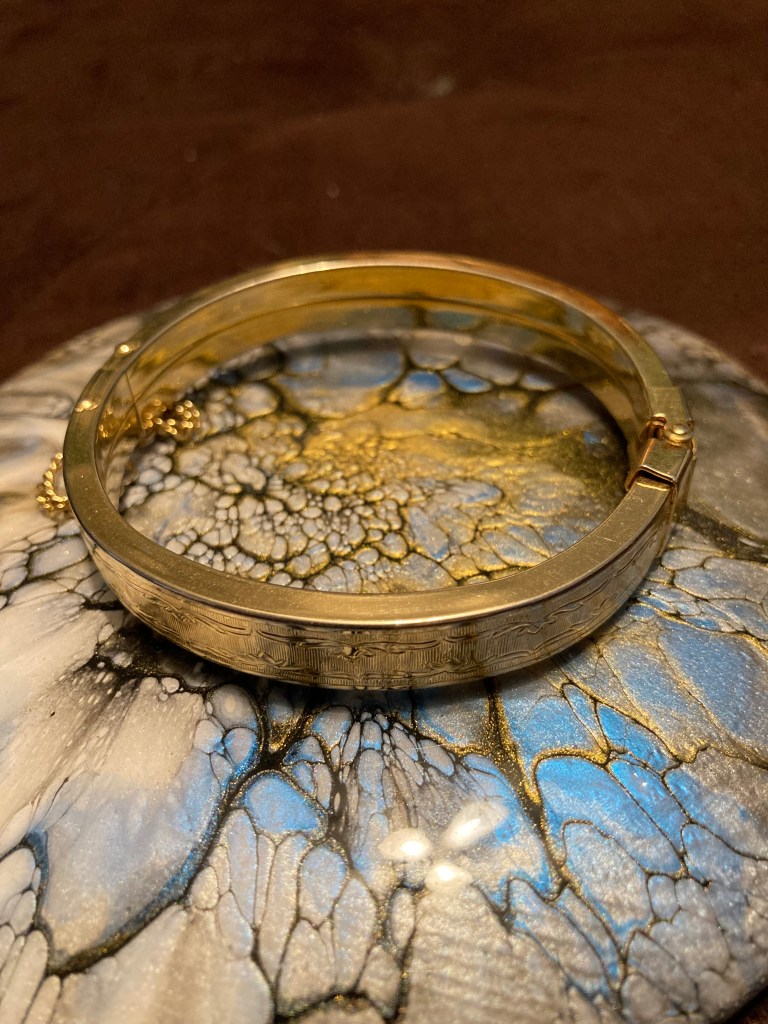
I am an old woman. One hundred twenty to be exact. I’ve lived a long, full life, and it’s time to set my house in order and write my memoirs. To be honest, it’s not just my age that triggered these thoughts. Recently, some foreign traders stopped by to sell us some trinkets, and I recognized a gold bracelet of mine that’s been missing for years. I remember it disappeared the day of the big feast. I assumed a slave girl of mine had stolen it, and I’ve held a grudge against her all these years. I think it’s time to make things right between us. Let me tell you how it happened.
It all began when my husband Abraham bought me a gift—a beautiful 12-year-old girl from Egypt. I remember the first time I saw Hagar. She seemed frightened and shy, but she had a spirit about her, an air of determination that was unusual for slaves. I took her under my wing immediately and taught her how to cook and keep house for me. She was quick and bright and seemed eager to please. As her body began to blossom, I noticed Abraham eyeing her occasionally, but he never touched her. He was too loyal to me to be tempted by her beauty. And I was careful to always meet his needs.
About this time, my husband had another one of those encounters with God. He claimed God told him he was going to have a son whose descendants would grow into a mighty nation. He was ecstatic. I thought him a fool at the time. After all, I was too old to have a baby, and he’d never been with another woman. But he insisted God would keep his promise somehow, and he believed Him.
That got me to thinking. All my life I’d longed to have a baby. Abraham desperately wanted an heir for all his wealth. But me? I just ached to hold an infant in my arms and feel him suckle at my breast. Never mind the embarrassment and shame of not being able to produce a child; I just wanted to know what it was like to feel life inside me. But it seemed that God had shut up my womb forever.
And so I got an idea. If I couldn’t have a baby of my own, perhaps there was another way. What if I persuaded Abraham to sleep with Hagar? A child half mine to cuddle and play with was better than none. When I suggested this possibility to him, he agreed, but only if he married the girl first. Then the child could be a legitimate heir.
What a delight to my soul the day Hagar hinted that she might be pregnant. I was to have my baby at last. But something unexpected happened. Her attitude toward me began to change. I noticed it first in the way she tossed her head, like she was something special. Later she turned surly and haughty, as if she thought herself better than me. I couldn’t understand it. Here I’d given her favored status, with the best tent and food, and even shared my husband with her . . . and this was all the thanks I got?
It must have been Abraham’s fault, and I told him so. Though I was still considered beautiful by any standard, I could not compete with the lithe, young body of my slave girl. Abraham was spending more time with her at night, and I could see him watching her throughout the day. I’m ashamed I started to make life miserable for her. I sent her on long errands and demanded more physical labor to keep her out of the tent.
One day she stayed away longer than usual, and I started to worry. What if something happened to my child? What if she ran away and Abraham blamed me? I was most relieved when she showed up two days later. I could tell she’d been crying, and I was about to open my mouth to scold her for staying away so long, when something in her face stopped me. Something had changed. She had lost her defiance. Maybe she realized now where her bread and cheese came from. “That’s better,” I thought. She returned to work, but she avoided me as much as possible. That was okay with me, though, because I had mixed feelings every time I saw her swelling belly.
At last the day came for the birth. Abraham and I could hardly contain our joy. I took over immediately the oversight of all little Ishmael’s needs. Of course I had to depend on Hagar to feed him for me, but the rest of the time, he was mine to play with and cuddle while she worked.
Abraham doted on him too. He gave him the best of the best. What Ishmael wanted, Ishmael received. But something was wrong. I blamed Hagar for how he turned out—a surly, angry young man. Much to my dismay, he seemed to have an interest in hunting rather than sheep herding, and Abraham indulged him with the finest bow and arrow on his twelfth birthday. As a mom, I disapproved, but at this point I had little to say in the matter. He was a man now.
And then, a year later, the most extraordinary thing happened. Some out-of-town visitors dropped by and told Abraham that he and I would have a son by this time next year. I just laughed. Abraham was no spring chicken! And me? Couldn’t they see my wrinkles? They should have realized I was way past the time for enjoying this pleasure. But they insisted they told the truth, and I was afraid when they challenged me.
Oh, just a minute. See that handsome young man over there by the well? That’s Isaac . . . my son. You see, the men were right! Unbelievable! Not only did I get pregnant, but I got a name change too—from Sarai to Sarah. That’s when I learned that nothing is too hard for the Lord!
But I need to finish my story of Hagar. The day came for Isaac to be weaned. Hagar had remained aloof during my pregnancy and even more distant after Isaac was born. I didn’t mind. I was pretty preoccupied with what was happening in my own life. But on the day of the big feast, something happened that I’ve lived to regret.
I think Hagar was feeling left out of the festivities, and I can only imagine now how she must have felt to see her own son lose his favored status and position. I’m sure she must have said something to Ishmael, because early that morning I came upon the two of them whispering by the woodpile.
Later that afternoon, three-year-old Isaac came running to my tent, bawling like he’d been trampled by a camel. When I finally got him calmed down with the promise of a treat, he pointed toward Ishmael’s tent. It seems Ishmael had lured him into his domicile, then ripped his cloak off and started mocking him for being a cry-baby when he protested. Claimed he was the first-born, and he would make Isaac mind him, or he’d hurt him. A servant nearby heard the commotion and rescued Isaac before any more harm could be done.
I was livid. Nobody, but nobody, was allowed to touch my son, least of all a slave child. I immediately accosted Abraham and demanded he get rid of “that woman and her son.” There was no way I was going to allow him to share in Abraham’s inheritance after God had promised the blessing would come through Isaac.
I’m sorry. Please forgive my tears. I felt something had died in Abraham that day. I know I hurt him deeply with my tirade, for I knew how much he cared for Ishmael. I’ve since begged his forgiveness, and he’s assured me that God has healed the hurt. I’m glad. But it didn’t bring Ishmael back. He and Hagar left the next morning, having missed out on the feast the night before. We’ve never heard from them since.
Life went back to normal after that—if raising a child at age 93 can be considered normal! Isaac was the apple of my eye. We had a very special bond as mother and son—still do. I’m so proud of how he’s turned out. But he needs to know the stories of his childhood before I die. And I need to relieve my conscience and find some peace in my old age.
So here’s what I did. I bought back my bracelet from that trader and asked where he’d gotten it. He said he’d had it for a long time. He was passing by a woman and her son one time on the trade route, when she stopped him and begged him to trade it for some food. She looked pretty desperate, so he did. Even gave her some money for it. He said his wife loved that bracelet, but when she died, he decided to get rid of it.
I know it’s a long shot, but I plan to give it back to Hagar if my servant can find her. I want her to know that I’ve forgiven her, but most of all I want to ask her forgiveness for the way I treated her. And now, if you’ll excuse me, I need to rest a bit before I tell you my next story.