End Times – Are You Ready for the Curtain?

Curtain

Now we see through a glass [curtain], darkly (I Corinthians 13:12).

From my 2009 Journal. I’m in the audience. The preliminaries on stage are over. The curtain is still closed. The lights in the audience are starting to dim. It’s getting darker all around. It’s almost time for the play to begin, time for the curtain to open so we can see what’s hidden behind it. The preparations that have been made in heaven are about to be revealed.

We know the plot; we read it in the program. We’re familiar with the characters. We know it’s going to be an interactive drama. Are we ready? We in the audience have all been given weapons so we can join the battle scene. Are we, the Church, ready?

What to Do When You Can’t Do

Jesus judged me and counted me faithful and trustworthy and appointed me to this ministry. (The Apostle Paul, I Timothy 1:12 AM)

From my 2009 Journal. My child-rearing days taxed my time and energy, but these days I wonder sometimes why I have so much free time. You’d think I’d be happy to sit around and read novels and watch TV or do jigsaw puzzles. But I want to fill more of my time with ministry and less with fluff. That’s when I think of the Apostle Paul sitting for months in prison. Did he long to get back into the ministry of preaching? Did he ever feel like he was spinning his wheels? Missionary life was exciting and challenging and suited his drive for evangelism. I know he used some of this down time talking to the other prisoners and guards and writing epistles, but I suspect time weighed heavily on him.

How much of my time is God-directed and passion-driven vs. drifting along day by day, with no goals or excitement to fill my time? Where is my focus—on TIME or on my character development? I fear I think too much like an American—filling time is the driving force and factor of our days. In a warm-culture setting with no calendars or appointments or clocks or watches, relationships become central. Maybe I need to go back to my African roots and sit for awhile under a tree. God appointed me to a ministry of inner healing prayer, so I may as well let Him be in charge of my time as well.

2020. Though I wrote this over ten years ago, it seems to fit today’s challenges with social distancing and forced isolation. I’m grateful that I’m still able to carry on with ministry through electronic means.

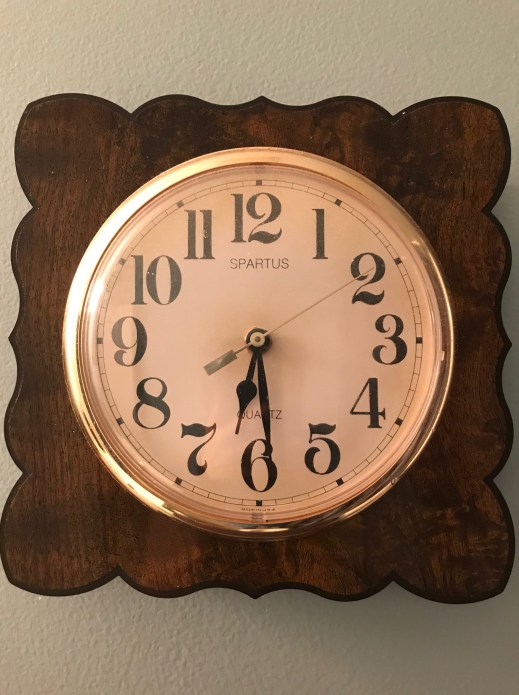
clock

Visible or Invisible Deeds

The sins of some are obvious, reaching the place of judgment ahead of them; the sins of others trail behind them. In the same way, good deeds are obvious, and even those that are not obvious cannot remain hidden forever (I Tim. 5:24-25).

From my 2009 Journal. While meditating on this verse, I came up with the following examples:

  1. The sins of some are obvious: Someone who yells obscenities and openly threatens a person in a parking lot.
  2. The sins of others trail behind them: An abuser’s sins are hidden to the world’s eyes; but eventually they become revealed (in the lives of the victims and, of course, at the Judgment Day).
  3. Good deeds are obvious: Someone gives a large donation to a charity that names a building after him.
  4. Even those that are not obvious cannot remain hidden forever: when I leave cookies on a neighbor’s porch with no note.

Can you give me more examples?

I’d like to be a better good-deed doer. It doesn’t come naturally to me. Though I have occasionally done something in a generous and spontaneous way, I usually have to plan, set aside time, and then do. But I’m thinking good deeds are more than giving things away or doing an act of service. Could a good deed also be offering a kind word to a frazzled checkout clerk or giving a smile of affirmation to a child or hugging a grieving friend?

I recall the time when our family stopped at an out-of-town gas station to take a much-needed rest stop. I was surprised and delighted to find fresh-cut flowers on the ladies’ bathroom counter. An uncharacteristically clean stall and a fresh odor also caught my attention.

When I emerged from the restroom, I approached the clerk behind the counter and asked if I could see the manager. Her face visibly fell. “Why?” she demanded sullenly. She looked like she’d been caught doing something wrong and went on the defensive. “She’s not here.”

“Okay,” I responded. “I just wanted to tell her how much I appreciated a clean bathroom and especially enjoyed the fresh flowers.”

The change on her face was immediate. With the fear gone, she relaxed and grinned. “I’ll be sure to tell her,” she said. “And thank you so much.” I wondered then how often this tired clerk had to put up with complaining customers. It appeared that this one kind word had made her day.

And now that I’ve told you, my deed is no longer hidden, but maybe it will encourage you to do a good deed today.

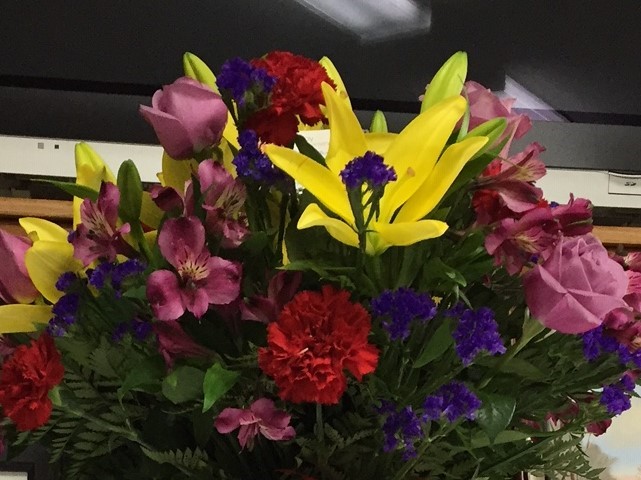
Bouquetb

The River of Life

From my 2009 Journal. While Scott and I were visiting his family in Vancouver, BC, I picked up a novel from his aunt’s bookshelf.  Published in 1931, A White Bird Flying, is full of life’s lessons and philosophy and old-fashioned values—a gentle reminder of days gone by in rural Nebraska. Laura, a would-be writer, chooses love and a family over career and a promised inheritance. When her would-be benefactor dies, he sends her the grand sum of one dollar in retaliation for spurning him.

The author, Bess Streeter Aldrich, concludes:

Life is like a river—a groping, pulsing river, endlessly rising and falling, finding its way through mists and shadows to some far sea. Every human is a part of the story. One life touches another and is gone. There is contact for a brief time—an influence for good or ill. And the river goes on, endlessly rising and falling, finding its way to the sea (p. 123).

1110111537

For years, I simply drifted in the water, going along with what others wanted for my life rather than following my heart. A lot of the decisions I made were because I didn’t really know what I wanted. And even if I did, I got easily thwarted or side-tracked by the scenery around me or the rocks in the riverbed. I could make goals, but if people or events interrupted the flow, I’d give up on my dreams and let them paddle the boat for me.

So when does an interruption become a distraction and when is it actually a God-event? How can you tell the difference? Is the interruption like a bumper lane in a bowling alley? The rubber is there to keep you out of the gutter. Or is the interruption like a pile of sticks in the river that you want to avoid because it’s a snare or a trap?

DIGITAL CAMERA

I think the rapids are the events over which you have no control, and you have to be on your guard, alert to navigate well to stay upright. Thankfully, not all of life is calm and not all is rapids. Variety is nice. So is it okay to drift? Sometimes. Those are the resting times. But it’s not okay when the water is rough. And that’s when I’m glad I have an experienced Guide with me Who knows the river and knows where the hazards are. And He’s strong enough to keep us on an even keel. But God expects me to engage in the fight to stay upright. I need to use my paddle as I’m able.

Sometimes, when you’re about to be dumped into the river, you just hang onto the sides for dear life. But you’re not going to drown (unless it’s your time to go Home) because Jesus has the lifeline in His hands. When He comes to rescue you, relax, don’t struggle against Him.

But back to the author’s metaphor. “Life is like a river. Every human is a part of the story. One life touches another and is gone.” What does that look like in the picture? Are we flotsam and jetsam? Tree debris? Turtles swimming downstream? Canoes that bump against each other? What do you think?

What other applications can you see in this metaphor?

Shame on You

From my 2009 Journal. Having a judgmental spirit is like trying to cast shame on another person.

Shame Ben

At my boarding school, kids were adept at using a little gesture that meant “shame on you” or “naughty, naughty.” Left pointer finger pointed at the victim. Right pointer finger perpendicular to the left one. Slide right finger repeatedly across and down left finger. Shake the head. “Tsk tsk.”

Why did we do that? Did we learn it from the grown-ups who said to us, “Shame on you!” or “You know better than that.” Do those words actually correct behavior, or do they simply cause the child to cower, believing there’s something wrong with him? Why can’t we discipline and correct without the shaming?

My judgmental spirit and attempt to shame a person is simply self-righteousness. And shame on me for doing so! I am not your judge. When a kid pointed a finger at us in judgment, we’d remind him that three fingers pointed back at himself.

I should just put my shaming fingers in my pocket.

Guilt and Forgiveness—a Visual

Karekare Black Beach 491

Karekare Black Beach, NZ

Guilt is like strolling on a sandy beach—you leave footprints for all to see. You may try to cover your shame by smoothing sand over the prints; but as you walk away, you create more footprints.

Forgiveness is God sending His wind (the Holy Spirit), blowing across the sand, erasing all the prints. And even if you fail again, the wind continues to blow.

But how much better to scramble up onto a solid, flat rock where no footprints can be made and no guilt and shame exist.

I’m on the Rock, hallelujah,

I’m on the Rock to stay,

For He lifted me from the miry clay—

I’m on the Rock to stay.


The Worry Worm

From my 2020 Journal. Everyone is jumping on the bandwagon of trying to give us encouraging words and uplifting things to focus on during our forced isolation from COVID-19, and I’ve purposefully tried to stay away from the topic on my blogs. We’ve heard and seen enough for a lifetime on the news and in social media to bring fear and anxiety into our hearts. I am not afraid, so don’t tell me not to be afraid! But then it hit me. I’m may not be afraid, but I did identify some worry. Oops. So here’s my response.

Worm dried

Worry

Is like a worm,

Weaseling its way into my brain,

A virus that goes viral,

With nothing to stop the corruption.

Too late to quarantine,

It’s already done its damage.

All I can do is holler for help and pray and praise

To arrest it in its tracks and

To wash away the filth of the residue

Praise Him, praise Him, all ye little children,

God is love, God is love.

Ahhh, sweet peace.

You Made Your Own Bed . . .

From my 2009 Journal. A few years ago, I had a friend (A) who adopted two girls from another country. One day my friend injured her leg and she struggled to take care of them. Another friend (B) dismissed it with the attitude “Well, she asked for it.” (i.e. she had no business adopting if she couldn’t afford them.) I was shocked and surprised at B’s attitude. Yes, Friend A had made that choice, and yes, she has to live with her choices, but it wasn’t A’s fault that she injured her leg and needed compassionate help.

Perhaps I should examine my own heart, however. A smoker I know is struggling with emphysema, and I don’t feel like giving him any sympathy. Of course I would never withhold getting an oxygen tank to him if he ran out, but I’d still roll my eyes and think he made his own bed and must lie in it! I guess I’m no better than Friend B and her judgment.

Or I think of someone who struggles with physical challenges because she is obese. Do I withhold compassion and mercy when she has a stroke? In a way, you could say she asked for it, but I don’t think that’s the right response. Instead, I need God’s compassion for her in her debilitating state. In the same way, I need God’s pity and mercy for my own struggles that keep me bound and powerless to change.

The thing is, I can readily see the solution to everyone else’s problem, but find it harder to deal with my own. Quit smoking! Lose weight! Turn to Christ! Let go of your anger! Forgive that person who hurt you! But when I look inward at my own issues, I find I can easily make excuses for my own actions and attitudes.

You may have made your own bed and must lie in it, but I can choose to help you change your sheets.

monkeys in bed 2

Rule-Keeping 101

Rules

From my 2009 Journal. I’ve been reading Romans 14 and thinking about biblical rules. Old Testament rules included “Don’t murder.” but Jesus said it’s what’s in your heart that is most important. Is “Don’t hate” a New Testament rule? I suppose you could say that, but rules generally govern actions, not attitudes. For example, I may be imprisoned for murder but not for hating someone in my heart. But if you take care of the attitude (hatred) in your heart, you’ll have no temptation to do the action (murder).

In context, Romans 14 seems to be referring to religious activity: observances of meat offered to idols and special observances of days. I have freedom, the Apostle Paul says, to eat meat or not eat meat, to observe a day “unto the Lord” or not. It’s not just the action that pleases God, but the attitude of the heart. Am I doing it out of obedience to my conscience or out of disobedience? Am I doing it with a grateful heart? If I do the religious activity but am not thankful, what good is it? Verse 14 says food offered to idols in and of itself is not unclean. But if in your heart you believe it’s unclean, then to you it is. Don’t do it!

When I see someone’s action, I may or may not know their heart or their motive, but I confess I have been found guilty of unfairly judging them. It’s long past time for me to quit the Old Testament rule-keeping and be grateful for God’s grace and freedom to live according to the only two rules I find in the New Testament: love God and love each other.

Bottom line: examine your own heart, and don’t judge another believer’s religious activities. Can I hear an “amen”?

When Should We Disobey the Government?


From my 2009 Journal. Following up my recent blog post about The Blue Parakeet—Rethinking How You Study the Bible, I remember Scot McKnight’s injunction to read the Bible as a dialogue that includes different facets of a topic. We can get into trouble when we quote one verse or phrase in the Bible out of context, and we can come up with some pretty bad theology or advice. For example, I hear Paul saying in Romans 13 that you should never disobey government; and if you oppose government, you bring condemnation on yourself.

Let everyone be subject to the governing authorities, for there is no authority except that which God has established. The authorities that exist have been established by God. Consequently, whoever rebels against the authority is rebelling against what God has instituted, and those who do so will bring judgment on themselves. (Romans 13:1-2, 7 NIV)

Yet when Peter and the early apostles were instructed to stop preaching, they said to the high priest, “We must obey God, rather than men.” And God honored Daniel, Shadrach, Meshach, and Abednego when they defied the king and refused to bow down to his statue. Apparently it’s okay to practice civil disobedience if it conflicts with God’s law—but you’ll pay the consequences if you’re caught.

And so I think it’s wrong to apply Paul’s statement in every situation. In context, I think he was saying “Do what’s right.” There’s nothing morally wrong in paying your taxes and obeying the speed limits and [practicing social distancing, to apply this blog to 2020]. You don’t want to be slapped in jail for doing something the government opposes. But if the government forbids assembling together as believers [and I’m not saying as a temporary measure to avoid the corona virus], then disobedience is legit and the church must go underground.

Let’s dialogue. Over what issue would you disobey the government?

Flag