Am I Not Enough?

From my 2016 Journal. I’m feeling disgruntled today, agitated, pacing, complaining. Jesus invites me to sit with Him for a bit. “I’m weary of working with people whose hearts are closed. Soulmate is a mythical beast.”

“Am I not enough?” Jesus asks.

“Am I not enough?” the Holy Spirit queries.

“Am I not enough?” the Father says.

And my heart cries out “I want You to be. So why am I not satisfied? Why do I cling to the illusion that flawed human beings are capable of meeting the deepest longings and intimate needs of my heart?”

“It’s not fair to expect people to be God to you,” observes Jesus. “That’s idolatry.”

And so I repent.

Be Jesus to others but let go of expecting them to be that to you.

THOUGHTS, WORDS, DEEDS

Your life is a printout of your thoughts.

From my 2011 Journal. Since childhood, I’ve been taught that deeds are important—whether good or bad. Remember that little chorus, “O be careful little hands what you do”? Within the last 10 years, as I’ve been listening to people’s memories, I’ve begun to understand how much our words might have an even greater impact. (See Derek Prince’s book Blessing or Curse—You Can Choose.)

But after reading Surviving Death by Scott Degenhardt, I became convicted about how much our thoughts can impact the universe as well. For one thing, if you think something, it has the potential to turn into words, which often morph into deeds. (Ever notice how you can think about doing something, and then you decide to ignore it, and then all of a sudden you find yourself getting up and doing that very thing?) I marvel that a thought has that much power over my body.

I could quote the verse “as [a man] thinketh in his heart, so is he” (Prov. 23:7 KJV), but somehow I’d come to believe that as long as I didn’t SAY something or DO something, it was okay. But here’s where I got convicted. I have found myself critiquing and then criticizing people’s choices in my head. I would never dare say something out loud, but I indulged the thought. What if we all had the ability to read everyone else’s thoughts? Would our thought life change?

Here’s the thing . . . thoughts are not really private. The God of the universe knows my mind. And sometimes my thoughts get expressed in my triggered emotional responses.

I am He Who searches minds—the thoughts, feelings and purposes—and the [inmost] hearts.  Rev. 2:23

God, by Jesus Christ, will judge men in regard to the things which they conceal—their hidden thoughts. Rom. 2:16

How does one confess a lifetime of guilt in one’s thought life? Sigh.

Thoughts pexels-photo-1485657

I DON’T HAVE TO . . . I GET TO

ToiletYears ago, Scott and I attended a concert at the Tivoli Theatre in Chattanooga. I don’t remember now which groups performed, but the lyrics from an old Gospel song stuck with me for a long time. The refrain was “I don’t have to . . . I get to.”
Here’s a sample from my own list:

  • I don’t have to cook meals for my family . . . I get to.
  • I don’t have to pray for people . . . I get to.
  • I don’t have to clean the toilets . . . I get to.
  • I don’t have to love my enemies . . . I get to.

Another good phrase to use is:  Isn’t it great that . . . ?

  • Isn’t it great that we have dirty dishes? It means we have food to eat.
  • Isn’t it great that my hair is frizzy today? It means I have hair!
  • Isn’t it great that it’s raining today? It means that the flowers are drinking.
  • Isn’t it great that I have a toilet to clean? It means I don’t have to squat over a hole in the ground (seriously)!

Now your turn . . . 

VISION, LIMITS, AND OBITS

IMG_4641 (2)From my 2011 Journal. We’re teaching the life of Elisha in Momentum (Sunday school for grades 4-6), and our leader Lori challenged us to ask ourselves 3 sets of questions.
#1 Write down a sentence that describes the vision you have for your life.

That’s a tall order! I’m sure it’s changed over the years [and perhaps has changed since I wrote this 8 years ago]. At first I thought of the word “prayer” and then “service,” but I think even more than that, the word “obedience.” I’m more of a rule-follower than a leader. Another word that comes to mind is “peace.” All these words have been my pursuit since childhood. Can they be melded into one sentence?

My Vision Statement:  I will prayerfully pursue inner peace while living a life of obedience in His service.

#2 Where do you limit yourself? and Where do you limit God?

Unlike my youngest daughter, I don’t like change. I’m not inherently adventuresome. I limit myself physically. I don’t get outside as much as I’d like to enjoy nature. I’m content to stay inside where it’s sterile and comfortable. [I’ve since then deliberately made that change.] I limit myself when I doubt that God is working in another person’s life. I limit God when I cannot see the big picture or when I don’t ask for big things. I’m Elisha behind a plow, plodding along. I have no imagination that God has a much greater work for me to do. [Again, thankfully God has grown me in these areas.]

#3 Write out your own obituary.

Besides the stats of where I’ve lived and what I’ve done and who my surviving relatives are—I suppose Lori means for what character traits will people remember me. The truth? Or what I hope they remember me for? Okay, here goes. . . .

She liked things done her way. She liked simplicity and minimalism. She neglected exercise. And she had a terrible memory. She loved spicy food and anything African. She accepted people at face value and tried to learn something from everyone. She was hardest on her husband and expected more from him than from others—but she eventually relaxed on that one and decided to let God be his Holy Spirit.

She loved prayer, but never felt like she mastered it. She had a driving passion for purity, obedience to God, mind renewal, helping others come to emotional healing. She enjoyed writing—for herself—and used to crochet and cross-stitch. Mostly she enjoyed reading, and when younger, climbing trees. She adored her family. She enjoyed baking, but not cooking on a routine basis—especially for picky eaters. Using her resources for God was extremely important to her. She loved monkeys but not dogs, and she tolerated cats. Sunsets, rainbows, a full moon, cloud formations, and the African sky. She liked to work on the computer—especially when creating words on a page, and even data entry. But most of all, above all else, she LOVED GOD.

Now it’s your turn. I’d love to hear your responses to these thought-provoking questions.

Who’s in Your Driver’s Seat?

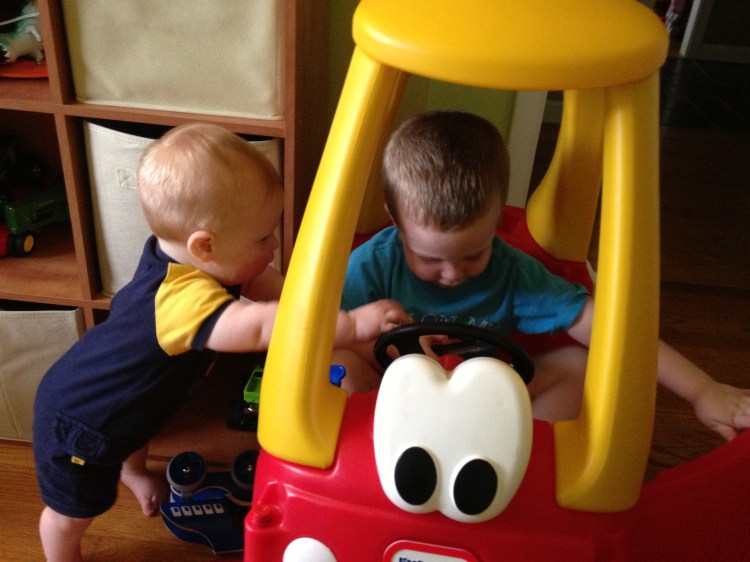
Drivers seat

Baby Benjamin and big brother Jackson

I have heard people use the metaphor that God should be in the driver seat of our lives—that God is in charge, and I can trust Him to drive this vessel anywhere He wants. But I’m not sure that’s accurate. If I were the passenger, I would have no say in where I go and what I do. He has given human beings a choice. I am actually behind the steering wheel. And so, though I am driving, His hands are on the wheel with me because He is inside me. When I fight against His direction, we begin to swerve and hit potholes and run off the road and wreck, but when I yield to His gentle pressure, He keeps me on the right path, going in the right direction. He can see up ahead where the detour signs are, where the roadblocks are. So I can trust Him when He suggests we take a break, find another route, or stop to help a fellow traveler. I cannot drive another person’s vessel for him/her (sometimes I wish I could!), but I can lend a hand with a flat tire or offer a snack or a drink of cool water to ease his/her discomfort.

Where do you see Jesus in your picture?

Small Bites


As I read the Scriptures, I find I can only chew on one small portion at a time. When I’m studying faith in Hebrews 11, it’s hard to focus on I Corinthians 13 and love. When I’m reading the Psalms, I’m focused on praise and thanksgiving. I have to trust that whatever bite I’m chewing on at the time is what my soul needs.

Sometimes my soul needs water because I’m thirsty (“as the deer panteth for the water”). Sometimes it enjoys dessert (the mountaintop experiences in life). But other times, a sip of bitter coffee (admitting I’m wrong) offsets the sweetness of forgiveness. Meat and starch for energy. I need it all . . . but I can only take (and enjoy) one bite at a time.

And so I lay aside the guilt that says I’m not praising enough, or I’m lingering too long over the coffee. I need balance. And I can trust God to bring into my life whatever He has planned for me to help me grow in my walk with Him.

What are you chewing on today?

Small bites 2

Shame and Shoulds

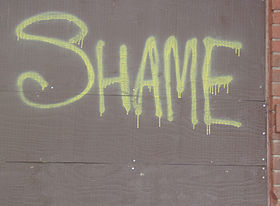
From my 2011 Journal. There are certain words, facial expressions, and people’s attitudes that shut me down. One of them is “You should or shouldn’t . . .” My instant response is to go on the defense: “Why should I?” or “Why shouldn’t I?” That self-protective defiant attitude covers timidity to be who I was created to be.

shameI may refuse to listen to your words because they heap shame on me, but I find it’s an uphill battle to sever the ties with them. I am determined to climb this mountain even if I have to do it alone, but the weariness of the battle gets to me.

Jesus says, “Level ground would have been easier, but mountain climbing shows what you’re made of and tests your endurance and strengthens your muscles and heart. Not a bad thing. Keep climbing!” And eventually I am able to see your words for what they are—your belief system, not mine.

I’m reading Unlocking Your Family Patterns by Cloud, Townsend, Carter, and Henslin. I identify with the chapter “Learning to Achieve Adulthood.” The premise is that as children, we always feel “one-down” to adults. Growing up means coming to the place in life where we feel “equal” or “even.” My own shoulds and shaming words or posture are my attempt to feel “one-up.”

Whether your words or mine, I can turn those “shoulds” to “coulds.”

  • I should be praying more = I could be praying more.
  • I should be more available = I could be more available.
  • I should clean my house today = I could clean house today (or not!).

I’m ready to get rid of these echoes in my mind and heart. No longer will I hide my true self to protect me from your words or deeds. I can graciously and lovingly place them back on you and stand firm in what God created me to be—free of shame and life-sucking rules.

What shame messages are you battling to erase?


Food—It Does a Body Good

I know someone who analyzes every bite that goes into her mouth. She obsesses over fat and sugar and red meat and raw vegetables. I wonder if she’ll live any longer or have a better quality of life as a result? I doubt it. She’s riddled with fears and physical and emotional pain.

I remember my mother commenting on the food fads in American each time we came home on furlough: one year it was sugar-free, then fat-free, and now it’s gluten-free. One year we were informed that we should eat potato skins to get the most nutrients, and the next time we were admonished to pitch them because of all the toxins. At one time egg yolks were verboten, and now it’s acceptable. Will someone please make up their mind!

My mother taught me to have moderation and balance in all things. It doesn’t mean I’m totally and perfectly moderate in my eating habits. I just don’t worry too much if I eat a piece of sugar occasionally or enjoy a steak now and then. God gave us food to enjoy, and as long as we don’t make food our god, I think we can relax and live with an eye to the eternal.

Describe your relationship with food.potatoes

Sing with Me

Singing

From my 2008 Journal. You know what I miss? The focus of music in some churches has shifted from the sound of the congregation’s voices blending in harmony under the leadership of a song leader or musician—to a group of performers on stage. Now I know they’re not called “performers” and I know that’s not their intention, but . . . I personally find it a little distracting to watch what’s happening on stage. Critiquing performance is my natural tendency instead of focusing inward and upward. I know that my focus needs to be on God, and I know that I can become distracted by any number of things—so sometimes I just have to shut my eyes during worship.

I also acknowledge that the temptation with singing old familiar hymns led by a choir director is to sing with the lips and not from the heart. I get that. I know it’s not what’s happening on the stage that counts, but what’s in my heart. But certain environments are just more conducive to worship for me than others. We recently visited a liturgical church where the organist, hidden out of sight, led the congregational singing. I could hear my own voice blending in harmony with the voices around me. I found the experience quite refreshing.

Okay, I’ve said my piece. Now let’s sing!

The People’s Choice Award

KingLike a child begging a parent for candy before dinner, I wonder if there are times when we beg too hard for what we want, and God gives it to us—but it’s not for our best. Better to examine our hearts, motives and emotions to discover why we’re begging for something. Better to ask, “according to God’s will” and from a heart of peace that is aligned with what God has predetermined is best for us or our loved one.

Once more, just before the public declaration of God’s choosing, the prophet Samuel warned the people of their folly in desiring a king (I Samuel 12). It’s like the Israelites begging for meat in the wilderness: God answered their prayers, but then they suffered the consequences.

So why did the people want a king? “To be like the other nations” it says in one place. But verse 12 gives us more insight:

But when you saw that Nahash king of the Ammonites was moving against you, you said to me [Sam], “No, we want a king to rule over us”—even though the Lord your God was your king (NIV).

Their folly began with bending to the culture, followed by fear of the enemy, which led to stubbornness and rebellion against God.

What gives me hope is that even after God granted their request for a king, He still gave them a second chance to do right.

If you fear the Lord and serve and obey him and do not rebel against his commands, and if both you and the king who reigns over you follow the Lord your God—good! (v. 14). [But IF the opposite is true, watch out!]

Even when we sin and foolishly ask for something that’s not good for us, God can still redeem the situation—IF we repent.