My heart is heavy this morning with the news that a friend is nearing the end of her life, and another is struggling to function with a disease. Perhaps God put the heaviness there so that I will pray for my friends. Perhaps I’m believing a lie. Or maybe it’s tapping into something unresolved in my own heart. I see worry lines across my forehead.
In my mind, I lift my dying friend’s wasted skeleton and lay her gently in the lap of Jesus. He smiles. She is in good hands.
I see my other friend limping and leaning heavily on my left shoulder as I try to keep her upright. I’m sad and I don’t know why. My knees buckle under her weight, while Jesus waits for us to reach Him. Why isn’t He stepping forward to help? We sit for a while and rest, and still He tarries. I believe I have the responsibility to get her there, but I can’t. All I can do is sit with her till help comes. And as I relax and encourage her, Jesus sends angels to minister to her. They gently soothe her, but her earthly pain remains. Then I see the angels lift her, chair and all, to His feet. I follow and I watch.
“Are you ready, my child?” He whispers in her ear.
“Not yet,” she replies. And so he instructs the angels to carry her to Sick Bay.
It seems I’m next. “Come here, my child,” He says. “What’s troubling you?”
“It’s that word responsibility again,” I say. I know that whatever “it” is doesn’t belong to me.
“No, But love does. Staying with her and not walking away is what I ask of you.”
“That’s the easy part; I can do that.”
“Then visit her in Sick Bay and let her know she’s not alone in her pain.”
It’s often easier to try to fix another’s pain in order to relieve my own, but prayer is not about telling God what to do. It’s about letting go of my expectations and listening to His instructions.
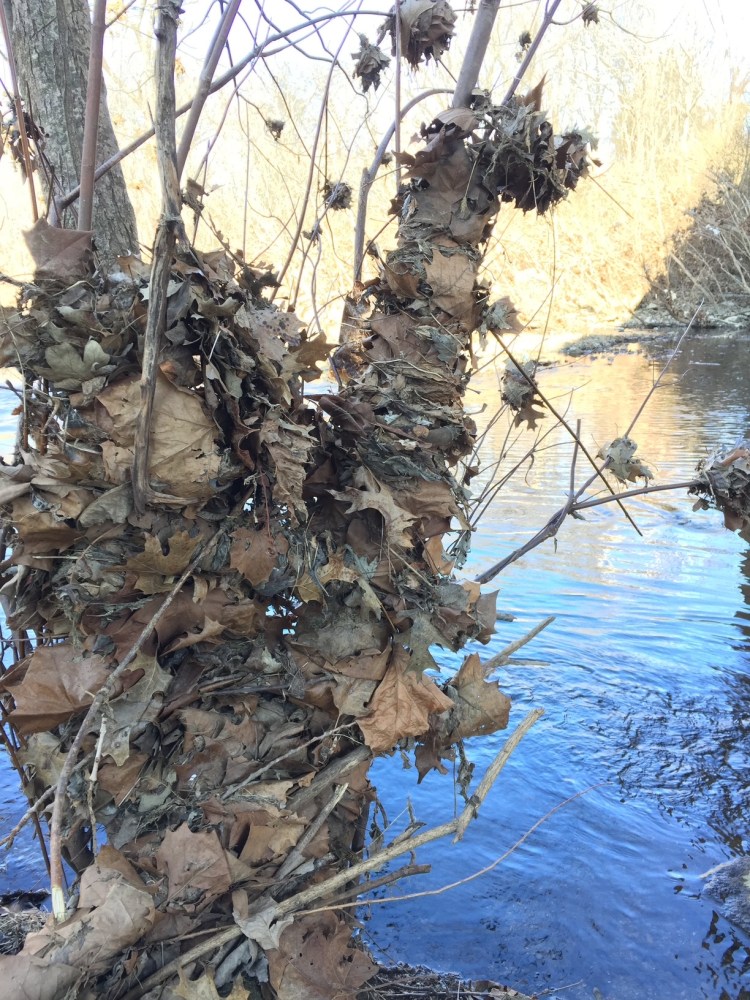
Two days in a row I rose from my bed feeling weary. Is this mild depression? Driven to get some fresh air and exercise, on Saturday I donned a light jacket, packed what I needed for the day, and headed to the Greenway. I snapped some photos and tried not to think. Just walk. Bare trees and brown hues dominated the landscape in the winter chill. I saw a red-headed woodpecker, two fat robins, some ducks on the water, a cardinal, and several squirrels with nuts in their mouths. Under one overpass, I was shocked to see how high the water had flooded at some point. Leaves twined tightly around branches above my head.
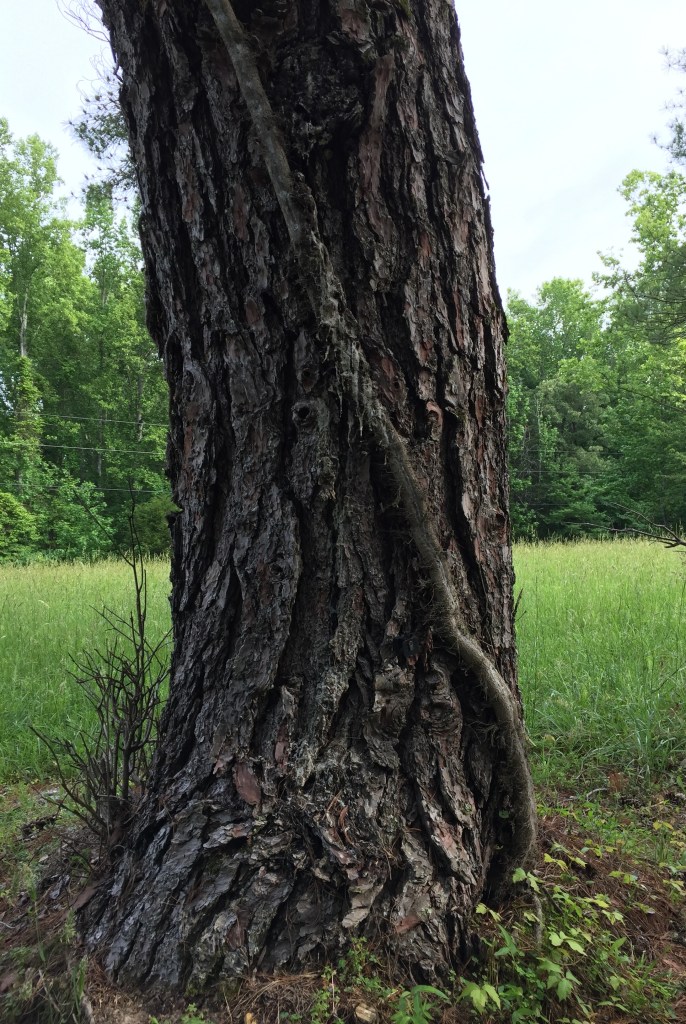
Returning to the trailhead, I sat on a bench to rest, but my body felt antsy, jiggly. As I tried to relax, I heard God say, “Be a tree.”
“But a tree doesn’t move!” I exclaimed.
“Precisely.”
A tree. Rooted. Still. Unmovable. Sturdy. Stable. Allowing the animals to come to me. I don’t have to find them; they will find me. Just be. Be still and know that I am God. Be still. Be still.
Be still before the Lord and wait patiently for Him. Psalm 37:7 (NIV)
In awe of this simple injunction from the Holy Spirit, I began to walk again. But it wasn’t enough. I could still feel the dread of having to be “on” at my next meeting.
I came to another bench warmed by the sun and stretched out on my back. I needed to release whatever load I was still carrying. In my mind I saw a steel cord across my chest with weights on the ends, holding me down. I heard the word responsibility.
Again? Still? Why do I keep struggling with this?
I asked the Lord to cut the cord or remove the balls, and surprisingly He refused.
What? A weight too heavy for Him to lift? I don’t understand.
“OK, Lord, do it your way.”
And I watched as He lifted the cord a few inches off my chest, suspended lightly on His index finger. Now I could choose to stay or to move. That felt better.
And so I walked some more.
“Is there more, Lord?” I still feel tired in my soul.
Then I saw a closet door. When I opened it, a mass of material goods tumbled out. “What a mess!” I cried. “I don’t have the energy to clean it up and sort through the pile.”
“Your decision-maker is tired,” He said. “It’s time to sort and tidy your environment. You’ve been living in clutter and chaos in your home for six weeks now with Christmas, company, family messes, extra meals, and three big projects completed in three weeks. Your office and sleeping space are not restful or peaceful. It’s time to take back your place and create a peaceful environment.”
“That I can do,” I thought. And with that, the oppressive, heavy feeling began to lift.
“Be a tree. Be still. Look to Me to make your decisions. Declutter and find peace once more.”
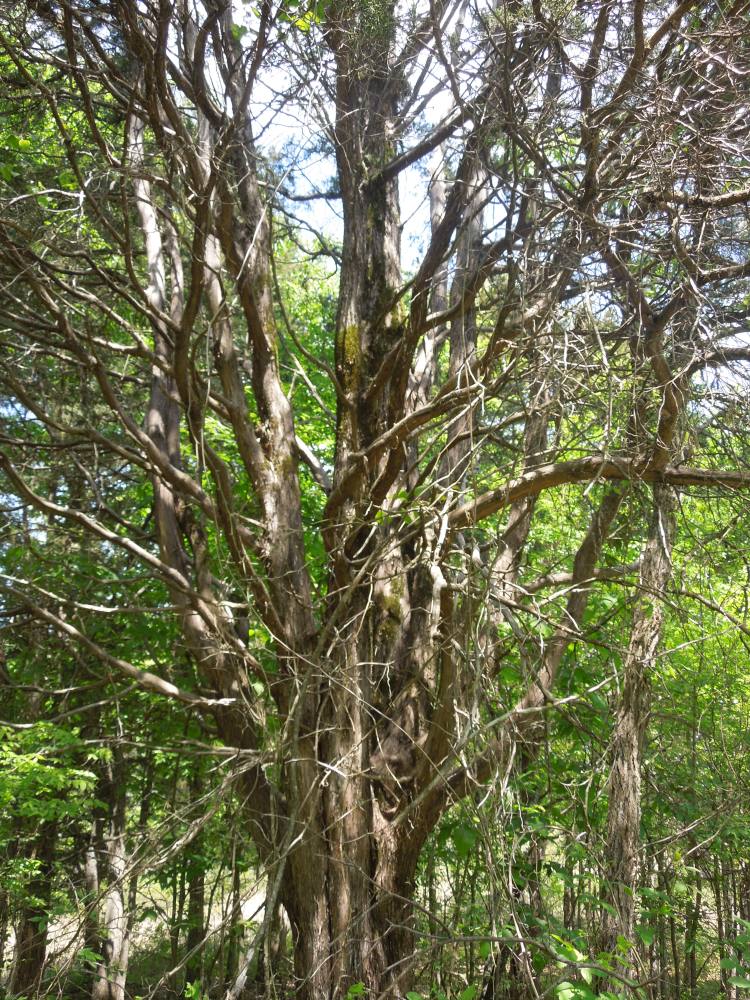
All during church the next day I tried to process, to rejuvenate, to just sit and soak in God’s presence. I visualized a part of my heart like a squirrel scampering around the tree, so many branches to explore, unable to settle. Then I saw one branch overladen with fruit (and perhaps some excess stuff) drooping to the ground. It represented my to-do-list responsibilities, my ongoing projects, my schedule, and my ministry relationships. It represented the month of January and the burdens I’ve been carrying. I knew the little squirrel needed to stay away from that branch, but he lusted after the fruit. Perching on another branch on Sunday meant trying to focus on other things for a while, but that simply did not work. And so, I gave up the escapist, self-disciplined route to focus on what it might feel like to venture out onto that over-burdened branch. I was afraid it would snap and fall to the ground, and the fruit would rot before it could ripen.
And that’s when I saw a metal bar (God’s strength) underneath the branch supporting the weight. Now the squirrel could perch on the bar and still reach various fruits without breaking the whole limb. That felt a whole lot lighter and safer.
The next morning, I felt more rested and alert instead of groggy and grumpy. And that evening I did not get overwhelmed when we hosted a Super Bowl party for our entire family. Let’s see what tomorrow brings.
He shall be like a tree planted by the rivers of water, that bringeth forth his fruit in his season; his leaf also shall not wither; and whatsoever he doeth shall prosper. Psalm 1:3 (KJV)
Like a cedar of Lebanon he will send down his roots; his young shoots will grow. His splendor will be like an olive tree, his fragrance like a cedar of Lebanon. People will dwell again in his shade. Hosea 14:5b-7a NIV
Many years ago, a missionary couple put me on their mailing list without my consent, and for some reason I resented it. I don’t even recollect why, but for years, every time their prayer letter arrived in the mailbox, I tossed it in the trash; and later by e-mail, I’d hit the delete button without reading it. Petty, I know. Every other missionary letter I received I’d read and pray through it. This morning, however, I felt the small prick of conscience when the Holy Spirit said I needed to change my attitude toward this couple.
Once a day, beginning in the New Year, I open one Christmas card, reread the sentiment and personal notes, and pray for the person who sent it. I had just confessed my sin when I picked up the next card in the stack. I laughed out loud when it turned out to be from this missionary couple. God has such a sense of humor. And later that day, for the first time, I read their e-mail newsletter and felt engaged with their ministry.
Why does it take me so long to recognize my blind spots or to acknowledge my triggers? So much wasted time, bad brain space, and lost opportunity for prayer. I’m grateful for God’s patience, love, and forgiveness.
I’m really struggling right now. I’m angry, resentful, proud, defensive, hurt, sad, and stressed. I’ve had to let go of other areas of responsibility in order to survive my teaching duties. I’ve lost my joy and peace, and I don’t know the way back. My friends say I sound depressed.
[I was teaching at a junior college whose goal was to motivate struggling students to stay in school. The administration placed great pressure on the teachers to make this happen.]
VISUAL
I’ve sidled ungracefully past the wildly swinging middle section of a tightrope, but now I’m weary, trying to stay centered. Some in the watching crowd cheer me; others boo. I want to be applauded; I want to be liked; but when a belligerent student confronts me, my hackles rise.
ANOTHER VISUAL
I am a track team coach. I can encourage the runners from the sidelines or drive the momentum from the front. But if they choose to quit running, I can’t force them to continue. Nor can I simultaneously grasp every hand and drag them forward. While I’m helping one, others lag behind. I urge them to help each other, but it’s not enough. Complaining the race is too hard, many keep stepping off the track, distracted by illness, winter weather, or family stressors. Others continue to run but get lost and wander off into the marshes. Some are so far behind they’ll never catch up.
Meanwhile, my boss yells at me that I’m not trying hard enough. It’s my fault if I don’t provide their running shoes, hold their hands, and stay with them till the sun goes down.
And me? I’m wearing myself out trying to be in multiple places at once. I’m running 16 hours a day to keep the pace for the motivated student runners while racing back and forth to grab the laggers. I hear my boss yelling in one ear, and the runners wheezing and gasping in the other. The front runners complain that I’m spending too much time in back, and the ones in back complain I’m out front too much. I’m angry, tired, discouraged and ready for the finish line.
A THIRD VISUAL
I’m a spelunking tour guide. To those in my assigned group who follow closely enough to hear, I point out the beauty of the stalactites along the way. I can wait for a few stragglers to catch up before I begin lecturing, but if they linger in the back, talking and not listening, that’s on them. Or if they turn back to the entrance of the cave, I have to let them go. It’s not my fault if they are physically incapable of keeping up. I can provide a wheelchair, but unless they get someone else to push them, they’re stuck. I already have six people in my group who need wheelchairs! My job is to keep lecturing and keep pointing the way with my flashlight.
I become discouraged when I discover that only 8 to10 out of my original 20 make it to the beautiful waterfall at the end of the cave. The stragglers have missed it!
Now that I’m finished ranting, I’m ready to listen to the Lord.
THE LESSON
I am at fault. I have not bathed my classes in prayer. I have not prayed for my students by name. I have not consistently blessed my classroom. I’ve been too tired, distracted, and preoccupied to give it all over to God. I keep griping and crying that it’s too hard, too impossible a task that God has required of me. (Hmm. I sound like my students!)
And so, I repent for neglecting my spiritual disciplines. I can’t keep the students on track if I don’t have the right focus.
I realize, now, that it’s the company’s responsibility, not mine, to make sure the spelunkers sign a waiver saying they are physically and mentally fit for the journey BEFORE they enter the cave. Now that I understand it’s not my fault and that I’m doing all I can, what do I do with those in wheelchairs that the company requires me to get safely back to the entrance? I’m afraid the students will have to wait there alone in the pitch-blackness until we send for help. That’s when I notice permanent low lights lining the path. They will be safe for now.
A 2025 Update. I understand the passion behind wanting to help students succeed, but I’m not sure pressuring the teachers was the best motivation. This school is no longer in existence, and I am no longer teaching.
I dreamt last night we exchanged houses with some neighbors. Little by little, we carried our stuff into theirs while they moved theirs into ours. We had no help because all our friends were old, and we needed to care for them in the midst of the chaos.
What was my brain trying to sort out in my sleep? The whole scene felt chaotic and stressful. Am I anticipating Christmas?
Visual: I’m standing in a canoe, and a strong wind knocks me out of the boat. The shallow water poses no threat, but I’m peeved that I’m soaked and cold. Jesus invites me to join Him by a fire on the beach.
“You know,” He says reflectively, “I made the ocean, I made the wind. Heck, I even made the canoe!”
“Jesus!” I exclaim, “You’re not supposed to use the word heck.”
“Why not?” He replies. “I made that too!” And He laughs.
I don’t think it’s funny. Hell is no laughing matter.
“Hell itself? No,” He says soberly. “But creation, yes.”
“Karen,” He continued. “You don’t like being in a rocky canoe, do you? It’s too …”
“Wet!” I smile. “And I can’t get anything done. I have a long to-do list, you know … goals to accomplish, places to go, things to do.”
“That’s the issue, then, isn’t it? You’re feeling the shakiness of time.”
“Yes, Lord. I crave uninterrupted time alone to think time and to plan.”
Now that I understand what I’m fretting about, I need help sorting it out and setting it aside.
“Will you teach me, Lord? I trust You to bring to mind what I need to know and what I need to do and when.”
A 2025 Update. I’ve learned over the years not to ignore upsetting dreams. I pay attention to the emotion I feel when I wake up, and with the Lord’s help come to a place of peace. What a difference it makes in how I approach the rest of my day!
I’m too busy. Important details are slipping through my fingers. I’m worried over finances (first the washing machine died, then the compressor on the upstairs air conditioning unit quit, and now the car needs a new muffler). I’m worried over my daughters’ needs, over my health, sleep, and eating habits, over other people’s health, over ministry needs.
I haven’t been at peace for a while. When circumstances go awry or when things spin out of control, is my response always a trigger from the past? Or can it be a new situation? It’s a tangled mess right now. Where to begin to lay it on the altar?
Sometimes it’s simply a choice. And today my choice it to hand God my worry.
My ship floats in a sea of God’s love and care, but in my ship dwell all my cares and concerns. When life comes at me one bundle at a time, I can deal with each in turn and move on. But when the bundles continue to compile, my stress elevates, and my ship sinks deeper into the water. There aren’t too many choices: throw some of the bundles overboard, climb to the top and enjoy the view, or sink with the ship. This could be akin to burnout, and I don’t want to go there.
This weekend was the last bundle to pile on top. Was it from God to test me or simply an opportunity to minister to one of God’s children?
My husband’s name is listed in the phone book under clergy, and we get periodic pleas for help from random strangers. One time I was able to pray with a lady for an hour. Usually, I refer them to the church office. This time it was Saturday, church office closed, when I got a call from Gerry, a 62-year-old homeless Christian widow who was stranded near us and afraid to get on the highway with her car leaking fluid. I invited her to spend the night. It broke my heart not to be able to help her more, but I couldn’t take on one more thing. If I’m feeling this much stress, I cannot even begin to fathom what she goes through on a daily basis to survive.
Was I foolish to take her in? Was she merely working the system to get what she wants? I gave her what I could—a bed and meals, laundry, a hot shower, and a phone card. But I wanted to give her more. I wanted to pray with her intensively to heal a few hurts, but I don’t think she was ready for that yet. I listened, I didn’t judge her, I held her, and I prayed for her. What more did You want from me, Lord? She was a bundle I had to gently place overboard and trust her to God’s care.
Gerry told me a Catholic Father, responsible for his flock, went to bed each night praying, “God take care of Your sheep; I’m going to sleep.” That’s profound. God, take care of my friend Gerry. I need to take care of my family now.
When do you come to the place where you say no to someone’s plea for help? I have control over who I schedule to pray with. It’s a steady stream, usually not too much, but right now, it’s too much. With two graduations, a senior show, and a reception to prepare for, I feel swamped. I feel like climbing out of the boat and swimming in God’s love for a while. I need a spiritual bath.
Now I see barnacles of pride and sin and anger cemented to the bottom of my boat. I must chip them off, break the bonds that hold them in place, and let them float away.
Next day. My boat has suddenly sprung a leak. It appears that our house guest stole my credit card. I called to cancel the card and filed a police report. I feel sad for Gerry. I was taken advantage of. I gave her dollars I could ill afford to give her, and she stole from me. I could be angry, bitter, hateful, revengeful. Instead, I feel sorrow for her. Would I do the same were I in her shoes? Perhaps. Lord, take care of my friend Gerry. I believe she’s Your child. She believes You’re punishing her for her divorce.
That night. Shame-faced, I found my credit card in the pocket of my housecoat—right where I put it yesterday. Lord, help me. Were you protecting me from some future fraud through this incident? What’s going on here? What lesson are You trying to teach me? You’ve just restored my faith in human beings. God, forgive me. I falsely accused an innocent person. Lord, please protect her from false arrest.
Why does money drive everything here on earth? A homeless person struggles for daily bread and survival next to the millionaire who lives in luxury. Money can mean survival or demise. Why do we hang onto it so tightly? Or let it go so easily? What happened to the trusting nature of my childhood? Have I seen too much now of how the other half lives? Is it because I don’t feel in control of what I do have? I’m living in a very stable condition now, but life is so uncertain. You can build a business for a lifetime and then lose it in one disaster. What exactly am I afraid of? What are my worries? How do I let go?
A 2025 Update. Shortly after this, we removed Scott’s title “Reverend” from our phone listing, and the calls stopped. Was that a good decision?
I don’t remember how I processed through this visual, but I realize now that the more bundles I carried, the deeper I sank into God’s love, and that’s not a bad thing. I may not have been in control of the bundles of life’s circumstances, but what didn’t belong and what made it worse was the weight of my worry and the unholy barnacles. I also learned through this incident that I cannot rescue everyone. I am not meant to do God’s job.
Galatians 5:19-21 lists “acts of the flesh” as “immorality, impurity, sensuality, idolatry, sorcery, enmities, strife, jealousy, outbursts of anger, disputes, dissensions, factions, envying, drunkenness, carousing, and things like these.”
I’m not too worried about drunkenness, orgies, sorcery, and idolatry. But what of selfishness? Or outbursts of anger? Or envy? Are we not all guilty of these at some point?
This is more than a list. It’s an admonition for self-examination. And so my prayer today, Lord, is for You to reveal and expose any area in my life that does not exhibit a fruit of the Spirit.
Later. That’s the quickest answer to prayer I’ve ever had! Yesterday was an emotionally draining day. It will forever be known in my mind as “Meltdown Day.”
Probably ten years ago, I got ticked off with a friend over an issue that affected me. She promised to take care of it, but she never did. Year after year, I stewed inside, waiting for her to fulfill her promise. Up to now, she’d always put up a brick wall when I brought up the subject.
Well, yesterday, the subject came up again, and I was surprised when she said she’d handle it. Now, it appeared that a little door had opened in her wall, and it felt safe to walk through it.
Wrong. She got triggered and slammed that door in my face. The why is her story, her issue. But my response was so out of character and out of line that I knew it tapped into something deep inside. I had been working through a grief issue just before this incident, and it was not finished yet. This seemed to blow it wide open.
I grabbed some Kleenex, hopped onto my bicycle, and rode to our local playground. I cried for over an hour before I started to process my anger, envy, and grief. It took another couple hours to talk it out with my friend.
Deep wounds take a long time to heal and release, I think. But why are they there in the first place? Perhaps because of our own sin. Perhaps because of other people’s sin against us. Or maybe it’s just lies we believe. Guilty. I raise my hand. Guilty.
Burnout is a dead campfire. No spark, no heat, just cold ashes. No life left to warm others. No energy to cook. Useless. It needs an outside source to reignite the wood. And rain further diminishes any chance of catching a spark. Cool and damp, I retreat to my tent.
AI-generated
I remember my experience in Grade 6 at Camp Barakel.* One night we were scheduled to camp outdoors, but for some reason our counselor decided to forgo setting up tents. In the middle of the night, rain sent us dashing to our cabins—clothing, hair, and sleeping bags soaked. Shivering and shaking, I wrapped myself in my one dry towel for the rest of the miserable night.
I don’t know how to release the bone-chilling shivers in this memory. It reminds me of the day my dad, my brother, and I got caught in a downpour on our motorcycle on an African footpath. As soon as we reached home, Mom stoked the fire in the wood stove to heat up some water, stripped off my clothes, and plopped me into the tin bathtub. I think I’ve hated being cold ever since.
As I sit with the memories and release my anger and blame, I notice my campfire has a single flame, fed by a wick where oil flows steadily beneath it—God’s eternal supply. I venture out of my tent and savor the warmth. Perhaps I’ll have enough strength now to face tomorrow.
Why is it sometimes easier to absorb negative comments than positive ones?
When someone says something negative to me, I tend to accept the curse of their words, allow the knife’s edge to pierce my heart, and begin to believe the lie that their words are true. And then I protectively shroud my heart. But when I agree to let go of my protective cover and feel the hurt, God heals the wound, and the curse of the words dissolves. Once the curse is broken, someone may repeat those same ugly words, but this time they’ll be deflected by the shield of truth.
When someone says something positive to me, however, it’s sometimes harder for the blessing to sink in. For example, you might tell me I’m beautiful. But if I believe I’m ugly, I will deny your blessing, and it will bounce off my head and never absorb into my heart. It’s all about lies I believe.
James 3:10 (NIV) says, “Out of the same mouth come praise and cursing. My brothers and sisters, this should not be.” I am responsible for what comes out of my mouth, and I am responsible for processing what’s in my heart when it comes out of yours.
For further reflection, here are some examples of blessings and curses in the Bible.
God spoke a blessing after He created the earth. “This is good!” He declared. (Genesis 1:24)
God cursed the ground after The Fall (Genesis 3). To live under a curse is a terrible thing. Heaven will be a lifting of the curse and a return to beauty and perfection.
God cursed Cain as a punishment for murder (Genesis 4:11). Yet, even in the curse, God placed a mark on Cain as a way of escape. Mercy.
Abraham understood the power of blessings and curses. God said to him, “I will bless you … You will be a blessing … I will bless those who bless you, and I will curse him who curses you … In you shall the families and kindred of the earth be blessed, and by you they shall bless themselves” (Genesis 12:1-3).
Jacob wrestled with the angel and would not let him go until the angel was willing to “declare a blessing on him” (Genesis 32). What does this mean anyway?
Pagan Laban said to godly Eliezer, “You are blessed of the Lord” (Genesis 24:31). He spoke true words even if he didn’t understand them.
The Lord blessed Potifar’s house “for Joseph’s sake; and the Lord’s blessing was on all that he had in the house and in the field” (Genesis 39:5).
Jesus became a curse for us. “Cursed is everyone who hangs on a tree” (Deuteronomy 21:23). If just ONE curse on our heads brings wounding, my imagination isn’t great enough to fathom the curse of the world on His shoulders. He felt all my sin, all the curses I’ve ever spoken. The world itself—that He made with His own hands—rejected Him, thrusting a giant sword through His heart. In one agonizing, painful moment He knew—He could identify with soul wounds. He never believed a lie, but He felt the curse. A terrible moment in time. But He broke the curse!
Guilt is like walking on a sandy beach, leaving footprints for all to see. And when shame tries to smooth over the prints, I create more footprints in my retreat.
Forgiveness is God sending His wind (the Holy Spirit) to blow across the sand, erasing all the prints. And even if I fail again, the wind continues to blow.
How much better to scramble onto a rock, where no footprints can be made, and no guilt and shame exist.