Should You Ever Break a Vow?

From my 2009 Journal.

The Bible instructs us to keep our vows; however, some vows are unhealthy and must be broken “I’ll never do that again!” or “I’ll build a wall to protect my heart” can be detrimental to our healing journey.

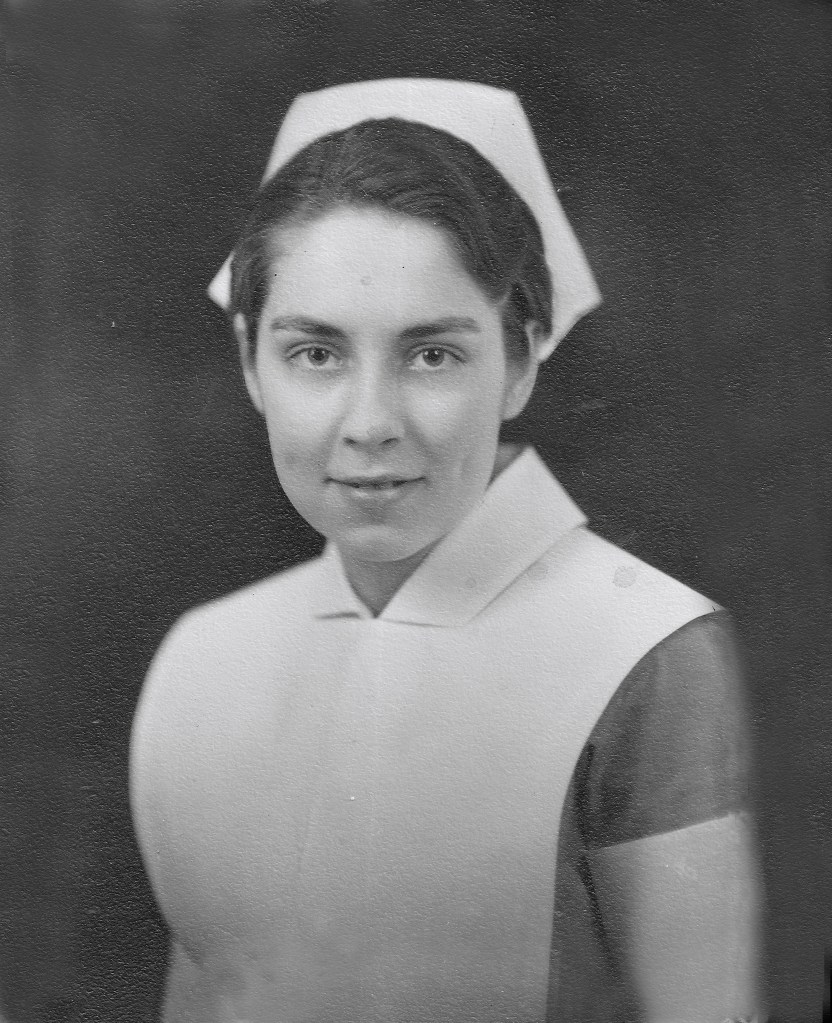
When I was in junior high, my ambition was to become a missionary nurse—just like my mom. But one day, one of my teachers whom I highly respected asked me what I wanted to be when I grew up. When I told him, he replied, “Well, you should consider becoming a doctor instead. You have good enough grades.”

To please my teacher, for the next six years I informed everyone I was going to become a missionary doctor, and I began to look into med schools. Very quickly, I realized I really had no passion or even the slightest interest in studying the medical field. And so I floundered, trying to figure out who I was. Consequently, I made a vow never to become a counselor. I did not want to be responsible for guiding someone incorrectly in their life choices. How ironic that I am now pursuing a Master’s in Pastoral Counseling!

Today I read:

Personally I am satisfied about you, my brethren, that you yourselves are rich in goodness, amply filled with all [spiritual] knowledge and competent to admonish and counsel and instruct one another also. (Romans 15:14 Amp, Emphasis added):

Note the order:

  1. First comes goodness
  2. Then comes knowledge
  3. Next competency
  4. And finally comes the act of counseling.

Character precedes knowledge. Practice comes before proficiency. I have no business counseling others if I don’t begin with character; and without training, counseling others can be dangerous. In Job 38:2 God asks, “Who is this that darkens counsel by words without knowledge?” I wonder if I’ll make a good counselor?

A 2023 Update. Technically, I kept my vow since I became in inner healing prayer minister instead of a counselor. However, breaking that vow would have been acceptable as it was made from a place of emotion and wrong motives. Better not to make an unhealthy vow or promise than to have to break it later.

My mother, Martha Seger

Judgment or Love?

From my 2009 Journal.

A few years ago, I had a friend who struggled to care for her two adopted girls when she injured her leg. Another friend remarked, “Well, she asked for it.” (i.e. she had no business adopting children if she couldn’t afford them.) Yes, my friend had made that choice, but it wasn’t her fault she hurt her leg and needed compassionate help.

But what if I am at fault for the consequence of my choices? A smoker I know is struggling with emphysema. I find it difficult to drum up any sympathy. I may fetch an oxygen tank if he runs out, but I’d still roll my eyes and think he made his own bed and must lie in it.

And then I think of an obese friend who struggles with physical challenges. Do I withhold compassion and mercy when she has a stroke? I may conclude that she asked for it, but I don’t think that’s the right response. Instead, I need God’s love for her.

I can readily see the solution to everyone else’s problem but find it harder to deal with my own. Quit smoking! Lose weight! Turn to Christ! Let go of your anger! Forgive that person who hurt you! But when I look inward at my own shortcomings, I find I can easily make excuses for my own actions and attitudes. I need God’s mercy for my own struggles that keep me bound and powerless to change and quit judging others for losing their battles. I don’t know what it’s like to walk in their shoes.

The heart is deceitful above all things and desperately wicked. Who can know it? (Jeremiah 17:9 KJV)

The Gift of Faith

Jesus said, “Were not ten healed? Where are the nine? Can none be found to come back and give glory to God except this outsider?” Then he said to him, “Get up. On your way. Your faith has healed and saved you” (Luke17: 17-19 The Message).

Jesus healed ten lepers, but only one thanked Him. The Samaritan had faith; I don’t know if the other nine had it or not. Did Jesus heal certain people out of compassion or because of their faith? He raised the dead—and that’s not because of their faith! In this case, the one leper demonstrated that he “got it.” I suspect God does a lot of things for us that go unacknowledged.

Maybe faith is like a promised Christmas present, an unopened box. Jesus hands it to me and says, “I’ve made you a promise. It’s in the box. But it’s not time to open it yet.” And faith says, “I believe You, Lord. And I will patiently wait till You say it’s time.”

Abraham was given a box. Inside was the promise of a son. But I think he got impatient waiting—or perhaps he thought God had handed him the wrong box, and so he set it aside and opened a different gift under the tree. But even with his mistake, God still handed him the right one and he still got to open it.

I have so many precious promise boxes under my tree I can’t even count them all! What box am I holding that I’m ignoring, substituting, not waiting for, anxious about?

When Jesus handed the one leper his gift, he remembered to write the thank you note. The other nine got their gift, too, but were so excited they forgot where it came from. We must pause, notice, respond in gratitude, and recognize the source of our healing, our salvation.

Spiritual Fruit

Love, joy, peace, patience, kindness, goodness, faithfulness, gentleness, self-control (Gal. 5:22-23)

From my 2005 Journal.

I’m not sure where or when in my spiritual journey (from the pulpit?) I picked up the notion that we were supposed to strive to do the list of Fruits of the Spirit. “Look over this list,” they’d say. “Which one do you lack? Work at this one today. Be more (“more” is unquantifiable) loving, put on a joyful countenance, exercise patience or self-control.” Shame for failing in any area became a natural by-product of this teaching.

But one day I began to ponder the nature of fruit, and then, thankfully, I heard (from the pulpit?) a correct interpretation of this verse. Spiritual fruit is not a to-do list but rather a by-product, a result of abiding in the Spirit, of being attached to the vine, of mind renewal. I can choose to exhibit the fruits by determination and self-effort, and that is not a bad thing. I can choose not to punch my friend in the face if I’m mad at her. But how much easier and freeing to have these qualities flow out of me naturally, graciously, without effort as a result of inner healing prayer and mind renewal. Even “abiding in the vine” is no longer a grit-my-teeth, work-at-it endeavor. Rather, it is a natural by-product of connecting all parts of my heart to the Lord.

Fruit plate created by my friend Renate.

Rules vs. Freedom

From my 2009 Journal. Do we have any rules we need to abide by as believers? Moses’ Law says “Don’t murder.” Jesus says it’s what’s in your heart that’s important. Is “don’t hate” a rule? I suppose you could say that. Rules generally govern actions, and hatred is not an action (unless it’s acted upon). But if you take care of the attitude (hatred) in your heart, you’ll have no temptation to do the action (murder).

We usually judge a person’s actions, though I have to say I’m guilty of judging a person’s heart based on their actions. I wouldn’t know what’s in their heart if I didn’t see their action.

Romans 14 refers to religious activity: eating meat offered to idols and special observances of days. I have freedom, Paul says, to eat meat or not eat meat, to observe a day “unto the Lord” or not. It’s not the action that pleases God, but the attitude of the heart. Are you doing it out of obedience to your conscience or out of disobedience? Are you doing it with a grateful heart? If you do it but aren’t thankful, what good is it?

Bottom line: don’t judge someone else’s religious activities (assuming they are believers) and don’t put an obstacle or stumbling block in another person’s way. Verse 14 says food offered to idols in and of itself is not unclean. But if in your heart you believe it’s unclean, then to you it is. Don’t do it!

The Word and the Spirit

Journal 2005

Sometimes I learn more truth through other people’s processing than I do through my own. Yesterday, while praying with a client over the phone, God answered a question for her that answered a question for me: If we have the Holy Spirit, why do we need the Bible? And if we have the Bible, why do we need the Holy Spirit?

Now, I could have given her a plausible explanation that would have satisfied me. However, it made the most sense to her when she visualized a classroom. We need both the Teacher and the textbook. A student gets information from the text—facts, history, stories, and even poetry, but she has a relationship with the Teacher. The Teacher asks and answers questions about the text; He explains, expands, and embellishes it. And how does He know so much about the textbook? He’s the author!

My Eyes

My eyes are continually toward the Lord… (Ps. 25:15)

Sometimes I look at the back of Your head as You say, “Follow Me down this path.” Sometimes I look into Your eyes, and I see tender love and compassion. Sometimes I look sideways toward You—for companionship and fellowship. Other times I look up at You like an expectant child looking toward her father—waiting for the surprise, the delight, the gift, the promised reward. It’s hard to look toward You when I’ve disappointed You. My eyes are downcast then, so I won’t see Your disapproval or displeasure with what I’ve done or thought. I look around me, behind, above, below me—and You are there. No matter where I look, I am “toward you”—if only I open my eyes!

Keep my eyes on You, Lord.

Psalm 41

Journal 2005

How blessed is he who considers the helpless.

The Lord will deliver him in a day of trouble (Psalm 41:1 NASB).

The Psalms are a mystery to me sometimes. I believe David’s words are inspired Scripture, but I don’t read them as universal truths or commands. For example, Psalm 41:2 says, “The Lord will protect him and keep him alive.” If this statement were a truism, a promise from God, and God didn’t protect him just ONE TIME, then this statement is false. So what does this mean? That David meant it figuratively (that he’d be kept alive in heaven?) or was it true for him and he said this applying to all men? Was this simply his perception?

Matthew Henry’s commentary suggests: “Either this is about David, or this is about how his friends have treated him.” This is not a universal promise to all mankind, but more of a comfort to David in his present circumstances.

David writes about himself, his wishes, prayers, and struggles and how he views his world. I think we’re looking into the heart of a man who expresses himself poetically. Perhaps a better understanding of Hebrew poetry is the key.

Anyone care to jump in and wrestle along with me on how to interpret the Psalms?

The Lord Is Not My Shepherd

Journal 2005

David thought in word pictures based on his experiences, so Psalm 23 made sense to him. But it’s hard to put myself in his sandals, for I’m not a sheep-tender. I love the imagery, and I know it’s scriptural, but the concept of “The Lord is my shepherd” doesn’t touch my soul.

I am a tree-lover. Inside the fence of our African compound, my missionary dad planted a variety of tropical fruit trees for food and a thousand neem trees for firewood. Just outside our property, a stately kuka (baobab) tree called my name, and further into the bush grew other exotic fruit for tasting and flowering trees for climbing. As a child, I made it my mission to try them all.

And so, I write my own poem.
The Lord is my Living Baobab Tree.

He wraps His massive branches around my slender frame.

I hide myself in the crook of His arm.

He is my place of peace and solitude and a gathering place for social encounters.

I view the world differently from Your height.

I soar in Your high branches and rock comfortably on your lower ones.

I might itch when I touch your pods, but the inside fruit tingles sweet-sour on my tongue.

You reveal Your secrets as I spend time in You.

You spread Your cool leaves above me and shelter me from sun and rain.

You invite me to climb, but I can never attain the topmost branches.

You are too lofty for me.

I want to dwell in Your branches forever.

I run to you when I feel pain or pleasure.

I run barefoot to Your roots and climb into Your lap, content.

You restore my soul.

Is God more than a shepherd or a tree? Of course. But the symbolism focuses on the senses. Can I taste God?  (“Oh taste and see that the Lord is good.”) Can I hear His rustling branches in the Spirit’s wind? Can I smell Him in the dampness of the roots of the earth? Or the odor of rain as it cleanses the dusty leaves? Can I touch Him? When I touch the unlovely, the poor, the prisoner, the orphan child, I touch the face of God. I can’t see Him with physical eyes, but I can see His handiwork, and I get to know the heart of the artist. I see His creativity, His passion, His bigness, His attention to detail, His order, His comfortableness with chaos. I sense His emotion in the fury of the hurricane as well as the gentle caress of whispered breeze on my cheek.

A 2022 Update. One day, while trying to still my heart on a hiking trail bench, the Lord said to me, “Be a tree.” I want to be an oak tree—stable and strong, where many can come and rest in my branches. Some of my leaves become diseased when outside forces ruin their beauty, but it’s okay for the bad parts to fall off so new growth can replace them. I want to feed the squirrels and provide shade for the tired and weary. And I want my branches to whisper, “Jesus loves you. God is here. Come and find peace.” He’s the invisible sap, the life inside me, flowing from root to healthy branch.

The Lord was David’s shepherd, but He’s my tree, and I want to be like Him.

“One that would have the fruit must climb the tree.”
1980. Revisiting what was left of my old, beloved baobab.

What Would Paul Say?

Journal 2005

I have been taught all my life that we are to believe and follow every word written in the Bible. But we are inconsistent. We decide which rules and principles we want to follow and then gloss over the rest. (See The Blue Parakeet by Scot McKnight.) And if we question some portion of another person’s pet doctrine or rule, we’re accused of going against the Bible.

There’s a reason, obviously, why the Apostle Paul’s letters are included in the canon, but one must keep in mind that he wrote to specific individuals or churches about specific issues in the context of their culture. How different would these letters read if he were alive today and wrote to the American church or the Korean or Ethiopian or Brazilian? Different needs, different pastors, different times, different issues.

Would Paul, for example, still address the role of women in the church? Would he still preach, “Women, don’t usurp authority over men,” or would he instruct, “Exercise your God-given gifts, and don’t hinder each other’s spiritual growth”?

Would he still say, “Wives, submit to your husbands,” or would he say, “Be mutually respectful of each other”?

How would he address the subject of clothing, hairstyles, and modesty? Would he tailor his words to the country he’s writing to?

All the instructions regarding the widow list don’t apply so much to us in our U.S. culture where widows have more resources. Perhaps Paul would preach about ministering to the homeless instead.

Would Paul address employee-boss issues in the USA instead of slave-master dynamics?

Would he still need to give instructions on the use of spiritual gifts?

A 2022 Update. How politically correct do you think he’d be? I suspect Paul would not mince words to the churches about his opinions on issues he didn’t address in the first century, such as abortion, euthanasia, cloning, transgender choices, and gay marriage.